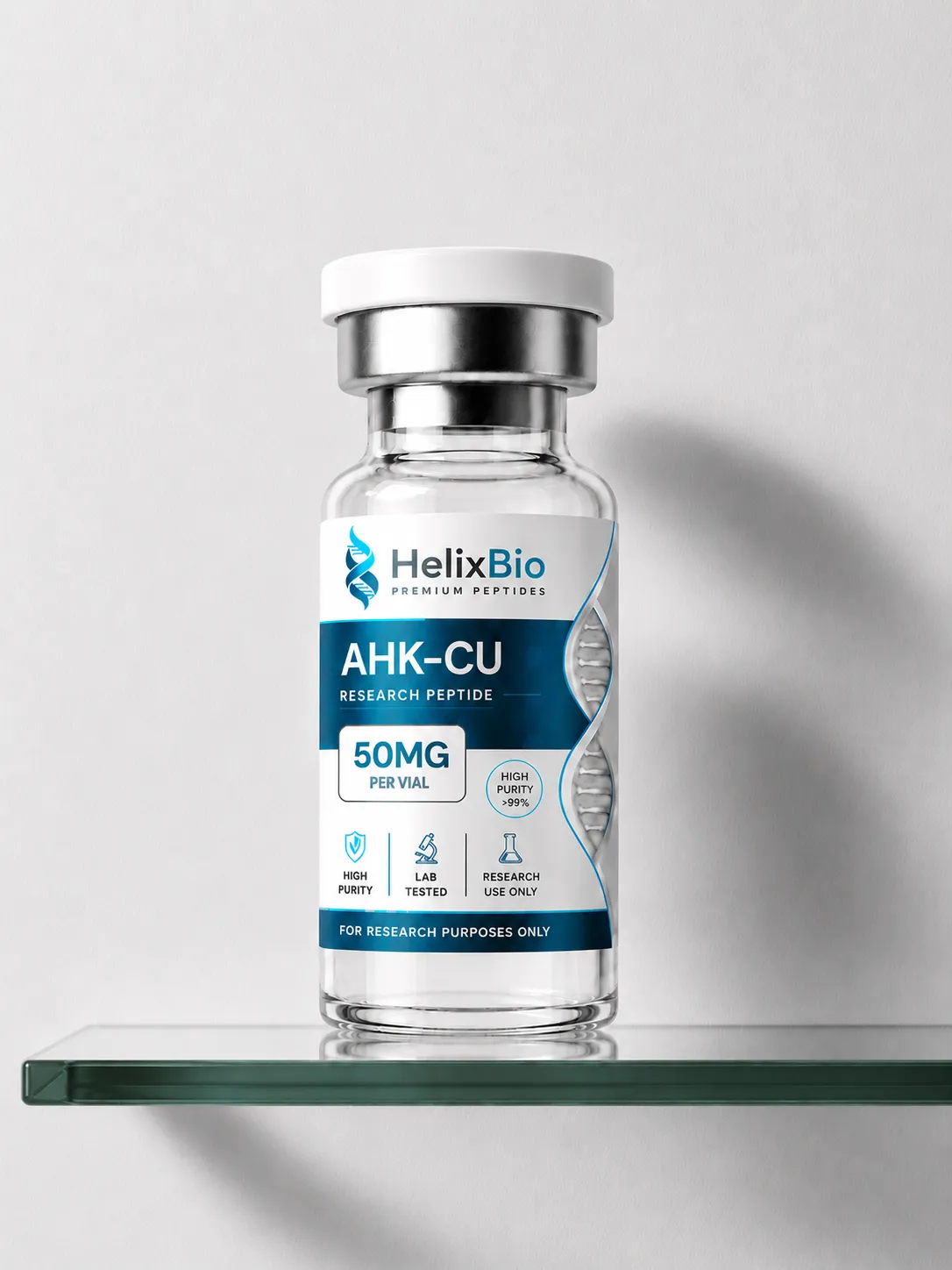
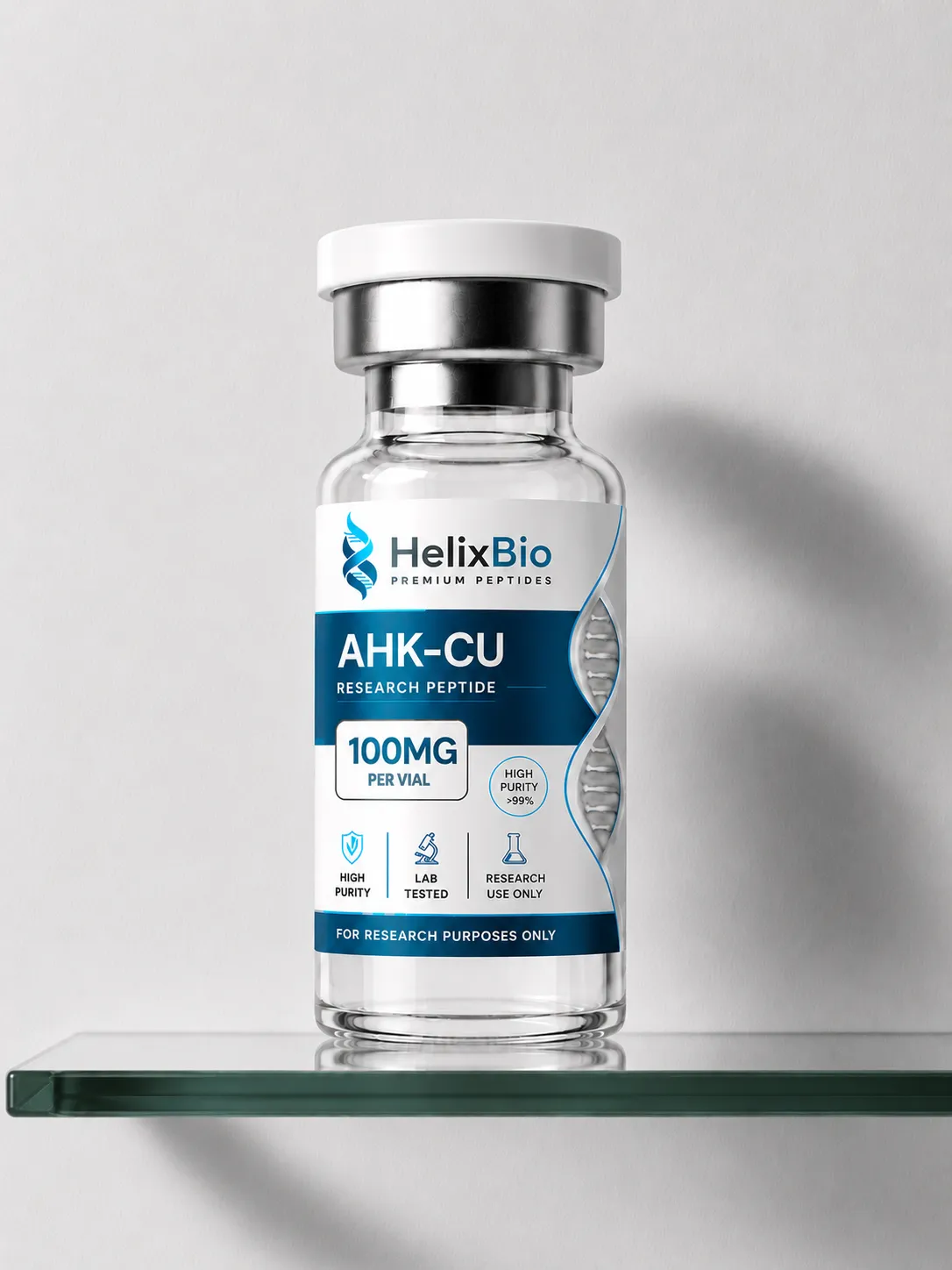
AHK-CU is a synthetic copper-binding peptide widely studied in laboratory settings for its biochemical properties and interactions with cellular pathways. As a member of the copper peptide family, AHK-CU has attracted interest in peptide science, molecular biology, tissue engineering, and regenerative research. Although it shares similarities with other copper peptides, including GHK-CU, AHK-CU possesses a distinct amino acid sequence that makes it a separate subject of scientific investigation. Helix Bio supplies research-grade AHK-CU exclusively for laboratory and educational research, manufactured to a high-purity standard. It is not intended for human or veterinary use.
HPLC certified
Independent analysis
Highest standard
Full traceability
AHK-CU is a copper-complexed peptide that has become an area of interest within peptide science due to its unique structural characteristics and its role in experimental biological research. Scientists have investigated copper peptides for decades to better understand their interactions with proteins, enzymes, extracellular matrices, and cellular signaling pathways. While AHK-CU shares the copper-binding properties common to this peptide family, it remains a distinct research compound with its own biochemical profile, differing from GHK-CU in its amino acid sequence and downstream experimental behavior.
AHK-CU is a copper peptide consisting of a short amino acid sequence complexed with copper ions. Copper peptides have been studied extensively because copper is an essential trace element involved in numerous biological processes. Helix Bio's AHK-CU is supplied as a lyophilized (freeze-dried) powder in a sealed laboratory vial to support stability prior to reconstitution.
This product exists to support in vitro and laboratory research only. It is manufactured, labeled, and sold for research use only (RUO) — not for human or veterinary use, not for diagnostic procedures, and not for compounding. It is intended for researchers studying copper peptide chemistry, metal ion binding mechanisms, tissue engineering models, and extracellular matrix biology.
Copper peptides remain an important area of peptide science because they offer opportunities to study the interaction between peptide sequences and biologically relevant metal ions. Helix Bio manufactures AHK-CU with careful attention to purity, consistency, and secure packaging, giving researchers a dependable material for comparing copper peptide structures, evaluating experimental models, and generating reproducible laboratory data.
This product is not intended for individual consumers seeking to use it outside a research setting.
| Field | Detail |
|---|---|
| Product Name | AHK-CU |
| Category | Research Peptide — Copper Peptide |
| Form | Lyophilized powder |
| Purity | High-purity research grade — see current lot's Certificate of Analysis where available |
| Appearance | Lyophilized powder |
| Packaging | Sealed laboratory vial |
| Storage | Store refrigerated before reconstitution; freezer temperatures recommended for long-term storage |
| Research Use | Laboratory and scientific research only — not for human or animal use |
| Manufacturer | Helix Bio |
AHK-CU has been referenced in scientific literature exploring:
Researchers may compare AHK-CU with GHK-CU to evaluate differences in copper binding, peptide stability, and molecular interactions. The current body of evidence primarily consists of laboratory and preclinical research and should not be interpreted as evidence of clinical effectiveness. Everything sold by Helix Bio is intended for laboratory research only, not for administration to humans or animals outside a licensed research setting.
Peptide purity is an important consideration in laboratory research because impurities can interfere with analytical results and experimental reproducibility. Helix Bio's AHK-CU is manufactured in a controlled environment with careful raw material selection, batch consistency checks, and quality inspections throughout production. Researchers should refer to any batch-specific documentation provided with the product for analytical information when available.
AHK-CU is packaged in a securely sealed laboratory vial with protective packaging designed to minimize environmental exposure during transit. Researchers should inspect the package for visible damage before use. Shipping methods, delivery times, and regional availability may vary — refer to Helix Bio's shipping and support pages for current information.
AHK-CU sold by Helix Bio is intended strictly for laboratory, analytical, and scientific research use. It is not a drug, dietary supplement, cosmetic, or food product, and it is not approved by the FDA or any regulatory body for human or veterinary use, diagnosis, treatment, cure, or prevention of any disease or condition. This product must not be administered to humans or animals outside of a properly licensed research facility. Nothing on this page constitutes medical advice, and no statement here should be interpreted as a therapeutic or health claim. By purchasing this product, the buyer confirms they are a qualified researcher, laboratory, or institution acquiring it for lawful research purposes only, and accepts full responsibility for compliance with all applicable local, state, and federal regulations governing research chemicals.
Knowledge Base
Knowledge Base
Knowledge Base
Knowledge Base
Knowledge Base
Knowledge Base
Knowledge Base
Knowledge Base
Knowledge Base
Knowledge Base
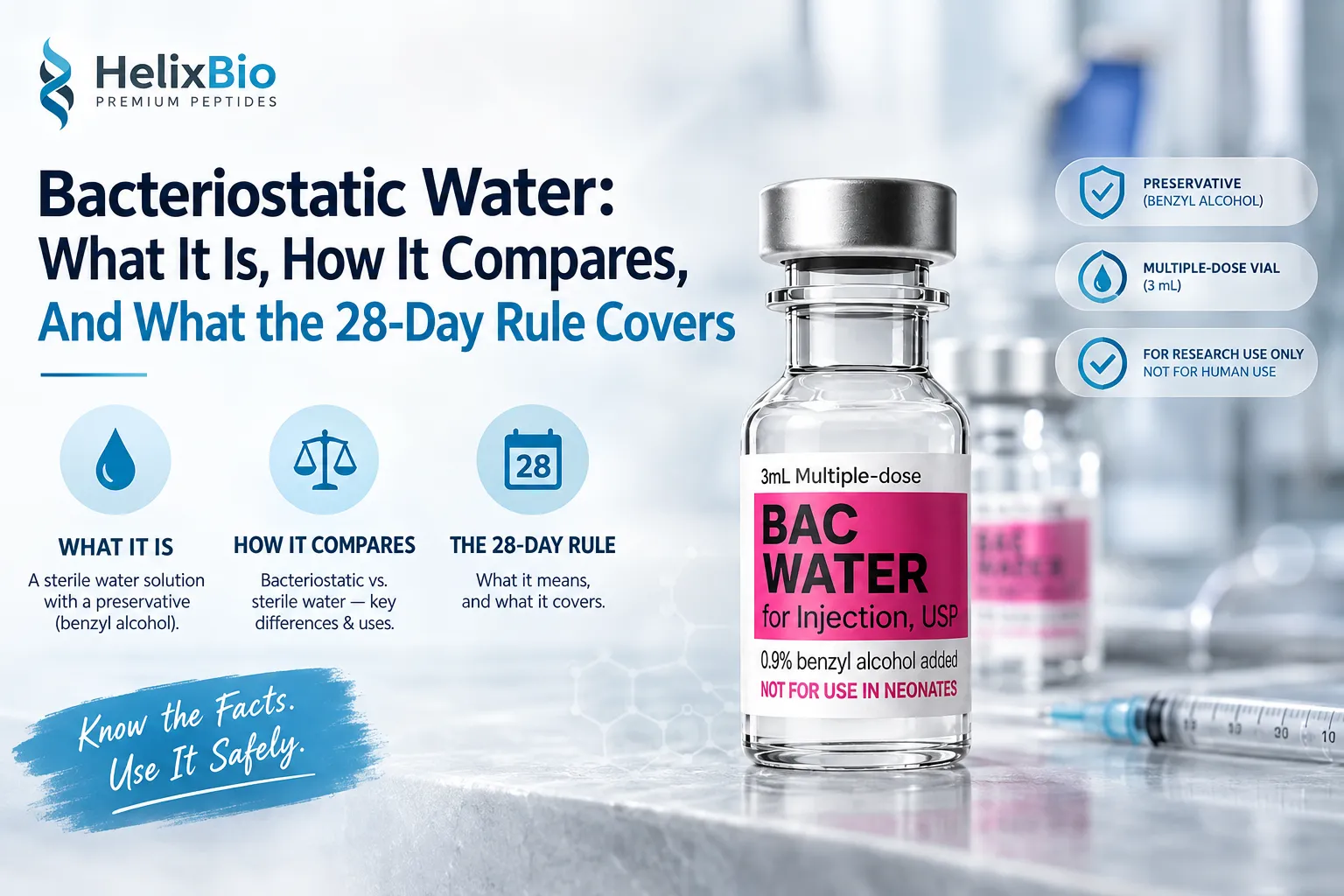
What bacteriostatic water contains, how it differs from sterile water and saline, where the 28-day opened-vial figure comes from, and what a COA can show.
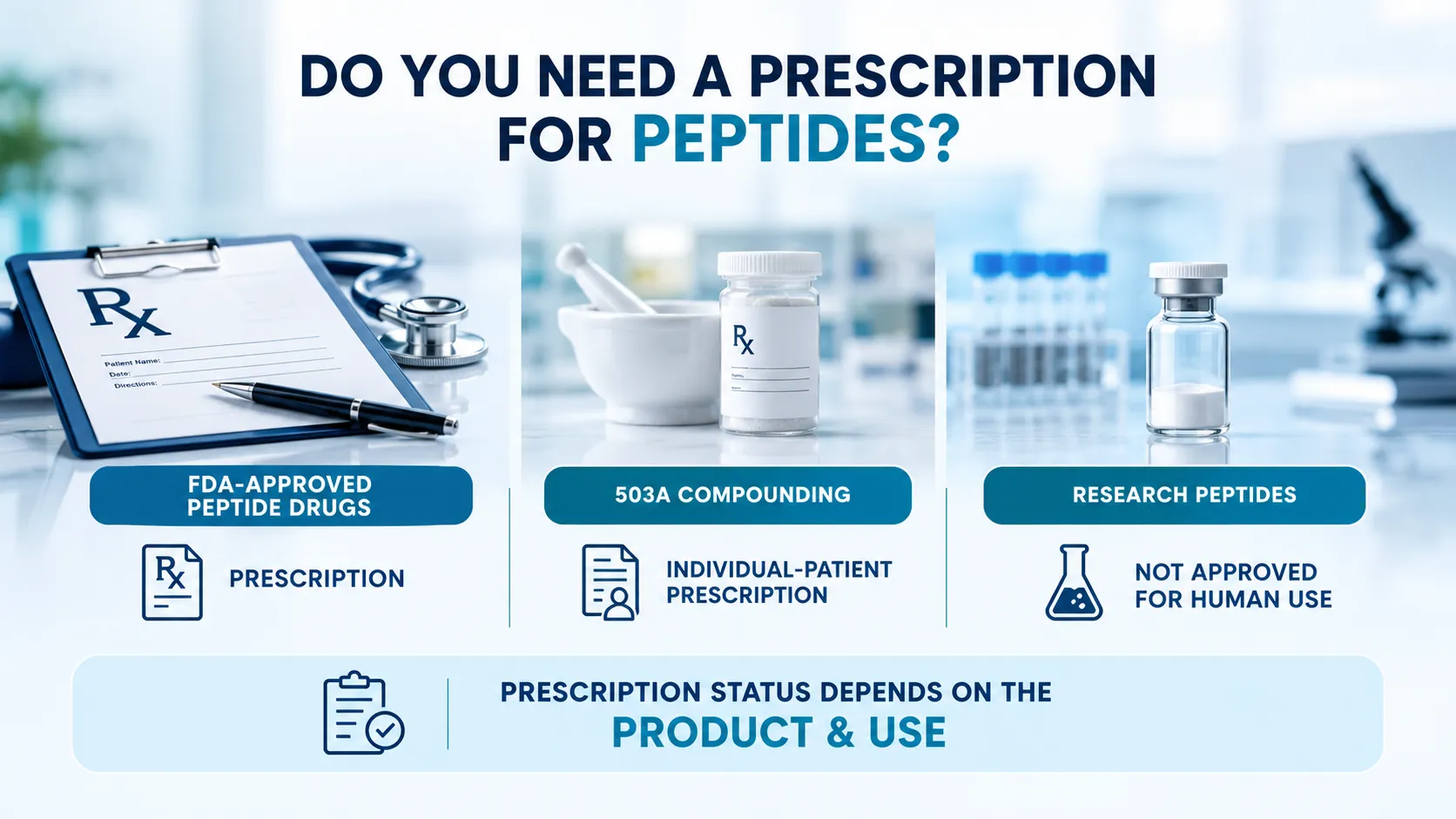
Do you need a prescription for peptides? It depends on the category. See which peptides need one, which do not, and the dated 2026 FDA rules that apply.
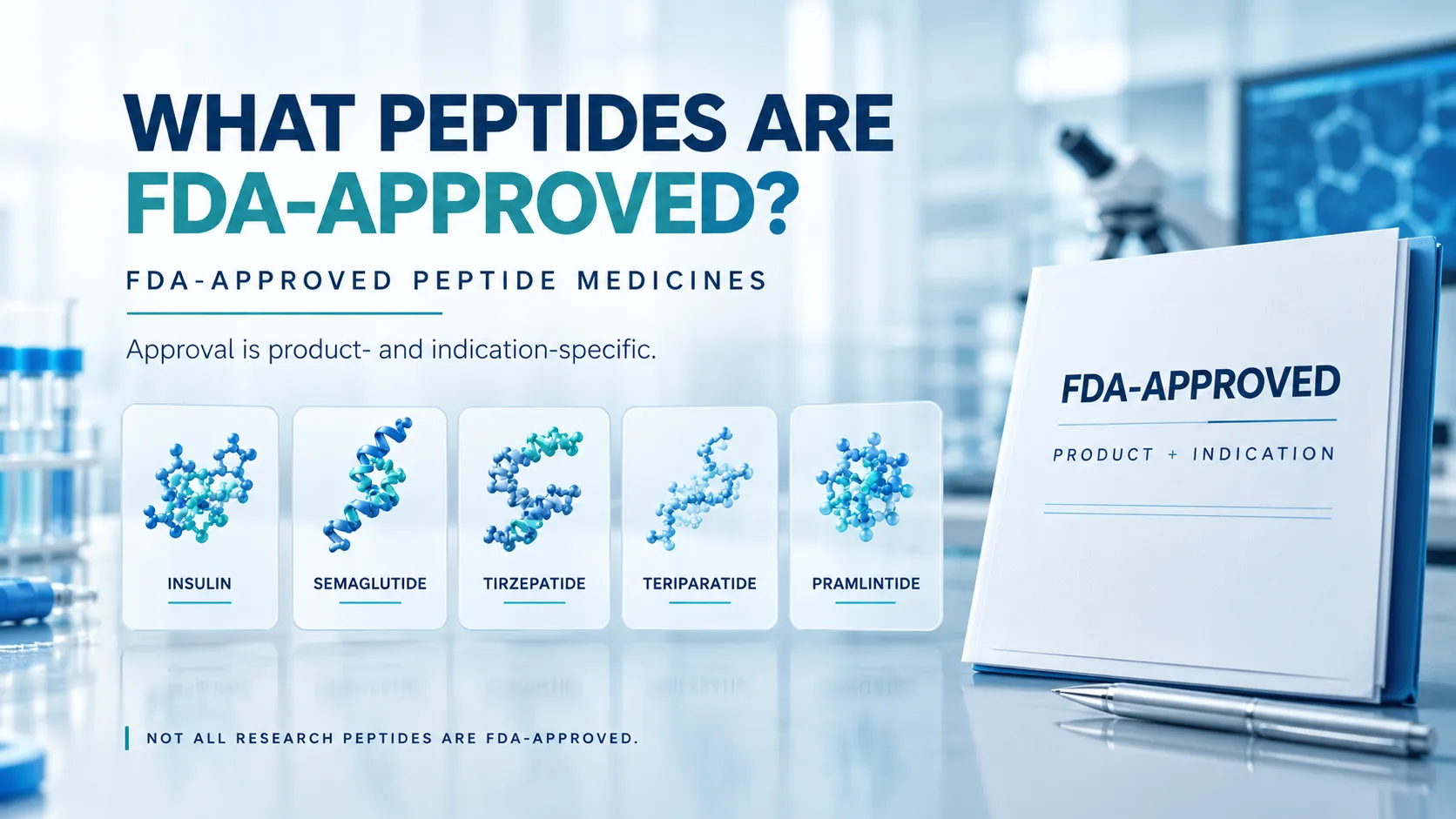
The complete 2026 list of FDA-approved peptides: 47 drugs by category and approval year, which popular peptides are not approved, and pipeline to watch.