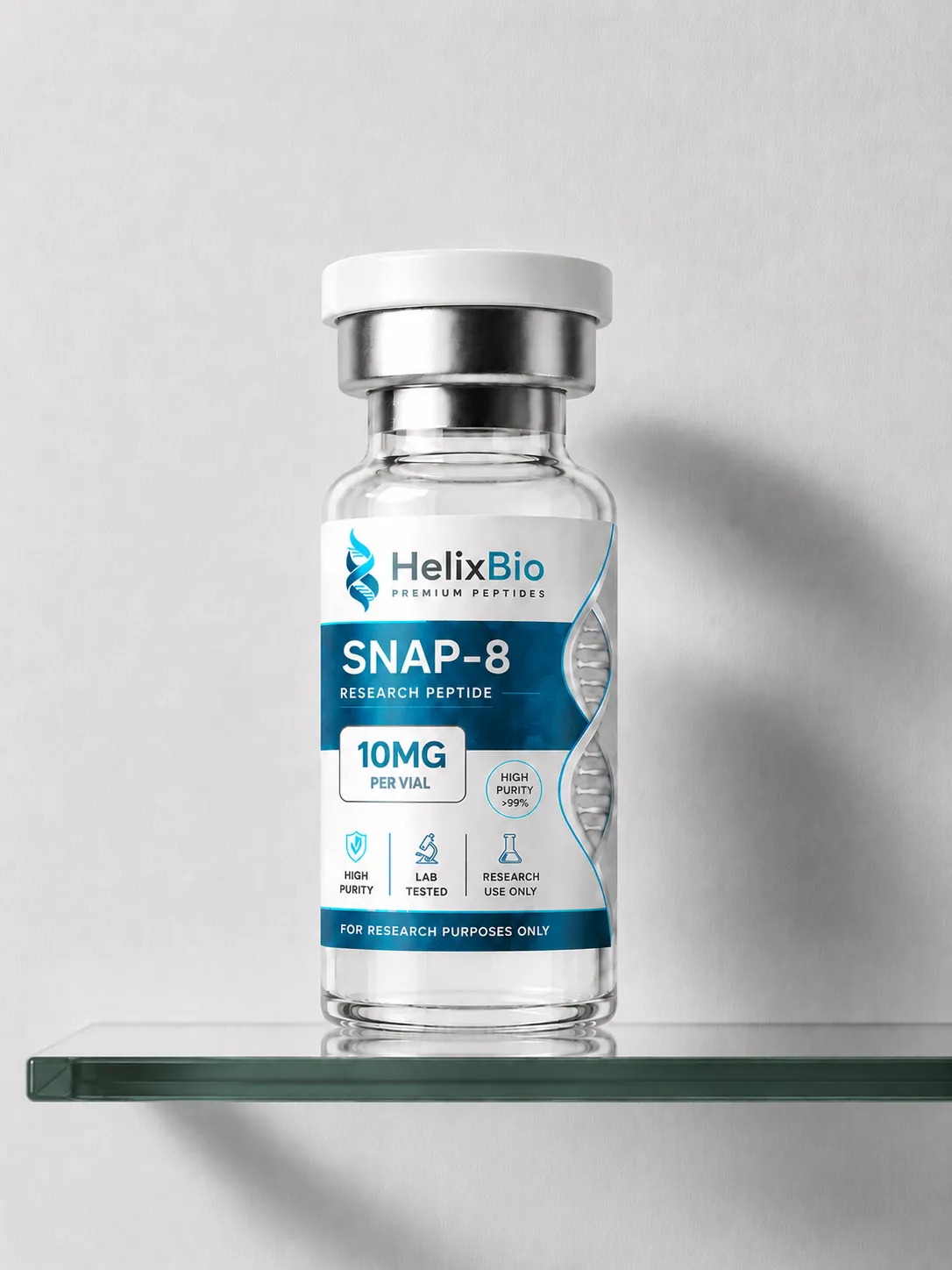
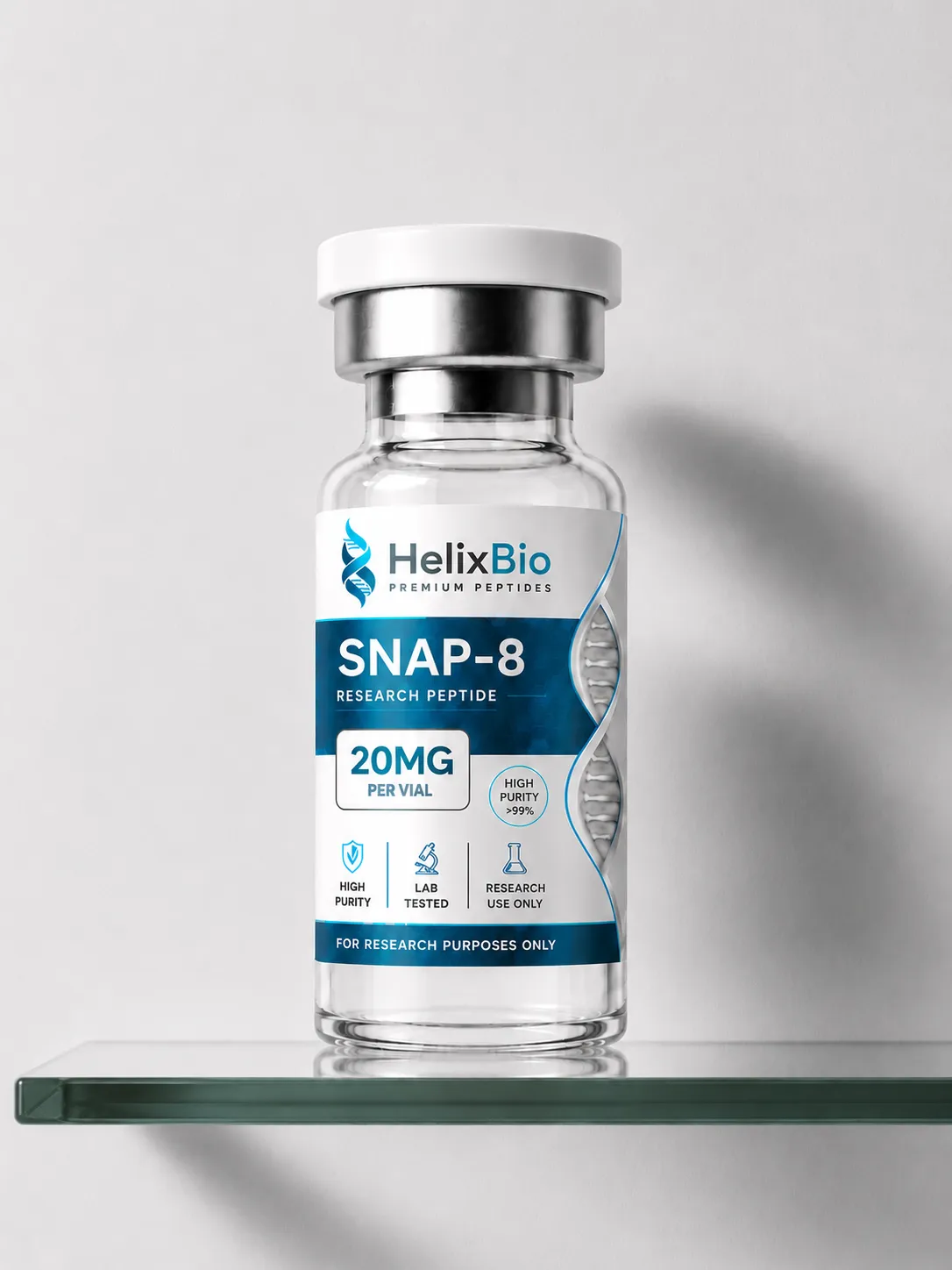
SNAP-8, also known as Acetyl Octapeptide-3, is a synthetic octapeptide studied in research involving the SNAP-25 protein, SNARE complex biology, vesicle fusion, and peptide-based cosmetic science. As an extended peptide related to Argireline, SNAP-8 is of interest to researchers investigating peptide structure, protein-peptide interactions, neurotransmitter-release pathways, and topical cosmetic formulations. Published analytical research has also established LC-MS/MS methods for identifying and quantifying Acetyl Octapeptide-3. Helix Bio supplies SNAP-8 as a research-use-only material for qualified laboratory and scientific applications. The company states that its research peptides are supported by batch-specific COA documentation and third-party HPLC and mass-spectrometry testing.
HPLC certified
Independent analysis
Highest standard
Full traceability
SNAP-8 is the common research and cosmetic name for Acetyl Octapeptide-3, a synthetic eight-amino-acid peptide associated with research into the SNAP-25 portion of the SNARE complex.
The SNARE complex is a group of proteins involved in membrane fusion and vesicle-release processes. SNAP-25 is one of the proteins participating in this molecular machinery. Research on SNAP-8 examines how a short synthetic peptide corresponding to part of the SNAP-25 sequence can interact with this system.
SNAP-8 is often discussed alongside Argireline because both peptides are related to the SNAP-25 region and have been studied in cosmetic peptide research. SNAP-8 is an extended analog containing eight amino-acid residues rather than the shorter six-residue sequence associated with Argireline.
For laboratory researchers, this makes SNAP-8 relevant to studies involving peptide-protein interactions, SNARE-related signaling, vesicle fusion models, and cosmetic formulation science.
SNAP-8 is classified as a synthetic octapeptide. Its commonly reported sequence is:
Ac-Glu-Glu-Met-Gln-Arg-Arg-Ala-Asp-NH₂
The peptide contains eight amino-acid residues and an N-terminal acetyl modification. Its structure is related to a region of SNAP-25 that participates in SNARE-complex assembly.
Important research characteristics include:
SNAP-8 and Argireline are closely related but are not identical peptides.
Argireline is associated with Acetyl Hexapeptide-3/Acetyl Hexapeptide-8 nomenclature, while SNAP-8 is Acetyl Octapeptide-3. SNAP-8 extends the related sequence with two additional residues.
| Characteristic | SNAP-8 | Argireline |
|---|---|---|
| Common Name | SNAP-8 | Argireline |
| Peptide Type | Synthetic octapeptide | Synthetic hexapeptide |
| Common Scientific Name | Acetyl Octapeptide-3 | Acetyl Hexapeptide-3 / Acetyl Hexapeptide-8 |
| Sequence Length | 8 residues | 6 residues |
| Research Relationship | Extended SNAP-25-related peptide | Shorter SNAP-25-related peptide |
| Research Focus | SNARE/SNAP-25 interactions and cosmetic peptide science | SNARE/SNAP-25-related research and cosmetic formulations |
The two compounds should not be treated as interchangeable. Researchers should identify the exact peptide, sequence, formulation, purity, and lot documentation required for a given experiment.
Helix Bio's SNAP-8 is intended exclusively for laboratory and scientific research.
Potential research areas include:
The appropriate application depends on the research model, experimental objective, analytical methodology, and laboratory protocol.
Defined Peptide Identity
Research involving synthetic peptides benefits from clearly defined molecular identity. SNAP-8 has a recognized sequence and chemical identity, allowing researchers to distinguish it from related peptides such as Argireline.
Relevant to SNARE Biology
SNAP-8 is associated with the SNAP-25 portion of the SNARE complex, giving researchers a defined peptide model for investigating protein interactions and membrane-fusion biology.
Established Analytical Methods
Published research has described LC-MS/MS methodology for the identification and quantification of Acetyl Octapeptide-3, demonstrating that the compound can be analytically characterized using modern mass-spectrometric methods.
Useful for Cosmetic Peptide Research
SNAP-8 has been studied in cosmetic science, including research concerning topical formulations and peptide-based approaches to expression-line models. The available evidence should be interpreted according to the specific formulation, experimental model, and study design rather than generalized to every SNAP-8 preparation.
Documented Quality Approach
Helix Bio states that its peptide catalog uses third-party HPLC and mass-spectrometry testing, with batch-specific certificates of analysis. Researchers can use this documentation to evaluate the identity and purity of the material associated with a specific lot.
SNAP-8 is intended for qualified scientific and laboratory users, including:
It is not intended for consumers seeking cosmetic treatment, anti-aging treatment, medical treatment, or self-administration.
| Specification | SNAP-8 |
|---|---|
| Product Name | SNAP-8 |
| Scientific Name | Acetyl Octapeptide-3 |
| Product Type | Synthetic peptide |
| Peptide Class | Octapeptide |
| Research Category | Cosmetic & Skin Compounds |
| Research Focus | SNAP-25 / SNARE-complex biology |
| Sequence | Ac-Glu-Glu-Met-Gln-Arg-Arg-Ala-Asp-NH₂ |
| Purity | Verify current lot-specific COA |
| Appearance | Refer to current product listing and COA |
| Form | Refer to current product documentation |
| Packaging | Refer to current product listing |
| Storage | Follow current product-specific documentation |
| Lot Testing | Verify applicable COA |
| Identity Testing | Mass spectrometry where documented |
| Purity Testing | HPLC where documented |
| Research Use | Laboratory research only |
| Human Use | Not intended for human use |
| Veterinary Use | Not intended for veterinary use |
| Manufacturer/Supplier | Helix Bio |
| Country of Origin | Verify current product documentation |
Product-specific specifications such as purity percentage, vial size, appearance, lot number, and analytical results should always be confirmed using the current product listing and applicable COA.
SNAP-25 Research
SNAP-8 is closely associated with the SNAP-25 region of the SNARE complex. Researchers can use this relationship when designing experiments focused on protein-peptide interactions and SNARE-related molecular biology.
SNARE-Complex Research
SNARE proteins are central to membrane-fusion processes involved in vesicular transport. SNAP-8 provides a defined synthetic peptide model for research into aspects of this protein machinery.
Vesicle Fusion Studies
SNARE-complex assembly is closely connected to vesicle fusion and neurotransmitter-release mechanisms. SNAP-8 is therefore relevant to experimental work examining molecular interactions within this pathway.
This should be understood as a research context rather than a claim that SNAP-8 produces a particular physiological outcome in humans.
Peptide-Protein Interaction Research
Short synthetic peptides are useful experimental tools for examining binding, molecular recognition, structure-function relationships, and protein-complex assembly.
SNAP-8's relationship to the SNAP-25 sequence makes it particularly relevant to this type of research.
Cosmetic Peptide Research
SNAP-8 has been investigated in cosmetic science and topical formulation research. Published literature has described studies involving SNAP-8-containing formulations, including analytical work and experimental topical formulations.
Research results should not automatically be transferred from a particular formulation to a different peptide preparation. Vehicle composition, concentration, peptide stability, delivery system, experimental design, and skin model can all influence observed outcomes.
Analytical Research
SNAP-8 can be examined using chromatographic and mass-spectrometric techniques. A published LC-MS/MS method specifically addresses the analysis of Acetyl Octapeptide-3 and demonstrates its application to a SNAP-8-containing microneedle formulation.
Reliable peptide research depends on more than a name printed on a vial. Researchers should be able to identify the compound, confirm the batch, and review analytical data relevant to purity and molecular identity.
Helix Bio states that its research peptide batches undergo third-party HPLC purity testing and mass-spectrometry identity confirmation. The company also states that a batch-specific Certificate of Analysis is available for its products.
For SNAP-8, researchers should review the applicable documentation for:
HPLC and mass spectrometry answer different analytical questions. HPLC can be used to evaluate chromatographic purity, while mass spectrometry provides information about molecular mass and identity. Using both approaches provides a stronger analytical picture than relying on a single measurement. Helix Bio describes this combined approach as part of its quality-control process.
Third-party testing claims should always be evaluated against the documentation for the specific lot being purchased.
Storage should follow the product-specific instructions supplied by Helix Bio and the applicable lot documentation.
For laboratory handling:
For lyophilized research peptides, Helix Bio's general FAQ recommends frozen or refrigerated storage with protection from light and moisture until needed, while noting that reconstituted peptide storage should follow the product-specific guidance.
Because peptide stability varies with formulation and conditions, the product's current COA and storage instructions should take precedence over generalized recommendations.
Helix Bio describes its products as research-use-only materials and states that its peptide batches are supported by analytical documentation. The company also describes cold-chain packaging and tracked shipping as part of its fulfillment process.
Current shipping availability, delivery timeframes, packaging configuration, temperature-control practices, and destination restrictions can change. Researchers should confirm the current Helix Bio shipping policy before placing an order.
Upon delivery, researchers should inspect the package and verify that the product name and lot information correspond with the accompanying documentation.
SNAP-8 supplied by Helix Bio is intended strictly for laboratory and research purposes. It is not intended for human consumption, ingestion, injection, self-administration, veterinary use, diagnosis, treatment, cure, or prevention of any disease or medical condition.
SNAP-8 is a research compound associated with Acetyl Octapeptide-3. Scientific literature concerning SNAP-8, cosmetic formulations, or related peptide mechanisms should not be interpreted as evidence that a particular research-use-only preparation is safe or effective for human use.
Helix Bio states that its products are not evaluated or approved by the U.S. Food and Drug Administration for safety or efficacy and are not intended for human or veterinary use or for ingestion, injection, or other administration.
Nothing on this page constitutes medical advice, dosage guidance, treatment instructions, or a recommendation for personal use.
Researchers are responsible for determining the suitability of SNAP-8 for their experimental system and for complying with applicable federal, state, local, institutional, laboratory, safety, and research requirements.
Knowledge Base
Knowledge Base
Knowledge Base
Knowledge Base
Knowledge Base
Knowledge Base
Knowledge Base
Knowledge Base
Knowledge Base
Knowledge Base
Knowledge Base
Knowledge Base
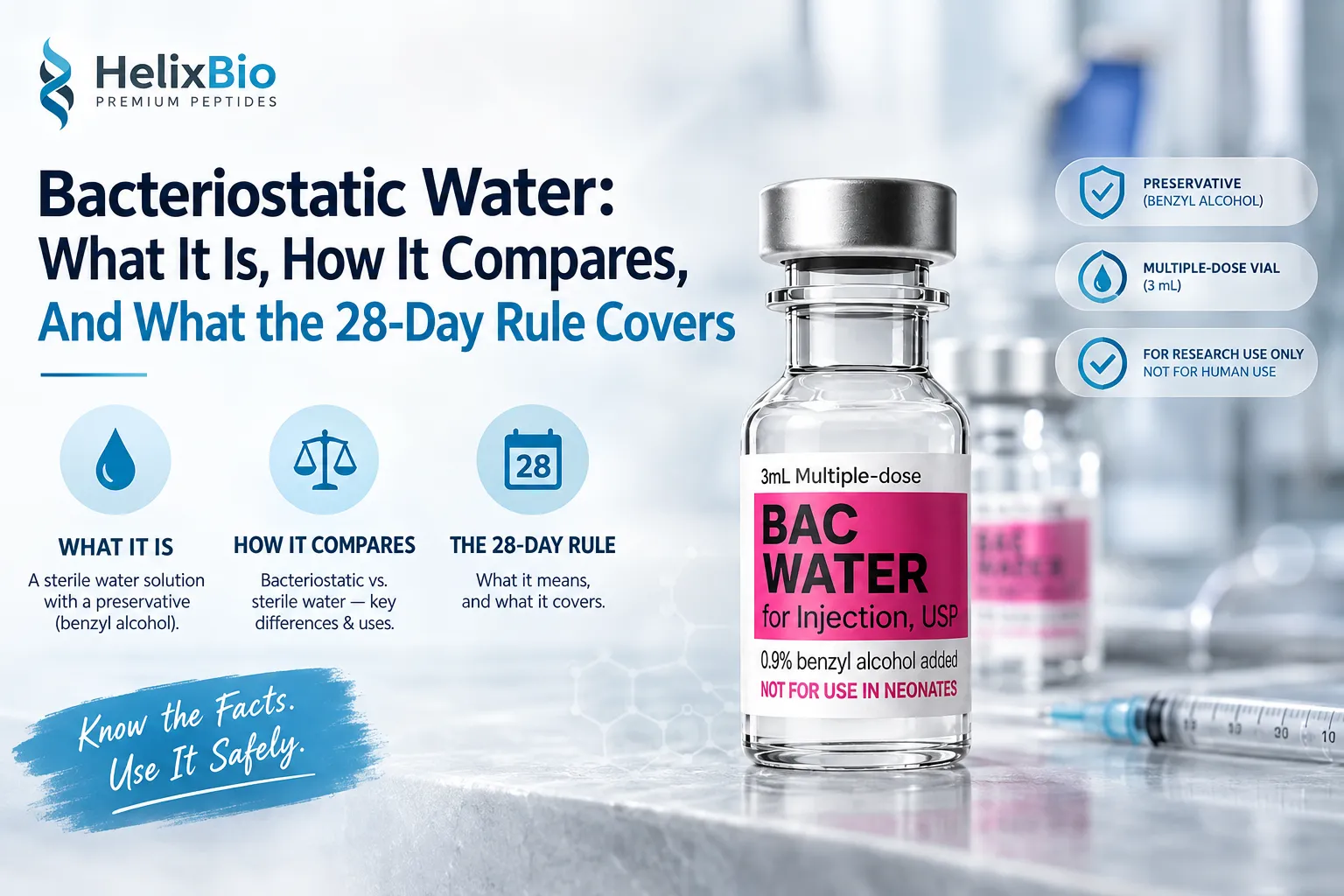
What bacteriostatic water contains, how it differs from sterile water and saline, where the 28-day opened-vial figure comes from, and what a COA can show.
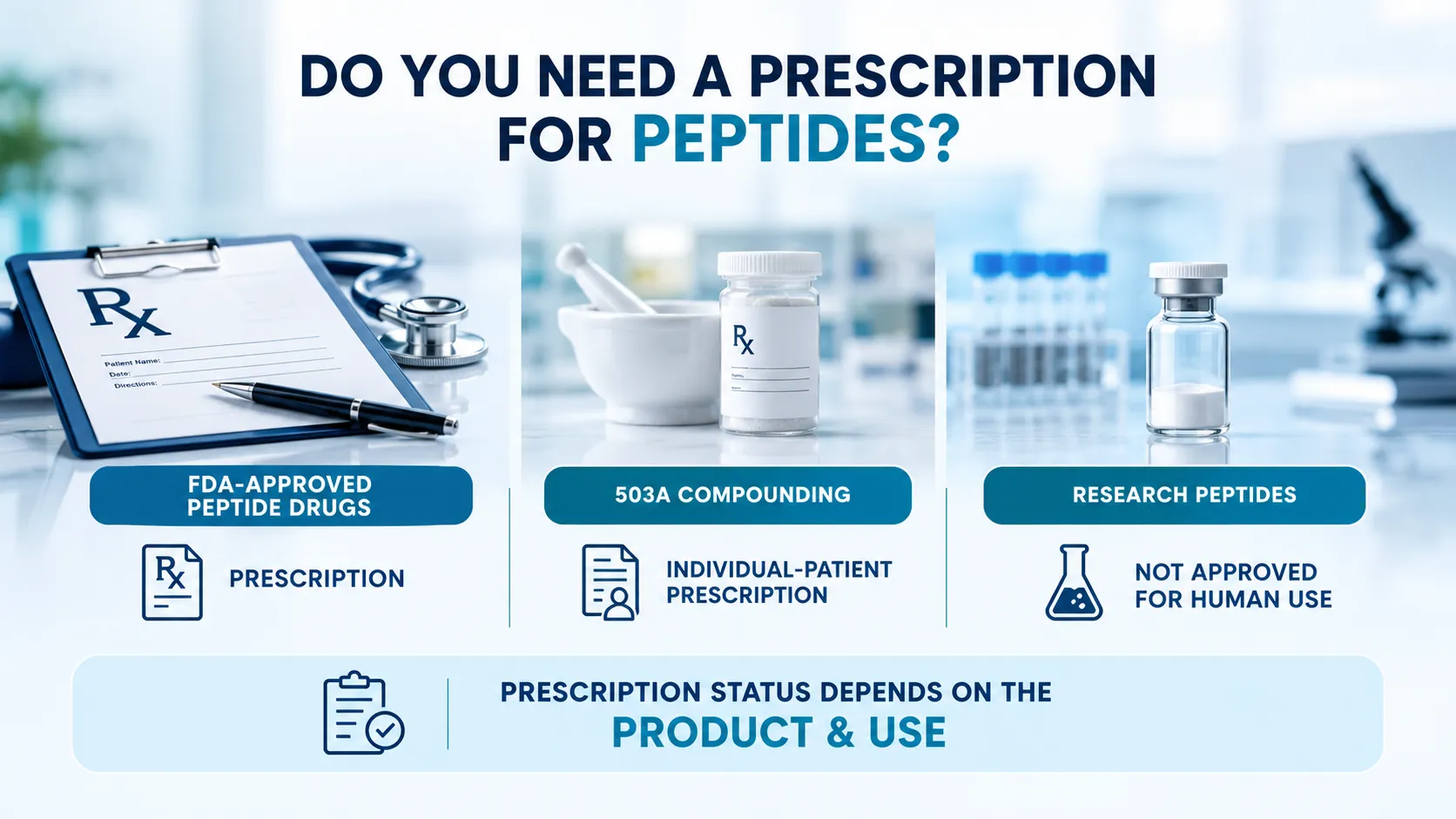
Do you need a prescription for peptides? It depends on the category. See which peptides need one, which do not, and the dated 2026 FDA rules that apply.
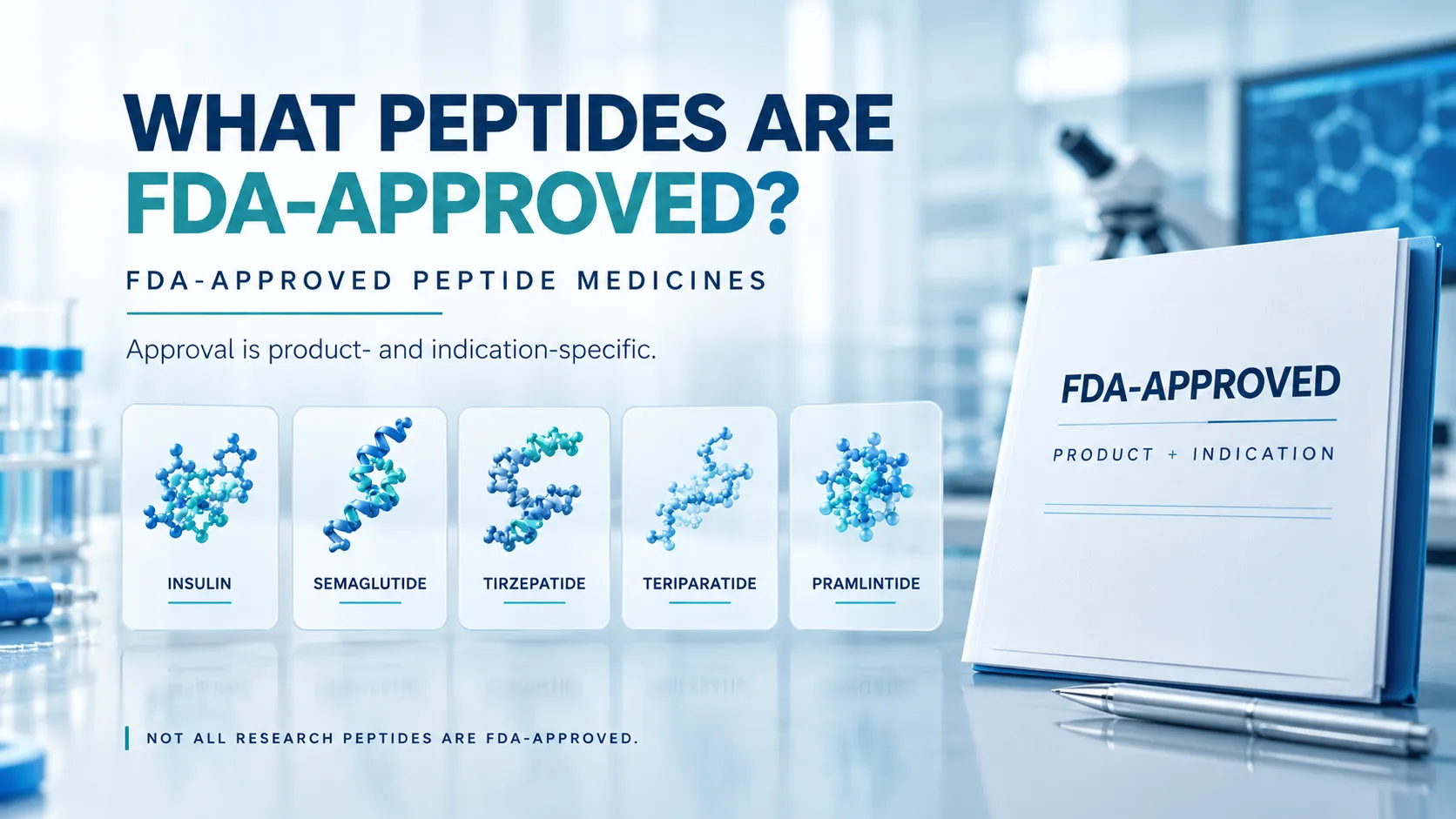
The complete 2026 list of FDA-approved peptides: 47 drugs by category and approval year, which popular peptides are not approved, and pipeline to watch.