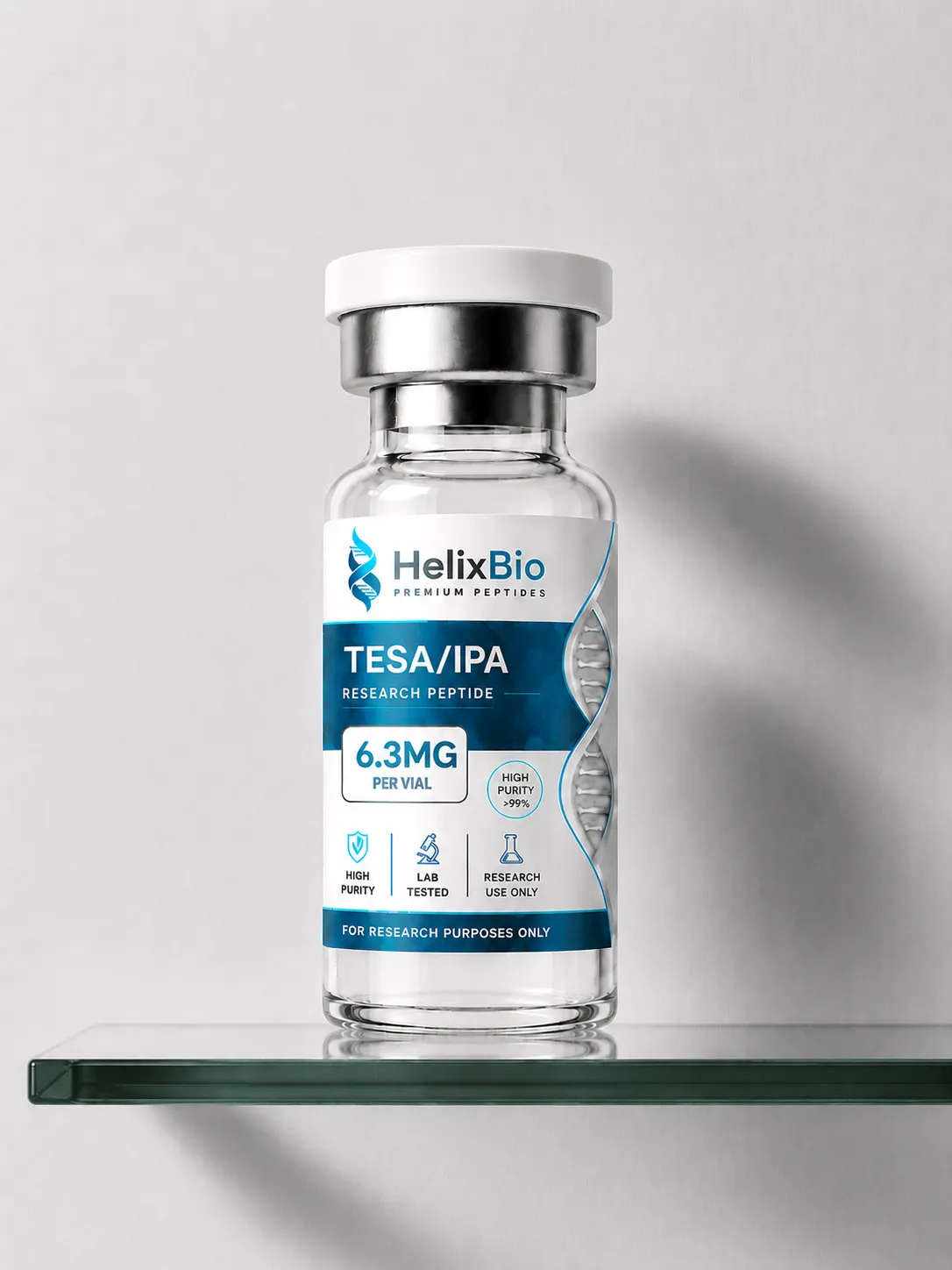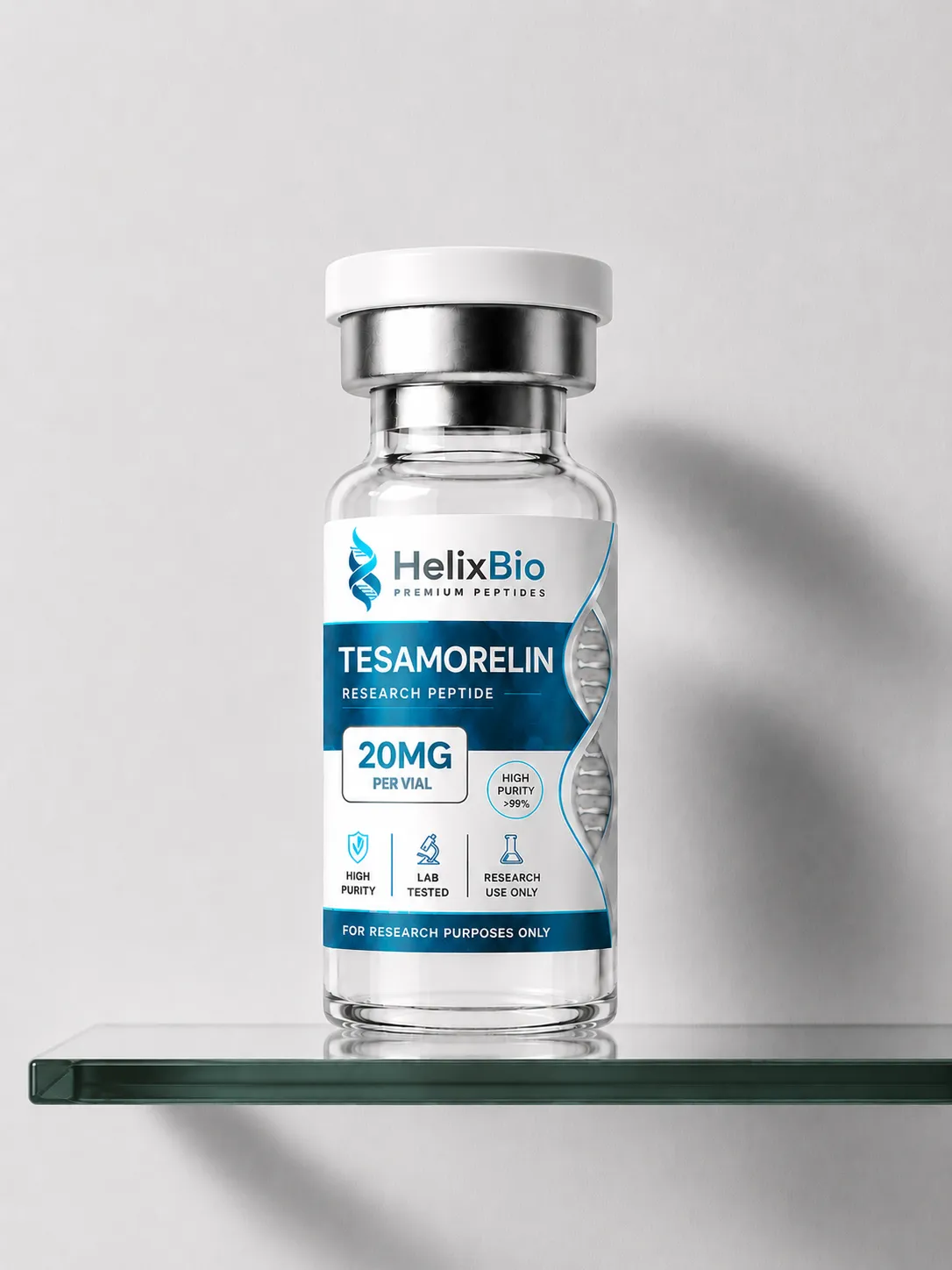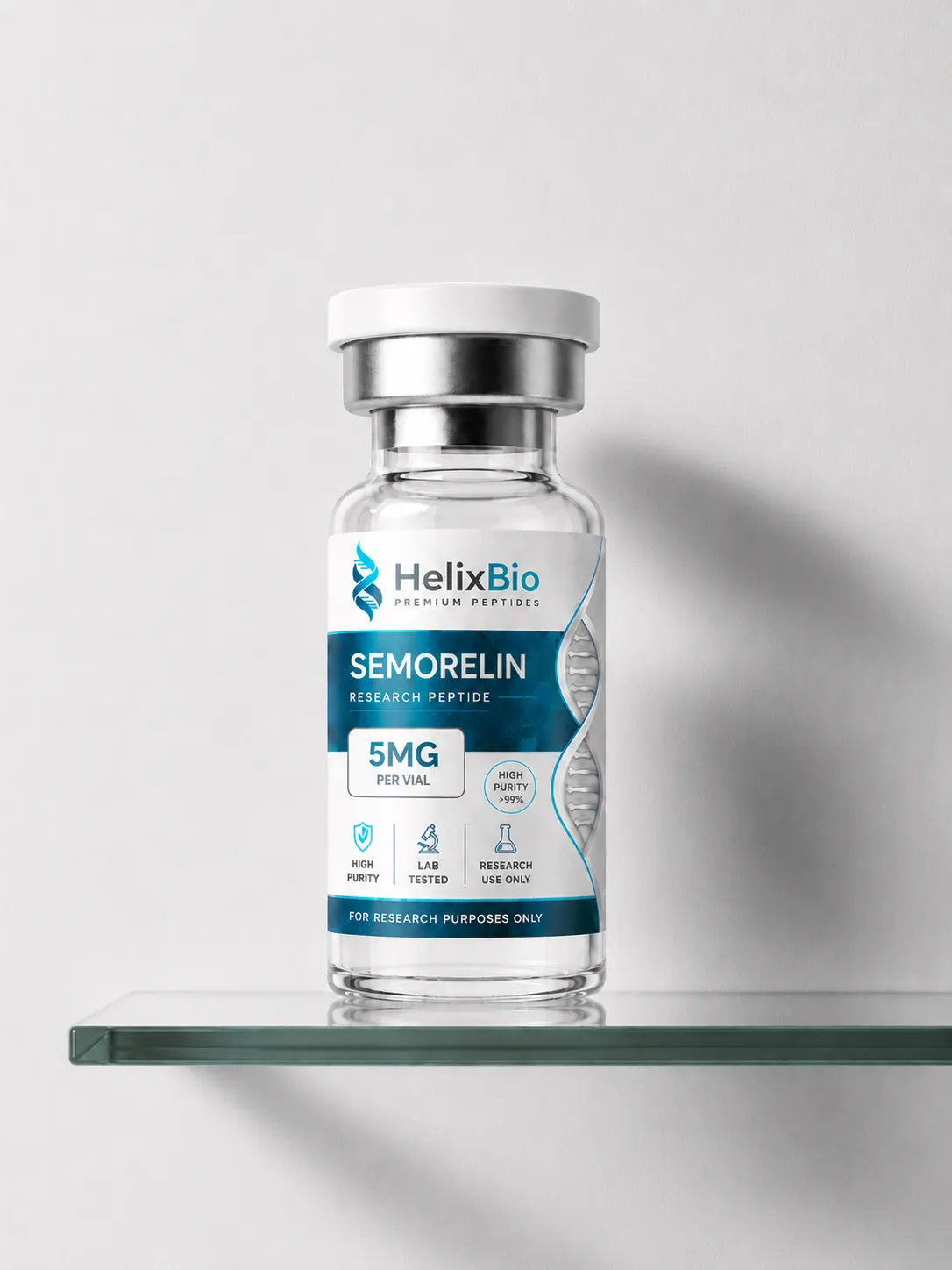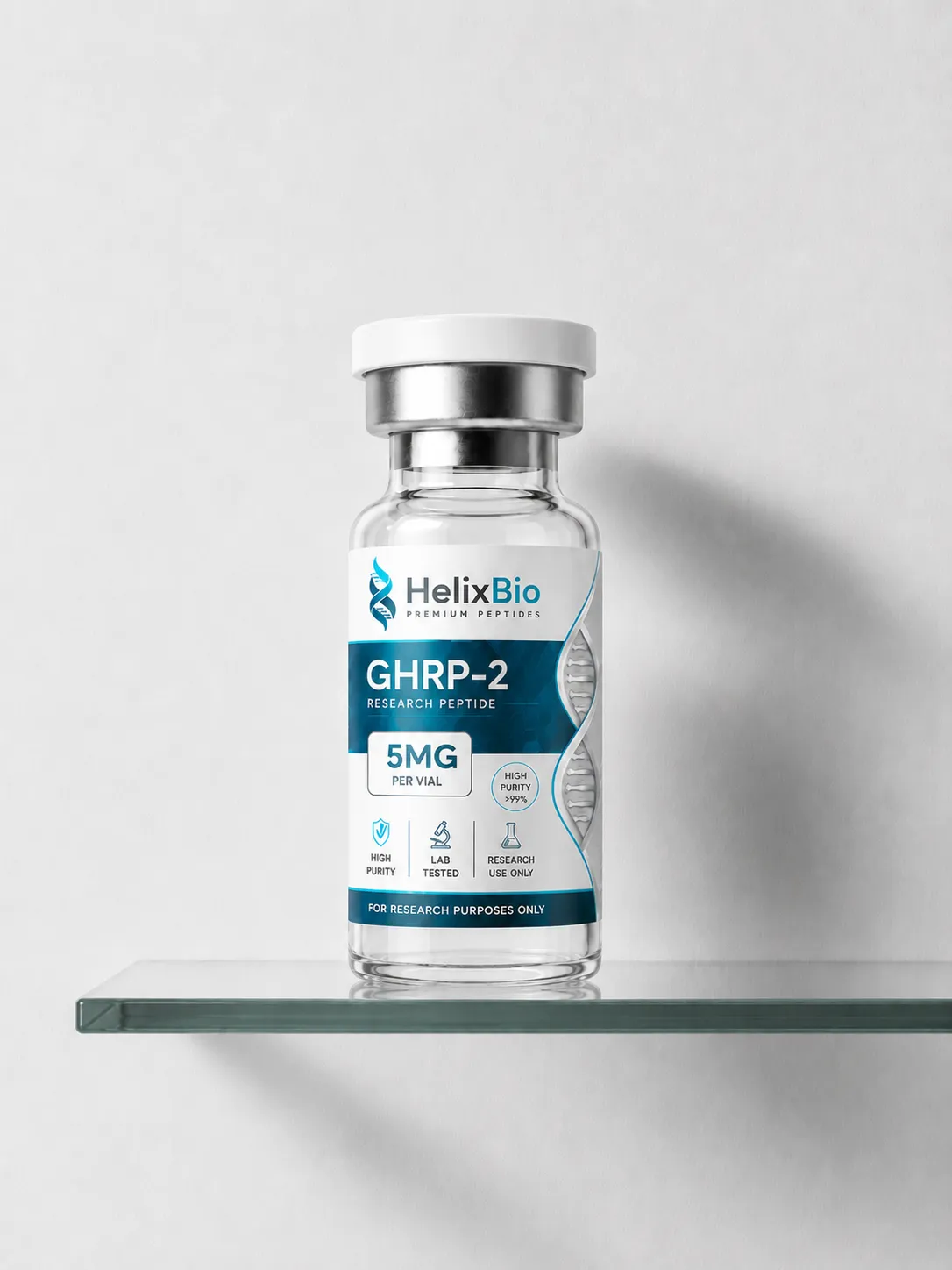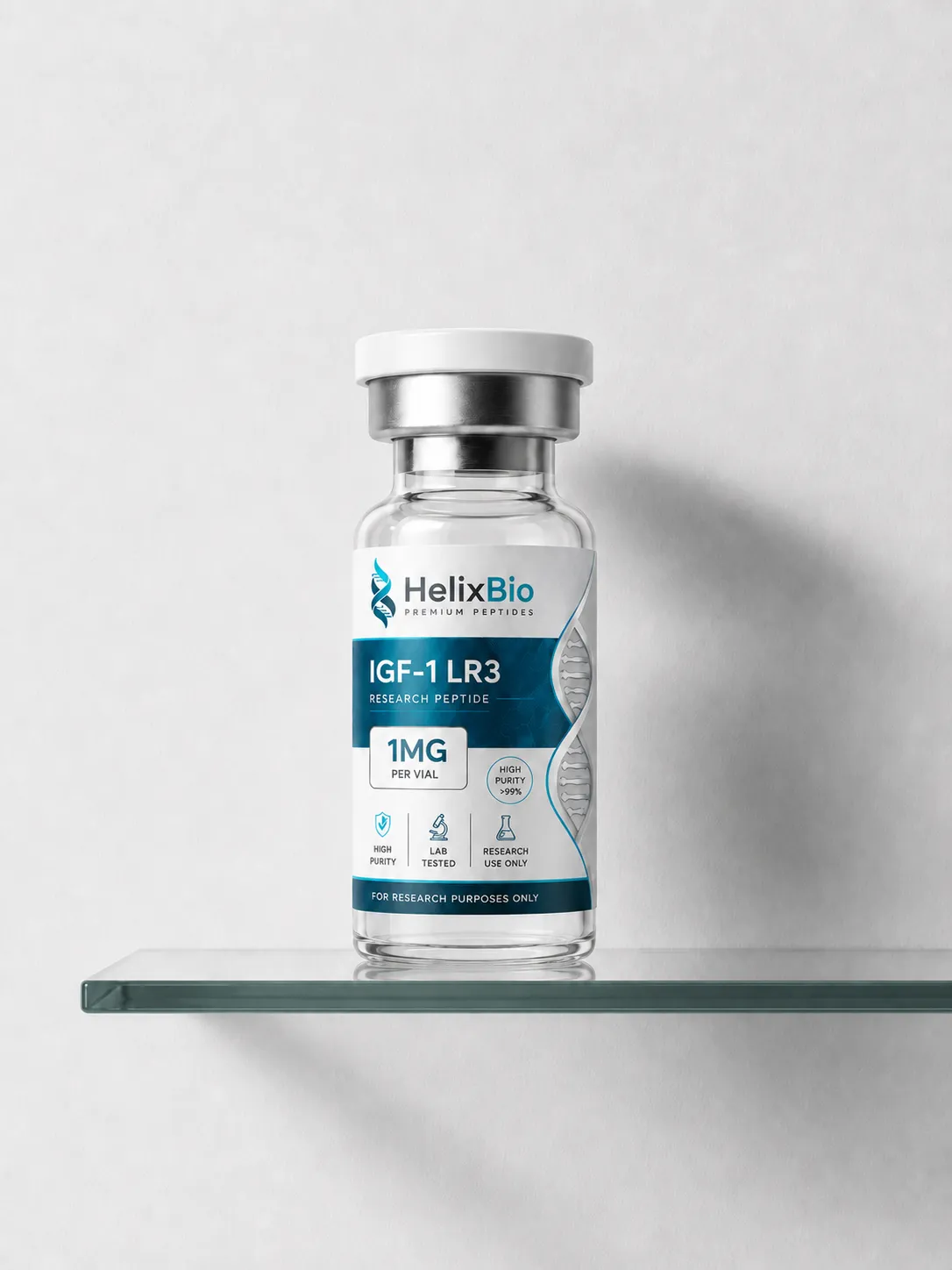
IGF-1 LR3 is a modified analog of insulin-like growth factor 1 (IGF-1) studied in laboratory research involving growth-factor signaling, receptor interactions, cell signaling, and peptide structure-function relationships. The name Long Arginine 3 IGF-1 refers to structural modifications that distinguish IGF-1 LR3 from native IGF-1. Helix Bio provides IGF-1 LR3 as a research-use-only material for qualified laboratory and non-clinical research. It is not intended for human consumption or self-administration.
HPLC certified
Independent analysis
Highest standard
Full traceability
IGF-1 LR3, also known as Long R3 IGF-1 or Long Arginine 3 IGF-1, is a modified form of IGF-1 used as a research tool in studies of growth-factor biology.
Native IGF-1 is a peptide growth factor involved in complex cellular signaling. IGF-1 LR3 has structural modifications designed to alter characteristics such as interactions with IGF-binding proteins, making it useful for researchers studying differences between native IGF-1 and modified IGF-1 analogs.
Primary research areas include:
IGF-1 LR3 is structurally related to native IGF-1 but is not identical to the native molecule. The "LR3" designation refers to the Long Arginine 3 modification. Structural differences between IGF-1 LR3 and native IGF-1 are important in research because molecular structure can influence ligand interactions, binding characteristics, and experimental behavior. For this reason, IGF-1 LR3 should be treated as a distinct research compound rather than simply another name for native IGF-1.
IGF-1 LR3 is relevant to research involving IGF-1 receptor (IGF1R) signaling and cellular signaling pathways. Researchers may investigate how modified IGF-1 analogs interact with IGF-related receptors, how structural modifications influence receptor signaling, differences between native IGF-1 and modified analogs, cellular responses to growth-factor signaling, and relationships between peptide structure and biological activity.
One important research distinction between IGF-1 LR3 and native IGF-1 involves binding-protein interactions. IGF-1 normally exists within a complex biological environment that includes IGF-binding proteins. Modified analogs such as IGF-1 LR3 are studied partly because structural changes can affect these interactions, giving researchers an opportunity to investigate how changes in binding-protein affinity may influence experimental models of IGF-related signaling. This should be interpreted as a laboratory research characteristic, not as a claim about predictable effects in humans.
| Research Characteristic | IGF-1 LR3 | Native IGF-1 |
|---|---|---|
| Molecular relationship | Modified IGF-1 analog | Naturally occurring IGF-1 |
| Structural profile | Contains modifications relative to native IGF-1 | Native molecular structure |
| Binding-protein research | Studied for altered binding characteristics | Naturally interacts with IGF-binding proteins |
| Research focus | Analog structure, signaling and receptor studies | Native IGF-1 biology and signaling |
| Research purpose | Comparative and mechanistic laboratory studies | Studies of native IGF-1 biology |
The key point is that IGF-1 LR3 is not the same molecule as native IGF-1.
IGF-1 LR3 and MGF are both relevant to research involving growth-factor signaling, but they are distinct research peptides with different structures and research contexts. Researchers comparing the two should focus on molecular structure, receptor interactions, signaling pathways, experimental model, research objective, and analytical characterization.
IGF-1 LR3 provides researchers with a defined IGF-1 analog for studying how structural modifications can influence growth-factor-related research systems. It can be particularly relevant when an experimental project requires comparison between a modified IGF-1 analog and native IGF-1 or other growth-factor peptides.
When evaluating an IGF-1 LR3 research supplier, researchers should look beyond a product name or advertised purity percentage. Important quality considerations include clear compound identification, batch-specific analytical documentation, appropriate purity testing, HPLC results where applicable, mass spectrometry characterization where applicable, Certificate of Analysis documentation, transparent sourcing information, and clearly stated research-use-only status. Specific Helix Bio testing claims are published only when supported by current batch documentation.
IGF-1 LR3 is not intended for human consumption, self-administration, diagnosis, treatment, or prevention of disease.
| Field | Detail |
|---|---|
| Product Name | IGF-1 LR3 |
| Alternative Name | Long R3 IGF-1 / Long Arginine 3 IGF-1 |
| Category | Research Peptide |
| Type | Modified IGF-1 analog |
| Research Classification | Research use only |
| Primary Research Area | Growth-factor and cell-signaling research |
| Research Focus | IGF-related receptor signaling, peptide structure-function studies |
| Physical Form | Lyophilized powder |
| Purity | Batch-verified — see current lot's Certificate of Analysis |
| Packaging | Sealed research vial |
| Batch Testing | Verified per current batch documentation |
| Certificate of Analysis | Available for the specific batch |
| Manufacturer/Supplier | Helix Bio |
| Market | United States |
IGF-1 LR3 can be studied in laboratory models investigating interactions involving IGF-related receptors and downstream cellular signaling. Researchers may use modified IGF-1 analogs to explore how molecular changes affect receptor-related experimental outcomes.
Cell signaling is one of the principal research areas identified for IGF-1 LR3, including how growth-factor analogs interact with cellular signaling systems, how structural changes influence experimental responses, how IGF-related signaling differs between experimental models, how receptor-associated pathways respond to different ligands, and how modified peptides compare with native growth factors.
IGF-1 LR3 is relevant to comparative research involving modified IGF-1 analogs, including IGF-1 LR3 vs native IGF-1, IGF-1 LR3 vs MGF, IGF-1 LR3 vs Des(1-3) IGF-1, and IGF-1 analogs vs growth hormone secretagogues. The experimental purpose of each comparison should determine which compound is appropriate for a given research model.
IGF-1 LR3 can also be relevant to studies examining relationships between molecular structure and experimental behavior, including structural modifications, receptor interactions, binding characteristics, peptide stability, analog comparisons, and growth-factor signaling.
High-Performance Liquid Chromatography (HPLC) is commonly used in peptide analytical workflows to separate components within a sample and evaluate chromatographic purity. For research peptides, HPLC results can provide useful information about the composition of a particular batch.
Mass spectrometry can provide molecular-mass information relevant to peptide identity and analytical characterization. Using mass spectrometry alongside chromatographic analysis can provide a more complete analytical picture than relying on a single quality metric.
A Certificate of Analysis (CoA) is batch-specific documentation that may contain information about identity, purity, testing methods, or other analytical characteristics. Researchers purchasing IGF-1 LR3 should verify that a CoA, when provided, corresponds to the exact batch being evaluated.
Third-party testing can add an independent layer of analytical verification when performed by a qualified laboratory. Claims such as "third-party tested" are only published for batches where independent testing has actually been performed and documentation is available.
Storage requirements — including lyophilized peptide stability, reconstitution, refrigeration, and shelf life — should be taken from current Helix Bio documentation rather than assumed, since these can depend on formulation and supplier specifications.
Reconstitution is a laboratory preparation procedure that should be performed according to validated institutional protocols and the applicable product documentation. For safety and compliance, this product page does not provide personal-use dosing, injection instructions, administration schedules, or self-administration guidance.
Helix Bio's IGF-1 LR3 is positioned for the United States research market. Specific shipping times, packaging formats, vial sizes, payment methods, international availability, bulk pricing, and replacement policies should be confirmed from Helix Bio's current policies before ordering.
For laboratory research use only — not for human consumption. IGF-1 LR3 is supplied solely as a research material for qualified laboratory and scientific applications. It is not intended to diagnose, treat, cure, mitigate, or prevent any disease or medical condition. IGF-1 LR3 is not a dietary supplement, food product, or product intended for human use. Researchers and institutions are responsible for complying with applicable federal, state, local, institutional, and laboratory requirements governing the acquisition, handling, storage, and use of research materials. No information on this page should be interpreted as medical advice, dosing guidance, treatment guidance, or a recommendation for human administration.
Knowledge Base
Knowledge Base
Knowledge Base
Knowledge Base
Knowledge Base
Knowledge Base
Knowledge Base
Knowledge Base
Knowledge Base
Knowledge Base
Knowledge Base
Knowledge Base
Knowledge Base
Knowledge Base
Knowledge Base
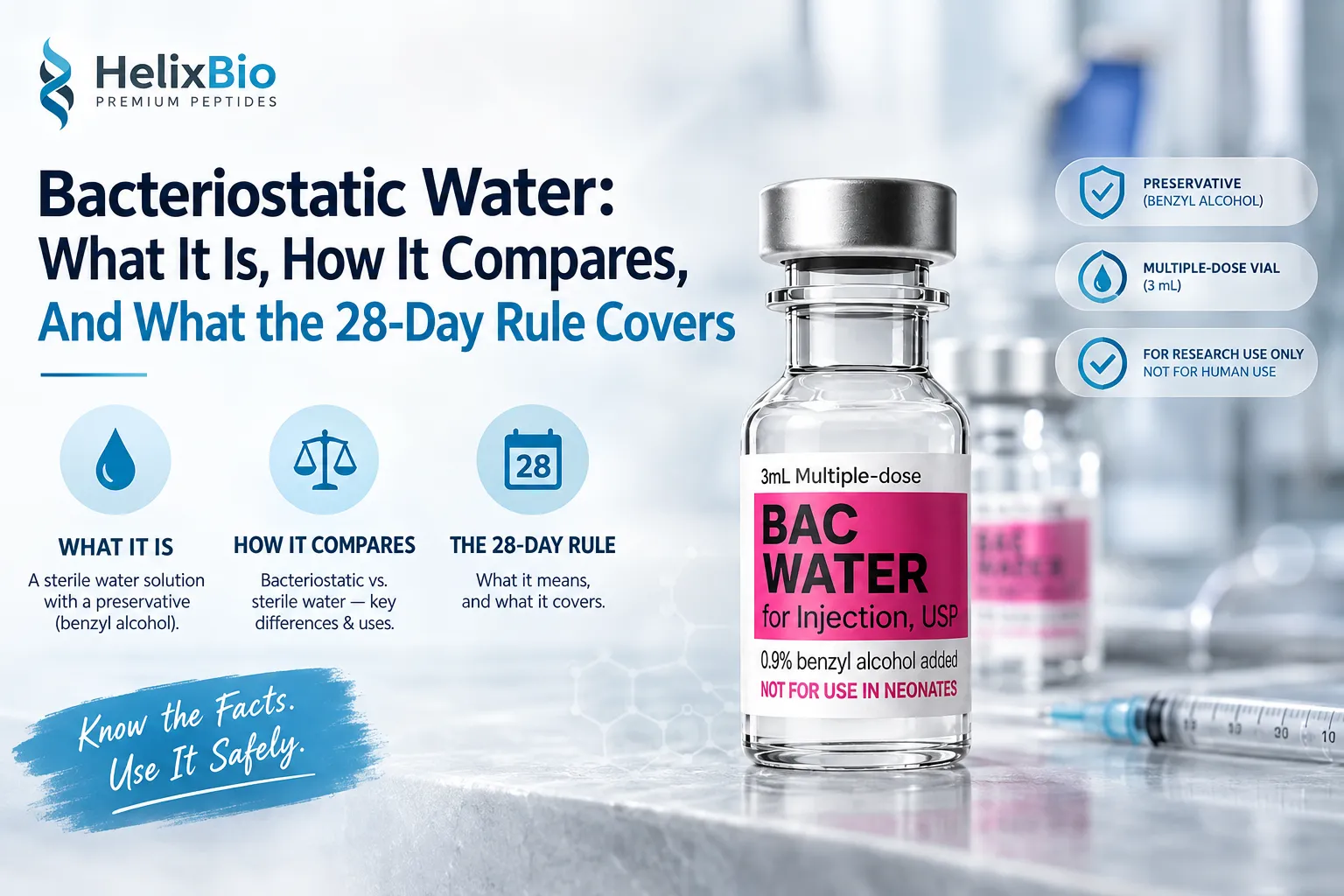
What bacteriostatic water contains, how it differs from sterile water and saline, where the 28-day opened-vial figure comes from, and what a COA can show.
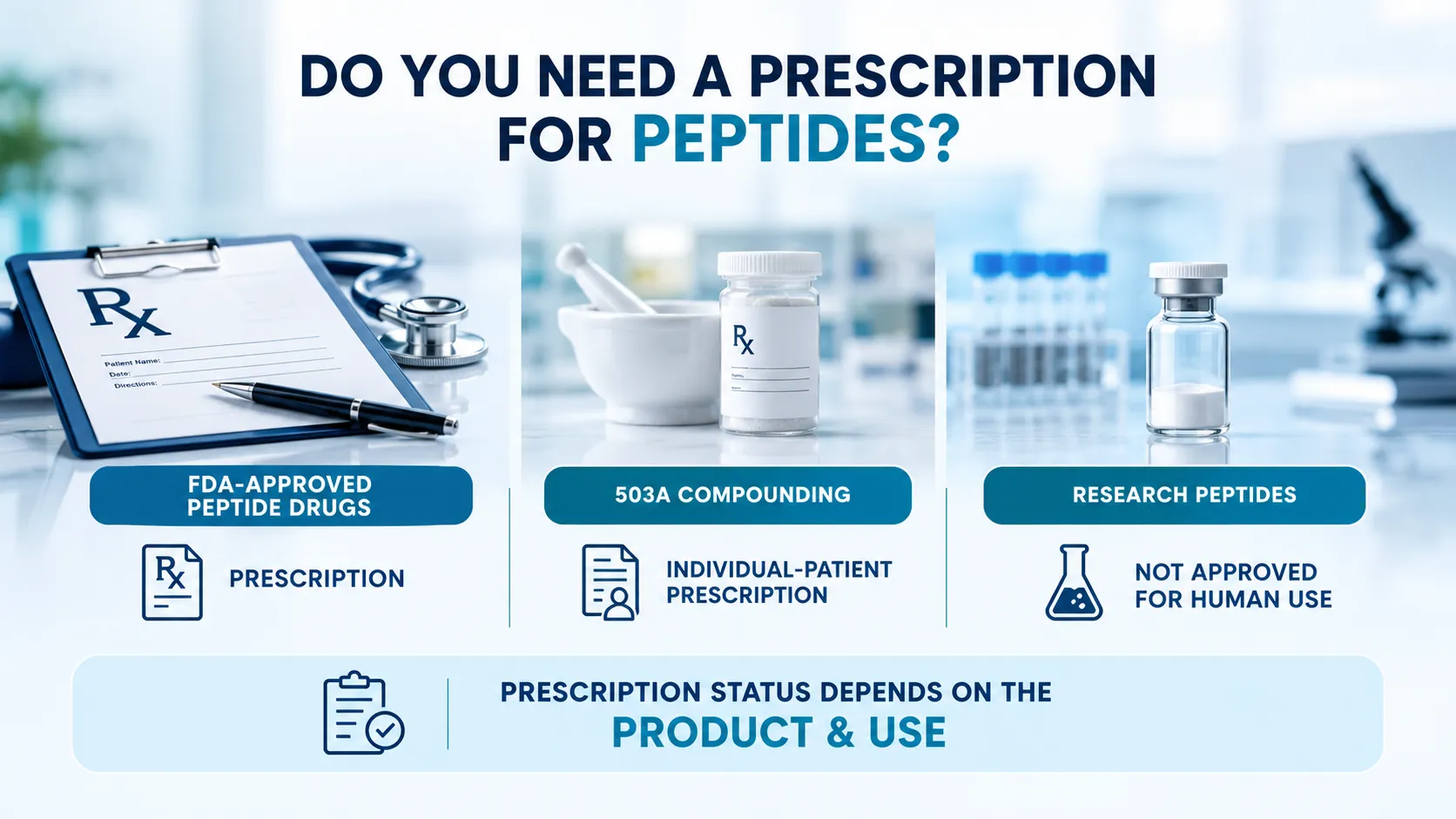
Do you need a prescription for peptides? It depends on the category. See which peptides need one, which do not, and the dated 2026 FDA rules that apply.
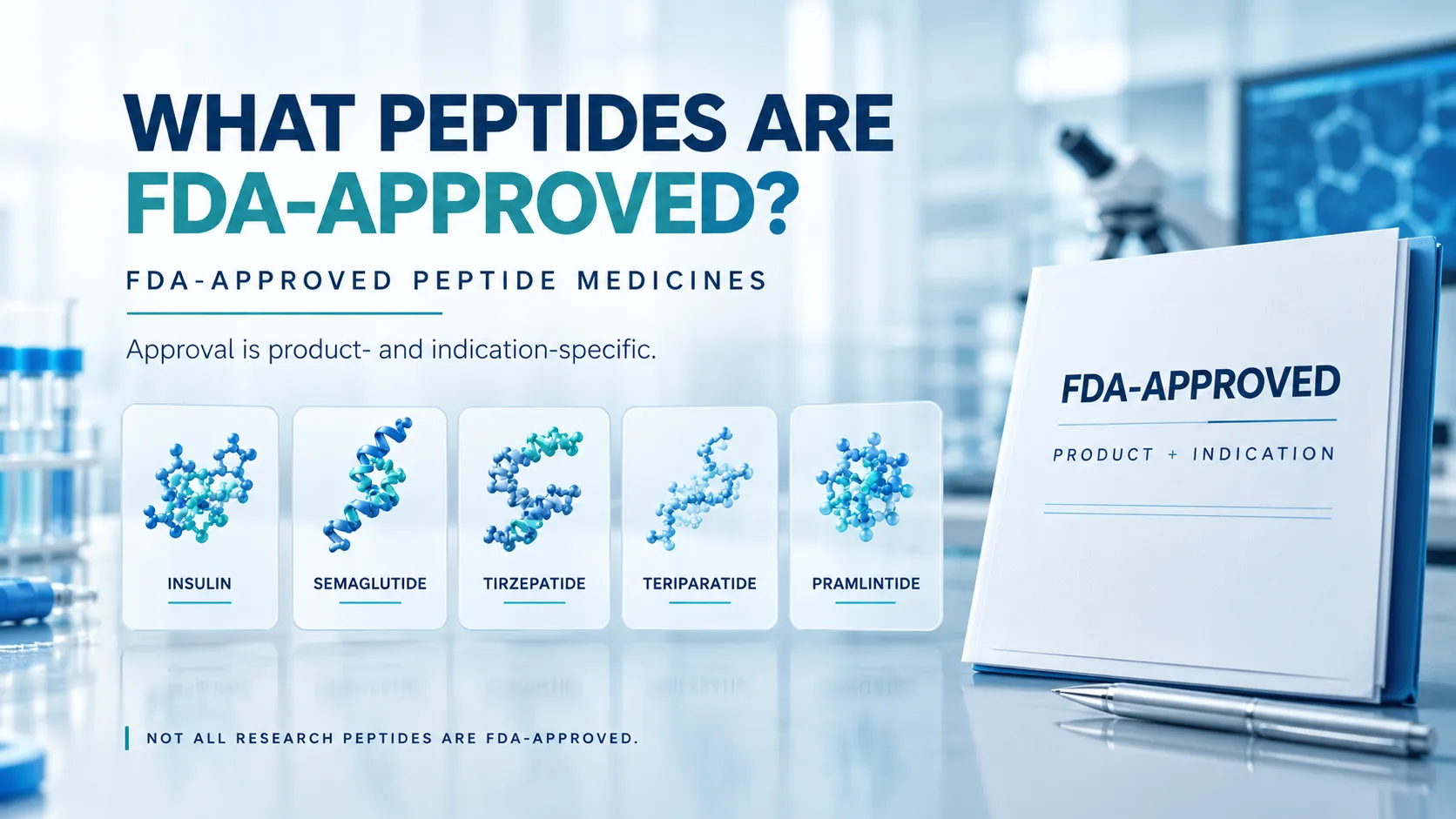
The complete 2026 list of FDA-approved peptides: 47 drugs by category and approval year, which popular peptides are not approved, and pipeline to watch.