- Freeze-dried powder survives shipping at room temperature, which is why most parcels carry no ice pack.
- Surviving transit and staying stable in storage are two different problems with two different answers.
- A vial that feels warm on arrival is normal, and warmth alone is not evidence of damage.
- Once a peptide is in solution, the timeline shortens from months to weeks and refrigeration stops being optional.
- No check you can run at home measures potency, so visual inspection screens for obvious problems only.
Do peptides need to be refrigerated in shipping?
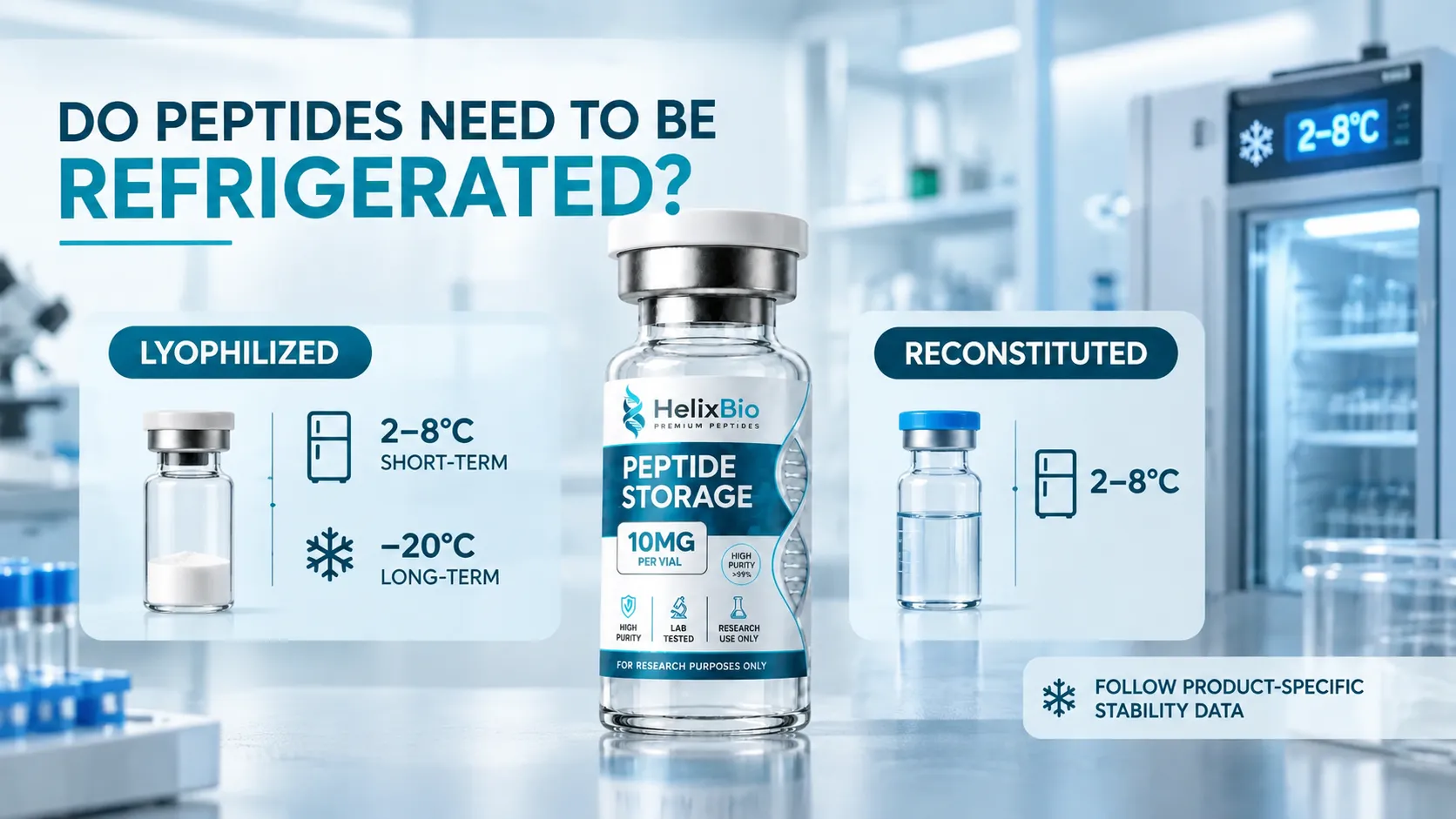
Lyophilized peptides do not need to be refrigerated in transit. Dry powder tolerates a few days at ambient temperature without meaningful loss. Refrigerate the vials once they reach you, at 2 to 8 °C. Reconstituted solutions are the exception, and they belong in the fridge.
The parcel lands on a July afternoon, warm to the touch. There is no ice pack inside and no insulation, just a padded mailer and a small glass vial. It feels like it spent the morning in a delivery van. Anyone unpacking that box for the first time assumes the material is ruined.
It almost certainly has not been ruined. So do peptides need to be refrigerated, and did the missing ice pack cost you anything? This guide answers that directly, then explains the chemistry underneath it. From there it walks through the warm-arrival scenarios buyers actually run into. It also covers how long ambient exposure stays harmless and marks where the evidence runs out.
Why do most peptides ship at room temperature?
Freeze-drying pulls water out of the vial. That single step changes almost everything about how the material behaves inside a shipping box.
Water drives the two degradation pathways that matter most for peptides. Hydrolysis needs water to break peptide bonds apart. Microbial growth needs water too, and neither has much to work with inside a properly lyophilized vial. Take the water away and you remove the fuel for both.
Molecular movement is the second piece. In a dry solid, molecules sit locked in place rather than drifting and colliding. Reactions that need two molecules to meet slow down sharply when neither can travel. Warming the vial does speed those reactions up, following ordinary chemistry. The real question is whether the exposure lasts long enough to matter.
Transit is a short window by comparison. A domestic parcel typically moves in one to three days, which reflects general industry practice rather than a guarantee. Published stability guidance for lyophilized peptides is measured in months and years. Against that scale, seventy-two hours of ambient exposure barely registers.
Cold packs exist to solve a different problem. A gel pack keeps a liquid cold, and liquids are where peptides degrade fast. Packing ice around a sealed vial of dry powder adds weight, cost, and condensation risk. None of that addresses a real failure mode. Suppliers who skip the ice pack on lyophilized product are following the chemistry rather than cutting corners.
Hold on to one distinction for the rest of this guide. Surviving transit is not the same as thriving in storage. The two answers diverge the moment the parcel is opened.
So do peptides need to be refrigerated?
In transit, the answer is usually no. On arrival, yes.
Those two lines do most of the work here. Lyophilized vials belong at 2 to 8 °C for months-scale storage. Around −20 °C is the usual recommendation when material needs to sit for longer than that. Industry guidance commonly cites roughly 12 to 18 months refrigerated and 24 months or more frozen for dry powder. Treat those as guidance ranges rather than expiry dates. Actual stability is sequence-specific and depends on how the vial was made and sealed.
Reconstitution flips every one of those rules. A peptide in solution has water back, so hydrolysis has its fuel again and the clock speeds up. Solutions belong in the fridge, and their useful life is generally counted in weeks rather than months. Our step-by-step reconstitution guide covers the handling side in detail.
Freezing solutions is where the field genuinely disagrees. Durham Peptides advises against frozen storage for aqueous peptide solutions. Their reasoning points to ice crystal formation, concentration gradients during the phase change, and pH shifts as the liquid freezes. They also flag benzyl alcohol in some diluents as a component that changes behavior through freezing. UK Peptides takes the opposite position, recommending that reconstituted material be split into single-use aliquots and frozen, with repeated freeze-thaw cycles avoided.
Both reasonings hold together on their own terms. Aliquoting does reduce how often a vial gets warmed and cooled, and freezing does slow chemistry down. The conservative reading is to keep solutions refrigerated rather than frozen. Use them inside a short window and avoid freeze-thaw cycling entirely. That is guidance drawn from formulation practice rather than settled law, and a supplier's own instructions for a specific product should override any general article.
What does cold chain actually mean?
Cold chain describes an unbroken refrigerated path from the point of manufacture to the door. Every leg stays inside a defined temperature band, and that band gets monitored and documented along the way. Pharmaceutical biologics ship this way because they arrive as liquids with stability requirements attached.
Research peptides sold as lyophilized powder sit in a different category. The dry format removes the reason for a refrigerated path, so ambient shipping is the norm rather than a shortcut.
Marketing has started to blur that line. Some suppliers have begun promoting cold-chain packaging as a differentiator, and the claim sounds reassuring on a product page. Separate the claim from the chemistry before paying extra for it. Insulation and gel packs do real work for liquids. For a sealed vial of powder on a short domestic route, they do very little.
Three situations are where cold chain earns its keep. Reconstituted solutions in transit need it, because water plus warmth is the combination that actually degrades material. Long international shipping deserves consideration too. A parcel sitting in customs for two weeks accumulates far more exposure than a three-day domestic run. Sequences known to be heat-sensitive or oxidation-prone are the third case, and your supplier should be the one identifying those products.
What should you do if peptides arrive warm?
Warm arrivals generate more worry than any other shipping question. Four scenarios cover almost all of them.
Warm to the touch after a summer delivery
Nothing here is cause for concern. A small glass vial holds very little thermal mass, so it matches the surrounding air within minutes. Warmth in your hand means the vial reached the temperature of the truck or the porch. Refrigerate it on arrival and carry on as usual.
It sat in a hot mailbox all day
Cumulative exposure is higher in this case, and honesty demands a different answer. A metal mailbox in direct sun can run well above ambient air temperature for hours. That said, a single day of heat still sits at the short end of a months-scale stability window for dry powder. Run the visual checks below and refrigerate promptly. Note the incident in case a later batch comes from the same lot.
There was no ice pack in the box
Missing ice is expected for lyophilized product. An ice pack usually signals that a supplier is shipping something in solution. It can also mean they have chosen insulation as a marketing feature. Its absence says nothing about purity, handling, or quality. What matters far more is whether the vial arrived sealed and whether the lot has documentation behind it.
How to tell if heat actually damaged the vial
Several signs are worth looking for, and each one is coarse rather than conclusive.
Color change is the first thing to check. Fresh lyophilized peptide is usually white to off-white, so yellowing or browning suggests chemical change. Texture of the cake is the second signal. A dry cake should look dry, and hard clumping or a melted and re-set appearance points to moisture or heat. Visible moisture inside the vial is a clear problem. Lyophilization exists to remove that water in the first place. After reconstitution, cloudiness or floating particles in a solution that should be clear is the last screen.
Here is the honest limit on all four. Not one of those checks measures potency. Material can look perfect and still have lost activity, and a certificate of analysis does not close that gap. A COA reports what testing found for a sample from that lot at the time of testing. It says nothing about what happened to your specific vial in transit. Purity on a COA is also not the same thing as safety or stability.
How long can peptides sit at room temperature?
Scale is what makes this question answerable. Three timeframes behave very differently from each other.
Hours of handling are trivial for lyophilized powder. Letting a vial sit on a bench, or reach room temperature before opening, causes no meaningful loss. Days of transit are tolerated, which is the whole basis for ambient shipping. Weeks to months of room-temperature storage is where measurable degradation shows up. That longer window is the one refrigeration exists to protect.
General chemistry explains the pattern well enough. Reaction rates roughly double for every 10 °C rise in temperature, a rule of thumb from the Arrhenius relationship. Use it to understand direction, never to calculate a number for a specific vial. Real peptides have specific residues, moisture content, and packaging. The rule of thumb accounts for none of that. Our guide to peptide half-life versus shelf life separates the two clocks people tend to conflate.
What changes when you travel with peptides?
Powder travels better than most people expect. Lyophilized material tolerates ambient conditions for the length of an ordinary trip. A weekend away or a week of travel poses little risk to sealed vials. Solutions are the real constraint, because a reconstituted vial wants refrigeration and a suitcase cannot provide it.
Flying deserves a little planning ahead. Carry-on beats checked baggage, since cargo holds swing across a wider temperature range than the cabin does. Keep vials in their original labeled packaging so anyone inspecting them can see what they are. On security rules, check current TSA guidance before you fly rather than relying on a general article. TSA publishes specific allowances for medications and medically necessary liquids. Research material is not a medication, so that exemption should not be assumed to apply.
Road trips fail in one predictable way. A kit left on a sunny car seat or in a closed trunk can sit far above outdoor temperature. An insulated bag solves that problem cheaply. Keeping the kit in the cabin rather than the trunk solves most of the rest.
What to check the day peptides arrive
Five steps take about two minutes and save a great deal of second-guessing later.
- Inspect the outer packaging and the vial seal before anything else.
- Photograph any crack, leak, or crushed packaging while the box is still intact, since claim windows are short.
- Look at the powder itself against the color and texture signs described above.
- Move the vials into refrigeration promptly rather than leaving the box on a counter.
- Log the arrival date along with the batch or lot number for future reference.
What happens next matters as much as the inspection does. Our guide to storage mistakes that destroy potency covers the errors that cost people far more material than shipping ever does.
Shipping format versus temperature, at a glance
One table settles most of what people ask about this topic. Read down the format column first, because format drives every other answer in the row. Notice that the four cells in the last column all say some version of the same thing. Tolerance is a statement about how a class of material generally behaves, not a measurement of the vial in your hand. That gap is the single most useful thing to understand about shipping and refrigeration, and no table or article can close it for you.
Shipping format | Transit temperature | Likely tolerance | What the evidence does not prove |
|---|---|---|---|
Lyophilized powder | Ambient, roughly 15 to 25 °C | Well tolerated across a typical one to three day transit | That any individual vial retained full potency |
Lyophilized powder | Elevated, roughly 30 to 40 °C | Generally tolerated for short exposure; risk rises with duration | Where the exact threshold for measurable loss sits |
Lyophilized powder | Shipped with cold packs | Tolerated; adds condensation risk on unsealing | That cold packs improve outcomes for dry powder |
Reconstituted solution | Ambient | Poorly tolerated; degradation runs faster in solution | How much activity remains after a specific exposure |
Reconstituted solution | Shipped with cold packs | Better tolerated, and the case where cold chain earns its cost | That refrigeration halts degradation rather than slowing it |
What the evidence doesn't prove
Three limits deserve stating plainly here.
No test you can run at home measures potency. Color, texture, and clarity checks screen for gross problems only. Material that passes all three can still have degraded. Published stability figures are guidance ranges rather than guarantees, and they vary by sequence, formulation, and packaging. A figure quoted for one peptide does not transfer to another.
Much of the reasoning in this article rests on general chemistry. The water-removal argument, the restricted-mobility argument, and the temperature-rate relationship are well established in formulation science. Peptide-specific studies that measure real transit conditions are far less common than the confident claims made about them. Where this guide leans on a general principle rather than a transit study, it says so.
The bottom line
One rule covers nearly every case you will meet. Ambient transit is fine for lyophilized powder, and cold storage is for keeping rather than for shipping. A warm box with no ice pack is what correct handling of dry material looks like. It is not a sign that something went wrong.
Refrigerate vials when they arrive, and watch color and texture rather than trusting the absence of an ice pack. Treat reconstituted solutions as a far shorter clock than the powder they came from. For the errors that cost more material than shipping ever will, read our guide to storage mistakes that destroy potency. Check the batch certificate of analysis for the lot you received as well.
Helix Bio Chem materials are supplied for laboratory research use only, and not for human use, veterinary use, or compounding. Nothing in this article constitutes medical advice, dosing guidance, or administration instructions. Research material is not a drug and has not been evaluated for safety or effectiveness in humans.
Frequently Asked Questions
For lyophilized powder over short periods, very little happens at all. Dry material tolerates ambient conditions for days without meaningful loss. Leave it at room temperature for weeks or months and degradation becomes measurable. Refrigeration is the storage standard for that reason. Reconstituted solutions behave differently, and leaving those unrefrigerated shortens their usable life considerably.
Warmth speeds up chemical reactions, and how much that matters depends on temperature and duration. A vial that reached air temperature during delivery is normal and needs no action beyond refrigeration. Sustained high heat across days or weeks carries real risk instead. Check color, texture, and clarity, while remembering that those checks screen for obvious damage only.
Think about this in three separate scales. Hours of handling are trivial for dry powder. Days of transit are routinely tolerated, which is why ambient shipping is standard practice across the industry. Weeks to months of room-temperature storage is where loss becomes measurable. Reconstituted solutions sit at the short end of every one of those windows.
Lyophilized peptides usually ship at ambient temperature and without ice packs, because dry powder needs no refrigerated path. Solutions are the case where cold shipping does real work. Some suppliers offer insulated or cold packaging as a differentiator. Check whether it addresses the product you are actually buying, or whether it simply sounds reassuring on the page.
The format answer applies here as it does to other peptides. Lyophilized CJC-1295 tolerates ambient transit and belongs in refrigeration once it arrives, with frozen storage for longer holds. Reconstituted material needs the fridge and a shorter timeline. Stability is sequence-specific, so follow the storage conditions stated on the documentation for your particular lot.
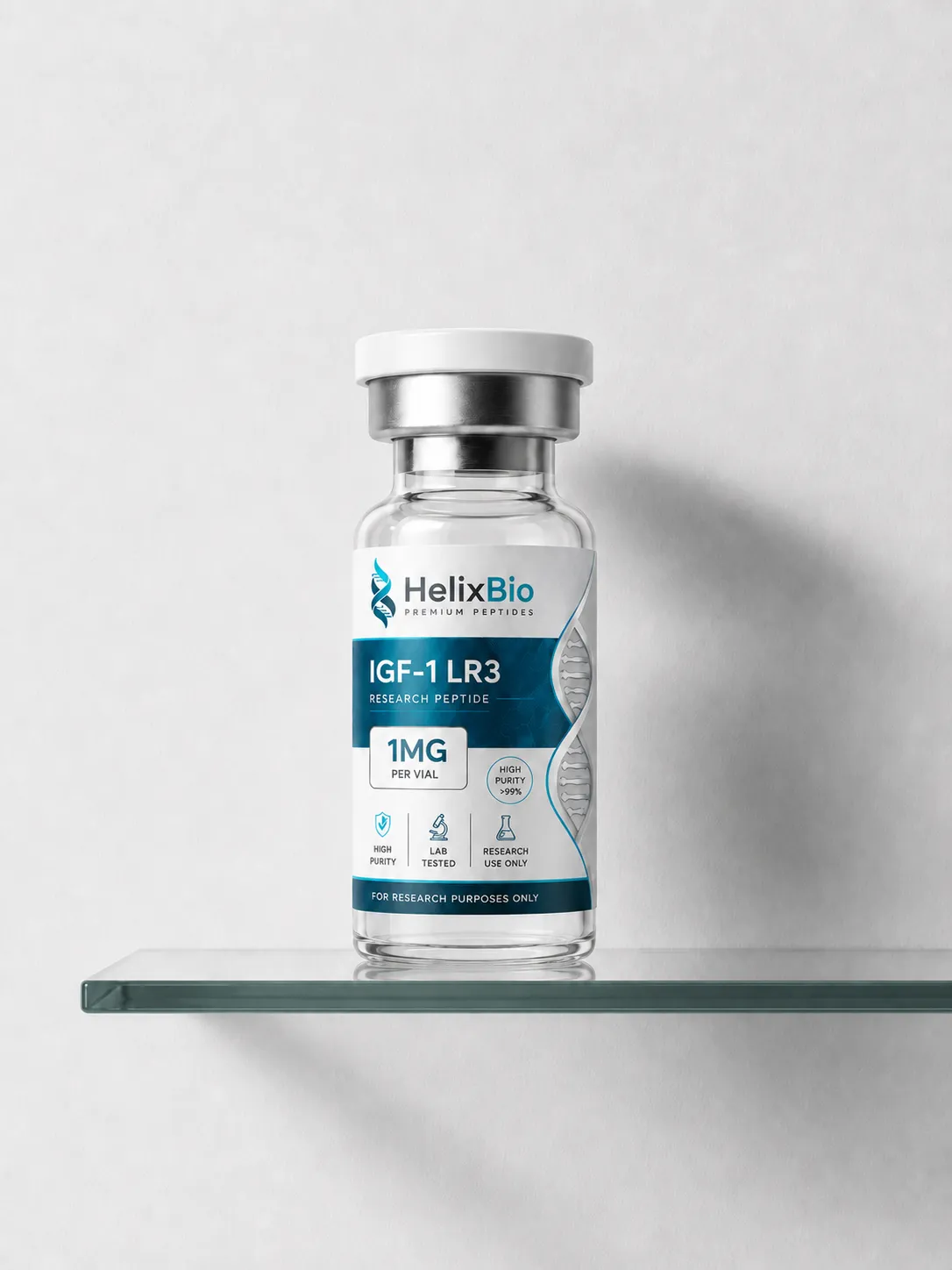
Yes on arrival, and the same transit logic holds for the lyophilized form. IGF-1 LR3 is a larger molecule than most short research peptides, and larger sequences generally carry more conformational fragility. That argues for tighter handling rather than looser handling. Refrigerate promptly and treat any reconstituted material as short-lived.
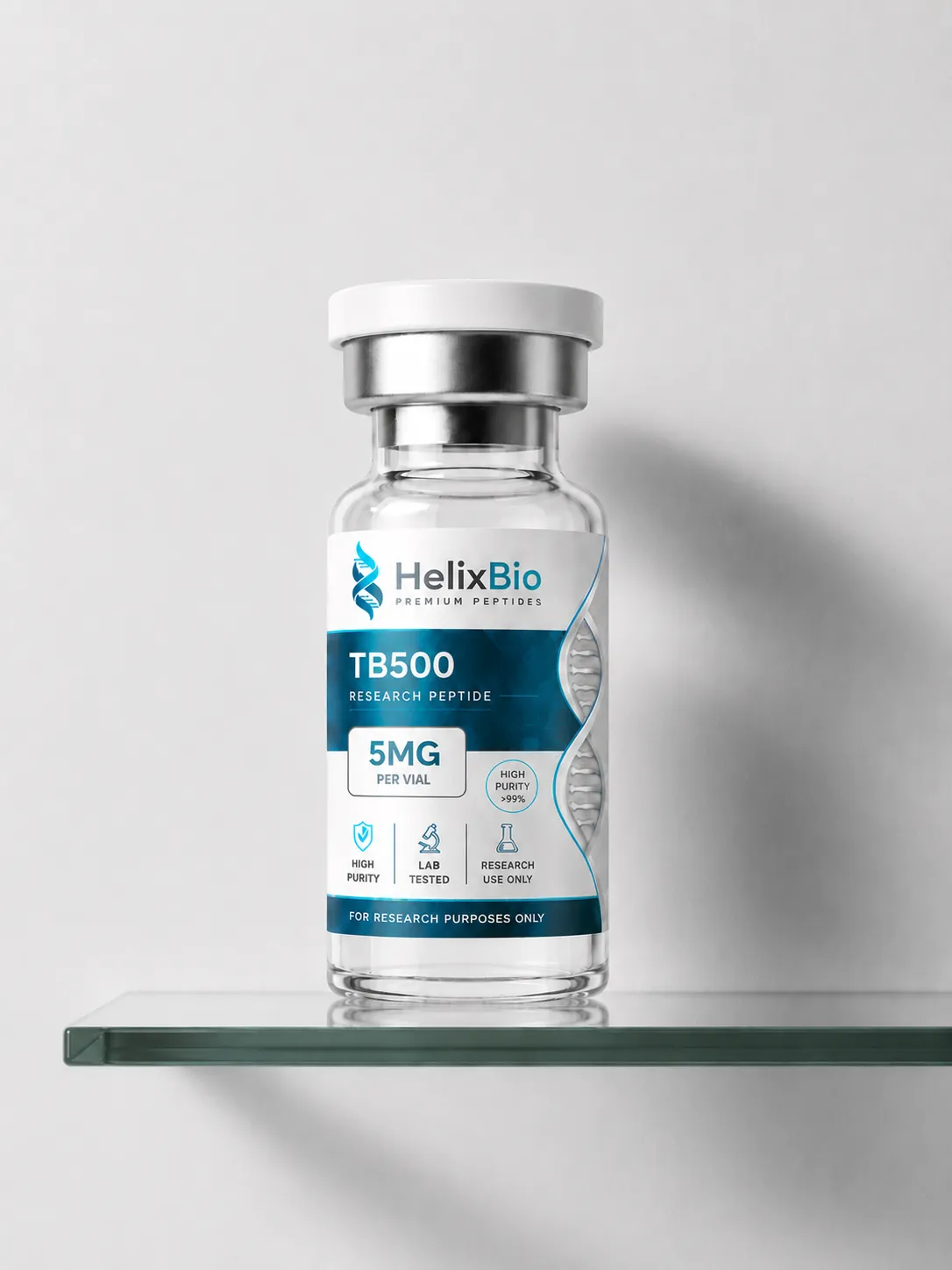
Lyophilized TB-500 follows the standard pattern here. It tolerates ambient transit and belongs at 2 to 8 °C once received. One complication is worth knowing about. Material sold under the TB-500 name varies in what it actually contains. Identity documentation for your specific lot therefore matters as much as storage conditions do.
Keep lyophilized vials in their original labeled packaging. Carry them in the cabin rather than checked baggage, since cargo holds swing across wider temperatures. Avoid leaving a kit in a hot car for any length of time. Reconstituted solutions are the hard case, because nothing in a suitcase substitutes for a fridge. Check current security rules before flying.
Guidance genuinely splits on this question. Durham Peptides advises against freezing aqueous solutions, citing ice crystal formation, pH shifts during the phase change, and benzyl alcohol behavior in some diluents. UK Peptides recommends aliquoting and freezing instead. The conservative position is refrigeration rather than freezing, a short use window, and no freeze-thaw cycling.
Helix Bio Chem Team
Research & Product Team
Our in-house team tracks published peptide research and translates it into clear, source-cited summaries for the research community.
Reviewed by in-house research chemists
support@helixbiochem.com