- Lyophilized peptides remain stable for 12-24 months at -20C but degrade rapidly once reconstituted
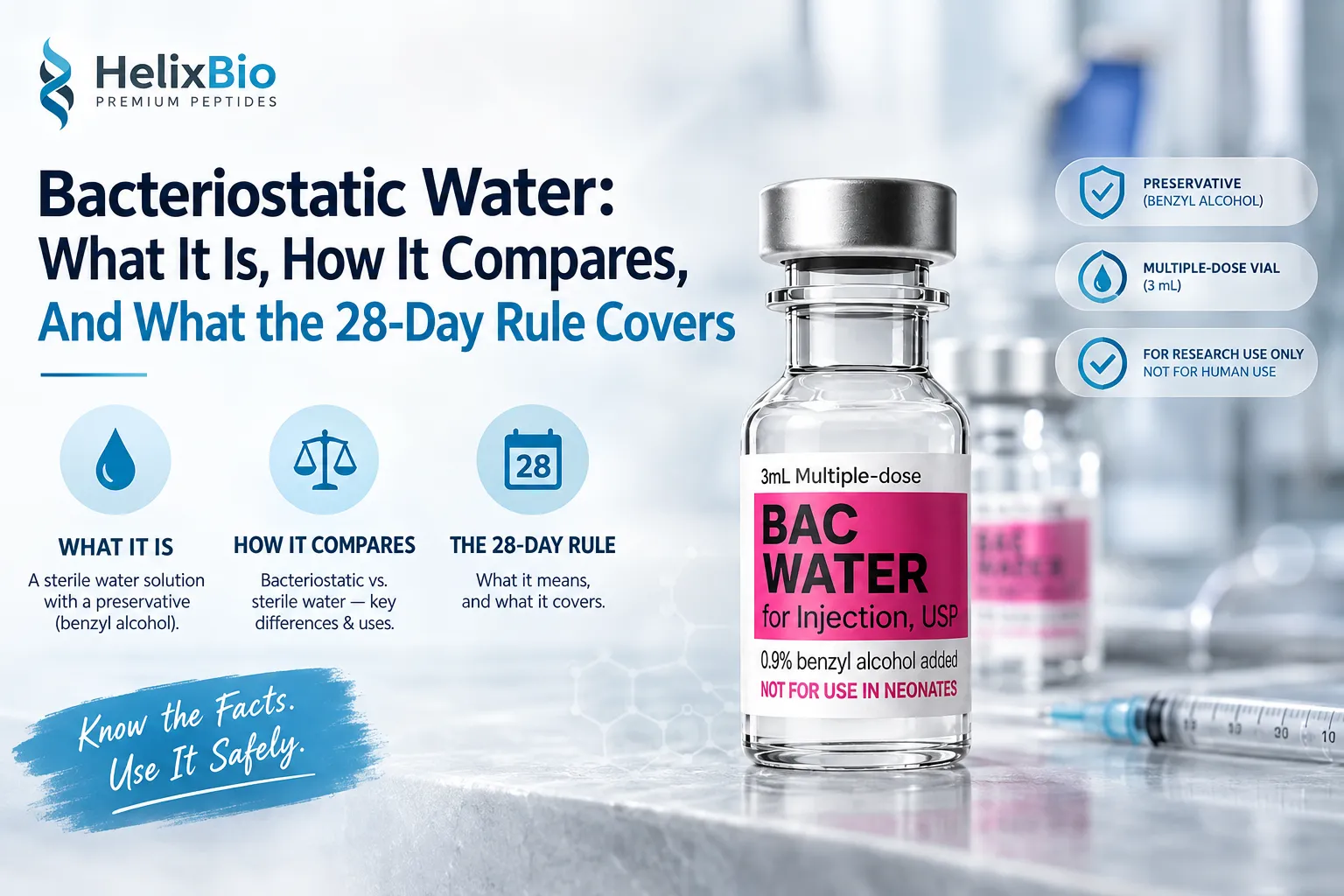
- Bacteriostatic water contains 0.9% benzyl alcohol for multi-dose use up to 28 days
- Reconstituted peptides should be stored at 2-8C for short-term or -20C for medium-term stability
- Gentle swirling rather than vortexing prevents mechanical peptide degradation during reconstitution
- Aliquoting reconstituted peptides reduces freeze-thaw cycles and contamination risk
- Peptide concentration should be calculated based on research protocol requirements (typically 1-10 mg/mL)
- Hydrophobic peptides may require alternative solvents like DMSO for complete dissolution
- Visual inspection for turbidity, precipitation, or discoloration indicates potential degradation
Peptide reconstitution is one of the most critical steps in laboratory research workflows, yet it remains a source of significant variability in experimental outcomes. Proper reconstitution techniques directly impact peptide stability, solubility, and research reliability across in-vitro and preclinical study models.
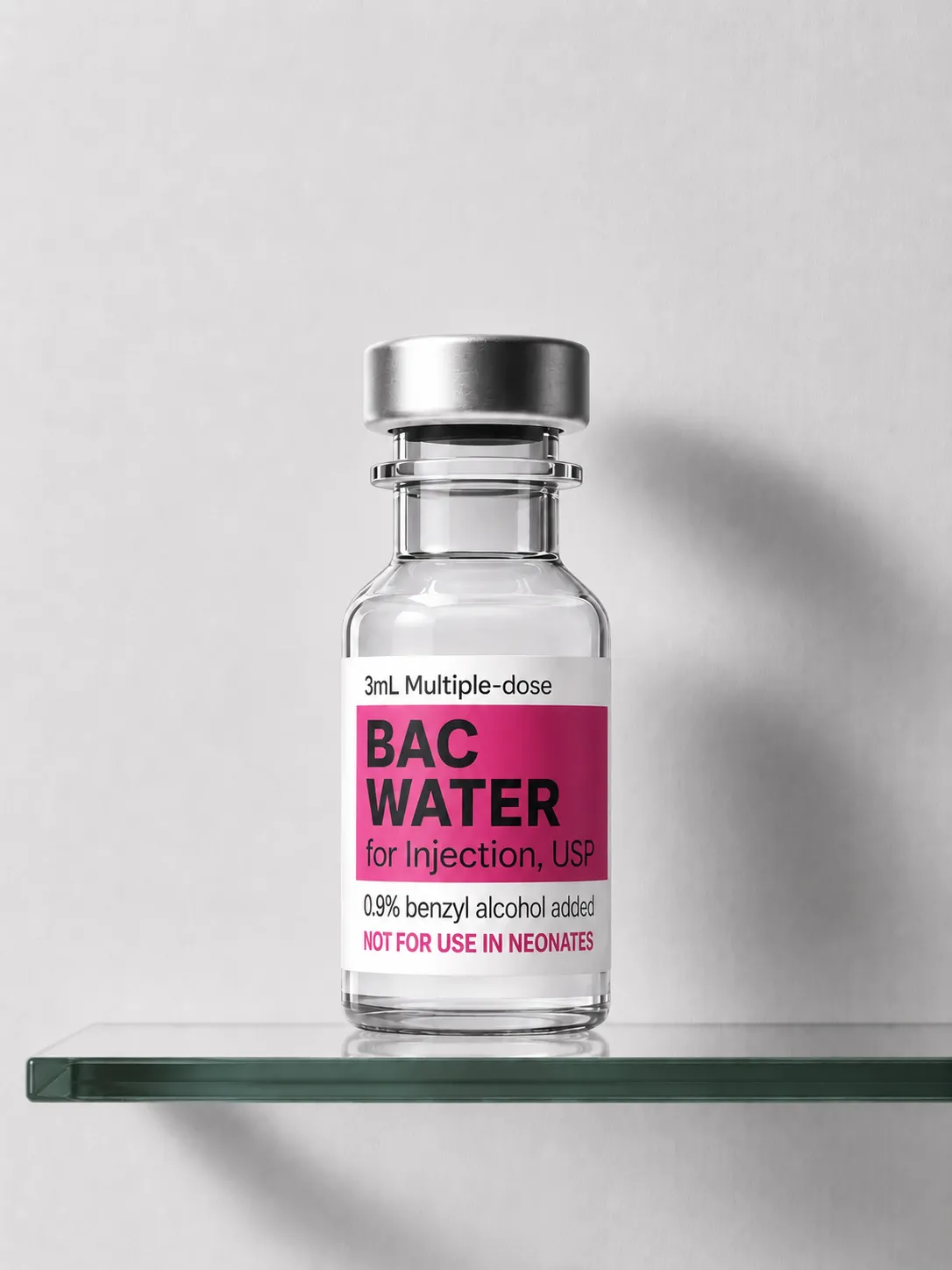
BAC Water
LABORATORY SOLVENT
BAC Water, also known as Bacteriostatic Water, is a sterile, non-pyrogenic solution commonly used in laboratory environments for the reconstitution and dilution of research peptides and other compatible research compounds. It contains Water for Injection with 0.9% benzyl alcohol as a preservative to help inhibit bacterial growth after the vial has been opened. Helix Bio supplies research-grade BAC Water exclusively for laboratory, analytical, and educational research applications. This product is intended for research use only and is not intended for human or veterinary use.
This guide provides evidence-based protocols for reconstituting lyophilized peptides using bacteriostatic water, including concentration calculations, storage parameters, and stability timelines validated by peptide manufacturers and analytical laboratories.
Understanding Lyophilized Peptides
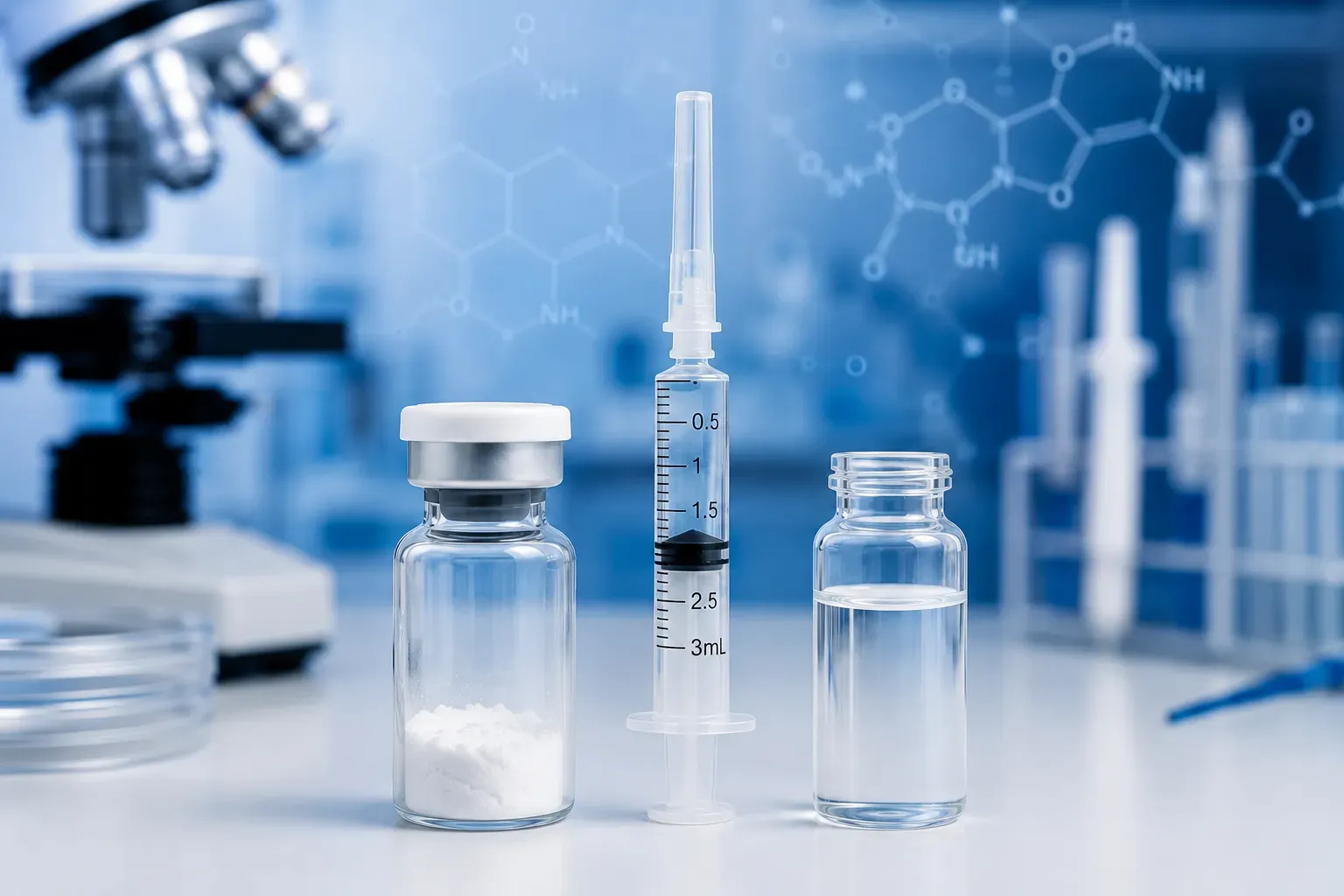
Lyophilization, or freeze-drying, is the standard preservation method for research peptides. This process removes water content while maintaining molecular structure, allowing peptides to remain stable for extended periods when stored correctly.
Why Peptides Are Lyophilized
Peptides in their native aqueous state are susceptible to hydrolysis, microbial contamination, and conformational degradation. Lyophilization addresses these challenges by:
- Removing water molecules that facilitate degradation reactions
- Creating a stable powder form suitable for long-term storage at -20C
- Enabling precise dosing and concentration control during reconstitution
- Reducing risk of bacterial or fungal growth during storage
The lyophilized state typically maintains peptide integrity for 12-24 months when stored at -20C in sealed vials, compared to days or weeks once reconstituted.
Physical Characteristics of Lyophilized Peptides
Lyophilized peptides appear as white to off-white powders or fluffy cakes in glass vials. The appearance can vary based on:
- Peptide sequence and amino acid composition
- Counterions present (acetate, hydrochloride, trifluoroacetate)
- Lyophilization process parameters
- Residual moisture content (typically <5%)
Researchers should note that color variations from white to slightly yellow may occur without indicating degradation, though significant discoloration warrants analytical verification.
Bacteriostatic Water: Composition and Function
Bacteriostatic water for injection (BWFI) is the most common reconstitution solvent for research peptides. Understanding its composition helps researchers make informed decisions about solvent selection.
What Is Bacteriostatic Water?
Bacteriostatic water is sterile water containing 0.9% benzyl alcohol as a bacteriostatic preservative. The benzyl alcohol concentration inhibits microbial growth in multi-dose vials, making it suitable for peptides requiring multiple withdrawals over time.
Key properties include:
- pH range: 4.5 to 7.0 (compatible with most peptide structures)
- Osmolarity: Approximately isotonic with physiological fluids
- Preservative: 0.9% benzyl alcohol (9 mg/mL)
- Sterility: Filter-sterilized and packaged in sealed vials
Why Bacteriostatic Water Over Sterile Water?
The critical difference lies in the preservative system. Sterile water for injection (SWFI) contains no antimicrobial agents, meaning:
- Single-use only to prevent contamination
- No protection against introduced microorganisms
- Shorter usable window once vial is opened
Bacteriostatic water provides:
- Multi-dose capability (up to 28 days per USP guidelines)
- Benzyl alcohol inhibition of bacterial growth
- Extended usability for research protocols requiring repeated sampling
Benzyl alcohol may affect certain peptide structures or research applications. For single-use reconstitution or benzyl alcohol-sensitive protocols, sterile water or 0.9% sodium chloride may be preferable alternatives.
Alternative Reconstitution Solvents
Depending on research requirements, alternative solvents include:
- Sterile Water for Injection (SWFI): For single-use applications
- 0.9% Sodium Chloride: For isotonic requirements
- Acetic Acid Solutions (0.1-1%): For poorly soluble basic peptides
- DMSO: For hydrophobic peptides (typically <10% final concentration)
- Buffer Solutions: For pH-sensitive research applications
Solvent selection should align with peptide properties and downstream research protocols.
Reconstitution Protocol: Step-by-Step
Following standardized reconstitution procedures minimizes variability and preserves peptide integrity. This protocol applies to most lyophilized research peptides.
Pre-Reconstitution Preparation
- Verify peptide identity and quantity from the certificate of analysis
- Inspect lyophilized cake for discoloration or collapse
- Allow vial to reach room temperature before opening (prevents condensation)
- Prepare clean workspace with 70% isopropyl alcohol for surface disinfection
- Gather materials: bacteriostatic water, sterile syringes, alcohol swabs, target storage vials
Calculating Reconstitution Volume
Determining the appropriate bacteriostatic water volume requires knowing:
- Peptide mass in vial (typically 2mg, 5mg, 10mg)
- Desired final concentration (commonly 1-10 mg/mL)
- Dosing precision requirements for research protocol
Concentration formula:
Volume (mL) = Peptide Mass (mg) / Target Concentration (mg/mL)
Example calculations:
Peptide Mass | Target Concentration | Bacteriostatic Water Volume |
|---|---|---|
2 mg | 2 mg/mL | 1.0 mL |
5 mg | 5 mg/mL | 1.0 mL |
10 mg | 2 mg/mL | 5.0 mL |
10 mg | 5 mg/mL | 2.0 mL |
10 mg | 10 mg/mL | 1.0 mL |
Higher concentrations (5-10 mg/mL) reduce storage volume but may increase aggregation risk. Lower concentrations (1-2 mg/mL) improve solubility for some peptides but require larger storage volumes.
For quick concentration math without manual calculation, use our peptide reconstitution calculator.
Reconstitution Technique
- Disinfect vial tops with alcohol swabs and allow to air dry
- Draw calculated bacteriostatic water volume into sterile syringe
- Add solvent slowly to the side of the peptide vial (avoid direct stream onto lyophilized cake)
- Gently swirl the vial until complete dissolution occurs (do not vortex or shake vigorously)
- Inspect solution for clarity and absence of particulates
- Transfer to storage vials if aliquoting, or store in original vial
Gentle swirling rather than vortexing prevents mechanical stress on peptide bonds and reduces foaming, which can denature sensitive peptide structures.
Troubleshooting Solubility Issues
Some peptides exhibit poor solubility in bacteriostatic water. Strategies include:
- Increase solvent volume to lower concentration
- Add 0.1% acetic acid for basic peptides (arginine, lysine-rich sequences)
- Warm to room temperature (never exceed 25C during reconstitution)
- Extended gentle mixing (15-30 minutes with occasional swirling)
- Consider alternative solvents (DMSO, dilute HCl, ammonium bicarbonate)
Persistent insolubility may indicate peptide degradation or require specialized solubilization protocols.
Storage Conditions and Stability Timelines
Post-reconstitution storage parameters significantly impact peptide stability and research reproducibility. Temperature, light exposure, and container material all influence degradation rates.
Temperature Requirements
Reconstituted peptides:
- Short-term (1-7 days): 2-8C (refrigerator)
- Medium-term (1-4 weeks): -20C (freezer)
- Long-term (>1 month): -80C (ultra-low freezer)
Lyophilized peptides:
- Optimal: -20C or lower in sealed, desiccated vials
- Acceptable: 2-8C for <6 months
- Avoid: Room temperature storage beyond 2-4 weeks
Stability Timelines by Storage Condition
Storage Temperature | Expected Stability | Notes |
|---|---|---|
Room Temperature (20-25C) | 1-7 days | Only for immediate use |
Refrigerator (2-8C) | 14-28 days | Most common short-term storage |
Freezer (-20C) | 1-3 months | Standard medium-term storage |
Ultra-low (-80C) | 6-12 months | Best for long-term reconstituted storage |
Lyophilized (-20C) | 12-24 months | Optimal pre-reconstitution storage |
These timelines assume proper reconstitution technique, sterile conditions, and appropriate container materials. Even correctly reconstituted peptides can lose potency prematurely if handled poorly afterward — see our breakdown of common peptide storage mistakes for the errors that most often shorten these windows.
Aliquoting Strategies
Dividing reconstituted peptide into single-use aliquots provides:
- Reduced freeze-thaw cycles (major degradation pathway)
- Minimized contamination risk from repeated vial access
- Consistent concentration across research experiments
- Efficient workflow for longitudinal studies
Recommended aliquot volumes: 50-200 microliters depending on research protocol requirements.
Container Material Considerations
Peptide adsorption to container surfaces can reduce effective concentration. Best practices include:
- Glass vials: Minimal adsorption, preferred for long-term storage
- Polypropylene tubes: Acceptable for short-term storage
- Avoid: Polystyrene and certain plastics with high peptide binding
- Low-binding tubes: Available for sensitive applications
Surface treatment (siliconization) further reduces adsorption for critical applications.
Degradation Pathways and Prevention
Understanding peptide degradation mechanisms enables proactive stability preservation.
Primary Degradation Mechanisms
Hydrolysis:
- Peptide bond cleavage by water molecules
- Accelerated by extreme pH and elevated temperature
- Prevented by lyophilization and low-temperature storage
Oxidation:
- Methionine, cysteine, tryptophan, and histidine residues susceptible
- Catalyzed by light, metal ions, and dissolved oxygen
- Mitigated by inert atmosphere storage and antioxidant additives
Deamidation:
- Asparagine and glutamine conversion to acidic forms
- pH and temperature dependent
- Minimized by neutral pH storage conditions
Aggregation:
- Intermolecular association forming insoluble complexes
- Promoted by high concentration, agitation, and freeze-thaw cycles
- Reduced by optimal concentration and gentle handling
Signs of Peptide Degradation
Researchers should monitor for:
- Solution turbidity or precipitate formation
- Color changes (yellow to brown discoloration)
- Reduced biological activity in research assays
- HPLC peak shifts or new impurity peaks
- Mass spectrometry evidence of modification
Analytical verification (HPLC, mass spectrometry) provides definitive degradation assessment.
Quality Control and Verification
Implementing quality control measures ensures research reliability and data integrity.
Pre-Use Verification
- Visual inspection: Clarity, color, particulate matter
- Concentration verification: UV spectrophotometry or amino acid analysis
- Purity assessment: HPLC chromatography when available
- Documentation: Record reconstitution date, concentration, storage conditions
Stability Monitoring
For critical research applications:
- Periodic sampling: Test aliquots at defined intervals
- Activity assays: Functional validation of peptide integrity
- Analytical testing: HPLC or mass spectrometry at study endpoints
- Comparative analysis: Fresh vs. stored peptide performance
Peptides showing signs of degradation (precipitation, discoloration, activity loss) should not be used in research protocols. Degraded peptides introduce variability and compromise data quality.
Common Reconstitution Mistakes
Avoiding these frequent errors improves research outcomes:
- Using incorrect solvent volume (concentration errors)
- Vortexing instead of swirling (mechanical degradation)
- Room temperature storage of reconstituted peptides
- Multiple freeze-thaw cycles without aliquoting
- Contaminated syringes or vials (microbial introduction)
- Ignoring solubility limitations (aggregation and precipitation)
- Extended storage beyond stability timelines
- Inadequate documentation of reconstitution parameters
Systematic adherence to validated protocols minimizes these risks.
Special Considerations for Specific Peptides
Certain peptide classes require modified reconstitution approaches.
Hydrophobic Peptides
- May require organic solvents (DMSO, acetonitrile) for initial solubilization
- Dilute into aqueous buffer after complete dissolution
- Consider sonication (brief, low-power) if insoluble
- Monitor for aggregation during storage
Cysteine-Containing Peptides
- Susceptible to oxidation and disulfide bond formation
- Consider reducing agents (TCEP, DTT) for research applications
- Store under inert atmosphere when possible
- Avoid metal contamination
Long Peptides (>30 amino acids)
- Slower dissolution kinetics
- May require extended mixing time
- Higher aggregation propensity
- Consider lower reconstitution concentrations
Modified Peptides
- Phosphorylated, glycosylated, or lipidated peptides may have unique solubility profiles
- Consult manufacturer guidelines for specific recommendations
- Analytical verification particularly important for modified sequences
Regulatory and Compliance Considerations
Research peptide handling must align with institutional and regulatory requirements.
Documentation Requirements
- Certificate of analysis for each peptide lot
- Reconstitution records (date, concentration, solvent, operator)
- Storage temperature logs
- Stability testing data when available
- Disposal records for expired or degraded materials
Safety Considerations
While research peptides are not intended for human use, standard laboratory safety applies:
- Personal protective equipment (gloves, lab coat, eye protection)
- Chemical fume hood for lyophilized powder handling
- Proper waste disposal per institutional guidelines
- Material safety data sheet (MSDS) review
Conclusion
Proper peptide reconstitution is fundamental to research quality and reproducibility. By following evidence-based protocols for bacteriostatic water selection, concentration calculation, storage conditions, and stability monitoring, researchers can maximize peptide integrity and experimental reliability.
Key success factors include:
- Accurate concentration calculations
- Gentle reconstitution technique
- Appropriate temperature storage
- Aliquoting to prevent freeze-thaw damage
- Regular quality verification
- Comprehensive documentation
Researchers should consult specific peptide manufacturer guidelines and institutional protocols for compound-specific requirements. For compound-specific reconstitution context, see our research guide on GLP-1 and GIP agonists.
Frequently Asked Questions
Reconstituted peptides stored at 2-8C typically remain stable for 14-28 days. At -20C, stability extends to 1-3 months. Lyophilized peptides stored at -20C maintain integrity for 12-24 months. Stability varies by peptide sequence and storage conditions.
Yes, sterile water for injection (SWFI) can be used for single-dose reconstitution. However, it lacks the 0.9% benzyl alcohol preservative, so reconstituted peptides must be used immediately or aliquoted and frozen to prevent microbial contamination.
Optimal concentration depends on the peptide and research application. Common ranges are 1-10 mg/mL. Higher concentrations (5-10 mg/mL) reduce storage volume but may increase aggregation risk. Lower concentrations (1-2 mg/mL) improve solubility for difficult peptides.
Vortexing creates mechanical shear forces that can denature peptide structures, cause foaming, and promote aggregation. Gentle swirling allows dissolution without mechanical stress, preserving peptide integrity and biological activity in research models.
Use the formula: Volume (mL) = Peptide Mass (mg) / Target Concentration (mg/mL). For a 5mg peptide vial at 5 mg/mL concentration, add 1.0 mL bacteriostatic water. Adjust volume based on desired final concentration for your research protocol.
Multiple freeze-thaw cycles accelerate peptide degradation through aggregation and conformational changes. Best practice is to aliquot reconstituted peptides into single-use volumes before freezing, limiting each aliquot to one freeze-thaw cycle.
Try gentle swirling for extended periods (15-30 minutes), warming to room temperature, or reducing concentration by adding more solvent. For hydrophobic peptides, consider 0.1% acetic acid or small amounts of DMSO. Persistent insolubility may indicate degradation.
Bacteriostatic water is compatible with most research peptides. However, benzyl alcohol may affect certain peptide structures or research applications. For benzyl alcohol-sensitive protocols, use sterile water or 0.9% sodium chloride for single-use reconstitution.
For long-term storage, aliquot reconstituted peptides into single-use volumes and store at -80C for up to 6-12 months. For medium-term storage (1-3 months), -20C is acceptable. Always protect from light and minimize freeze-thaw cycles.
Degradation indicators include solution turbidity, visible precipitate, color changes from clear to yellow or brown, reduced activity in research assays, and new peaks on HPLC analysis. Degraded peptides should not be used in research protocols.
Co-reconstitution is possible but requires compatibility verification. Different peptides may have varying solubility profiles, stability characteristics, and interaction potentials. For research integrity, separate reconstitution and storage is recommended unless specific compatibility data exists.
Sterile technique is critical to prevent microbial contamination, especially for multi-use vials. Use alcohol swabs on vial tops, sterile syringes, and work in a clean environment. Contamination can degrade peptides and introduce variability in research results.
- 01Bachem. Handling and Storage Guidelines for Peptides. 2026.
- 02JPT. How to Store Peptides | Best Practices for Researchers. 2026.
- 03Pure Tested Peptides. Peptide Reconstitution, Storage, and Stability: A Complete Research Protocol Guide. 2026.
- 04Peptide Mind. Peptide Reconstitution: Complete Research Guide (2026).
- 05The Peptide Guides. Peptide Storage & Handling: Complete Guide. 2026.
Helix Bio Chem Team
Research & Product Team
Our in-house team tracks published peptide research and translates it into clear, source-cited summaries for the research community.
Reviewed by in-house research chemists
support@helixbiochem.com