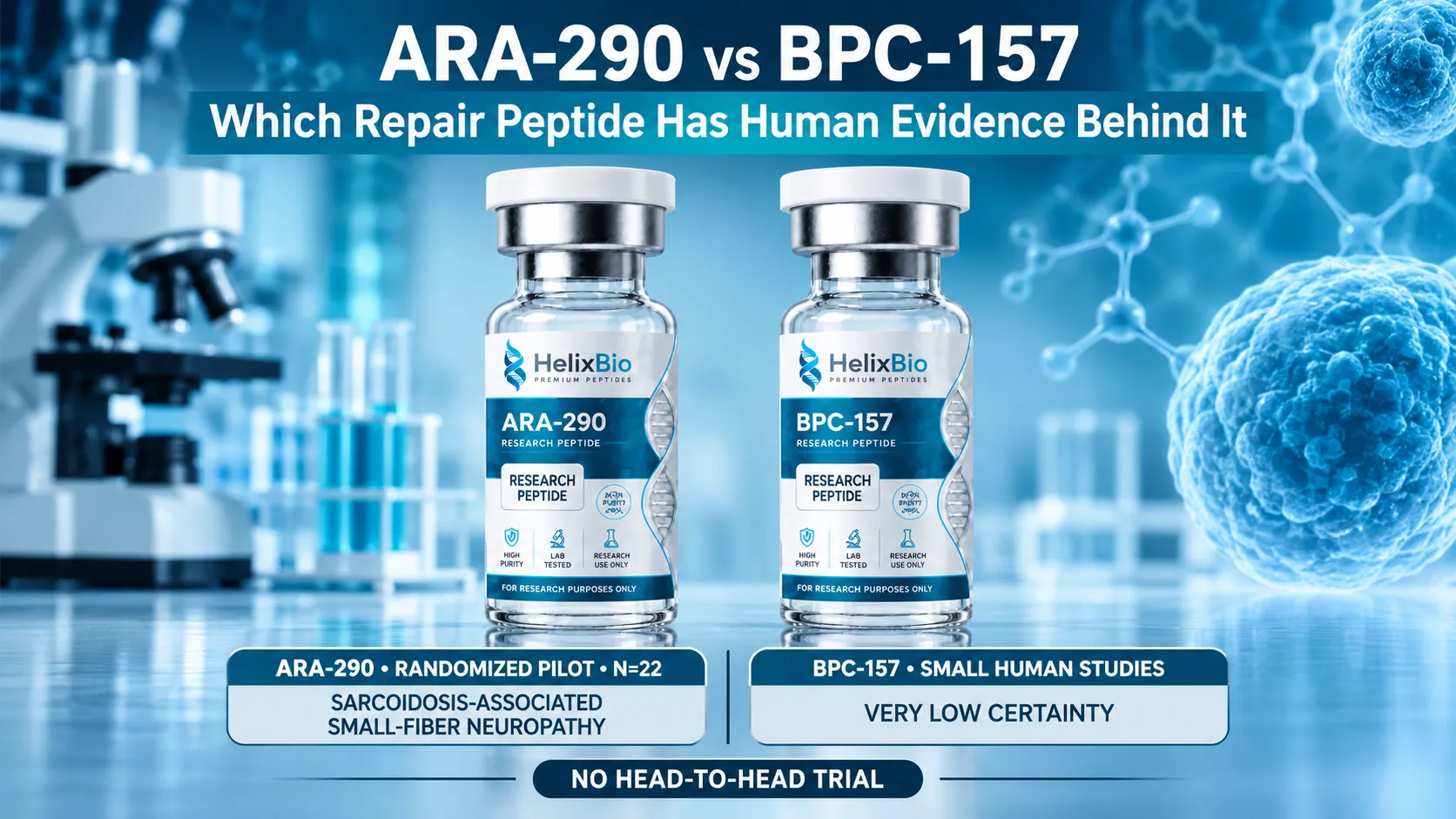
- ARA-290 (cibinetide) has six published human studies totaling roughly 217 participants, including randomized placebo-controlled trials, checked against PubMed in November 2026.
- BPC-157's human record, per a 2026 systematic review, is three small uncontrolled studies covering 30 participants, rated very low certainty; its preclinical literature is far larger.
- No head-to-head trial compares ARA-290 and BPC-157, so the only defensible comparison is evidence quality, not which compound works better.
- Pain intensity did not separate from placebo in any controlled ARA-290 trial; what improved were symptom scores, pain interference, and the surrogate endpoint corneal nerve fiber area.
- In the 64-patient dose-ranging trial, only the 4 mg arm significantly improved corneal nerve fiber area (+697 µm², p=0.012); the higher 8 mg dose did not.
- Neither compound is FDA or EMA approved for any indication; ARA-290's orphan and Fast Track designations are not approvals, and its 503A Category 3 listing is not a safety finding.
- Cibinetide is not named on the WADA 2026 Prohibited List, but innate repair receptor agonists are prohibited as a class under S2.1.5 at all times.
- ARA-290 development is stalled: no new trial has started since April 2016, no Phase 3 was ever registered, and all five therapeutic studies involved the developer's founders or employees as authors.
The short answer
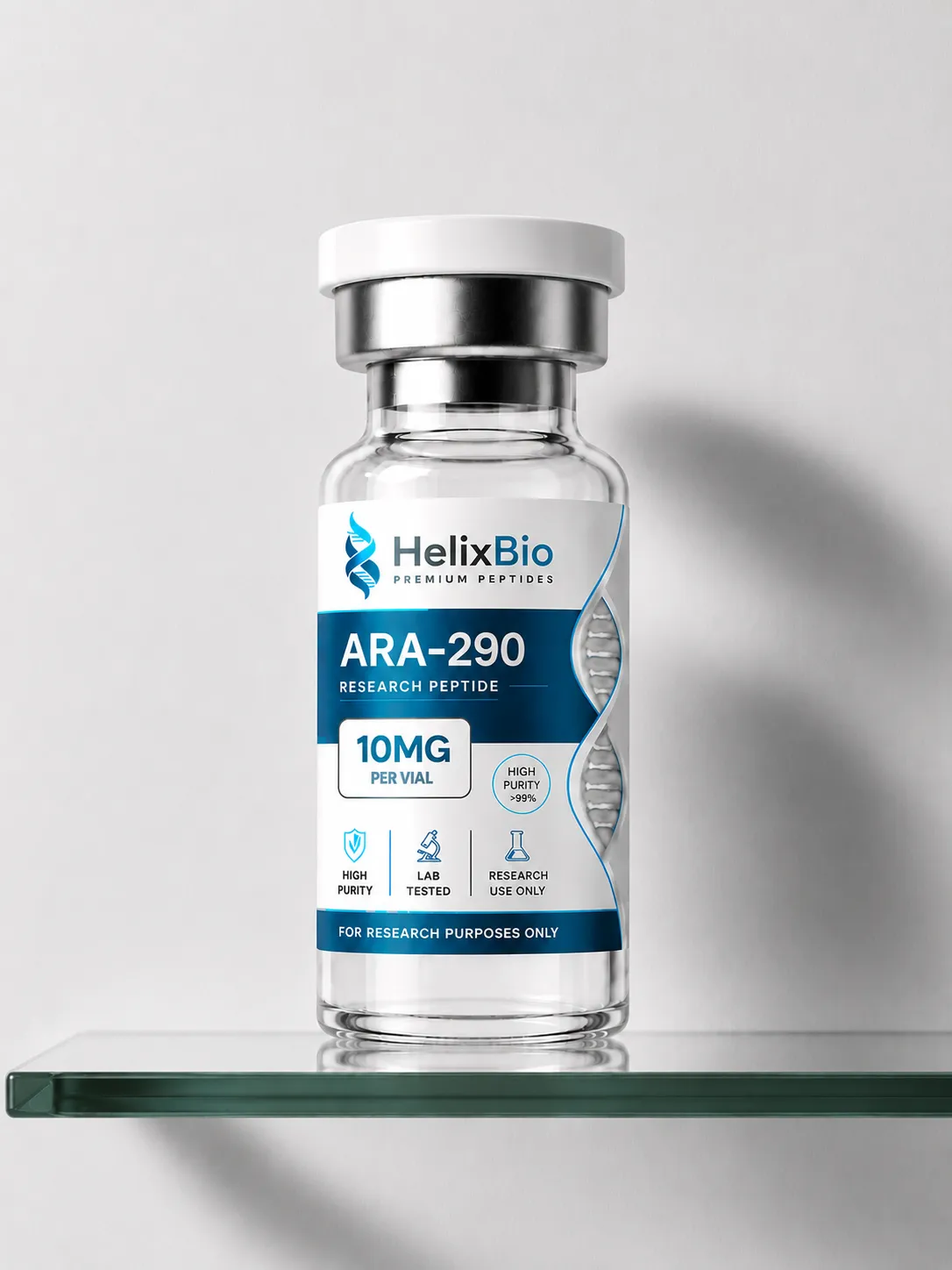
ARA-290
RESEARCH PEPTIDE
ARA-290, known in the scientific literature as cibinetide, is a small synthetic peptide derived from the structure of erythropoietin (EPO). Helix Bio supplies it strictly for laboratory and academic research use — it is not manufactured, labeled, or sold for human consumption, clinical use, or self-administration, and it is not FDA-approved for any indication. ARA-290 has drawn research interest because it's designed to interact with the innate repair receptor, a receptor complex distinct from the classic erythropoietin receptor that drives red blood cell production. That distinction is why it's often described as a non-hematopoietic EPO analog and why it shows up in published research on tissue protection, nerve fiber biology, and inflammation-related signaling, including third-party clinical research on neuropathic pain and sarcoidosis-associated neuropathy. Helix Bio's ARA-290 ships as a lyophilized powder, is verified through HPLC and mass spectrometry, and includes a certificate of analysis with every batch. This page covers what's known about ARA-290's structure and mechanism, how Helix Bio tests it, and the published research context — useful background before placing a research order.
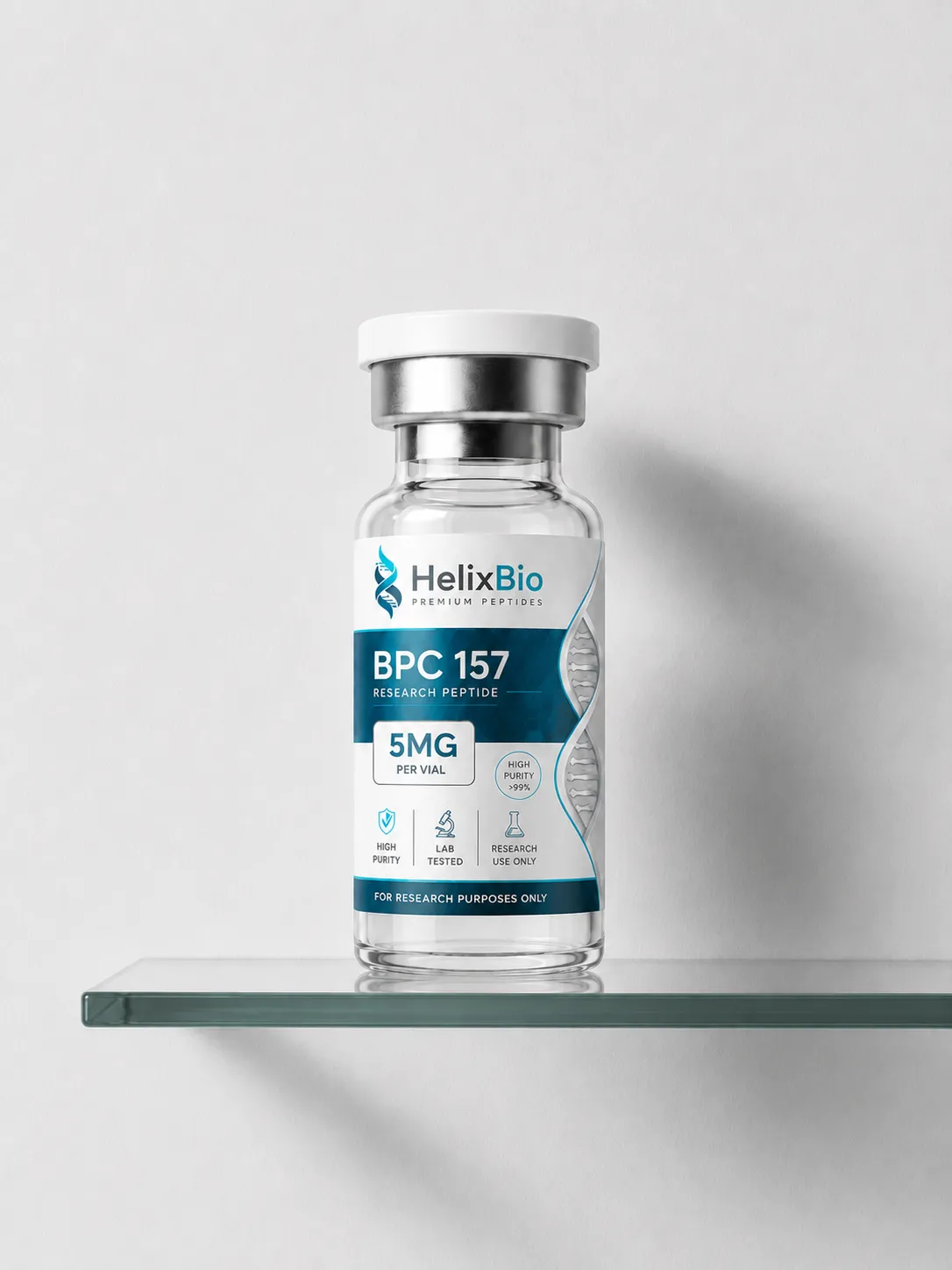
BPC-157
RESEARCH PEPTIDE
BPC-157 is a synthetic pentadecapeptide, a short chain of 15 amino acids derived from a protective protein found in gastric juice. It's one of the most widely studied research peptides in the biotech space, referenced across laboratory literature on tissue repair, angiogenesis, and gastrointestinal research models. Helix Bio's BPC-157 is manufactured for laboratory use, supplied as a lyophilized powder, and backed by a certificate of analysis for every batch. It's intended strictly for qualified researchers, laboratories, and academic institutions — not for human or animal use.
ARA-290 has the stronger published human evidence. Six human studies, including randomized placebo-controlled trials, have tested it in roughly 217 people, mostly for small fiber neuropathy. BPC-157 has a far larger animal literature, but a 2026 systematic review found only three small uncontrolled human studies covering 30 participants, graded very low certainty. No head-to-head trial has ever compared the two compounds, and no combination study exists. That makes this a comparison of evidence quality, not a verdict on which peptide performs better. ARA-290's human trials also carry real limitations, including null pain results and developer-linked authorship, which this article covers in full.
What are ARA-290 and BPC-157?
ARA-290, known by its International Nonproprietary Name cibinetide, is a synthetic 11-amino-acid peptide modeled on the helix B surface of erythropoietin (EPO). It is linear, with an N-terminal pyroglutamate residue, not cyclic, despite what some competitor pages claim. BPC-157 is a synthetic 15-amino-acid peptide related to a protein found in gastric juice, studied mostly in animal injury models. Its structure and background are covered in our BPC-157 structure and mechanism guide.
Property | ARA-290 (cibinetide) | BPC-157 |
|---|---|---|
Length | 11 amino acids | 15 amino acids |
Origin | Engineered from the helix B surface of erythropoietin | Fragment related to a gastric juice protein |
Sequence | pGlu-Glu-Gln-Leu-Glu-Arg-Ala-Leu-Asn-Ser-Ser | Not covered here; see the BPC-157 guide |
CAS number | 1208243-50-8 | Not restated here; see the BPC-157 guide |
Molecular formula | C51H84N16O21 | Not restated here; see the BPC-157 guide |
Molecular weight | 1,257.3 g/mol (PubChem CID 91810664) | Not restated here; see the BPC-157 guide |
FDA UNII | 9W5677JKDA | Not restated here; see the BPC-157 guide |
Proposed target | Innate repair receptor (proposed EPOR plus CD131 complex) | No single defined receptor established |
Developer | Araim Pharmaceuticals | No active pharmaceutical developer established |
Both compounds are investigational. Neither is approved for human use anywhere, and research vials are not the same material used in any clinical trial.
Two Research Records That Could Not Look More Different
The two evidence bases are almost mirror images. ARA-290 went through a conventional drug development path. Its developer ran registered, randomized, placebo-controlled human trials between 2012 and 2017, published the results, quantified the endpoints, and reported the failures along with the successes. The program then stalled before Phase 3, which is part of the story too.
BPC-157 took the opposite path. Researchers have published dozens of animal studies across tendon, ligament, muscle, bone, and gut models since the 1990s. A 2025 systematic review in the HSS Journal identified 36 studies in orthopaedic sports medicine, of which 35 were preclinical and exactly one involved humans. Human testing never caught up. A separate 2026 systematic review that searched the literature through June 2026 found three human studies in total, with 30 participants between them, none controlled, all judged poor methodological quality.
So a researcher comparing the two is not weighing two similar piles of evidence. One compound has a small but real controlled human record. The other has breadth in animals and almost nothing controlled in people.
One boundary keeps the ARA-290 side honest. Its human efficacy data is confined to sarcoidosis-associated small fiber neuropathy, diabetic painful neuropathy, and one negative macular edema trial. The stroke, kidney, and ischemia-reperfusion protection findings from the 2008 foundational work are animal results only, with no human testing in any of those settings.
The Receptor Model Behind ARA-290, Briefly
ARA-290 was designed around a specific receptor hypothesis. EPO signals red blood cell production through a homodimer of two EPO receptors, written (EPOR)2. Its tissue-protective effects were proposed to run through a different complex, one EPOR subunit paired with CD131, the beta-common receptor. Brines and Cerami named this proposed complex the innate repair receptor (IRR). ARA-290 was engineered to engage the proposed IRR without activating the erythropoietic homodimer, which is why it is called non-erythropoietic.
The model is supported but not settled. Mice lacking the beta-common receptor showed no analgesic response to ARA-290 in nerve injury work, which supports CD131's functional role. A 2018 Scientific Reports study, however, found that the extracellular regions of EPOR and the beta-common receptor do not directly associate in vitro. Functional selectivity has evidence behind it; the physical heteromer remains disputed. Treat the IRR as a proposed receptor model, not established structural fact. The full ARA-290 mechanism and COA guide covers the receptor biology in depth, so this article stays with the evidence comparison.
The Evidence Tier Comparison
This table is the core of the article. Figures were checked against PubMed, ClinicalTrials.gov, and the cited systematic reviews in November 2026.
Evidence dimension | ARA-290 (cibinetide) | BPC-157 |
|---|---|---|
Published human studies | 6 | 3 identified by the 2026 systematic review |
Total human participants | About 217 (181 in therapeutic trials plus 36 healthy volunteers) | 30 across the three reviewed studies |
Controlled human trials | Yes; randomized, double-blind, placebo-controlled trials in 2012, 2013, 2015, and 2017 | None; all three studies were uncontrolled |
Largest single trial | 64 participants (Phase 2b dose-ranging, 2017) | 16 participants (retrospective knee-pain study) |
Longest human treatment period | 12 weeks | Not established from controlled data |
Negative human results published | Yes; a 9-patient macular edema trial failed every objective endpoint, and a 36-person mood study found no mood improvement | No controlled results of any kind |
Preclinical literature | Focused; stroke, renal, and nerve injury models, plus dose-response nerve pain work in rats | Extensive; 35 of 36 studies in the 2025 orthopaedic review were preclinical |
Independent replication | None; the five therapeutic trials all involved the developer's founders or employees as authors | Not applicable; no controlled human work to replicate |
Key limitation | Small, short trials; pain intensity never separated from placebo; program stalled before Phase 3 | Human evidence rated very low certainty; animal findings cannot be converted into human outcomes |
Both compounds are available as research materials for laboratory use. Researchers comparing the physical products can review the ARA-290 research vial and the BPC-157 research vial specifications directly. Helix Bio Chem also lists an ARA-290 spray format; no cited trial used a spray formulation, and every regimen described below was intravenous or subcutaneous injection in a monitored study.
What the Six ARA-290 Human Studies Actually Measured
Every regimen below is a published fact about a specific study population, reported with its duration. None of it is guidance of any kind.
Study | Participants | Published regimen | Principal findings |
|---|---|---|---|
Heij 2012 | 22, sarcoidosis with small fiber neuropathy symptoms | 2 mg IV, three times weekly, 4 weeks | SFNSL symptom score improved versus placebo (change of -11.5 vs -2.9, p<0.05); BPI pain improved equally in both arms |
Dahan 2013 | 38, sarcoidosis with small nerve fiber loss | 4 mg SC daily, 28 days | Corneal nerve fiber area rose a median 14.5% vs a 5.3% fall on placebo (p=0.022); SFNSL improved (p=0.005); pain intensity fell about 9% in both arms, with no between-group difference |
Brines 2015 | Type 2 diabetes with painful neuropathy | 4 mg SC daily, 28 days, with 28 days follow-up | HbA1c and lipid profiles improved across the 56-day observation; PainDetect scores improved significantly; corneal nerve fiber density rose in a low-baseline subgroup |
Cerit 2015 | 36 healthy volunteers | Single 2 mg dose vs placebo | No mood improvement; the authors wrote the findings did not unequivocally support an antidepressant-like profile |
Culver 2017 | 64, sarcoidosis, dose-ranging | 1, 4, or 8 mg SC daily, 28 days | Only the 4 mg arm significantly improved corneal nerve fiber area; pain did not separate from placebo at any dose |
Lois 2020 | 9, diabetic macular edema | 4 mg SC daily, 12 weeks | Negative on every objective endpoint, including visual acuity and retinal thickness |
Three details deserve emphasis. First, the Dahan 2013 paper carries a 2016 erratum: an arithmetical error understated its absolute corneal nerve fiber area values by a factor of 2.26, though the percentages stand. Second, the six studies are not six successes. One trial was negative on everything it measured, and the healthy-volunteer mood study found no effect. Third, all five therapeutic studies involved Araim's founders or employees as authors, and no group unconnected to the developer has ever replicated the findings. That conflict of interest does not invalidate the results, but any honest reading carries it.
Why does the 4 mg result matter more than the 8 mg?
The 2017 Phase 2b trial (Culver, NCT02039687) is the single most informative dataset in the ARA-290 record, because it tested three doses against placebo in 64 people. The primary endpoint was the change in corneal nerve fiber area (CNFA) at day 28, placebo-corrected.
Dose arm | CNFA change vs placebo | Result |
|---|---|---|
1 mg daily | +109 µm² (95% CI -429 to 647) | Not significant |
4 mg daily | +697 µm² (95% CI 159 to 1,236) | Significant, p=0.012 |
8 mg daily | +431 µm² (95% CI -130 to 992) | Not significant |
The middle dose worked on the surrogate endpoint. Doubling it did not. This U-shaped pattern matters scientifically because it argues against a simple more-is-better pharmacology, and the program ended before anyone resolved why. Regenerating GAP-43 positive skin fibers also increased in the 4 mg group (p=0.035), and CNFA changes correlated with walking distance. Pain told a different story: every group improved, placebo included, and the placebo-corrected pain difference at 4 mg was p=0.157, not significant. Nothing in this table is an established dose, since no regulatory body ever reviewed one. Readers who want the trial mechanics and measurement methods in more depth can continue with the complete ARA-290 research guide.
Nerve Fiber Findings Are Not the Same as Pain Relief
The most misquoted fact in this literature is the pain result, so here it is plainly. Pain intensity did not separate from placebo in any controlled ARA-290 trial. Heij 2012 saw Brief Pain Inventory scores improve equally in both arms. Dahan 2013 recorded a roughly 9% pain intensity reduction in both groups, with no between-group difference. Culver 2017 found pain improvement in every arm, placebo included, with no significant separation at any dose.
What did move were different kinds of measures. Symptom questionnaires such as the Small Fiber Neuropathy Screening List separated from placebo in two trials. Pain interference, which asks how much pain disrupts daily activity, improved more on ARA-290 in the 2013 trial. And corneal nerve fiber area, measured by corneal confocal microscopy, increased in two trials. CNFA is a surrogate endpoint. It counts small nerve fibers in the cornea as a proxy for small fiber health, and no large trial has shown that growing those fibers translates into validated clinical benefit. A sentence like ARA-290 reduces pain is not supported by the controlled data. A sentence like ARA-290 improved symptom scores and a nerve fiber surrogate while pain intensity never separated from placebo is what the record shows.
Safety Signals and the Limits of Short Trials
Safety reporting across the program is thin but specific. The registry results for the 2017 dose-ranging trial list serious adverse events by arm: 2 of 16 participants at 1 mg, 0 of 16 at 4 mg, 1 of 14 at 8 mg, and 0 of 16 on placebo. Named serious events included syncope, headache, chest tightness, shortness of breath, and small bowel enteritis in the 1 mg arm, and one case of suicidal ideation in the 8 mg arm. The registry states no causality assessments, so these events cannot be attributed to the drug or cleared of it. The absence of any dose pattern cuts both ways and should not be over-read.
Elsewhere, Dahan 2013 reported no serious adverse events, no injection-site reactions, and no anti-ARA-290 antibodies. Lois 2020 reported no serious adverse events and no anti-cibinetide antibodies across 12 weeks. The Brines 2015 abstract states that no potential safety issues were identified; abstract-level safety summaries compress detail, so the full paper is the right place to read that trial's adverse event accounting. No trial reported a rise in red blood cell measures, consistent with the non-erythropoietic design, within these small samples.
The limits matter more than the individual findings. Total human exposure is roughly 217 people. The longest treatment period is 12 weeks. There is no long-term safety data, no pregnancy data, and no post-marketing record, because the compound was never marketed. An absence of signal in trials this small is not a demonstration of safety. BPC-157 sits further back still: with no controlled human trials, it has no controlled human safety dataset at all, and the 2026 review concluded it should not be used clinically outside regulated trials.
What regulatory status does each compound have?
Neither compound is approved by the FDA or the EMA for any indication. For ARA-290, the designations that exist are easy to misread, so each needs its label.
The European Commission granted cibinetide two orphan designations: EU/3/13/1191 for the treatment of sarcoidosis on 7 October 2013, and EU/3/16/1721 for the prevention of graft loss in pancreatic islet transplantation on 29 August 2016. The EMA states directly that an orphan designation is not a marketing authorisation. In the US, Araim announced FDA orphan drug designation covering sarcoidosis and neuropathic pain in sarcoidosis, and announced a Fast Track designation for the neuropathy indication; primary FDA records confirming the exact dates were not available for this article, so no dates are stated here. Neither designation is an approval.
On compounding, Cibinetide (ARA-290) appears in Category 3 of the FDA's 503A bulk drug substances list, updated 14 May 2026, meaning it was nominated without adequate supporting information for evaluation. Category 3 is not a safety finding. It means the FDA has not evaluated the substance and it is not eligible for compounding under section 503A.
For athletes, the 2026 WADA Prohibited List does not name cibinetide individually, but section S2.1.5 prohibits innate repair receptor agonists as a class, at all times, and the list extends to substances with similar biological effects. ARA-290 is an innate repair receptor agonist by design, so the class prohibition is the operative fact. BPC-157 is likewise unapproved for human use, and the 2025 HSS review notes its use is banned in professional sports. Readers weighing the US legal picture for research purchases can start with our US research peptide legality and RUO compliance overview and the state-by-state peptide law tracker.
What Happened to ARA-290 Development
The trial registry tells a complete, dated story.
Year | Event |
|---|---|
2008 | Brines and Cerami publish the foundational PNAS paper deriving tissue-protective peptides from EPO's helix B |
2012 | First randomized pilot in sarcoidosis small fiber neuropathy published (n=22) |
2013 | Second controlled sarcoidosis trial published (n=38) |
2015 | Type 2 diabetes trial and the healthy-volunteer mood study published |
2016 | Last trial start: the Belfast diabetic macular edema study begins in April 2016 |
2017 | Phase 2b dose-ranging results published; the macular edema trial is terminated, with the registry citing expiry of study drug with no replacement available |
2020 | The terminated macular edema study is published as a negative trial |
Since | No new trial registered; no Phase 3 ever filed; four ClinicalTrials.gov records in total |
ClinicalTrials.gov holds exactly four cibinetide records, and no trial has started since April 2016. One completed Leiden study of cognitive effects was published as the 2015 mood paper. A Karolinska-sponsored metabolic study sits at unknown status with no results. The honest description is a stalled or dormant program. The registry's stated termination reason for the final trial was a drug supply issue, not a safety action, and no regulator rejected the compound. Whether the developer formally closed is not established by primary sources, so this article does not claim it.
What Researchers Should Take Away
The comparison resolves cleanly as long as the question stays precise. On published human evidence, ARA-290 leads: six studies, controlled designs, quantified endpoints, and published failures. On preclinical breadth, BPC-157 leads by a wide margin, and that is where its reputation comes from. Neither record establishes an effective repair peptide in humans. ARA-290's controlled trials improved surrogate and symptom measures while pain intensity never beat placebo, and its program stopped before the question could be settled. BPC-157's human testing has not reached the controlled stage at all.
No head-to-head trial exists, no combination study exists, and the popular framing that assigns each peptide a repair niche comes from marketing copy, not literature. For laboratory researchers, the practical difference is what each compound's record lets you study against: ARA-290 offers defined human trial endpoints and a disputed but specific receptor model, while BPC-157 offers a deep catalog of animal injury models awaiting controlled human work.
Ordering from Helix Bio Chem
Browse the research catalog at shop. Review the terms and conditions before ordering. Use the buying checklist if additional purchasing guidance is needed. All Helix Bio Chem products are for laboratory research use only, are not for human consumption, and are not the clinical-trial material used in any study described above.
Frequently Asked Questions
No. ARA-290 (cibinetide) is not FDA approved for any indication, and no marketing application has been identified. Its orphan and Fast Track designations are development incentives, not approvals, and its FDA 503A Category 3 listing means it was nominated for compounding without adequate support, which is not a safety finding.
ARA-290 is an 11-amino-acid peptide engineered from erythropoietin's helix B surface to target the proposed innate repair receptor, with six published human studies. BPC-157 is a 15-amino-acid peptide related to a gastric juice protein, with an extensive animal literature but only three small uncontrolled human studies identified by a 2026 systematic review.
ARA-290, by a clear margin. It has randomized placebo-controlled human trials covering roughly 217 participants, while BPC-157's reviewed human record is 30 participants across three uncontrolled studies rated very low certainty. This is a difference in evidence quality only; no head-to-head trial exists and neither compound is proven effective in humans.
The controlled trials show a split result. Symptom scores, pain interference, and corneal nerve fiber measures improved versus placebo in some trials, but pain intensity itself never separated from placebo at any dose. The compound is not approved for neuropathy or anything else, and no Phase 3 trial was ever run.
The 2017 dose-ranging trial's registry lists serious adverse events in 2 of 16 participants at 1 mg, 0 of 16 at 4 mg, and 1 of 14 at 8 mg, including one case of suicidal ideation, with no causality assessments stated. Other controlled trials reported no serious adverse events and no anti-drug antibodies. Total human exposure is only about 217 people for 12 weeks at most, so no long-term safety profile exists.
In the US, ARA-290 is sold as a research-use-only chemical for laboratory work, not as a drug, supplement, or compounded medication. It is not approved for human use anywhere, is not eligible for 503A compounding, and state-level rules on research peptides vary, so researchers should check their own jurisdiction.
Cibinetide is the International Nonproprietary Name for ARA-290, adopted in 2015. The two names refer to the same 11-amino-acid peptide, also called pHBSP or helix B surface peptide in earlier literature. Searchers and vendors mostly use ARA-290, while regulators and journals use cibinetide.
It was engineered to engage the proposed innate repair receptor without activating the EPO receptor homodimer that drives red blood cell production. In the published human trials, no rise in red blood cell measures was reported, though those trials were small and short, so this is an absence of signal rather than a guarantee.
No. No clinical trial has ever compared the two compounds directly, and no study has tested them in combination. Claims that one is better for a given purpose, or that they work well together, have no trial evidence behind them.
Effectively yes. Cibinetide is not named individually on the WADA 2026 Prohibited List, but section S2.1.5 prohibits innate repair receptor agonists as a class at all times, in and out of competition. Since ARA-290 is an innate repair receptor agonist by design, it falls under the class prohibition.
EPO is a 165-amino-acid hormone approved for treating anemia, and it stimulates red blood cell production with known cardiovascular risks. ARA-290 is an 11-amino-acid fragment modeled on one surface of EPO, designed to keep the proposed tissue-protective signaling while dropping the erythropoietic effect, and it is not approved for anything.
- 01Brines M, et al. Nonerythropoietic, tissue-protective peptides derived from the tertiary structure of erythropoietin. Proc Natl Acad Sci USA. 2008;105(31):10925-10930. PMID 18676614.
- 02Heij L, et al. Safety and efficacy of ARA 290 in sarcoidosis patients with symptoms of small fiber neuropathy: a randomized, double-blind pilot study. Mol Med. 2012;18:1430-1436. PMID 23168581.
- 03Dahan A, et al. ARA 290 improves symptoms in patients with sarcoidosis-associated small nerve fiber loss and increases corneal nerve fiber density. Mol Med. 2013;19:334-345. PMID 24136731. Erratum: Mol Med. 2016;22:674.
- 04Brines M, et al. ARA 290, a nonerythropoietic peptide engineered from erythropoietin, improves metabolic control and neuropathic symptoms in patients with type 2 diabetes. Mol Med. 2015;20(1):658-666. PMID 25387363.
- 05Cerit H, et al. Testing the antidepressant properties of the peptide ARA290 in a human neuropsychological model of drug action. Eur Neuropsychopharmacol. 2015;25(12):2289-2299. PMID 26431906. NCT02070783.
- 06Culver DA, et al. Cibinetide improves corneal nerve fiber abundance in patients with sarcoidosis-associated small nerve fiber loss and neuropathic pain. Invest Ophthalmol Vis Sci. 2017;58(6):BIO52-BIO60. PMID 28475703. NCT02039687.
- 07Lois N, et al. A phase 2 clinical trial on the use of cibinetide for the treatment of diabetic macular edema. J Clin Med. 2020;9(7):2225. PMID 32674280. EudraCT 2015-001940-12; ISRCTN16962255.
- 08Swartjes M, et al. ARA 290, a peptide derived from the tertiary structure of erythropoietin, produces long-term relief of neuropathic pain coupled with suppression of the spinal microglia response. Mol Pain. 2014;10:13. PMID 24529189.
- 09Cheung Tung Shing KS, et al. EPO does not promote interaction between the erythropoietin and beta-common receptors. Sci Rep. 2018;8:12457. PMID 30127368.
- 10Vasireddi N, et al. Emerging use of BPC-157 in orthopaedic sports medicine: a systematic review. HSS J. 2025;21(4):485-495. PMID 40756949.
- 11Poolton JT, Minett J, Kazmi A. Human evidence for BPC-157 in orthopaedic and regenerative medicine: a systematic review of efficacy and safety. Acta Orthop Belg. 2026;92(3). PMID 42885452.
- 12PubChem. Cibinetide, CID 91810664. Formula C51H84N16O21; molecular weight 1,257.3 g/mol; CAS 1208243-50-8; UNII 9W5677JKDA.
- 13European Medicines Agency. Orphan designation EU/3/13/1191, cibinetide for the treatment of sarcoidosis, granted 7 October 2013.
- 14European Medicines Agency. Orphan designation EU/3/16/1721, cibinetide for the prevention of graft loss in pancreatic islet transplantation, granted 29 August 2016.
- 15FDA. Bulk Drug Substances Nominated for Use in Compounding Under Section 503A, Category 3 entry for Cibinetide (ARA-290), list updated 14 May 2026.
- 16World Anti-Doping Agency. 2026 Prohibited List, section S2.1.5, innate repair receptor agonists, in force 1 January 2026.
- 17ClinicalTrials.gov records for cibinetide: NCT02039687, NCT02070783, NCT01933529, NCT06626971.
Helix Bio Chem Team
Research & Product Team
Our in-house team tracks published peptide research and translates it into clear, source-cited summaries for the research community.
Reviewed by in-house research chemists
support@helixbiochem.com