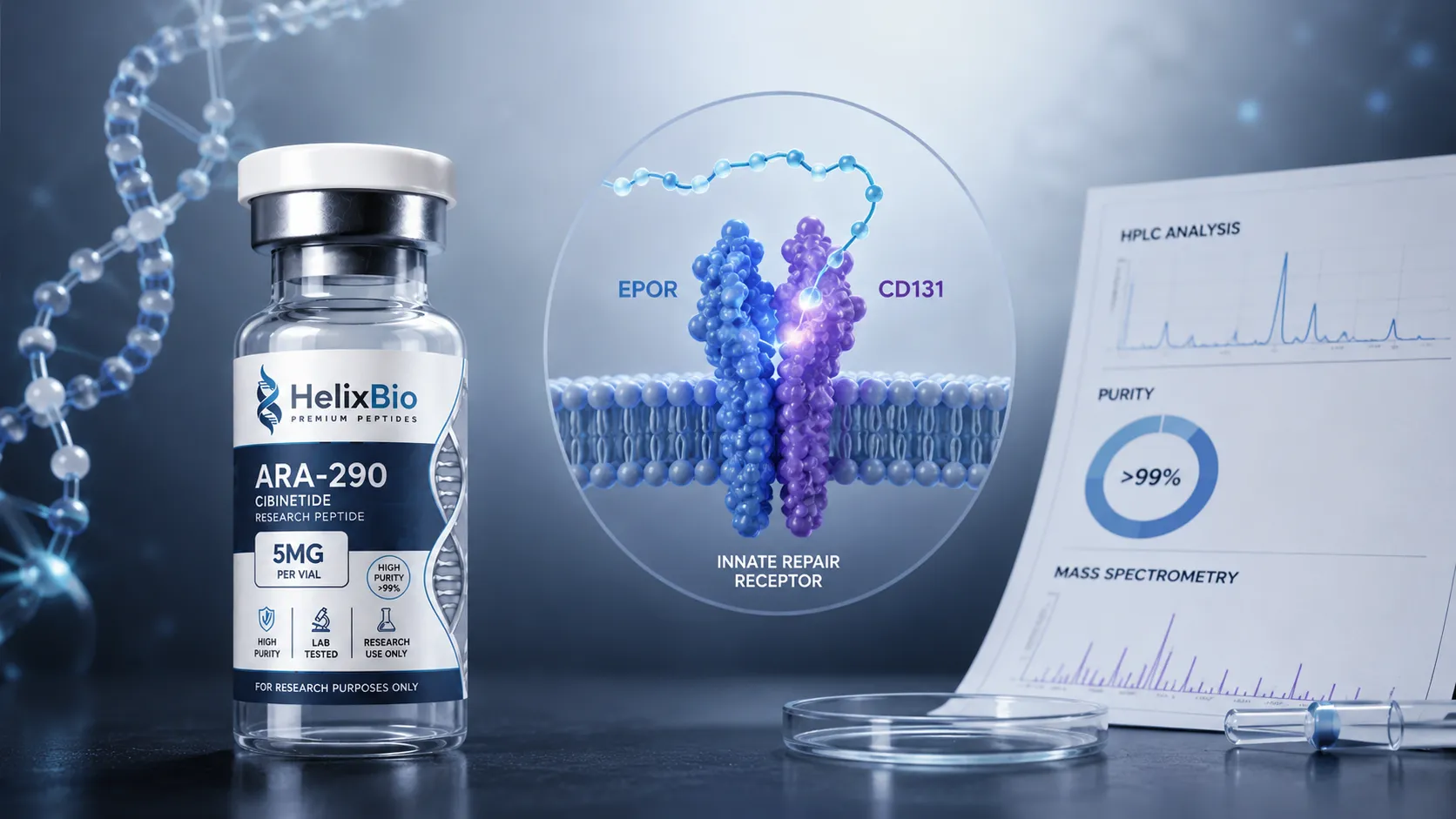
- ARA-290, also called cibinetide, is an 11-amino-acid peptide derived from the helix-B surface of erythropoietin and engineered to be non-erythropoietic.
- The innate repair receptor is a heterodimer of the erythropoietin receptor and the beta-common receptor CD131, structurally distinct from the homodimeric EPOR that drives red blood cell production.
- ARA-290's relief of mechanical and cold allodynia in rodent nerve-injury models was absent in beta-common receptor knockout mice, demonstrating receptor dependence rather than correlation.
- In a 2012 randomized double-blind pilot of 22 sarcoidosis patients, the ARA-290 group improved significantly on the Small Fiber Neuropathy Screening List against placebo, while Brief Pain Inventory scores improved equivalently in both groups.
- In the 2017 Phase 2b trial of 64 subjects, the 4 mg dose produced a placebo-corrected increase in corneal nerve fiber area of 697 square micrometres at day 28 with p = 0.012, while the 8 mg dose did not reach significance.
- Functional and symptomatic endpoints in the Phase 2b trial, including the six-minute walk test and pain scores, did not separate significantly from placebo.
- Cibinetide is not approved by the FDA, the EMA, or any other regulatory authority, and orphan drug and fast track designations are development incentives rather than findings of safety or efficacy.
- ARA-290's C-terminal Asn-Ser-Ser motif is a recognized deamidation hotspot producing an approximately 0.98 Da mass shift, which makes analysis date and storage conditions directly relevant to batch verification.
ARA-290, also called cibinetide, is an 11-amino-acid peptide derived from the helix-B surface of erythropoietin and engineered to be non-erythropoietic. The first question in ARA-290 cibinetide research is almost always whether a compound built from EPO raises hematocrit the way EPO does. It does not, and the reason is structural rather than a matter of dose: ARA-290 was designed to engage a different receptor complex than the one that drives red blood cell production. That single design decision is the whole point of the molecule, and it is also what makes the compound's certificate of analysis worth reading carefully, because an 11-residue peptide with a modified N-terminus and a deamidation-prone C-terminus has specific analytical failure modes. This piece covers the receptor biology, the two published human trials with their actual numbers including the endpoints that did not separate from placebo, an extended treatment of COA and purity verification, and an accurate account of where the compound's regulatory status stands.
ARA-290
RESEARCH PEPTIDE
ARA-290, known in the scientific literature as cibinetide, is a small synthetic peptide derived from the structure of erythropoietin (EPO). Helix Bio supplies it strictly for laboratory and academic research use — it is not manufactured, labeled, or sold for human consumption, clinical use, or self-administration, and it is not FDA-approved for any indication. ARA-290 has drawn research interest because it's designed to interact with the innate repair receptor, a receptor complex distinct from the classic erythropoietin receptor that drives red blood cell production. That distinction is why it's often described as a non-hematopoietic EPO analog and why it shows up in published research on tissue protection, nerve fiber biology, and inflammation-related signaling, including third-party clinical research on neuropathic pain and sarcoidosis-associated neuropathy. Helix Bio's ARA-290 ships as a lyophilized powder, is verified through HPLC and mass spectrometry, and includes a certificate of analysis with every batch. This page covers what's known about ARA-290's structure and mechanism, how Helix Bio tests it, and the published research context — useful background before placing a research order.
What Is ARA-290? From Erythropoietin to the Helix-B Surface Peptide
Erythropoietin does two separable jobs. It signals bone marrow to produce red blood cells, and it independently protects and repairs injured tissue. For years those were assumed to be the same signal acting in different places. Michael Brines and Anthony Cerami established that they run through different receptors.
Their 2008 paper in the Proceedings of the National Academy of Sciences, "Nonerythropoietic, tissue-protective peptides derived from the tertiary structure of erythropoietin," set out the design logic. Rather than modifying the whole EPO molecule, they identified the specific three-dimensional surface responsible for tissue-protective signaling and built short peptides that reproduced it. ARA-290 emerged from that work as a first-in-class synthetic peptide agonist, developed by Araim Pharmaceuticals in Tarrytown, New York. It is also referred to in the literature as helix B surface peptide, or HBSP.
The peptide is 11 residues, linear, with an N-terminal pyroglutamate and a C-terminus ending in Asn-Ser-Ser. Its molecular weight is commonly reported at approximately 1,257 Da. It has a short plasma half-life, but the published work notes that it triggers sustained biological effects once concentrations exceed the receptor's low nanomolar affinity, which decouples duration of exposure from duration of effect.
Mechanism: The Innate Repair Receptor
This is the mechanistic core of the compound and the section worth reading closely, because the receptor distinction is specific, documented, and frequently stated imprecisely.
Two receptors, not one
Classical erythropoiesis is driven by a homodimeric erythropoietin receptor: two identical EPOR subunits. Tissue protection runs through a different assembly, a heterodimeric complex of one EPOR subunit and one beta-common receptor subunit, also designated CD131. That heterodimer is what Brines and Cerami named the innate repair receptor, or IRR. It signals through janus kinase-2 and multiple downstream intracellular pathways.
The two receptors share a subunit but are not the same receptor and do not do the same thing. ARA-290 has high affinity and selectivity for the IRR and does not meaningfully engage the EPOR homodimer. That is why hematological parameters remained stable across the human trials, and it is the mechanistic basis for the claim that ARA-290 separates EPO's reparative signaling from its hematologic effects and the associated cardiovascular and thrombotic risk profile.
The knockout evidence
The cleanest confirmation that the beta-common subunit is required comes from receptor knockout work. In rodent models of neuropathic pain, ARA-290 produced long-term relief of mechanical and cold allodynia after sciatic nerve injury in normal mice, and produced no such effect in animals with a beta-common receptor knockout phenotype. Removing one subunit of the heterodimer removes the effect. That is a strong result, because it demonstrates receptor dependence rather than correlation.
Downstream
IRR activation is described in the literature as shifting injured tissue away from a self-amplifying proinflammatory cascade and toward repair. Additional work reported that ARA-290 antagonizes the TRPV1 ion channel in small nerve fibers, which is relevant because TRPV1 undergoes upregulation and sensitization in neuropathic states and integrates nociception with neurogenic inflammation.
Clinical Research: Two Trials and Their Actual Numbers
ARA-290 has more published human data than most research peptides. It also has published null results, and reporting the first without the second misrepresents the record.
Heij 2012 pilot | Culver 2017 Phase 2b | |
|---|---|---|
Journal | Molecular Medicine | Investigative Ophthalmology and Visual Science |
Subjects | 22 | 64 randomized |
Design | Randomized, double-blind, placebo-controlled exploratory | Randomized, double-blind, placebo-controlled, two-centre |
Route and duration | 2 mg intravenous, three times weekly, 4 weeks | 1, 4 or 8 mg subcutaneous daily, 28 days |
Primary measure | Symptom scores | Corneal nerve fiber area by confocal microscopy |
Result vs placebo | SFNSL improved significantly | CNFA improved significantly at 4 mg only |
Pain vs placebo | Did not separate | Did not separate |
The 2012 pilot study
Heij and colleagues published a randomized, double-blind, placebo-controlled exploratory trial in Molecular Medicine in 2012. Twenty-two patients with sarcoidosis and symptoms of small fiber neuropathy received either ARA-290 at 2 mg intravenously three times weekly (n = 12) or placebo (n = 10) for four weeks. Enrollment required a diagnosis of neuropathy and a spontaneous pain score of at least 5 on the Brief Pain Inventory.
At week 4, the ARA-290 group showed a significant improvement in Small Fiber Neuropathy Screening List score against placebo: a change of -11.5 ± 3.04 versus -2.9 ± 3.34 standard error of the mean, p < 0.05. The ARA-290 group also improved from baseline on the pain and physical functioning dimensions of the SF-36, at -23.4 ± 5.5 and -14.6 ± 3.9 respectively.
The part usually omitted: mean Brief Pain Inventory and Fatigue Assessment Scale scores improved significantly but equivalently in both groups. The primary pain instrument did not separate ARA-290 from placebo. No change was observed on the Inventory of Depressive Symptomatology. No safety concerns were raised by clinical or laboratory assessment.
The 2017 Phase 2b trial
Culver and colleagues published the larger trial in Investigative Ophthalmology & Visual Science in 2017. It was a double-blind, randomized, placebo-controlled, two-centre study at Leiden University Medical Center and the Cleveland Clinic, registered as NCT02039687, running from January 2014 to February 2015. Sixty-four subjects with sarcoidosis-associated small nerve fiber loss and neuropathic pain were randomized 1:1:1:1 to cibinetide at 1, 4 or 8 mg per day subcutaneously, or placebo, for 28 days. The primary endpoint was change in corneal nerve fiber area measured by corneal confocal microscopy.
Endpoint | Result |
|---|---|
CNFA at day 28, 1 mg, placebo-corrected | +109 µm², 95% CI -429 to 647 |
CNFA at day 28, 4 mg, placebo-corrected | +697 µm², 95% CI 159 to 1236, p = 0.012 |
CNFA at day 28, 8 mg, placebo-corrected | +431 µm², 95% CI -130 to 992 |
Intraepidermal GAP-43+ fiber length, 4 mg | Increased approximately 23% from baseline, p = 0.035 |
Intraepidermal nerve fiber density (IENFD) | No treatment group differences |
6-minute walk test, 4 mg vs placebo | +17.7 m vs +1.2 m, p = 0.11, not significant |
Pain, moderate-to-severe subgroup (n = 44), 4 mg | LS mean difference -1.01, 95% CI -2.42 to 0.41, p = 0.157, not significant |
Correlation, CNFA change with GAP-43+ change | Spearman rho = 0.575, p = 0.025 |
Correlation, CNFA change with 6MWT change | Spearman rho = 0.645, p = 0.009 |
Read the table carefully, because it is more mixed than the headline. The primary structural endpoint was met, at one dose. The 8 mg group did not reach significance, and two subjects in that arm had treatment assignment unconfirmed due to a pharmacy error, which the authors note may have reduced discriminatory power. IENFD, a second structural measure, showed nothing. The functional and symptomatic endpoints did not separate from placebo, and the authors attribute that in part to a strong placebo response, which they document as an increasingly common feature of neuropathic pain trials. Serious adverse events were reported in three subjects, of which one, in the 8 mg group, was assessed as possibly related to study drug. Following discontinuation, corneal nerve fiber area trended back toward baseline.
The authors' own framing is that the trial supports corneal nerve fiber area as a surrogate endpoint for assessing potential disease-modifying therapies. That is a claim about the measurement tool as much as about the drug. It is also worth noting that most of the author group were employees, consultants or grant recipients of Araim Pharmaceuticals, disclosed in the publication.
Certificate of Analysis and Purity Verification for ARA-290
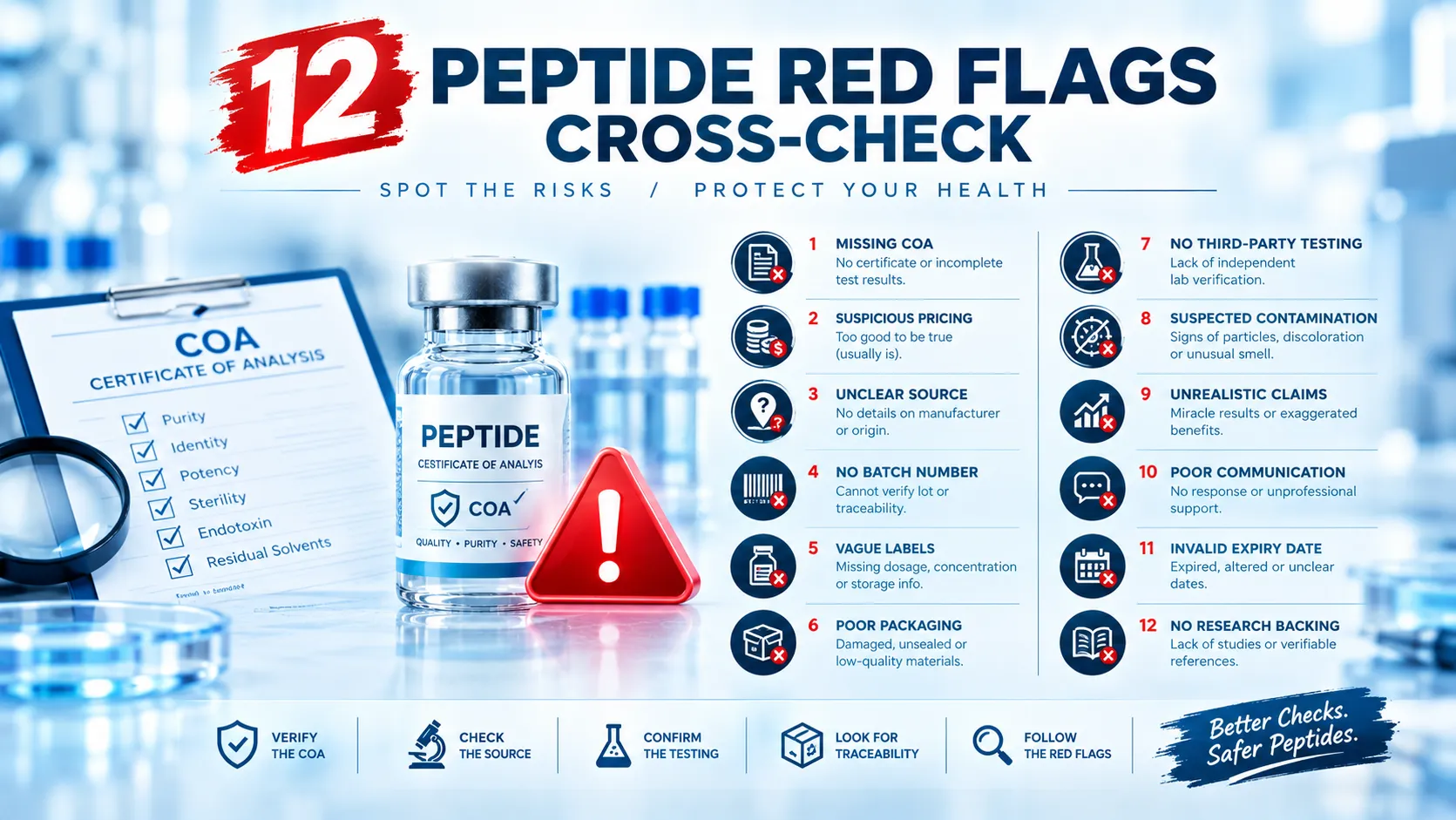
ARA-290-specific COA and lab-testing queries make up a large share of real search demand for this compound, and there is more to say here than for a generic short peptide, because this sequence has two named chemical liabilities.
What the document should contain
Purity by RP-HPLC. Research-grade cibinetide is typically reported at 98% or higher by area normalization, most often with UV detection at 214 nm, where the peptide bond absorbs. Ask for the chromatogram itself. A stated percentage is a conclusion; the trace is the evidence. Check that the gradient is shallow enough that closely related species would actually resolve rather than co-eluting under one peak.
Identity by mass spectrometry. Either ESI-MS or MALDI-TOF is standard. The COA should print the theoretical mass for the stated sequence next to the observed mass so the two can be compared directly. A COA that says "identity confirmed by MS" without printing the numbers has confirmed nothing the reader can check.
N-terminal pyroglutamate confirmation. ARA-290's N-terminus is pyroglutamate, a cyclized residue rather than a free amine. This matters twice. It is a stabilizing feature, since it resists aminopeptidase cleavage and blocks Edman sequencing. And incomplete cyclization during synthesis leaves the open-chain glutamine or glutamate form, which differs in mass by 17 or 18 Da depending on the precursor. That difference is well within the resolution of routine MS, so it is detectable if anyone looks for it.
Deamidation. The sequence terminates in Asn-Ser-Ser. Asparagine followed by a small residue is a recognized deamidation hotspot, and deamidation converts Asn to Asp or isoAsp with a mass shift of about +0.98 Da. That is a small shift, but it is resolvable on a high-resolution instrument and it produces a distinguishable HPLC peak because the added negative charge changes retention. Deamidation is also time and temperature dependent, which means it is a storage question as well as a synthesis question. On a COA, the relevant check is whether the analysis date is recent relative to the synthesis date, and whether the chromatogram shows a shoulder or satellite peak near the main one.
Net peptide content. Lyophilized peptide is not pure peptide by weight. Counterion, usually acetate or trifluoroacetate, plus residual moisture typically account for 10% to 20% of vial mass. Net peptide content is determined by amino acid analysis or quantitative nitrogen determination and is a separate number from HPLC purity. Without it, any concentration calculated from stated vial weight carries an unknown error.
No disulfide to verify. ARA-290 contains no cysteine, so unlike disulfide-containing peptides there is no oxidation state or scrambling question. That simplifies the analysis, and a COA that reports disulfide verification for this compound is describing a test that does not apply to it.
Cross-checking the COA against the vial received
The document is only useful if it describes the material in hand. Four checks, in order:
- Lot number. The lot printed on the COA must match the lot on the vial label exactly. This is the single most common failure point and the easiest to verify.
- Analysis date. It should follow the synthesis or manufacture date, not precede it, and should be recent enough that the deamidation window described above is meaningful.
- Stated quantity. The fill weight on the COA should match the label. A mismatch means either a documentation error or a different product.
- Appearance. The physical description on the COA, typically a white to off-white lyophilized powder, should match what is in the vial. Discolouration, a collapsed or oily cake, or visible moisture are grounds to stop and query the batch rather than proceed.
A COA issued by the manufacturer and a COA issued by an independent laboratory are different documents answering the same question with different incentives. Third-party testing means an analysis performed by a laboratory with no commercial interest in the result, on a sample from the specific lot being sold. A manufacturer-supplied document is not third-party testing regardless of how it is labelled, and a third-party report covering a different lot number tells you about a batch you did not receive.
The general methodology for evaluating chromatograms, mass spectra and third-party reports is set out in the certificate of analysis reading guide. Supplier-level due diligence beyond the document itself is covered in the U.S. research peptide sourcing checklist.
Storage and Handling
Deamidation kinetics make storage discipline more consequential for this compound than for many. Lyophilized ARA-290 is generally held at -20°C or lower and protected from moisture, since water is a direct reactant in the deamidation pathway. After reconstitution, the usable window shortens substantially and refrigeration rather than refreezing is standard practice, because freeze-thaw cycling drives both aggregation and hydrolysis. The specific degradation pathways and the errors that quietly cost potency are catalogued in the storage mistakes reference and in the reconstitution and stability guide.
Regulatory Status
Cibinetide is not approved by the FDA, the EMA, or any other regulatory authority for any indication.
It holds several designations, and designations are not approvals. The FDA granted Orphan Drug Designation for the treatment of sarcoidosis in July 2016, following an earlier EU Orphan Drug Designation for the same condition. ARA-290 had previously received US Orphan Drug and Fast Track designations for the treatment of neuropathic pain in patients with sarcoidosis. A separate EU orphan medicinal product designation was granted for prevention of graft loss in pancreatic islet transplantation. Orphan designation provides development incentives, including a period of marketing exclusivity if a product is eventually approved, tax credits and fee waivers. It is an incentive granted at the start of a development pathway, not a finding about safety or efficacy at the end of one.
Development did not reach the end of that pathway. No Phase 3 trial has been reported, no NDA or BLA was submitted, and Araim Pharmaceuticals has wound down. As of 2026, no sponsor holds an active US IND for cibinetide and no clinical trials are registered. Available reporting attributes the stall to commercial and organizational factors rather than to a safety signal or a regulatory rejection, which is a meaningful distinction but not one that changes the compound's status.
ARA-290 was not among the seven peptide bulk drug substances reviewed by the FDA's Pharmacy Compounding Advisory Committee in July 2026; that proceeding, covered in the 2026 503A bulks list explainer, did not address it. Material sold in the United States is research-use-only under the framework described in the RUO compliance overview.
The Open Question in ARA-290 Research
The Phase 2b trial left a specific puzzle on the table. The 4 mg dose produced a significant structural effect and the 8 mg dose did not, despite the preclinical expectation that the two would behave similarly above a threshold. The authors offer a procedural explanation, the two subjects lost from the 8 mg arm to a pharmacy error in a small trial. A pharmacological explanation is also available: a receptor with low nanomolar affinity and sustained signaling after brief exposure is exactly the kind of target where more ligand does not produce more effect, and may produce less.
The second unresolved question is the one the authors themselves raised. Corneal nerve fiber area moved, intraepidermal nerve fiber density did not, and GAP-43 staining agreed with the cornea rather than with IENFD. If corneal nerve fiber area is a valid surrogate for small fiber regeneration, that discordance means IENFD is the insensitive measure, which the authors argue on the grounds that density counts ignore nerve fiber branching. If it is not valid, the trial's positive result is a measurement artefact. Nothing since 2017 has settled which, and no active development program exists to settle it. For researchers, the practical consequence is that ARA-290's strongest human evidence rests on an endpoint that is still being validated, which is a more precise statement of the compound's evidentiary position than either "proven in Phase 2" or "unproven."
Frequently Asked Questions
ARA-290 is a synthetic 11-amino-acid peptide corresponding to the helix-B surface region of erythropoietin, developed by Araim Pharmaceuticals and also known as cibinetide or helix B surface peptide. It was engineered to activate the innate repair receptor without stimulating red blood cell production.
Yes. ARA-290 is the development code and cibinetide is the international nonproprietary name, and both refer to the same molecule. Helix B surface peptide, or HBSP, also appears in the literature for the same compound.
No, and that separation is the design objective of the molecule rather than a dose-dependent effect. ARA-290 engages the heterodimeric innate repair receptor rather than the homodimeric erythropoietin receptor that drives erythropoiesis, and hematological parameters remained stable across the published human trials.
The innate repair receptor, or IRR, is a heterodimeric receptor complex composed of one erythropoietin receptor subunit and one beta-common receptor subunit, also designated CD131. It signals through janus kinase-2 and multiple downstream pathways, and its activation is associated with tissue protection and repair in preclinical models.
The classical erythropoietin receptor that drives red blood cell production is a homodimer of two identical EPOR subunits, while the innate repair receptor pairs one EPOR subunit with a beta-common receptor subunit. They share a subunit but are structurally different assemblies with different functions.
In rodent models of neuropathic pain, ARA-290 produced long-term relief of mechanical and cold allodynia after sciatic nerve injury in normal mice, and produced no such effect in animals with a beta-common receptor knockout phenotype. Removing one subunit of the heterodimer removed the effect.
Two randomized placebo-controlled trials have been published in sarcoidosis-associated small fiber neuropathy. The 2012 pilot of 22 patients showed improvement on the Small Fiber Neuropathy Screening List against placebo, and the 2017 Phase 2b trial of 64 subjects met its primary structural endpoint at the 4 mg dose with a placebo-corrected increase in corneal nerve fiber area of 697 square micrometres.
Not against placebo in either published trial. Brief Pain Inventory scores improved equivalently in both arms of the 2012 pilot, and in the 2017 Phase 2b trial the placebo-corrected pain difference in the moderate-to-severe subgroup did not reach significance at p = 0.157. The 2017 authors attribute this in part to a strong placebo response, which they document as an increasingly common feature of neuropathic pain trials.
ARA-290 is an 11-residue linear peptide with a molecular weight commonly reported at approximately 1,257 Da. A certificate of analysis should print the theoretical mass for the stated sequence alongside the observed mass so that the two can be compared directly rather than asserting that identity was confirmed.
It should report RP-HPLC purity with the chromatogram attached, mass spectrometry identity with theoretical and observed masses printed together, confirmation of the N-terminal pyroglutamate, and net peptide content as a figure separate from gross vial weight. The lot number must match the vial label and the analysis date must follow the synthesis date.
Research-grade cibinetide is typically reported at 98% or higher by RP-HPLC area normalization, usually with UV detection at 214 nm. The stated percentage is a conclusion rather than evidence, so the chromatogram itself should be requested and checked for whether the gradient was shallow enough to resolve closely related species.
It depends entirely on who performed the analysis and on which lot. Third-party testing means an analysis by a laboratory with no commercial interest in the result, performed on a sample from the specific lot being sold. A manufacturer-issued document is not third-party testing regardless of labelling, and a third-party report covering a different lot describes a batch other than the one received.
No. ARA-290 contains no cysteine residues, so there is no disulfide bridge and no oxidation state or scrambling question to verify. A certificate of analysis that reports disulfide verification for this compound is describing a test that does not apply to it.
No. Cibinetide is not approved by the FDA, the EMA, or any other regulatory authority for any indication. No Phase 3 trial has been reported and no marketing application was submitted.
No. Orphan drug designation is an incentive granted near the start of a development pathway, providing benefits such as tax credits, fee waivers and a period of marketing exclusivity if a product is eventually approved. ARA-290 received FDA orphan drug designation for sarcoidosis in 2016 plus orphan and fast track designations for sarcoidosis-associated neuropathic pain, and none of these constitutes a finding about safety or efficacy.
- 01Heij L, Niesters M, Swartjes M, et al. Safety and efficacy of ARA 290 in sarcoidosis patients with symptoms of small fiber neuropathy: a randomized, double-blind pilot study. Mol Med. 2012;18(1):1430-1436. doi:10.2119/molmed.2012.00332
- 02Culver DA, Dahan A, Bajorunas D, et al. Cibinetide improves corneal nerve fiber abundance in patients with sarcoidosis-associated small nerve fiber loss and neuropathic pain. Invest Ophthalmol Vis Sci. 2017;58(6):BIO52-BIO60. doi:10.1167/iovs.16-21291
- 03Targeting the innate repair receptor to treat neuropathy. Pain Rep. PMCID: PMC5741312.
- 04Araim Pharmaceuticals. Araim Pharmaceuticals receives Orphan Drug Designation from the US FDA for ARA 290 for the treatment of sarcoidosis. PR Newswire, July 5, 2016.
- 05Araim Pharmaceuticals. Cibinetide (ARA 290) regenerates small nerve fibers and improves neuropathic clinical symptoms. Press release, May 8, 2017.
- 06U.S. Food and Drug Administration. July 23-24, 2026: Meeting of the Pharmacy Compounding Advisory Committee.
Helix Bio Chem Team
Research & Product Team
Our in-house team tracks published peptide research and translates it into clear, source-cited summaries for the research community.
Reviewed by in-house research chemists
support@helixbiochem.com