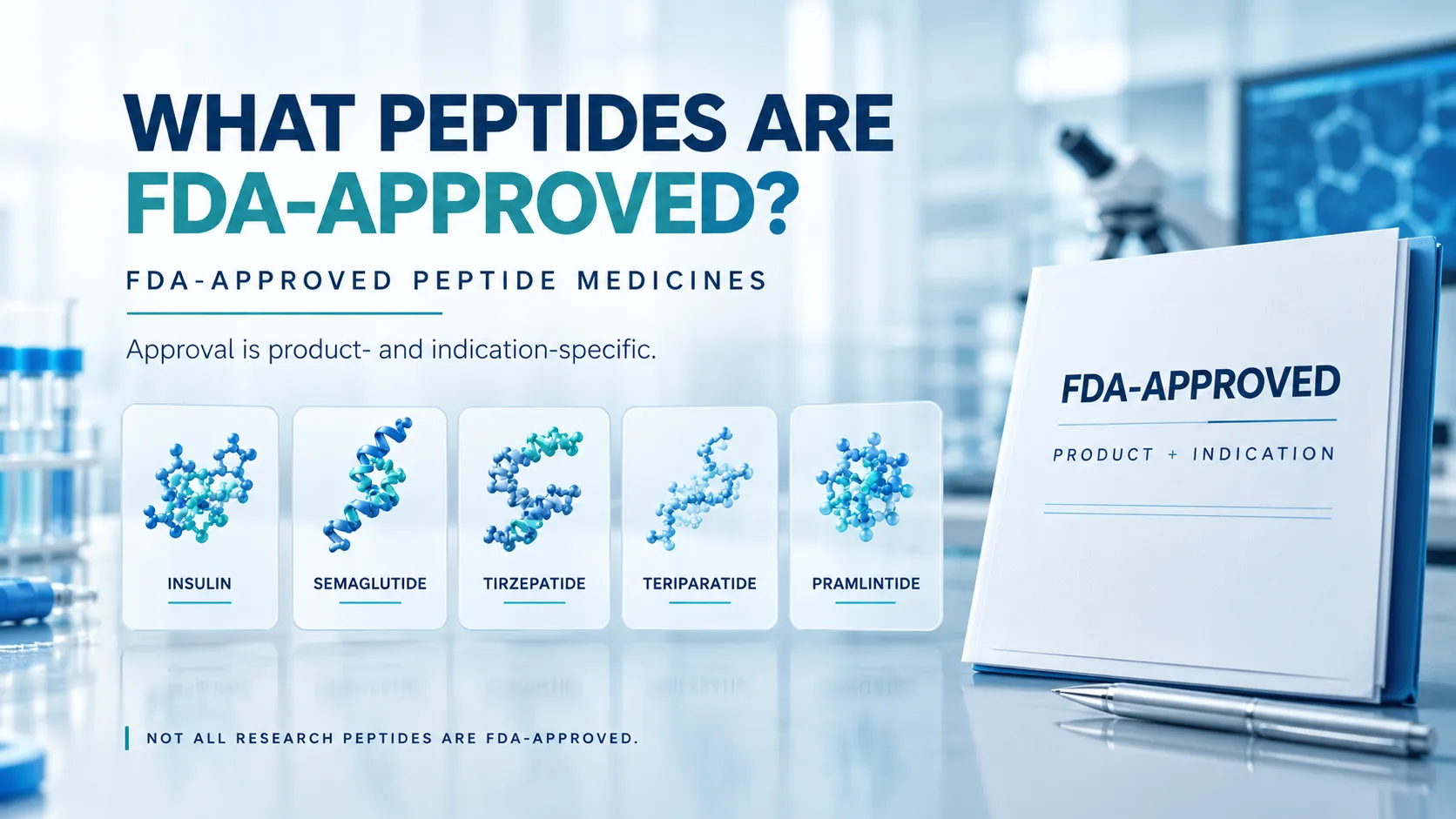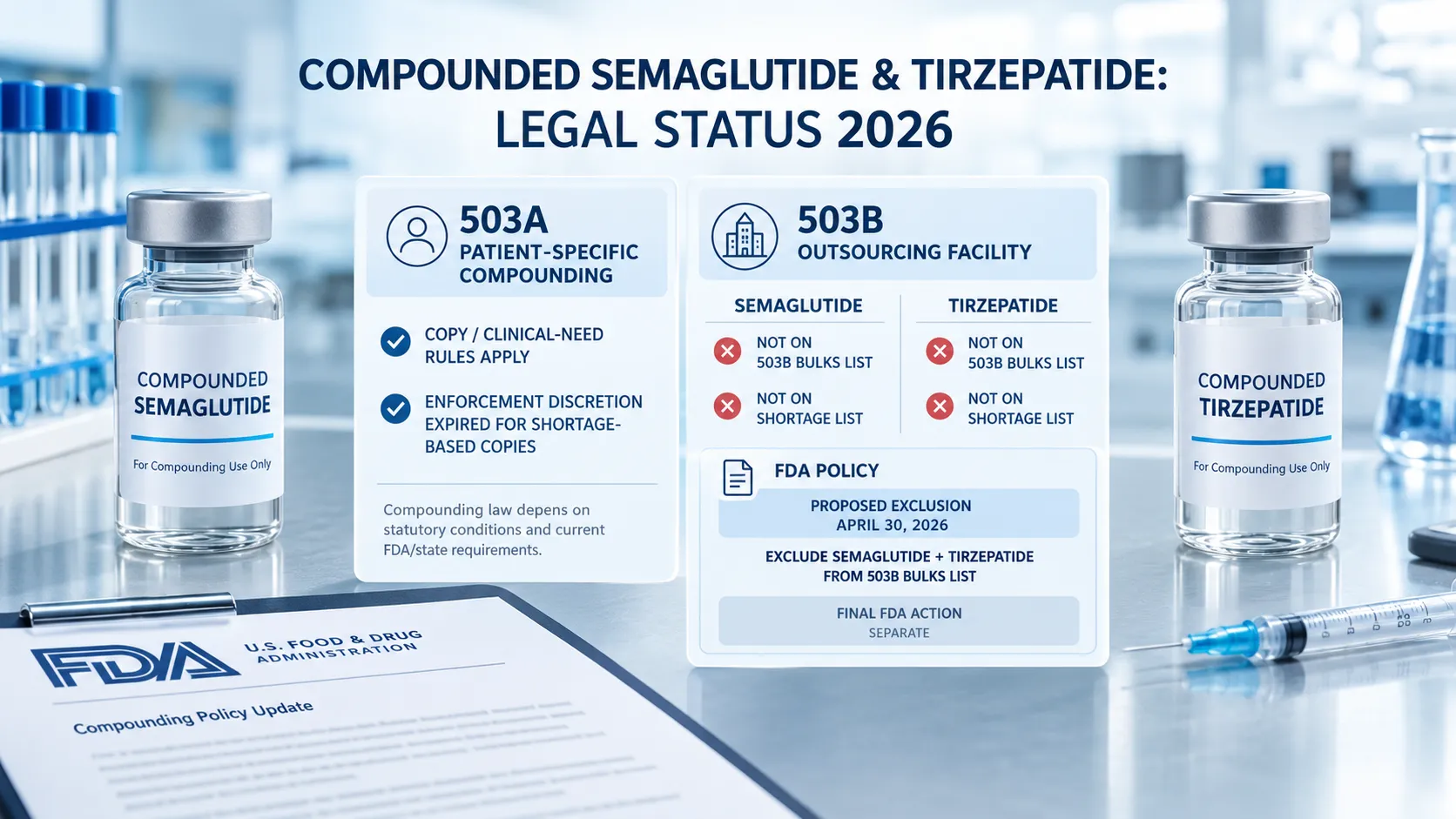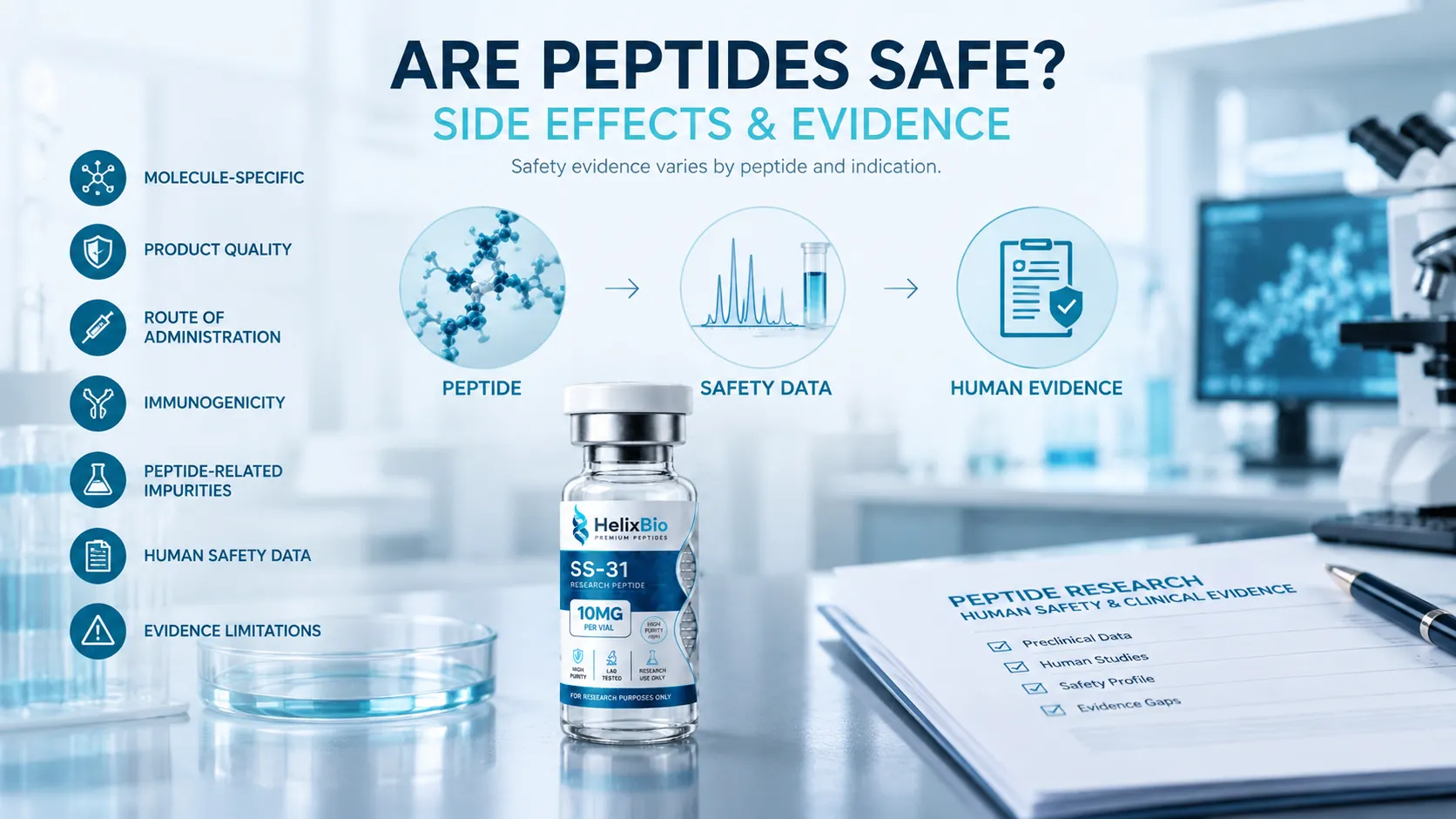

- Research Use Only (RUO) means a product has not received FDA approval for clinical use, diagnostics, or human consumption.
- RUO peptides are entirely legal in the USA when purchased and used strictly for laboratory research and method development.
- The FDA's 21 CFR 809.10(c)(2)(i) and 21 CFR 312 govern the labeling and investigational use of unapproved substances.
- The RUO label is a legal designation, not merely a marketing disclaimer, and must be prominently displayed.
- Vendors are strictly prohibited from providing clinical-use instructions, dosing guidelines, or marketing RUO products as treatments.
- Many RUO peptides are manufactured to high purity standards (>98% HPLC) and should be verified via batch-specific Certificates of Analysis.
As the field of biotechnology expands, so does the prevalence of synthesized peptides in laboratory settings. From metabolic studies to advanced regenerative models utilizing compounds like BPC-157 and GHK-Cu, investigators frequently ask: Are research peptides legal in the USA? The short answer is yes, but their legality is strictly governed by their intended use and regulatory labeling.
In the United States, the purchase, sale, and handling of unapproved synthetic peptides are regulated primarily through the FDA's "Research Use Only" (RUO) framework. Understanding this classification is absolutely essential for vendors, researchers, and academic institutions to maintain compliance and avoid severe legal repercussions.
The Definition of Research Use Only (RUO)
Research Use Only (RUO) is a regulatory classification indicating that a product has not been evaluated or approved by the FDA (or equivalent regulatory bodies) for use in clinical diagnostics, therapeutic applications, or human consumption. This label appears on a wide range of products including peptides, reagents, antibodies, and chemical reference standards.
Crucially, the RUO designation is not a quality judgment. It does not mean the product is inferior, impure, or unsuitable for rigorous scientific work. In fact, many RUO peptides are manufactured to the same purity standards (>98% HPLC) as pharmaceutical-grade compounds but lack the formal regulatory submission and approval pathway.
FDA Regulatory Frameworks Governing RUO
The FDA defines and restricts RUO products through specific sections of the Code of Federal Regulations (CFR):
21 CFR 809.10(c)(2)(i)
This statute defines RUO products in the context of in vitro diagnostics (IVDs) as products in the laboratory research phase of development that are not intended for use in clinical procedures. According to labeling requirements, RUO products must prominently display "For Research Use Only. Not for use in diagnostic procedures" or similar restriction language.
21 CFR 312: Investigational New Drug (IND)
The Investigational New Drug (IND) regulations govern how unapproved substances may be used in research settings. Unless a peptide has an active IND application for clinical trials, it cannot be legally administered to humans. RUO products have no approved medical indications and may not be promoted for any clinical application.
The FD&C Act Section 201(g)
The Federal Food, Drug, and Cosmetic Act defines a "drug" broadly as any substance intended for use in the diagnosis, cure, mitigation, treatment, or prevention of disease. If a vendor sells an RUO peptide but markets it as a cure or treatment, they illegally cross the line into selling an unapproved new drug.
Vendor and Buyer Obligations
Compliance requires strict adherence to behavior and labeling by both the supplier and the researcher.
Obligation Type | Details & FDA Expectations |
|---|---|
Truthful Labeling | The RUO label must accurately reflect the product status and appear prominently on all vials and packaging. |
No Clinical Promotion | Vendors may not provide customer support, training materials, or marketing content that supports using RUO products in clinical settings. |
Record Keeping | Vendors should maintain sales records and customer qualification documentation showing products are sold to legitimate research entities. |
No Clinical Application | RUO products may not be used in clinical diagnostics, patient treatment, or any procedure that directly affects patient care decisions. |
The FDA has issued numerous warning letters to companies marketing RUO-labeled products while providing clinical-use instructions, clinical validation data, or customer support for clinical applications.
Quality Assurance in RUO Peptides
Even though RUO peptides are exempt from Phase I-III clinical trials and post-market surveillance, high-quality vendors self-regulate by providing comprehensive Certificates of Analysis (COA). A batch-specific COA should always be available showing HPLC purity, mass spectrometry confirmation, and other relevant quality metrics. Researchers must verify these COAs to ensure experimental consistency and eliminate variables caused by impurities.
In summary, research peptides are entirely legal in the USA when acquired, labeled, and utilized exclusively for laboratory research. For a practical walkthrough of sourcing compliant material, see our guide on how to buy research peptides online in the USA, and review our medical disclaimer for the research-use framing that applies across the catalog. By understanding and respecting the RUO designation, researchers can legally procure high-purity compounds to advance scientific understanding safely.
Frequently Asked Questions
Yes, research peptides are legal to purchase and possess in the USA, provided they are bought and used strictly for laboratory research and development.
RUO stands for Research Use Only, a regulatory classification indicating the product has not been evaluated or approved by the FDA for clinical or therapeutic applications.
No. The RUO designation is not a quality judgment; many RUO peptides are manufactured to the same purity standards (>98% HPLC) as pharmaceutical-grade compounds.
Absolutely not. RUO products have no approved medical indications and may not be used in any procedure that directly affects patient care or human health.
It is an FDA regulation that defines RUO products in the laboratory research phase that are not intended for use in clinical procedures.
Providing clinical-use instructions violates RUO compliance, effectively turning the peptide into an unapproved new drug and inviting severe FDA warning letters.
Legitimate vendors provide a batch-specific Certificate of Analysis (COA) showing HPLC purity and mass spectrometry confirmation.
Unlike FDA-approved products, RUO vendors have no legal obligation to report adverse events, though responsible vendors maintain internal quality complaint systems.
A drug is defined broadly as any substance intended for use in the diagnosis, cure, mitigation, treatment, or prevention of disease.
Customs may require documentation of research intent and institutional affiliation to verify the imported peptides are legitimately for research purposes.
No. FDA-approved products complete these trials, but RUO products undergo none of these steps as they are not meant for clinical use.
Vendors should maintain records showing products are sold to legitimate research entities, universities, and pharmaceutical companies, not individuals for personal use.
Helix Bio Chem Team
Research & Product Team
Our in-house team tracks published peptide research and translates it into clear, source-cited summaries for the research community.
Reviewed by in-house research chemists
support@helixbiochem.com