- The FDA 503A Bulks List is the federal register of bulk drug substances that licensed pharmacists may use to compound patient-specific prescriptions, established only through formal rulemaking.
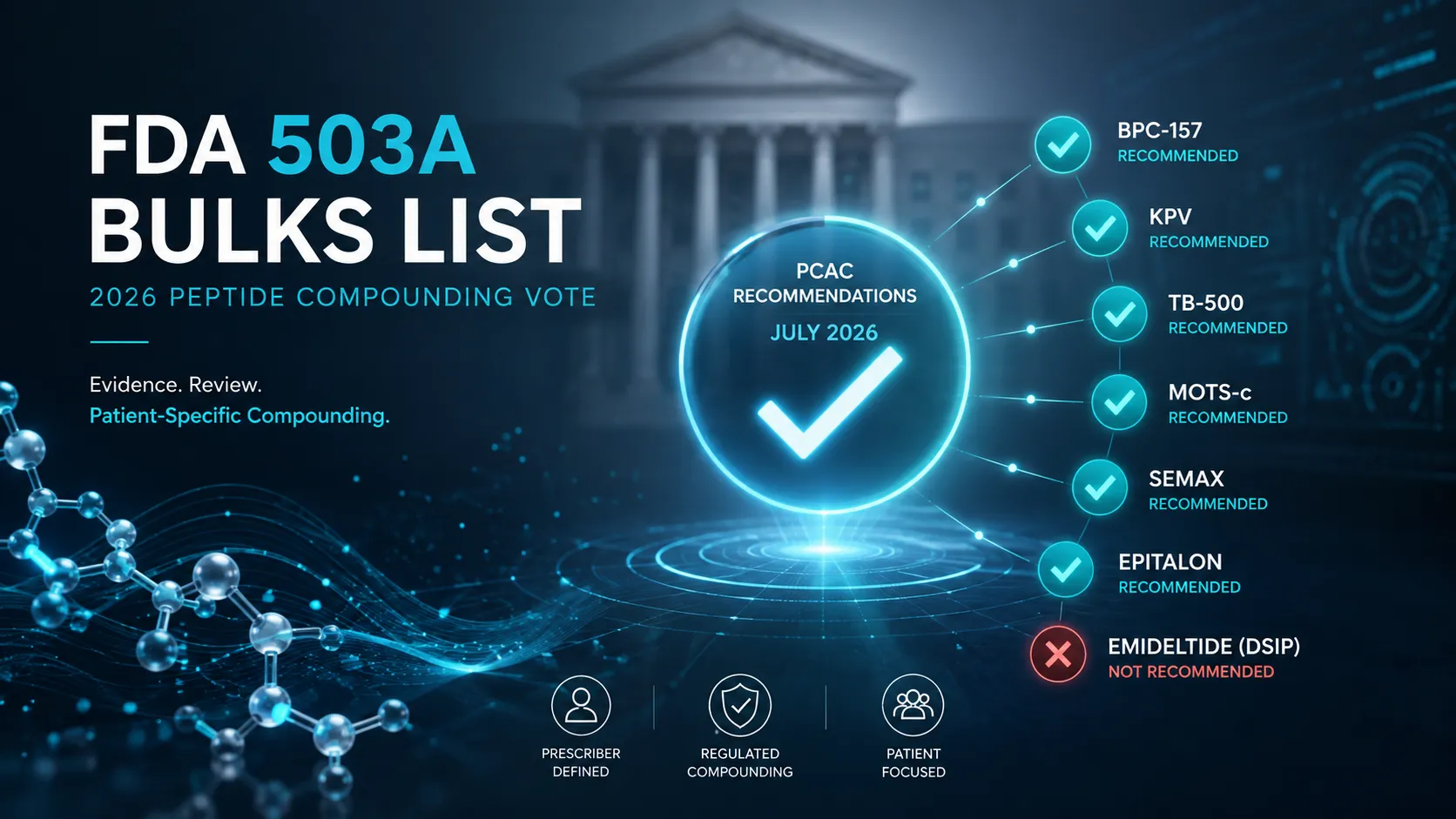
- The FDA Pharmacy Compounding Advisory Committee met July 23 and 24, 2026, and recommended six of seven nominated peptides for the 503A Bulks List, rejecting only emideltide.
- The six substances recommended were BPC-157, KPV, TB-500, MOTS-c, Semax, and Epitalon, each considered in both free base and acetate forms.
- FDA staff had recommended against all seven nominations, citing incomplete chemical characterization, limited human clinical data, and immunogenicity concerns.
- A PCAC recommendation is advisory and nonbinding, and the FDA is not legally required to adopt it.
- None of the six recommended peptides may be lawfully compounded under Section 503A today, and the FDA retains authority to take enforcement action against pharmacies that compound them.
- Only formal notice-and-comment rulemaking by the FDA or an act of Congress amending the Federal Food, Drug, and Cosmetic Act can change compounding eligibility.
- Inclusion on the 503A Bulks List is not FDA approval and does not change the research-use-only classification of research-grade material.
The FDA 503A Bulks List explained in one sentence: it is the federal register of bulk drug substances that licensed pharmacists and physicians may lawfully use to compound patient-specific prescriptions, and nothing gets on it without formal rulemaking. On July 23 and 24, 2026, the FDA's Pharmacy Compounding Advisory Committee voted to recommend adding six peptide substances to that list. Headlines treated the vote as a legalization event. It was not one, and the gap between what the committee did and what the coverage implied is the reason this explainer exists.
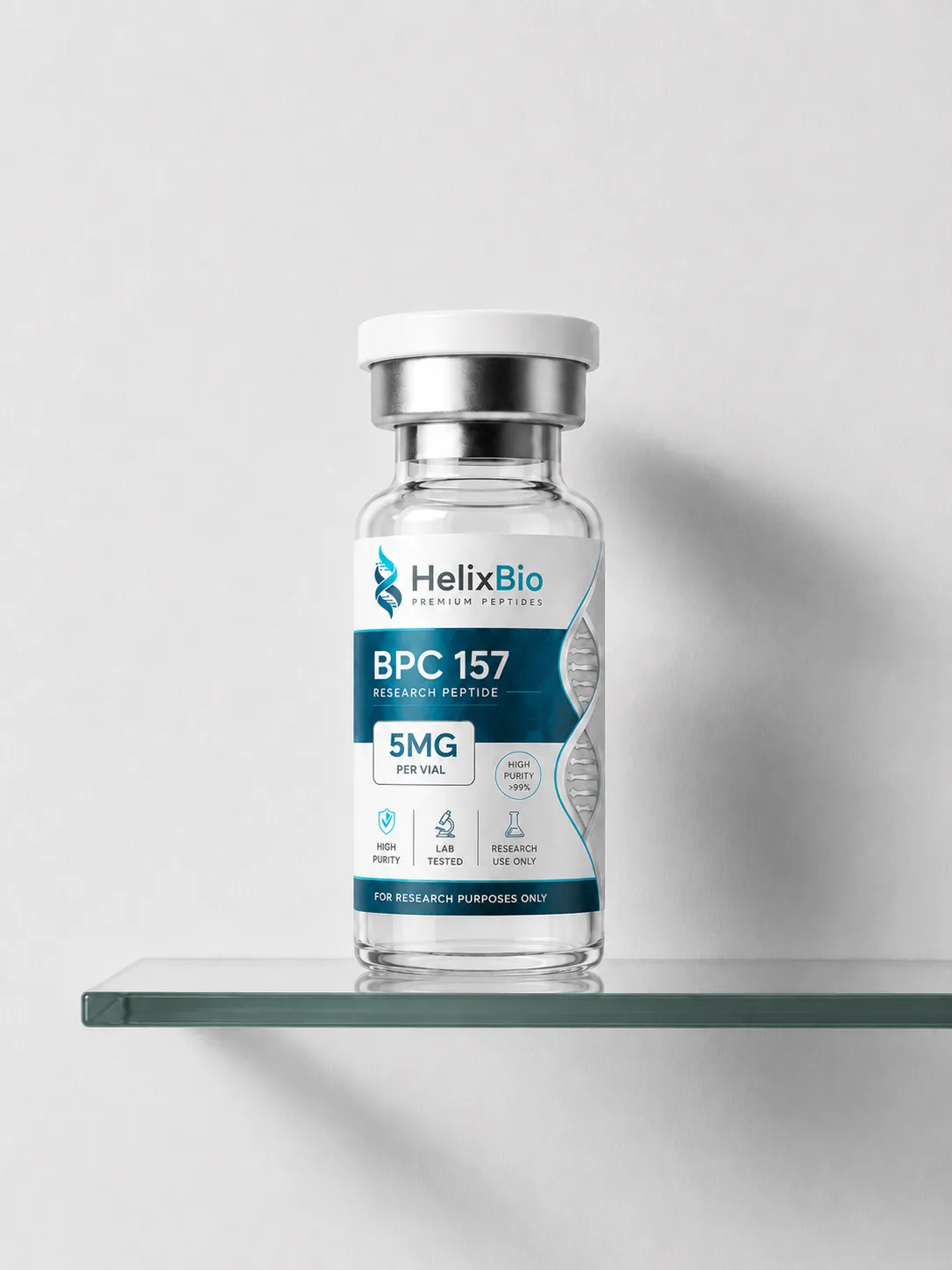
BPC-157
RESEARCH PEPTIDE
BPC-157 is a synthetic pentadecapeptide, a short chain of 15 amino acids derived from a protective protein found in gastric juice. It's one of the most widely studied research peptides in the biotech space, referenced across laboratory literature on tissue repair, angiogenesis, and gastrointestinal research models. Helix Bio's BPC-157 is manufactured for laboratory use, supplied as a lyophilized powder, and backed by a certificate of analysis for every batch. It's intended strictly for qualified researchers, laboratories, and academic institutions — not for human or animal use.
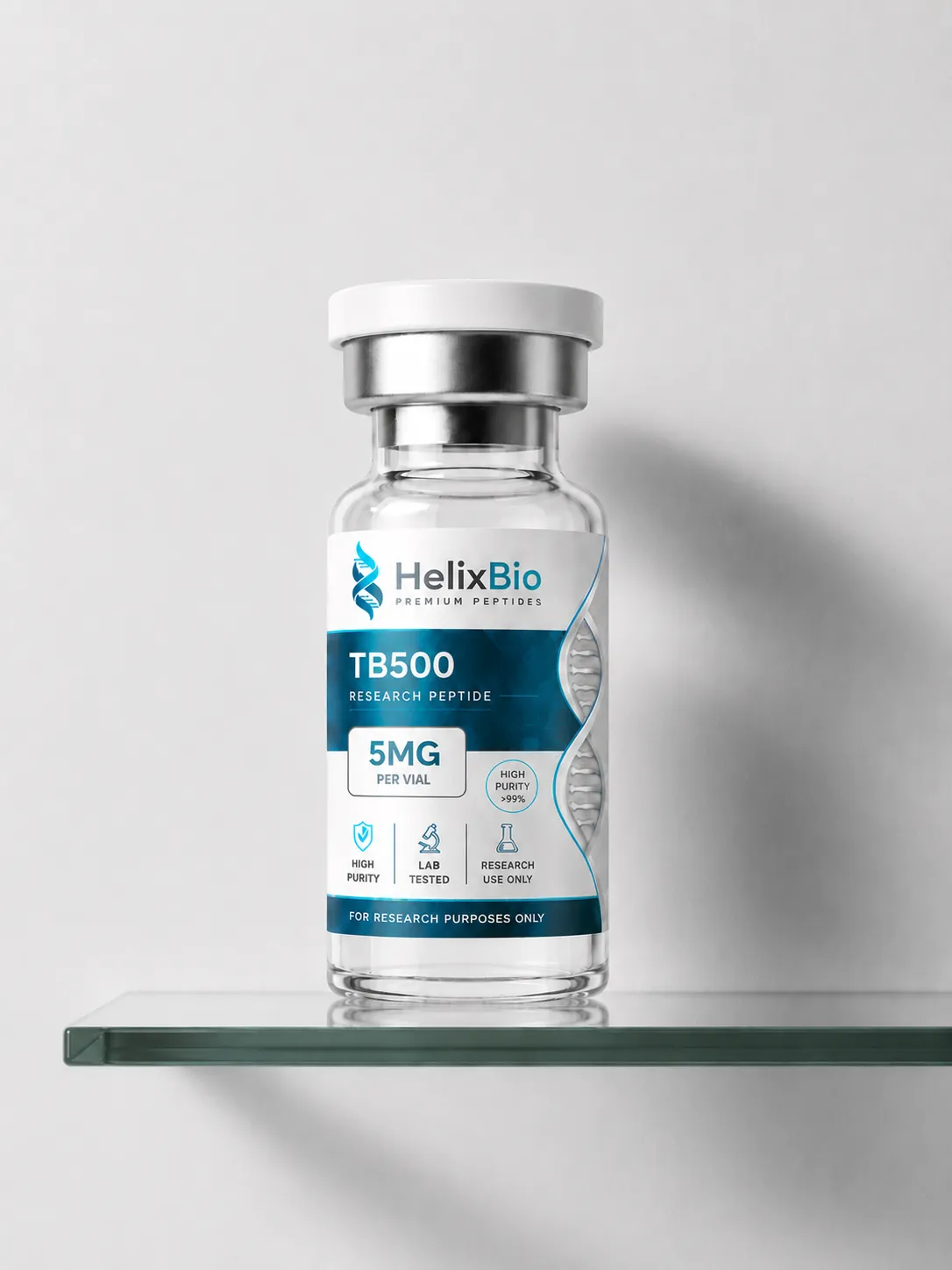
TB-500
RESEARCH PEPTIDE
TB-500 is a synthetic peptide fragment derived from Thymosin Beta-4, a naturally occurring protein involved in actin regulation within cells. It's one of the most referenced research peptides in laboratory literature on cell migration, angiogenesis, and tissue repair models. Helix Bio's TB-500 is manufactured for laboratory use, supplied as a lyophilized powder, and backed by a certificate of analysis for every batch. It's intended strictly for qualified researchers, laboratories, and academic institutions studying cellular repair mechanisms — not for human or animal use.
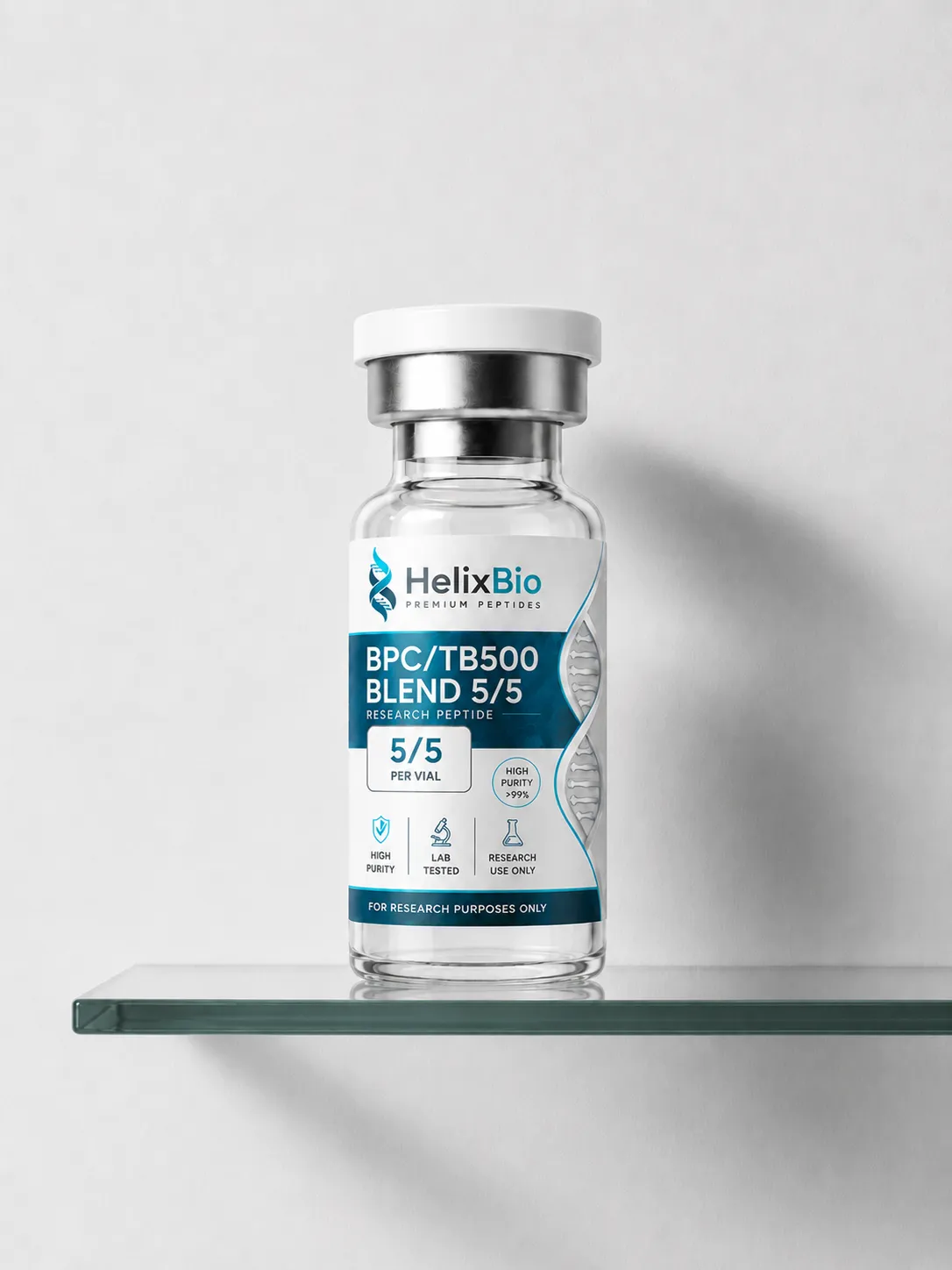
BPC-157 / TB-500 Blend
RESEARCH PEPTIDE
The BPC-157/TB-500 blend combines two of the most studied research peptides — BPC-157, a synthetic pentadecapeptide derived from gastric juice, and TB-500, a synthetic fragment of Thymosin Beta-4 — into a single pre-measured vial. Researchers use blended vials like this to simplify combined-pathway study protocols instead of reconstituting and dosing two separate compounds. Helix Bio's blend is manufactured for laboratory use, supplied as a lyophilized powder with a clearly labeled mg-per-compound ratio, and backed by a certificate of analysis for every batch. It's intended strictly for qualified researchers and laboratories — not for human or animal use.
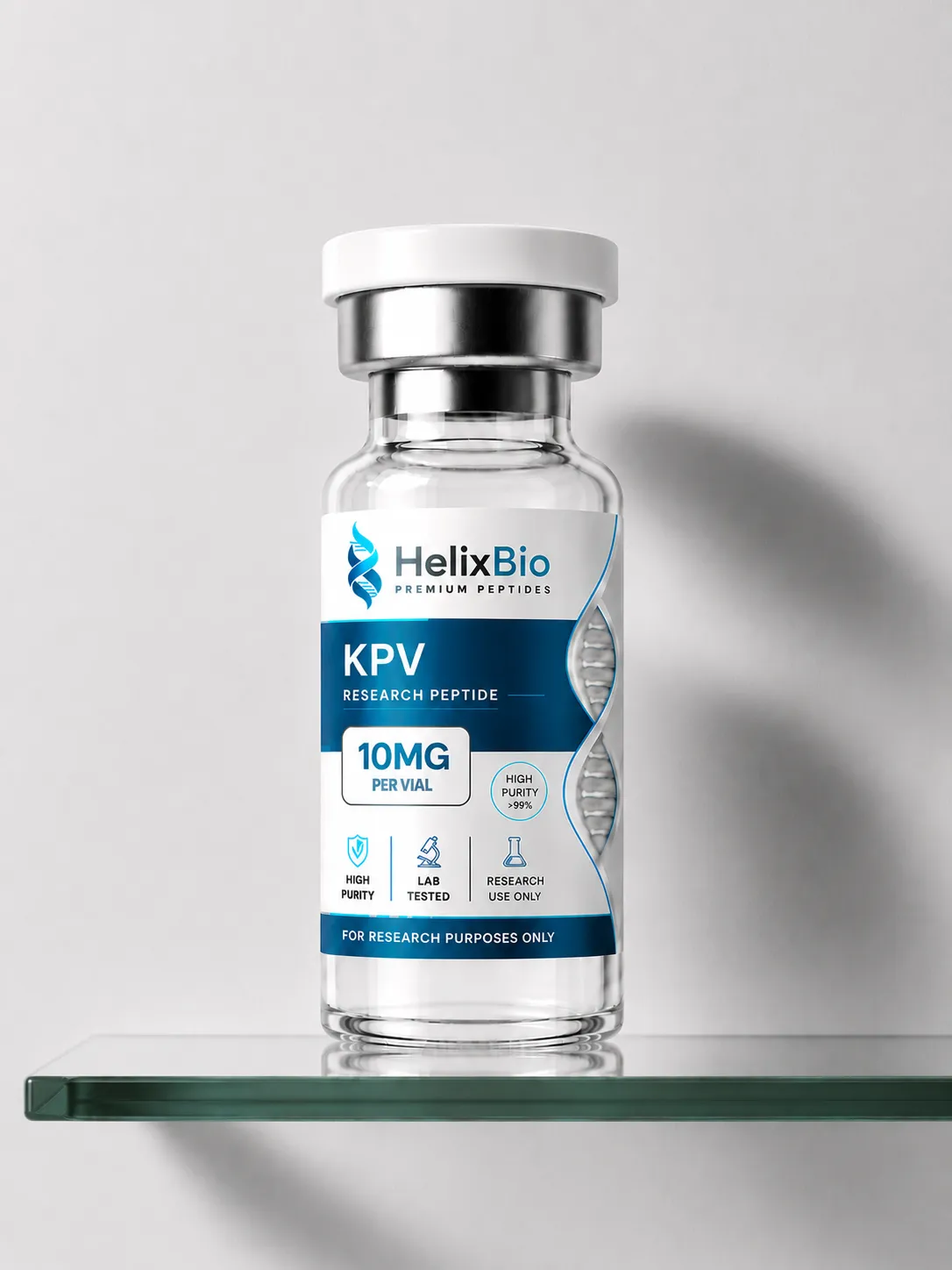
KPV
RESEARCH PEPTIDE
KPV is a small synthetic tripeptide derived from the C-terminal fragment of alpha-melanocyte-stimulating hormone (alpha-MSH). It's a compact, well-defined research compound referenced in laboratory literature examining anti-inflammatory pathways, gut barrier function, and cytokine modulation. Helix Bio's KPV is manufactured for laboratory use, supplied as a lyophilized powder, and backed by a certificate of analysis for every batch. It's intended strictly for qualified researchers, laboratories, and academic institutions — not for human or animal use.
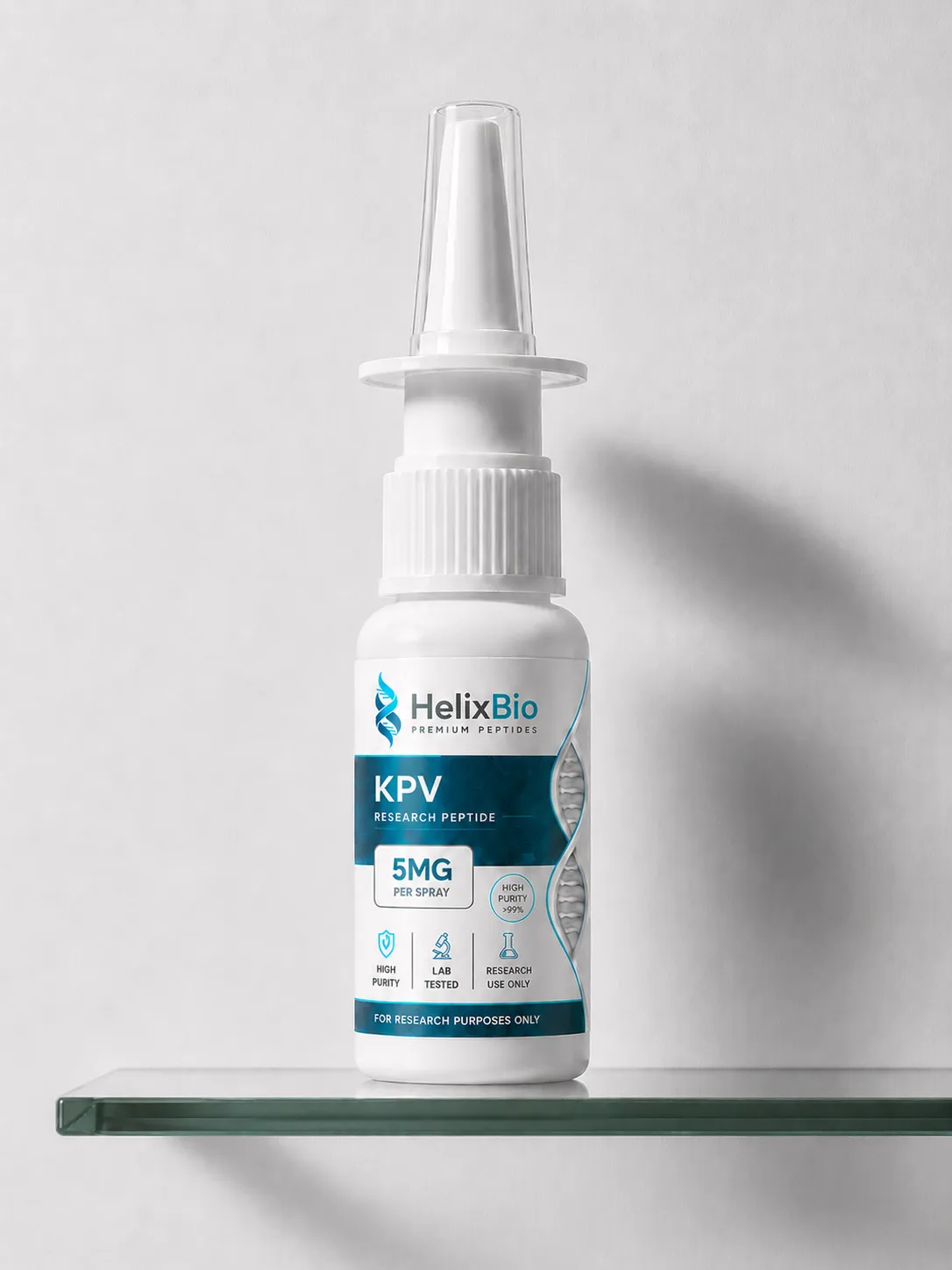
KPV Spray
RESEARCH PEPTIDE
KPV Spray is a research-use formulation containing KPV, a short tripeptide composed of lysine, proline, and valine. KPV corresponds to the C-terminal tripeptide sequence of alpha-melanocyte-stimulating hormone (α-MSH) and has been investigated in laboratory research involving peptide signaling, cellular pathways, intestinal biology, and molecular interactions. Helix Bio supplies KPV Spray strictly as a research and laboratory material. It is intended for qualified researchers and controlled experimental environments and is not intended for human or veterinary use.
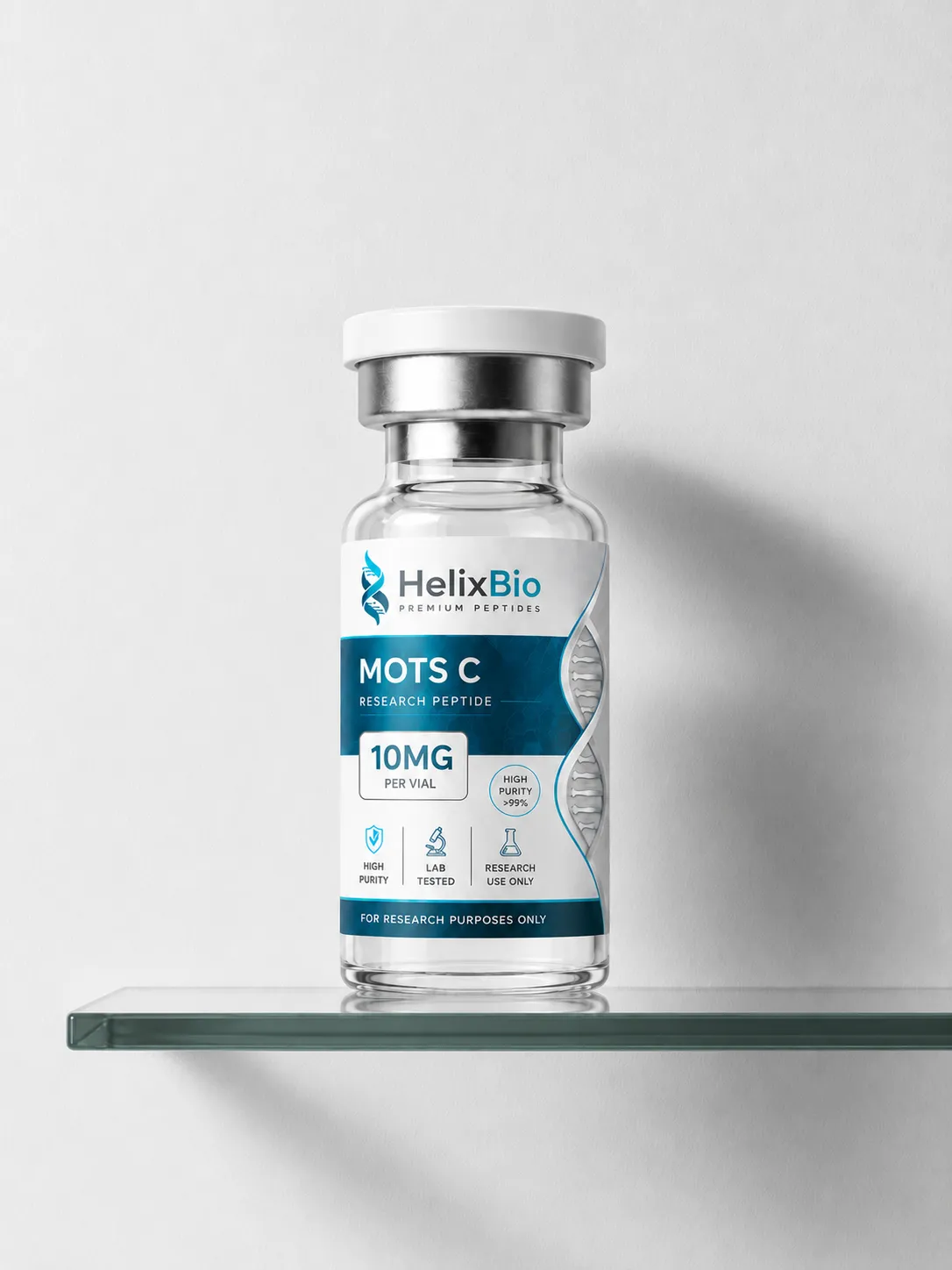
MOTS-C
RESEARCH PEPTIDE
MOTS-C is a mitochondrial-derived peptide (MDP) made up of 16 amino acids and encoded within a short open reading frame of the mitochondrial genome, rather than nuclear DNA. Since its identification, it has become one of the more closely studied peptides in mitochondrial biology, largely because it appears to act as a signaling molecule between mitochondria and the rest of the cell. Helix Bio supplies MOTS-C as a lyophilized research peptide, manufactured to a purity standard of 99% or higher and tested in-house before every batch ships. It is sold exclusively for laboratory research use by qualified professionals — not for human or animal use, and not for human consumption.
What the FDA 503A Bulks List Actually Is
Section 503A of the Federal Food, Drug, and Cosmetic Act carves out an exemption. Drug products compounded by a licensed pharmacist or physician for an identified individual patient are largely exempt from the FDA requirements that govern manufactured drugs, including premarket approval, cGMP manufacturing standards, and adequate directions for use.
That exemption is conditional. A bulk drug substance used in 503A compounding must satisfy one of three statutory routes:
- It is the subject of an applicable United States Pharmacopeia or National Formulary monograph.
- It is a component of an FDA-approved drug product.
- It appears on a list of bulk drug substances established by the FDA through rulemaking, known as the 503A Bulks List.
The seven peptides reviewed in July 2026 fail the first two routes. None has an applicable pharmacopeial monograph, and none is a component of an approved drug. Route three was therefore the only pathway available, which is precisely why the advisory committee was convened.
Failing all three routes means a substance cannot be lawfully compounded under Section 503A. That was the legal status of all seven nominated peptides before the July 2026 meeting, and it remains their legal status now.
503A Compounding Versus 503B Outsourcing
The distinction trips up most readers arriving at this topic, and it changes what the vote means in practice.
503A compounding happens in a traditional pharmacy. A prescriber writes for an individual, identified patient, and a pharmacist prepares that specific preparation. Volume is small, the preparation is patient-specific, and oversight is primarily by state boards of pharmacy.
503B outsourcing facilities register with the FDA, may compound in bulk without patient-specific prescriptions, and are subject to cGMP requirements and direct FDA inspection. They operate from a separate bulk substances list with its own criteria.
The July 2026 vote concerned the 503A list only. A pharmacy compounding a preparation for one named patient is the activity at issue, not commercial-scale production and not retail sale of research-grade material.
What Happened at the July 2026 PCAC Meeting
The Pharmacy Compounding Advisory Committee met at the FDA's White Oak campus in Silver Spring, Maryland across two days, under public docket FDA-2026-N-2979. Seven peptide bulk drug substances were on the agenda, each considered in both free base and acetate forms.
Substance | Also known as | Day reviewed | Committee outcome |
|---|---|---|---|
BPC-157 | Body Protection Compound 157 | July 23 | Recommended for inclusion |
KPV | Lysine-proline-valine tripeptide | July 23 | Recommended for inclusion |
TB-500 | Thymosin beta-4 fragment | July 23 | Recommended for inclusion |
MOTS-c | Mitochondrial ORF of the 12S rRNA type-c | July 23 | Recommended for inclusion |
Emideltide | Delta sleep-inducing peptide, DSIP | July 24 | Not recommended |
Semax | Semax | July 24 | Recommended for inclusion |
Epitalon | Epithalon, epithalamin | July 24 | Recommended for inclusion |
Six of seven received an affirmative recommendation. Emideltide was the single rejection.
Why the Vote Drew Attention
The committee reached a different conclusion than the agency's own reviewers. In the briefing materials prepared for the meeting, FDA staff wrote that there was insufficient evidence to evaluate the effectiveness and safety of the nominated peptides, citing incomplete chemical characterization, thin human clinical data, and immunogenicity concerns. Staff had recommended against all seven. Some FDA scientists restated those objections during the meeting itself.
The committee voted the other way on six of them. The votes were split rather than lopsided, and the divergence between career reviewers and the advisory panel is the structural fact that makes the outcome unusual rather than routine.
Health and Human Services Secretary Robert F. Kennedy Jr. has publicly supported broader peptide availability, and members appointed to the committee during his tenure participated in the votes. The policy argument advanced by proponents is that moving these substances into regulated compounding would draw consumers away from an unregulated gray market where purchasers may receive contaminated material. Opponents, including FDA reviewers, argued the evidence base does not support compounding eligibility regardless of market dynamics.
What the FDA Reviewers Actually Objected To
The staff objections are worth understanding on their merits rather than treating them as bureaucratic resistance, because they identify the specific evidentiary gaps that any future rulemaking would have to address.
Three categories of concern appear in the agency's assessment. The first is incomplete chemical characterization: for several of these substances, the physicochemical properties, stability profile, and impurity spectrum of bulk material are not documented to the standard the agency applies to substances used in compounded preparations. The second is the thinness of the human clinical record. Much of the supporting literature for these compounds consists of animal work, in vitro studies, or small trials published outside the peer-reviewed English-language literature. The third is immunogenicity. Peptides administered parenterally can provoke an immune response, and the agency's position has been that the immunogenic potential of these specific substances has not been adequately characterized.
Committee members who voted in favor generally weighed these gaps against access considerations and the argument that regulated compounding is preferable to unregulated purchase. That trade-off, rather than a dispute about the underlying data, is what separated the two positions.
A Recommendation Is Not a Rule
This is the part that most coverage compressed into something misleading, so it is worth stating without hedging.
The PCAC provides independent expert advice and issues nonbinding recommendations. Congress did not give it final regulatory authority. The FDA decides which substances appear on the 503A Bulks List, and the agency is not legally required to adopt any recommendation the committee makes.
As a result, the July 2026 votes changed no law. The six recommended peptides still cannot be lawfully compounded under Section 503A. The FDA retains authority to take enforcement action against pharmacies that compound them.
A useful mental model: the committee's vote is a recommendation entering the agency's policy record. Only two mechanisms can actually change what a pharmacy may compound — formal notice-and-comment rulemaking by the FDA, or an act of Congress amending the Federal Food, Drug, and Cosmetic Act.
What Formal Rulemaking Would Involve
If the FDA elects to act on the recommendations, the process runs through the Administrative Procedure Act. The agency would publish a proposed rule, open a public comment period during which stakeholders may submit scientific data and objections, review the submissions, and then publish a final rule with an effective date.
That sequence takes months at minimum and frequently longer. It also has more than one possible ending. The agency may decline to propose a rule at all, may propose adding some substances and not others, or may propose inclusion with conditions attached.
What Changes, and What Stays Exactly the Same
Scenario | 503A compounding pharmacies | FDA approval status | Research-use-only supply |
|---|---|---|---|
Today, post-vote | Cannot lawfully compound these substances | None approved | Unchanged, research use only |
If FDA proposes a rule | Still cannot compound during comment period | None approved | Unchanged, research use only |
If a final rule adds them | May compound patient-specific prescriptions | Still not FDA-approved drugs | Unchanged, research use only |
If FDA declines | Cannot compound; enforcement risk continues | None approved | Unchanged, research use only |
The rightmost column does not vary. That is the operative point for anyone reading this from a research supply perspective: inclusion on the 503A Bulks List is not FDA approval, and it does not convert research-use-only material into anything else. The list governs what a licensed pharmacist may compound for a named patient. It says nothing about the regulatory classification of compounds sold for laboratory research.
The Six Recommended Substances
Each of the following is supplied by Helix Bio strictly for research use, and that classification is unaffected by the committee's recommendation.
BPC-157 is a synthetic pentadecapeptide whose research literature centers on angiogenic signaling and tissue repair models. It draws the largest share of public attention among the seven and is available as BPC-157 and in a BPC-157 / TB-500 blend. The mechanistic comparison between the two compounds is covered in the BPC-157 versus TB-500 analysis.
TB-500 corresponds to the active region of thymosin beta-4, studied for G-actin sequestration and cell migration. Available as TB-500.
KPV is a tripeptide fragment of alpha-melanocyte-stimulating hormone studied primarily in models of intestinal and mucosal inflammation, with NF-kappaB signaling as the characterized target. Available as KPV and KPV spray.
MOTS-c is a 16-amino-acid mitochondrial-derived peptide encoded in the mitochondrial genome, researched largely through AMPK pathway activation and metabolic regulation. Available as MOTS-C.
Semax is a synthetic peptide derived from a fragment of adrenocorticotropic hormone, with a Russian clinical literature base and research interest in neurotrophic signaling. Available as Semax and Semax spray.
Epitalon is a synthetic tetrapeptide studied in telomerase and pineal regulation models, with much of its primary literature also originating in Russian-language publications. Available as Epitalon and Epitalon spray.
The One That Was Rejected
Emideltide, more commonly called delta sleep-inducing peptide or DSIP, was the only substance the committee declined to recommend. It remains available for research use as DSIP and DSIP spray. Its practical status is identical to the other six today, since none of them may be compounded either. The difference matters only if the FDA proceeds to rulemaking, at which point DSIP would lack even an advisory recommendation supporting its inclusion.
Why RUO Status Is Independent of This Process
Research-use-only material sits outside the compounding framework entirely. RUO products are supplied for laboratory investigation, are not intended for human or veterinary administration, and carry no approved indication. Nothing about the 503A rulemaking pathway alters that.
Helix Bio is not a 503A compounding pharmacy and not a 503B outsourcing facility. The company supplies research-grade compounds with certificate of analysis documentation for laboratory use. Whether the FDA eventually adds BPC-157 to a compounding list has no bearing on the classification of research-grade BPC-157, because the two categories are governed by different sections of the statute for different purposes.
Researchers evaluating supply sources will find the underlying legal framework covered in the research peptide legality and RUO compliance guide, and the practical verification steps in the sourcing checklist for buying research peptides in the USA.
Reading Claims About This Vote Critically
Marketing language referencing the July 2026 votes has already appeared across the sector, and a few specific claims are worth flagging as inaccurate.
- Claims that any of these peptides is now "FDA approved" are false. Approval requires a new drug application demonstrating safety and efficacy for a specific indication. No such application has been approved for any of the seven.
- Claims that the vote made these compounds "legal" misstate the mechanism. The vote produced a recommendation, not a rule, and compounding these substances remains outside what Section 503A permits.
- Claims that the vote validates research-grade product quality confuse two unrelated things. The nominations concerned bulk drug substances for pharmacy compounding, and the committee reviewed chemical characterization and clinical evidence, not the quality of any particular vendor's material.
What Is Worth Tracking From Here
The signal to watch is not further committee activity. It is the Federal Register. A proposed rule addressing any of the six substances would open a public comment period and start the only process that can actually change compounding eligibility, and the absence of a proposed rule after a sustained interval would itself be informative about how the agency weighed a recommendation its own reviewers opposed. The docket from the meeting, FDA-2026-N-2979, remains the reference point for the underlying submissions and briefing materials.
Frequently Asked Questions
The 503A Bulks List is a list of bulk drug substances the FDA has established through rulemaking that licensed pharmacists and physicians may use to compound patient-specific prescriptions under Section 503A of the Federal Food, Drug, and Cosmetic Act. A substance may also qualify for compounding if it has an applicable USP or National Formulary monograph or is a component of an FDA-approved drug.
At its July 23 and 24, 2026 meeting, the Pharmacy Compounding Advisory Committee voted on whether seven peptide bulk drug substances should be added to the 503A Bulks List. The committee recommended six for inclusion and declined to recommend one.
The committee recommended BPC-157, KPV, TB-500, MOTS-c, Semax, and Epitalon for inclusion on the 503A Bulks List, each in both free base and acetate forms. Emideltide, also called delta sleep-inducing peptide or DSIP, was the only nomination the committee voted against.
No. The committee's recommendation is nonbinding and changed no law, so BPC-157 still cannot be lawfully compounded under Section 503A. The FDA retains authority to take enforcement action against compounding pharmacies that prepare it.
No. FDA approval requires a new drug application demonstrating safety and efficacy for a specific indication, and no such application has been approved for BPC-157 or any of the other six nominated peptides. Inclusion on a compounding bulk substances list is a separate regulatory mechanism from drug approval.
503A compounding takes place in a traditional pharmacy preparing a patient-specific prescription for an identified individual, overseen primarily by state boards of pharmacy. 503B outsourcing facilities register with the FDA, may compound without patient-specific prescriptions, are subject to cGMP requirements and FDA inspection, and operate from a separate bulk substances list.
FDA staff had recommended against all seven nominations in the briefing materials prepared for the meeting, citing incomplete chemical characterization, thin human clinical data, and immunogenicity concerns. The committee reached the opposite conclusion on six of them, creating a divergence between the agency's career reviewers and its advisory panel.
The FDA would need to complete formal notice-and-comment rulemaking, which involves publishing a proposed rule, opening a public comment period, reviewing submissions, and publishing a final rule. The alternative mechanism is an act of Congress amending the Federal Food, Drug, and Cosmetic Act.
Notice-and-comment rulemaking generally takes months at minimum and often considerably longer, because the agency must publish a proposed rule, allow a public comment period, and review submitted scientific data and objections before issuing a final rule. The process may also end without any substance being added.
No. Research-use-only material is supplied for laboratory investigation, is not intended for human or veterinary administration, and carries no approved indication. The 503A framework governs what a licensed pharmacist may compound for a named patient and operates independently of RUO classification.
No. Helix Bio is neither a 503A compounding pharmacy nor a 503B outsourcing facility. It supplies research-grade compounds with certificate of analysis documentation for laboratory research use only.
Emideltide, also known as DSIP, was the only nomination the committee declined to recommend for inclusion on the 503A Bulks List. In practical terms its current status matches the other six, since none of the seven may be compounded today, but it would lack an advisory recommendation if the FDA proceeds to rulemaking.
The meeting operated under public docket FDA-2026-N-2979, which contains the briefing materials and timely-filed public comments. Submissions other than those marked confidential are publicly viewable through the federal regulations docket system.
None of the seven nominated peptides has an applicable United States Pharmacopeia or National Formulary monograph, and none is a component of an FDA-approved drug product. That is why addition to the 503A Bulks List through rulemaking was the only available pathway to compounding eligibility.
Claims that the vote made any peptide FDA-approved or legal to compound are inaccurate, since the recommendation is nonbinding and no rule has been issued. Claims that the vote validates the quality of any particular vendor's material are also unsupported, because the committee reviewed chemical characterization and clinical evidence for bulk drug substances rather than individual suppliers.
- 01Werner MJ, Klock SM. FDA Advisory Committee Endorses Compounding of Certain Peptides. Holland & Knight Alert. August 4, 2026.
- 02U.S. Food and Drug Administration. July 23-24, 2026: Meeting of the Pharmacy Compounding Advisory Committee. Docket No. FDA-2026-N-2979.
- 03FDA Advisory Committee's Vote May Open A Drug-Compounding Back Door For Unapproved Peptides. Health Affairs Forefront. 2026.
- 04FDA Advisory Committee Voted Yes on Six Peptides. Now What? The Regulatory Road Ahead. Buchanan Ingersoll & Rooney PC. 2026.
- 05The Peptide Vote Heard Round the Compounding World. Boesen & Snow Law. 2026.
Helix Bio Chem Team
Research & Product Team
Our in-house team tracks published peptide research and translates it into clear, source-cited summaries for the research community.
Reviewed by in-house research chemists
support@helixbiochem.com