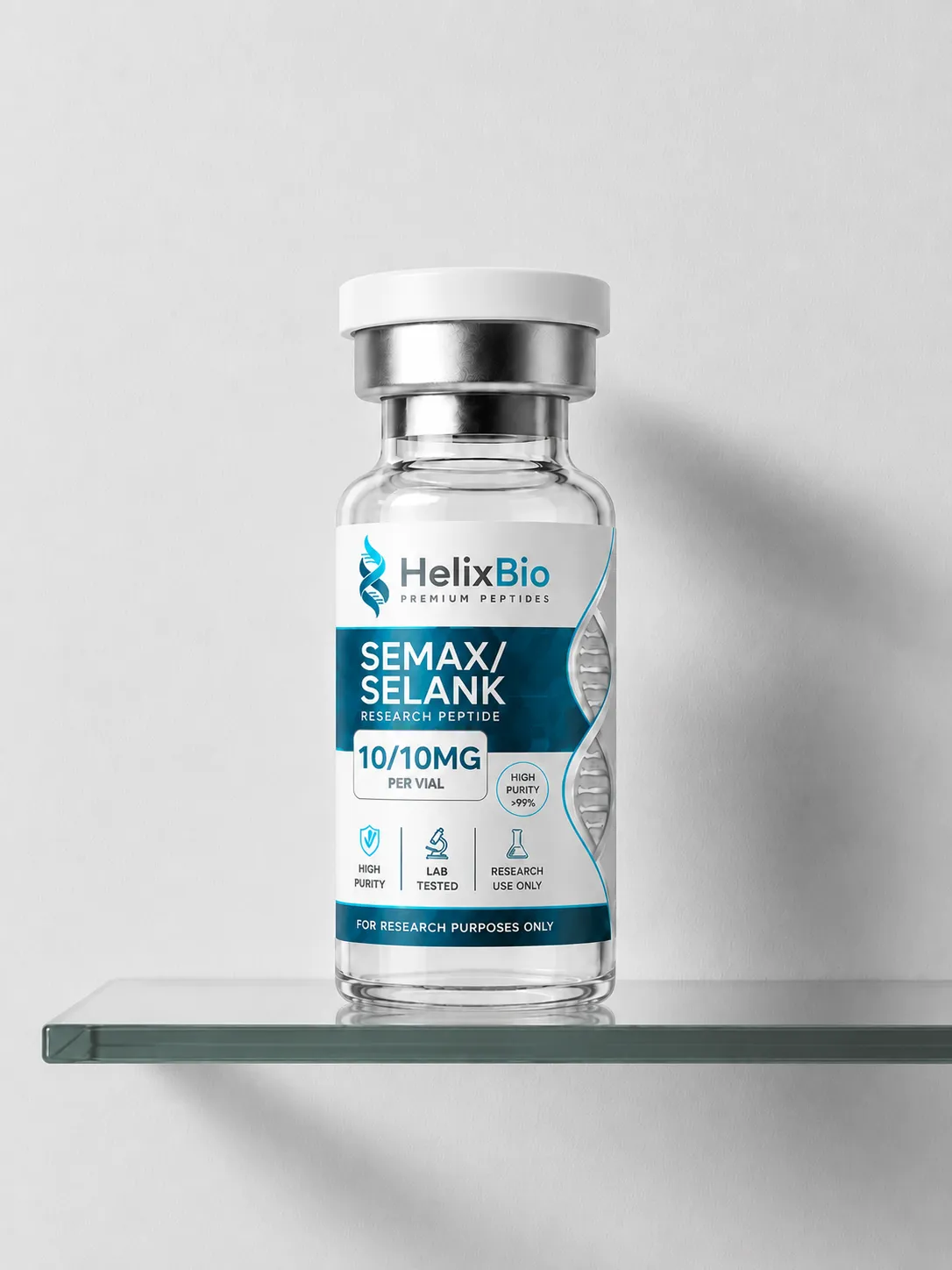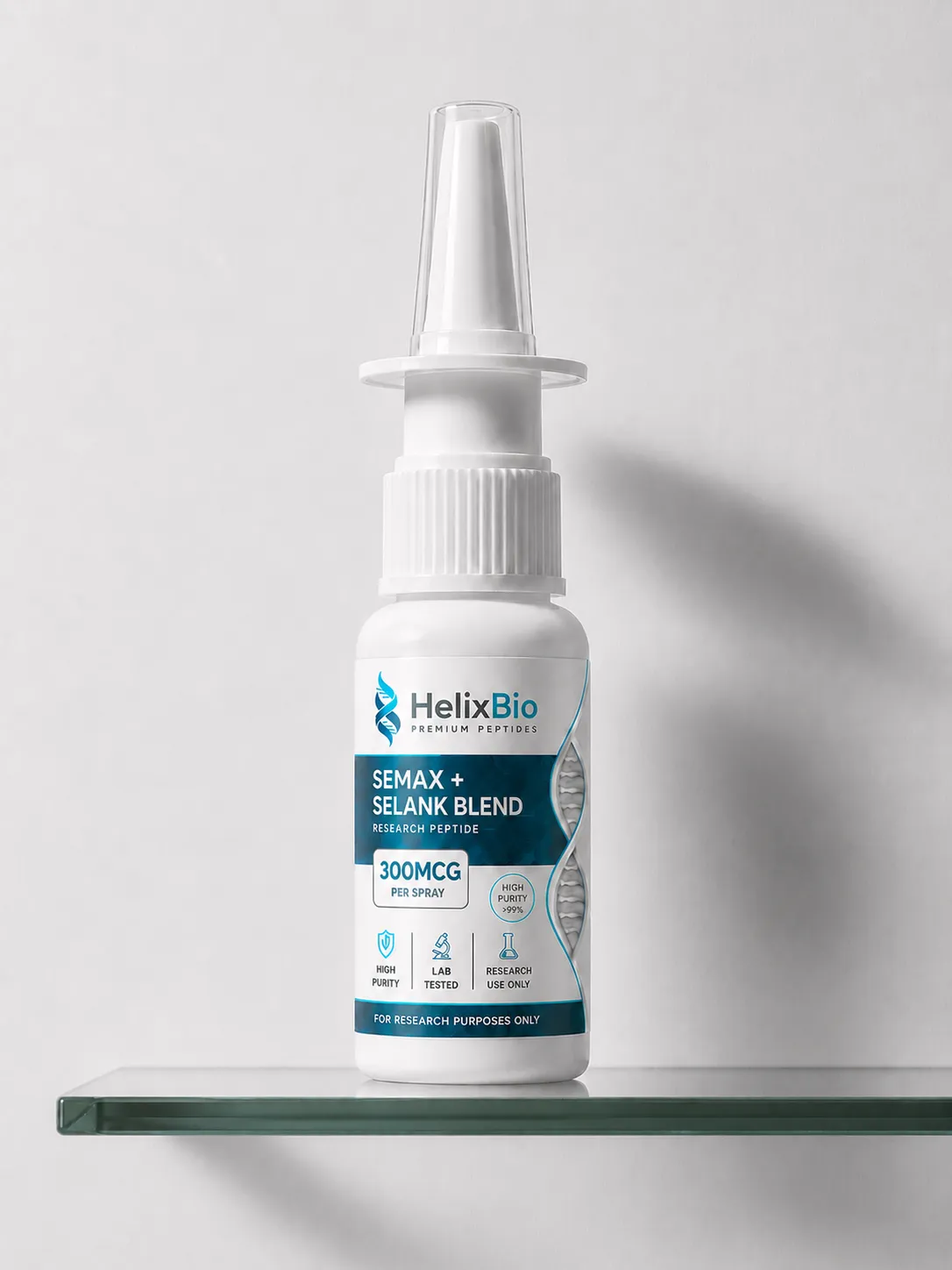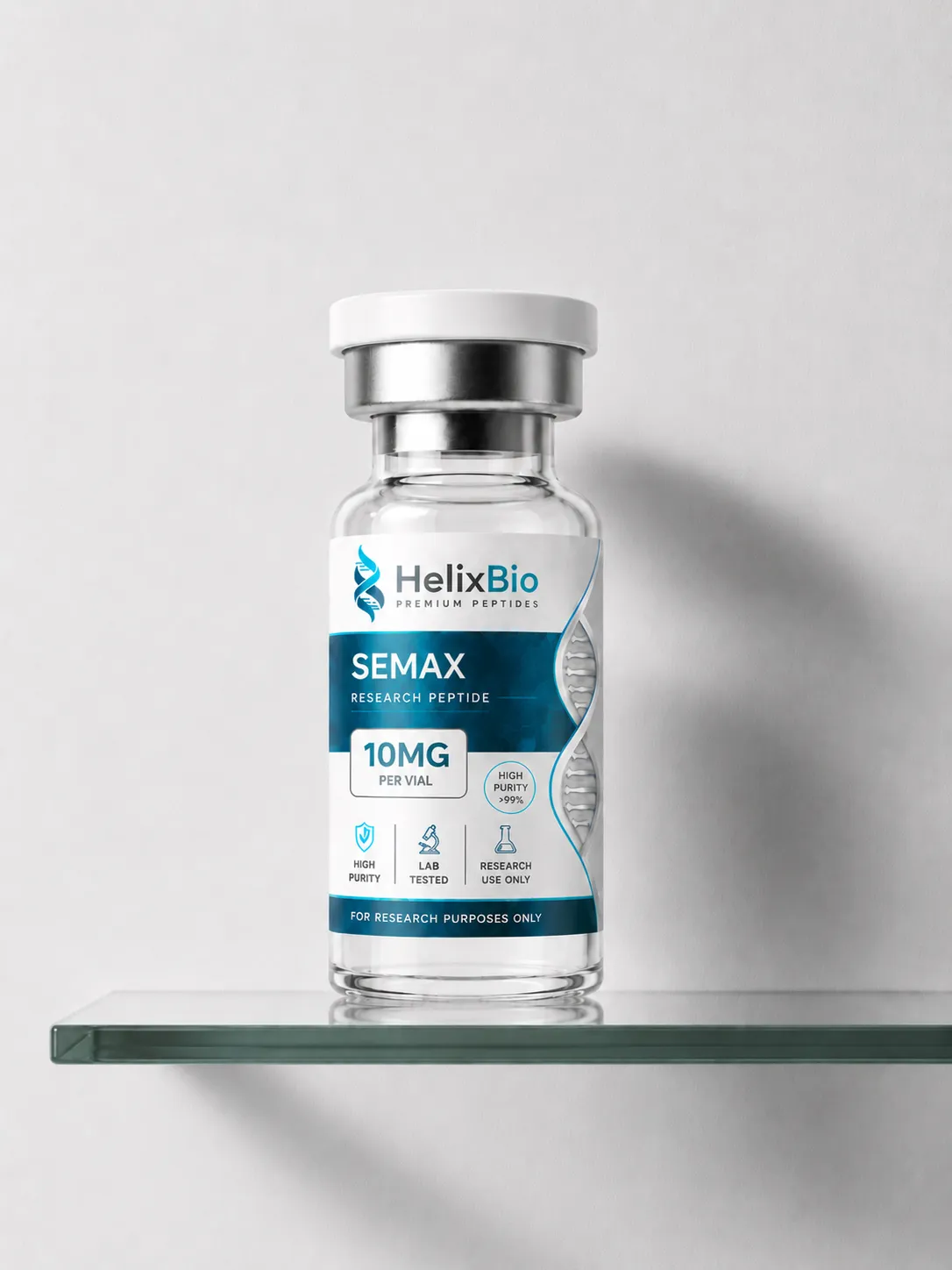
Semax is a synthetic heptapeptide derived from the sequence of the N-terminal fragment of adrenocorticotropic hormone (ACTH 4-10). It has been investigated in laboratory research involving neurotrophic signaling, BDNF expression, cellular signaling, and neurobiology. Helix Bio offers Semax as a research-use-only peptide for qualified laboratory and non-clinical research. It is not intended for human or veterinary use, ingestion, injection, diagnosis, treatment, or prevention of disease.
HPLC certified
Independent analysis
Highest standard
Full traceability
Semax is a synthetic seven-amino-acid peptide commonly described by the sequence Met-Glu-His-Phe-Pro-Gly-Pro. Scientific literature identifies it as an analog of the ACTH(4-10) fragment.
For research purposes, Semax is primarily relevant to investigations of peptide signaling and neurobiology. Published studies have examined its relationship with neurotrophic factors, including brain-derived neurotrophic factor (BDNF), as well as Trk receptor-related signaling.
Major content areas include:
Semax is a heptapeptide, meaning it consists of seven amino-acid residues. Its commonly reported sequence is Met-Glu-His-Phe-Pro-Gly-Pro. The molecule is structurally related to the ACTH(4-10) fragment, while the addition of the Pro-Gly-Pro portion distinguishes Semax as a modified peptide rather than native ACTH(4-10). This structural relationship makes Semax useful for research into how relatively small peptide modifications can influence molecular interactions and downstream biological signaling.
One of the most frequently studied aspects of Semax is its relationship with brain-derived neurotrophic factor (BDNF). In a published experimental study, researchers reported specific Semax binding in rat basal forebrain tissue and observed changes in BDNF protein levels following experimental administration. Another study examined Semax in rat hippocampal tissue and reported changes involving BDNF and TrkB expression and phosphorylation. These findings are relevant to basic research into neurotrophic signaling, but they do not establish that Semax produces equivalent effects in humans.
There is no single, fully established mechanism that explains every observed experimental effect of Semax. Research has investigated several molecular features, including BDNF expression, TrkB-related signaling, neurotrophin gene expression, specific peptide binding, cellular signaling responses, and brain-region-specific experimental effects. Because much of the mechanistic literature involves animal or cellular models, findings should be interpreted within the limitations of the specific experimental system.
Neurotrophic signaling is an important area of Semax research. BDNF is a neurotrophin involved in neuronal signaling and synaptic plasticity, and researchers have investigated whether Semax exposure changes BDNF-related molecular pathways in experimental models. This makes Semax a useful research subject for experiments focused on neurotrophin expression, BDNF signaling, Trk receptor pathways, gene-expression responses, peptide-mediated cellular signaling, and brain-region-specific molecular responses.
Semax and N-Acetyl Semax are related peptide research compounds, but they should not be treated as identical materials. The N-acetyl modification changes the chemical structure of the peptide. Researchers interested in comparing these compounds should consider molecular structure, chemical modification, analytical identity, purity profile, experimental model, and research objective.
Semax is relevant to research programs investigating the relationship between peptide structure and neurotrophic signaling. For laboratories evaluating a Semax research peptide supplier, analytical documentation is an important consideration — researchers should be able to establish what compound they received, understand the reported purity, and associate testing results with the relevant batch.
Helix Bio's quality program includes reversed-phase HPLC purity testing, LC-MS identity/molecular-weight confirmation, and batch-specific analytical documentation, with chromatograms and analytical information supplied with orders.
Semax is not intended for human consumption, injection, self-administration, veterinary use, or medical treatment.
| Field | Detail |
|---|---|
| Product Name | Semax |
| Alternative Description | ACTH(4-10)-related synthetic heptapeptide |
| Amino Acid Sequence | Met-Glu-His-Phe-Pro-Gly-Pro |
| Category | Research Peptide |
| Research Area | Cognitive & Nootropic / Neurobiology Research |
| Intended Use | Laboratory and non-clinical research only |
| Physical Form | Lyophilized powder |
| Purity | Confirm current Semax batch/COA |
| HPLC Testing | Reversed-phase HPLC used for peptide purity |
| MS Testing | LC-MS used for identity and molecular-weight confirmation |
| Certificate of Analysis | Confirm current batch documentation |
| Manufacturer/Supplier | Helix Bio |
| FDA Status | Not presented as an FDA-approved human-use product |
Semax has been investigated in experimental research involving learning, memory-related behavior, and neurotrophic signaling. Published studies have reported experimental changes in BDNF and TrkB-related measures. For a research-use product page, these findings should be described as research observations, not as evidence that Semax improves cognition in humans.
Published experimental literature has investigated Semax in models related to neurotrophic and cellular responses under experimental conditions. Some studies have examined changes in neurotrophin expression following experimental exposure. The term neuroprotection should be used carefully — experimental findings do not establish that Semax is a clinically proven neuroprotective treatment.
The BDNF/TrkB pathway is a particularly relevant research area. Studies have reported changes in BDNF protein, BDNF gene expression, and TrkB-related measures in experimental systems exposed to Semax.
Research has also examined Semax-associated changes in neurotrophin and neurotrophin-receptor gene expression. One experimental study investigated changes involving BDNF, NGF, and related receptor genes in rat hippocampus and frontal cortex after Semax exposure, relevant to gene-expression profiling, neurotrophin signaling, peptide-induced transcriptional changes, tissue-specific molecular responses, and temporal changes following experimental exposure.
Semax may also be included in comparative research involving other research peptides, including Semax vs Selank, Semax vs Noopept, and Semax vs N-Acetyl Semax. These compounds have different chemical structures and should be evaluated according to the specific scientific question rather than grouped together based on broad marketing categories.
High-Performance Liquid Chromatography (HPLC) is widely used in peptide analysis to separate the target compound from related substances and other components. For a Semax research peptide, the reported HPLC purity percentage can provide useful information about chromatographic composition. Helix Bio's research peptides are verified using reversed-phase HPLC, and chromatograms are included with orders.
Mass spectrometry can provide information about molecular mass and peptide identity. Helix Bio uses LC-MS analysis to confirm peptide identity and molecular-weight accuracy.
A Certificate of Analysis (COA) is batch-specific documentation that can provide information about peptide identity, HPLC purity, mass-spectrometry results, concentration or peptide content, storage recommendations, lot identification, and other analytical specifications. Helix Bio's COAs include HPLC purity percentages, MS identity confirmation, peptide concentration, storage recommendations, and sequence verification. Researchers should always verify that the COA corresponds to the exact lot being evaluated.
Helix Bio's peptide batches undergo independent analytical testing, with third-party HPLC and MS verification as part of its quality approach. Any third-party testing claim for Semax is supported by current batch documentation.
Semax reconstitution should be treated as a laboratory preparation procedure, not a personal-use instruction. The appropriate solvent, concentration, preparation method, and storage conditions depend on the experimental protocol, peptide formulation, and validated laboratory procedure. Researchers should consult the applicable COA, SDS, and institutional SOP before preparing a Semax sample.
Helix Bio's website presents its products as research and laboratory materials and describes lyophilized packaging and cold-chain handling as part of its broader peptide supply process. Specific package sizes, shipping times, domestic shipping options, temperature-control requirements, bulk pricing, and replacement policies should be confirmed against the current product listing and Helix Bio's published shipping policy before ordering.
For research and laboratory use only — not for human or veterinary use. Semax is offered as a research material for qualified laboratory and non-clinical scientific applications. It is not intended for ingestion, injection, self-administration, diagnosis, treatment, cure, mitigation, or prevention of any disease or medical condition. This product is not a dietary supplement, food product, cosmetic ingredient, or medication.
Semax has not been presented on this page as an FDA-approved human-use product. Researchers and institutions are responsible for complying with applicable federal, state, local, institutional, biosafety, and laboratory requirements. Scientific findings discussed on this page are provided for research and educational context. Results from animal, cellular, or other experimental models should not be interpreted as evidence of equivalent effects in humans.
The FDA currently identifies Semax among substances for which it has concerns relating to peptide-related impurities and potential immunogenicity in certain compounded-drug contexts. This reinforces the importance of keeping research-use products clearly separated from human-use or therapeutic claims.
Knowledge Base
Knowledge Base
Knowledge Base
Knowledge Base
Knowledge Base
Knowledge Base
Knowledge Base
Knowledge Base
Knowledge Base
Knowledge Base
Knowledge Base
Knowledge Base
Knowledge Base
Knowledge Base
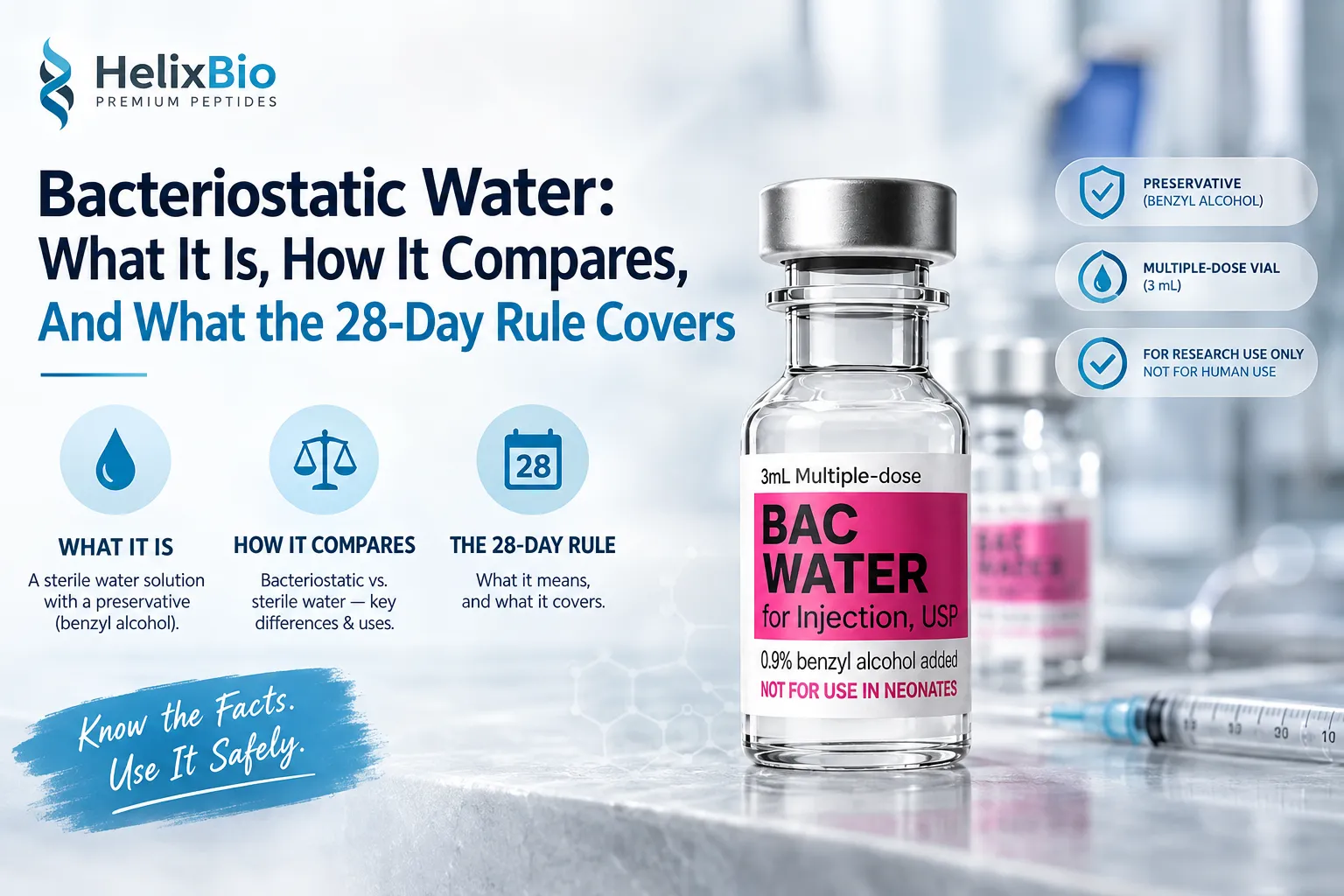
What bacteriostatic water contains, how it differs from sterile water and saline, where the 28-day opened-vial figure comes from, and what a COA can show.
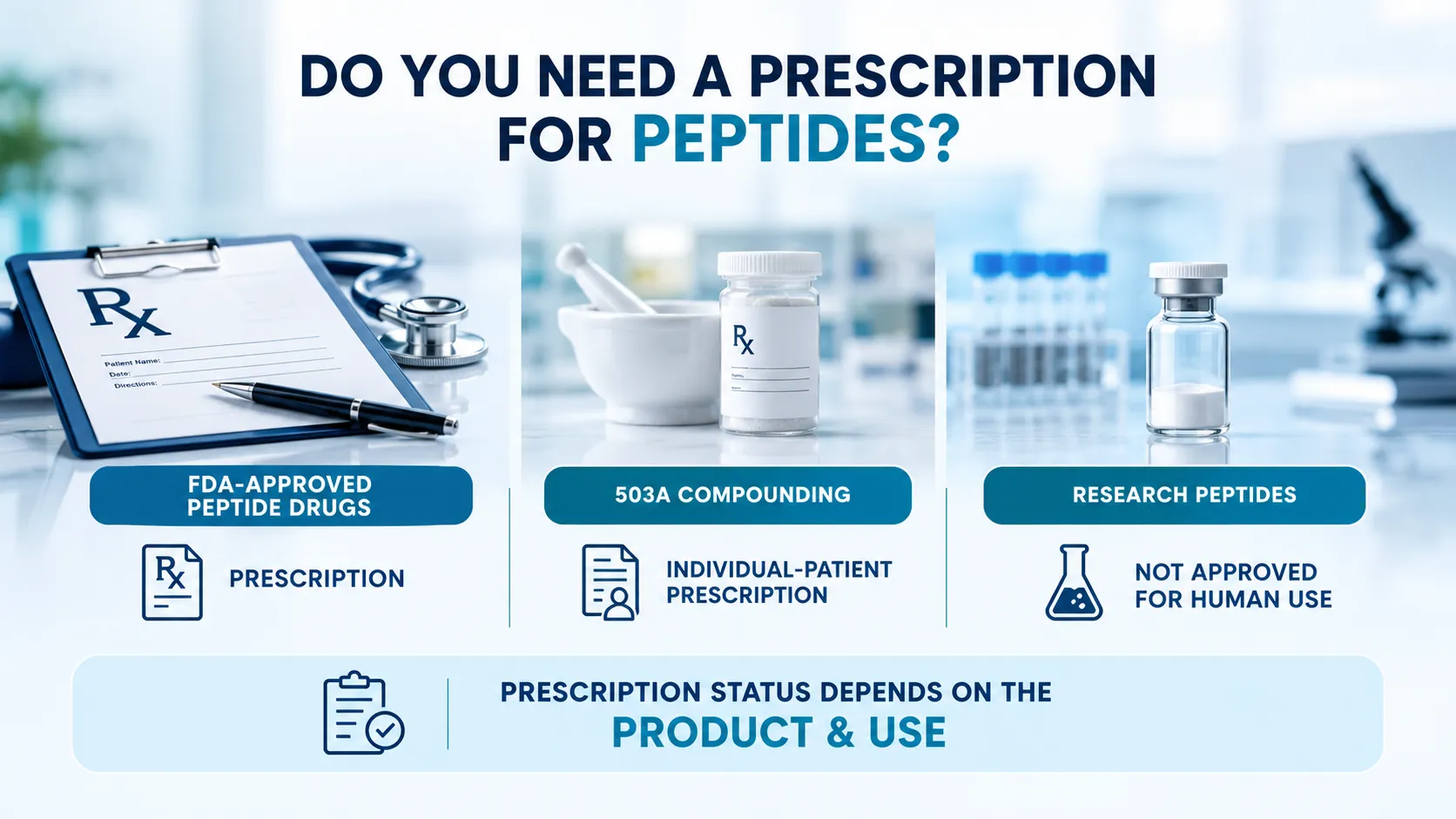
Do you need a prescription for peptides? It depends on the category. See which peptides need one, which do not, and the dated 2026 FDA rules that apply.
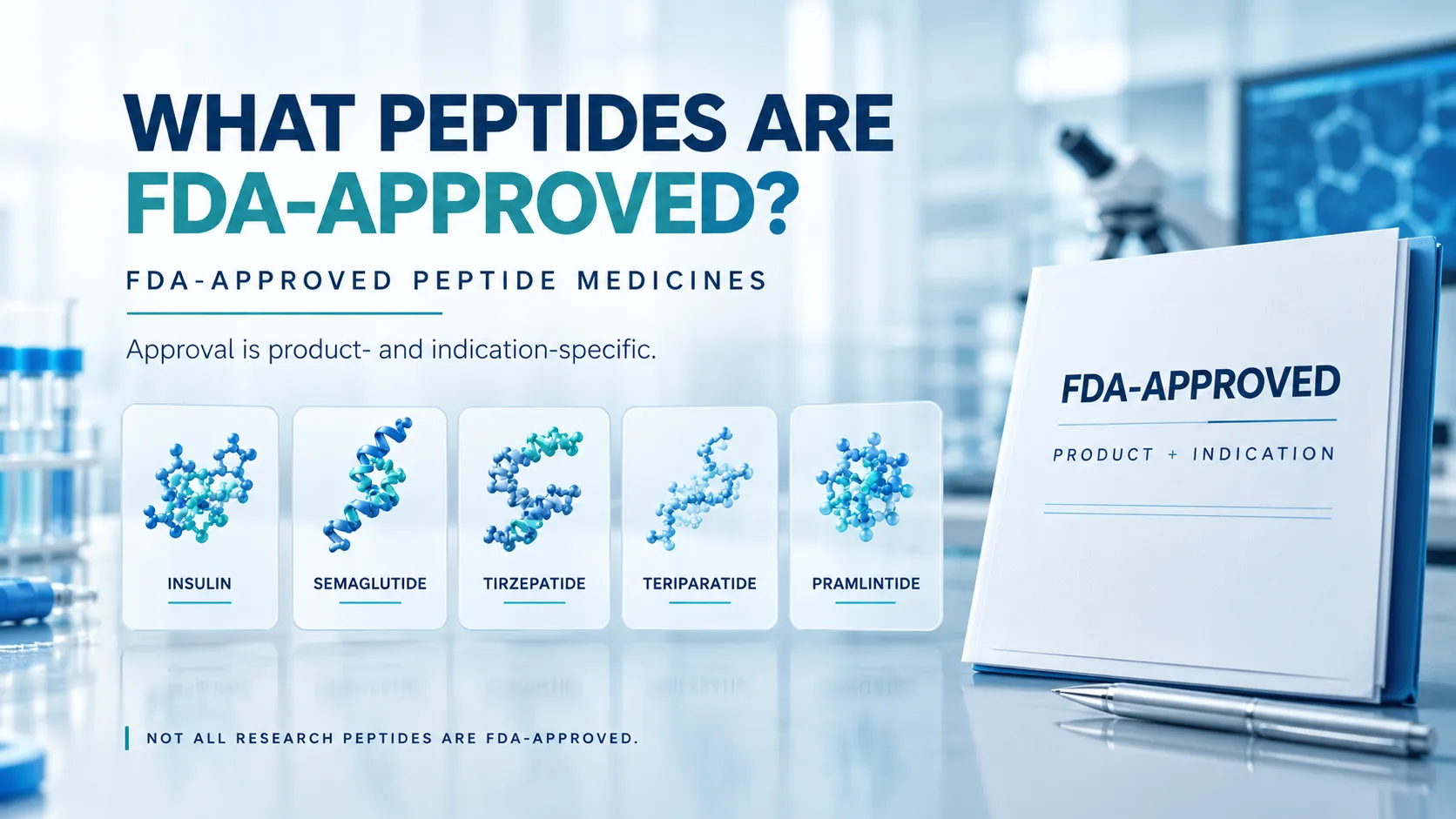
The complete 2026 list of FDA-approved peptides: 47 drugs by category and approval year, which popular peptides are not approved, and pipeline to watch.