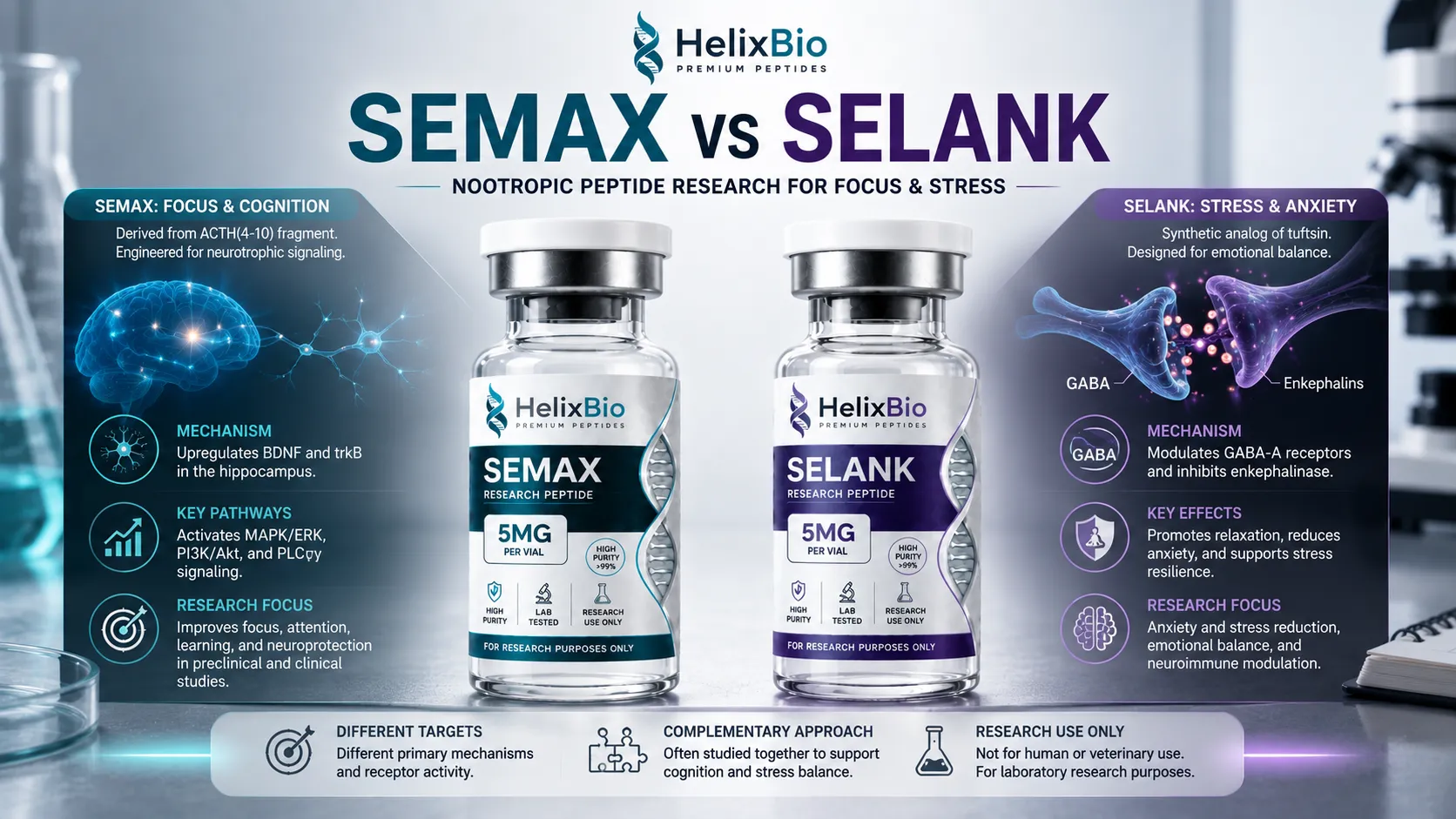
- Semax is a synthetic ACTH(4-10) analog whose primary research mechanism is BDNF/trkB upregulation, with a single application producing a documented 1.4-fold increase in hippocampal BDNF protein.
- Selank is a synthetic tuftsin analog whose primary research mechanisms are enkephalinase inhibition (IC50 approximately 15 micromolar) and GABA-A receptor modulation.
- Selank's anxiolytic effect has been reported as comparable to benzodiazepines in clinical research, without the sedation, tolerance, or withdrawal effects associated with benzodiazepine use.
- Semax research is best supported for attention, focus, and neuroprotection; Selank research is best supported for anxiety, stress resilience, and GABAergic signaling.
- No peer-reviewed study has directly tested combined Semax and Selank administration against either compound alone.
- Both compounds originate from Russian pharmacological research programs and are not FDA-approved; both are supplied strictly as Research Use Only materials in the United States.
Semax and Selank are the two most-studied Russian-developed nootropic peptides, and they are frequently grouped together under a single "cognitive peptide" label that obscures a real mechanistic distinction. Semax is a dopaminergic, BDNF-driving compound studied primarily for focus, attention, and neuroprotection. Selank is a GABAergic, enkephalinase-inhibiting compound studied primarily for anxiety and stress resilience. Both are heptapeptides. Neither is a stimulant in the conventional sense. This guide compares their structures, mechanisms, and published research base, and explains why many research protocols study them together rather than as substitutes for one another.
Semax
RESEARCH PEPTIDE
Semax is a synthetic heptapeptide derived from the sequence of the N-terminal fragment of adrenocorticotropic hormone (ACTH 4-10). It has been investigated in laboratory research involving neurotrophic signaling, BDNF expression, cellular signaling, and neurobiology. Helix Bio offers Semax as a research-use-only peptide for qualified laboratory and non-clinical research. It is not intended for human or veterinary use, ingestion, injection, diagnosis, treatment, or prevention of disease.
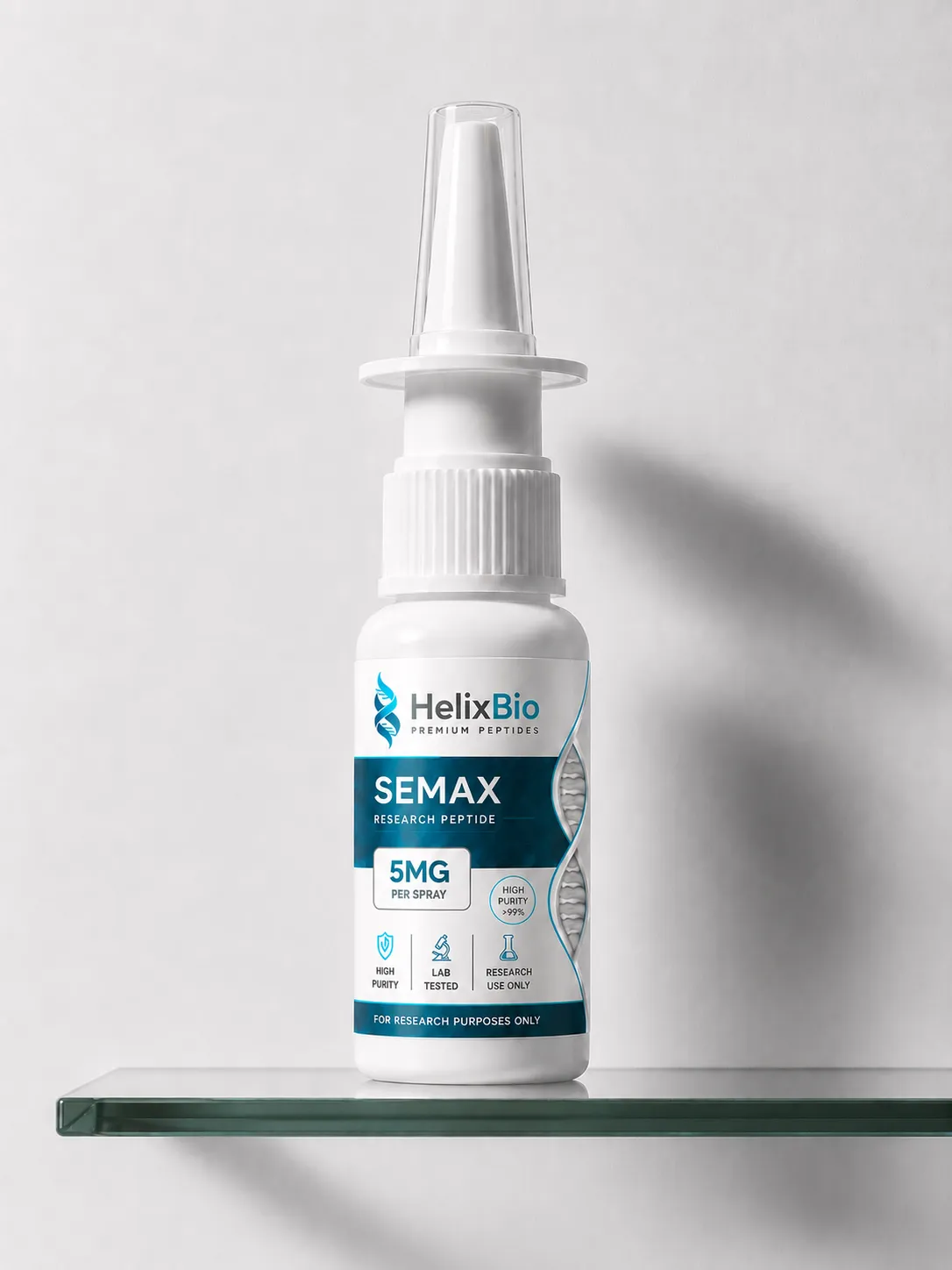
Semax Spray
RESEARCH PEPTIDE
Semax Spray is a research-use peptide formulation containing Semax, a synthetic heptapeptide associated with laboratory research into peptide signaling, neurobiology, receptor interactions, and molecular pathways. Semax is structurally related to the ACTH(4–10) peptide fragment and has been investigated in published scientific literature involving neuronal signaling and neurotrophin-related pathways. Helix Bio supplies research materials for qualified laboratory and scientific applications. Semax Spray is offered strictly for research use and is not intended for human or veterinary consumption, diagnosis, treatment, or prevention of disease.
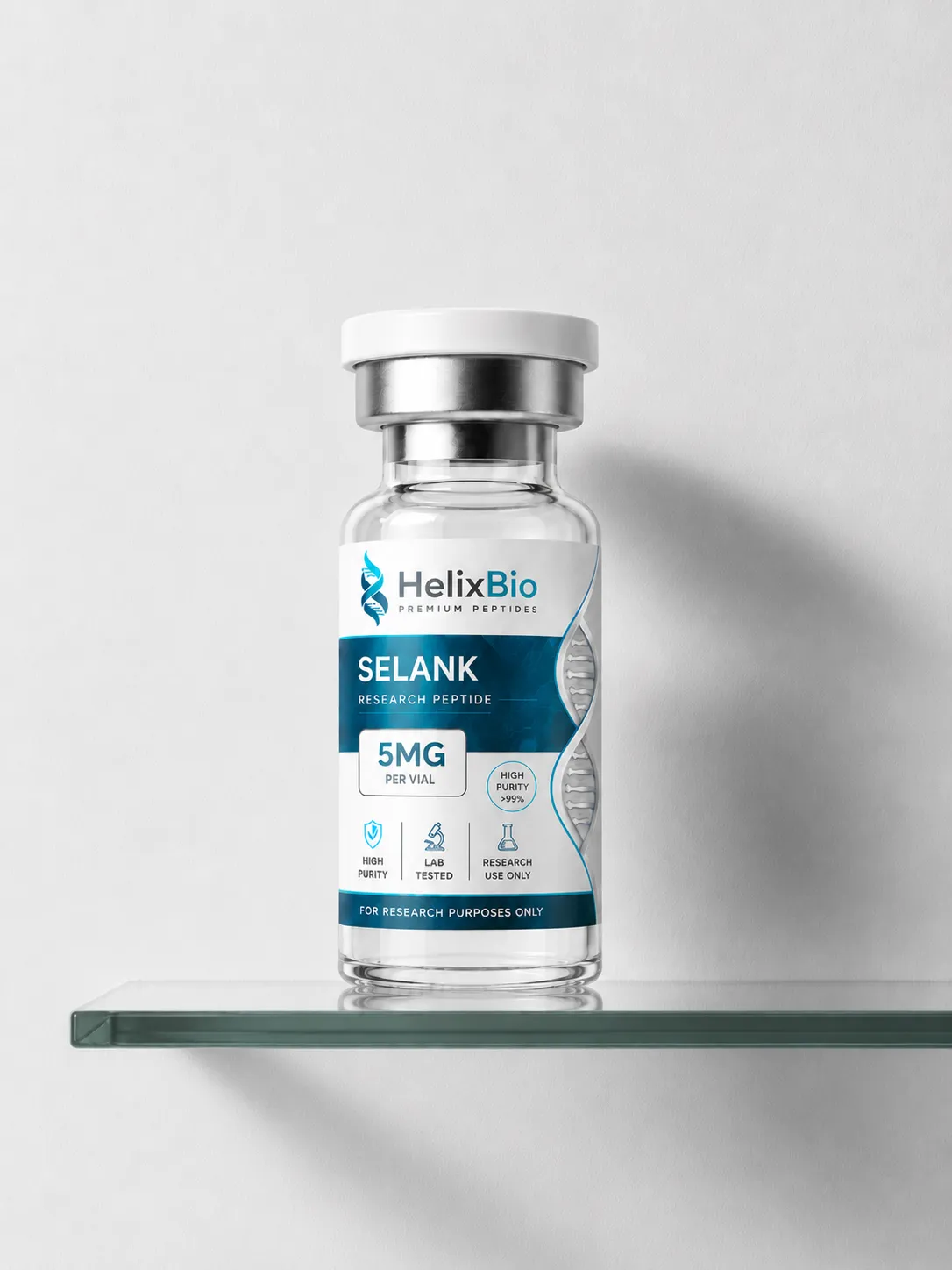
Selank
RESEARCH PEPTIDE
Selank is a synthetic heptapeptide and tuftsin analog with the amino acid sequence Thr-Lys-Pro-Arg-Pro-Gly-Pro. It has been investigated in experimental research involving neurobiology, GABAergic signaling, BDNF expression, stress-response models, immune-related signaling, and peptide structure-function relationships. Helix Bio offers Selank as a research-use-only peptide for qualified laboratory and non-clinical research. It is not intended for human consumption, self-administration, diagnosis, treatment, cure, or prevention of any disease or medical condition.
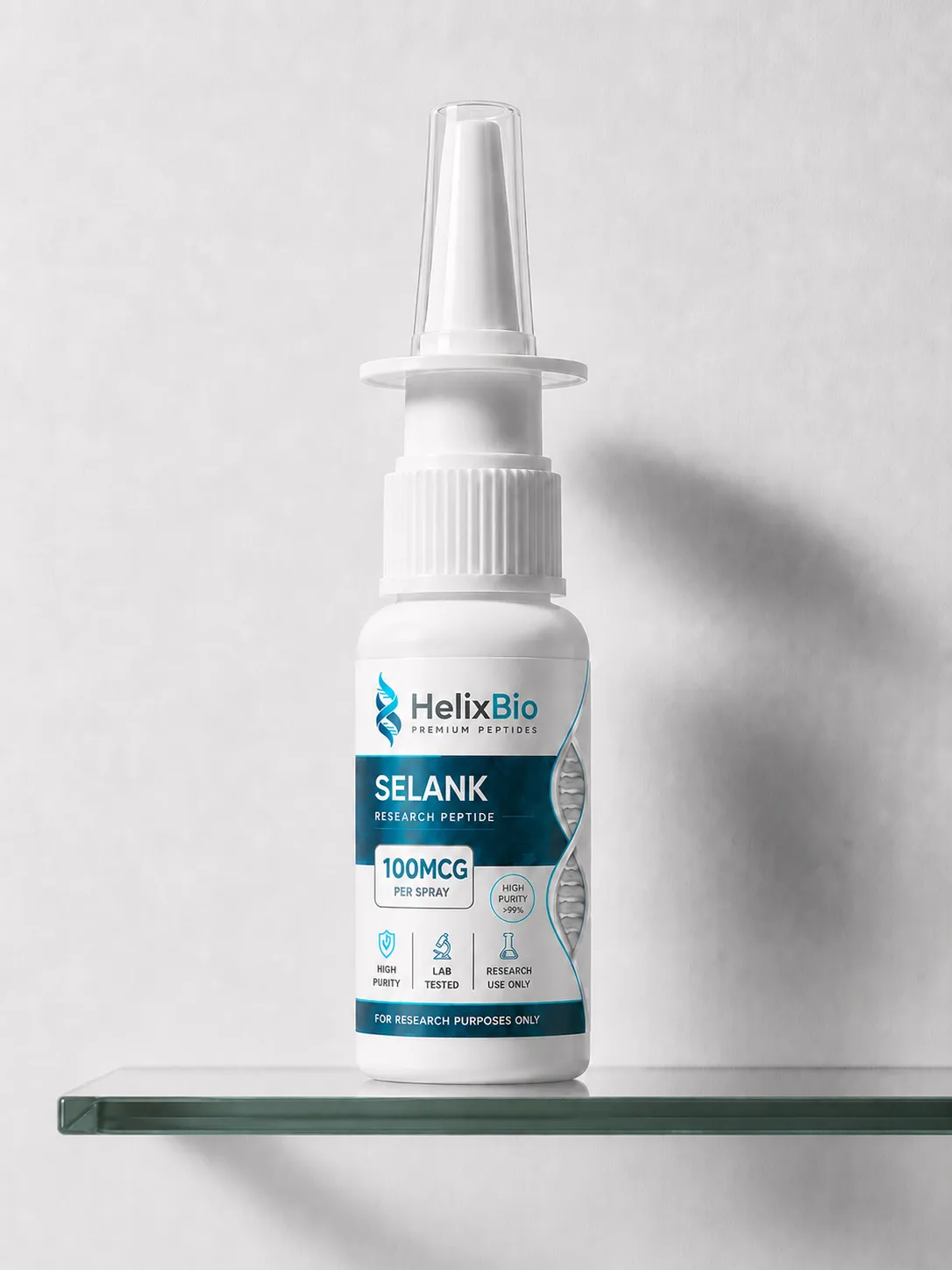
Selank Spray
RESEARCH PEPTIDE
Selank Spray is a research-use peptide preparation centered on Selank, a synthetic heptapeptide derived from the tuftsin peptide sequence. Selank has been investigated in preclinical research involving neurobiology, behavioral models, neurotransmitter-related pathways, gene expression, and brain signaling. Helix Bio supplies Selank Spray strictly as a research and laboratory material. It is intended for qualified researchers and controlled laboratory investigation, not for human or veterinary administration. Researchers evaluating this material should review the applicable lot-specific Certificate of Analysis (COA), product specifications, and analytical documentation before incorporating it into an experimental workflow.
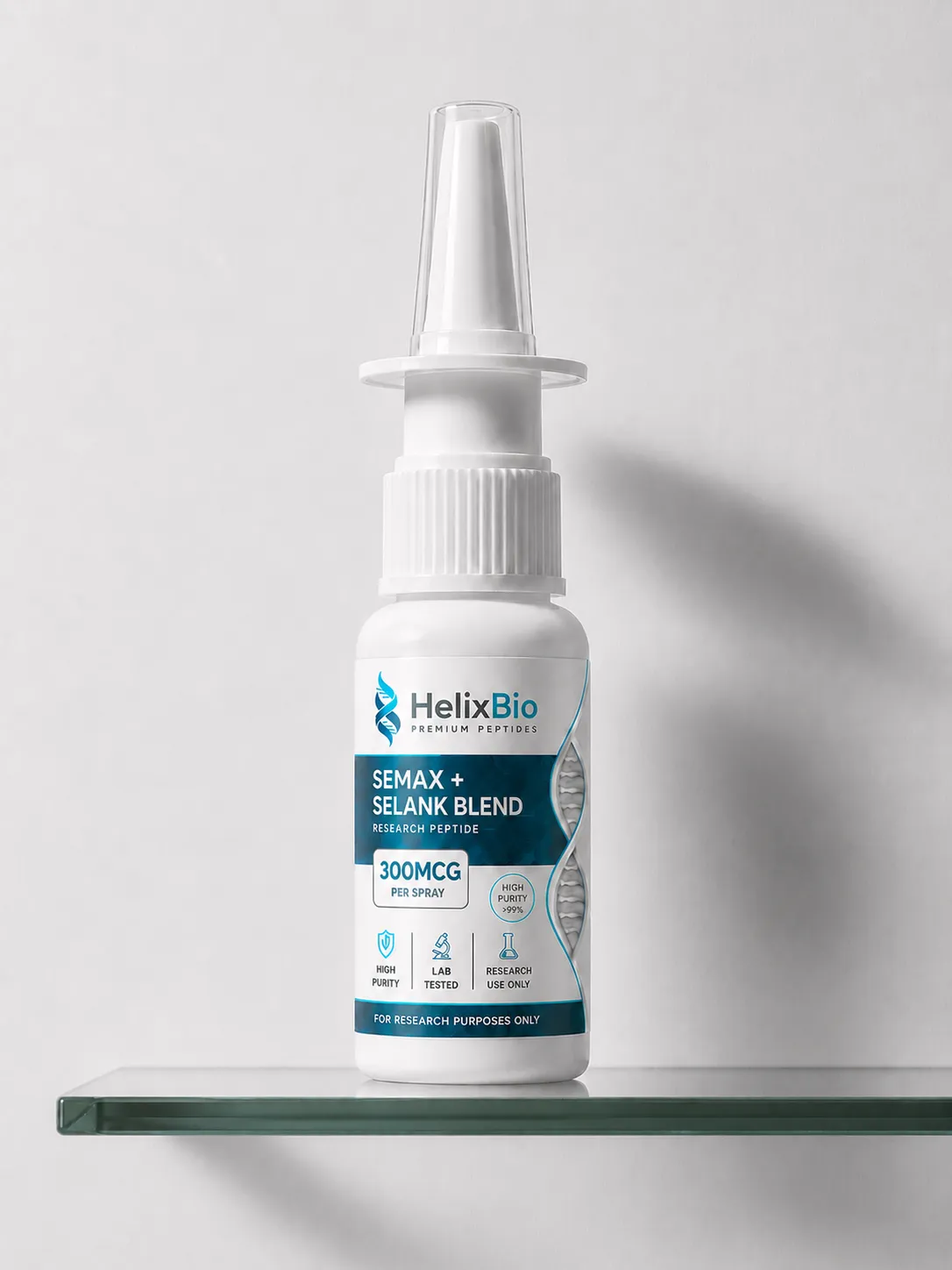
Semax + Selank Blend Spray
RESEARCH PEPTIDE
Semax + Selank Blend Spray is a research-use-only peptide preparation combining two synthetic heptapeptides, Semax and Selank, for controlled laboratory and scientific investigation. Semax is structurally related to the ACTH(4–10) peptide fragment, while Selank is a synthetic analogue of the endogenous peptide tuftsin. The combination is relevant to research involving peptide structure, molecular signaling, neurobiology, receptor interactions, enzymatic activity, and related biochemical pathways. Helix Bio supplies research materials for laboratory use only. This product is not intended for human or veterinary administration.
Our existing coverage of Selank on this site has focused on its role in sleep and recovery research alongside Epitalon and DSIP. This guide addresses a distinct and larger research question: Semax and Selank's shared and separate roles in cognitive performance and stress-response research, independent of sleep architecture.
Semax: Structure and Research Mechanism
Semax is a synthetic heptapeptide analog of adrenocorticotropic hormone fragment ACTH(4-10), engineered to retain the parent fragment's neurotrophic signaling properties while eliminating its hormonal, corticosteroid-stimulating activity. This structural design is the entire reason Semax exists as a distinct research compound rather than simply being ACTH itself: it isolates the cognitive-signaling portion of the ACTH molecule from its endocrine effects.
BDNF and trkB Upregulation
Semax's best-characterized mechanism is upregulation of brain-derived neurotrophic factor (BDNF) and its receptor, tropomyosin receptor kinase B (trkB), in the hippocampus. Research published on Semax's neurotrophic effects found that a single application produced a maximal 1.4-fold increase in BDNF protein levels, accompanied by a 1.6-fold increase in trkB tyrosine phosphorylation, and a 3-fold increase in exon III BDNF mRNA alongside a 2-fold increase in trkB mRNA in the rat hippocampus. These are precise, quantified findings from a single controlled study — not a general claim about "boosting BDNF," which is how the compound is frequently described in secondary sources without the underlying numbers.
Downstream Signaling Cascades
Semax-driven BDNF/trkB activation triggers several well-characterized downstream cascades: MAPK/ERK, PI3K/Akt, and PLCγ signaling, each associated in the broader neuroscience literature with neuronal survival, synaptic plasticity, long-term potentiation, and neurogenesis. Separate research has documented that Semax increases mRNA expression of both BDNF and nerve growth factor (NGF) in cultures of nerve and glial cells, indicating the neurotrophic effect is not limited to the hippocampus alone. Semax has also been studied for effects on dopamine signaling, which researchers connect to its studied effects on attention and motivation-related behavior in animal models. Researchers investigating this pathway have specifically examined striatal and frontal cortex dopamine turnover following Semax administration, reporting shifts consistent with a modulatory rather than a stimulant-like effect on the dopaminergic system — a distinction that matters because it separates Semax's studied cognitive effects from the acute, receptor-flooding mechanism of classical psychostimulants.
Russian clinical research using intranasal Semax has examined the compound in stroke recovery models, pediatric developmental delay, and optic nerve atrophy — contexts that reflect its neuroprotective and neurotrophic mechanism rather than any stimulant-like acute effect. This body of clinical data originates outside standard Western regulatory frameworks and has not been replicated in FDA-reviewed trials.
Historical Development and Research Lineage
Semax was developed in the 1980s by researchers at the Institute of Molecular Genetics of the Russian Academy of Sciences, building on earlier observations that fragments of ACTH retained behavioral and neurological effects even after the full hormone's corticosteroid-stimulating activity had been removed through enzymatic cleavage. This lineage matters for research context: Semax is not a novel synthetic invention unconnected to endogenous biology, but a deliberately truncated fragment of a naturally occurring hormone, selected specifically because the 4-10 sequence retained neurotrophic signaling while shedding the adrenal-stimulating properties of intact ACTH. That history explains why Semax research spans both the original endocrinology literature on ACTH fragments and the newer neurotrophic-signaling literature examining BDNF and trkB expression specifically.
Selank: Structure and Research Mechanism
Selank is a synthetic heptapeptide (Thr-Lys-Pro-Arg-Pro-Gly-Pro) developed as an analog of tuftsin, an endogenous immunomodulatory peptide. Where Semax's research centers on dopaminergic and neurotrophic signaling, Selank's centers on GABAergic and opioid-adjacent pathways relevant to anxiety and stress.
Enkephalinase Inhibition
Selank's first well-documented mechanism is inhibition of enkephalin-degrading enzymes, commonly referred to as enkephalinase. Research demonstrated that Selank dose-dependently inhibits enzymatic hydrolysis of plasma enkephalin with an IC50 of approximately 15 micromolar, and separate clinical research on patients with generalized anxiety disorder found shortened enkephalin half-life and reduced total enkephalinase activity in blood during active anxiety states — establishing a direct link between the enzyme Selank inhibits and the physiological state it is studied to modulate.
GABA-A Receptor Modulation
Beyond enkephalinase inhibition, Selank has been shown to upregulate GABA-A receptor sensitivity and influence the expression of genes involved in GABA synthesis, transport, and receptor subunit composition. Published research using IMR-32 neuroblastoma cells found that Selank affects the expression of genes involved in GABAergic neurotransmission, and animal-model research has shown Selank altering GABA-A receptor subunit expression in the hippocampus and cortex.
Selank's most clinically notable research finding is that its anxiolytic effect has been reported as comparable to classical benzodiazepines in patients with generalized anxiety disorder and neurasthenia, but without the sedation, muscle relaxation, tolerance, or withdrawal phenomena associated with benzodiazepine use — a distinction researchers attribute to its multi-target mechanism rather than direct GABA-A agonism alone.
From Tuftsin to Selank: Why an Immunomodulatory Peptide Became an Anxiolytic Research Candidate
Tuftsin, the endogenous peptide Selank is derived from, is a naturally occurring immunomodulatory fragment cleaved from the heavy chain of immunoglobulin G, historically studied for its effects on phagocytic activity and immune cell function rather than anxiety or cognition. Selank's designers extended the native tuftsin sequence with an additional Pro-Gly-Pro tripeptide tail specifically to increase enzymatic stability, since native tuftsin is degraded within minutes in circulation. That stabilization is what allowed researchers to observe tuftsin-family effects on enkephalinase and GABAergic signaling that would otherwise be too transient to study — the extended sequence gave researchers a long enough window to characterize effects the native peptide could not sustain. Some research has also examined whether Selank retains any of tuftsin's original immunomodulatory activity, with mixed and still-developing findings, meaning Selank's research profile spans both the neuropsychiatric literature it is best known for today and a smaller, older immunological literature connected to its parent peptide.
Semax vs Selank: Direct Comparison
Attribute | Semax | Selank |
|---|---|---|
Structural class | ACTH(4-10) heptapeptide analog | Tuftsin heptapeptide analog |
Primary mechanism | BDNF/trkB upregulation | Enkephalinase inhibition |
Secondary mechanism | MAPK/ERK, PI3K/Akt, PLCgamma signaling | GABA-A receptor modulation |
Primary research angle | Cognition, focus, neuroprotection | Anxiety, stress resilience |
Dopamine system involvement | Documented | Not primary mechanism |
GABA system involvement | Not primary mechanism | Documented |
Reported comparator | Neurotrophic/nootropic agents | Benzodiazepine-class anxiolytics |
Sedation in research models | Not reported as primary effect | Not reported despite benzodiazepine-comparable anxiolysis |
Human clinical data origin | Russian stroke, developmental, and optic nerve research | Russian generalized anxiety disorder and neurasthenia research |
FDA approval status | Not approved | Not approved |
Why They're Frequently Studied Together
Semax and Selank are often studied within the same research protocol not because they share a mechanism, but because they address complementary aspects of cognitive-stress physiology: Semax's BDNF-driven neurotrophic signaling supports the biological substrate for learning and attention, while Selank's enkephalinase and GABA-A activity addresses the stress and anxiety states that are known to impair those same cognitive processes. A research design examining cognitive performance under stress has a plausible rationale for including both compounds as distinct experimental variables. The Semax + Selank Blend Spray exists specifically to support this combined research design, though — consistent with other compounded blends — no published study has directly tested the combination against either compound alone.
Evidence Base: Publication Volume and Study Design
The published literature for both peptides is asymmetric in an important way researchers should account for when weighing evidence strength. Semax's strongest data — the BDNF/trkB fold-change findings — come from a small number of tightly controlled rodent studies with precise molecular endpoints, supplemented by a larger and less methodologically rigorous body of Russian clinical case series in stroke and developmental-delay populations. Selank's strongest data — the enkephalinase IC50 and the benzodiazepine-comparable anxiolysis finding — come from a mix of enzymatic assay studies and Russian randomized clinical trials in generalized anxiety disorder, which are closer to the trial designs Western researchers are accustomed to evaluating, though still not FDA-reviewed. Neither compound has a Phase 3-equivalent trial in the sense used by FDA-regulated drug development, and researchers should treat both bodies of evidence as hypothesis-generating rather than confirmatory.
Research Applications: Where Each Compound's Evidence Is Strongest
Semax research is best supported for:
- Attention, focus, and motivation-related behavioral research, connected to its documented dopaminergic signaling effects and the specific fold-change data available for BDNF and trkB expression.
- Neuroprotection research following ischemic injury, reflecting the Russian clinical literature on stroke recovery models and the compound's documented neurotrophic upregulation in hippocampal tissue.
- BDNF/trkB pathway research as a standalone neurotrophic signaling question, independent of any specific cognitive application, given that the fold-change data was generated as a mechanistic finding rather than a behavioral outcome study.
- Comparative neurotrophic-peptide research, where Semax's ACTH-fragment origin provides a useful contrast against BDNF-pathway compounds derived from entirely different parent molecules.
Selank research is best supported for:
- Anxiety and stress-response research, particularly protocols examining GABAergic or enkephalinergic contributions to anxiety states, where the IC50 data for enkephalinase inhibition provides a quantifiable mechanistic anchor.
- Research comparing peptide-based anxiolysis against benzodiazepine-class comparators, given the direct clinical comparison already present in the literature and the absence of reported sedation or dependence effects.
- Studies examining the relationship between chronic stress and cognitive performance, where Selank's stress-axis effects can be isolated from Semax's more direct cognitive-signaling mechanism.
- GABA-A receptor subunit expression research, particularly in cell-culture models where Selank's gene-expression effects on GABAergic neurotransmission machinery can be measured directly.
Stacking Considerations: Semax and Selank in Combined Protocols
Researchers combining Semax and Selank in a single protocol are typically testing a specific hypothesis: that reducing stress-axis interference (Selank's domain) allows Semax's neurotrophic and dopaminergic effects on cognition to be observed more cleanly, since elevated stress hormones are independently known to impair the same attention and memory processes Semax is studied to support. This is a reasonable experimental rationale, but it is a hypothesis about the interaction, not a validated finding — no dedicated pharmacokinetic or pharmacodynamic interaction study has characterized how the two peptides behave when administered together, whether via separate vials or the combined spray formulation. Researchers designing combined protocols should treat the two compounds as independent variables with independently documented mechanisms, log them as separate line items in any experimental record, and avoid attributing an observed combined effect to either peptide's individual literature without a proper control arm testing each compound alone.
Reconstitution and Handling
Both Semax and Selank are supplied as lyophilized powder or, in spray formulations, as a stabilized intranasal solution, reflecting the fact that the original Russian clinical research for both compounds used intranasal administration rather than injection. For lyophilized vials intended for injectable research use, standard reconstitution principles apply: bacteriostatic water introduced slowly down the vial wall, gentle swirling rather than shaking, and refrigerated storage of the reconstituted solution within its documented stability window. Our peptide reconstitution guide covers solvent selection and stability timelines in full, and our guide to common peptide storage mistakes covers the handling errors most likely to affect potency in short heptapeptides like these.
Regulatory and Compliance Context
Neither Semax nor Selank is approved by the FDA for any human indication. Both originate from Russian pharmacological research programs and carry a substantial clinical literature base generated outside standard FDA-reviewed trial frameworks — a distinction researchers should account for when evaluating the strength of available evidence, since Russian clinical trial methodology and reporting standards differ from FDA-regulated trial design. In the United States, both compounds are supplied strictly as Research Use Only laboratory materials, not intended for human consumption, and are not evaluated for safety or efficacy outside a laboratory setting. For a full walkthrough of what RUO classification permits and does not permit, see our guide on whether research peptides are legal in the USA.
Conclusion
Semax and Selank are frequently mentioned in the same breath, but they are studied for different reasons: Semax for its dopaminergic and BDNF-driven effects on cognition and neuroprotection, Selank for its enkephalinase-inhibiting and GABA-A-modulating effects on anxiety and stress resilience. Their heptapeptide structures and Russian research origins are similar; their receptor targets and research applications are not. Selecting between them — or studying them together, as many protocols do — should be driven by which side of the cognition-stress relationship the research question actually addresses.
Frequently Asked Questions
Semax primarily upregulates BDNF and trkB signaling, associated with neurotrophic and dopaminergic effects relevant to cognition. Selank primarily inhibits enkephalinase enzymes and modulates GABA-A receptors, associated with anxiolytic and stress-resilience effects. The two mechanisms do not overlap.
Semax has the more direct research connection to focus and attention, through its documented dopaminergic and BDNF-driven neurotrophic signaling. Selank's research connection to focus is indirect, operating through reduction of anxiety and stress that can otherwise impair cognitive performance.
Yes. Clinical research on patients with generalized anxiety disorder and neurasthenia found Selank's anxiolytic effect comparable to classical benzodiazepine drugs, without producing the sedation, muscle relaxation, tolerance, or withdrawal phenomena associated with benzodiazepine use.
Research found Selank dose-dependently inhibits enzymatic hydrolysis of plasma enkephalin with an IC50 of approximately 15 micromolar, establishing a direct pharmacological basis for its studied anxiolytic mechanism.
A single application of Semax produced a maximal 1.4-fold increase in BDNF protein levels in the rat hippocampus, along with a 1.6-fold increase in trkB tyrosine phosphorylation and a 3-fold increase in exon III BDNF mRNA, based on published neurotrophic research.
Many research groups study them together on the premise that Semax's cognitive-signaling effects and Selank's stress-reduction effects address complementary aspects of cognition under stress. However, no peer-reviewed published study has directly tested the combined administration against either compound alone.
A pre-formulated Semax + Selank Blend Spray exists specifically to support combined research protocols. As with other compounded blends, the combination itself has not been the subject of a dedicated published study, even though both individual components have their own separate research literature.
No. Neither compound is classified or studied as a stimulant. Semax's research effects are neurotrophic and dopaminergic in nature rather than acutely stimulating, and Selank's research effects are anxiolytic, working through GABA-A and enkephalinase pathways rather than stimulant mechanisms.
Both peptides were originally developed by Russian pharmacological research institutes, and the largest existing body of clinical data for both compounds comes from Russian clinical trials conducted under that country's regulatory framework, which differs from FDA-reviewed trial design and reporting standards used in the United States.
Semax research, particularly intranasal administration studies, is designed around central nervous system effects including hippocampal BDNF changes, which requires the peptide or its active fragments to reach relevant brain regions. The precise blood-brain barrier transport mechanism remains an active research question rather than a fully characterized pathway.
The original Russian clinical research for both Semax and Selank primarily used intranasal administration, which is reflected in the intranasal spray formulations available for laboratory research alongside standard lyophilized vials.
No. Neither compound has FDA approval for any human indication. Both are supplied in the United States strictly as Research Use Only laboratory materials, not evaluated for human safety or efficacy, and not intended for human consumption.
- 01Semax, an analog of ACTH(4-10) with cognitive effects, regulates BDNF and trkB expression in the rat hippocampus.
- 02The inhibitory effect of Selank on enkephalin-degrading enzymes as a possible mechanism of its anxiolytic activity. PMID: 11550013.
- 03GABA, Selank, and Olanzapine Affect the Expression of Genes Involved in GABAergic Neurotransmission in IMR-32 Cells. Frontiers in Pharmacology. PMC5328971.
- 04Selank Administration Affects the Expression of Some Genes Involved in GABAergic Neurotransmission. Frontiers in Pharmacology.
- 05Efficacy and possible mechanisms of action of a new peptide anxiolytic selank in the therapy of generalized anxiety disorders and neurasthenia. PMID: 18454096.

Helix Bio Chem Team
Research & Product Team
Our in-house team tracks published peptide research and translates it into clear, source-cited summaries for the research community.
Reviewed by in-house research chemists
support@helixbiochem.com