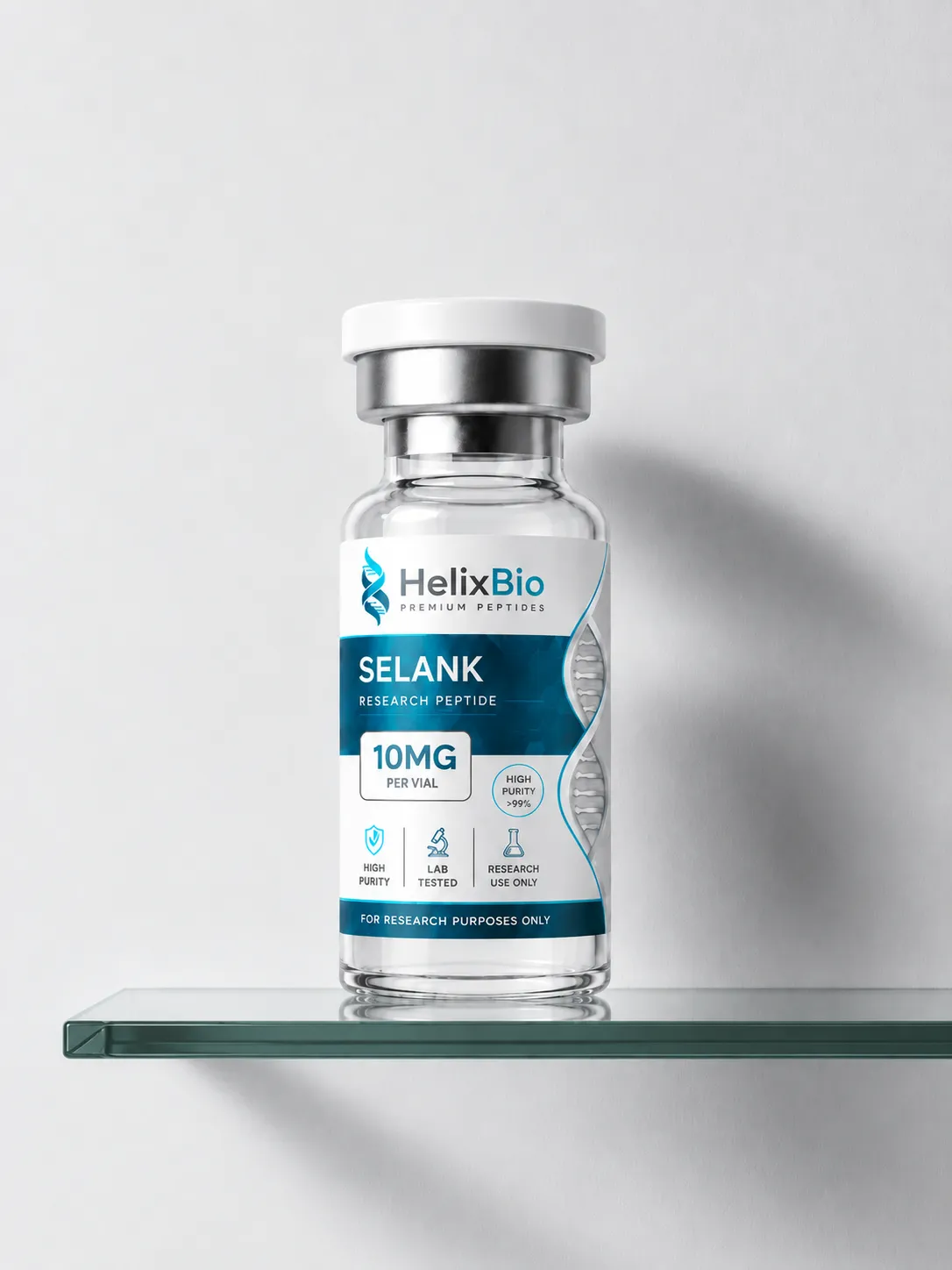
Selank is a synthetic heptapeptide and tuftsin analog with the amino acid sequence Thr-Lys-Pro-Arg-Pro-Gly-Pro. It has been investigated in experimental research involving neurobiology, GABAergic signaling, BDNF expression, stress-response models, immune-related signaling, and peptide structure-function relationships. Helix Bio offers Selank as a research-use-only peptide for qualified laboratory and non-clinical research. It is not intended for human consumption, self-administration, diagnosis, treatment, cure, or prevention of any disease or medical condition.
HPLC certified
Independent analysis
Highest standard
Full traceability
Selank is a synthetic heptapeptide derived from the structure of tuftsin, an endogenous tetrapeptide. Its commonly reported amino acid sequence is Thr-Lys-Pro-Arg-Pro-Gly-Pro.
The compound has been investigated primarily in Russian scientific research and literature covering neuropharmacology, stress-response models, GABAergic signaling, neurotrophic pathways, and immune-related research. Research has examined several possible biological mechanisms rather than establishing one definitive mechanism of action, investigating Selank's relationship with GABA receptor signaling, enkephalin-degrading enzymes, BDNF expression, and gene-expression changes associated with neurotransmission.
For laboratory researchers, Selank provides a defined peptide model for studying how a synthetic tuftsin analog interacts with molecular and cellular pathways.
Selank is a seven-residue peptide (Thr-Lys-Pro-Arg-Pro-Gly-Pro), commonly described as a tuftsin analog because its structure is based on the endogenous peptide tuftsin. Important research terminology associated with Selank includes heptapeptide, tuftsin analog, synthetic peptide, peptide bond, amino acid sequence, molecular mass, lyophilized peptide, peptide degradation, and analytical characterization.
There is no single mechanism that adequately describes every experimental observation involving Selank. Research has explored several possible pathways: GABAergic signaling, enkephalin metabolism, BDNF expression, neurotransmission-related gene expression, opioid-system interactions, stress-response signaling, and immune and cytokine-related responses.
A 2018 review described research suggesting that Selank may interact with GABAergic signaling through allosteric modulation of GABA receptors. Separate research in rats found changes in the expression of multiple genes involved in neurotransmission following Selank exposure, with the authors proposing that GABAergic signaling may represent one component of its molecular activity. These findings remain experimental and should not be converted into claims about therapeutic efficacy or human outcomes.
The GABAergic system is one of the better-known molecular research areas associated with Selank. A study examining Selank's molecular activity reported changes involving GABA receptor binding and proposed subtype-selective, concentration-dependent allosteric modulation as one possible mechanism. Another study analyzed the expression of genes involved in GABAergic neurotransmission in rat frontal cortex and observed changes in numerous neurotransmission-related genes after experimental Selank exposure. A separate cell-culture study produced a more nuanced result: Selank did not directly change the mRNA levels of the GABAergic genes examined in IMR-32 neuroblastoma cells, although the findings partially supported a possible interaction with GABA receptor signaling. Research results can depend on the species, tissue, cell type, experimental conditions, exposure parameters, and analytical method.
Another proposed mechanism concerns enkephalin metabolism. A PubMed-indexed study investigated Selank's ability to inhibit enzymes involved in enkephalin degradation, reporting concentration-dependent inhibition of enkephalin hydrolysis and proposing that this pathway could contribute to the compound's observed experimental effects. This makes Selank relevant to research examining enkephalin metabolism, peptidase activity, opioid-related signaling, peptide degradation pathways, and neurochemical regulation. The findings should be considered mechanistic research rather than evidence of a medical benefit.
Brain-derived neurotrophic factor (BDNF) is another area of interest in Selank research. Experimental studies have investigated Selank-associated changes in BDNF expression in brain regions including the hippocampus. One study reported that intranasal administration of Selank regulated BDNF expression in the rat hippocampus, and another animal study examined Selank and BDNF content in the hippocampus and prefrontal cortex in a rat model involving chronic ethanol exposure. The evidence is experimental and should not be interpreted as establishing human cognitive or therapeutic effects.
Researchers evaluating a Selank peptide supplier should consider more than the product name or stated purity percentage. For reproducible research, the material should be identifiable and traceable to a specific batch. Analytical documentation can help researchers evaluate peptide identity, reported purity, batch number, molecular-mass confirmation, chromatographic profile, storage requirements, and product handling information.
Helix Bio's product and quality claims are presented only according to the current documentation actually available for the specific Selank batch — a specific purity percentage, third-party testing claim, certification, or COA result is only published when supported by current batch documentation.
Selank is not intended for human consumption, self-administration, injection, or veterinary use.
| Field | Detail |
|---|---|
| Product Name | Selank |
| Scientific Category | Synthetic research peptide |
| Peptide Type | Heptapeptide |
| Peptide Sequence | Thr-Lys-Pro-Arg-Pro-Gly-Pro |
| Structural Description | Tuftsin analog |
| Research Areas | Neurobiology, neuropharmacology, stress-response and immune-related research |
| Intended Use | Laboratory and non-clinical research only |
| Physical Form | Lyophilized powder |
| Purity | Confirm current batch COA |
| Packaging | Sealed research vial |
| HPLC Testing | Confirm current batch documentation |
| Mass Spectrometry | Confirm current batch documentation |
| Certificate of Analysis | Confirm current batch documentation |
| Manufacturer/Supplier | Helix Bio |
Selank is frequently discussed in scientific literature concerning anxiolytic research, but this product page uses that terminology strictly in a research context. Experimental studies have examined Selank in anxiety-related behavioral models and, in some cases, human clinical research. Research findings should not be presented as proof that Selank treats anxiety or other medical conditions.
Selank has been investigated in experimental models involving stress-related behavior. Research in rodents has examined Selank under chronic or unpredictable stress conditions and measured behavioral responses, helping researchers study stress-response behavior, neurochemical signaling, GABA-related pathways, peptide-mediated responses, and the interaction between stress and neurobiology.
Selank has also been investigated in research involving immune-related signaling, including cytokine and interferon-related pathways. Published research has examined changes in cytokine-related responses in experimental and clinical research settings. These findings should be treated as research observations and not as evidence that Selank is an immune-support treatment.
Experimental literature has also investigated Selank in models involving cognition, memory, emotional behavior, and neurotrophic signaling, including animal research examining Selank alongside BDNF measurements in the hippocampus and prefrontal cortex.
Animal models are an important part of the published Selank literature, with studies using rodents to investigate anxiety-related behavior, stress response, GABAergic signaling, BDNF expression, neurotransmission-related gene expression, enkephalin metabolism, and opioid-system interactions. Results from animal models should not be assumed to translate directly to human outcomes.
| Research Characteristic | Selank | Semax |
|---|---|---|
| Peptide Type | Heptapeptide | Heptapeptide |
| Sequence | Thr-Lys-Pro-Arg-Pro-Gly-Pro | Met-Glu-His-Phe-Pro-Gly-Pro |
| Structural Relationship | Tuftsin analog | ACTH(4-10)-related peptide |
| Research Areas | GABAergic signaling, stress models, BDNF, immune-related research | Neurotrophic signaling, BDNF, TrkB-related research |
| Research Context | Neuropharmacology and psychoneuroimmunology | Neurobiology and neurotrophic research |
There is no scientifically meaningful universal answer to which compound is "better." Researchers should select the compound that matches the biological pathway, model, assay, and research question.
Selank and N-Acetyl Selank are related research compounds, but an N-acetyl modification changes the chemical structure. When comparing the materials, researchers should evaluate exact chemical identity, amino acid sequence, chemical modifications, molecular mass, purity, analytical characterization, and experimental objective. N-Acetyl Selank should not be assumed to have identical properties to standard Selank simply because the names are related.
Selank and Noopept belong to different chemical categories and should not be treated as interchangeable research materials. A meaningful comparison should consider chemical structure, molecular target, research model, experimental endpoint, available literature, and analytical requirements.
Purity is an important consideration when selecting a research-grade Selank peptide. HPLC, or High-Performance Liquid Chromatography, can be used to separate peptide components and assess the chromatographic purity profile of a sample. Researchers should review reported HPLC purity, chromatogram, lot or batch number, testing date, analytical method, and related analytical results. A high reported purity percentage does not replace identity confirmation or appropriate sample characterization.
Mass spectrometry can provide molecular-mass information that supports peptide identity. For stronger quality assessment, HPLC purity data and mass-spectrometry identity information should be considered together.
A Certificate of Analysis (COA) is batch-specific documentation used to communicate analytical information about a research material. A Selank COA may contain the product name, batch number, HPLC purity, mass-spectrometry results, peptide content, analytical testing date, storage recommendations, and other product-specific specifications. Batch traceability is the most important point — a generic COA from another lot should not be treated as proof of the quality of the batch received.
Third-party laboratory testing can provide an additional layer of analytical verification when performed by an appropriately qualified independent laboratory. Selank is not described as "third-party tested" unless current batch documentation supports that claim.
Reconstitution is a laboratory preparation process and should be performed according to the applicable research protocol, product documentation, and institutional SOP. The appropriate solvent, concentration, preparation method, and subsequent storage conditions depend on the specific experimental design and material, so a generic reconstitution ratio should not be treated as universally applicable.
Research peptide shipping should preserve product integrity and maintain appropriate handling conditions during transit, including packaging format, vial size, lot identification, protective packaging, cold-chain requirements, domestic shipping availability, shipment tracking, and documentation supplied with the order. Specific Helix Bio shipping times, package sizes, cold-chain options, bulk pricing, payment methods, and return policies should be confirmed against the company's current published policies before ordering.
For research and laboratory use only — not for human consumption or veterinary use. Selank is offered as a research material for qualified laboratory and non-clinical scientific applications. It is not intended for ingestion, injection, self-administration, diagnosis, treatment, cure, mitigation, or prevention of any disease or medical condition. This product is not a dietary supplement, food product, cosmetic product, or medication.
Information on this page concerning Selank's biological activity, mechanisms, research applications, or published studies is provided for scientific and educational context only. Experimental findings from animal, cellular, or clinical research should not be interpreted as a recommendation for personal use or as evidence of a therapeutic benefit. Researchers and institutions are responsible for complying with all applicable federal, state, local, institutional, biosafety, laboratory, and research requirements.
The FDA currently lists selank acetate (TP-7) among bulk drug substances for which compounded drugs may present potential immunogenicity concerns related to aggregation and peptide-related impurities, and notes that important information regarding human safety is lacking. Accordingly, Selank sold as research material should remain clearly separated from claims concerning human therapeutic use.
Knowledge Base
Knowledge Base
Knowledge Base
Knowledge Base
Knowledge Base
Knowledge Base
Knowledge Base
Knowledge Base
Knowledge Base
Knowledge Base
Knowledge Base
Knowledge Base
Knowledge Base
Knowledge Base
Knowledge Base
Knowledge Base
Knowledge Base
Knowledge Base
Knowledge Base
Knowledge Base

What bacteriostatic water contains, how it differs from sterile water and saline, where the 28-day opened-vial figure comes from, and what a COA can show.
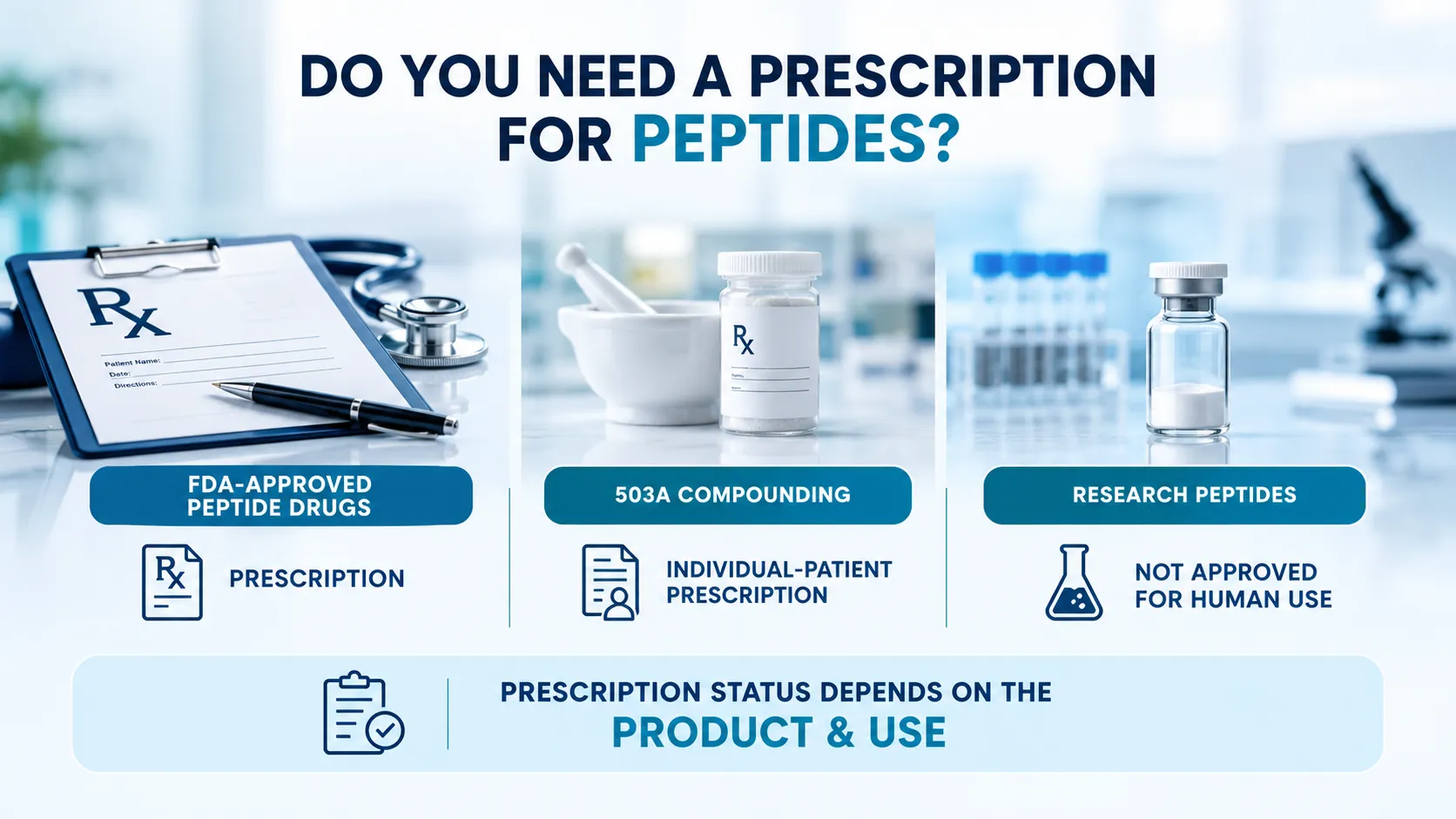
Do you need a prescription for peptides? It depends on the category. See which peptides need one, which do not, and the dated 2026 FDA rules that apply.
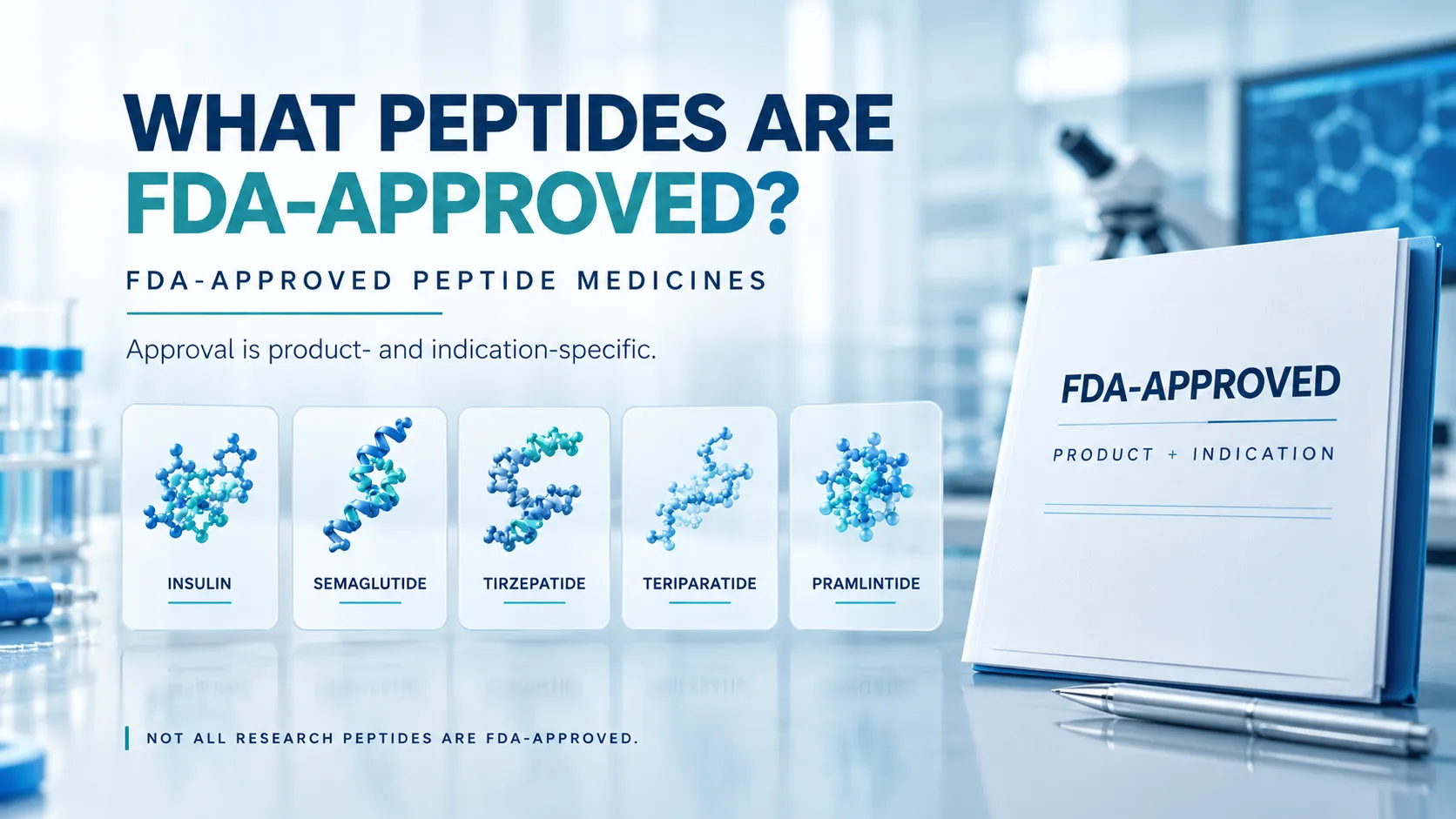
The complete 2026 list of FDA-approved peptides: 47 drugs by category and approval year, which popular peptides are not approved, and pipeline to watch.