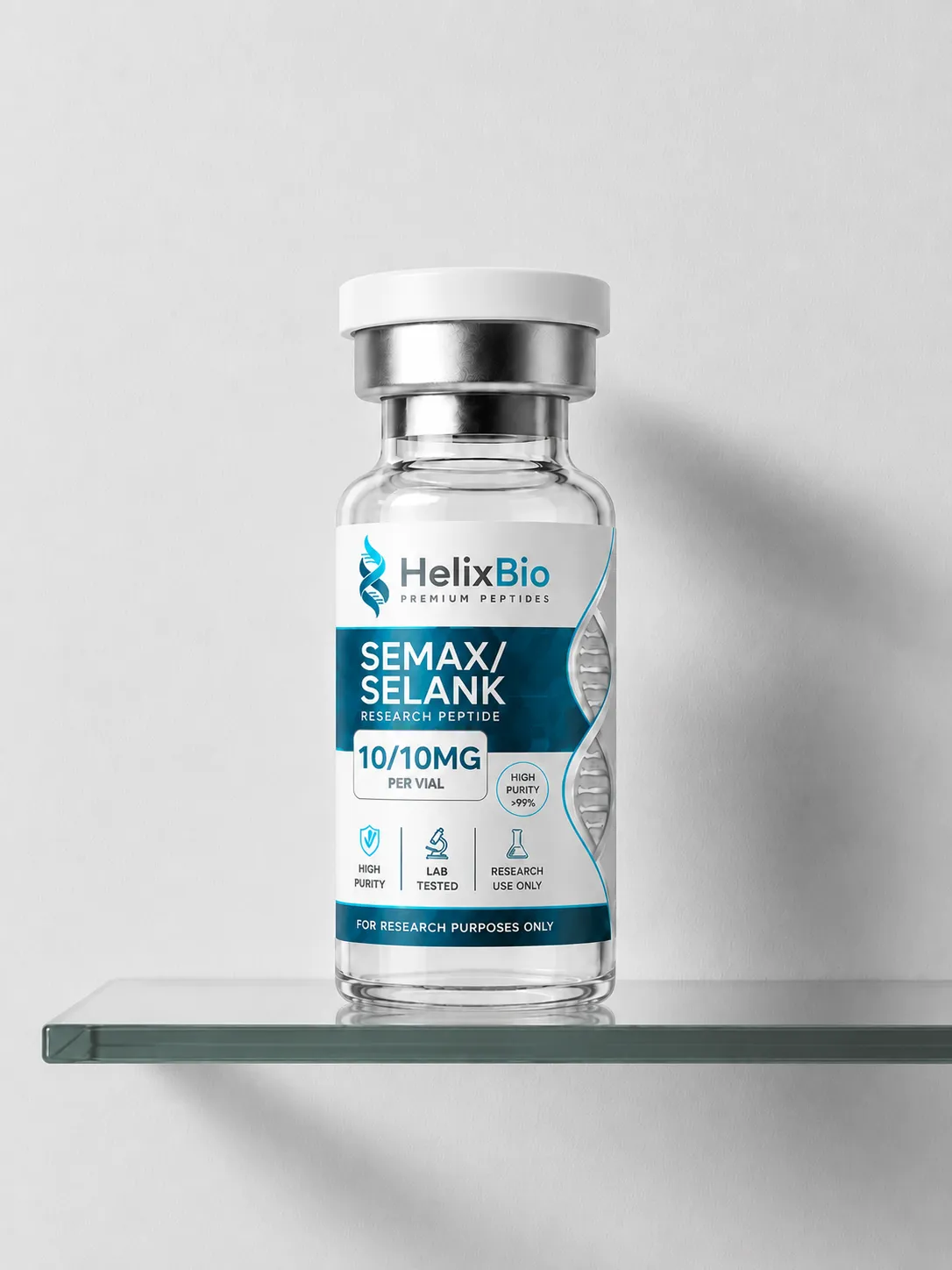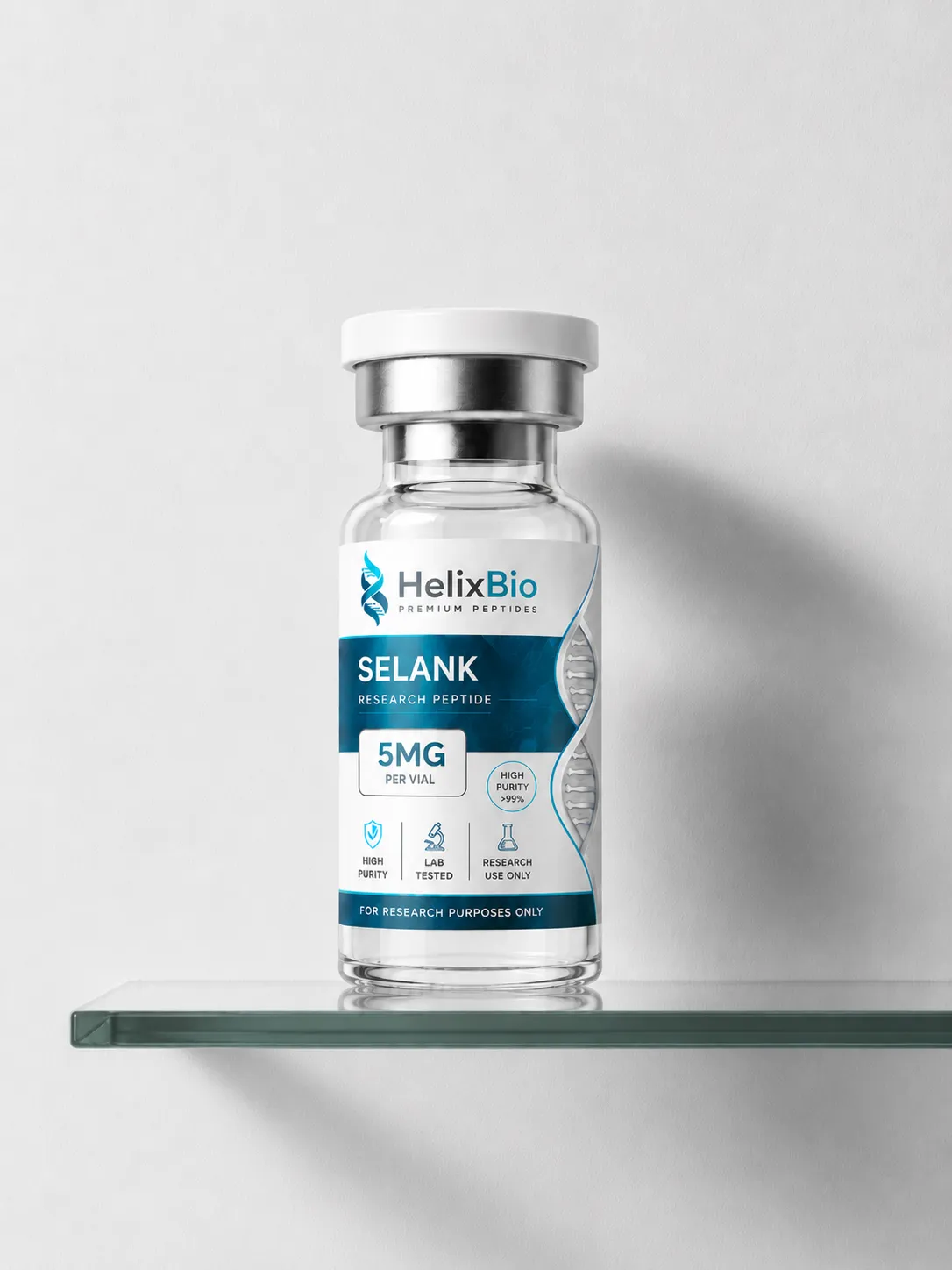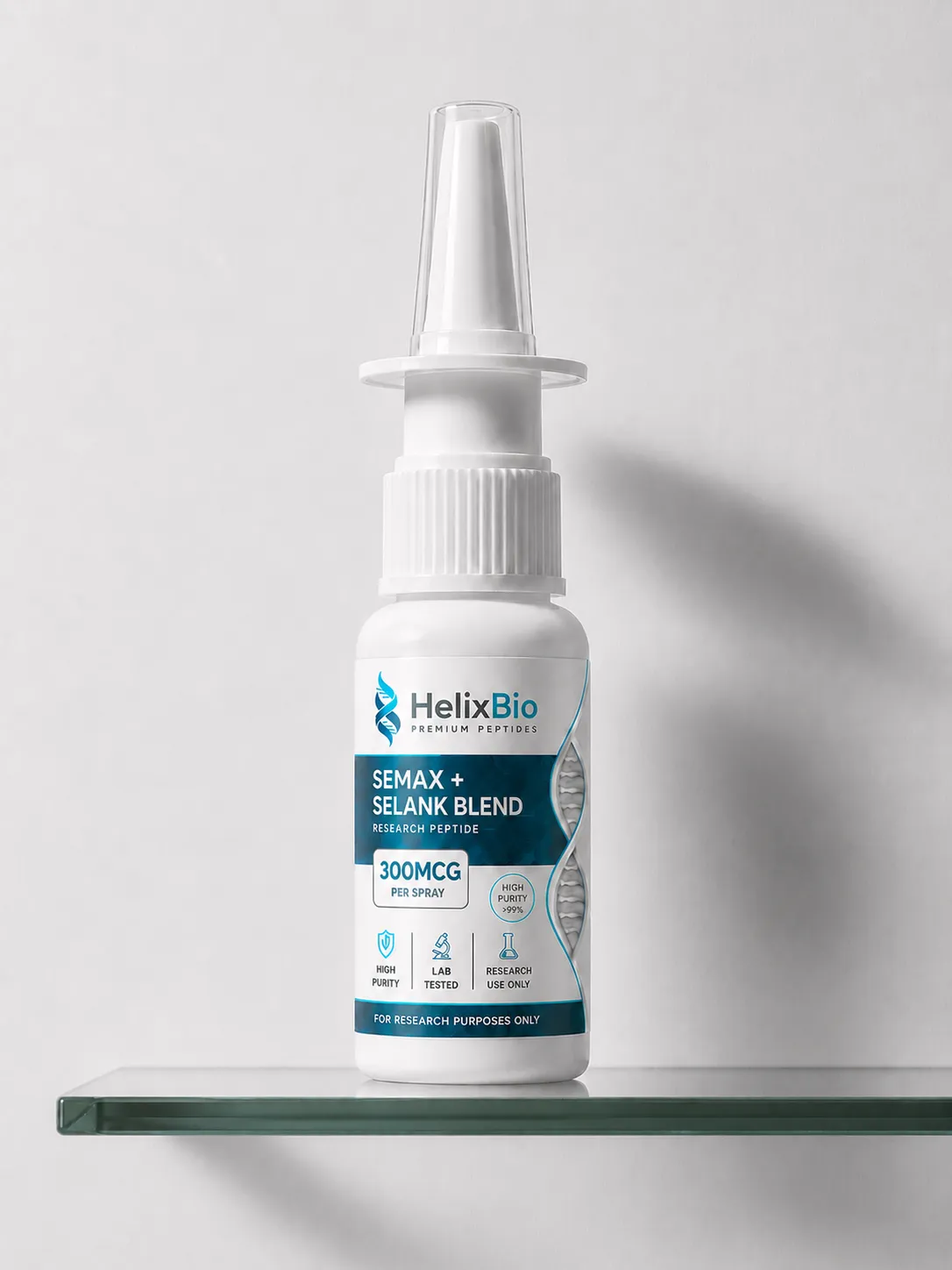
Semax + Selank Blend Spray is a research-use-only peptide preparation combining two synthetic heptapeptides, Semax and Selank, for controlled laboratory and scientific investigation. Semax is structurally related to the ACTH(4–10) peptide fragment, while Selank is a synthetic analogue of the endogenous peptide tuftsin. The combination is relevant to research involving peptide structure, molecular signaling, neurobiology, receptor interactions, enzymatic activity, and related biochemical pathways. Helix Bio supplies research materials for laboratory use only. This product is not intended for human or veterinary administration.
HPLC certified
Independent analysis
Highest standard
Full traceability
Semax and Selank are distinct synthetic peptides that have appeared in scientific literature examining molecular, biochemical, and neurobiological processes.
Semax is a synthetic heptapeptide with the sequence Met-Glu-His-Phe-Pro-Gly-Pro and is structurally associated with the N-terminal fragment of adrenocorticotropic hormone (ACTH). Research has examined Semax in models involving neurobiology, peptide-receptor interactions, gene expression, and neurotrophic signaling.
Selank is a synthetic heptapeptide with the sequence Thr-Lys-Pro-Arg-Pro-Gly-Pro and is an analogue of tuftsin. Published research has investigated Selank in relation to peptide metabolism, receptor-associated signaling, gene expression, and biochemical pathways.
The Semax + Selank Blend Spray brings these two research compounds together in one prepared format. The blend is intended to provide researchers with a defined material for laboratory investigation where both peptide sequences are relevant to the experimental design.
The product contains two peptide components:
The exact concentration, formulation, and lot-specific analytical characteristics should be confirmed against the current product documentation and Certificate of Analysis before use in an experiment.
The Semax + Selank combination may be relevant to laboratory research examining:
The presence of two distinct peptide molecules makes the blend particularly relevant to studies designed to examine combined or comparative peptide behavior. Experimental interpretation should account for the individual properties of each component rather than treating the blend as a single molecular entity.
A peptide blend can be useful when an experimental workflow calls for more than one defined peptide component in the same research material.
Semax + Selank Blend Spray provides researchers with a prepared combination of two well-characterized synthetic heptapeptides that have been investigated independently in the scientific literature. This can support research designs focused on comparative peptide biology, molecular interactions, or pathways where both compounds are relevant.
For analytical work, documentation is especially important. Researchers should verify the lot number, reported purity, molecular identity, formulation, and other product-specific information before incorporating a research material into an experimental protocol.
Helix Bio states that its research products are supported by batch-specific Certificates of Analysis and independent HPLC and mass-spectrometry testing.
Semax + Selank Blend Spray is intended for qualified users conducting legitimate laboratory or scientific research, including:
It is not intended for consumers seeking products for personal use, self-experimentation, diagnosis, prevention, or treatment.
| Specification | Details |
|---|---|
| Product Name | Semax + Selank Blend Spray |
| Category | Peptide Blend / Research Peptide |
| Components | Semax + Selank |
| Semax Sequence | Met-Glu-His-Phe-Pro-Gly-Pro |
| Selank Sequence | Thr-Lys-Pro-Arg-Pro-Gly-Pro |
| Format | Spray |
| Intended Use | Laboratory and scientific research only |
| Human Use | Not intended for human use |
| Veterinary Use | Not intended for veterinary use |
| Purity | Verify current lot-specific COA |
| Identity Testing | Verify current lot-specific analytical documentation |
| Packaging | Product-specific packaging; confirm current specifications |
| Storage | Follow product label and current lot documentation |
| Manufacturer / Supplier | Helix Bio |
| Lot Testing | Review applicable batch-specific COA |
| Country of Origin | Not specified; confirm with supplier documentation |
Product specifications can vary by formulation and lot. The applicable Certificate of Analysis and product documentation should take precedence over general catalog information.
Semax + Selank Blend Spray is intended for research applications rather than therapeutic use.
Researchers can investigate how structurally distinct synthetic peptides behave under defined laboratory conditions, including degradation, stability, and molecular interactions.
Semax and Selank have both been investigated in experimental neurobiological research. Published work has examined Semax in relation to BDNF and TrkB-associated signaling, while research on Selank has explored biochemical and neurobiological mechanisms.
These findings provide scientific context for laboratory investigation but should not be interpreted as evidence that this research product is safe or effective for human use.
The two peptide components may be studied in experiments involving cellular signaling, peptide-mediated molecular interactions, and downstream biochemical processes.
Published research has investigated interactions between Semax, Selank, and enzymes involved in peptide degradation. Such literature may be relevant when designing in-vitro experiments involving peptide metabolism or enzymatic stability.
Because Semax and Selank are chemically distinct peptides, researchers may investigate differences in molecular behavior, stability, biological interactions, or experimental responses under controlled conditions.
Quality control is particularly important when working with synthetic peptides because impurities, degradation products, truncated sequences, or incorrect molecular identity can affect experimental interpretation.
Helix Bio states that its peptide catalog uses HPLC purity testing and mass spectrometry to verify purity and molecular identity. The company also states that batch-specific Certificates of Analysis are available for its products.
Researchers evaluating a Semax + Selank research peptide blend should review:
The current lot-specific documentation should be used when determining whether a particular batch is appropriate for an experimental workflow.
Storage requirements should always follow the product label and lot-specific documentation supplied with the material.
General laboratory handling considerations include:
Helix Bio's general research-peptide guidance notes that storage conditions can depend on whether a peptide is lyophilized or formulated, so researchers should follow the applicable product documentation rather than relying on a generic storage temperature.
Helix Bio states that its research products are supplied for laboratory and scientific applications and uses documented handling and shipping practices for research materials. The company's website describes cold-chain handling and tracked shipping as part of its research-product logistics.
Shipping availability, packaging configuration, transit conditions, and applicable restrictions can vary. Review the current Helix Bio shipping information and product documentation before placing an order.
Semax + Selank Blend Spray is sold strictly for research and laboratory purposes.
This product is not intended for human or veterinary use, ingestion, injection, inhalation, or any other form of administration. It is not intended to diagnose, treat, cure, mitigate, or prevent any disease or medical condition.
The product has not been evaluated or approved by the U.S. Food and Drug Administration (FDA) for human or veterinary use. Research-use-only materials should be used only within appropriate laboratory environments and under applicable institutional, regulatory, and safety requirements.
Helix Bio is not a compounding pharmacy and does not provide products for clinical administration. Researchers are responsible for determining whether a product is appropriate for their intended experimental application and for reviewing current lot-specific documentation before use.
Knowledge Base
Knowledge Base
Knowledge Base
Knowledge Base
Knowledge Base
Knowledge Base
Knowledge Base
Knowledge Base
Knowledge Base
Knowledge Base
Knowledge Base
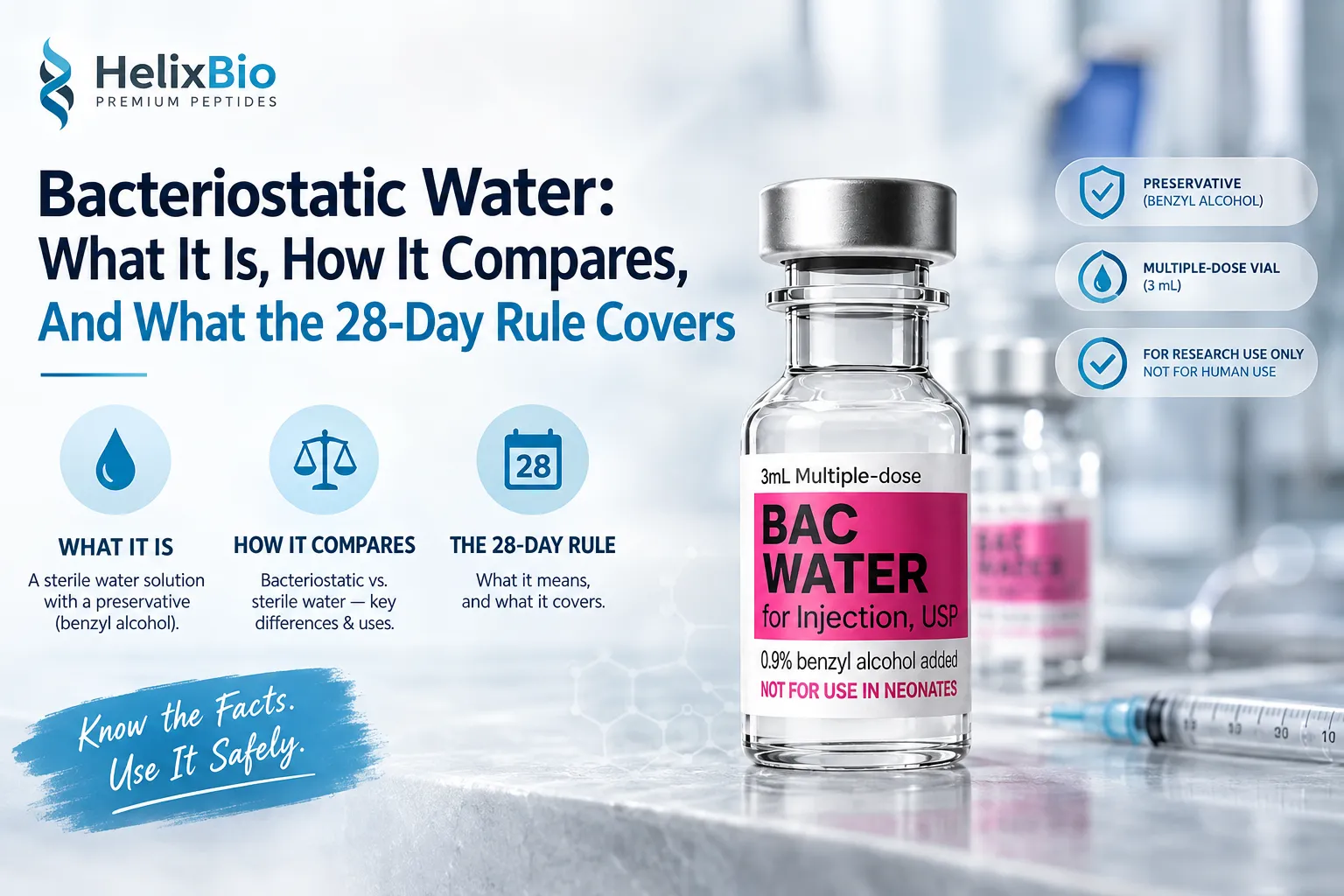
What bacteriostatic water contains, how it differs from sterile water and saline, where the 28-day opened-vial figure comes from, and what a COA can show.
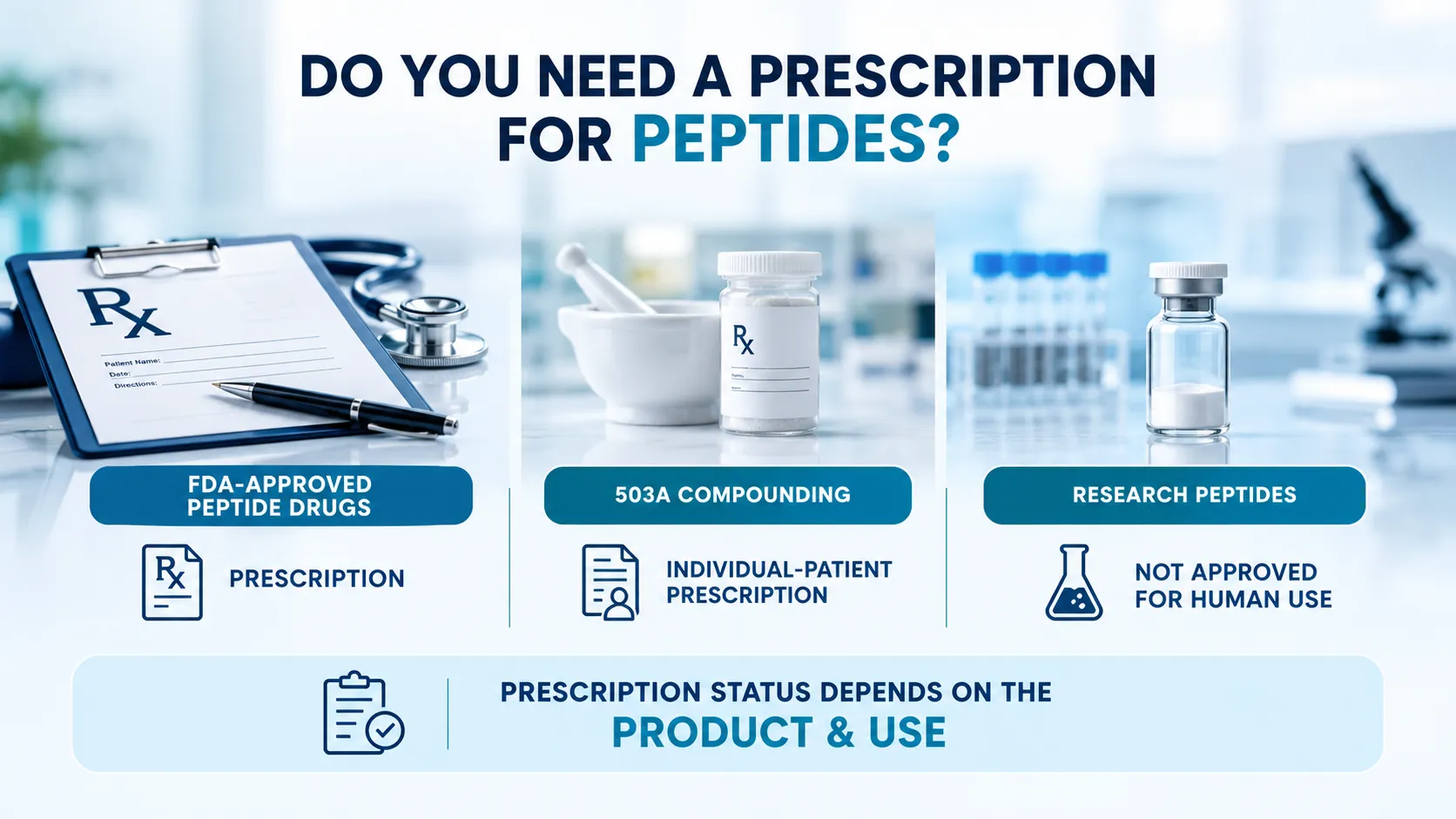
Do you need a prescription for peptides? It depends on the category. See which peptides need one, which do not, and the dated 2026 FDA rules that apply.
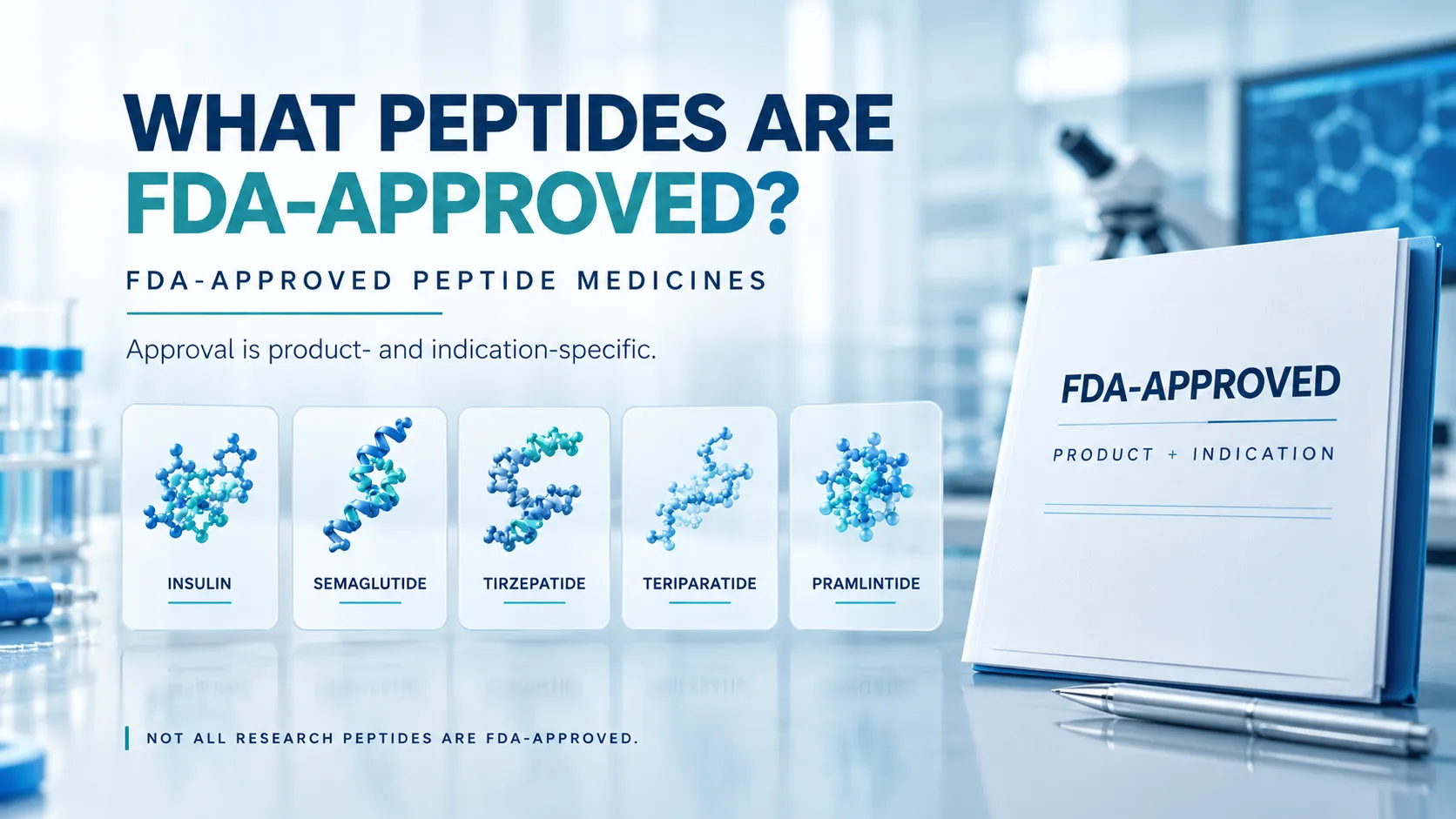
The complete 2026 list of FDA-approved peptides: 47 drugs by category and approval year, which popular peptides are not approved, and pipeline to watch.