Selank Peptide Research: Tuftsin Analogue, GABA Modulation and the Evidence
Recovery protocolsSeptember 17, 202614 min read
Selank is a synthetic heptapeptide built on the tuftsin scaffold. Review its GABAergic, enkephalinase and BDNF research, human trial data, and what the evidence does not establish.
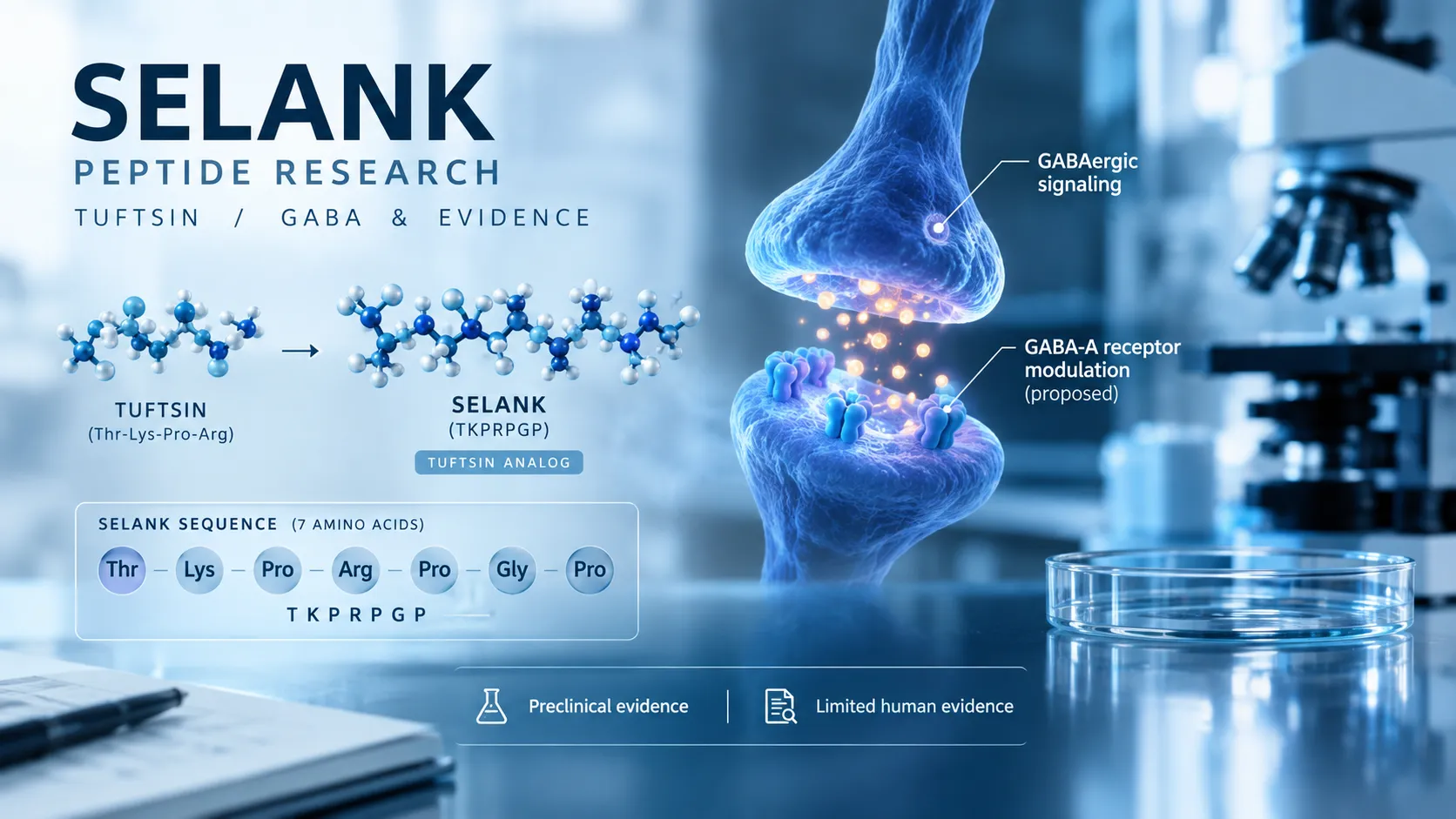
Selank (Thr-Lys-Pro-Arg-Pro-Gly-Pro) is a C-terminally extended synthetic analogue of tuftsin, an IgG Fc-domain tetrapeptide; the Pro-Gly-Pro extension slows enzymatic degradation and improves CNS penetration.
A 2018 radioligand study in rat brain membranes showed Selank acts as a positive allosteric modulator of GABA-A receptor binding at a site distinct from the classical benzodiazepine site.
Selank dose-dependently inhibited enkephalin-degrading enzyme activity in blood plasma with an IC50 of approximately 15 μM in a 2001 in vitro enzymatic assay.
The strongest human clinical evidence consists of two Russian randomised trials; neither included a placebo arm, and no Western RCT has been completed.
A 2020 resting-state fMRI study in 52 healthy volunteers found acute amygdala-temporal connectivity changes after Selank administration — a neuroimaging finding, not a clinical anxiolytic endpoint.
Selank contains no Trp, Tyr, or Phe; A₂₈₀ is not suitable for purity measurement — RP-HPLC at 214 nm is the appropriate method.
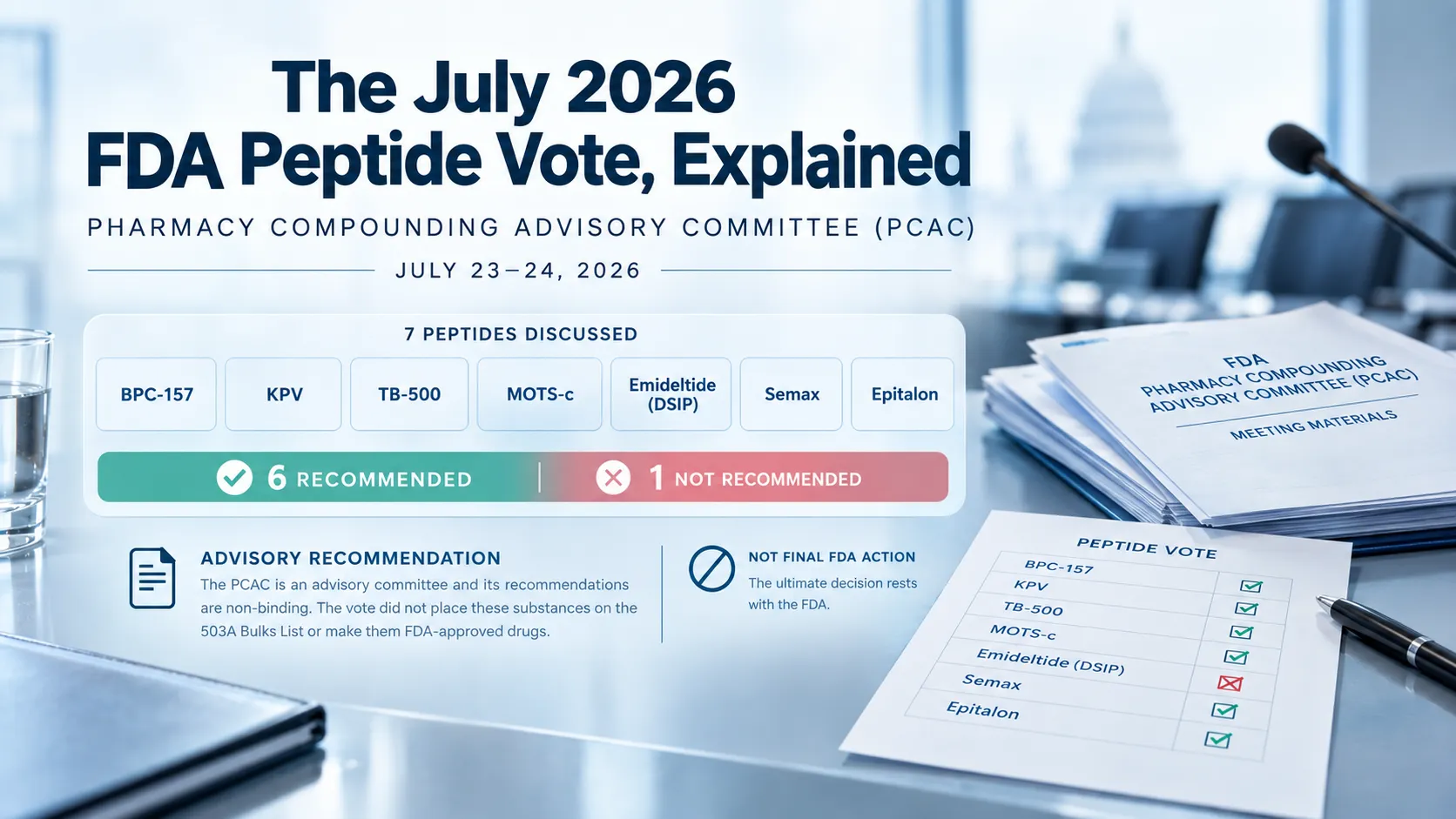
Selank was not among the seven peptides reviewed at the July 2026 FDA Pharmacy Compounding Advisory Committee proceedings; its Category 2 reclassification announcement had not been formally published as of the most recent available information.
Tuftsin, the endogenous tetrapeptide at the core of Selank's design, survives in plasma for seconds. That is the central design problem Selank solves — and understanding the solution is the most direct route into understanding what this compound is and why researchers find it useful.
Featured In This Article
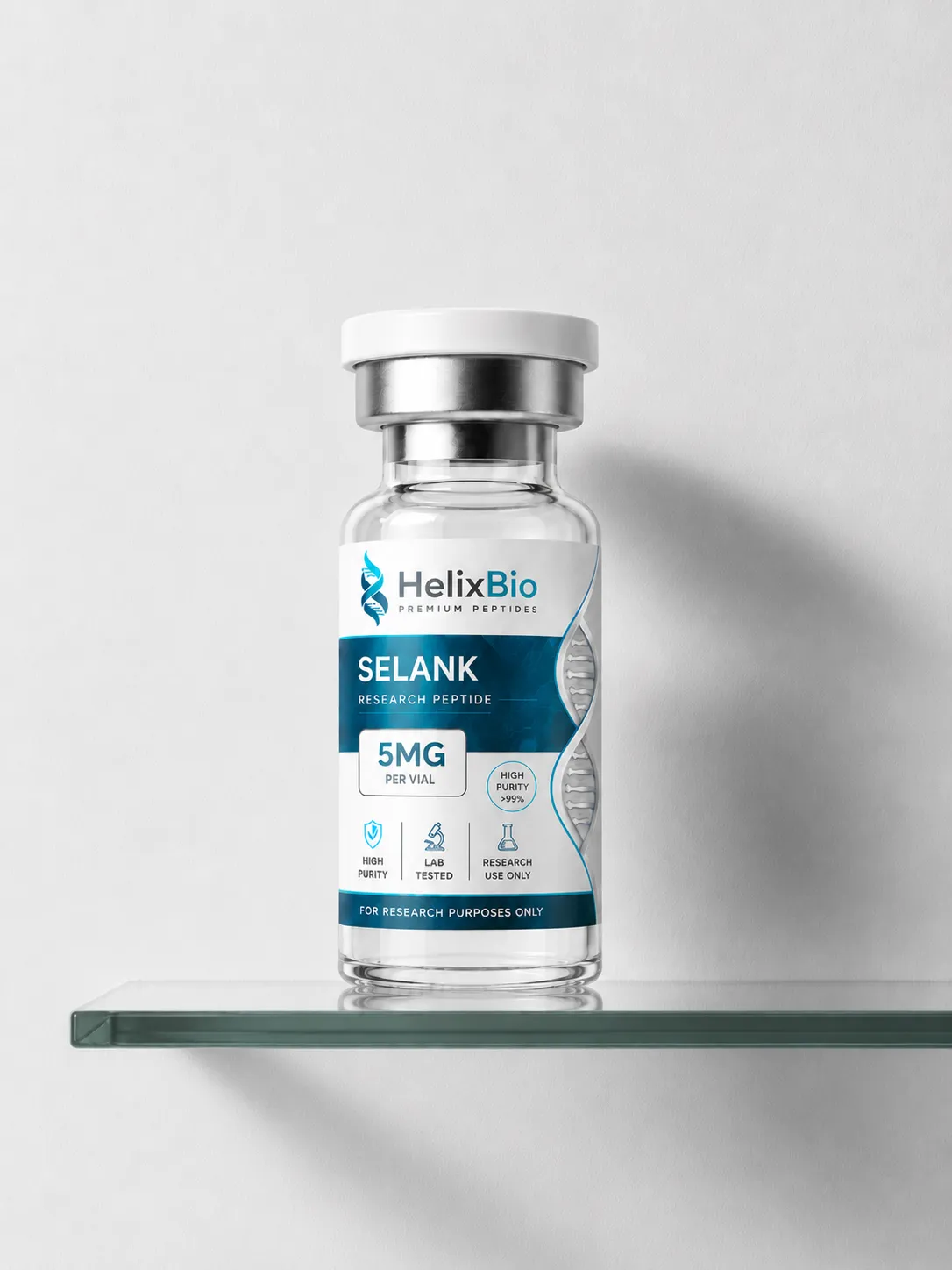
Selank
RESEARCH PEPTIDE
Highly purified synthetic peptide prepared for rigorous laboratory research.
$72.00
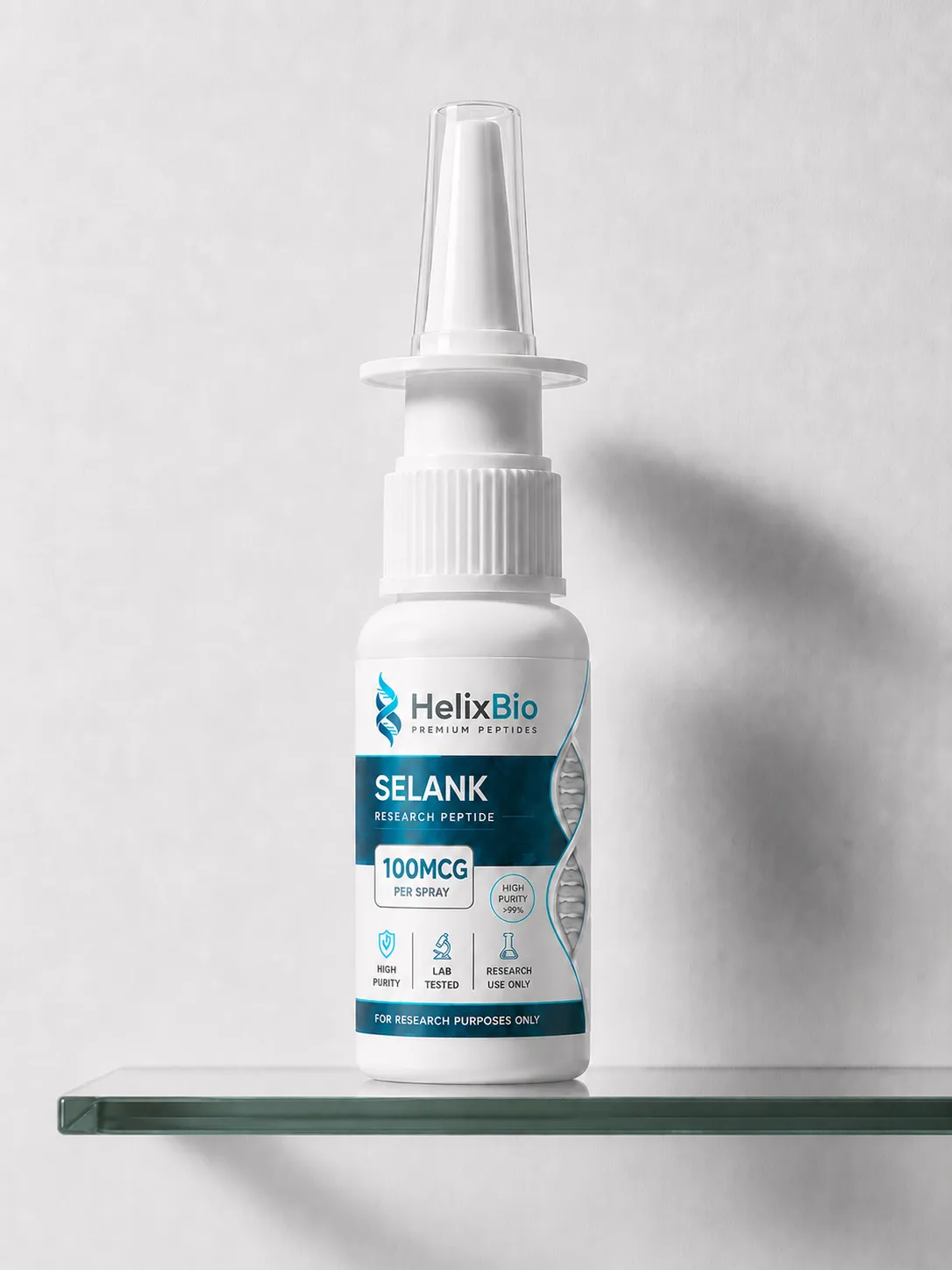
Selank Spray
RESEARCH PEPTIDE
Highly purified synthetic peptide prepared for rigorous laboratory research.
$83.00
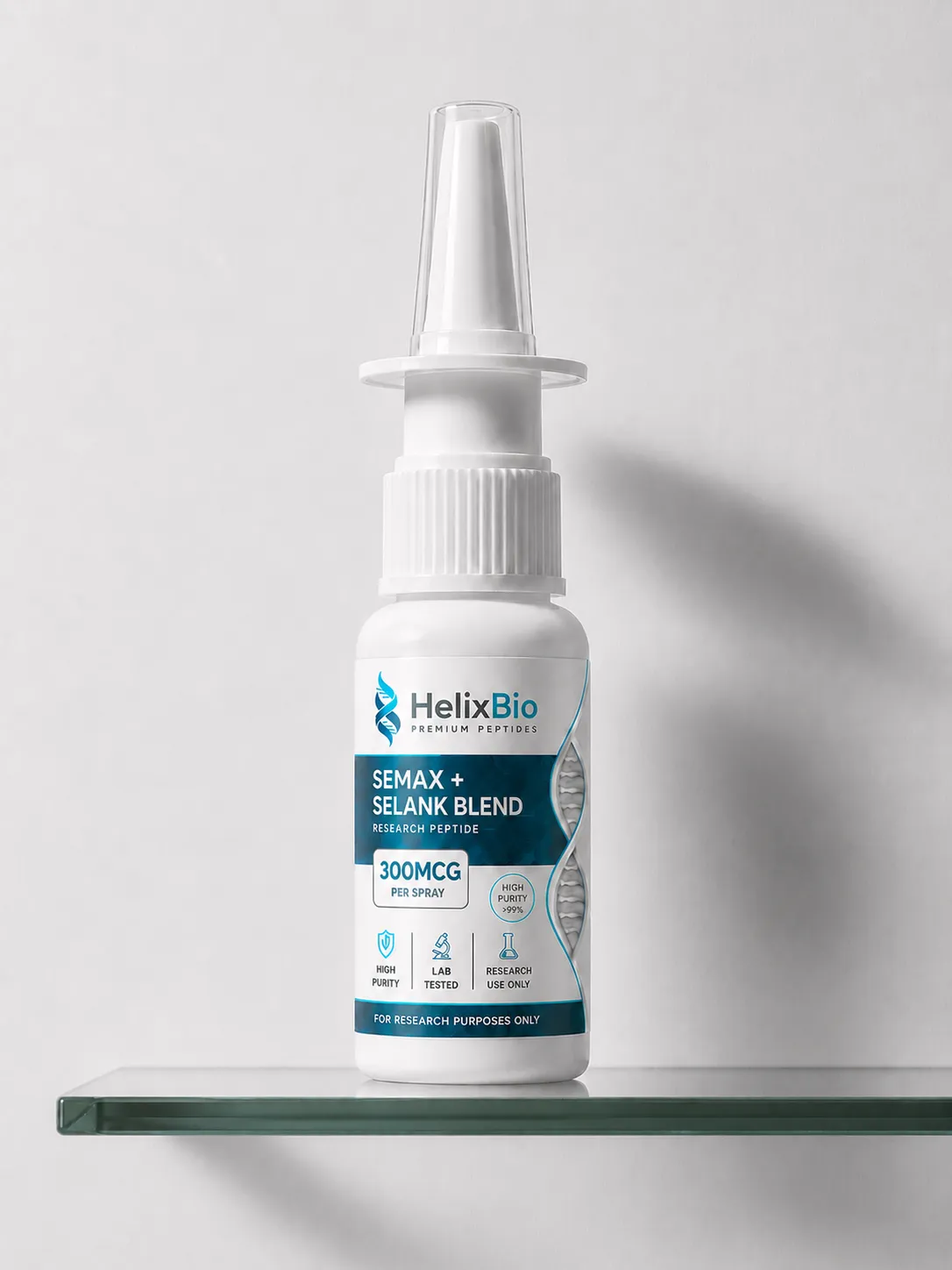
Semax + Selank Blend Spray
RESEARCH PEPTIDE
Highly purified synthetic peptide prepared for rigorous laboratory research.
$132.00
Selank is a synthetic heptapeptide with the amino acid sequence Thr-Lys-Pro-Arg-Pro-Gly-Pro. It was developed at the Institute of Molecular Genetics of the Russian Academy of Sciences as a structurally stabilised analog of tuftsin. Its molecular formula is C₃₃H₅₇N₁₁O₉, its average molecular weight is approximately 751.88 g/mol, and its CAS number is 129954-34-3 (free peptide) or 2703745-90-6 (acetate salt form). The compound is also listed under the alias TP-7.
Selank and Tuftsin: What the Extension Actually Does
Tuftsin (Thr-Lys-Pro-Arg) is a naturally occurring tetrapeptide located at residues 289–292 of the Fc domain of immunoglobulin G heavy chains. Two enzymes are required to release it: splenic tuftsin-endocarboxypeptidase, which cleaves the Arg-Glu bond distal to Arg292, and leukokininase on the outer face of the phagocyte plasma membrane, which cleaves the Lys-Thr bond proximal to Thr289. In the body, tuftsin's primary role is immunomodulatory — it stimulates phagocytic activity in macrophages and neutrophils. The problem for researchers is that aminopeptidases degrade it almost immediately, making it effectively impossible to study CNS-adjacent effects with the native peptide.
Selank retains the tuftsin tetrapeptide unchanged at its N-terminus and adds three residues — Pro-Gly-Pro — at the C-terminus. This extension does two things the published record supports: it substantially slows enzymatic degradation compared to tuftsin alone, and it improves CNS penetration. The same Pro-Gly-Pro stabilisation tail appears in Semax, though that compound's parent sequence (ACTH(4-10)) and its receptor biology are entirely different.
The precise chemical description matters: Selank is a C-terminally extended synthetic analogue of tuftsin. It is not a tuftsin fragment, not a tuftsin variant with amino acid substitutions, and not derived from the Fd (antigen-binding) domain of IgG — tuftsin resides in the Fc (constant) domain. That distinction occasionally matters when cross-referencing supplier documentation or reading older immunology literature that discusses tuftsin's origin.
Property
Value
Amino acid sequence
Thr-Lys-Pro-Arg-Pro-Gly-Pro (TKPRPGP)
Residues
7 (heptapeptide)
Molecular formula
C₃₃H₅₇N₁₁O₉
Average molecular weight
~751.88 g/mol
CAS (free peptide)
129954-34-3
CAS (acetate salt)
2703745-90-6
Aliases
TP-7, Selanc
No. of cysteine residues
0
The GABA Research — Evidence by Level
The GABAergic system is the best-documented molecular research area for Selank. Stating the evidence accurately means separating three distinct levels of finding that the literature conflates more often than it should.
What a radioligand assay showed
Vyunova, Andreeva and colleagues published what remains the primary mechanistic paper in Protein and Peptide Letters in 2018 (PMID 30255741). They used a [³H]GABA radioligand binding assay in isolated rat brain plasma membrane preparations — an in vitro system, not a whole-cell recording or a patch-clamp experiment. Their finding: Selank acted as a positive allosteric modulator of [³H]GABA binding in a concentration-dependent manner. When they combined Selank with diazepam (a benzodiazepine) and olanzapine (an atypical antipsychotic), the combined effect was not additive. Selank blocked the modulatory activity of both compounds, leading the authors to conclude that Selank's binding site and the classical benzodiazepine site do not fully overlap, though they may partially share space.
This is the correct framing of the GABA evidence: one radioligand binding study in rat brain membranes, establishing positive allosteric modulation at GABA-A receptors and a binding site distinct from the benzodiazepine site. It is not human mechanistic proof and it does not establish specific subunit selectivity — the paper uses "subtype selective" as a hypothesis derived from the non-additive interaction, not as a direct structural demonstration.
What gene expression studies showed
Volkova and colleagues (Frontiers in Pharmacology, 2016, PMID 26924987) analysed expression changes in 84 genes involved in GABAergic neurotransmission in rat frontal cortex one hour and three hours after Selank administration (300 μg/kg). Forty-five of the 84 genes showed significant changes at one hour, and the pattern of those changes correlated positively with the pattern produced by GABA administration. This is a gene expression correlation study in rat cortex — it supports the hypothesis that Selank engages the GABAergic system, but it does not demonstrate direct receptor binding, specify which subunits are affected, or establish a mechanism at the protein level.
A 2017 Frontiers paper (PMID 28293190) from the same group applied a similar approach to IMR-32 human neuroblastoma cells. Selank alone did not directly change mRNA levels of the GABAergic genes examined in that cell line. Effects appeared only in combination conditions. This is the result that rarely surfaces in secondary literature — Selank alone had no significant direct effect on those 84 genes in IMR-32 cells, suggesting the GABAergic gene expression response may depend on cell type, subunit composition, or tissue context.
What has not been established
Specific GABA-A receptor subunit selectivity for Selank has not been directly demonstrated in any published primary study. Human receptor occupancy data does not exist. The question of whether Selank's effects in animal models and the Russian clinical trials operate through GABAergic modulation, through enkephalinase inhibition, or through both simultaneously has not been resolved. Writing "Selank works through GABA" as a universal fact misrepresents what the evidence actually shows.
Enkephalinase Inhibition
Selank's second well-documented mechanistic line comes from a 2001 PubMed-indexed study (PMID 11550013) by Zozulya, Kost and colleagues. Working with an in vitro enzymatic assay using blood plasma, they found that Selank dose-dependently inhibited enkephalin-degrading enzyme activity, with an IC50 of approximately 15 μM. Selank outperformed two established peptidase inhibitors — bacitracin and puromycin — in that assay system.
The same paper also measured enkephalin half-life in patients with various anxiety and phobic disorders. Patients with generalised anxiety disorder showed shortened enkephalin half-life and reduced total enkephalinase activity in blood, establishing a physiological correlation between enkephalin degradation and the anxiety phenotype under study.
Evidence classification: directly established as enzymatic inhibition in vitro. The role of this mechanism in Selank's in vivo effects — whether it operates alongside GABAergic modulation, or independently, or dominates one of the two — remains an open question in the literature. The two mechanisms are not mutually exclusive, and the current published record does not resolve which predominates under which conditions.
BDNF and Cytokine Research
A 2008 study by Inozemtseva and colleagues (Doklady Biological Sciences, PMID 18841804) reported that intranasal administration of Selank regulated BDNF expression in the rat hippocampus in vivo. This is the primary citation behind the BDNF mechanism claim, and it is a rat hippocampus study — not a human mechanistic finding. The direction of effect (upregulation) is what the secondary literature picks up; the study itself is the appropriate citation, and researchers should read it with that model in mind.
A separate study examined Selank and BDNF content in the hippocampus and prefrontal cortex in a rat model involving chronic ethanol exposure. These are animal models and should not be interpreted as human therapeutic evidence.
On the cytokine side, Kolomin, Morozova, Volkova and colleagues (Molecular Immunology, 2014) reported changes in expression of inflammation-related genes including Il2rg and Xcr1 in mouse spleen 90 minutes after Selank administration at 100 μg/kg. This is mouse spleen gene expression in a single model — an immunomodulatory signal in that system, not a universal anti-inflammatory finding.
For each proposed Selank mechanism, check whether the study was conducted in a cell line, an animal model, or a human population — and note the endpoint measured. Gene expression is not the same as receptor binding; receptor binding in membranes is not the same as behavioural outcome; behavioural outcome in rodents is not the same as clinical efficacy.
Human Research: What the Trials Actually Measured
All published clinical evidence for Selank originates from Russian research institutions. No Western randomised controlled trial has been completed or published. That distinction matters when evaluating evidence quality, and it should be stated plainly.
Zozulya et al. 2008 (PMID 18454096)
62 patients with generalised anxiety disorder and neurasthenia. Selank (n=30) was compared to medazepam (n=32) — a benzodiazepine pro-drug used clinically in Russia. Outcomes were measured using the Hamilton, Zung, and Clinical Global Impression scales. The reported finding: anxiolytic effects were similar between the two groups, but Selank additionally produced antiasthenic and psychostimulant effects not seen with medazepam. Enkephalin half-life in blood serum was also measured as a biological marker. Limitations: published in a Russian-language journal, conducted at a single site, no placebo arm, no blinding described in the available abstract, and the sample sizes are small by Western RCT standards.
Second randomised trial (2015)
70 patients with anxiety-phobic, hypochondriac and somatoform disorders, split between phenazepam monotherapy (30) and phenazepam plus Selank (40). Efficacy was assessed with the HDRS, CGI and Spielberger scales, tolerability with the UKU side-effect rating scale, and quality of life with SF-36. This is an add-on versus monotherapy design with no placebo arm, so it does not establish Selank's independent efficacy.
Panikratova et al. 2020 (PMID 32342318)
52 healthy participants underwent resting-state fMRI before and at 5 and 20 minutes after administration of either Selank, Semax, or placebo by injection. Between-group differences were found in functional connectivity between the right amygdala and a region spanning the fusiform, inferior and middle temporal, and parahippocampal gyri in the right hemisphere. This is a neuroimaging study in healthy volunteers — it demonstrates an acute measurable effect on brain connectivity involving the amygdala, but it is not a clinical trial and its endpoints are connectivity changes, not anxiety outcomes.
Evidence level
Study
System
Main finding
Limitation
In vitro (radioligand)
Vyunova 2018
Rat brain membranes
Selank is a PAM at GABA-A; binding site distinct from BZD site
One study; no subunit-level structural data
In vitro (enzymatic)
Zozulya 2001
Blood plasma
Enkephalinase inhibition; IC50 ~15 μM
In vitro; in vivo relevance proposed, not confirmed
Animal (gene expression)
Volkova 2016
Rat frontal cortex
45/84 GABAergic genes changed; pattern correlated with GABA
No protein-level or binding confirmation
What the Evidence Does Not Establish
This section matters as much as the mechanism review. The published record for Selank is consistent enough to support serious research interest, but it does not establish several things that vendor content regularly implies.
The evidence does not establish that Selank is an approved medical treatment for anxiety or any other condition outside Russia. It does not establish clinical efficacy meeting the standard required by the FDA or EMA — neither of the two randomised trials included a placebo arm. It does not establish long-term safety in humans; the longest trials run weeks, not months or years. It does not establish that GABA-A receptor modulation is Selank's primary mechanism in vivo, since both GABAergic and enkephalinase pathways are documented and the two have not been deconvolved by independent research. It does not establish specific subunit selectivity at the human GABA-A receptor. It does not establish that the animal model findings translate to human outcomes. And it does not establish that the effects observed in Russian clinical populations would replicate in Western populations under FDA-reviewed trial conditions.
None of this diminishes Selank as a legitimate research compound. It describes the evidence accurately.
Analytical Identity and COA Verification
Selank has no cysteine residues, which removes the disulfide-folding complexity that complicates longer peptides. It also contains no tryptophan, tyrosine, or phenylalanine — the aromatic residues that absorb strongly at 280 nm. A₂₈₀ is therefore not a meaningful purity measurement for Selank. The appropriate wavelength for RP-HPLC purity assessment is near 214 nm, which detects the peptide bond backbone. Research-grade Selank is typically reported at ≥98% purity by that method.
Mass spectrometry should report an observed mass consistent with C₃₃H₅₇N₁₁O₉. If the material is the acetate salt form, the observed cation mass should match the free peptide, while the COA should state which form is in the vial and on which mass basis identity was confirmed. A vial described as the acetate salt carries a formula weight approximately 60 Da higher than the free peptide — the COA should specify this rather than leave it ambiguous.
Multiple basic side chains (Lys, Arg, two Pro nitrogens) mean the counterion load from acetate or TFA can represent a meaningful fraction of vial mass. Net peptide content by amino acid analysis answers the question HPLC purity alone cannot: how much peptide is actually present, not just what proportion of the peptide present is the correct peptide. Both figures answer different questions and both belong on a complete COA for quantitative research.
The lot number printed on the COA must match the lot on the vial label. A generic document reproduced across multiple batches is marketing material, not batch-specific analytical documentation.
Selank vs Semax: Where This Article Ends and the Comparison Begins
Selank and Semax are both synthetic heptapeptides from Russian research programmes, both carrying a C-terminal Pro-Gly-Pro stabilisation tail, and both studied in overlapping areas of neuropharmacology. The structural similarity ends there. Semax is an ACTH(4-10) analogue with primary research around BDNF/trkB upregulation and dopaminergic signalling. Selank is a tuftsin analogue with primary research around enkephalinase inhibition and GABA-A modulation.
The regulatory positions also differ as of 2026: Semax received a favourable advisory vote from the FDA's Pharmacy Compounding Advisory Committee at the July 23–24, 2026 proceedings. Selank was not among the seven compounds reviewed at that session, so nothing from those proceedings changed its status.
The full mechanism-by-mechanism comparison — including the evidence tables and stacking rationale — is covered in the dedicated article at Semax vs Selank: Nootropic Peptide Research Compared. This article is designed to stand alone as a Selank reference, not to duplicate that comparison.
Regulatory Status and Research-Use Framework
Selank is approved in the Russian Federation for generalised anxiety disorder and neurasthenia and has appeared on Russia's list of vital and essential medicines since 2011. It carries no FDA approval for any indication in the United States.
Under the FDA's 503A compounding framework, Selank was classified as a Category 2 bulk drug substance as of April 2026 — meaning compounding from bulk was not permitted under the agency's enforcement discretion. In February 2026, HHS Secretary Robert F. Kennedy Jr. announced publicly that approximately 14 of 19 Category 2 peptides, including Selank, would be reclassified to Category 1. As of the most recent information available at time of writing, the FDA had not published a formal document implementing that reclassification. Researchers should verify the current category status directly at FDA.gov before drawing any conclusions about compounding status.
Material sold as a research-use-only compound in the United States operates under the RUO framework and is not for human administration. The compliance overview is at Are Research Peptides Legal in the USA.
For product specifications, lot-specific documentation, and current COA status, see the Selank research peptide page. Reconstitution and storage principles for short lyophilised peptides without cysteine are covered in the peptide reconstitution guide.
Got Questions?
Frequently Asked Questions
Selank is a synthetic heptapeptide with the sequence Thr-Lys-Pro-Arg-Pro-Gly-Pro, molecular formula C₃₃H₅₇N₁₁O₉, and an average molecular weight of approximately 751.88 g/mol. It was developed at the Institute of Molecular Genetics of the Russian Academy of Sciences as a stabilised research analog of the endogenous tetrapeptide tuftsin.
Selank retains the tuftsin tetrapeptide (Thr-Lys-Pro-Arg) at its N-terminus and adds three residues (Pro-Gly-Pro) at the C-terminus. The correct description is a C-terminally extended synthetic analogue of tuftsin — not a fragment, not a substituted variant. Tuftsin itself originates in the Fc domain of immunoglobulin G, not the Fd domain.
A 2018 radioligand study (PMID 30255741) using rat brain membrane preparations showed Selank acts as a positive allosteric modulator of [³H]GABA binding, with a binding site distinct from the classical benzodiazepine site. Specific subunit selectivity has not been directly demonstrated at the structural level; two gene-expression studies support GABAergic engagement but do not confirm the precise binding mechanism.
Standard benzodiazepines bind at the γ2-α subunit interface of GABA-A receptors. The 2018 radioligand study found that Selank's interaction with GABA-A is non-additive with diazepam and olanzapine — Selank blocked their modulatory activity — indicating distinct, partially non-overlapping binding sites. Whether this translates to a different clinical tolerability or dependence profile in humans has not been established in controlled trials.
In a 2001 in vitro enzymatic assay (PMID 11550013), Selank dose-dependently inhibited enkephalin-degrading enzyme activity in blood plasma with an IC50 of approximately 15 μM. It outperformed bacitracin and puromycin in that assay. Whether this mechanism operates as the primary driver of Selank's in vivo effects, alongside GABAergic modulation, or in some proportion of both, has not been resolved in the published literature.
Two Russian randomised trials are the primary human evidence. The first (62 patients, Selank vs medazepam, PMID 18454096) found comparable anxiolytic effects on Hamilton, Zung, and CGI scales, with additional antiasthenic effects favouring Selank. The second (70 patients: phenazepam alone versus phenazepam plus Selank) compared efficacy and tolerability. Neither trial included a placebo arm. A 2020 fMRI study in 52 healthy volunteers found amygdala-temporal connectivity changes but did not measure clinical anxiety outcomes.
A 2008 study (PMID 18841804) reported that intranasal Selank regulated BDNF expression in the rat hippocampus in vivo. This is an animal model finding; the direction of the effect (regulation of BDNF) is what the secondary literature picks up, but the model is rat hippocampus and should not be interpreted as human mechanistic or therapeutic evidence.
The published record does not establish that Selank is an approved medical treatment outside Russia, that either randomised trial demonstrated placebo-superior efficacy, that long-term safety in humans has been characterised, that GABA-A modulation is the primary mechanism in vivo, that specific subunit selectivity exists at the human receptor, or that Russian clinical findings would replicate in Western trial conditions.
Reversed-phase HPLC with UV detection near 214 nm is the appropriate method. Selank contains no tryptophan, tyrosine, or phenylalanine, so A₂₈₀ produces a negligible or unreliable signal and should not be used as the primary purity measurement. Research-grade Selank is typically reported at ≥98% by RP-HPLC.
CAS 129954-34-3 refers to the free heptapeptide (MW ~751.88 g/mol). CAS 2703745-90-6 refers to the acetate salt form, which carries approximately 60 Da additional mass from the acetic acid counterion. A COA should specify which form is in the vial and report molecular identity on the corresponding mass basis.
Selank has no FDA approval for any indication. As of April 2026 it was classified as a Category 2 bulk drug substance under the 503A compounding framework, restricting compounding from bulk. An announcement in February 2026 indicated intent to reclassify it to Category 1, but formal FDA documentation had not been published at that time. Selank was not reviewed at the July 2026 PCAC proceedings. Researchers should verify current status at FDA.gov.
Selank (Thr-Lys-Pro-Arg-Pro-Gly-Pro) is a tuftsin analogue; its primary research mechanisms are enkephalinase inhibition and GABA-A modulation. Semax (Met-Glu-His-Phe-Pro-Gly-Pro) is an ACTH(4-10) analogue; its primary research mechanism is BDNF/trkB upregulation. Both share a Pro-Gly-Pro stabilisation tail. Semax received a favourable PCAC advisory vote at the July 2026 proceedings; Selank was not reviewed at that session.