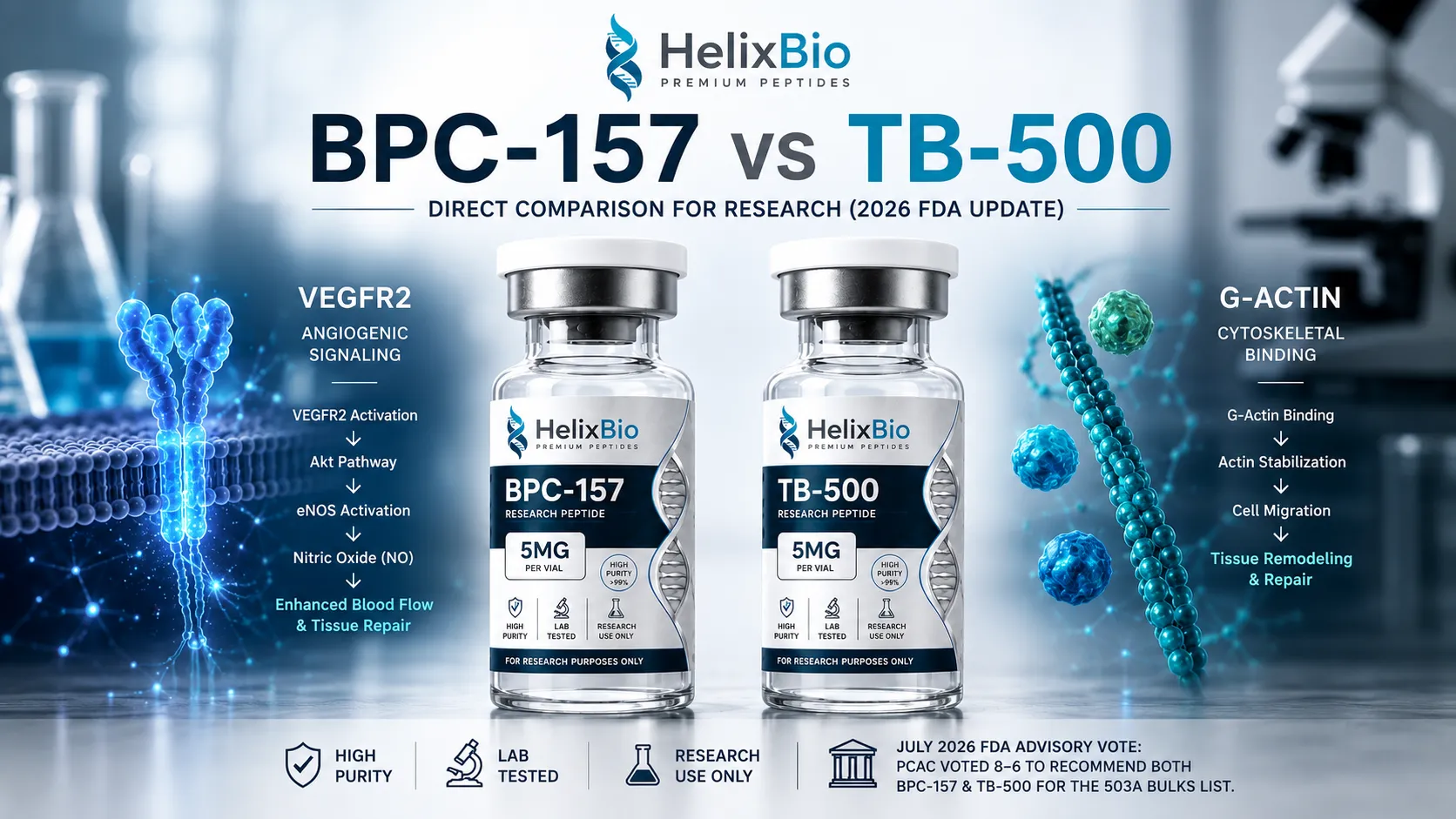
- The FDA's Pharmacy Compounding Advisory Committee voted 8-6 on July 23-24, 2026 to recommend both BPC-157 and TB-500 for the federal 503A Bulks List, but the vote is non-binding and requires formal FDA rulemaking and HHS approval before taking effect.
- BPC-157 is a 15-amino-acid pentadecapeptide whose primary research mechanism is VEGFR2-Akt-eNOS angiogenic signaling, with strongest evidence in tendon, ligament, and gastric mucosal healing models.
- TB-500 is a synthetic fragment of Thymosin Beta-4 whose primary research mechanism is reversible G-actin sequestration, with strongest evidence in cardiac tissue survival and cell-migration models via the ILK-Akt pathway.
- No peer-reviewed published study has directly tested combined BPC-157 and TB-500 administration; complementary-mechanism protocols are based on mechanistic inference, not demonstrated synergy data.
- Neither compound has completed human clinical trials; all currently published data comes from rodent and in-vitro research models.
- The July 2026 advisory vote does not change either compound's current Research Use Only classification or legal status.
BPC-157 and TB-500 are the two most frequently searched recovery peptides in laboratory research, and as of August 2026 they are also the subject of a live U.S. regulatory decision that will determine how compounding pharmacies can legally handle them. On July 23–24, 2026, the FDA's Pharmacy Compounding Advisory Committee (PCAC) voted 8–6 to recommend both compounds for inclusion on the federal 503A Bulks List — the strongest regulatory signal either peptide has received to date, and a genuinely new development that most existing comparison content on the internet does not yet account for. This guide compares BPC-157 and TB-500 mechanism-by-mechanism, reviews what the July 2026 vote actually changes (and does not change), and lays out where each compound's research evidence is strongest.
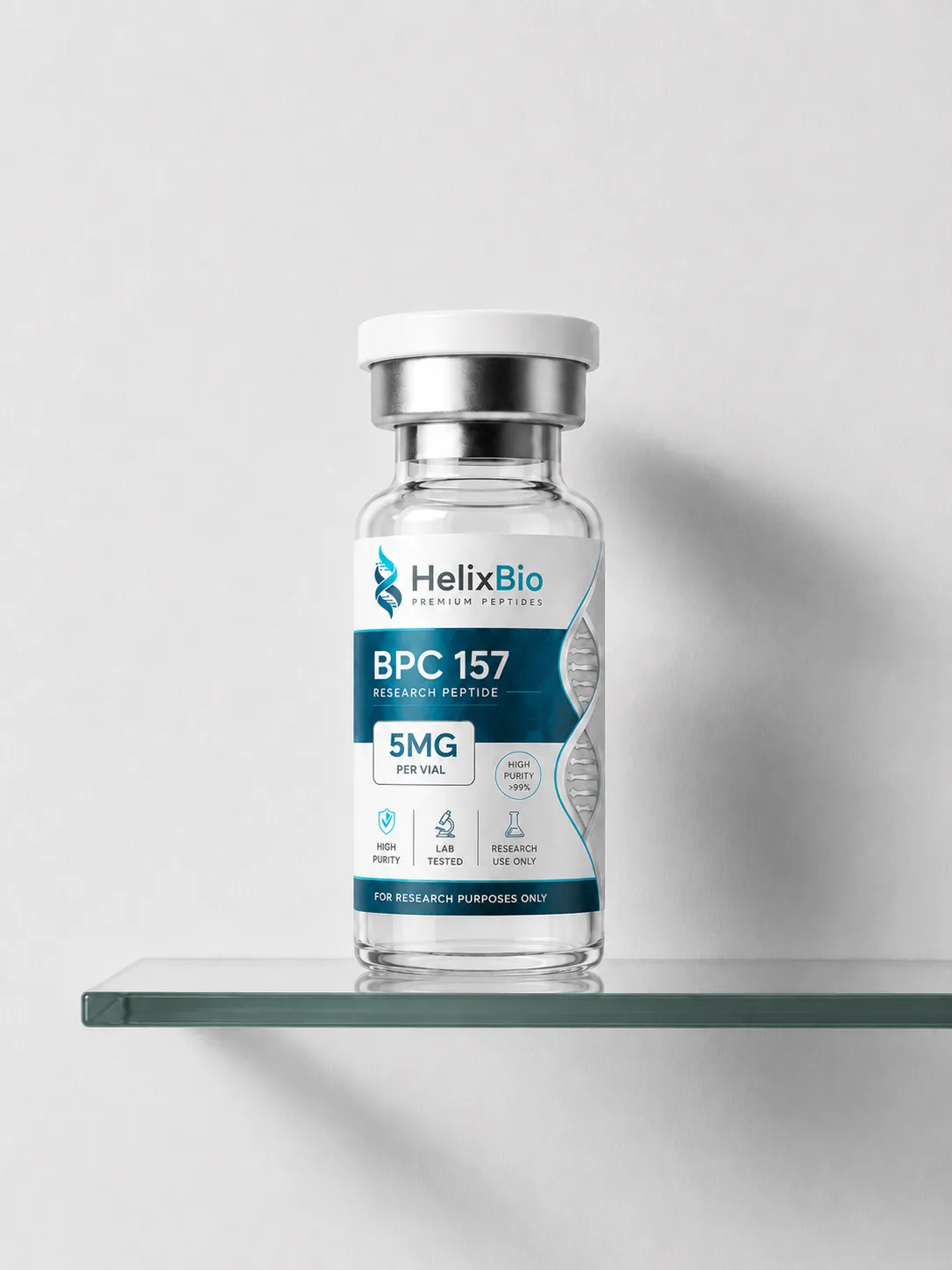
BPC-157
RESEARCH PEPTIDE
BPC-157 is a synthetic pentadecapeptide, a short chain of 15 amino acids derived from a protective protein found in gastric juice. It's one of the most widely studied research peptides in the biotech space, referenced across laboratory literature on tissue repair, angiogenesis, and gastrointestinal research models. Helix Bio's BPC-157 is manufactured for laboratory use, supplied as a lyophilized powder, and backed by a certificate of analysis for every batch. It's intended strictly for qualified researchers, laboratories, and academic institutions — not for human or animal use.
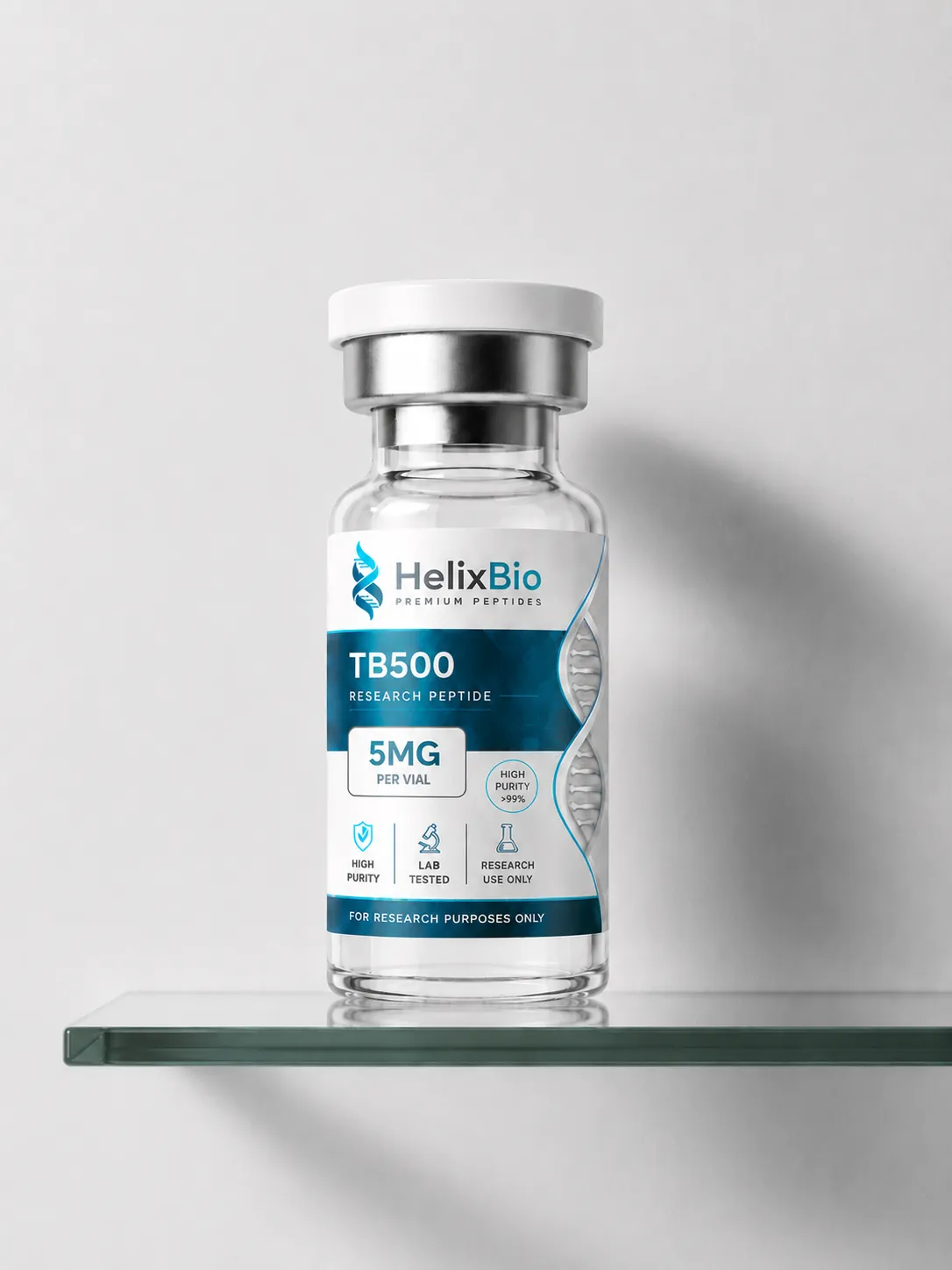
TB-500
RESEARCH PEPTIDE
TB-500 is a synthetic peptide fragment derived from Thymosin Beta-4, a naturally occurring protein involved in actin regulation within cells. It's one of the most referenced research peptides in laboratory literature on cell migration, angiogenesis, and tissue repair models. Helix Bio's TB-500 is manufactured for laboratory use, supplied as a lyophilized powder, and backed by a certificate of analysis for every batch. It's intended strictly for qualified researchers, laboratories, and academic institutions studying cellular repair mechanisms — not for human or animal use.
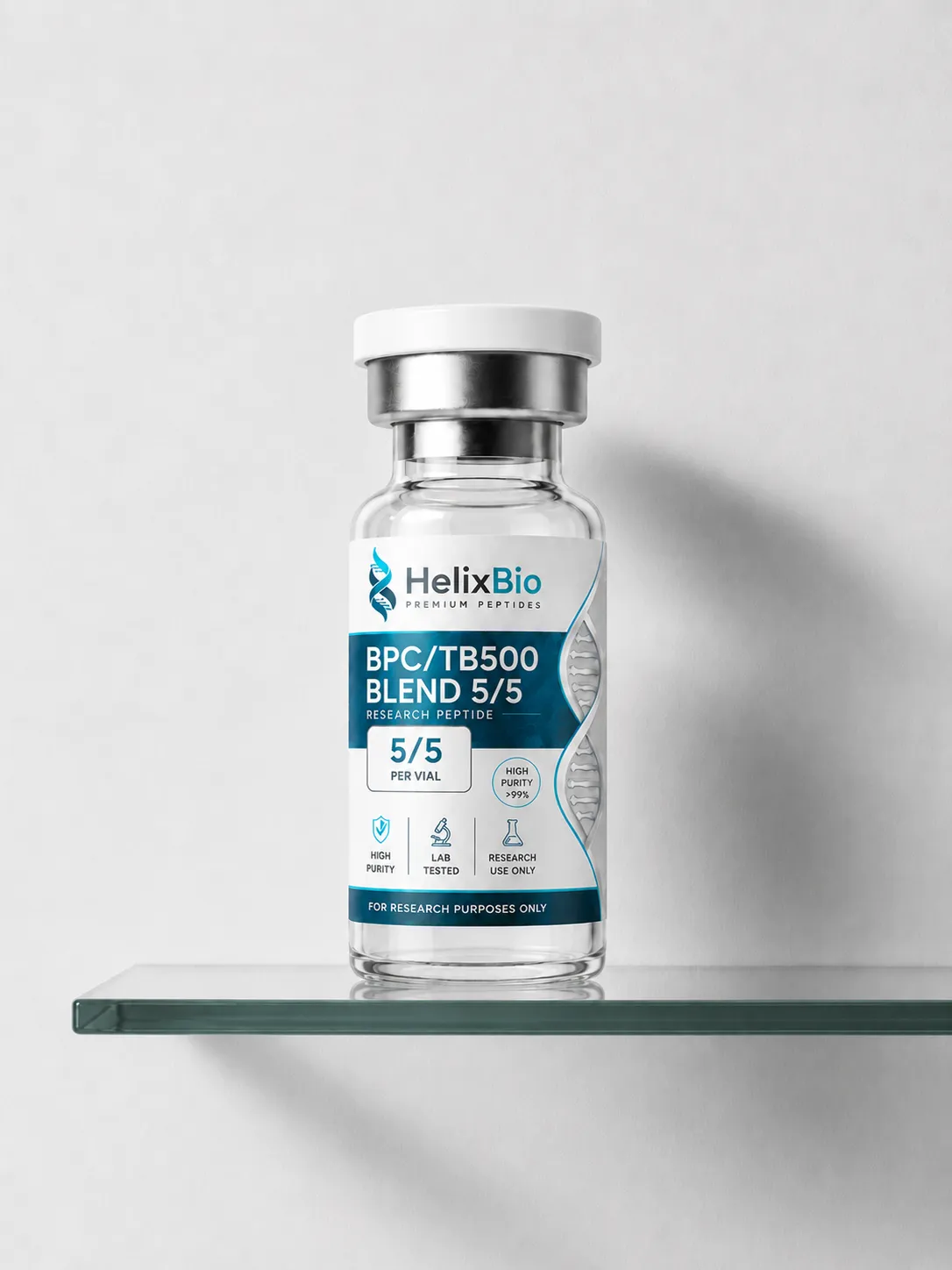
BPC-157 / TB-500 Blend
RESEARCH PEPTIDE
The BPC-157/TB-500 blend combines two of the most studied research peptides — BPC-157, a synthetic pentadecapeptide derived from gastric juice, and TB-500, a synthetic fragment of Thymosin Beta-4 — into a single pre-measured vial. Researchers use blended vials like this to simplify combined-pathway study protocols instead of reconstituting and dosing two separate compounds. Helix Bio's blend is manufactured for laboratory use, supplied as a lyophilized powder with a clearly labeled mg-per-compound ratio, and backed by a certificate of analysis for every batch. It's intended strictly for qualified researchers and laboratories — not for human or animal use.
Both peptides are studied for tissue-repair applications, and both are frequently mentioned in the same sentence — but they are structurally unrelated, act through different signaling pathways, and are supported by different bodies of published research. Treating them as interchangeable is a common research-design mistake this guide is intended to correct.
The July 2026 FDA Advisory Vote: What Actually Changed
The FDA's Pharmacy Compounding Advisory Committee convened on July 23–24, 2026 to evaluate seven candidate peptides for potential addition to the 503A Bulks List — the list of substances that outsourcing compounding pharmacies may legally use to prepare compounded formulations under Section 503A of the Federal Food, Drug, and Cosmetic Act. The committee's vote proceeded against the explicit objection of the FDA's own career scientific staff, who had recommended against several of the nominations.
Compound | PCAC Vote | Outcome |
|---|---|---|
BPC-157 | 8–6 | Recommended |
TB-500 | 8–6 | Recommended |
KPV | 8–6 | Recommended |
MOTS-c | 7–5 | Recommended |
Semax | 8–5 | Recommended |
Epitalon | 7–4 | Recommended |
Emideltide (DSIP) | 6–7 | Not recommended |
The PCAC vote is a **recommendation only** — it is not a rulemaking, an approval, or a change in current law. The FDA still must complete a formal rulemaking process to add any substance to the 503A Bulks List, and the Secretary of Health and Human Services must formally sign off on the addition. The FDA has departed from advisory committee recommendations before. As of this writing, BPC-157 and TB-500 remain unapproved, research-use-only compounds with no FDA-approved human indication, and nothing about the July 2026 vote changes that status today.
The 503A Bulks List itself governs a narrow slice of the regulatory picture: it determines which substances licensed outsourcing facilities may use when preparing compounded drug formulations under physician prescription, a pathway distinct from both FDA drug approval and from laboratory research supply. For researchers, the practical significance of the July 2026 vote is narrower than headlines suggest: it signals that the regulatory environment around compounding-grade access to these two peptides may shift in the coming rulemaking cycle, which is useful context for institutional planning, but it has no bearing on the laboratory research-use-only classification under which BPC-157 and TB-500 are currently supplied and studied. The formal rulemaking process that would follow a favorable PCAC recommendation typically involves a public comment period and further agency review, meaning any actual change to the Bulks List is unlikely to take effect quickly even if HHS ultimately approves it. For a fuller breakdown of what RUO status does and does not permit, see our guide on whether research peptides are legal in the USA.
BPC-157: Structure and Research Mechanism
BPC-157 is a synthetic pentadecapeptide — a 15-amino-acid sequence (Gly-Glu-Pro-Pro-Pro-Gly-Lys-Pro-Ala-Asp-Asp-Ala-Gly-Leu-Val) derived from a partial sequence of a protective protein found in human gastric juice. It was selected for research use specifically because this fragment retains bioactivity while being more stable than the parent protein.
The VEGFR2-Akt-eNOS Pathway
The most consistently replicated mechanism for BPC-157 in the published literature is angiogenic signaling through vascular endothelial growth factor receptor 2 (VEGFR2). Research published in *Scientific Reports* demonstrated that BPC-157 up-regulates VEGFR2 and promotes its internalization, activating the downstream VEGFR2-Akt-eNOS nitric oxide pathway; when receptor internalization was experimentally blocked, the angiogenic effect was blocked as well, indicating that endocytosis of the receptor — not simple surface binding — sits at the center of the mechanism. The same body of research describes BPC-157 activating endothelial nitric oxide synthase (eNOS) via Src-Caveolin-1 phosphorylation, a second, complementary route into the nitric oxide system that affects vasomotor tone.
Tendon and Ligament Research
BPC-157's strongest and most reproduced evidence base is in tendon and ligament healing models. In a rat Achilles tendon transection model, BPC-157 significantly accelerated tendon explant outgrowth and increased tendocyte survival under oxidative stress. A separate rat model of Achilles tendon detachment from bone found BPC-157 improved healing across functional, biomechanical, and histological measures — including load-to-failure, stiffness, and collagen organization — and specifically opposed the healing-impairing effects of corticosteroid administration. Additional research has identified growth hormone receptor as one of the most strongly up-regulated genes in tendon fibroblasts exposed to BPC-157, providing a plausible transcriptional mechanism behind the tendon-specific effects observed at the tissue level.
BPC-157's research profile is most consistently described as **localized and gastrointestinal-tissue-oriented**: tendon, ligament, and gut mucosal repair dominate the published literature, with angiogenesis as the unifying mechanism across these different tissue types.
TB-500: Structure and Research Mechanism
TB-500 is a synthetic peptide corresponding to the actin-binding domain of Thymosin Beta-4 (Tβ4), the most abundant actin-sequestering protein in mammalian cells. Where BPC-157's research is anchored in vascular signaling, TB-500's is anchored in cytoskeletal biology.
G-Actin Sequestration
Thymosin Beta-4's core cellular function is maintaining a pool of polymerization-ready G-actin monomers by binding them in a reversible 1:1 complex. Structural biology research using a stabilized gelsolin-domain-1/Tβ4 hybrid solved this actin complex by X-ray crystallography at 2 Å resolution, showing that Tβ4 sequesters the actin monomer by capping both its barbed and pointed ends, physically preventing polymerization until cellular signaling releases the actin for filament assembly elsewhere. This sequestration-and-release cycle is what allows Tβ4/TB-500 to modulate cell migration: by controlling the available pool of free actin monomers, the peptide directly influences how quickly a cell can extend and remodel its cytoskeleton toward a site of injury.
The ILK-Akt Cardiac Repair Pathway
Beyond actin sequestration, Thymosin Beta-4 activates a distinct signaling cascade. Landmark research published in *Nature* demonstrated that thymosin β4 forms a functional complex with PINCH and integrin-linked kinase (ILK), activating the survival kinase Akt. In a mouse coronary artery ligation model, thymosin β4 treatment upregulated ILK and Akt activity in the heart, enhanced early cardiomyocyte survival, and improved measured cardiac function after infarction — establishing thymosin β4's research relevance to systemic and cardiac tissue-repair models in a way that has no direct parallel in the BPC-157 literature.
TB-500's research profile is most consistently described as **systemic and migration-oriented**: cell motility, cardiac tissue survival, and whole-body distribution dominate its literature, in contrast to BPC-157's more localized, angiogenesis-driven profile.
BPC-157 vs TB-500: Direct Comparison Table
Attribute | BPC-157 | TB-500 |
|---|---|---|
Structural class | 15-amino-acid pentadecapeptide | Synthetic fragment of Thymosin Beta-4 |
Core mechanism | VEGFR2-Akt-eNOS angiogenic signaling | G-actin sequestration and release |
Secondary pathway | Src-Caveolin-1-eNOS vasomotor signaling | Integrin-linked kinase (ILK)-Akt survival signaling |
Best-supported tissue research | Tendon, ligament, gastric/gut mucosa | Cardiac tissue, systemic wound models |
Distribution pattern studied | Localized tissue effects | Systemic, whole-body migration effects |
Human clinical trial data | None; preclinical/rodent only | None; preclinical/rodent only |
July 2026 PCAC 503A vote | Recommended, 8–6 | Recommended, 8–6 |
Current legal/RUO status | Research use only, unapproved | Research use only, unapproved |
Why the Mechanisms Do Not Overlap
The comparison above is not a matter of degree — BPC-157 and TB-500 operate on fundamentally different biological problems. BPC-157's research value comes from restoring blood supply to damaged tissue through receptor-mediated angiogenic signaling: it is, mechanistically, a vascular-repair peptide that happens to produce downstream tissue-healing effects. TB-500's research value comes from controlling the cytoskeletal machinery that lets cells physically move: it is, mechanistically, a cell-motility peptide that happens to produce downstream tissue-healing effects. Both destinations look similar in a wound-healing assay; the routes to get there are unrelated at the molecular level, which is exactly why researchers who study one should not assume findings transfer to the other.
Research Applications: Where Each Compound's Evidence Is Strongest
Selecting between BPC-157 and TB-500 for a research protocol should be driven by the tissue system and mechanism under investigation, not by general "recovery peptide" framing.
BPC-157 research is best supported for:
- Tendon and ligament repair models, particularly Achilles tendon transection and detachment protocols, where biomechanical outcome measures like load-to-failure and collagen organization have been directly reported.
- Gastrointestinal mucosal protection and gut-lining integrity studies, reflecting BPC-157's origin as a fragment of a gastric-protective protein.
- Angiogenesis research specifically targeting the VEGFR2 pathway, where receptor internalization rather than surface binding appears to drive the effect.
- Studies examining interactions between corticosteroids and soft-tissue healing impairment, since BPC-157 has been shown to oppose corticosteroid-related healing aggravation in tendon models.
TB-500 research is best supported for:
- Cardiac tissue survival and post-infarction repair models, supported by direct evidence from a mouse coronary artery ligation study.
- Cell migration assays, including wound-closure and re-epithelialization studies, where actin availability is the rate-limiting variable under investigation.
- Systemic, whole-body distribution studies where a localized mechanism would not explain observed effects, given thymosin beta-4's abundance across virtually all mammalian cell types.
- Research into actin cytoskeletal dynamics as a standalone cell-biology question, independent of any tissue-repair application, since the sequestration mechanism itself is a well-characterized structural biology model system.
Evidence Maturity: Preclinical Data Only for Both Compounds
Neither BPC-157 nor TB-500 has completed a human randomized controlled trial published in a peer-reviewed journal. The literature base for both compounds is preclinical: primarily rodent models, with supporting in-vitro cell-culture data. This does not diminish the mechanistic value of the published research, but it does mean that any claim describing either compound's effects as clinically established, rather than research-observed in animal or cell models, overstates the current evidence.
For a deeper look at how both compounds are studied alongside a third mechanism — copper peptide-driven extracellular matrix remodeling — see our companion guide to BPC-157, TB-500, and GHK-Cu tissue repair synergy.
Combining BPC-157 and TB-500 in Research Protocols
Because BPC-157 and TB-500 act through non-overlapping mechanisms — angiogenesis versus cytoskeletal motility — many research groups study them within the same protocol on the premise that vascular repair and cellular migration are complementary steps in tissue regeneration. The BPC-157 / TB-500 Blend exists specifically to support this combined-protocol research design.
It is important to be precise about the evidence here: **no peer-reviewed, published study has directly tested the combined administration of BPC-157 and TB-500 against either compound alone.** The rationale for combined-protocol research is mechanistic inference — the two pathways are plausible complements — not a demonstrated synergistic effect from controlled experimental data. Researchers designing combined-arm protocols should treat mechanistic complementarity as a hypothesis to test, not a proven outcome to cite.
Reconstitution, Storage, and Documentation
Both peptides are supplied as lyophilized powder and follow the same general handling principles as other research peptides: reconstitution with bacteriostatic water, gentle swirling rather than shaking, and refrigerated storage of reconstituted solution within the stability window documented for the specific lot. Because a three-way or two-way comparative protocol depends on both compounds being handled identically, storage-condition consistency across BPC-157 and TB-500 vials matters more here than in a single-compound study. Our full walkthrough of solvent selection, concentration math, and stability timelines is covered in the peptide reconstitution guide, and the handling errors that most often undermine comparative research are covered in common peptide storage mistakes.
Given the pending regulatory attention on both compounds, documentation discipline is also worth emphasizing: every vial used in a comparative protocol should be matched to its lot-specific certificate of analysis, with HPLC purity and mass spectrometry identity confirmed before use. See our guide on how to read a peptide certificate of analysis for the specific fields to check.
Regulatory and Compliance Context
As of August 2026, BPC-157 and TB-500 remain classified as Research Use Only (RUO) materials. They are not approved by the FDA for any human or veterinary indication, are not evaluated for safety or efficacy outside a laboratory setting, and are supplied exclusively for in-vitro and in-vivo laboratory research. The July 2026 PCAC vote does not change this classification; it recommends a future compounding-pharmacy pathway that still requires completed FDA rulemaking and HHS sign-off before taking effect. Researchers and institutions should track the FDA's formal rulemaking docket directly rather than treating the advisory vote itself as a regulatory outcome, and should continue sourcing material with full batch-specific documentation regardless of how the rulemaking proceeds. For a complete walkthrough of RUO compliance obligations, see are research peptides legal in the USA.
Conclusion
BPC-157 and TB-500 are frequently discussed together, but the comparison that matters for research design is mechanistic, not categorical. BPC-157's evidence is strongest where angiogenesis drives tissue repair — tendon, ligament, and gastric mucosa. TB-500's evidence is strongest where cytoskeletal cell migration and systemic survival signaling drive repair — cardiac tissue and wound-closure models. The July 2026 FDA advisory vote adds a real regulatory data point to track, but it changes nothing about either compound's current RUO status or the underlying science. Selecting between them — or combining them — should be driven by which mechanism the research question actually requires.
Frequently Asked Questions
Yes, both are currently legal to purchase and possess as Research Use Only (RUO) laboratory materials in the USA. Neither is FDA-approved for human or veterinary use, and both must be labeled and sold strictly for in-vitro or in-vivo laboratory research.
The FDA's Pharmacy Compounding Advisory Committee voted 8-6 to recommend both BPC-157 and TB-500 for the federal 503A Bulks List. This is only a recommendation - it is not final, requires a formal FDA rulemaking process, and needs sign-off from the Secretary of Health and Human Services before it could take effect.
BPC-157 primarily works through VEGFR2-Akt-eNOS angiogenic signaling, promoting new blood vessel formation to damaged tissue. TB-500 primarily works by sequestering G-actin monomers, controlling the cytoskeletal machinery that drives cell migration. The two mechanisms do not overlap.
BPC-157 has the stronger and more reproduced tendon-research literature, including multiple rat Achilles tendon transection and detachment studies showing improved biomechanical and histological healing measures. TB-500's literature is comparatively weighted toward cardiac and systemic migration models rather than tendon-specific research.
TB-500's research is more systemically oriented, with published cardiac repair data from a mouse coronary artery ligation model showing improved cardiomyocyte survival via the ILK-Akt pathway. BPC-157's published research is more concentrated on localized tissue effects such as tendon and gut mucosa.
Many research groups design combined protocols based on the mechanistic premise that angiogenesis (BPC-157) and cell migration (TB-500) are complementary steps in tissue repair. However, no peer-reviewed study has directly tested the combination against either compound alone, so any synergy remains a hypothesis rather than a demonstrated finding.
No. As of this writing, no peer-reviewed published research has directly compared or tested combined administration of BPC-157 and TB-500. Products combining both, such as blend formulations, are intended to support this kind of comparative or combined research, not to reference completed combination studies.
Both have a meaningful preclinical literature base, but BPC-157 has a larger volume of published tissue-repair studies specifically, largely from Croatian research groups studying gastrointestinal and musculoskeletal models. TB-500/thymosin beta-4 has a smaller but highly cited body of work concentrated in cardiac repair and cytoskeletal biology.
TB-500 (via its parent molecule thymosin beta-4) has direct published research in a mouse coronary artery ligation model demonstrating improved cardiomyocyte survival and cardiac function. BPC-157 does not have an equivalent cardiac-specific research base in the current literature.
No. The vote is an advisory committee recommendation only. Neither compound is FDA-approved for any human or veterinary indication, and both remain classified as Research Use Only materials pending a completed formal rulemaking process.
TB-500 corresponds to the actin-binding region of Thymosin Beta-4, which binds G-actin monomers in a reversible 1:1 complex with a dissociation constant of approximately 0.5 micromolar. This sequestration-release cycle is the basis for TB-500's studied effects on cell migration, and researchers designing cytoskeletal assays should account for this specific binding kinetic.
If the FDA does not finalize the rulemaking, both compounds simply remain in their current status: legally available as Research Use Only laboratory materials, as they are today. The 503A listing specifically concerns compounding pharmacy eligibility, not general research availability, so a non-finalized outcome would not restrict existing RUO research access.
- 01U.S. Food and Drug Administration. July 23-24, 2026: Meeting of the Pharmacy Compounding Advisory Committee.
- 02NCPA. FDA advisory committee nominates six peptides for pharmacies to compound. July 31, 2026.
- 03Modulatory effects of BPC 157 on vasomotor tone and the activation of Src-Caveolin-1-endothelial nitric oxide synthase pathway. Scientific Reports, 2020.
- 04Staresinic M, et al. Gastric pentadecapeptide BPC 157 accelerates healing of transected rat Achilles tendon and in vitro stimulates tendocytes growth. Journal of Orthopaedic Research, 2003.
- 05Krivic A, et al. Achilles Detachment in Rat and Stable Gastric Pentadecapeptide BPC 157: Promoted Tendon-to-Bone Healing and Opposed Corticosteroid Aggravation. Journal of Orthopaedic Research, 2006.
- 06Bock-Marquette I, Saxena A, White MD, DiMaio JM, Srivastava D. Thymosin beta4 activates integrin-linked kinase and promotes cardiac cell migration, survival and cardiac repair. Nature, 2004;432:466-472. PMID: 15565145.
- 07Irobi E, et al. Structural basis of actin sequestration by thymosin-beta4: implications for WH2 proteins. The EMBO Journal, 2004;23(18):3599-3608. PMID: 15329672.
- 08Pentadecapeptide BPC 157 Enhances the Growth Hormone Receptor Expression in Tendon Fibroblasts. PMC6271067.
Helix Bio Chem Team
Research & Product Team
Our in-house team tracks published peptide research and translates it into clear, source-cited summaries for the research community.
Reviewed by in-house research chemists
support@helixbiochem.com