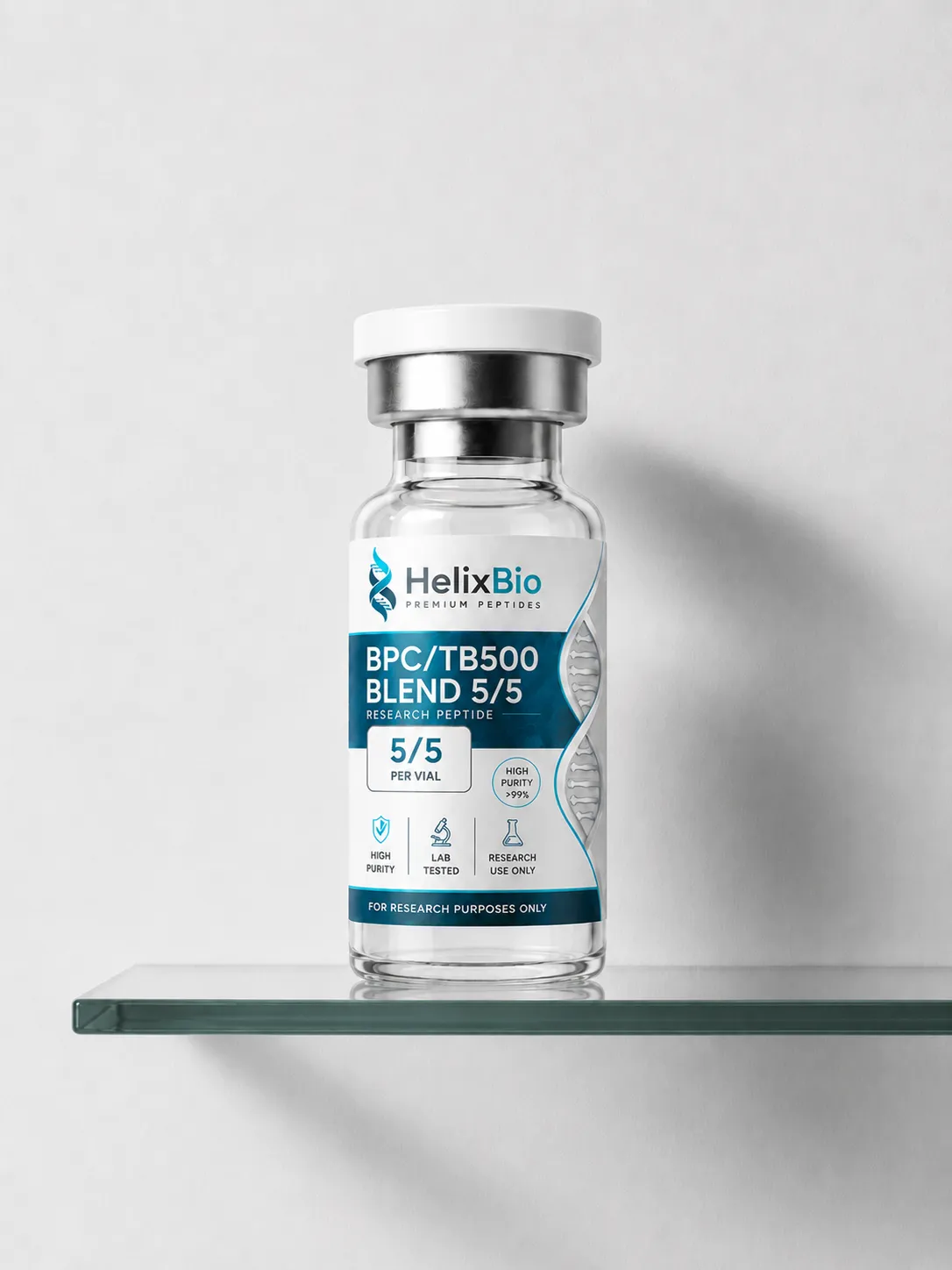
The BPC-157/TB-500 blend combines two of the most studied research peptides — BPC-157, a synthetic pentadecapeptide derived from gastric juice, and TB-500, a synthetic fragment of Thymosin Beta-4 — into a single pre-measured vial. Researchers use blended vials like this to simplify combined-pathway study protocols instead of reconstituting and dosing two separate compounds. Helix Bio's blend is manufactured for laboratory use, supplied as a lyophilized powder with a clearly labeled mg-per-compound ratio, and backed by a certificate of analysis for every batch. It's intended strictly for qualified researchers and laboratories — not for human or animal use.
HPLC certified
Independent analysis
Highest standard
Full traceability
BPC-157 and TB-500 are frequently studied together in tissue-repair and recovery-focused research literature, since they're associated with overlapping but distinct pathways — BPC-157 with gastrointestinal protection and angiogenesis, TB-500 with actin-binding activity and cell migration research. A pre-blended vial exists for research convenience: instead of managing two separate reconstitution schedules and dosing calculations, a researcher works from a single vial with a fixed, labeled ratio.
Helix Bio supplies this blend strictly as a research compound. It is not formulated, labeled, or sold as a drug, supplement, or finished pharmaceutical product, and no therapeutic claims are made about it or its components.
Each vial contains a lyophilized blend of BPC-157 and TB-500 in a labeled mg-per-compound ratio, manufactured under controlled laboratory conditions and verified through HPLC (high-performance liquid chromatography) testing. The exact ratio and total peptide content per vial are documented on the certificate of analysis and product listing.
This product exists to support in vitro and in vivo laboratory research examining combined-pathway effects — for example, studies comparing a blended protocol against single-compound protocols in tissue-repair or recovery research models. It's built for researchers who need a documented, ratio-labeled compound source — not for personal or consumer use.
Blended peptide vials introduce a problem standalone compounds don't have: if the vendor isn't transparent about the ratio, a researcher has no reliable way to know how much of each compound they're actually working with. Helix Bio addresses that by labeling the mg-per-compound ratio clearly on the product listing and the COA, not just a vague "blend" designation. Every batch ships with third-party-verifiable documentation, cold-chain handling protects compound integrity in transit, and the RUO disclaimer stays consistent with every other product on the site. For labs that need to document exactly what went into a protocol, that ratio transparency is the difference-maker.
This product is not intended for personal use, human consumption, or administration of any kind outside a controlled research setting.
| Field | Details |
|---|---|
| Product Name | BPC-157 / TB-500 Blend (Pentadecapeptide + Thymosin Beta-4 Fragment) |
| Category | Research Peptide Blend / Research Chemical |
| Form | Lyophilized powder blend |
| Purity | Verified via HPLC testing (see COA per batch) |
| Blend Ratio | Labeled mg-per-compound ratio, documented on product listing and COA |
| Appearance | White to off-white lyophilized powder |
| Packaging | Sealed, tamper-evident vial |
| Storage | Store frozen or refrigerated, protected from light, prior to reconstitution |
| Research Use | Laboratory and research use only |
| Documentation | Certificate of Analysis (COA) included |
| Country of Origin | USA-based supplier |
| Shelf Life | Extended stability in lyophilized form when stored properly |
Note: Exact purity percentage, blend ratio, and batch-specific data are listed on the COA provided with each order.
The BPC-157/TB-500 blend is used in research contexts where investigators want to study combined-pathway effects or simply prefer a single-vial protocol over managing two compounds separately. Common research contexts include:
This information is provided for research and educational context only. Helix Bio does not make any claims about therapeutic, medical, or health outcomes for this compound or its components, and none should be inferred from its research applications.
Helix Bio manufactures and tests the BPC-157/TB-500 blend under laboratory-controlled conditions. Every batch is assigned a lot number, and compound identity, purity, and ratio are verified through HPLC analysis before release. A certificate of analysis is generated per batch and made available to the researcher at or before the time of purchase, with the mg-per-compound breakdown clearly shown.
This documentation doesn't guarantee any particular research outcome — it confirms what's in the vial and in what proportion. For a blended product, that ratio transparency matters more than it does for a single compound, since two vendors' "BPC/TB-500 blend" listings can mean very different things without it.
Orders are packaged to protect compound integrity in transit, using cold-chain shipping practices appropriate for lyophilized research peptide blends. Vials arrive sealed and tamper-evident, with batch and ratio documentation included. For specific shipping timeframes, carrier details, or delivery regions, check Helix Bio's shipping policy page or contact customer support directly, as these details can change.
The BPC-157/TB-500 blend sold by Helix Bio is intended strictly for laboratory and research use only (RUO). It is not a drug, dietary supplement, cosmetic, or food product, and it is not intended for human or animal consumption, diagnosis, treatment, cure, or prevention of any disease or condition. This product has not been evaluated by the FDA. Statements on this page are for informational and research purposes only and do not constitute medical advice. By purchasing, the buyer confirms they are a qualified researcher or research institution and accepts full responsibility for compliant, lawful use of this compound.
Knowledge Base
Knowledge Base
Knowledge Base
Knowledge Base
Knowledge Base
Knowledge Base
Knowledge Base
Knowledge Base
Knowledge Base
Knowledge Base
Knowledge Base
Knowledge Base
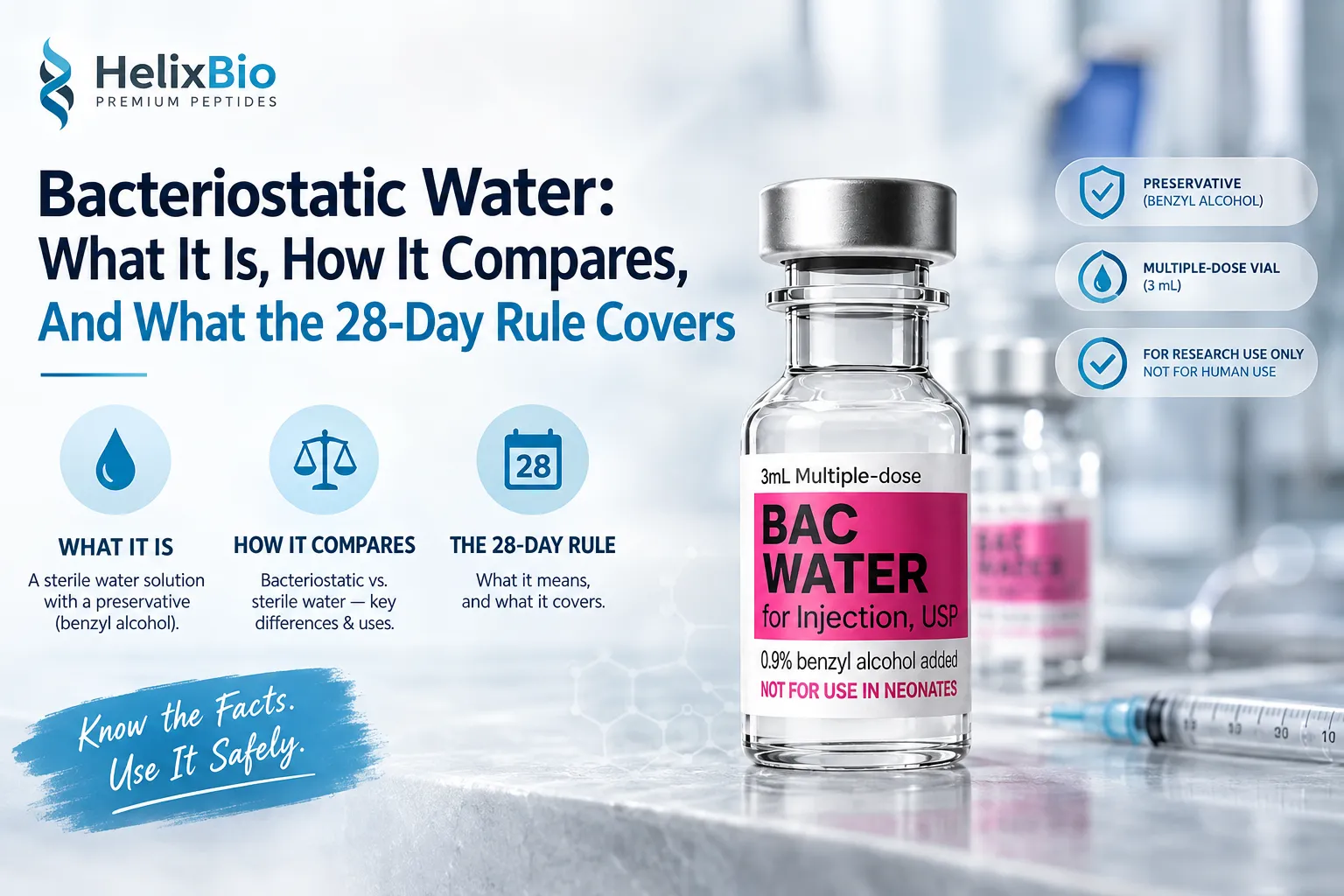
What bacteriostatic water contains, how it differs from sterile water and saline, where the 28-day opened-vial figure comes from, and what a COA can show.
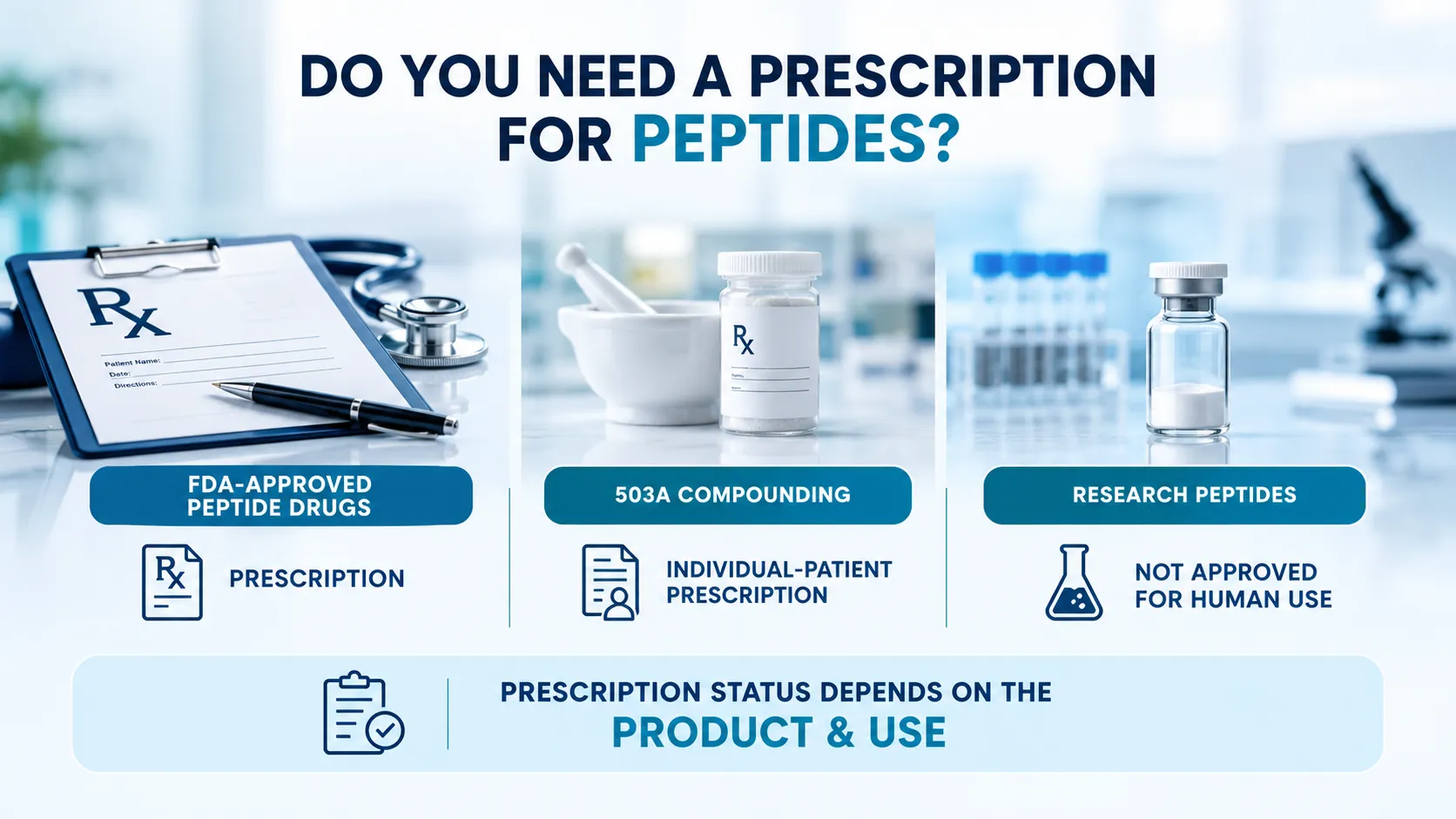
Do you need a prescription for peptides? It depends on the category. See which peptides need one, which do not, and the dated 2026 FDA rules that apply.
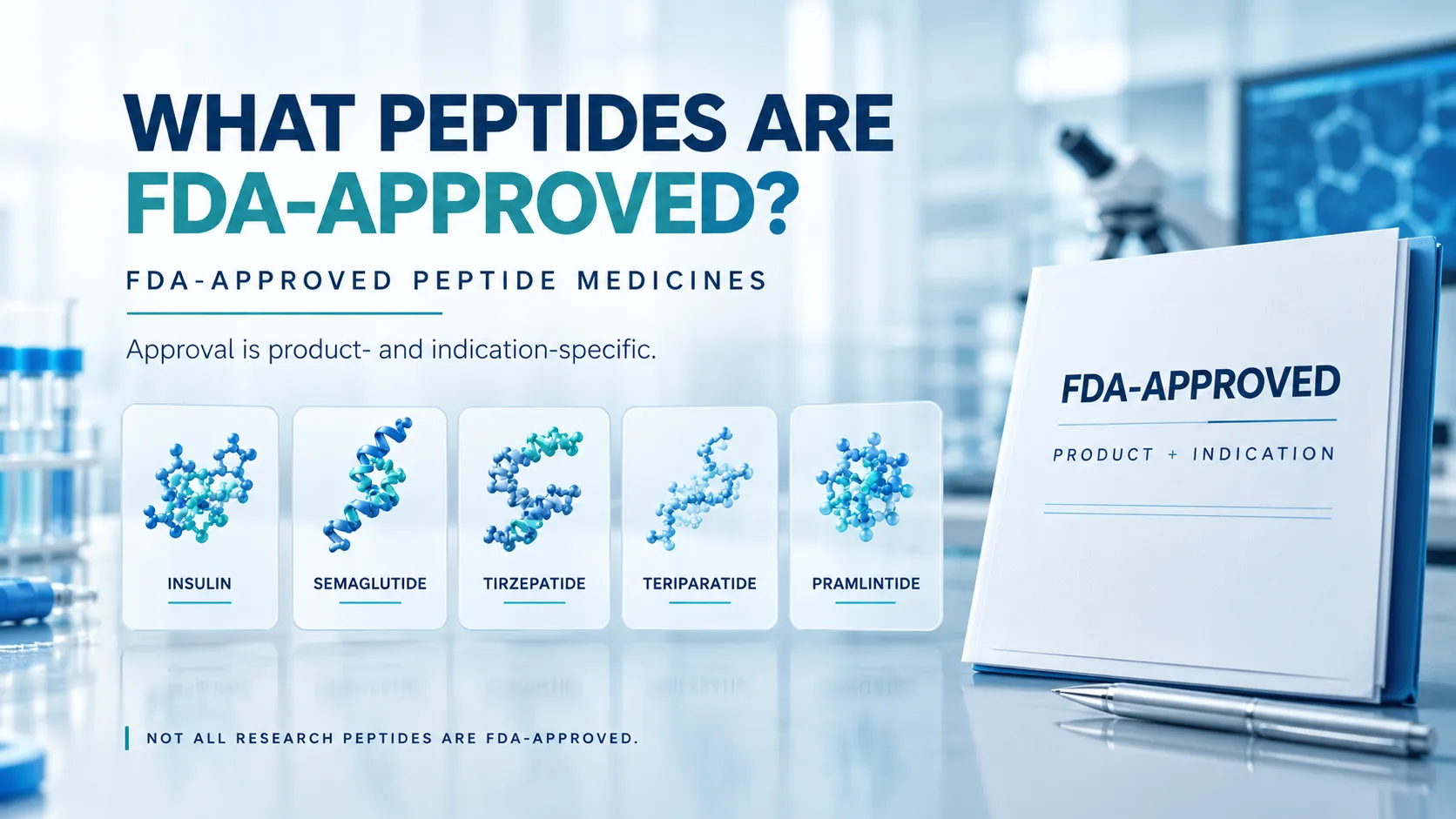
The complete 2026 list of FDA-approved peptides: 47 drugs by category and approval year, which popular peptides are not approved, and pipeline to watch.