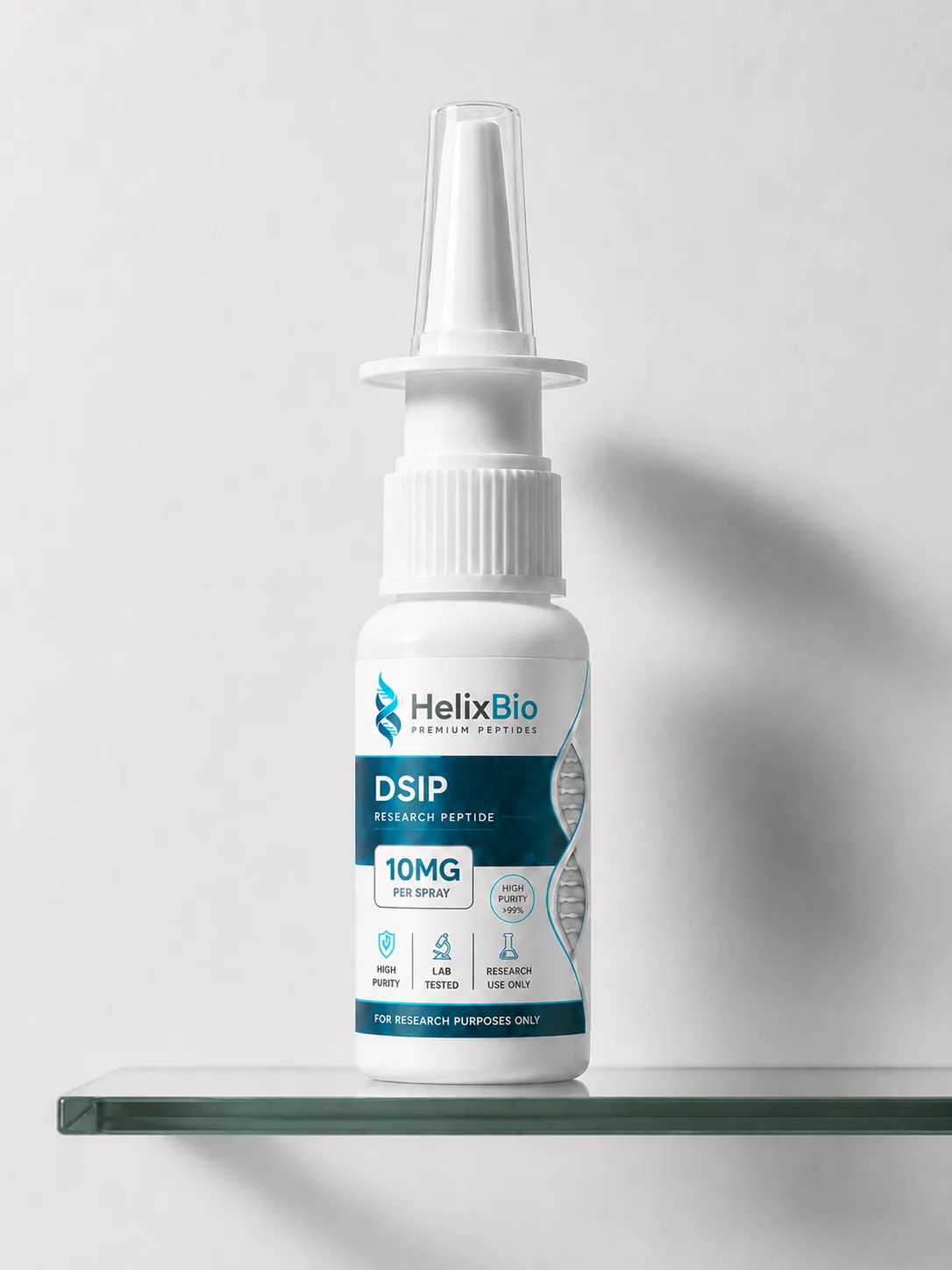
DSIP Spray is a research-use peptide preparation containing Delta Sleep-Inducing Peptide (DSIP), a synthetic nonapeptide that has been investigated in neurobiology, sleep-related research, electrophysiology, and peptide signaling studies. DSIP has a long history in scientific literature. Researchers have examined its relationship with sleep architecture, neurophysiological activity, neurotransmitter systems, circadian processes, and related biological pathways. NCBI's MeSH database identifies DSIP as a nonapeptide found in neural and peripheral tissues and classifies it within research areas including chemistry, synthesis, pharmacology, and sleep-related investigation. Helix Bio supplies DSIP Spray strictly as a research and laboratory material. It is not intended for human or veterinary use, ingestion, injection, or any other form of administration.
HPLC certified
Independent analysis
Highest standard
Full traceability
DSIP stands for Delta Sleep-Inducing Peptide. It is a synthetic nonapeptide associated with research into sleep regulation and neurophysiology. The peptide was characterized in early studies as a sequence consisting of nine amino acids: Trp-Ala-Gly-Gly-Asp-Ala-Ser-Gly-Glu.
DSIP research has historically focused on biological processes connected with sleep and electrophysiological activity. Scientific literature has also examined relationships involving neurotransmitter levels, circadian and locomotor patterns, hormonal signaling, and neuropharmacological processes.
The name "Delta Sleep-Inducing Peptide" describes the compound's history in sleep-related research, but it should not be interpreted as a clinical claim or indication. Research findings have varied across experimental models, and historical human studies do not establish the safety or efficacy of a modern DSIP spray product.
DSIP is a peptide consisting of nine amino acid residues. Its commonly reported sequence is:
Trp-Ala-Gly-Gly-Asp-Ala-Ser-Gly-Glu
The spray format is a product presentation rather than a different peptide sequence. Researchers should rely on the applicable product documentation and lot-specific Certificate of Analysis (COA) for the precise specifications of the material supplied.
DSIP is relevant to laboratory investigations involving:
Historical publications have investigated DSIP in controlled experimental settings, including studies examining sleep behavior and polysomnographic measurements. Those studies should be treated as scientific literature rather than evidence for therapeutic use of a contemporary commercial spray formulation.
DSIP Spray may be considered by laboratories looking for a defined DSIP research material in a spray presentation. For experimental planning, researchers should verify the current product specification, lot documentation, analytical results, and compatibility with their own validated research protocol.
Selecting a research peptide is primarily a documentation and quality-control decision. Researchers need to know what compound they are studying, how the material was characterized, and which analytical results correspond to the specific batch.
Helix Bio states that its research peptide catalog is supported by batch-specific Certificate of Analysis documentation and independent HPLC and mass spectrometry testing. HPLC can be used to assess chromatographic purity, while mass spectrometry provides molecular-weight and identity information. These analytical approaches address different quality attributes and are most useful when interpreted together.
For DSIP Spray, researchers should review the applicable documentation rather than relying solely on a general product description. The lot number on the product should correspond with the analytical documentation supplied for that lot.
DSIP Spray is intended for qualified users conducting legitimate laboratory or scientific research, including:
It is not intended for consumers seeking a product for personal use.
| Specification | Details |
|---|---|
| Product Name | DSIP Spray |
| Scientific Name | Delta Sleep-Inducing Peptide |
| Abbreviation | DSIP |
| Peptide Type | Synthetic nonapeptide |
| Research Category | Specialty & Hormonal Peptides / Neurobiological Research |
| Format | Spray |
| Intended Use | Research and laboratory use only |
| Human Use | Not intended for human use |
| Veterinary Use | Not intended for veterinary use |
| Purity | Refer to current lot-specific COA |
| Identity Testing | Refer to applicable analytical documentation |
| HPLC Testing | Refer to current lot documentation |
| Mass Spectrometry | Refer to current lot documentation |
| Packaging | Research-use product packaging; verify current product listing |
| Manufacturer / Supplier | Helix Bio |
| Country of Origin | Not specified; confirm with supplier documentation |
| Shelf Life | Refer to product documentation and lot-specific information |
Product specifications can vary by product and lot. Researchers should use the current COA and product documentation as the controlling source for analytical specifications.
DSIP is primarily of interest in research examining biological mechanisms related to neurophysiology and sleep-associated signaling.
Researchers have historically examined DSIP in relation to sleep behavior and sleep architecture. Early human studies investigated changes in sleep-related measurements following experimental administration, while later research assessed polysomnographic variables. Results across studies should be interpreted carefully because experimental designs, formulations, administration routes, populations, and analytical methods differ.
DSIP has been investigated in connection with electrophysiological activity. This makes it relevant to experimental research examining relationships between peptide signaling and measurable neural activity.
NCBI's MeSH classification describes research involving DSIP in relation to neurotransmitter levels and neuropharmacological activity. This provides a useful framework for laboratory investigations of peptide-associated signaling pathways.
Published scientific references have examined DSIP in relation to circadian and locomotor patterns. Such research may be relevant to experimental models investigating biological timing and behavioral physiology.
Because DSIP is a defined nonapeptide, it can also be relevant to laboratory work involving peptide synthesis, characterization, analytical chemistry, stability assessment, and structure-related studies.
High-performance liquid chromatography (HPLC) is commonly used to evaluate peptide purity by separating the target peptide from related compounds and impurities. The resulting chromatogram can provide information about the relative purity of the principal peptide component.
Helix Bio states that its research peptide batches undergo independent HPLC testing and that batch-specific analytical documentation is available.
Mass spectrometry provides molecular-weight information that can be used to assess whether the measured material is consistent with the expected molecular identity.
HPLC and mass spectrometry serve different analytical purposes. HPLC primarily addresses chromatographic purity, while mass spectrometry supports identity and molecular-weight confirmation.
A useful COA should identify the applicable batch or lot and provide relevant analytical information. Researchers should check that:
Helix Bio's website states that batch-specific COA documentation is provided for its research peptide products.
No certification, accreditation, or third-party laboratory credential should be assumed unless it is explicitly documented for the relevant batch or supplier.
Researchers should follow the current storage requirements supplied with the product and any instructions listed on the applicable COA.
General laboratory considerations include:
For reconstituted or otherwise altered research materials, storage requirements can differ substantially from those of the original product. Researchers should not infer a reconstituted product's stability or shelf life without supporting data.
Helix Bio describes its research materials as products intended for laboratory and scientific research and states that its fulfillment process includes packaging and tracked shipping for research orders.
Shipping availability, packaging configuration, carrier selection, delivery timelines, and applicable restrictions can change. Researchers should consult the current Helix Bio shipping information before placing an order.
For research integrity, retain the original packaging, product identifier, lot number, and applicable COA with the laboratory's purchasing and experimental records.
DSIP Spray is supplied by Helix Bio for research and laboratory purposes only.
This product is not intended for human or veterinary use, ingestion, injection, inhalation, topical administration, or any other form of administration to humans or animals. It is not intended to diagnose, treat, cure, mitigate, or prevent any disease or medical condition.
The information on this page is provided for scientific and educational reference and does not constitute medical advice, dosing instructions, treatment guidance, or a recommendation for human use.
Helix Bio states that its products have not been evaluated or approved by the U.S. Food and Drug Administration (FDA) for the uses described above and that the company is not a compounding pharmacy. Researchers are responsible for determining whether their intended research activities comply with applicable federal, state, institutional, laboratory, and other requirements.
Knowledge Base
Knowledge Base
Knowledge Base
Knowledge Base
Knowledge Base
Knowledge Base
Knowledge Base
Knowledge Base
Knowledge Base
Knowledge Base
Knowledge Base
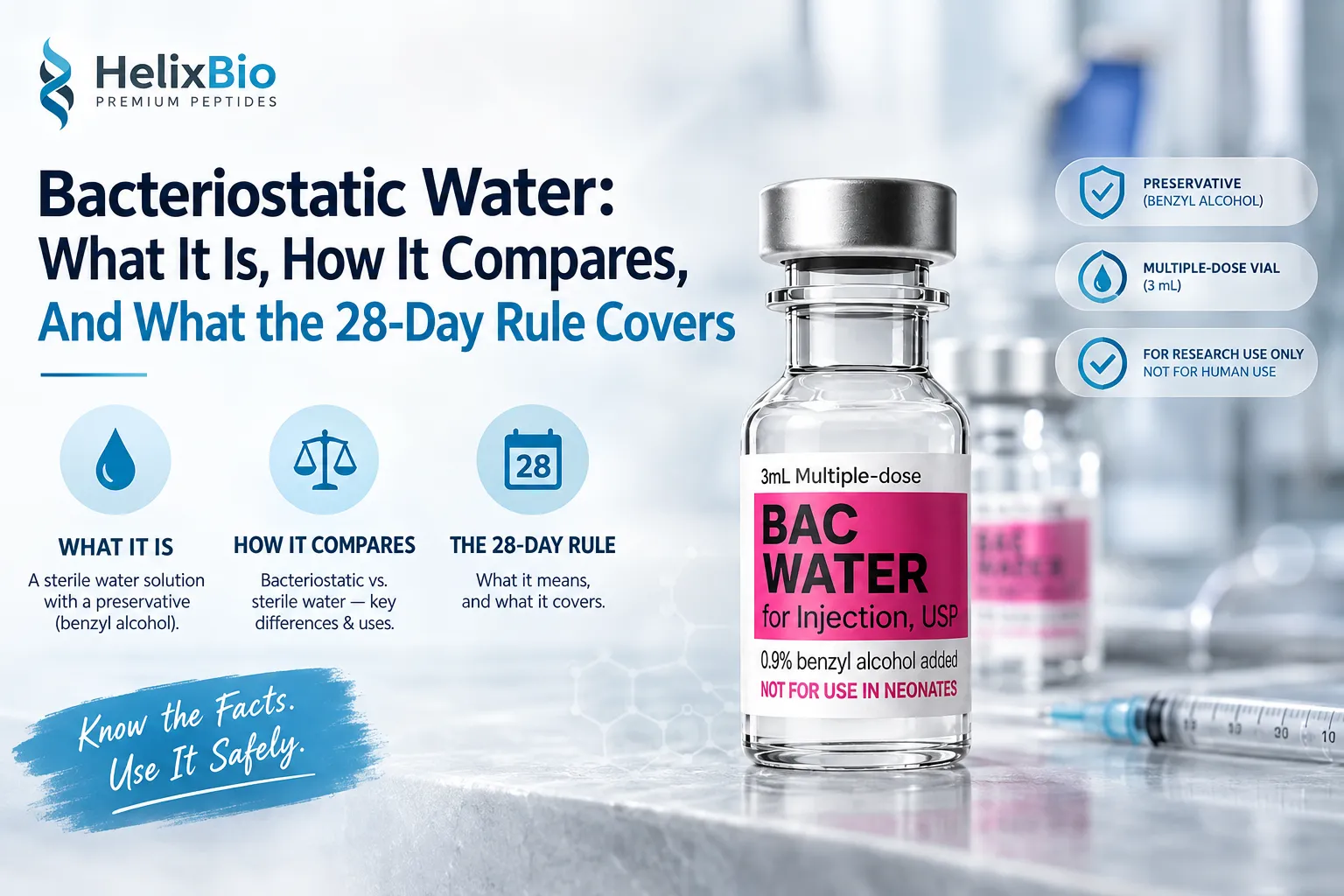
What bacteriostatic water contains, how it differs from sterile water and saline, where the 28-day opened-vial figure comes from, and what a COA can show.
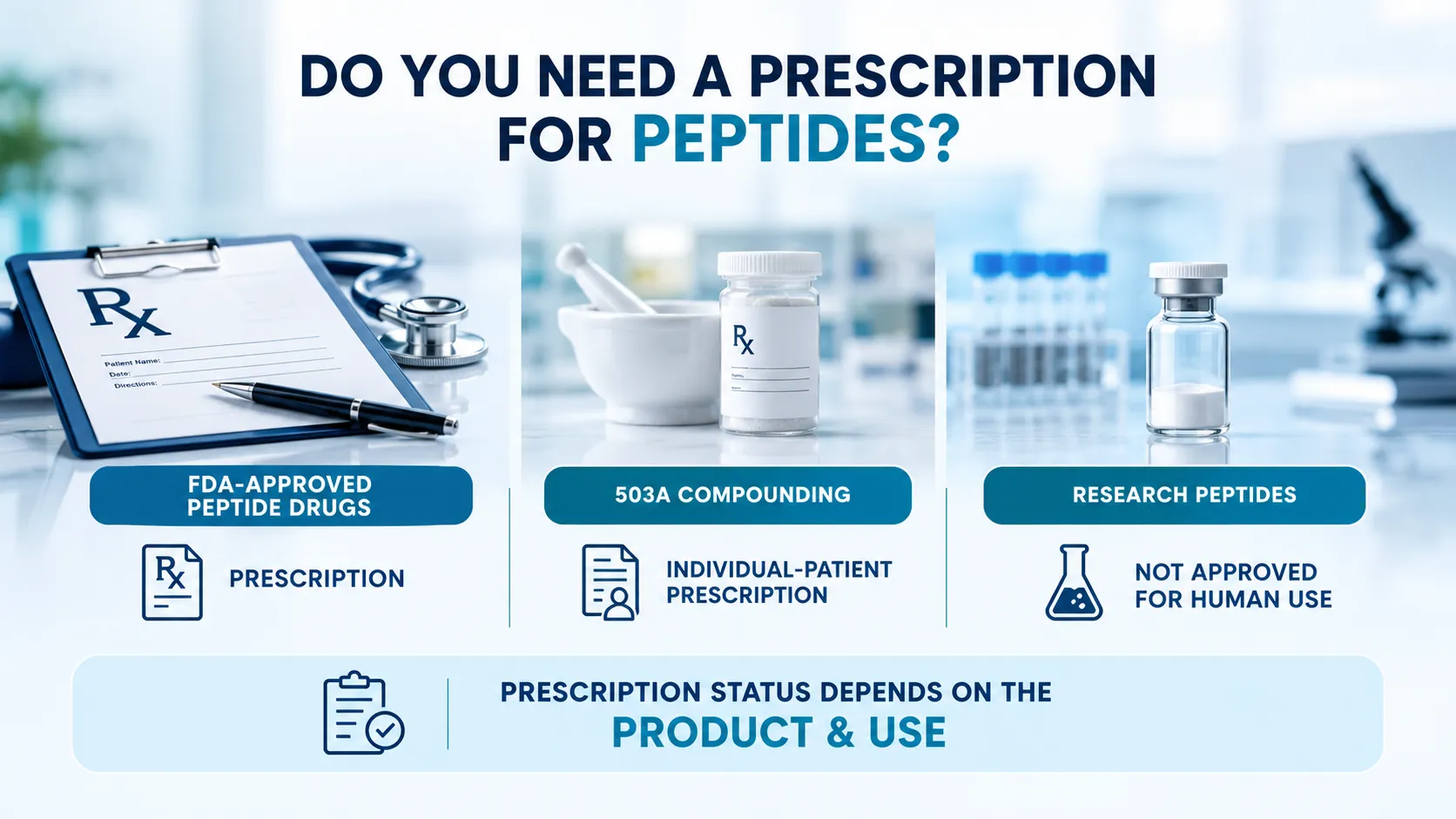
Do you need a prescription for peptides? It depends on the category. See which peptides need one, which do not, and the dated 2026 FDA rules that apply.
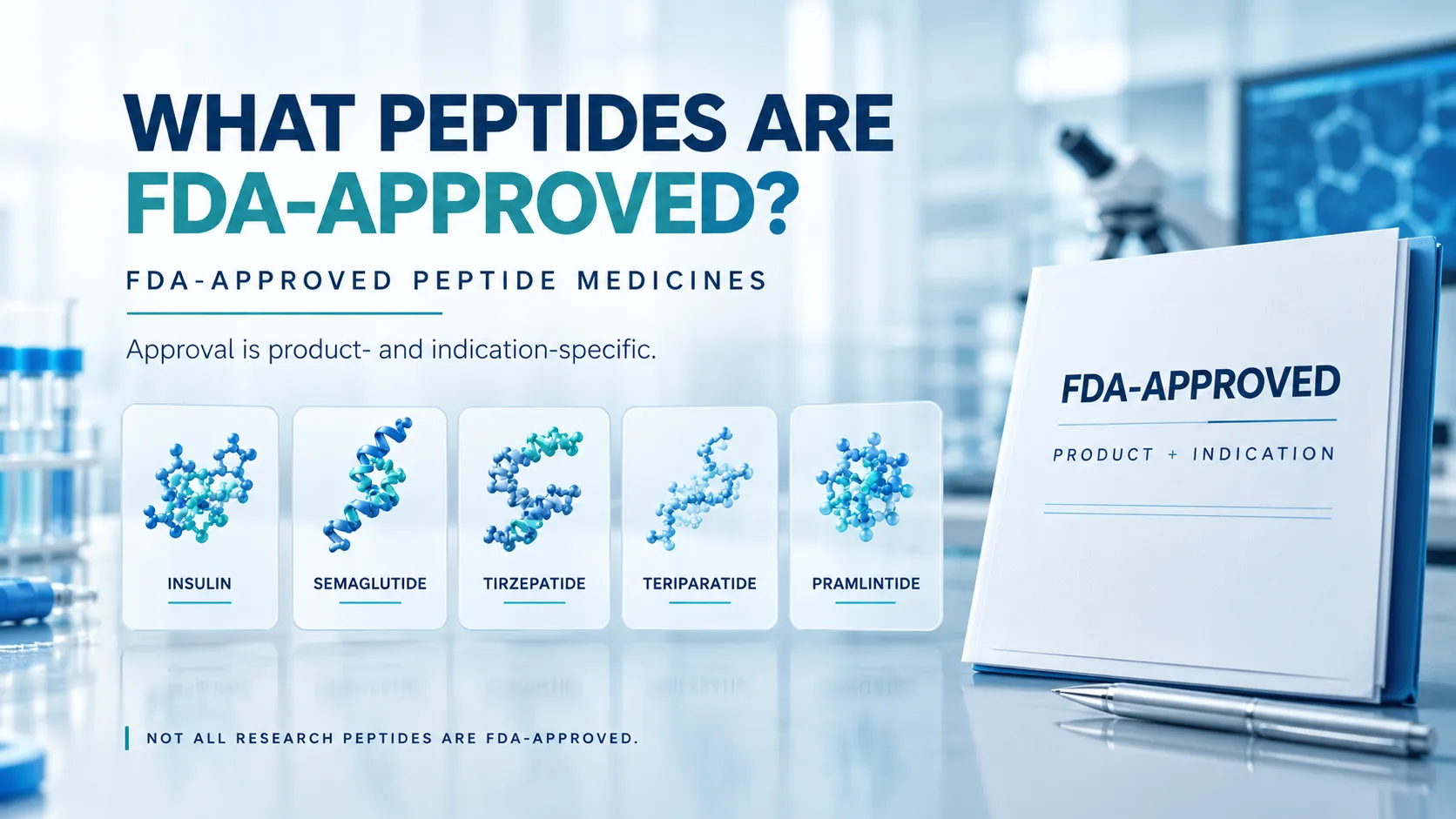
The complete 2026 list of FDA-approved peptides: 47 drugs by category and approval year, which popular peptides are not approved, and pipeline to watch.