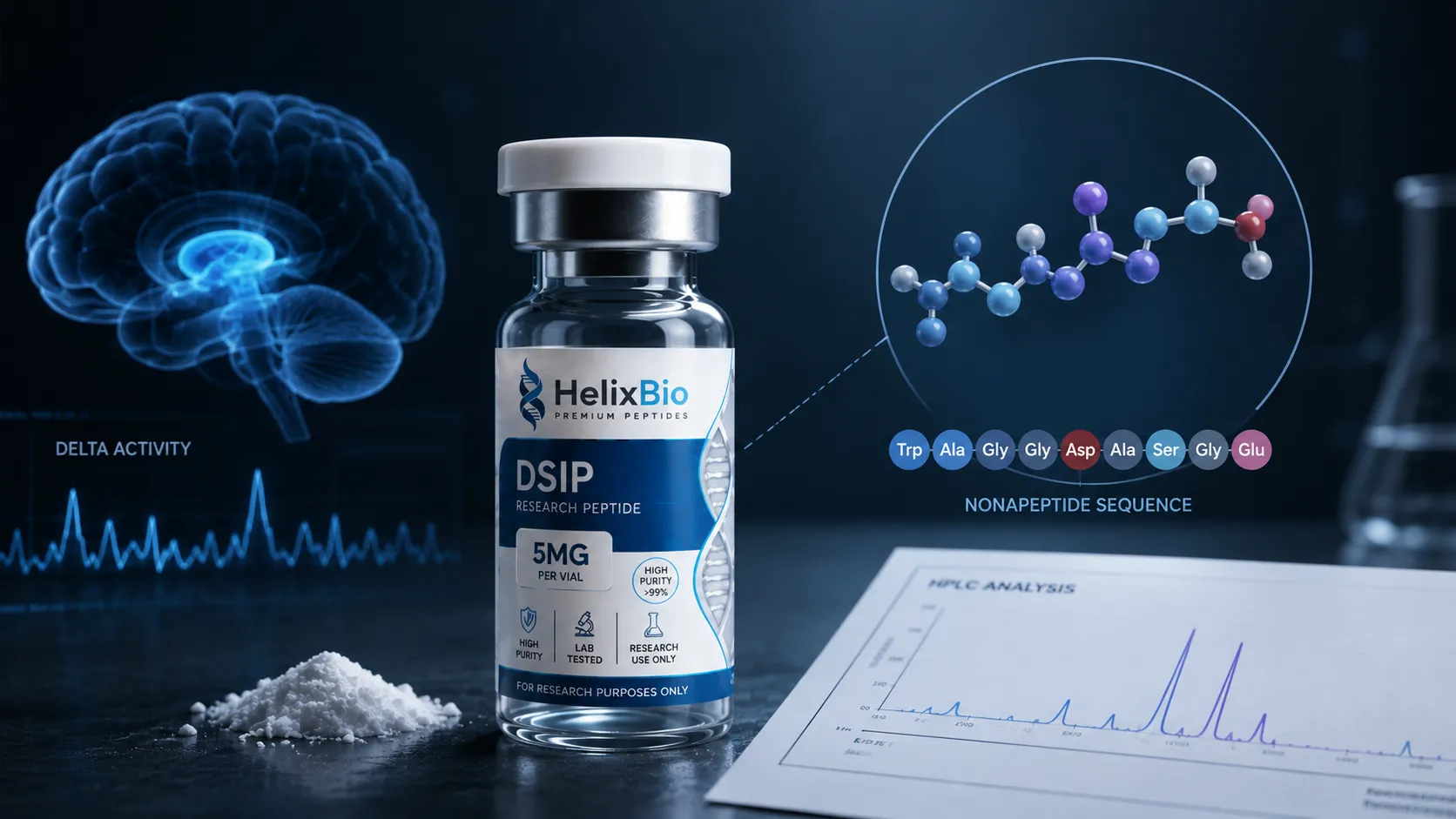
- DSIP is a nonapeptide with the sequence Trp-Ala-Gly-Gly-Asp-Ala-Ser-Gly-Glu and a molecular weight near 849 Da.
- DSIP was isolated from rabbit cerebral venous blood by the Schoenenberger-Monnier group at the University of Basel and characterized in a 1977 Proceedings of the National Academy of Sciences paper.
- No DSIP-specific receptor, gene, or precursor protein has been identified in the peer-reviewed literature after nearly fifty years of study.
- Kovalzon's 2006 review in the Journal of Neurochemistry describes the hypothesis of DSIP as a sleep factor as poorly documented and proposes that an unidentified DSIP-like peptide may account for reported DSIP immunoreactivity.
- FDA's July 2026 briefing package stated that Emideltide is not adequately characterized and carries potential for peptide-related impurities from incomplete coupling reactions, truncations, or side reactions.
- The FDA Pharmacy Compounding Advisory Committee voted against Emideltide 6 to 7 with one abstention on July 24, 2026, the only rejection among the seven peptides reviewed.
- DSIP's N-terminal tryptophan is the most oxidation-prone of the twenty proteinogenic amino acids, which makes light protection and mass spectrometry identity confirmation directly relevant to batch verification.
- A DSIP certificate of analysis should report RP-HPLC purity with the chromatogram attached, mass spectrometry identity near 848.9 Da, and net peptide content stated separately from gross vial weight.
Delta sleep-inducing peptide is a nine-amino-acid peptide with the sequence Trp-Ala-Gly-Gly-Asp-Ala-Ser-Gly-Glu and a molecular weight near 849 Da. The question that dominates DSIP peptide research is which receptor it binds, and the honest answer is that nobody knows. Nearly fifty years after the compound was first isolated, no DSIP-specific receptor, gene, or precursor protein has been identified in the peer-reviewed literature. That gap is not a footnote. It is the defining fact of the compound, and it shapes everything downstream, from how DSIP is studied in the laboratory to what a batch certificate of analysis can and cannot establish about the vial in front of you. This piece covers the discovery record, what the mechanism literature actually supports, how a compliant COA for DSIP should read, and where the compound stands after the FDA's July 2026 advisory vote.
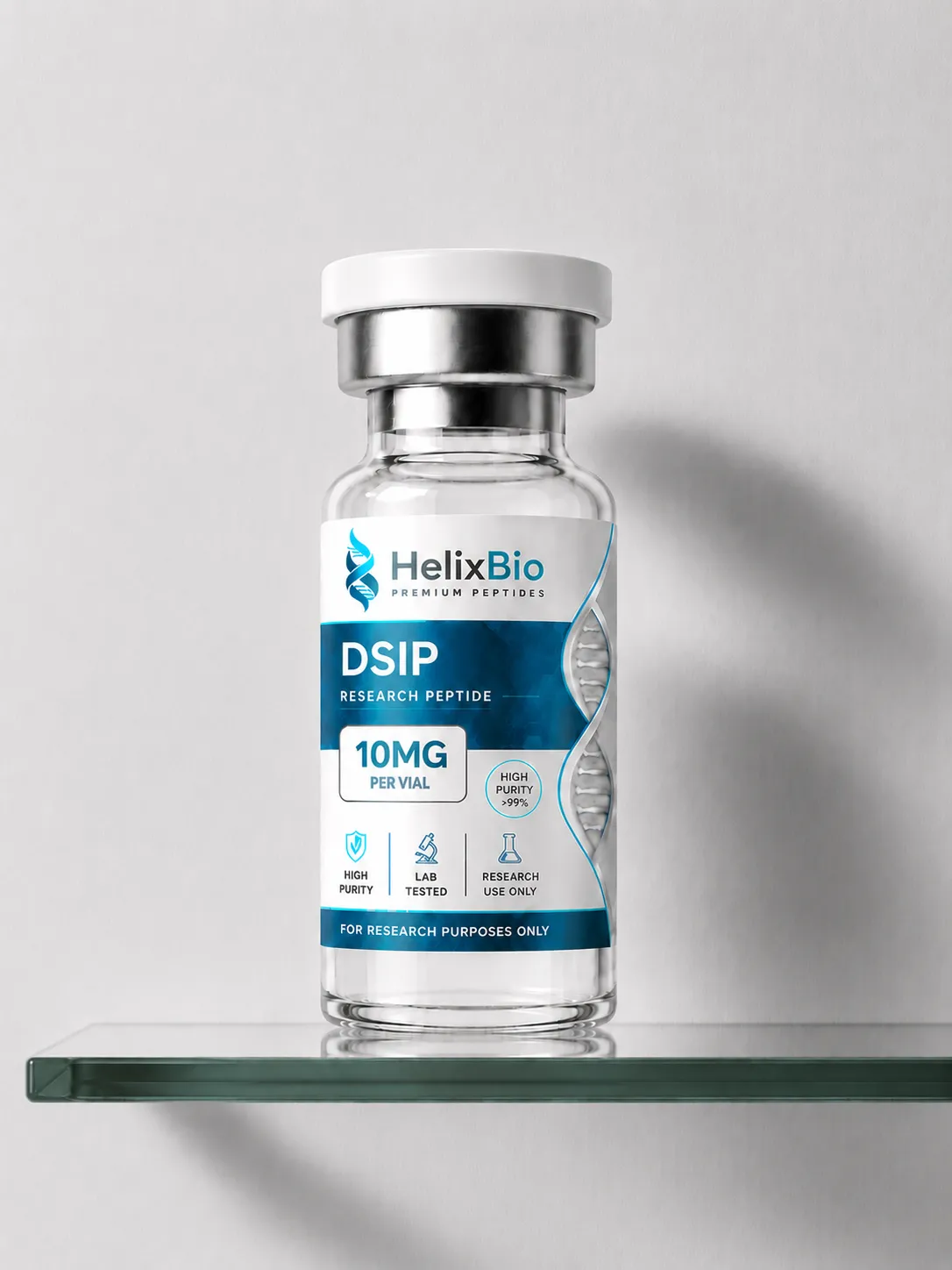
DSIP
RESEARCH PEPTIDE
DSIP (Delta Sleep-Inducing Peptide) is a synthetic neuropeptide that has been studied for decades in neuroscience, neuroendocrinology, sleep biology, and peptide research. Although its precise physiological role remains under investigation, DSIP continues to be examined for its interactions with the central nervous system, neurochemical signaling pathways, and endocrine regulation in experimental models. Helix Bio supplies research-grade DSIP exclusively for laboratory, analytical, and educational research. This product is supplied strictly for research use only and is not intended for human consumption, veterinary use, or therapeutic applications.
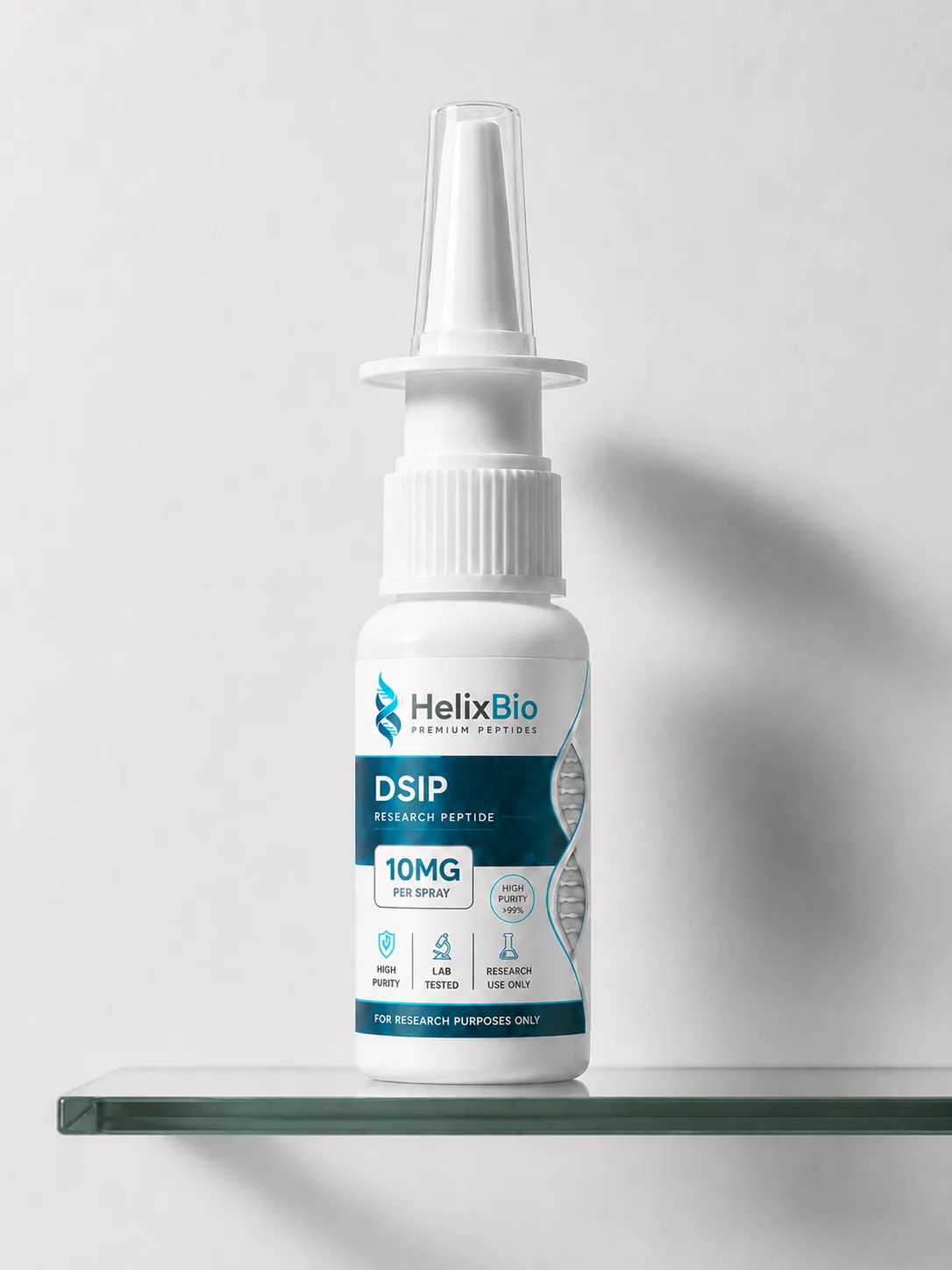
DSIP Spray
RESEARCH PEPTIDE
DSIP Spray is a research-use peptide preparation containing Delta Sleep-Inducing Peptide (DSIP), a synthetic nonapeptide that has been investigated in neurobiology, sleep-related research, electrophysiology, and peptide signaling studies. DSIP has a long history in scientific literature. Researchers have examined its relationship with sleep architecture, neurophysiological activity, neurotransmitter systems, circadian processes, and related biological pathways. NCBI's MeSH database identifies DSIP as a nonapeptide found in neural and peripheral tissues and classifies it within research areas including chemistry, synthesis, pharmacology, and sleep-related investigation. Helix Bio supplies DSIP Spray strictly as a research and laboratory material. It is not intended for human or veterinary use, ingestion, injection, or any other form of administration.
What Is DSIP? The 1977 Basel Isolation
DSIP came out of a specific experimental setup at the University of Basel. Marcel Monnier and Guido Schoenenberger applied low-frequency electrical stimulation to the intralaminar thalamic nuclei of rabbits, a region associated with sleep induction, then collected the cerebral venous blood draining from those brains by extracorporeal dialysis. When the resulting dialysate was infused into the brain ventricles of awake rabbits, the recipient animals showed increased delta-wave and spindle activity on EEG.
The 1977 report in the Proceedings of the National Academy of Sciences characterized the active molecule as a nonapeptide and named it delta sleep-inducing peptide. The same paper described the synthesis of the nonapeptide alongside five possible metabolic products corresponding to residues 1-8, 2-9, 2-8, 1-4 and 5-9, two nonapeptide analogues with amino acid substitutions, and a related tripeptide, Trp-Ser-Glu. All nine synthetic peptides were infused intraventricularly in rabbits under double-blind conditions at 6 nmol/kg, with EEG recorded from the frontal neocortex and limbic archicortex and analyzed by fast-Fourier transformation. A total of 61 rabbits including controls were used.
Two details from that original work matter for anyone sourcing the compound today. First, the sequence was established by direct amino acid analysis and sequencing, not inferred from a gene, because no gene was ever found. Second, the peptide's fragments were synthesized and tested from the very beginning, which means the truncation products that show up as synthesis impurities in modern preparations are compounds with their own small literature.
DSIP-like immunoreactivity has since been reported in a wide range of tissues and fluids across species, including human breast milk, and in the hypothalamus, limbic system, pituitary, and gut. The peptide's amino acid motif does not correspond to any recognized peptide family, which is part of why it has resisted classification for so long.
Why the DSIP Mechanism Remains Uncharacterized
Most vendor content on this compound asserts a mechanism. The literature does not support one.
The clearest statement of the problem is Vladimir Kovalzon's 2006 mini-review in the Journal of Neurochemistry, titled "Delta sleep-inducing peptide (DSIP): a still unresolved riddle." Kovalzon's assessment is direct: the link between DSIP and sleep has never been further characterized, in part because of the failure to isolate the DSIP gene, protein, and any related receptor. He describes the hypothesis of DSIP as a sleep factor as poorly documented and weak, and notes that the peptide's natural occurrence and biological activity remain obscure. His proposal is that a distinct, still-unidentified DSIP-like peptide may account for at least part of the DSIP-like immunoreactivity and biological activity reported over the decades.
What the literature does contain are proposed interactions rather than a confirmed receptor. DSIP shares partial structural similarity with dermorphin, a mu-opioid agonist, and has been reported to modulate opioidergic signaling. GABAergic involvement has been proposed on the basis of electrophysiological and behavioral work. Anticonvulsant and neuroprotective activity has been described in specific animal models. Several groups reported that DSIP and certain analogues cross the blood-brain barrier. None of this amounts to a single-receptor mechanism, and stating one would misrepresent the evidence.
When a supplier's product page names a specific DSIP receptor, that claim is not traceable to the primary literature. The absence of an identified receptor is a documented feature of this compound, not a gap in any one vendor's research. Treat receptor-specific claims as a signal to check the rest of that page carefully.
There is a practical consequence to all of this. For most research peptides, the analytical certificate confirms identity and the pharmacology explains behavior. With DSIP, the analytical chemistry is considerably more settled than the biology. A well-run HPLC and mass spectrometry pair can tell a researcher exactly what is in a vial. No assay currently tells them what it engages.
What the Original DSIP Experiments Actually Measured
Part of the reason DSIP's reputation outran its evidence is that the endpoint in the founding experiments is narrower than the compound's name implies.
The 1977 work measured EEG spectral power. Recordings were taken from the frontal neocortex and limbic archicortex, subjected to fast-Fourier transformation, and analyzed for delta-band and spindle activity. Increased delta power is a correlate of slow-wave sleep, not a direct measure of sleep architecture, latency, duration, or subsequent behavior. A compound that shifts EEG spectral distribution has done something specific and worth reporting, which is not the same as having induced sleep in the way the name suggests.
The route also matters. DSIP was infused intraventricularly, directly into the brain ventricles, at 6 nmol/kg. That bypasses every barrier a peripherally administered compound must cross. Reports that DSIP and certain analogues can cross the blood-brain barrier came later and are separate findings from the original result. Any inference from the 1977 experiments to peripheral administration is an inference, not a replication.
And the model was the rabbit. DSIP was isolated from rabbit blood, tested in rabbits, and the sequence as originally reported is described in the review literature as found only in rabbit. Later work across other species produced inconsistent results, which is the specific inconsistency Kovalzon's review addresses. Several groups reported sleep-promoting effects; others failed to replicate them entirely.
None of this makes the original work weak. It was carefully controlled, double-blinded, and used 61 animals including controls at a time when neither was standard. It does mean that "DSIP increases delta EEG power after intraventricular infusion in rabbits" is the finding, and that any broader claim requires evidence that has not been generated.
DSIP Compared With Other Sleep and Recovery Research Peptides
DSIP is usually discussed alongside two other compounds from the Eastern European neuropeptide literature. The three differ substantially in structure, in how well their mechanisms are characterized, and in current U.S. regulatory posture.
Compound | Length and sequence | Origin | Mechanism status | July 2026 PCAC outcome |
|---|---|---|---|---|
DSIP (Emideltide) | 9 residues, Trp-Ala-Gly-Gly-Asp-Ala-Ser-Gly-Glu | Isolated from rabbit cerebral venous blood, Basel, 1977 | No identified receptor, gene, or precursor; GABAergic and opioidergic interactions proposed | Not recommended, 6-7 with one abstention |
Epitalon | 4 residues, Ala-Glu-Asp-Gly | Synthetic tetrapeptide from Russian pineal peptide research | Proposed pineal and telomerase-related activity; limited Western peer-reviewed replication | Recommended, 7-5 with one abstention |
Selank | 7 residues, Thr-Lys-Pro-Arg-Pro-Gly-Pro | Synthetic analogue of the immunopeptide tuftsin | Tuftsin-derived; anxiolytic activity reported largely in Russian-language literature | Not reviewed; nomination withdrawn in September 2024 |
The pattern worth noting is that DSIP has the oldest and most internationally published discovery record of the three and still fared worst in regulatory review. Evidence age and evidence strength are different things. For a fuller multi-compound treatment of this category, see the sleep and recovery peptide research overview.
Certificate of Analysis and Purity Verification for DSIP
A large share of the search volume around this compound is about documentation rather than pharmacology. Queries for DSIP COA, DSIP lab tested, and DSIP third party tested reflect a real problem, and the FDA has now put its own version of that problem on the record.
In its briefing package for the July 2026 advisory committee meeting, FDA stated that Emideltide is not adequately characterized and has the potential for peptide-related impurities arising from incomplete coupling reactions, truncations, or side reactions. That is a specific analytical critique, not a general safety disclaimer, and it maps directly onto what a DSIP certificate of analysis should be checked for.
What a compliant DSIP COA should show
Purity by RP-HPLC. Research-grade preparations are typically reported at 98% or higher by area normalization at 214 nm. The number by itself is not the deliverable. The chromatogram is. A summary figure with no trace attached cannot be evaluated, because the position and size of the impurity peaks carry the information.
Identity by mass spectrometry. The observed mass should correspond to the theoretical mass for the nonapeptide free acid, near 848.9 Da. Mass spectrometry is what separates DSIP from its own truncation products. The des-tryptophan fragment corresponding to residues 2-9 differs by roughly 186 Da, which is an unmistakable separation on any functioning instrument.
Sequence-specific impurity risks. Two features of this particular sequence deserve attention on a chromatogram. The N-terminal tryptophan is the most oxidation-prone of the twenty proteinogenic amino acids, and oxidation adds 16 or 32 Da while producing a distinct, usually earlier-eluting peak. Degradation work by Schoenenberger's own group found that incubating DSIP in human or rat blood released products with retention times matching free tryptophan, so this residue is a known liability rather than a theoretical one. Separately, the Asp-Ala sequence at positions 5 and 6 falls among the motifs associated with aspartimide formation during Fmoc solid-phase synthesis, which produces a characteristic 18 Da loss and can generate epimerized byproducts.
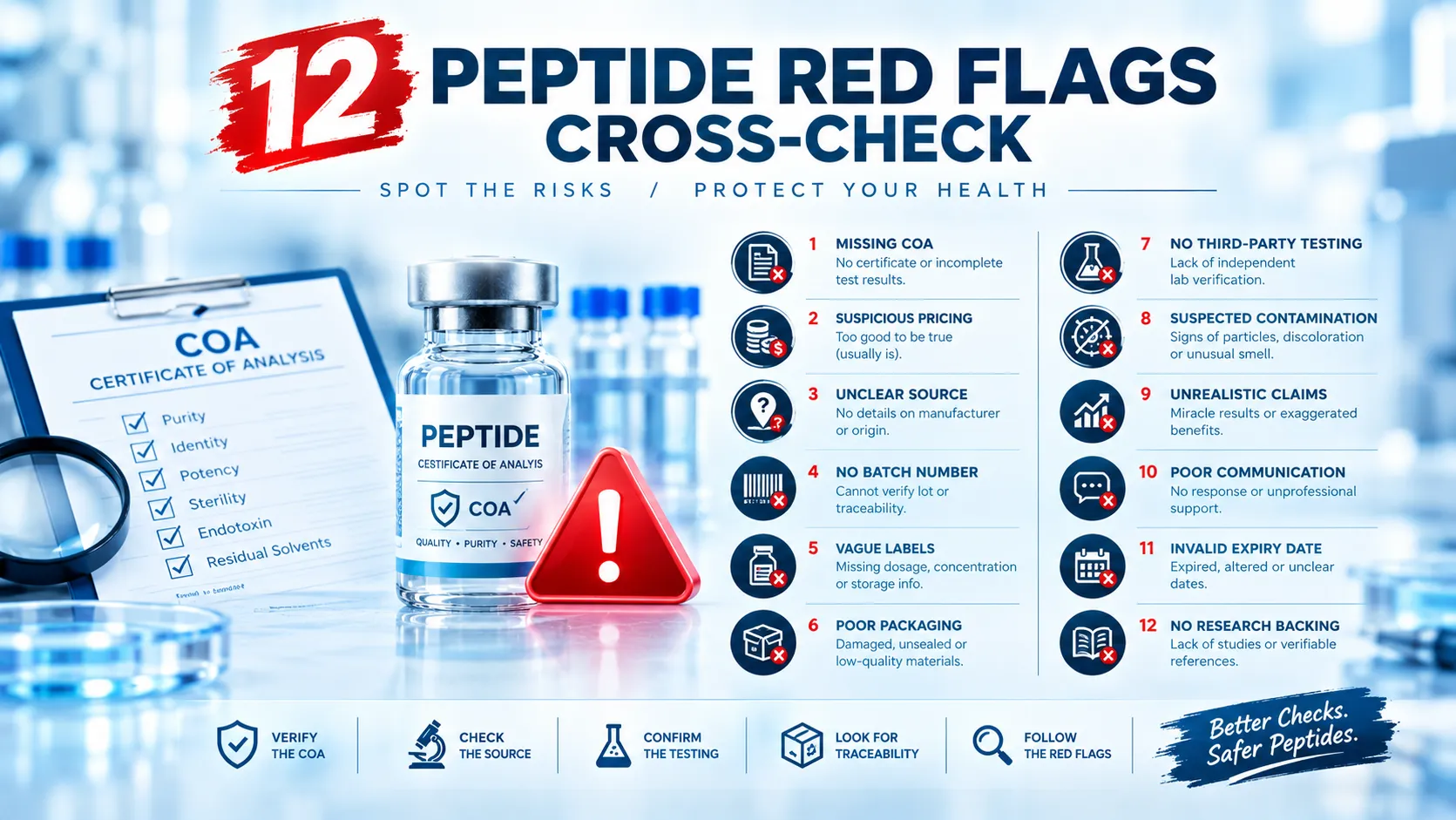
Net peptide content. Lyophilized peptides ship as salts, usually acetate or trifluoroacetate, with residual water. Counterion and moisture routinely account for 10% to 20% of vial mass. A COA reporting only HPLC purity says nothing about how much peptide is actually present.
Batch traceability. The lot number printed on the COA must match the lot on the vial label, and the date of analysis should postdate the synthesis date. A COA that covers a different lot is a document about a different vial.
Cross-checking the COA against the vial received
Check | What to confirm | Why it matters for DSIP specifically |
|---|---|---|
Lot number | COA lot matches the lot printed on the vial label | A COA for a different lot describes a different synthesis run with a different impurity profile |
Analysis date | Falls after the synthesis date, and recently | Tryptophan oxidation is time-dependent, so an old analysis describes material in a different state |
Method stated | RP-HPLC conditions, gradient, detection wavelength | A steep gradient compresses truncation products under the main peak and inflates apparent purity |
Observed mass | Printed alongside the theoretical value near 848.9 Da | Distinguishes intact nonapeptide from the 2-9 and 1-8 fragments |
Net peptide content | Reported as a separate figure from purity | Determines how much peptide the vial actually contains |
Appearance | Matches the physical description, typically white lyophilized powder | Discolouration in a tryptophan-containing peptide is a direct oxidation signal |
The general methodology behind each of these checks is covered in the guide to reading a peptide certificate of analysis, which walks through chromatogram interpretation and third-party testing in more depth than is useful to repeat here.
Regulatory Status: Emideltide and the July 2026 Advisory Vote
DSIP is referred to as Emideltide in U.S. regulatory proceedings, and the two names describe the same compound.
The FDA's Pharmacy Compounding Advisory Committee met on July 23 and 24, 2026, to consider seven peptide bulk drug substances for the 503A Bulks List: BPC-157, KPV, TB-500, MOTS-c, Emideltide, Semax, and Epitalon. FDA career scientists had published briefing materials recommending against all seven. The committee recommended six of them and rejected one. Emideltide was that one, voted down 6 to 7 with a single abstention. The proposed uses FDA reviewed for Emideltide were insomnia, narcotic dependence, and opioid withdrawal.
Several distinctions matter here and are frequently collapsed in coverage. An advisory committee vote is non-binding expert advice, not an agency decision. None of the six recommended peptides became legal to compound as a result, because formal rulemaking has to follow. And a favorable recommendation is not drug approval, which evaluates a specific finished product, dose, indication, manufacturing process, and label. The full procedural picture is covered in the 2026 FDA 503A bulks list explainer.
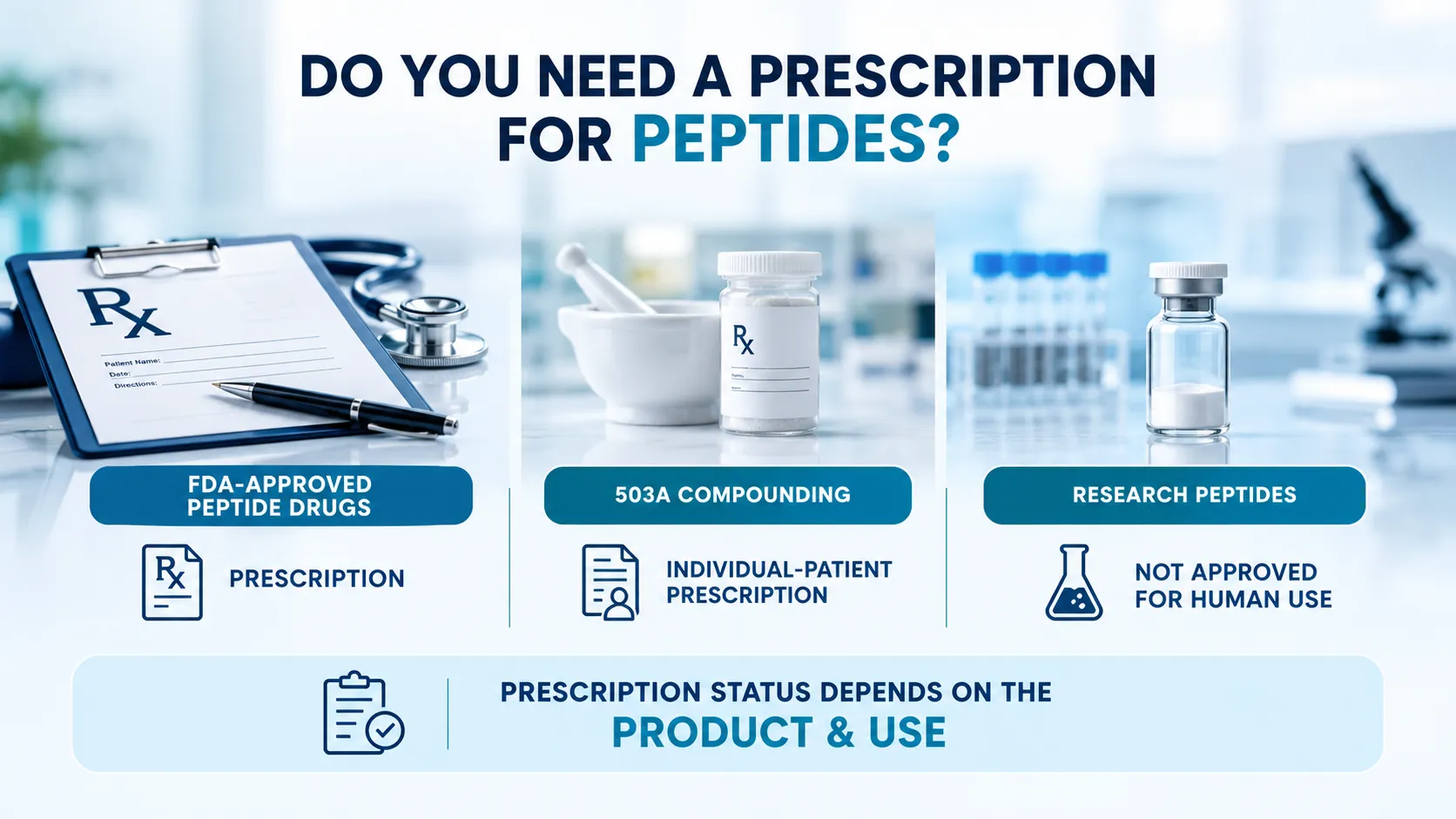
DSIP is not approved by the FDA for any indication. It is sold and studied in the United States as a research-use-only material, and the general framework governing that status is set out in the RUO compliance overview for research peptides.
Handling and Storage Considerations Specific to DSIP
The tryptophan oxidation risk described above is also a storage problem, not only a synthesis one. Lyophilized DSIP is generally held at -20°C in the dark, and amber vials or foil overwrap are common because tryptophan is photosensitive. Once reconstituted, peptides in this class have substantially shorter usable windows and are typically refrigerated rather than refrozen, since repeated freeze-thaw cycles drive both aggregation and hydrolysis.
Formulation format changes the calculus. Lyophilized vials and prepared spray formats have different exposure profiles, since a spray solution has already been reconstituted and carries whatever excipient and preservative system the manufacturer selected. Researchers comparing DSIP against DSIP in spray format should treat them as separate stability questions rather than interchangeable presentations of the same material. The mechanics of reconstitution and post-reconstitution stability are covered in the bacteriostatic water and reconstitution guide, and the failure modes that quietly cost potency are catalogued in the storage mistakes reference.
The Open Question in DSIP Research
Kovalzon's unresolved riddle is still unresolved, and it points at something more interesting than a missing receptor. If DSIP-like immunoreactivity has been detected across tissues and species for four decades while no DSIP gene exists in any sequenced genome, then either the antibodies used in those studies were cross-reacting with something else, or there is a related endogenous peptide that has never been isolated. Both possibilities are testable with tools that did not exist in 1977, and neither has been systematically pursued.
That leaves DSIP in an unusual position among research peptides. The analytical question, what is in this vial, is fully answerable with a chromatogram and a mass spectrum. The biological question, what does it act on, has resisted answering since the Nixon administration. Researchers evaluating this compound should hold those two questions apart, because a flawless certificate of analysis tells you a great deal about material quality and nothing whatsoever about mechanism.
Frequently Asked Questions
DSIP, or delta sleep-inducing peptide, is a nine-amino-acid peptide first isolated from the cerebral venous blood of rabbits at the University of Basel and characterized in 1977. It is studied in laboratory settings as a neuropeptide of uncertain endogenous origin and is supplied for research use only.
The sequence is Trp-Ala-Gly-Gly-Asp-Ala-Ser-Gly-Glu, established by direct amino acid analysis and sequencing in the original 1977 characterization. It does not correspond to any recognized peptide family, which is one reason the compound has resisted classification.
The nonapeptide free acid has a molecular weight of approximately 848.9 Da. This is the value a mass spectrometry identity trace on a certificate of analysis should approximate for correctly synthesized material.
No DSIP-specific receptor has been identified in the published literature, and neither has a DSIP gene or precursor protein. Interactions with GABAergic and opioidergic systems have been proposed, but no single-receptor mechanism is supported by the primary sources.
A compliant COA should report RP-HPLC purity with the chromatogram included rather than a summary figure alone, mass spectrometry identity confirmation with theoretical and observed masses printed side by side, net peptide content, and a lot number matching the vial label. The analysis date should postdate the synthesis date.
Research-grade preparations are typically reported at 98% or higher by RP-HPLC area normalization, usually with UV detection at 214 nm. The percentage alone is less informative than the chromatogram, because the position and size of impurity peaks carry the diagnostic information.
Identity is confirmed by mass spectrometry, typically ESI-MS or MALDI-TOF, comparing the observed mass against the theoretical mass for the nonapeptide. Mass spectrometry is what separates DSIP from its own truncation products, since the residue 2-9 fragment differs by roughly 186 Da.
Third-party testing means analysis performed by a laboratory with no commercial interest in the result, on a sample drawn from the specific lot being sold. A manufacturer-issued document is not third-party testing regardless of labelling, and a third-party report covering a different lot describes a batch other than the one received.
In its briefing package for the July 2026 Pharmacy Compounding Advisory Committee meeting, FDA stated that Emideltide is not adequately characterized and has potential for peptide-related impurities arising from incomplete coupling reactions, truncations, or side reactions. That is a specific analytical critique of the compound's manufacturing profile rather than a general safety statement.
Yes. Emideltide is the name used for delta sleep-inducing peptide in United States regulatory proceedings, and the two terms describe the same compound.
No. The Pharmacy Compounding Advisory Committee voted against recommending Emideltide for the 503A Bulks List on July 24, 2026, and an advisory committee vote is non-binding advice rather than an approval decision in either direction. DSIP is not approved by the FDA for any indication.
Lyophilized DSIP is generally held at -20 degrees Celsius and protected from light, since the N-terminal tryptophan is both oxidation-prone and photosensitive. After reconstitution the usable window shortens considerably, and refrigeration is standard practice rather than repeated freeze-thaw cycling.
DSIP is a nine-residue peptide isolated from rabbit blood in 1977, Epitalon is a synthetic tetrapeptide with the sequence Ala-Glu-Asp-Gly, and Selank is a seven-residue synthetic analogue of the immunopeptide tuftsin. All three are research-use-only in the United States, and only DSIP was rejected in the July 2026 advisory committee vote.
The most probable impurities are truncation and deletion sequences from incomplete coupling, oxidized tryptophan species showing a 16 or 32 Da mass addition, and aspartimide-related byproducts arising from the Asp-Ala motif at positions 5 and 6 during Fmoc synthesis. Each produces a distinguishable peak on a properly resolved chromatogram.
DSIP is supplied in the United States as a research-use-only material and is not approved by the FDA for any indication. Research-use-only status carries specific labelling and handling obligations, and researchers should confirm applicable institutional and state requirements independently.
- 01Schoenenberger GA, et al. Characterization of a delta-electroencephalogram (-sleep)-inducing peptide. Proc Natl Acad Sci U S A. 1977;74(3):1282-1286. doi:10.1073/pnas.74.3.1282
- 02Schoenenberger GA, Maier PF, Tobler HJ, Wilson K, Monnier M. The delta EEG (sleep)-inducing peptide (DSIP). XI. Amino-acid analysis, sequence, synthesis and activity of the nonapeptide. Pflugers Arch. 1978.
- 03Kovalzon VM, et al. Delta sleep-inducing peptide (DSIP): a still unresolved riddle. J Neurochem. 2006. doi:10.1111/j.1471-4159.2006.03693.x
- 04U.S. Food and Drug Administration. July 23-24, 2026: Meeting of the Pharmacy Compounding Advisory Committee.
- 05Regulatory Affairs Professionals Society. FDA advisory committee backs two more peptides, rejects one for compounding list. July 24, 2026.
- 06U.S. Food and Drug Administration. Certain Bulk Drug Substances for Use in Compounding that May Present Significant Safety Risks.
Helix Bio Chem Team
Research & Product Team
Our in-house team tracks published peptide research and translates it into clear, source-cited summaries for the research community.
Reviewed by in-house research chemists
support@helixbiochem.com