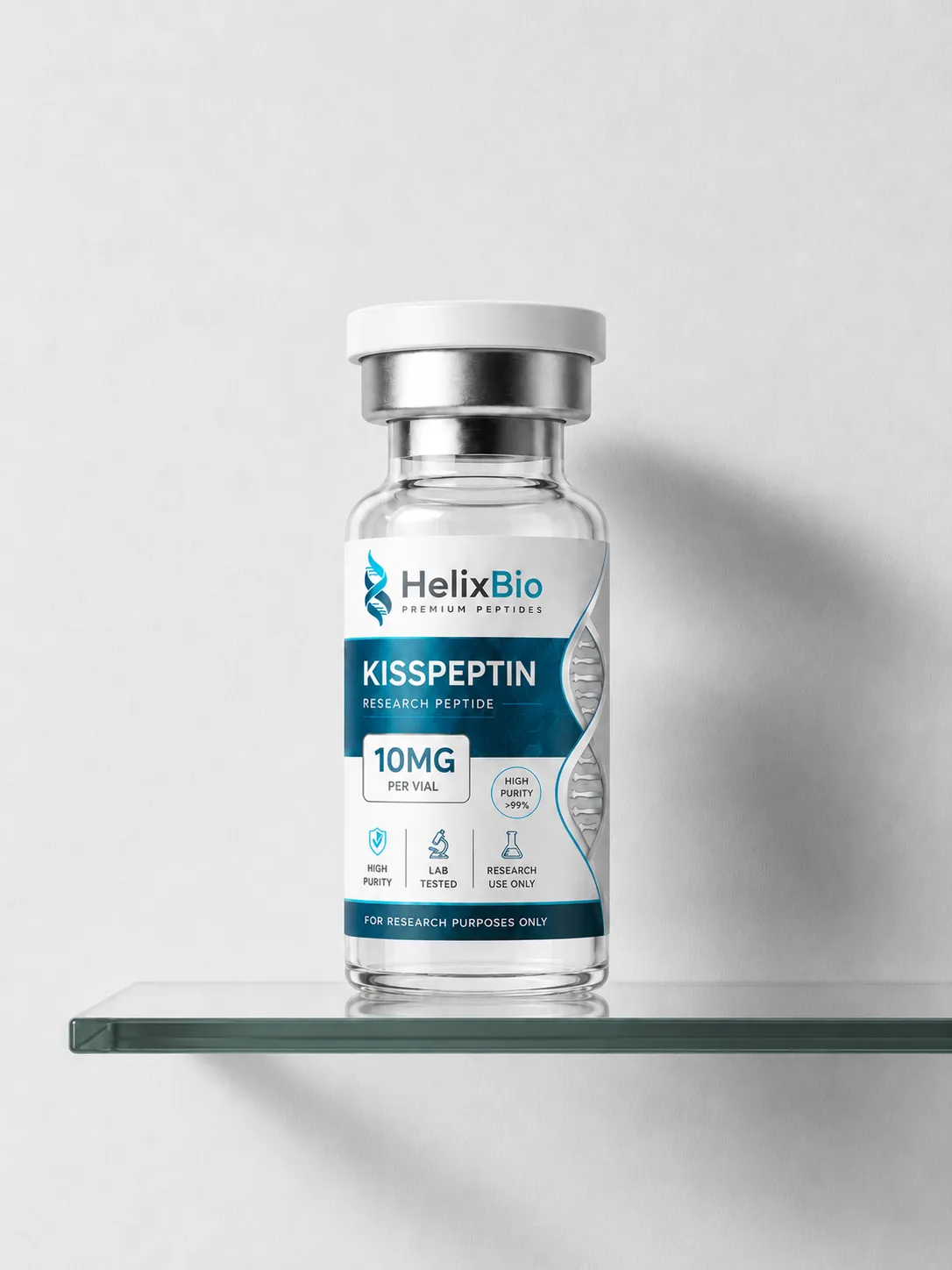
Kisspeptin is a naturally occurring peptide that plays an important role in scientific research related to reproductive endocrinology, neuroendocrine signaling, and hormonal regulation. Researchers have studied kisspeptin for its interaction with the GPR54 (KISS1R) receptor and its involvement in signaling pathways that regulate gonadotropin-releasing hormone (GnRH). Helix Bio supplies Kisspeptin exclusively for laboratory and research purposes. It is not intended for human or veterinary use, diagnostic procedures, or therapeutic applications.
HPLC certified
Independent analysis
Highest standard
Full traceability
Kisspeptin is a family of peptide fragments encoded by the KISS1 gene and recognized for its role in cellular signaling associated with reproductive biology. Since its discovery, it has become an important subject in endocrinology, neurobiology, developmental biology, and molecular signaling research. In laboratory settings, researchers investigate Kisspeptin to better understand hormone regulation, receptor interactions, reproductive physiology, and hypothalamic-pituitary-gonadal (HPG) axis signaling.
Kisspeptin is a synthetic research peptide designed to reflect the amino acid sequence used in laboratory investigations. Depending on the research protocol, scientists may study different peptide fragments such as Kisspeptin-10, Kisspeptin-13, Kisspeptin-14, or Kisspeptin-54. Product specifications should always be verified before experimental use. Helix Bio's Kisspeptin is supplied as a lyophilized powder in a sealed laboratory vial where applicable.
This product exists to support in vitro and laboratory research only. It is manufactured, labeled, and sold for research use only (RUO) — not for human or veterinary use, not for diagnostic procedures, and not for compounding. It is intended for researchers studying neuroendocrine signaling, GPR54 (KISS1R) receptor interactions, and reproductive biology.
Kisspeptin has become an important peptide in modern endocrine research because of its interaction with the KISS1 receptor (GPR54). Its well-documented biological pathway makes it valuable for experimental models exploring receptor activation, peptide-receptor binding, intracellular signaling, and physiological regulation. Rather than making unsupported performance claims, Helix Bio prioritizes transparency, product quality, and responsible scientific use.
This product is not intended for individual consumers seeking to use it outside a research setting.
| Field | Detail |
|---|---|
| Product Name | Kisspeptin |
| Category | Research Peptide — Synthetic Peptide |
| Research Fields | Endocrinology, Reproductive Biology, Molecular Biology, Neuroendocrinology |
| Appearance | Lyophilized powder (where applicable) |
| Purity | High-purity research grade — see current lot's Certificate of Analysis where available |
| Storage | Store refrigerated before reconstitution; freezer temperatures recommended for long-term storage |
| Packaging | Sealed laboratory vial |
| Research Use | Laboratory research only |
| Manufacturer | Helix Bio |
Kisspeptin is supplied exclusively for research applications and is commonly used in studies involving:
This product is intended only for qualified researchers working within regulated laboratory environments. Everything sold by Helix Bio is intended for laboratory research only, not for administration to humans or animals.
Researchers depend on consistent materials to produce reliable experimental results. Helix Bio manufactures research-grade Kisspeptin using established peptide synthesis methods with strict batch consistency practices, careful manufacturing, and laboratory-oriented packaging.
Kisspeptin is packaged to help maintain product integrity during transport. Researchers should inspect each vial upon receipt. Shipping methods, delivery times, and regional availability may vary — refer to Helix Bio's shipping and support pages for current information.
Kisspeptin sold by Helix Bio is intended strictly for laboratory, analytical, and scientific research use. It is not a drug, dietary supplement, cosmetic, or food product, and it is not approved by the FDA or any regulatory body for human or veterinary use, diagnosis, treatment, cure, or prevention of any disease or condition. This product must not be administered to humans or animals outside of a properly licensed research facility. Nothing on this page constitutes medical advice, and no statement here should be interpreted as a therapeutic or health claim. By purchasing this product, the buyer confirms they are a qualified researcher, laboratory, or institution acquiring it for lawful research purposes only, and accepts full responsibility for compliance with all applicable local, state, and federal regulations governing research chemicals.
Knowledge Base
Knowledge Base
Knowledge Base
Knowledge Base
Knowledge Base
Knowledge Base
Knowledge Base
Knowledge Base
Knowledge Base
Knowledge Base
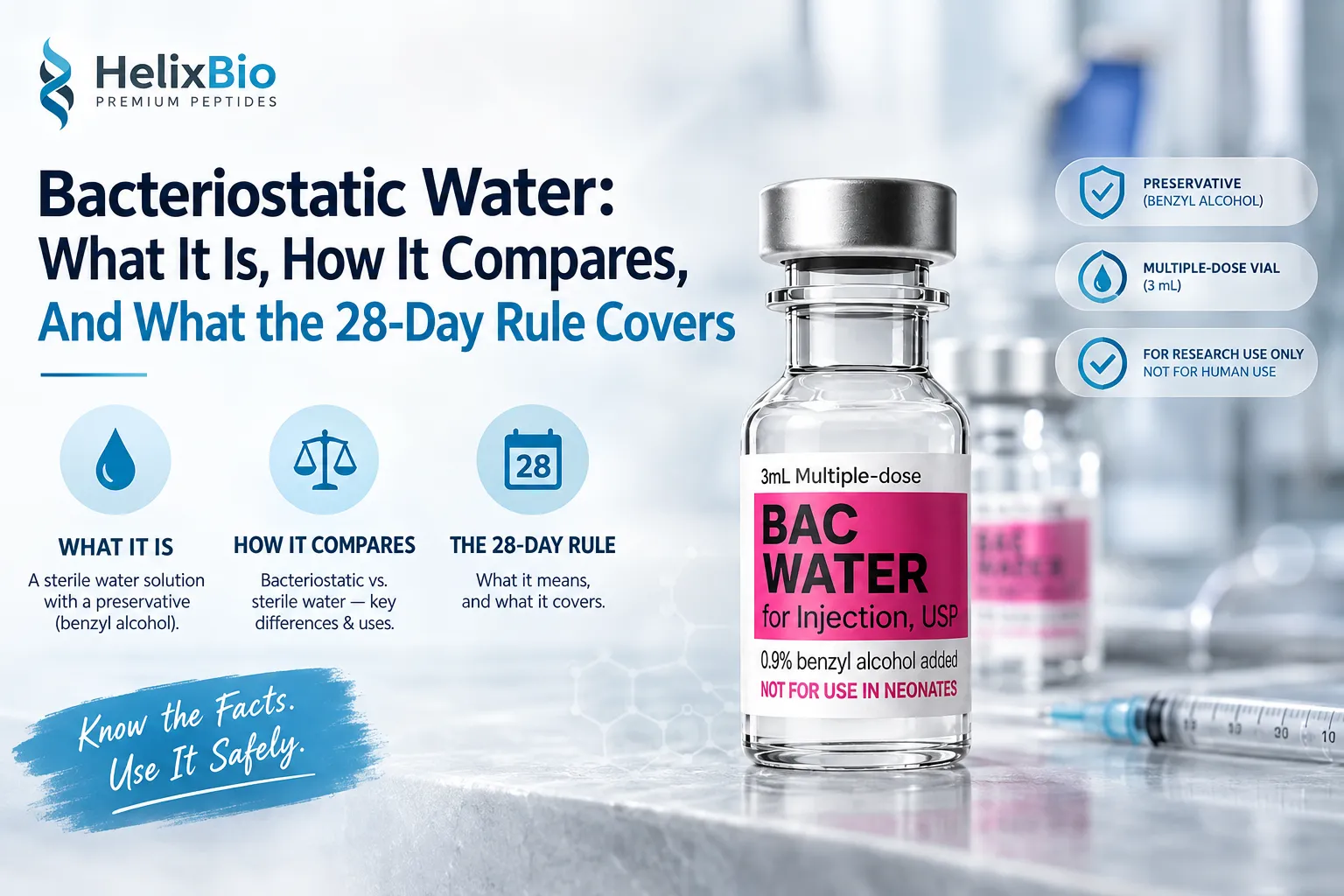
What bacteriostatic water contains, how it differs from sterile water and saline, where the 28-day opened-vial figure comes from, and what a COA can show.
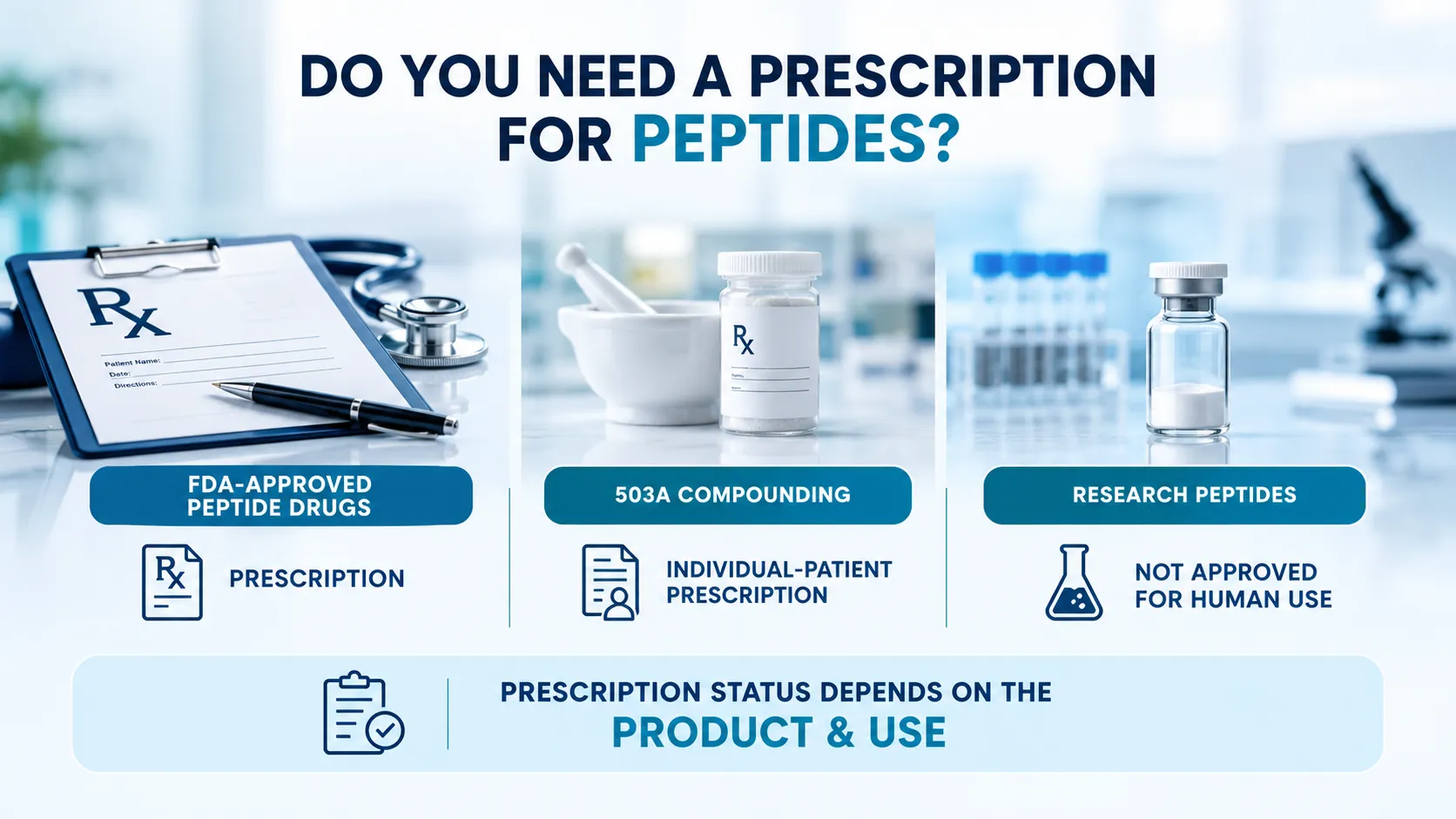
Do you need a prescription for peptides? It depends on the category. See which peptides need one, which do not, and the dated 2026 FDA rules that apply.
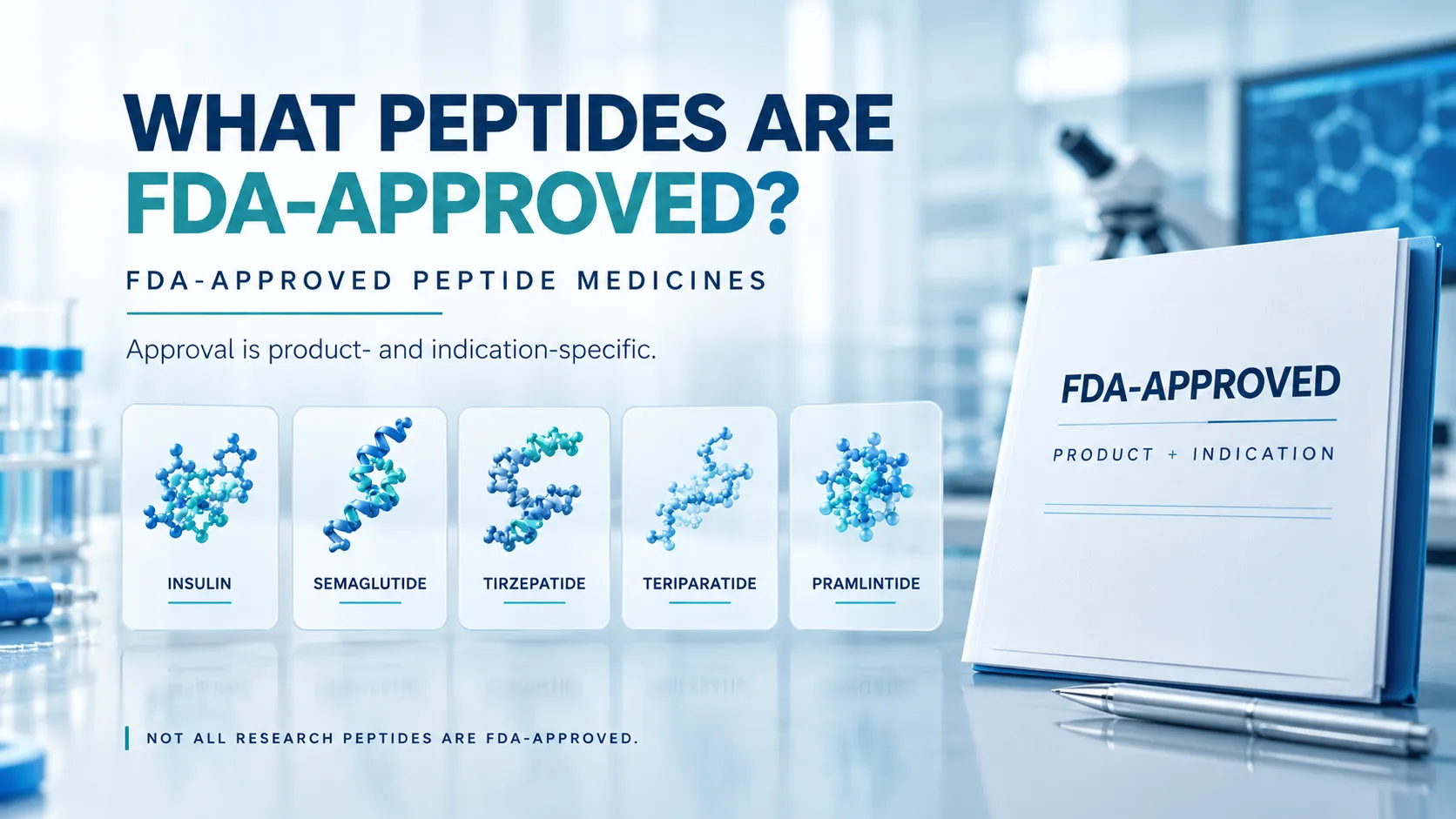
The complete 2026 list of FDA-approved peptides: 47 drugs by category and approval year, which popular peptides are not approved, and pipeline to watch.