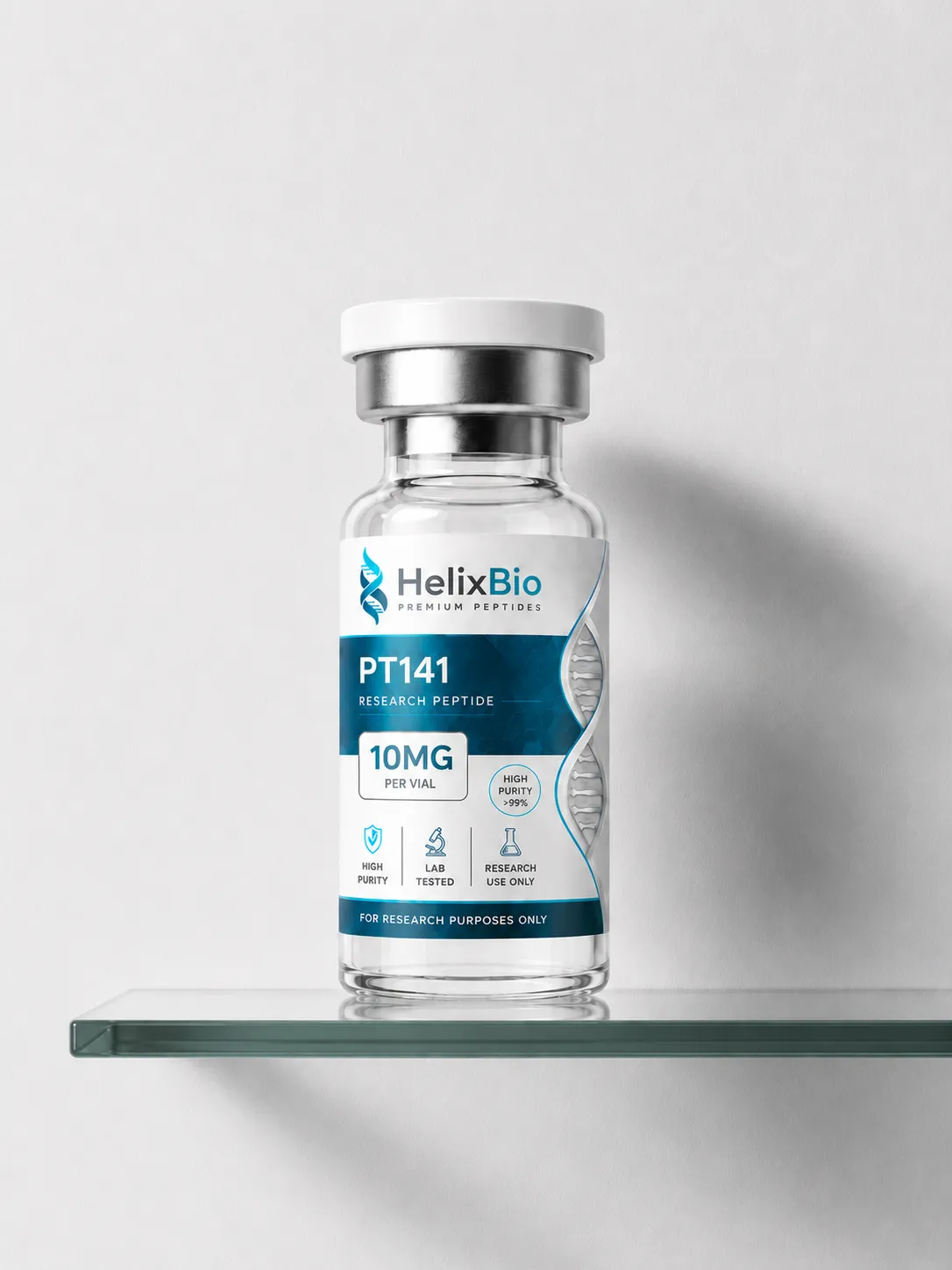
PT-141, also known as bremelanotide, is a synthetic cyclic peptide analog of alpha-melanocyte-stimulating hormone (α-MSH) used in research involving melanocortin receptor biology, peptide-receptor interactions, and cellular signaling. The compound has been investigated across melanocortin receptor subtypes, including MC1R, MC3R, MC4R, and MC5R. Helix Bio supplies PT-141 as a research-use-only peptide for qualified laboratory and scientific applications. Researchers should review the current lot-specific Certificate of Analysis (COA), analytical documentation, and product specifications before incorporating the material into an experimental workflow.
HPLC certified
Independent analysis
Highest standard
Full traceability
PT-141 is the research designation commonly associated with bremelanotide, a synthetic melanocortin peptide analog derived from the α-MSH framework. The U.S. Food and Drug Administration identifies PT-141 as a synonym for bremelanotide and lists the compound's molecular identity in its Substance Registration System.
Structurally, bremelanotide is a cyclic peptide containing a lactam bridge. This constrained molecular architecture makes PT-141 relevant to studies examining peptide conformation, receptor recognition, ligand selectivity, and melanocortin signaling.
Research has examined bremelanotide as a melanocortin receptor agonist, with particular attention to MC3R and MC4R. FDA documentation also describes activity involving MC1, MC3, MC4, and MC5 receptor subtypes.
PT-141 should not be confused with Melanotan-1 or Melanotan-2. Although all are synthetic melanocortin-related peptides, they have distinct structures and research profiles.
PT-141 is a synthetic cyclic peptide analog of α-MSH. FDA records identify bremelanotide as the active substance associated with PT-141 and provide its molecular formula as C₅₀H₆₈N₁₄O₁₀ for the free-base form.
The bremelanotide structure includes:
The FDA Substance Registration System distinguishes bremelanotide from bremelanotide acetate and lists PT-141 as a synonym for the compound.
Helix Bio's PT-141 is intended for laboratory and scientific research only.
Potential research applications include:
The suitability of PT-141 for any particular experiment depends on the research model, assay design, controls, analytical requirements, and laboratory protocols.
PT-141 and bremelanotide refer to the same underlying research compound in scientific and regulatory references. The FDA's Substance Registration System lists PT-141 among the synonyms for bremelanotide.
Bremelanotide is also the active ingredient in an FDA-approved prescription product. That regulated pharmaceutical product is a separate product from research-use-only PT-141 supplied by Helix Bio. The FDA approval package identifies Vyleesi as bremelanotide injection and describes its specific approved indication and formulation.
Therefore, the existence of an approved pharmaceutical containing bremelanotide should not be interpreted as approval of a research-use-only PT-141 product for human administration.
Defined Melanocortin Peptide Structure
PT-141 has a defined cyclic molecular structure that makes it useful for investigating relationships between peptide conformation and receptor interaction.
Relevant to Multiple Receptor Studies
Scientific and regulatory literature describes bremelanotide as a melanocortin receptor agonist with activity across several melanocortin receptor subtypes. This provides a basis for comparative research involving receptor pharmacology and ligand behavior.
Established Research Literature
PT-141/bremelanotide has been investigated in peer-reviewed research, including studies examining melanocortin receptor activity and physiological signaling.
Useful for Structure-Activity Research
The cyclic structure and modified α-MSH framework provide a defined molecular model for comparing synthetic melanocortin ligands.
Clear Research-Only Positioning
Helix Bio identifies its products as research and laboratory materials rather than human-use products. The site's published information states that its peptide catalog is intended for research purposes and not for ingestion, injection, or other administration.
PT-141 research peptide is intended for qualified users conducting legitimate scientific research, including:
It is not intended for consumers seeking sexual, cosmetic, tanning, therapeutic, or performance-related effects.
| Specification | PT-141 |
|---|---|
| Product Name | PT-141 |
| Common Name | Bremelanotide |
| Other Name | Bremelanotide / PT-141 |
| Product Type | Synthetic peptide |
| Peptide Class | Cyclic α-MSH analog |
| Research Category | Sexual & Hormonal Research |
| Primary Research System | Melanocortin receptor signaling |
| Receptor Targets Studied | MC1R, MC3R, MC4R, MC5R |
| Molecular Formula | C₅₀H₆₈N₁₄O₁₀ for bremelanotide free base |
| Purity | Verify current lot-specific COA |
| Appearance | Refer to current product documentation |
| Packaging | Refer to current product listing |
| Storage | Follow current product-specific documentation |
| Lot Testing | Verify applicable COA |
| Quality Documentation | Lot-specific COA where provided |
| Research Use | Laboratory research only |
| Human Use | Not intended for human use |
| Veterinary Use | Not intended for veterinary use |
| Supplier | Helix Bio |
| Country of Origin | Verify current product documentation |
Molecular identity information is based on FDA substance records. Product-specific attributes such as purity, package size, physical appearance, storage conditions, and analytical results should be confirmed against the current Helix Bio listing and applicable COA.
Melanocortin Receptor Research
PT-141 is relevant to research involving melanocortin receptors, a group of G-protein-coupled receptors involved in diverse cellular signaling processes.
Experimental work can examine receptor-ligand interactions, receptor activation, ligand selectivity, or downstream signaling under controlled laboratory conditions.
MC3R and MC4R Research
Published research has identified bremelanotide as an agonist at MC3R and MC4R. These receptors are therefore relevant targets for laboratory studies investigating melanocortin ligand activity and receptor pharmacology.
MC1R and MC5R Research
FDA regulatory documentation describes bremelanotide as a non-selective agonist of melanocortin receptor subtypes including MC1, MC3, MC4, and MC5. This makes PT-141 relevant to broader comparative melanocortin receptor investigations.
Peptide-Receptor Interaction Studies
PT-141 provides a defined synthetic ligand for studies examining how cyclic melanocortin peptides interact with receptor systems.
Depending on the research question, appropriate experiments may evaluate binding, receptor activation, ligand selectivity, or downstream cellular signaling.
Structure-Activity Relationship Research
The cyclic structure of PT-141 can be considered when studying how conformational restriction and sequence modifications influence melanocortin receptor interactions.
Researchers may compare PT-141 with other α-MSH analogs to investigate relationships between peptide structure and receptor behavior.
Analytical Characterization
PT-141 can be evaluated using analytical methods such as HPLC and mass spectrometry to investigate purity, identity, molecular mass, and other relevant quality attributes.
Research peptides should be assessed using appropriate analytical documentation before they are incorporated into experimental workflows.
Helix Bio states that its research peptide batches undergo independent testing, including HPLC purity assessment and mass-spectrometry verification, with batch-specific Certificates of Analysis. The site's published quality information also describes freeze-dried materials and batch-level analytical documentation.
For PT-141, researchers should review the documentation associated with the specific lot and, where available, verify:
Third-party testing should only be represented as applicable when it is documented for the relevant batch.
Helix Bio's website states a 99.1%+ verified purity standard for its catalog, but its general site disclaimer also notes that purity may vary by product and lot. Therefore, the lot-specific COA should take precedence over a general website statement when evaluating a particular PT-141 batch.
Follow the current storage requirements provided with the specific PT-141 product and lot documentation.
General laboratory considerations include:
Peptide stability can depend on formulation, concentration, container, temperature, moisture, and storage duration. Product-specific instructions should therefore take precedence over generic peptide-storage recommendations.
Helix Bio provides research-use-only peptide products for laboratory applications. The website describes its products as research materials and states that its catalog is supported by batch-specific quality documentation.
Current shipping availability, delivery timelines, packaging configuration, temperature-control practices, and destination restrictions should be confirmed using the current Helix Bio shipping information before ordering.
Researchers should inspect packages after receipt and promptly follow the applicable product-specific storage instructions.
PT-141 supplied by Helix Bio is intended strictly for research and laboratory use. It is not intended for human consumption, ingestion, injection, administration, veterinary use, diagnosis, treatment, cure, prevention of disease, sexual enhancement, or cosmetic use.
PT-141 is also known as bremelanotide, and bremelanotide is the active ingredient in an FDA-approved prescription drug product. That regulatory status applies to the specific approved pharmaceutical product and does not mean that research-use-only PT-141 supplied by Helix Bio is FDA-approved for human use. The FDA approval package identifies Vyleesi as a specific bremelanotide injection product approved for a defined clinical indication.
Helix Bio's own website states that its products are offered for research and laboratory purposes only and are not intended for ingestion, injection, or any form of administration.
Nothing on this page should be interpreted as medical advice, dosage guidance, treatment instructions, or a recommendation for human use.
Researchers are responsible for determining whether a material is appropriate for their experimental model and for complying with applicable federal, state, local, institutional, laboratory, biosafety, and chemical-handling requirements.
Knowledge Base
Knowledge Base
Knowledge Base
Knowledge Base
Knowledge Base
Knowledge Base
Knowledge Base
Knowledge Base
Knowledge Base
Knowledge Base
Knowledge Base
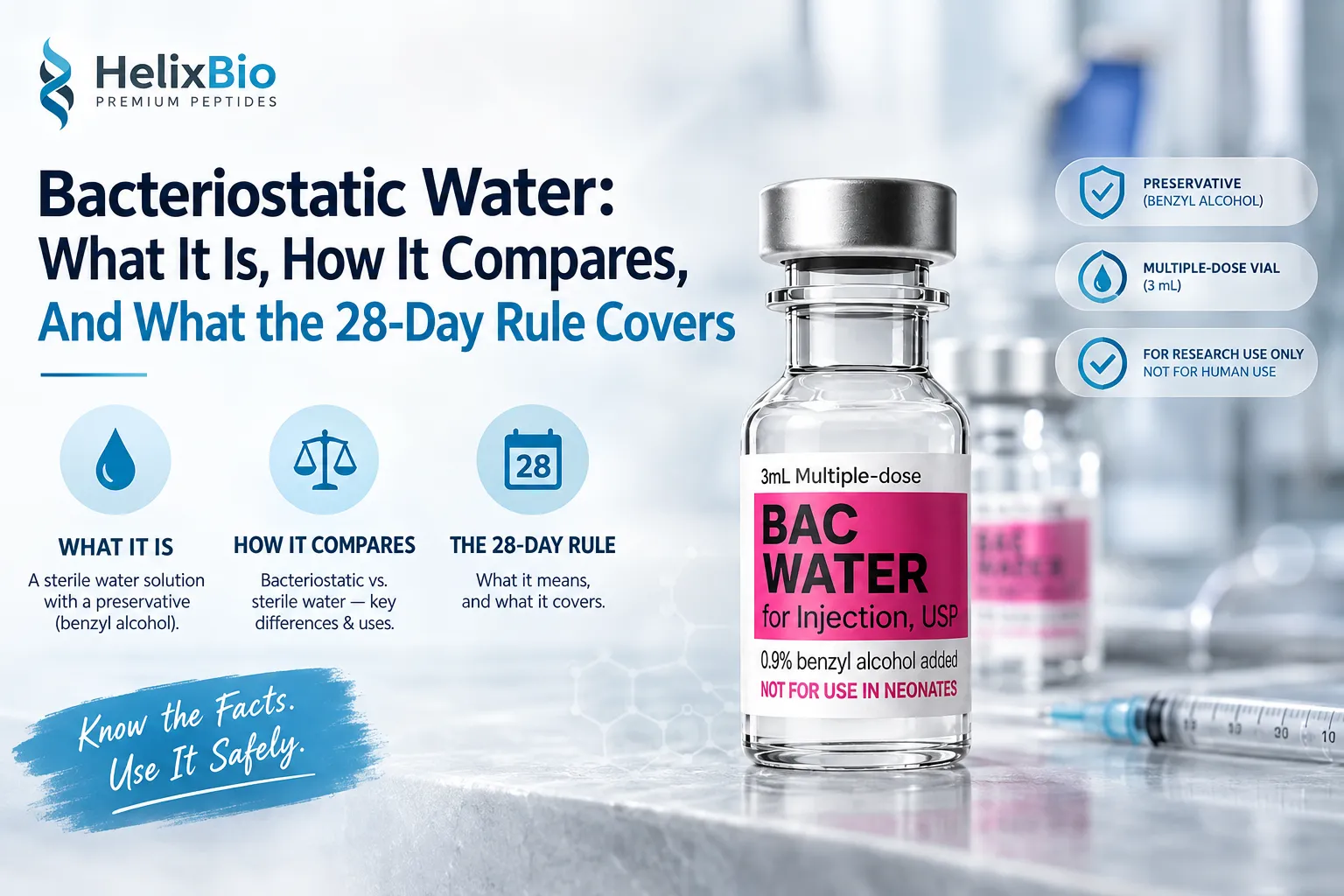
What bacteriostatic water contains, how it differs from sterile water and saline, where the 28-day opened-vial figure comes from, and what a COA can show.
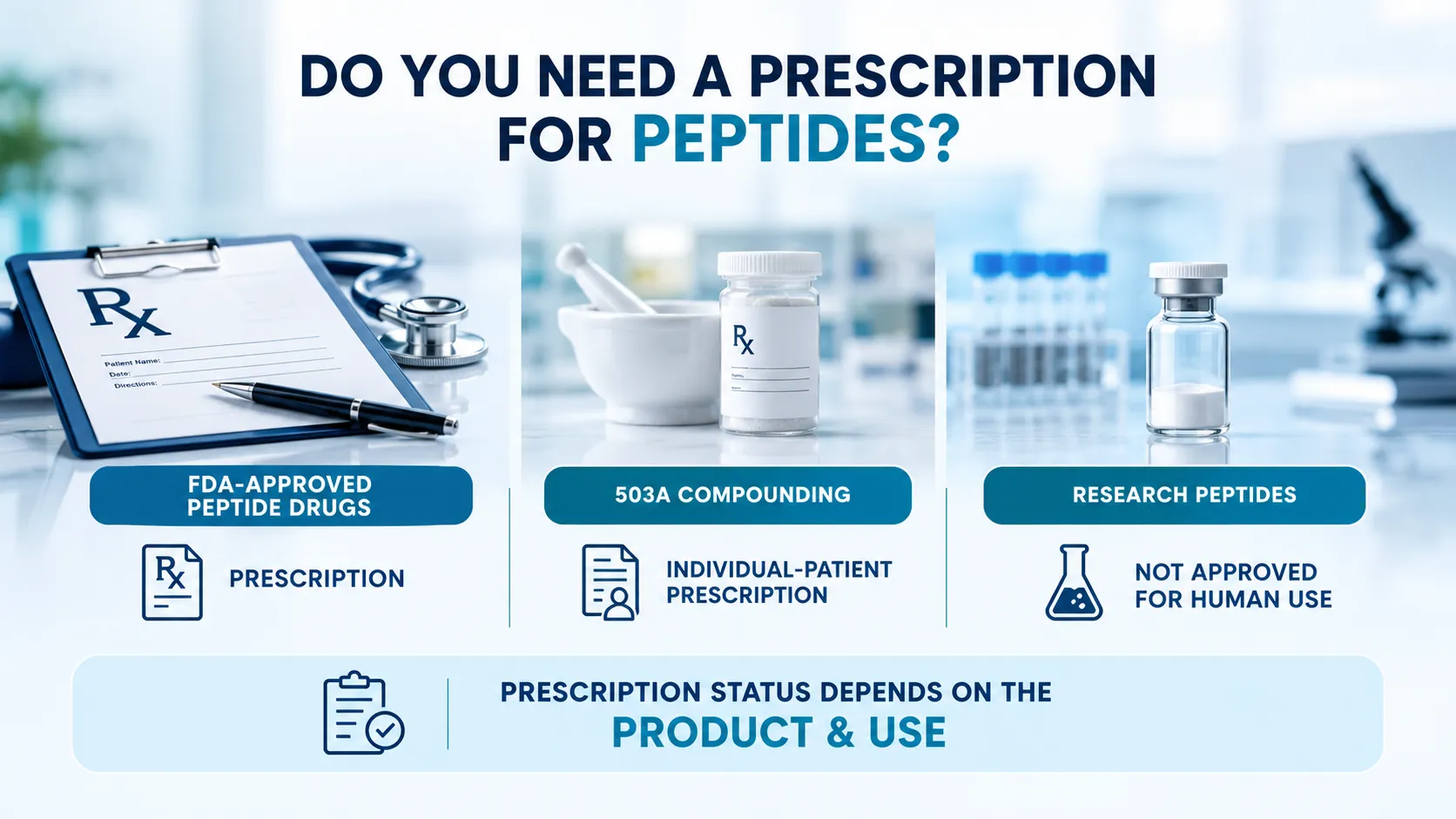
Do you need a prescription for peptides? It depends on the category. See which peptides need one, which do not, and the dated 2026 FDA rules that apply.
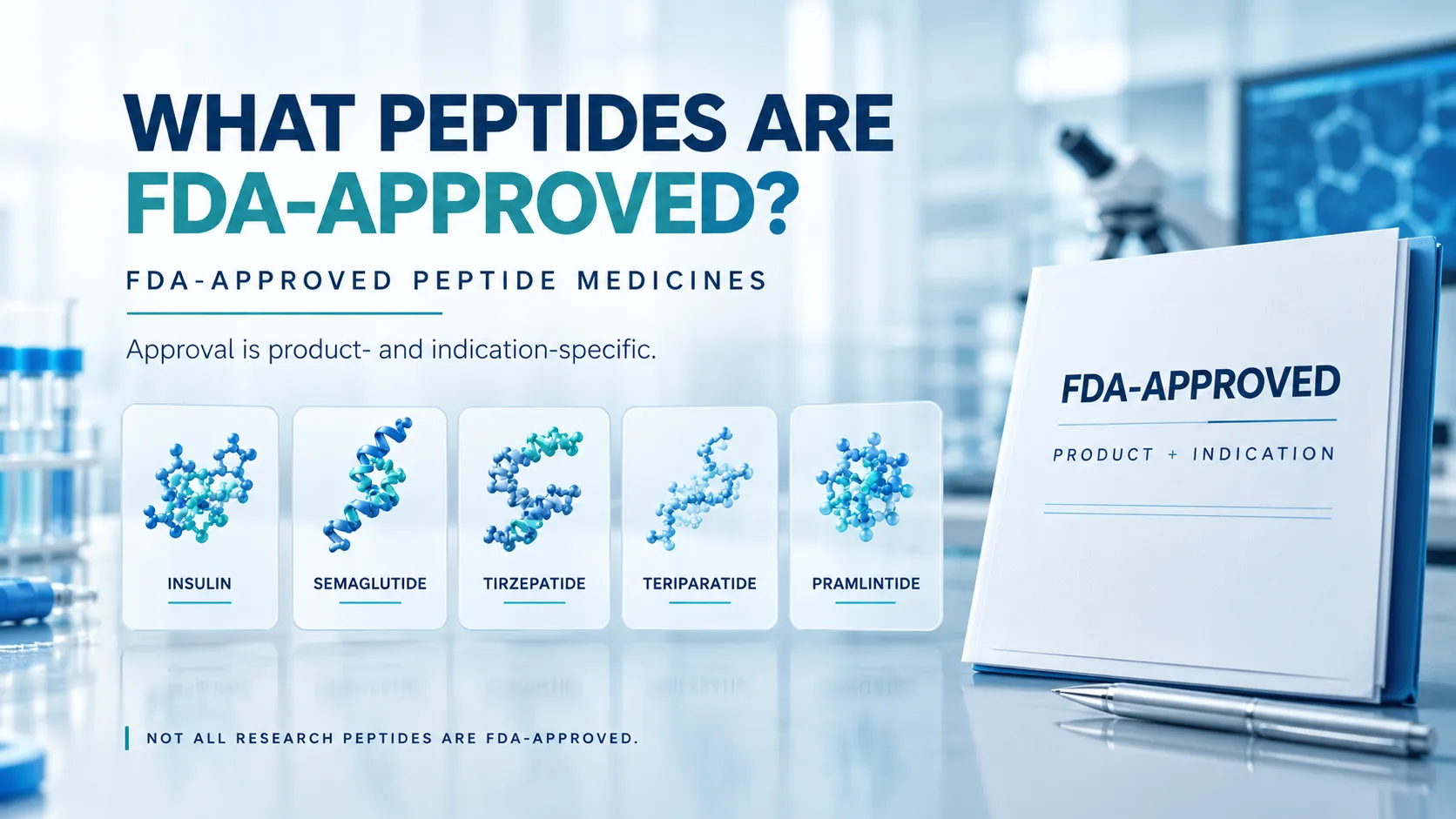
The complete 2026 list of FDA-approved peptides: 47 drugs by category and approval year, which popular peptides are not approved, and pipeline to watch.