- Laboratories are accredited to ISO/IEC 17025, never certified to it, and ISO itself accredits no laboratory.
- Accreditation covers only the tests and methods written on a laboratory's scope of accreditation document.
- A laboratory can hold a genuine ISO/IEC 17025 accreditation while the peptide test on its report sits outside that accredited scope.
- Absence of accreditation is not proof that a laboratory's result is wrong, and accreditation is not proof that any single result is correct.
- HPLC measures chromatographic purity and mass spectrometry confirms identity, so a purity figure alone has not established what the material is.
- Sterility under USP 71 and endotoxin under USP 85 are separate tests, and passing one establishes nothing about the other.
- ICH Q2(R2) defines the parameters a validated analytical method must demonstrate, without setting fixed numeric acceptance limits.
- A COA mismatch indicates absence of evidence rather than proof of defective material, except where a report has been reused or edited.
A certificate of analysis is only as strong as the laboratory that signed it. Most buyers learn to read the document. Far fewer ever check the lab behind it, and that is where the evidence usually breaks down.
BPC-157
RESEARCH PEPTIDE
BPC-157 is a synthetic pentadecapeptide, a short chain of 15 amino acids derived from a protective protein found in gastric juice. It's one of the most widely studied research peptides in the biotech space, referenced across laboratory literature on tissue repair, angiogenesis, and gastrointestinal research models. Helix Bio's BPC-157 is manufactured for laboratory use, supplied as a lyophilized powder, and backed by a certificate of analysis for every batch. It's intended strictly for qualified researchers, laboratories, and academic institutions — not for human or animal use.
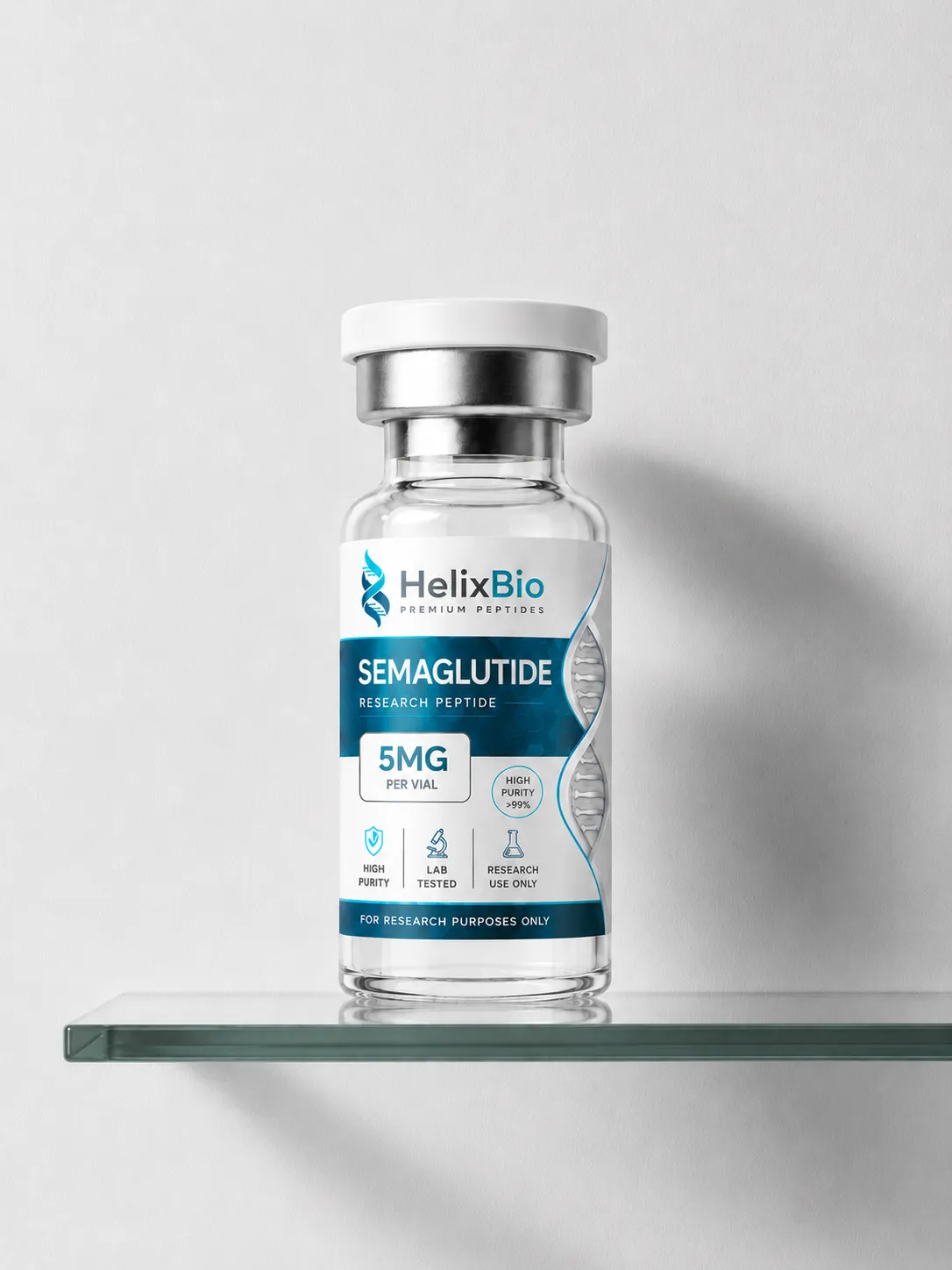
Semaglutide
RESEARCH PEPTIDE
Semaglutide is a synthetic research peptide studied for its activity as a GLP-1 receptor agonist — one of the most extensively documented compounds in incretin pharmacology, with a clinical trial record (the STEP and SUSTAIN programs) that spans over a decade. Developed originally by Novo Nordisk, Semaglutide is the reference point most researchers use when evaluating newer dual- and triple-agonist peptides such as GLP-1TRZ and GLP-3RTA. Helix Bio supplies Semaglutide as a lyophilized powder intended strictly for laboratory and preclinical research, manufactured to a high-purity standard and backed by third-party verification. It is not intended for human consumption, diagnostic use, or any therapeutic application, and it is a separate product from FDA-approved branded medications.
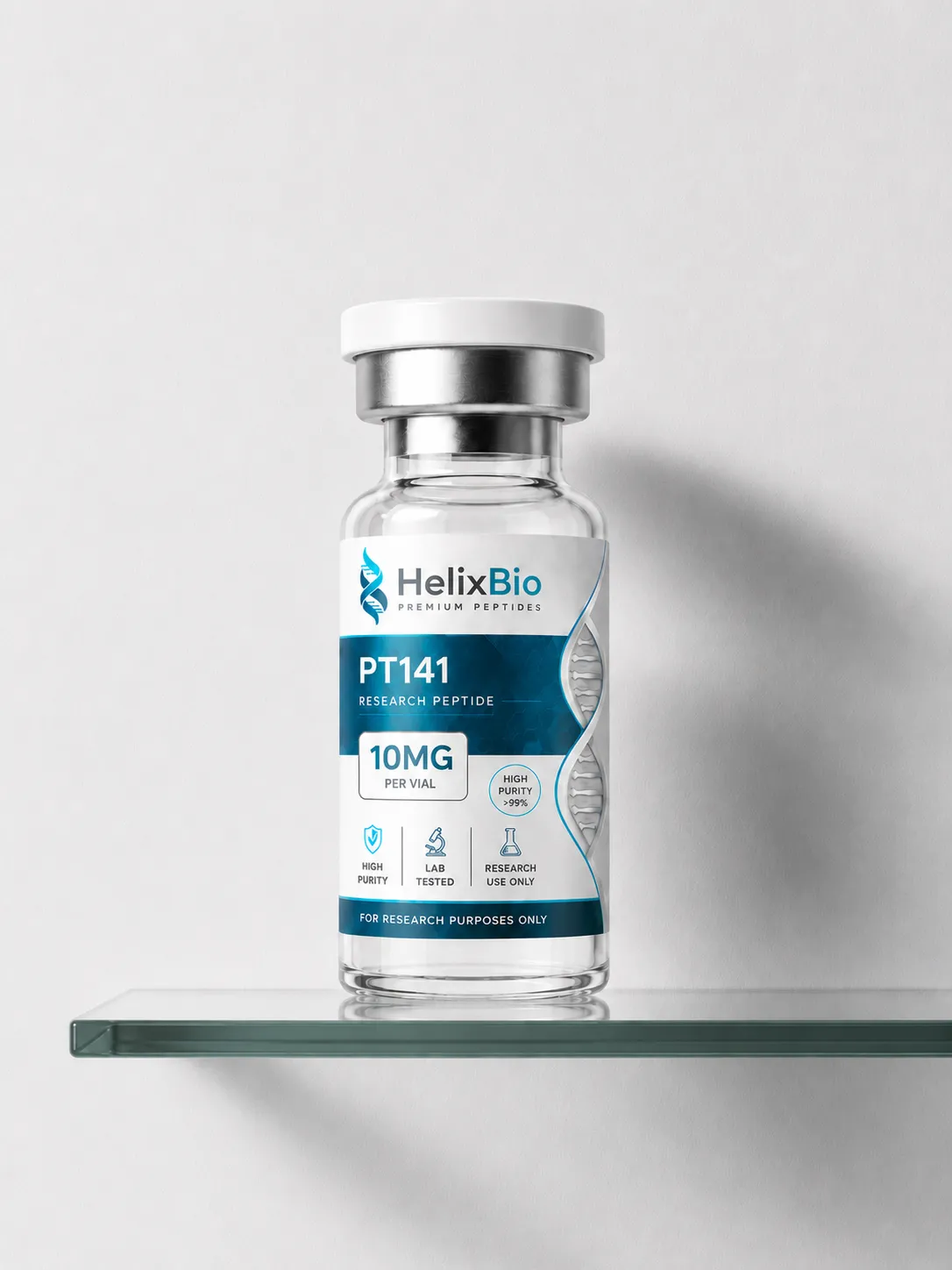
PT-141
RESEARCH PEPTIDE
PT-141, also known as bremelanotide, is a synthetic cyclic peptide analog of alpha-melanocyte-stimulating hormone (α-MSH) used in research involving melanocortin receptor biology, peptide-receptor interactions, and cellular signaling. The compound has been investigated across melanocortin receptor subtypes, including MC1R, MC3R, MC4R, and MC5R. Helix Bio supplies PT-141 as a research-use-only peptide for qualified laboratory and scientific applications. Researchers should review the current lot-specific Certificate of Analysis (COA), analytical documentation, and product specifications before incorporating the material into an experimental workflow.
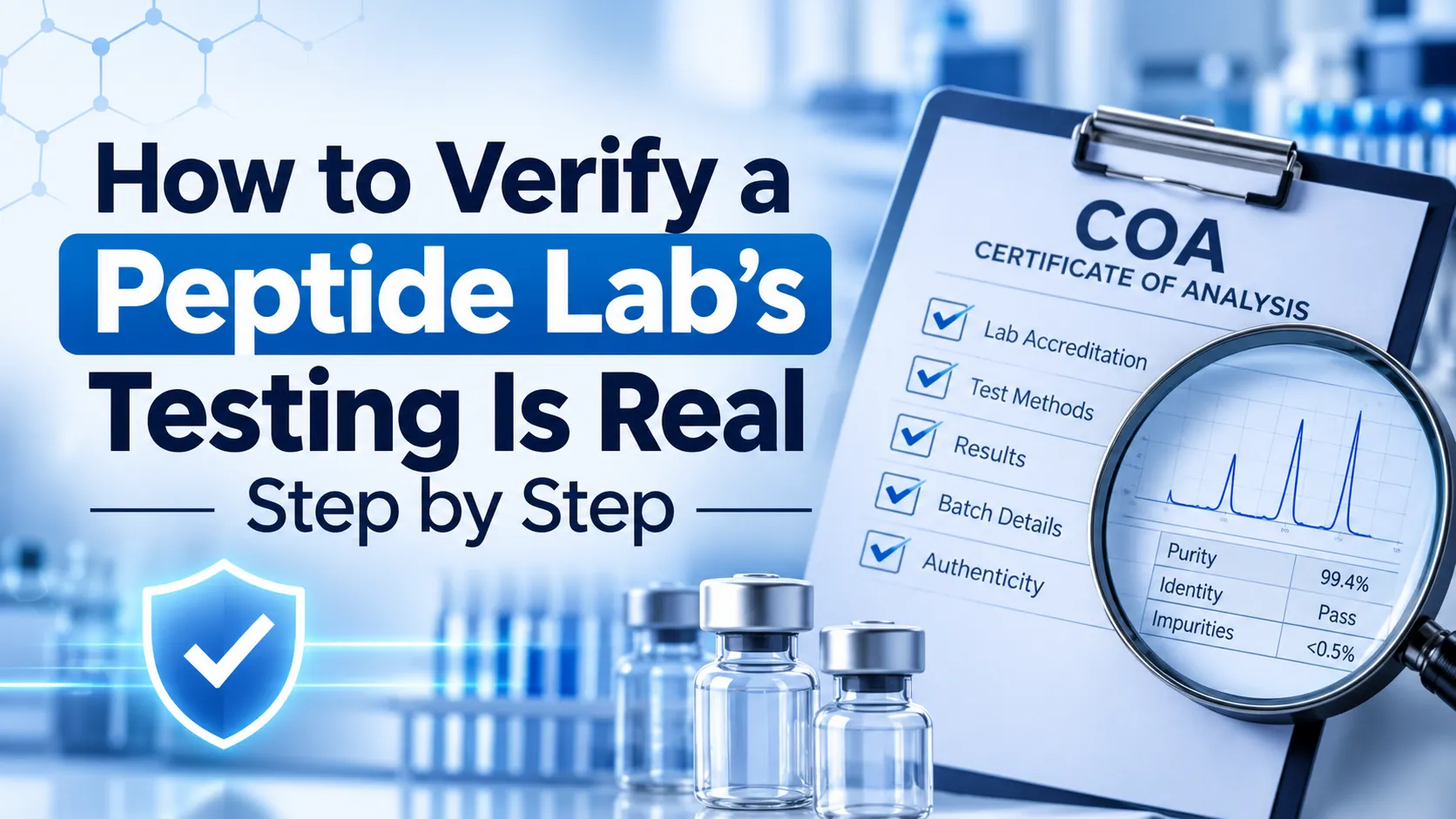
This guide covers the laboratory side of verification. It shows how to confirm a lab is real. It covers whether the accreditation reaches the test printed on your COA. It explains what validation documents exist and how to request them, and what each kind of mismatch proves.
Short answer. To verify a peptide lab, find the accreditation body and certificate number, then look that number up in the body's own public register. Open the scope document, not just the certificate. The scope lists which tests the accreditation covers. Confirm the report number on the lab's own portal, then match the lot to your vial.
The seven step verification sequence
- Find the lab name, the accreditation body and the certificate number on the COA.
- Look that number up in the accreditation body's own register, never a PDF hosted by the seller.
- Open the scope document and check that the test you care about is listed on it.
- Check the material matches and the Valid To date has not passed.
- Check the report number on the lab's own verification portal, where one exists.
- Match the lot on the vial to the lot on the report, character for character.
- Ask the seller which results are accredited and which are not.
One boundary before we start. This page is about auditing the laboratory. Three companion pages already cover the document side, and none of it is repeated here. For reading a COA field by field, see how to read a peptide certificate of analysis. For cross-checking documents against each other, see the twelve peptide COA red flags. For what published contamination testing found, see peptide purity testing and contamination data.
What does ISO 17025 actually certify?
ISO/IEC 17025:2017 is the international standard for the competence of testing and calibration laboratories. It was first published in 1999, revised in 2005, and the 2017 edition is current. ISO last reviewed and confirmed it in 2023.
Start with the word that trips most people up. Laboratories are accredited to ISO/IEC 17025. They are never certified to it.
Certification attests that a management system conforms to a standard. ISO 9001 is a certification. Accreditation is third party recognition that a lab is competent to perform specific tasks, by specific methods, on specific materials. The two are different claims about different things.
ISO itself accredits nobody. Accreditation bodies assess laboratories against the standard. In the United States those bodies include A2LA, ANAB, PJLA, NVLAP, IAS and AIHA LAP. In the United Kingdom it is UKAS. Internationally, the ILAC Mutual Recognition Arrangement means an accreditation granted by one signatory is recognised by the others.
So the phrase "ISO 17025 certified peptide" is wrong twice over. The standard does not certify, and it does not apply to a product. Neither does "ISO 17025 certified COA", or an image caption describing an "ISO certified laboratory". A peptide cannot hold an accreditation. Only a lab can.
What accreditation covers
Accreditation covers only the tests and methods written on the laboratory's scope of accreditation. It covers nothing else.
That single sentence does more verification work than any logo. A laboratory accredited for food microbiology is not thereby accredited for peptide HPLC. A laboratory accredited for cannabis potency is not accredited for peptide identity. One report can carry accredited results and unaccredited results on the same page.
The correct phrasing is narrow and checkable. Write or expect this: tested by a laboratory accredited to ISO/IEC 17025:2017 for the named test or method. Use it only when the scope document actually lists that test.
What accreditation does not prove
Absence of accreditation is not proof that a result is wrong. An unaccredited laboratory can produce an accurate result, and an accredited one can produce a wrong one. Accreditation tells you an outside body assessed the lab's competence and system for listed methods. It is evidence about process, not a guarantee about your vial.
Four limits are worth stating plainly.
- Accreditation does not certify a product, a COA or a seller.
- It does not prove any single reported result is correct.
- It does not cover sampling the lab did not perform. A lab tests the sample it received.
- It does not prove the document you hold is the lab's unedited output.
Clause 7.8 of the standard requires a test report to state that results relate only to the items tested. That clause is the honest limit of every COA ever written.
How do you check a lab's accreditation?
The check is short once you know the order. Most people fail it at step one, because the COA names a standard without naming who granted anything.
Step one. Get two facts, not one. You need the accreditation body and the certificate number. A certificate number with no body is unverifiable. A body with no number is unverifiable. "ISO 17025 accredited" on its own is neither.
Step two. Use the body's own register. A2LA publishes a searchable directory at customer.a2la.org. ANAB publishes one at search.anab.org. UKAS publishes a public register. Do not accept a certificate PDF hosted on the seller's website as proof, because that file proves only that a file exists.
Step three. Check the status, not just the entry. Accreditations can be active, suspended, voluntarily withdrawn or withdrawn. Bodies also publish false claim listings. An entry that exists is not the same as an accreditation that is current.
Step four. Match the address. The scope names the site where the work is performed. If the COA's lab address does not match the accredited site, the accreditation may not cover the work.
Step five. Open the scope. This is the step almost nobody takes, and it is the one that decides the question.
Do not state a universal validity period for accreditation. Periods vary by body, and secondary sources disagree. Read the Valid To date printed on the scope document itself.
How do you read a scope document?
A scope of accreditation is a table. It lists the field of test, the materials or products tested, the property or parameter measured, and the standard or method used. Reading one takes about a minute.
Check four things. The test you care about is listed. The material matches yours. The Valid To date has not passed. The status is active.
Here is what that looks like against three real United States laboratories. All three are genuinely accredited. All three were checked against their accreditation body's own documents on 14 November 2026.
Laboratory | Body and certificate | Valid to | Scope includes | Scope does not include |
|---|---|---|---|---|
Pharmetric Laboratory, Largo FL | A2LA 5386.01 | 30 November 2026 | HPLC USP 621 on pharmaceuticals, endotoxin USP 85, sterility USP 71, microbial enumeration, pH, osmolality | No mass spectrometry or LC-MS identity test is listed |
Vanguard Laboratory, Olympia WA | A2LA 6377.01 | 30 September 2027 | Food and environmental microbiology, preservatives, ICP-MS trace elements, residual solvents | No peptide HPLC purity, no LC-MS identity, no endotoxin, no sterility |
PharmLabs, San Diego CA | PJLA 85368, certificate L25-933-R1 | 29 February 2028 | Peptide potency, purity and identity by HPLC, alongside cannabis and hemp work | Sterility offered is stated by the lab as not USP 71 |
Read across those rows and the scope rule stops being abstract.
A purity line on a Pharmetric COA sits inside an accredited scope, because HPLC under USP 621 is listed. An identity line on that same COA does not, because no mass spectrometry method appears on the scope document retrieved. Same lab, same certificate, two different evidential weights on one page.
Vanguard is the sharper case. The accreditation is real and current. A peptide purity or identity result from Vanguard is still not accredited data, because those methods are not on the scope. Its trace elements and residual solvent results can be. A seller describing that whole COA as accredited has overstated it.
PharmLabs is the counterexample that keeps the rule honest. Its accreditation lists peptide potency, purity and identity by HPLC, and the lab names the compounds it covers. Accredited peptide testing does exist. It is simply much rarer than the logos suggest.
What this means for the claim you will read everywhere
Two conclusions get drawn from this evidence, and both are wrong.
The first says accredited labs are better, so look for the badge. The badge tells you nothing on its own. The second says accreditation is meaningless in this market. That is lazy, and it is unfair to the labs doing the work.
The accurate statement sits between them. Accreditation is real and scope specific. Most laboratories issuing peptide COAs are not accredited for the peptide test on your document. A small number are. Read the scope, not the logo.
Two further labs are named on peptide COAs more than any others, and both deserve a precise description. Janoshik Analytical is a real registered laboratory in Prague with a working public report lookup. No ISO/IEC 17025 accreditation is published or found in the registers checked. Its verification portal confirms that a report is genuine, which is a separate and useful thing from accreditation. Freedom Diagnostics Testing is a real laboratory in Franklin, Tennessee, with a public COA lookup. Its site states compliance with ISO 9001 quality management principles and Good Laboratory Practice principles, naming no body, number or scope. Neither description is a judgement about the quality of their results.
What a real validation package contains
Accreditation asks whether the lab is competent. Method validation asks a narrower question. Was this particular method shown to work before anyone reported a number from it?
The recognised framework is ICH Q2(R2), Validation of Analytical Procedures. The FDA published it as final guidance on 7 March 2024, under docket FDA-2022-D-1503, alongside ICH Q14. Its stated objective is to demonstrate that an analytical procedure is fit for the intended purpose. The compendial companions are USP 1225 for validation and USP 1226 for verification.
One scope note matters, and sellers rarely give it. Q2(R2) governs release and stability testing of commercial drug substances and products. Research peptides sold for research use only are not commercial drug products, so the guidance does not legally bind a research peptide seller. It remains the recognised standard for what the word validated means. A seller claiming a validated method is invoking this framework whether or not it is bound by it.
The parameters a validation must cover
Parameter | What it establishes | Why it matters to a reader |
|---|---|---|
Specificity and selectivity | The method measures the target in the presence of impurities and matrix | Without it, an impurity peak can be counted as peptide |
Linearity | Detector response is proportional to concentration | Without it, a purity figure at one concentration says nothing about another |
Range | The interval over which accuracy and precision are proven | A result outside the validated range is unproven |
Accuracy | Closeness of the measured value to the true value | Without it, a figure can be systematically high or low |
Precision | Repeatability and intermediate precision | Without it, today's result and tomorrow's may differ on one sample |
Detection limit | The lowest amount detectable | Below it, "not detected" means nothing |
Quantitation limit | The lowest amount quantifiable with acceptable accuracy | Below it, a number is a guess |
Robustness | The method survives small deliberate changes | Without it, the method works in one lab on one good day |
Q2(R2) sets these parameters. It does not set fixed numeric acceptance limits. Some sellers quote a recovery window or a correlation coefficient as an ICH or USP requirement. The standards do not state them that way.
Validated, verified and in-house are three different claims
- A validated method has been shown fit for purpose across the full parameter set. Non-compendial and new methods need this.
- A verified method is a compendial method shown to work under this laboratory's actual conditions. It checks selected characteristics rather than repeating the whole validation.
- An in-house method is the lab's own. Routine use does not validate it.
Two documents anchor the distinction. 21 CFR 211.194(a)(2) requires users of compendial methods to verify suitability under actual conditions of use. USP 1226 covers verification itself. Part 211 governs finished pharmaceuticals, so it does not bind a research peptide seller either. It is the benchmark for what a complete laboratory record looks like.
What to ask the laboratory for
This is the request almost nobody makes, and the answer is informative either way.
- The method validation report, naming the method and version, the analyte and the matrix. It should give the protocol, the acceptance criteria set in advance, and the result for each parameter above.
- The scope schedule, so you can see which of the methods on your COA are accredited.
- The measurement uncertainty statement for the reported result.
A validation file should let you see which method produced your number and what was proven about it before it was used. Treat that description as guidance rather than a regulator's checklist, because no single primary source publishes one canonical contents list for peptide methods.
What you can treat as fact is simpler. A seller claiming a validated method who cannot produce or describe any validation documentation is making an unverifiable claim. A refusal to describe it at all is itself information.
Why does it matter who ran the test?
The structural difference is about interest, not equipment. An in-house laboratory reports on its own employer's product. An independent laboratory has no commercial stake in the number it prints.
In-house testing is not inherently unreliable, and plenty of manufacturers run capable labs. The problem is that you cannot check it from outside. There is no second party to call, no report number to look up, and no register entry to open.
What "independently tested" should mean is narrow. A named third-party laboratory, identifiable and contactable, issuing a report you can verify at source. What it often means in practice is a logo and an adjective.
A market snapshot gives the scale of the gap. A United Kingdom research peptide market report was compiled on 17 August 2026, covering 211 UK-facing sellers. It found that 34.1 percent showed a per-batch COA. Only 26.1 percent named a specific laboratory partner, and 10.0 percent offered a QR-verifiable COA. Those are UK-facing figures for one sample of sellers, not a global rate. They describe a market where most sellers do not publish the document this guide teaches you to check.
What each test actually answers
A COA bundles four separate claims. No single test answers more than one.
Question | Test that answers it | What that test does not establish |
|---|---|---|
Is it the named peptide | Mass spectrometry or LC-MS, measured against theoretical mass | Purity, quantity, sterility, endotoxin |
How pure is it | RP-HPLC, main peak area over total integrated area | Identity, quantity, sterility, endotoxin |
How much peptide is in the vial | Quantitative assay reported as net peptide content | Purity, identity, sterility, endotoxin |
Is it sterile or low endotoxin | Sterility USP 71, endotoxin USP 85 by LAL | Purity, identity, quantity, and each other |
Two confusions follow from that table and cause most misreadings.
HPLC measures purity, not identity. A different peptide eluting at the same retention time can report high purity. A COA with a purity figure and no mass spectrometry has not shown the material is the named compound.
Purity is also not content. Purity is a proportion of what was detected. Content is the mass of peptide in the vial, and counterion and residual moisture account for mass that is not peptide. The evidence grading framework covers what each measurement supports in more depth.
Sterility and endotoxin are a third trap, because the words sound interchangeable. Sterility under USP 71 is a 14 day incubation detecting viable organisms. Endotoxin under USP 85 is an LAL assay reporting a quantity. Passing one says nothing about the other, and a PCR or microarray screen is not the USP 71 test.
One real COA shows why the method line matters more than the verdict column. A Pharmetric report on a semaglutide sample was released on 14 February 2026. It carries a sterility result beside a statement that the sterility test is not USP 71 compliant. Method suitability on file is recorded as No. The lab performed a bioluminescence method it describes as validated as equal to the compendial test by direct comparison, with validation documents held on file. That is the lab's own statement, not an independent verification. A reader who sees only the word Pass has read the wrong line.
Does one COA cover every vial size from the same lot
No, and this question deserves its own answer because almost nobody asks it.
A COA describes a specific sample, drawn at a specific time, from a specific lot. It does not describe every vial filled from that lot, and it does not automatically describe a different fill size.
Where a 5 mg and a 10 mg vial are genuinely filled from one homogeneous lot, one lot-level report can reasonably cover both. The claim depends entirely on lot traceability, not on the shared document. Different fill runs, different lot numbers, and different finished-product batches are different things being tested.
Confirm three points before accepting one COA across sizes.
- The lot number on your vial appears on the report.
- The report identifies what was tested, the finished vial or an input material.
- The seller can state which lots that single report covers, in writing.
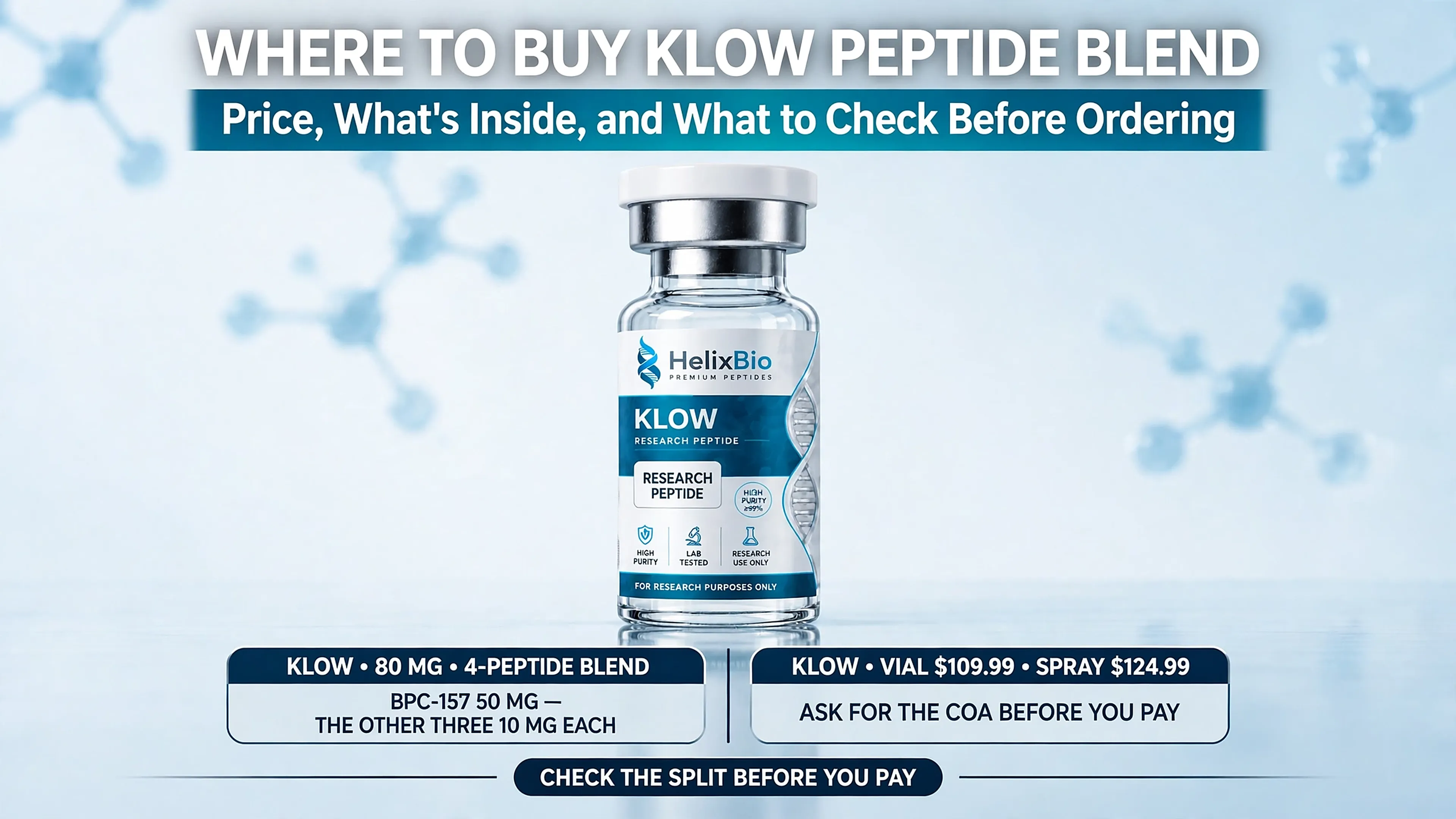
A report covering an input or raw material is not a report on the finished vial. That distinction matters most for blends, where one document has to carry several methods at once. The KLOW four-component blend COA guide and the GLOW component evidence page work through what per-component documentation has to establish.
What it means when a COA does not match what you received
Start with the useful reframing. The first question is not whether the COA is fake. Outright forgery exists and is the rarest failure. Mismatch is the common one, and it usually means a genuine report describes something other than what you are holding.
A mismatch is a gap between documents that should describe the same material. Here is what each type means and what it does not prove.
Type | What it looks like | What it establishes | What to do |
|---|---|---|---|
Lot mismatch | The vial lot is absent from the COA, or the numbers differ | The document is not about your vial | Request the lot-matched report, in writing |
Material mismatch | Label and report name different compounds, salt forms or components | Identity evidence does not attach to the product | Request the report naming the exact product and full composition |
Date mismatch | Dates that cannot fit together, or stale dates reused | Impossible dates make the document unreliable on its face | Ask for an explanation of the specific date |
Result mismatch | The issuer's own record and the PDF disagree | The issuer's record is the reference version | Describe what differs, do not guess why |
Missing identity data | HPLC purity with no mass spectrometry | Identity was never established | Request the MS data with measured and theoretical mass |
Reused or edited report | One report number, dates and results across several batches | At least one batch has no evidence behind it | Check the report number at the lab, then disregard the document |
Scope mismatch | The named lab is accredited, but not for these tests | The result is unaccredited, not necessarily wrong | Open the scope and ask which results are accredited |
Input versus finished product | The report covers a raw material, not the vial sold | The finished product was not the thing tested | Request testing on the finished lot |
Severity ratings and recommended actions in that table are expert interpretation. They are not regulatory requirements, and no primary source prescribes them.
Two cross-cutting rules make the table usable.
A mismatch means absence of evidence, not proof of bad material. The one exception is a reused or edited report, because there the document itself cannot be trusted whatever the product turns out to be.
A single mismatch is a reason to ask a question and get a corrected document. Two mismatches on one COA, or one the seller cannot explain, is a reason to disregard the document.
The remediation ladder
Most guides stop at the diagnosis. Here is the sequence after it.
- Contact the laboratory with the report number. Where the lab runs a public portal, check there first. If the portal returns nothing, or returns different details, stop treating the COA as evidence.
- Ask the seller for the lot-matched COA. Put the vial's lot number in the request and ask for the report covering that lot specifically.
- Document the mismatch. Keep the vial, the label, the COA and the correspondence. A refund or replacement conversation goes better with a record.
- Re-test the batch you received. An independent retest is the only step that produces evidence about your vial rather than about a document.
Clerical error and deliberate edit look identical from outside. Describe what differs and ask. Do not publish a conclusion about intent you cannot support.
A desk check you can run without a lab
Compare the measured mass on the COA against the published molecular weight for the compound. A gross mismatch is visible without equipment.
One trap makes this harder than it looks. Monoisotopic mass and average mass are different numbers for the same molecule, and the gap widens as peptides get larger. Confirm which one the report uses before calling anything a discrepancy.
What a verified peptide lot should actually require
The phrase "verified lot" gets used as a synonym for "we tested something". Traceability is a chain, and the phrase only means anything when the chain is unbroken.
- The raw material, with its own documentation.
- The synthesis batch that produced the material.
- The QC sample drawn from that batch.
- The COA describing that sample, by lot.
- The specific vial in your hand, carrying that lot number.
Three links break most often. The sample is chosen by the seller rather than drawn at random. The lot number on the vial never appears on any report. The report covers an input rather than the finished vial.
Ask which link your document actually covers. A lot is verified when every link holds, not when one report exists somewhere.
The buyer's verification checklist
Short enough to use with a vial in hand.
About the lab
- Which laboratory performed the testing, by full name and address.
- Which accreditation body granted the accreditation, and under what certificate number.
- Does the scope document list the specific tests on this COA.
- Has the Valid To date passed, and is the status active.
About the methods
- Which tests were actually run, named individually.
- Is the method identified specifically, including the standard and edition.
- Is the method validated, verified or in-house, and where is the documentation.
- Is a chromatogram available, or only a purity figure.
About the document
- Does the lot on the vial appear on the report, character for character.
- Does the report number return the same details on the lab's own portal.
- Is the testing date after the batch was made, and the issue date after the test.
- Is there a named person who authorised the report.
About what is missing
- Is there mass spectrometry identity data, or only purity.
- Is there a net peptide content line, separate from purity and fill weight.
- Were sterility and endotoxin tested separately, by named methods.
- Which results are accredited, and which are not.
Clause 7.8 of ISO/IEC 17025 requires a test report to contain sixteen items. They run from the laboratory's name and address through the method, the item tested and the dates. They end with the results and units, and the person who authorised the report. A COA missing the address, the method, the dates, the item identification or the signatory is incomplete against the standard's own reporting requirements. One honest caveat applies. A seller's COA is not necessarily an ISO/IEC 17025 test report. A missing item is evidence of a thin document, not proof of a standards violation.
What can a COA not tell you?
Every section above improves what you can establish. This section is about what no amount of document checking reaches.
Who chose the sample. A laboratory tests what arrives. It cannot confirm the sample represents the lot, and it does not select the vial. One certificate platform that read more than 13,500 lab test records through its own public interface disclosed that 13,517 of 13,560 were shop-chosen samples. Every published COA is, at minimum, a result the seller was willing to show.
What happened to the chain of custody. Between the tested sample and your vial sit filling, labelling, storage, shipping and time. A COA describes material at test time, under test conditions.
Whether competence transferred to this result. Accreditation is assessed periodically across a system. A validated method proves the procedure works. Neither proves this specific vial was handled correctly on the day.
Whether the lab issued this document. A named laboratory on a PDF is a claim about provenance. Only the lab's own record settles it.
Anything about safety or suitability. A purity percentage is an analytical measurement. It does not establish sterility, biological activity, net content or approval status. For the regulatory frame, see whether research peptides are legal in the USA.
The evidence that testing matters
Three pieces of public evidence show why these checks are not theoretical. Each carries its attribution limits.
Independent test purchases. Ashraf and colleagues published test purchase results in the Journal of Medical Internet Research in 2024. Vials labelled 99 percent pure measured 7.7 percent, 8.97 percent and 14.37 percent. Content exceeded the labelled amount by 28.56 to 38.69 percent. Endotoxin appeared in every sample, between 2.1645 and 8.9511 EU per mg. Read the scale correctly. That is three vials from illegal online pharmacies, for one compound. It proves the failure mode exists. It does not establish a rate across the market.
A criminal prosecution. The Department of Justice announced the outcome in its Northern District of Indiana release. Matthew Kawa of Paradigm Peptides was sentenced on 30 July 2026 to 70 months in prison, plus one year of supervised release. Restitution was set at 78,317.52 dollars, with a 5 million dollar money judgment. A co-defendant received 16 months. Both pleaded guilty on 10 December 2025. The release states the company falsely claimed three things. It said it was FDA registered, that it manufactured at its own United States laboratories, and that it tested products for quality. In reality it imported products from Asia and did not test them before sale. Many products sold as SARMs were testosterone. The release describes roughly 54,000 victims and more than 5 million dollars in sales, and notes FDA warning letters in 2020 and 2022. Secondary legal and trade coverage also reports that the company forged certificates of analysis. That wording comes from those secondary sources, not from the DOJ release.
Regulatory enforcement. The FDA issued warning letters to five online peptide sellers on 24 August 2026, posted on 1 September 2026. The reference numbers are 735127, 734884, 733652, 735063 and 735067. The agency's position across them is consistent. A research use only label is no defence where the rest of a site shows the products are intended for human use. The FDA also published a page on 1 October 2026 describing its concerns with unapproved GLP-1 drugs. It recorded 990 adverse event reports for compounded semaglutide as of 31 May 2026. More than 730 were recorded for compounded tirzepatide.
Two limits belong with that last item. A warning letter records the agency's findings and demands correction. It is not a court judgment. And the FDA has published no rule or guidance setting out how research peptide sellers must present a COA. Any claim that a COA format is FDA compliant or FDA required has no source behind it.
How can you tell if peptides are real?
There is no single check that settles it, and anyone promising one is overselling.
What exists is a chain. The lot on the vial matches the report. Identity is established by mass spectrometry. Purity is supported by a chromatogram. The laboratory is real, identifiable and checkable, with its scope read rather than assumed. An independent retest confirms the material you actually received.
Each link narrows the uncertainty. None of them removes it, because a COA describes a submitted sample rather than your vial. The ten point sourcing checklist covers what to confirm before ordering.
Where to go next
Run the seven step sequence on any COA you are offered, including ours. The checks in this guide are supplier agnostic by design, and they work the same way whoever issued the document.
Helix Bio batches are tested by independent third-party laboratories using HPLC and mass spectrometry. Lot-specific certificates are provided on request rather than published as a public library. Ask for the certificate covering your lot before you order, through the certificates page. Product pages such as PT-141, BPC-157 and semaglutide carry their own documentation notes.
All materials discussed here are for laboratory research use only. Nothing on this page is medical advice, and no compound mentioned is offered for human use.
Frequently Asked Questions
It means a supplier's testing laboratory has been assessed by an accreditation body as competent for specific listed methods. It says nothing about the peptide itself, the supplier, or any individual result. The claim is only meaningful once the scope document is read and the test in question appears on it.
In-house testing is performed by the manufacturer on its own product, and third-party testing is performed by an independent laboratory with no commercial interest in the result. In-house testing is not inherently unreliable, but it cannot be checked from outside. Third-party reports can be confirmed with the issuing laboratory.
Not automatically. A COA describes a sample drawn from a specific lot at a specific time, so coverage depends on lot traceability rather than on the document being shared across listings. Researchers should confirm that the lot number on the vial appears on the report and ask which lots that report covers.
Contact the issuing laboratory with the report number first, then ask the supplier for the report matching the exact lot on the vial. Document the mismatch and retain the vial, label and correspondence. An independent retest of the received batch is the only step that generates evidence about that specific material.
Residual solvent testing measures organic solvents left over from synthesis and purification, typically by gas chromatography, and trifluoroacetic acid is a common target in peptide work. It is a separate analysis from purity and identity, and it does not appear on most research peptide certificates. Its absence means solvent residues were not assessed, not that none are present.
Janoshik reports carry a task number and a unique key that can be entered on the laboratory's own public verification portal, which confirms whether the laboratory issued that report. That check establishes the document is genuine. It is a separate question from accreditation, and no ISO/IEC 17025 accreditation for Janoshik is published or found in the registers checked.
The issuing laboratory's own record is the reference version, and the circulated PDF is not. The practical step is to describe precisely what differs and ask the supplier to account for it in writing. Clerical error and deliberate alteration are indistinguishable from outside, so no conclusion about intent is supportable.
Yes, and modest variation between laboratories on the same lot is expected rather than suspicious. Different instruments, columns, wavelengths and integration practices produce different figures from identical material. A large divergence is worth querying with both laboratories, starting with the method line on each report.
No. A mismatch establishes that the document does not describe the material in hand, which is an absence of evidence rather than proof of a defective or counterfeit product. The exception is a reused or edited report, where the document itself cannot be relied on whatever the material turns out to be.
The three observed failure modes are fabrication of a report that no laboratory issued, recycling of one genuine report across multiple batches, and presentation of a genuine report describing a different lot. Recycling and mismatch are far more common than outright fabrication. Checking the report number against the issuing laboratory's own record addresses all three.
ISO/IEC 17025 is an accreditation of a laboratory's technical competence for specific listed test methods. ISO 9001 is certification that a management system conforms to a quality standard, and it assesses no testing capability. An ISO 9001 certificate offered in place of ISO/IEC 17025 accreditation does not answer the question being asked.
An exact 100.00 percent result warrants scrutiny rather than confidence, because real chromatograms almost always resolve trace impurities. The figure usually reflects rounding, a truncated integration, or a reporting convention rather than a measurement. The chromatogram and the integration data are what settle the question.
- 01International Organization for Standardization. ISO/IEC 17025:2017, General requirements for the competence of testing and calibration laboratories.
- 02A2LA. Scope of Accreditation to ISO/IEC 17025:2017, Pharmetric Laboratory, Certificate No. 5386.01, valid to 30 November 2026.
- 03A2LA. Scope of Accreditation to ISO/IEC 17025:2017, Olympic Analytical LLC dba Vanguard Laboratory, Certificate No. 6377.01, valid to 30 September 2027.
- 04ANAB. Accredited laboratory directory, ANSI National Accreditation Board.
- 05U.S. Food and Drug Administration. Q2(R2) Validation of Analytical Procedures, final guidance, 7 March 2024, docket FDA-2022-D-1503.
- 06U.S. Food and Drug Administration. FDA's Concerns with Unapproved GLP-1 Drugs Used for Weight Loss, 1 October 2026.
- 07U.S. Department of Justice, Northern District of Indiana. Illinois Man and Indiana Woman Sentenced Respectively to 70 Months and 16 Months in Prison.
- 08Ashraf AR, et al. Safety and Quality of Illicit Online Pharmacy Semaglutide. Journal of Medical Internet Research. 2024;26:e65440. PMID 39509151.
Helix Bio Chem Team
Research & Product Team
Our in-house team tracks published peptide research and translates it into clear, source-cited summaries for the research community.
Reviewed by in-house research chemists
support@helixbiochem.com