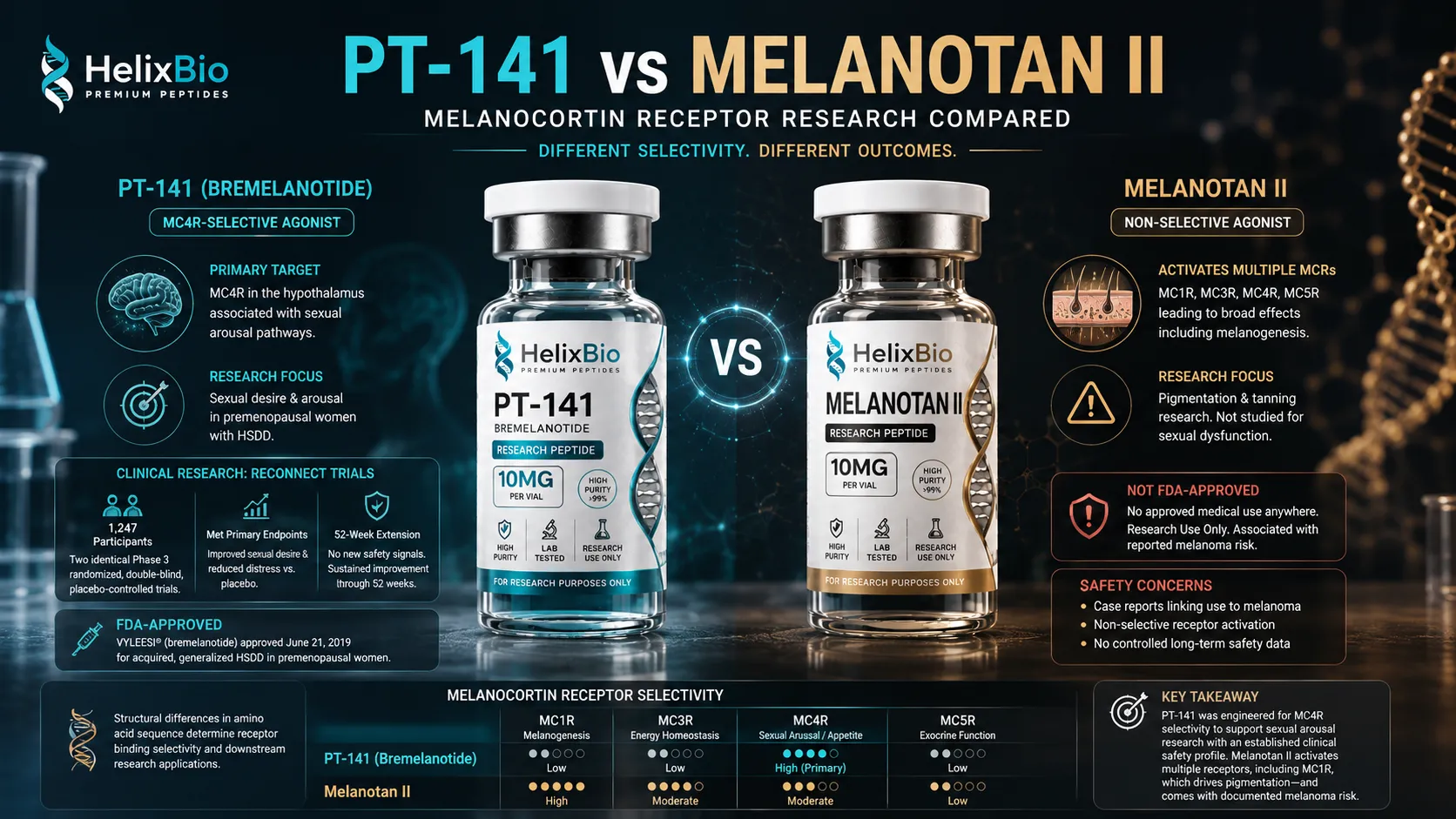
- PT-141 (bremelanotide) is FDA-approved as Vyleesi for hypoactive sexual desire disorder, based on two Phase 3 RECONNECT trials enrolling 1,247 women.
- Melanotan II has never received FDA approval for any indication and is supplied strictly as a Research Use Only compound.
- PT-141 is relatively MC4R-selective; Melanotan II non-selectively activates MC1R, MC3R, MC4R, and MC5R.
- RECONNECT trial data documented nausea in 40.0% of bremelanotide subjects versus 1.3% on placebo, and flushing in 20.3% versus 0.3%.
- Melanotan II's tanning effect works through the same cAMP-CREB-MITF-tyrosinase melanogenesis cascade implicated in pigmentary disease and melanocyte biology research.
- Published case reports have linked Melanotan II use to subsequent melanoma diagnosis, though a direct causal relationship has not been established.
PT-141 (bremelanotide) and Melanotan II share a common research lineage — both were derived from work on melanocortin receptor agonists at the University of Arizona in the 1990s — but they diverged onto very different regulatory and research paths. PT-141 became an FDA-approved pharmaceutical for hypoactive sexual desire disorder. Melanotan II never gained regulatory approval anywhere and remains an unapproved research chemical associated with a growing case-report literature on melanoma risk. The difference between them is not marketing; it is receptor selectivity, and this guide explains exactly what that means at the molecular level.
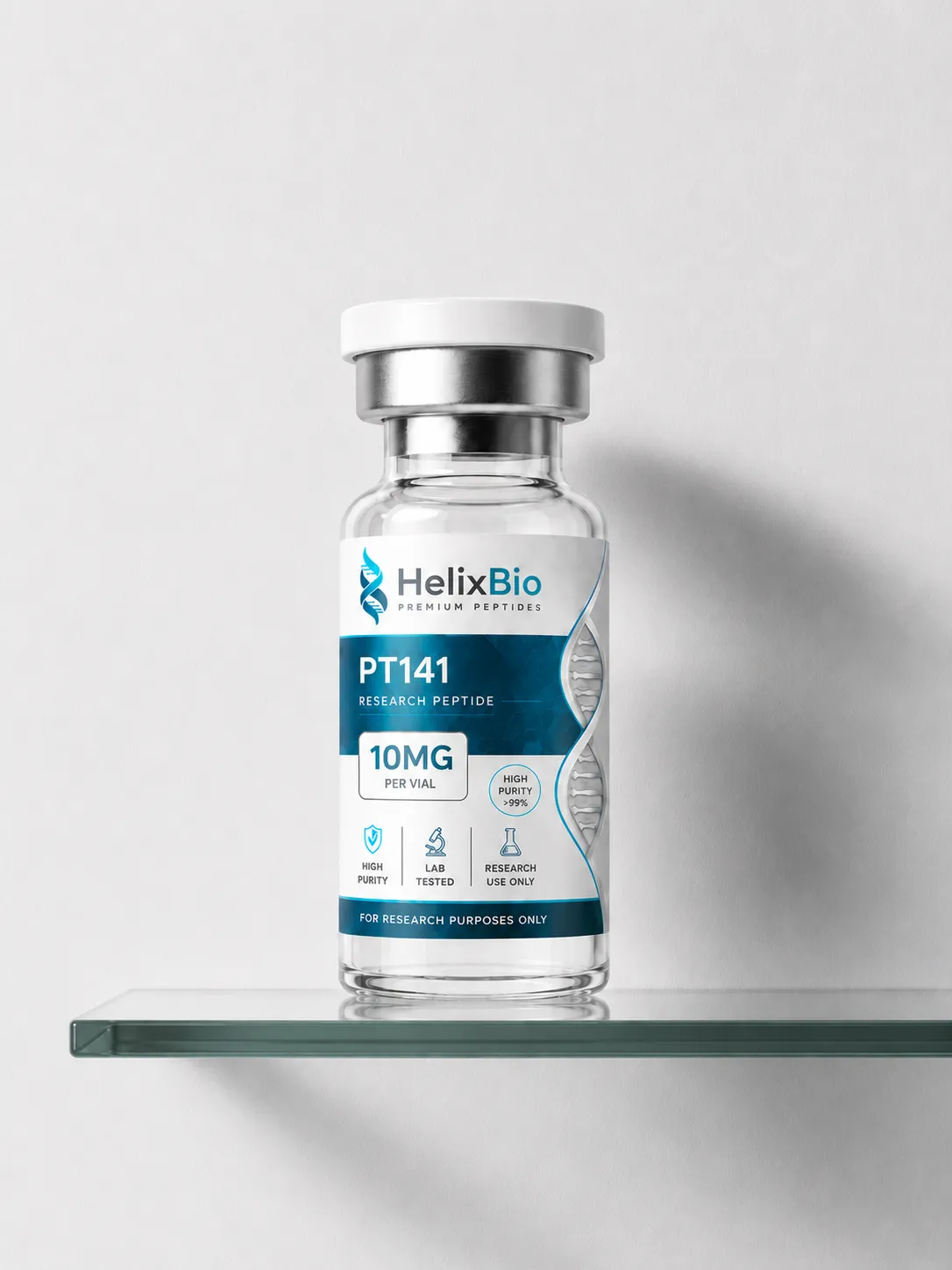
PT-141
RESEARCH PEPTIDE
PT-141, also known as bremelanotide, is a synthetic cyclic peptide analog of alpha-melanocyte-stimulating hormone (α-MSH) used in research involving melanocortin receptor biology, peptide-receptor interactions, and cellular signaling. The compound has been investigated across melanocortin receptor subtypes, including MC1R, MC3R, MC4R, and MC5R. Helix Bio supplies PT-141 as a research-use-only peptide for qualified laboratory and scientific applications. Researchers should review the current lot-specific Certificate of Analysis (COA), analytical documentation, and product specifications before incorporating the material into an experimental workflow.
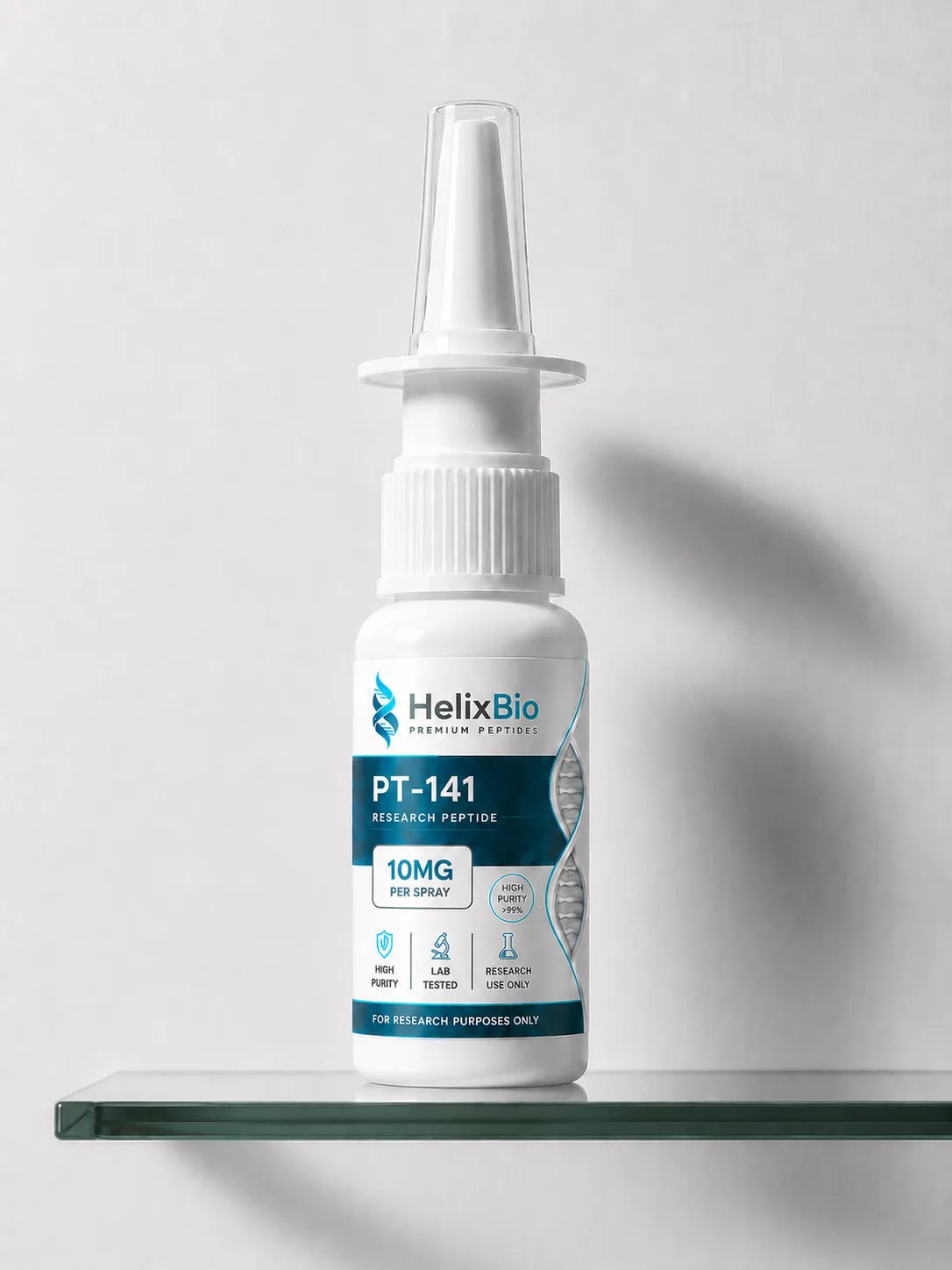
PT-141 Spray
RESEARCH PEPTIDE
PT-141 Spray is a research-use-only preparation featuring PT-141, also known as bremelanotide, a synthetic cyclic peptide analog related to alpha-melanocyte-stimulating hormone (α-MSH). PT-141 is studied extensively in melanocortin receptor biology, peptide-receptor interactions, neurobiology, and cellular signaling. Helix Bio provides research materials for controlled laboratory and scientific applications. This spray-format product is intended exclusively for research and laboratory use and is not intended for human or veterinary administration.
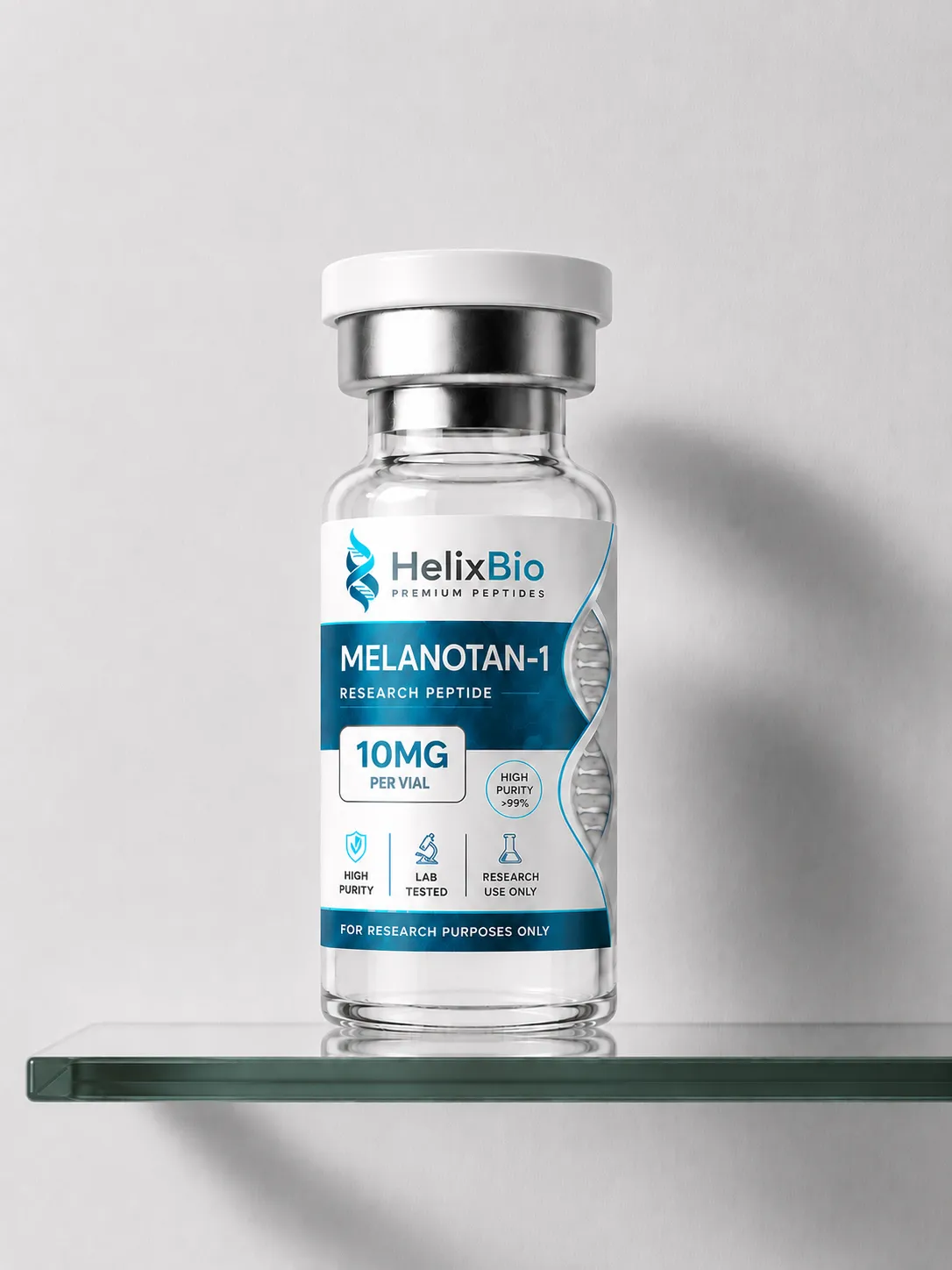
Melanotan-1
RESEARCH PEPTIDE
Melanotan-1 is a synthetic analog of alpha-melanocyte-stimulating hormone (α-MSH) used in laboratory research involving melanocortin biology, melanocortin receptors, and cellular pigmentation pathways. It is commonly associated with the research compound [Nle4-D-Phe7]-α-MSH and is also known in scientific literature as Melanotan I or MT-I. Helix Bio offers research-use-only peptide materials intended for controlled laboratory investigation. Product-specific analytical specifications should always be confirmed using the applicable lot documentation before experimental use.
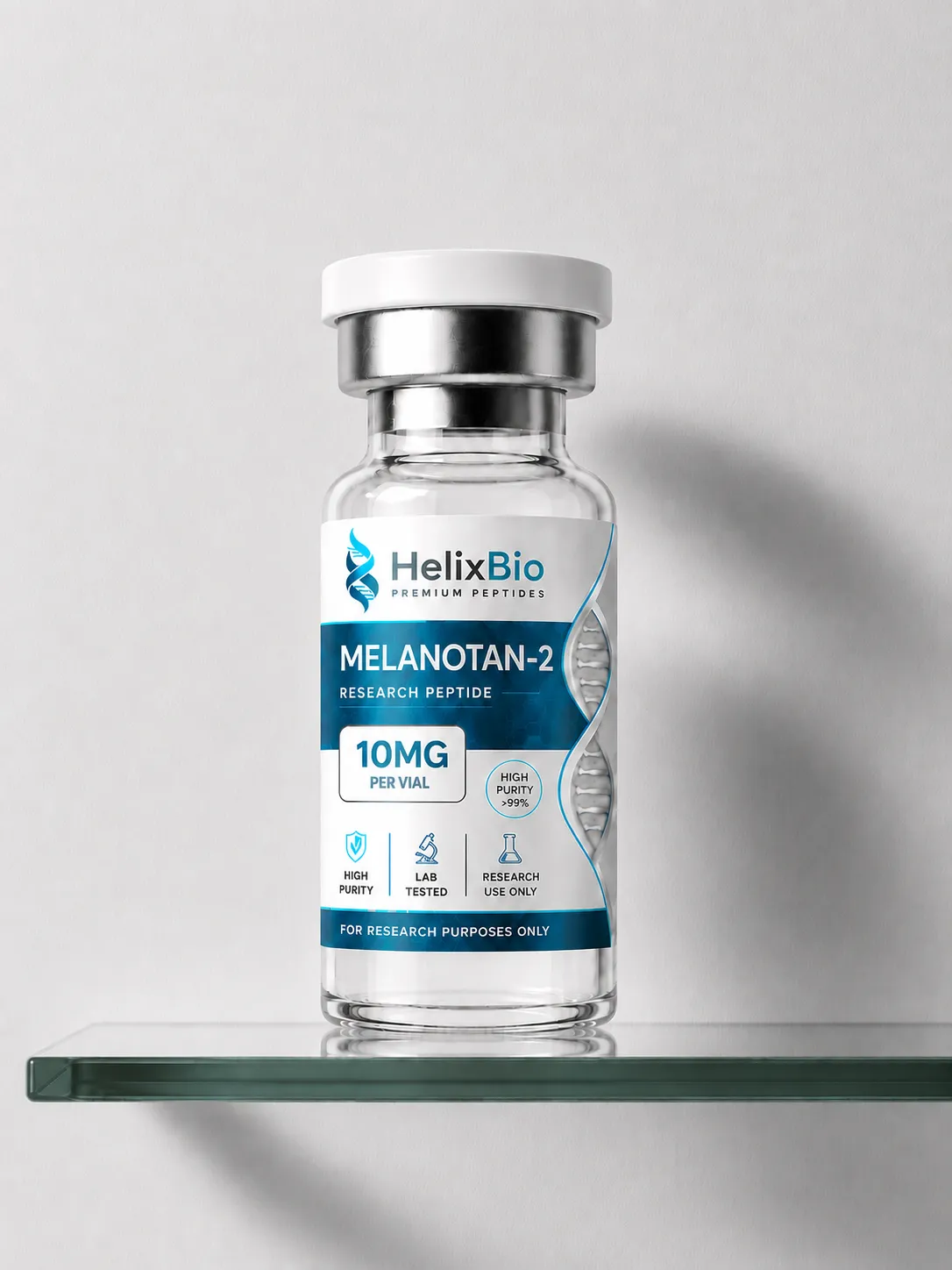
Melanotan-2
RESEARCH PEPTIDE
Melanotan-2 is a synthetic cyclic analog of alpha-melanocyte-stimulating hormone (α-MSH) that has been studied in laboratory research involving melanocortin receptors, peptide structure, receptor signaling, and related cellular pathways. It is structurally distinct from Melanotan-1 and is frequently used as a research ligand when investigators are examining melanocortin receptor pharmacology. Helix Bio provides Melanotan-2 as a research-use-only peptide for qualified laboratory and scientific applications. Researchers should consult the applicable lot-specific Certificate of Analysis (COA) and product documentation before incorporating the material into an experimental workflow.
Shared Origin, Divergent Paths
Both compounds descend from research into alpha-melanocyte-stimulating hormone (alpha-MSH) analogs conducted in the 1990s, when researchers were investigating melanocortin peptides as potential sunless-tanning agents. Melanotan II was the earlier, broader-spectrum compound to emerge from that program. Bremelanotide (PT-141) was subsequently developed as a more receptor-selective derivative, and its research and development pathway was redirected toward sexual dysfunction after researchers observed libido-related effects in early trials — a redirection that ultimately led to a formal FDA-approved indication that Melanotan II never pursued or received.
PT-141 is FDA-approved under the brand name Vyleesi for acquired, generalized hypoactive sexual desire disorder (HSDD) in premenopausal women, having received marketing approval on June 21, 2019. Melanotan II has no FDA approval for any indication and is not a legally marketed drug product in the United States; it is supplied strictly as a Research Use Only compound.
PT-141 (Bremelanotide): Structure and Receptor Selectivity
PT-141 is a cyclic heptapeptide melanocortin receptor agonist engineered for improved selectivity toward the melanocortin-4 receptor (MC4R) relative to its predecessor compounds. MC4R is expressed predominantly in the hypothalamus and is heavily implicated in the central regulation of appetite, energy homeostasis, and sexual arousal pathways — which is the receptor-level basis for PT-141's studied effects on sexual desire, independent of the vascular mechanism used by drugs like sildenafil.
Clinical Research: The RECONNECT Trials
PT-141's research base includes two identical randomized, double-blind, placebo-controlled Phase 3 trials — collectively known as the RECONNECT studies — which enrolled 1,247 premenopausal women with HSDD and tested on-demand subcutaneous bremelanotide 1.75 mg against placebo over 24 weeks. Both trials met their co-primary endpoints, showing statistically significant improvement in sexual desire and reduction in the distress associated with low desire, compared with placebo.
The trials also generated a precise adverse-event profile: nausea occurred in 40.0% of bremelanotide-treated subjects versus 1.3% on placebo, flushing in 20.3% versus 0.3%, and headache in 11.3% versus 1.9%. Nausea was the most common reason for treatment discontinuation, and researchers found that prophylactic antiemetic use reduced the subsequent nausea rate to roughly 5%, compared with roughly 15% in subjects who did not use an antiemetic — a finding that itself has research value for understanding the receptor cross-reactivity responsible for the nausea (MC4R activation in brainstem emetic centers).
Long-Term Extension Data
Of the 856 core-phase completers eligible for continued study, 684 women enrolled in a 52-week open-label extension, and 272 completed the full extension period. That extension study found no new safety signals beyond what was already characterized in the double-blind core phase, with treatment-related adverse events remaining consistent — nausea (40.4%), flushing (20.6%), and headache (12.0%) — and sustained improvement in HSDD symptoms through the full 52-week period. This long-duration dataset is part of what distinguishes PT-141's evidence base from Melanotan II's: bremelanotide has a full year of controlled, prospectively monitored human safety data behind its FDA-reviewed indication, while Melanotan II's human safety picture is built almost entirely from uncontrolled self-administration and case reports.
Because bremelanotide still exhibits measurable cross-reactivity with MC1R and MC3R alongside its primary MC4R target, transient skin flushing and mild pigmentation changes remain part of its documented side-effect profile even at its improved selectivity — illustrating that "MC4R-selective" is a relative, not absolute, pharmacological description.
Melanotan II: Structure and Receptor Non-Selectivity
Melanotan II is a cyclic heptapeptide analog of alpha-MSH that, unlike bremelanotide, was never optimized for receptor subtype selectivity. Research characterizing its receptor-binding profile has found that it binds and activates MC1R, MC3R, MC4R, and MC5R without meaningful discrimination between them — a pharmacological profile researchers describe as broad-spectrum melanocortin agonism rather than targeted receptor engagement.
The Melanogenesis Pathway: cAMP, CREB, MITF, and Tyrosinase
Melanotan II's tanning effect operates through MC1R activation on melanocytes, which triggers a well-characterized intracellular cascade: MC1R stimulation raises intracellular cyclic AMP (cAMP), which activates protein kinase A (PKA) and drives phosphorylation of the CREB transcription factor. Phosphorylated CREB then upregulates expression of the microphthalmia-associated transcription factor (MITF) gene, and MITF in turn binds the promoter regions of the core melanogenic enzyme genes — tyrosinase, and tyrosinase-related proteins 1 and 2 — driving eumelanin synthesis. This cAMP-CREB-MITF-tyrosinase cascade is the same core pathway implicated in normal physiological skin pigmentation and in pigmentary disease research, which is precisely why Melanotan II reliably darkens skin: it is pharmacologically forcing a pathway the body already uses, at a supraphysiological level, across every MC1R-expressing melanocyte simultaneously rather than in response to localized UV exposure.
Melanoma Case Reports and the MC1R Concern
Because MC1R signaling sits directly upstream of melanocyte proliferation and melanogenesis, and because MC1R variants are independently established risk markers for melanoma in the dermatology literature, Melanotan II's non-selective MC1R activation has drawn specific research scrutiny. Published case reports have documented melanoma diagnoses in individuals following self-administered Melanotan II use, including a 20-year-old woman with Fitzpatrick skin type II who was diagnosed with melanoma on the gluteal region three months after a three-week course of self-administered Melanotan II, and a 66-year-old man who developed melanoma in-situ after four weeks of use. A more recent case report describes a woman who developed an anterior maxillary mass, later confirmed as mucosal malignant melanoma, following use of an intranasal Melanotan II formulation. Researchers reviewing this case-report literature note that all documented individuals had independent melanoma risk factors — fair skin, prior tanning bed use, or family history — meaning a direct causal relationship between Melanotan II and melanoma induction has not been established, only a repeated temporal association that researchers consider worth further mechanistic investigation.
Multiple published case reports connect Melanotan II use with subsequent melanoma diagnosis, and researchers attribute the biological plausibility of this association to MC1R's established role upstream of melanocyte proliferation. This is case-report-level evidence, not a controlled causal study — but it is the specific reason Melanotan II carries meaningfully different risk research questions than the more receptor-selective bremelanotide.
Where Melanotan-1 Fits Into This Comparison
Melanotan-1 (afamelanotide-related research analog) is a separate compound from Melanotan II with its own distinct receptor engagement profile, and it should not be treated as interchangeable with Melanotan II simply because of the shared naming convention. Melanotan-1 research has generally focused on more selective MC1R engagement without the same breadth of MC3R/MC4R/MC5R cross-activity documented for Melanotan II, which is part of why afamelanotide itself went on to receive regulatory approval in the European Union and the United States for a rare photodermatosis indication — a very different regulatory outcome from Melanotan II's. Researchers comparing the two compounds should evaluate each one's own published receptor-binding and safety data rather than assuming equivalence based on the shared "Melanotan" name.
PT-141 vs Melanotan II: Direct Comparison
Attribute | PT-141 (Bremelanotide) | Melanotan II |
|---|---|---|
Receptor profile | MC4R-preferential, residual MC1R/MC3R activity | Non-selective: MC1R, MC3R, MC4R, MC5R |
Regulatory status | FDA-approved (Vyleesi, 2019) for HSDD | Not FDA-approved; RUO research compound only |
Primary research application | Sexual arousal / desire pathway research | Melanogenesis / MC1R signaling research |
Phase 3 trial data | Yes — RECONNECT (n=1,247) | No controlled Phase 3 program |
Documented nausea rate | 40.0% vs. 1.3% placebo | Reported in case series, not systematically quantified |
Skin pigmentation as side effect | Reported, secondary | Primary intended pharmacological effect |
Melanoma case-report literature | Not reported | Multiple published case reports |
Cyclic structure | Yes, disulfide-bridged cyclic heptapeptide | Yes, disulfide-bridged cyclic heptapeptide |
Why Receptor Selectivity Is the Whole Story
The comparison table above reduces to a single research principle: PT-141 and Melanotan II are close structural relatives whose entire divergence in safety and regulatory outcome traces back to receptor selectivity. Bremelanotide's development program specifically selected for reduced MC1R engagement relative to Melanotan II, trading some of the tanning effect for a cleaner sexual-arousal-pathway signal and a safety profile that could clear FDA review. Melanotan II retained the full-spectrum receptor activity of the earlier alpha-MSH analog research, which is precisely what makes it effective as a tanning agent and precisely what generates the MC1R-linked melanoma research questions.
Research Applications
PT-141 research is best supported for:
- Sexual arousal and desire pathway research, given the two completed Phase 3 randomized controlled trials and their FDA-reviewed data.
- MC4R-specific signaling research, given the compound's relative (though not absolute) selectivity for that receptor subtype.
- Comparative research against non-peptide sexual-dysfunction treatments that act through vascular rather than central nervous system mechanisms.
Melanotan II research is best supported for:
- MC1R signaling and melanogenesis pathway research, given its potent, non-selective activation of that receptor.
- Comparative pharmacology research examining receptor-selectivity engineering, using Melanotan II and bremelanotide as a paired case study in how a single structural optimization step changes an entire safety profile.
- Pigmentation-pathway research where broad-spectrum melanocortin agonism, rather than MC4R selectivity, is the specific variable under study.
Given the published case-report association with melanoma, any research protocol involving Melanotan II should account for MC1R's established role in melanocyte biology and should not be treated as a lower-risk alternative to more receptor-selective melanocortin agonists.
Reconstitution, Handling, and Documentation
Both compounds are typically supplied as lyophilized powder for laboratory reconstitution, or as pre-formulated intranasal spray for research protocols modeled on the original alpha-MSH analog delivery routes. Reconstitution should follow standard cold-chain handling: bacteriostatic water added slowly, gentle swirling rather than agitation, and refrigerated storage of the reconstituted solution within its documented stability window. Our peptide reconstitution guide covers solvent selection and stability timelines, and our peptide storage mistakes guide covers the handling errors most likely to affect potency in short cyclic heptapeptides like these. As with any research compound, a batch-specific Certificate of Analysis should be verified before use — see our guide on how to read a peptide Certificate of Analysis for what a compliant COA should include.
Regulatory and Compliance Context
PT-141's FDA approval applies specifically to the branded pharmaceutical product Vyleesi, manufactured and dispensed under an approved New Drug Application — it does not extend to bremelanotide sold as a research chemical, which remains subject to the same Research Use Only framework as any other unapproved peptide when sold outside that regulated pharmaceutical channel. Melanotan II has never held FDA approval under any brand or indication and remains classified strictly as a laboratory research compound not intended for human consumption. For a full explanation of what RUO classification permits, see our guide on whether research peptides are legal in the USA.
Conclusion
PT-141 and Melanotan II are frequently confused because they share a research origin, a cyclic heptapeptide structure, and overlapping melanocortin receptor targets. But they answer different research questions: PT-141's relative MC4R selectivity gave it a Phase 3-validated, FDA-reviewed path into sexual arousal pathway research, while Melanotan II's non-selective MC1R activation makes it a useful melanogenesis research tool that carries a distinct, published melanoma case-report literature. Selecting between them should be driven entirely by which receptor pathway the research question actually targets, and any protocol involving either compound should document the specific receptor-level hypothesis being tested rather than treating the two peptides as interchangeable "melanocortin agonists." The strength and shape of each compound's evidence base — a controlled, FDA-reviewed trial program for one, an uncontrolled case-report literature for the other — should itself inform how confidently a researcher can extrapolate from published findings to a new experimental design.
Frequently Asked Questions
PT-141 (bremelanotide) is a relatively MC4R-selective melanocortin agonist that is FDA-approved for hypoactive sexual desire disorder. Melanotan II is a non-selective melanocortin agonist that activates MC1R, MC3R, MC4R, and MC5R without meaningful discrimination, and has never received FDA approval for any use.
Yes. PT-141, under the brand name Vyleesi, received FDA marketing approval on June 21, 2019 for acquired, generalized hypoactive sexual desire disorder in premenopausal women. This approval applies to the branded pharmaceutical product, not to bremelanotide sold as a research chemical.
No. Melanotan II has never received FDA approval under any brand name or for any indication. It is classified and sold strictly as a Research Use Only laboratory compound, not intended for human consumption.
The two RECONNECT trials enrolled 1,247 premenopausal women with hypoactive sexual desire disorder and both met their co-primary endpoints, showing statistically significant improvement in sexual desire and reduction in associated distress compared with placebo, over 24 weeks of on-demand subcutaneous dosing.
In the RECONNECT trials, nausea occurred in 40.0% of bremelanotide-treated subjects compared with 1.3% on placebo, making it the most common adverse event and the most common reason for treatment discontinuation.
Published case reports have documented melanoma diagnoses in individuals following Melanotan II use, and researchers consider this biologically plausible given MC1R's established role in melanocyte biology. However, all documented cases involved individuals with independent melanoma risk factors, so a direct causal relationship has not been established in the literature — only a repeated temporal association.
Skin darkening is driven by MC1R activation on melanocytes. Melanotan II activates MC1R strongly and non-selectively, driving the cAMP-CREB-MITF-tyrosinase melanogenesis cascade. PT-141 was engineered for relative MC4R selectivity with reduced MC1R engagement, so pigmentation changes are a secondary rather than primary effect.
PT-141 (bremelanotide) primarily targets the melanocortin-4 receptor (MC4R), which is expressed predominantly in the hypothalamus and is implicated in central regulation of sexual arousal and appetite pathways.
Melanotan II activates MC1R, MC3R, MC4R, and MC5R without meaningful subtype selectivity, which researchers describe as broad-spectrum melanocortin agonism rather than targeted receptor engagement.
Yes. Both compounds descend from melanocortin receptor agonist research conducted at the University of Arizona in the 1990s, originally investigating alpha-MSH analogs as sunless-tanning agents. Bremelanotide was subsequently developed as a more receptor-selective derivative and redirected toward sexual dysfunction research after libido-related effects were observed in early trials.
This guide compares PT-141 and Melanotan II specifically. Melanotan-1 (afamelanotide-related research analog) and Melanotan-2 have distinct receptor engagement and research profiles of their own; researchers should evaluate each compound's own published mechanism and safety literature rather than assuming equivalence based on naming similarity.
Melanotan II activates MC1R on melanocytes, raising intracellular cAMP and activating protein kinase A, which phosphorylates the CREB transcription factor. Phosphorylated CREB upregulates MITF, which in turn drives expression of tyrosinase and tyrosinase-related proteins, the core enzymes of eumelanin synthesis.
- 01Kingsberg SA, et al. Bremelanotide for the Treatment of Hypoactive Sexual Desire Disorder: Two Randomized Phase 3 Trials. Obstetrics & Gynecology, 2019. PMID: 31599840.
- 02Long-Term Safety and Efficacy of Bremelanotide for Hypoactive Sexual Desire Disorder. Obstetrics & Gynecology, 2019. PMID: 31599847.
- 03FDA Approves New Drug Application for Vyleesi (bremelanotide injection), June 21, 2019.
- 04Cardones AR, Grichnik JM. Melanoma Associated with the Use of Melanotan-II. Dermatology, 2014. PMID: 24355990.
- 05Melanotan II nasal spray: a possible risk factor for oral mucosal malignant melanoma? PMID: 40210573.
- 06An overview of benefits and risks of chronic melanocortin-1 receptor activation. PMC11664455.
- 07Elucidation of Melanogenesis Cascade for Identifying Pathophysiology and Therapeutic Approach of Pigmentary Disorders and Melanoma. PMID: 32854423.
Helix Bio Chem Team
Research & Product Team
Our in-house team tracks published peptide research and translates it into clear, source-cited summaries for the research community.
Reviewed by in-house research chemists
support@helixbiochem.com