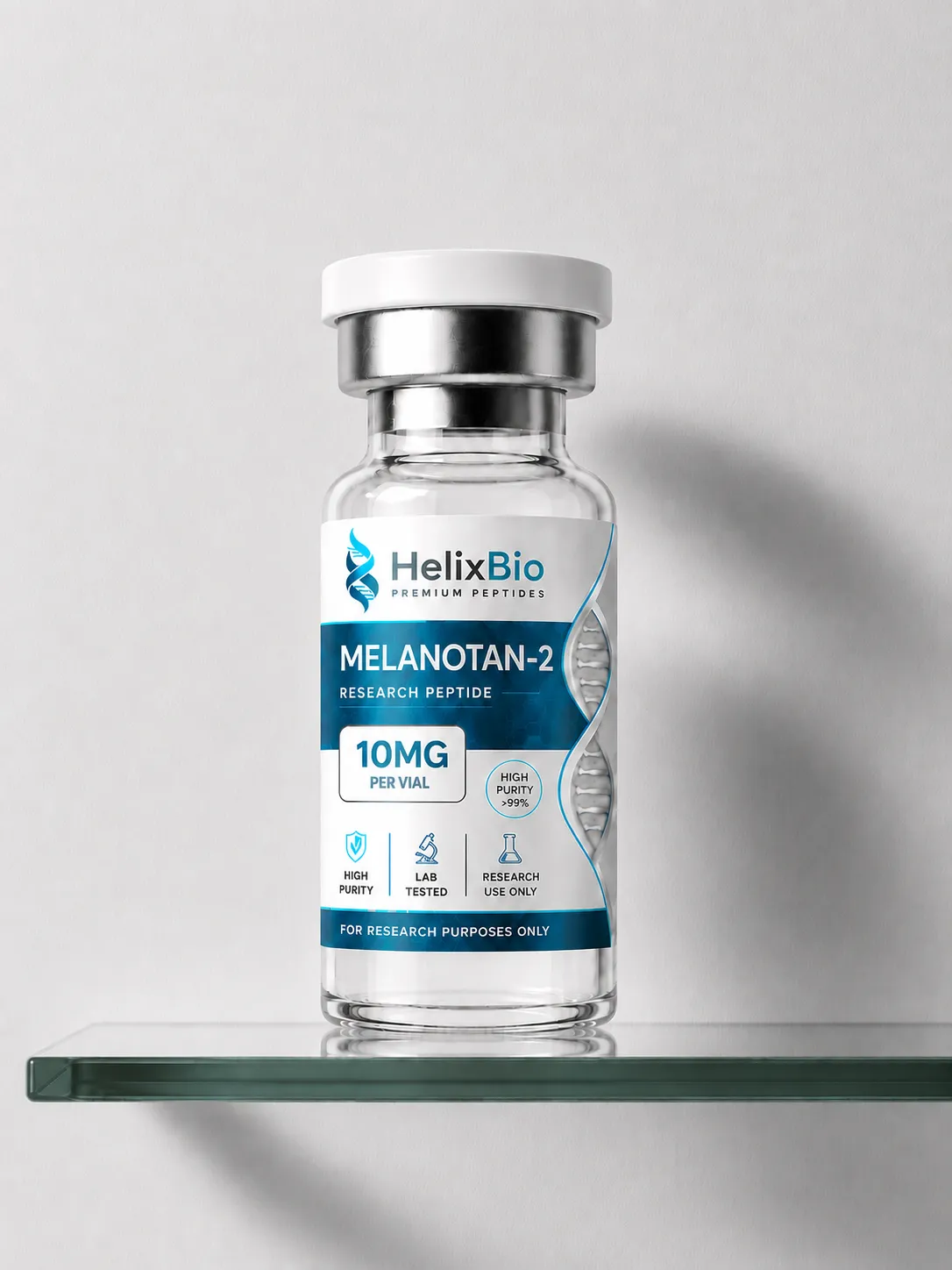
Melanotan-2 is a synthetic cyclic analog of alpha-melanocyte-stimulating hormone (α-MSH) that has been studied in laboratory research involving melanocortin receptors, peptide structure, receptor signaling, and related cellular pathways. It is structurally distinct from Melanotan-1 and is frequently used as a research ligand when investigators are examining melanocortin receptor pharmacology. Helix Bio provides Melanotan-2 as a research-use-only peptide for qualified laboratory and scientific applications. Researchers should consult the applicable lot-specific Certificate of Analysis (COA) and product documentation before incorporating the material into an experimental workflow.
HPLC certified
Independent analysis
Highest standard
Full traceability
Melanotan-2 is a synthetic peptide analog derived from the α-MSH framework. Unlike native α-MSH, Melanotan-2 incorporates structural modifications that produce a cyclic peptide configuration. This makes it a useful research model for investigating how peptide structure influences receptor interactions and biological signaling.
Melanotan-2 has been studied across the melanocortin receptor family, including MC1R, MC3R, MC4R, and MC5R. Its activity across these receptor systems has made it relevant to experimental pharmacology, receptor-ligand studies, and structure-activity relationship research.
The compound is commonly abbreviated as MT-2 or Melanotan II. It should not be confused with Melanotan-1, also known as Melanotan I or NDP-MSH. The two peptides have different molecular structures and research profiles.
Melanotan-2 is a cyclic heptapeptide analog of α-MSH. Its molecular design incorporates a lactam bridge that creates a constrained peptide structure. This cyclic configuration is an important feature when investigating the relationship between peptide conformation and melanocortin receptor activity.
The peptide is associated with the sequence Ac-Nle-c[Asp-His-D-Phe-Arg-Trp-Lys]-NH2. The structural constraint introduced through cyclization is relevant to studies examining ligand-receptor interactions and melanocortin pharmacology.
Researchers comparing α-MSH analogs can use Melanotan-2 as a defined structural model alongside other melanocortin peptides.
Melanotan-2 is intended solely for laboratory research. Potential research applications include:
The appropriate application depends on the experimental system, research objectives, analytical methods, and laboratory protocols.
Although their names are similar, Melanotan-1 and Melanotan-2 are different synthetic melanocortin analogs.
| Characteristic | Melanotan-1 | Melanotan-2 |
|---|---|---|
| Common abbreviation | MT-I | MT-II / MT-2 |
| General class | α-MSH analog | Cyclic α-MSH analog |
| Structural form | Modified linear peptide | Cyclic peptide |
| Research focus | Melanocortin receptor and pigmentation biology | Melanocortin receptor pharmacology and ligand activity |
| Molecular design | Nle4-D-Phe7 substitution | Cyclic heptapeptide analog with D-Phe substitution |
| Research use | Laboratory research | Laboratory research |
This distinction matters when selecting a peptide for comparative receptor or structure-function experiments.
Melanotan-2 is particularly useful for researchers studying how structural changes in melanocortin peptides affect receptor interactions.
Defined Cyclic Structure
The cyclic configuration of Melanotan-2 provides researchers with a useful model for examining how conformational restriction influences peptide-receptor interactions.
Broad Melanocortin Research Relevance
Published research has investigated Melanotan-2 and related analogs across melanocortin receptor subtypes. This makes the compound relevant to comparative receptor pharmacology and ligand studies.
Useful for Structure-Activity Research
Synthetic analogs such as Melanotan-2 allow researchers to compare molecular modifications and examine how sequence and conformation relate to receptor activity.
Established Research History
Melanotan-2 has appeared in scientific research investigating melanocortin receptors, peptide pharmacology, and related signaling systems, giving researchers an established literature base for experimental planning.
Research-Only Positioning
Helix Bio positions its peptide materials for research use. This is appropriate for qualified laboratories requiring peptide reagents for non-clinical experimental work.
Melanotan-2 is intended for qualified researchers and organizations conducting legitimate laboratory investigations, including:
It is not intended for consumers seeking tanning, cosmetic, therapeutic, or personal-use effects.
| Specification | Melanotan-2 |
|---|---|
| Product Name | Melanotan-2 |
| Common Names | Melanotan II, Melanotan 2, MT-2 |
| Scientific Classification | Synthetic cyclic α-MSH analog |
| Peptide Type | Cyclic peptide |
| Research Category | Melanocortin / Cosmetic & Skin Research |
| Research Targets | Melanocortin receptor systems |
| Molecular Form | Cyclic peptide analog |
| Purity | Verify current lot-specific COA |
| Appearance | Refer to current product documentation |
| Packaging | Refer to current product listing |
| Storage | Follow current lot-specific documentation |
| Quality Documentation | Refer to applicable COA |
| Lot Testing | Verify current lot documentation |
| Research Use | Laboratory research only |
| Human Use | Not intended for human use |
| Veterinary Use | Not intended for veterinary use |
| Manufacturer / Supplier | Helix Bio |
Product-specific specifications such as purity, package size, appearance, storage conditions, lot number, and analytical results should always be confirmed against the current product listing and applicable COA.
Melanocortin Receptor Research
Melanotan-2 is relevant to research involving melanocortin receptors, a family of G-protein-coupled receptors involved in several biological signaling pathways.
Researchers may use melanocortin analogs to compare receptor binding, ligand selectivity, receptor activation, and structure-function relationships.
MC1R Research
MC1R is strongly associated with melanocyte signaling and pigmentation biology. Synthetic α-MSH analogs can provide researchers with defined ligands for investigating receptor interactions in controlled experimental systems.
Melanotan-2 research should be interpreted in the context of the experimental model rather than as evidence of a clinical or cosmetic effect.
MC3R and MC4R Research
Melanotan-2 has also been studied in connection with other melanocortin receptor subtypes, including MC3R and MC4R. This makes it relevant to experiments comparing receptor subtype activity and ligand selectivity.
Structure-Activity Relationship Studies
The constrained cyclic structure of Melanotan-2 makes it useful in studies examining how peptide conformation and amino-acid substitutions influence receptor interactions.
Peptide-Receptor Interaction Studies
Researchers can investigate how Melanotan-2 interacts with melanocortin receptors using appropriate experimental models such as receptor-binding assays or cellular systems.
Analytical Characterization
Melanotan-2 can also be evaluated using analytical techniques designed to assess peptide identity, purity, molecular mass, and stability.
Research peptides should be evaluated using appropriate analytical documentation rather than relying solely on a product name or general specification.
Helix Bio describes analytical quality controls that include reversed-phase HPLC for purity assessment and LC-MS for peptide identity and molecular-weight confirmation. Researchers should consult the applicable lot documentation for the actual Melanotan-2 material being evaluated.
Before beginning an experiment, researchers should review available:
Third-party testing should not be assumed unless specifically documented for the applicable lot.
No certification, accreditation, or regulatory approval should be inferred from general product descriptions unless it is explicitly documented by Helix Bio.
Follow the storage requirements provided with the specific Melanotan-2 product and lot documentation.
General laboratory handling considerations include:
Because peptide stability varies by sequence, formulation, concentration, container, and environmental conditions, generic storage advice should not replace product-specific instructions.
Helix Bio provides research-use-only peptide products for laboratory applications. Shipping availability, delivery timelines, packaging configuration, temperature-control practices, and destination restrictions can vary and should be confirmed using the current Helix Bio shipping information before ordering.
Researchers should inspect the package after delivery and follow the product-specific storage instructions promptly.
Do not assume shipping or temperature-control conditions beyond those explicitly stated by the supplier.
Melanotan-2 supplied by Helix Bio is intended strictly for research and laboratory use. It is not intended for human consumption, ingestion, injection, administration, veterinary use, diagnosis, treatment, cure, prevention of disease, tanning, or cosmetic use.
This product should not be represented as an FDA-approved medicine, treatment, or cosmetic product. Research-use-only material is intended for controlled scientific investigation and must be handled in accordance with applicable laboratory, institutional, federal, state, and local requirements.
No information on this page should be interpreted as medical advice, dosing instructions, treatment guidance, or a recommendation for human use.
Researchers are responsible for determining whether a material is suitable for their experimental system and for following applicable safety, regulatory, and institutional requirements.
Knowledge Base
Knowledge Base
Knowledge Base
Knowledge Base
Knowledge Base
Knowledge Base
Knowledge Base
Knowledge Base
Knowledge Base
Knowledge Base
Knowledge Base
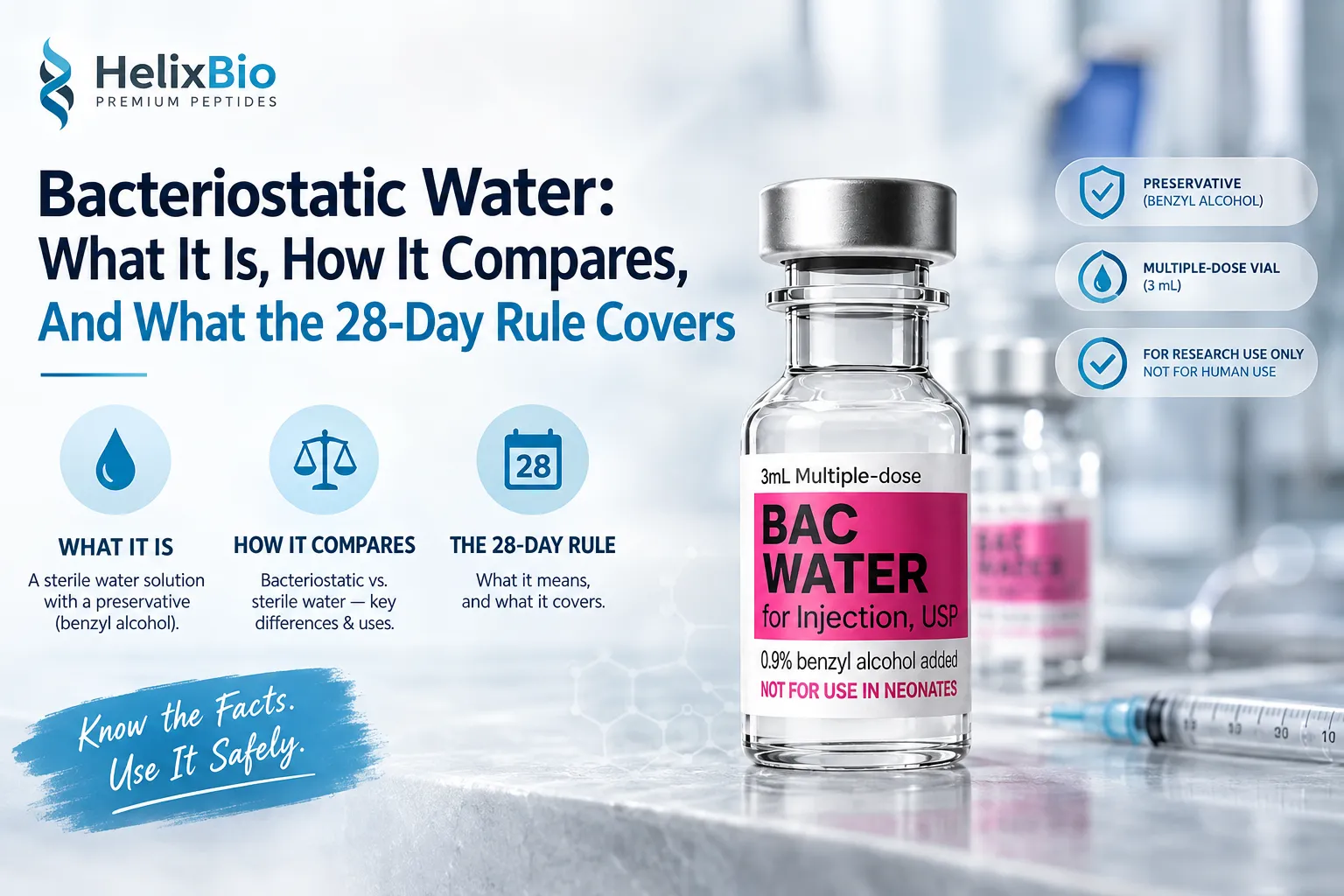
What bacteriostatic water contains, how it differs from sterile water and saline, where the 28-day opened-vial figure comes from, and what a COA can show.
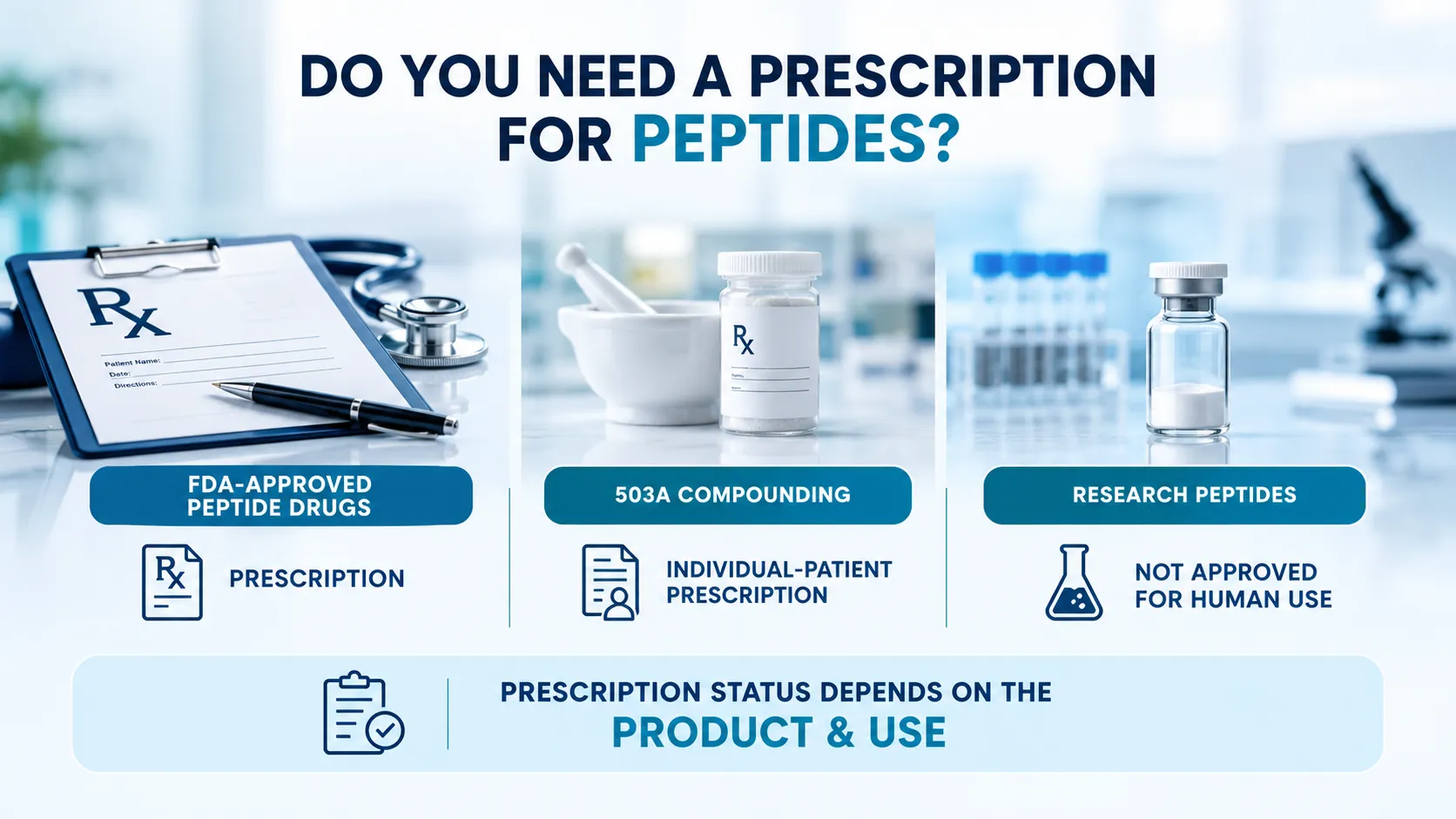
Do you need a prescription for peptides? It depends on the category. See which peptides need one, which do not, and the dated 2026 FDA rules that apply.
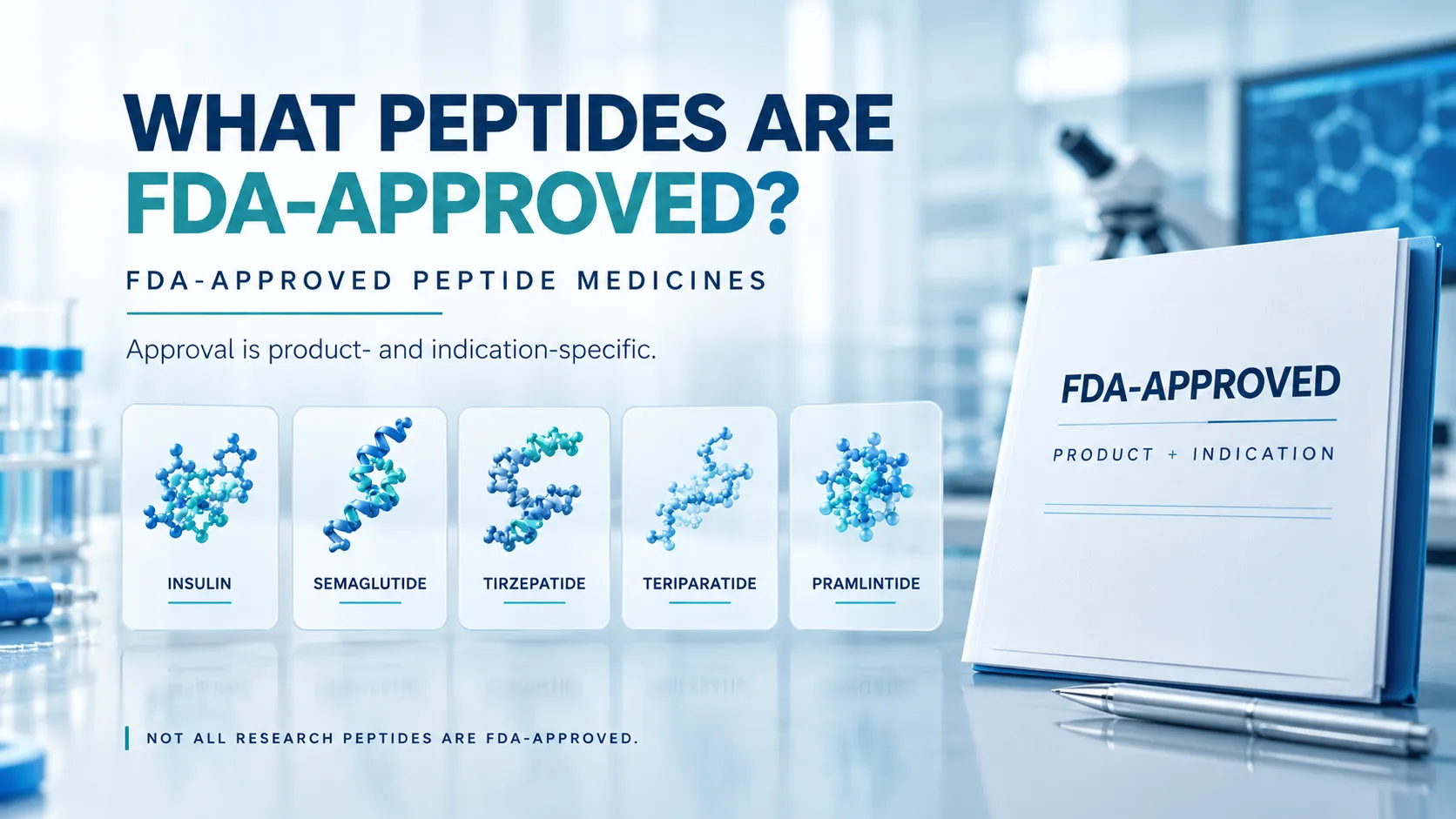
The complete 2026 list of FDA-approved peptides: 47 drugs by category and approval year, which popular peptides are not approved, and pipeline to watch.