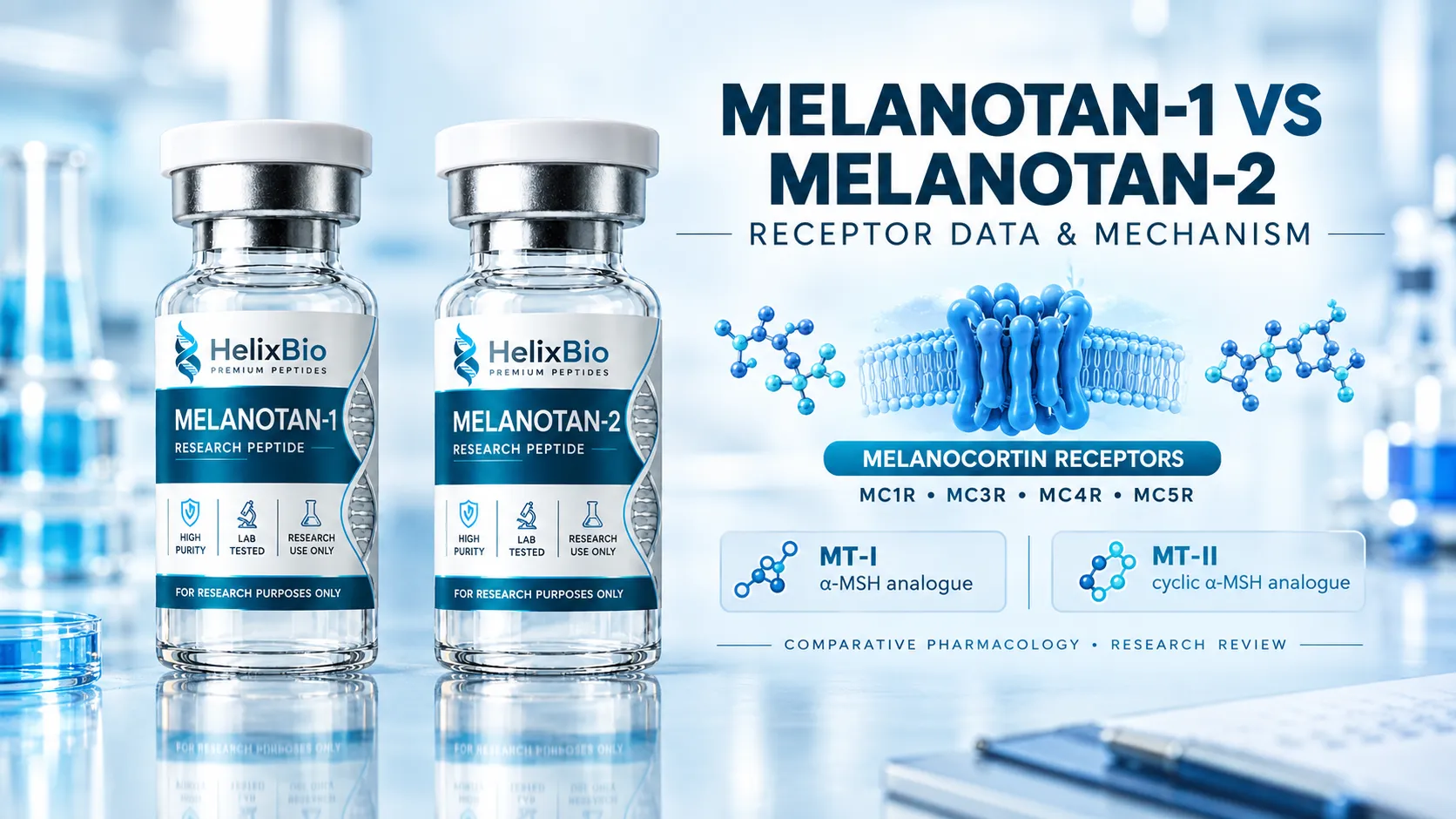
- Melanotan 1 is a linear 13-residue analogue, CAS 75921-69-6, with an average mass near 1646.9 g/mol.
- Melanotan 2 is a cyclic 7-residue lactam, CAS 121062-08-6, with an average mass near 1024.2 g/mol.
- Reference-standard binding data place Melanotan 1 across roughly a 60-fold range and Melanotan 2 across roughly a 69-fold range. Neither compound is subtype-selective at four melanocortin receptors.
- The two differ in receptor rank order, with Melanotan 1 running MC1, MC3, MC4, MC5 and Melanotan 2 running MC1, MC4, MC3, MC5.
- No published human plasma half-life for Melanotan 2 was located, and the figures circulating online range from 33 minutes to 2 hours without citations.
- Afamelanotide is approved as SCENESSE, a 16 mg subcutaneous implant, for one rare-disease indication only.
- Two randomised placebo-controlled trials of that implant enrolled 74 patients in the European Union and 94 in the United States.
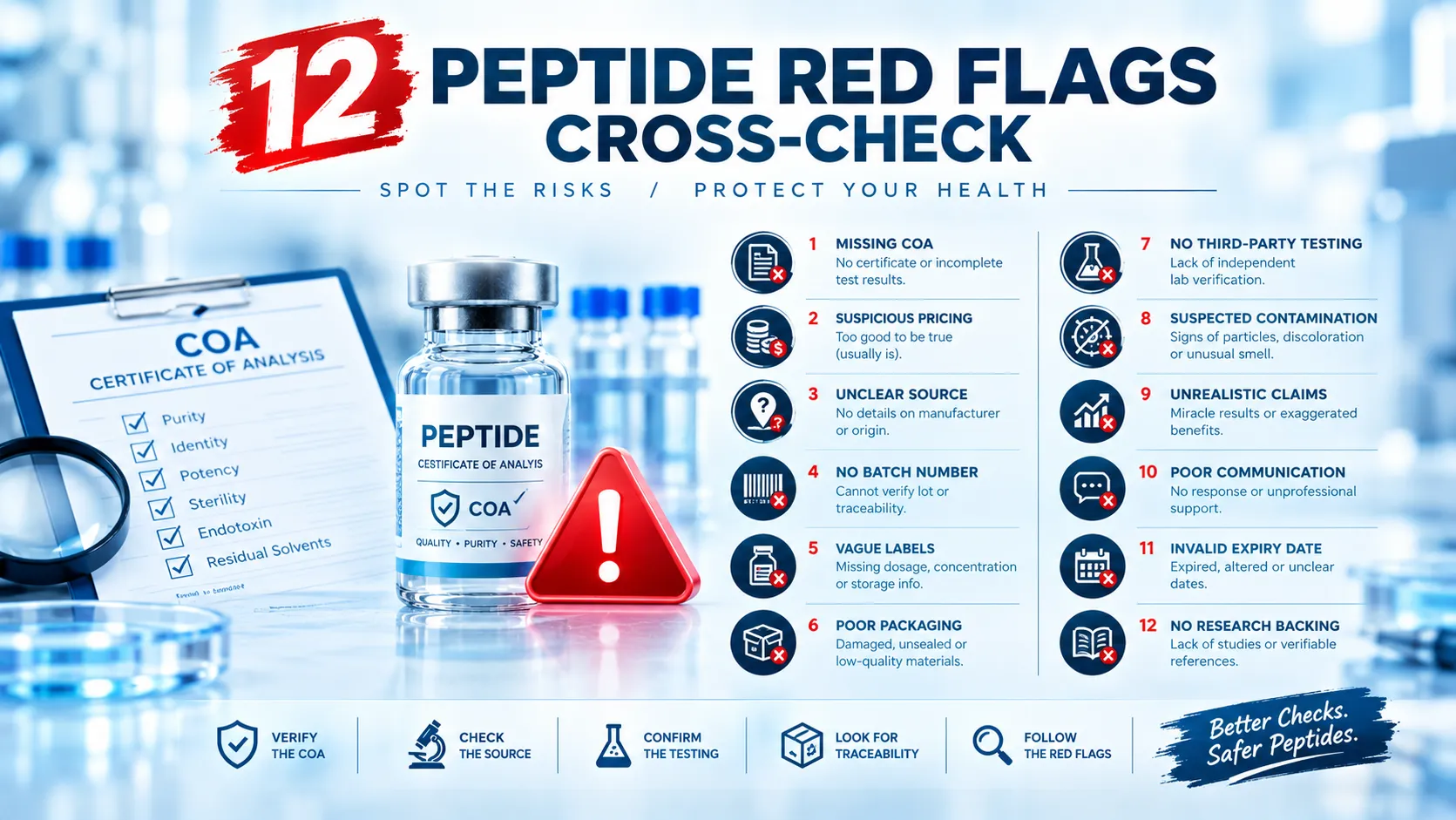
- Analysis of three online sellers found vials labelled 10 mg containing 4.32 to 8.84 mg of Melanotan 2.
- Nine published case reports describe pigmented-lesion changes or acute symptoms after self-administered Melanotan 2.
Quick answer
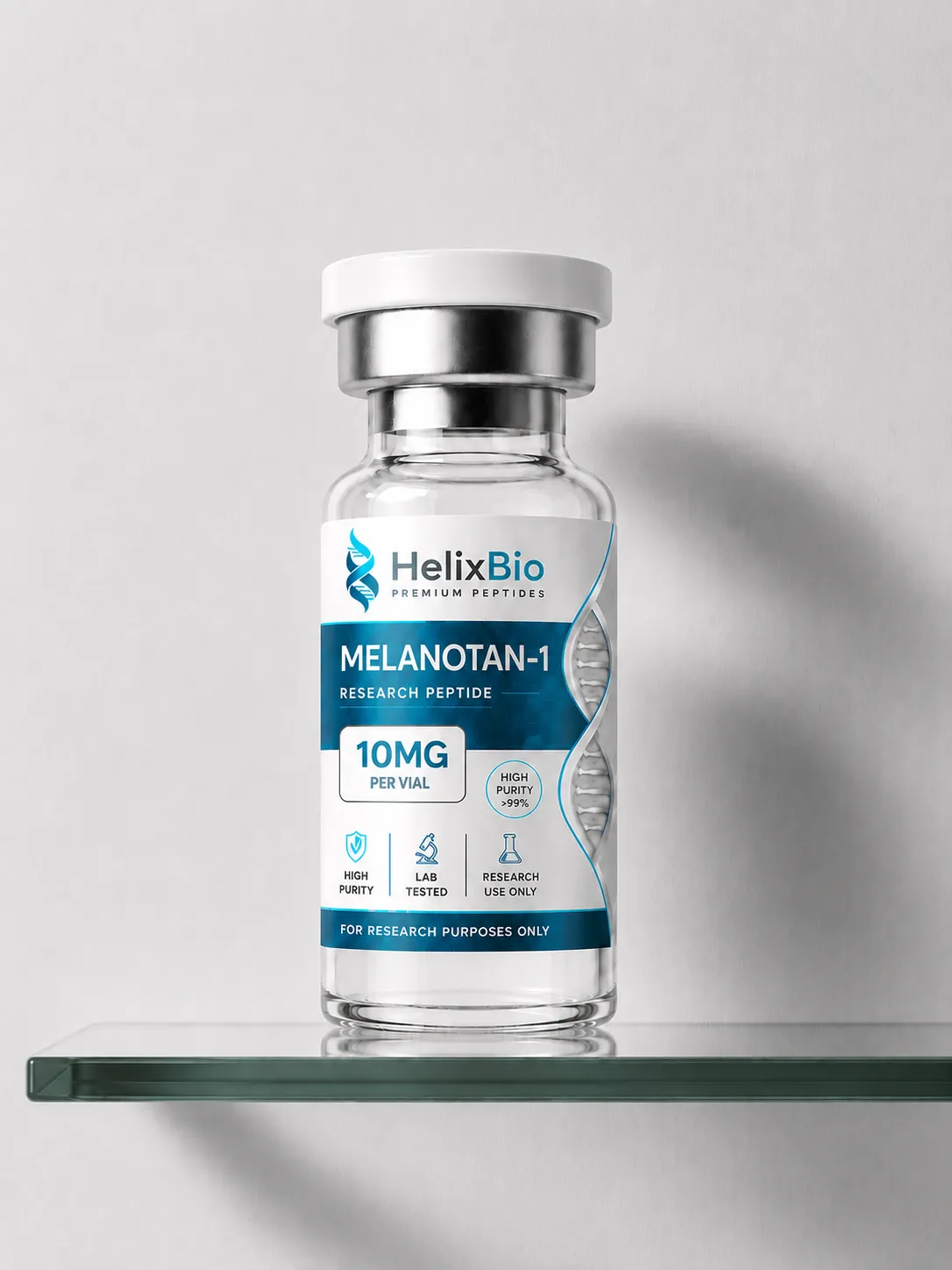
Melanotan-1
RESEARCH PEPTIDE
Melanotan-1 is a synthetic analog of alpha-melanocyte-stimulating hormone (α-MSH) used in laboratory research involving melanocortin biology, melanocortin receptors, and cellular pigmentation pathways. It is commonly associated with the research compound [Nle4-D-Phe7]-α-MSH and is also known in scientific literature as Melanotan I or MT-I. Helix Bio offers research-use-only peptide materials intended for controlled laboratory investigation. Product-specific analytical specifications should always be confirmed using the applicable lot documentation before experimental use.
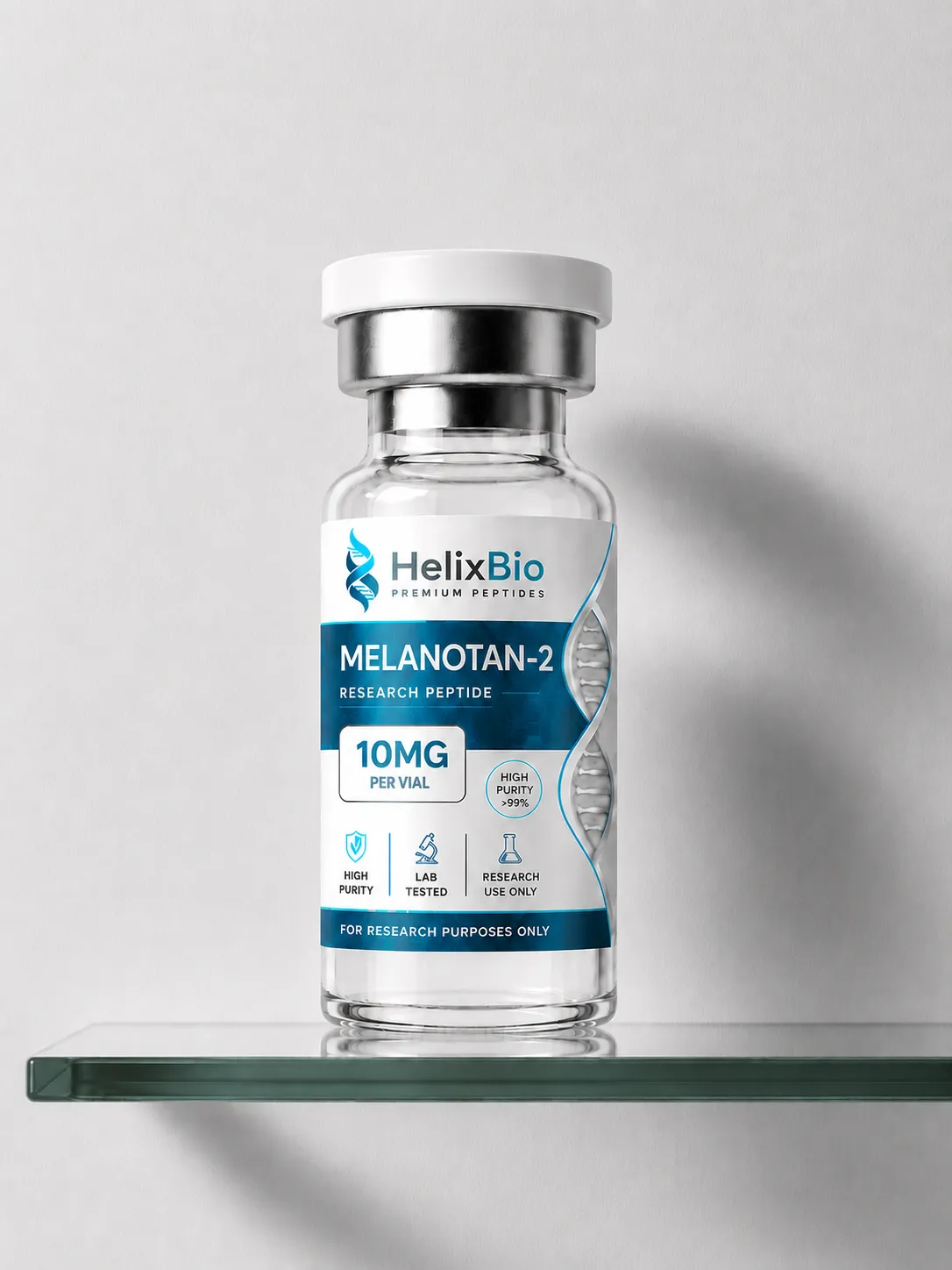
Melanotan-2
RESEARCH PEPTIDE
Melanotan-2 is a synthetic cyclic analog of alpha-melanocyte-stimulating hormone (α-MSH) that has been studied in laboratory research involving melanocortin receptors, peptide structure, receptor signaling, and related cellular pathways. It is structurally distinct from Melanotan-1 and is frequently used as a research ligand when investigators are examining melanocortin receptor pharmacology. Helix Bio provides Melanotan-2 as a research-use-only peptide for qualified laboratory and scientific applications. Researchers should consult the applicable lot-specific Certificate of Analysis (COA) and product documentation before incorporating the material into an experimental workflow.
Melanotan 1 is a linear 13-residue α-MSH analogue. Melanotan 2 is a cyclic 7-residue lactam. Reported binding data show both acting across four melanocortin receptors, differing in rank order rather than selectivity. No human half-life exists for Melanotan 2. Both are sold as research compounds, not approved medicines.
What Melanotan 1 and Melanotan 2 actually are
Melanotan 1 carries the sequence designation [Nle4, D-Phe7]-α-MSH. Chemical records give it CAS 75921-69-6, molecular formula C78H111N21O19, and an average mass near 1646.9 g/mol. The same molecule appears in the literature as Melanotan I, MT-I, NDP-MSH and afamelanotide. Those are four names for one compound.
Melanotan 2 is a different molecule. Its sequence runs Ac-Nle-c[Asp-His-D-Phe-Arg-Trp-Lys]-NH2, under CAS 121062-08-6, with formula C50H69N15O9 and an average mass near 1024.2 g/mol. Registry records describe it formally as a cyclic 2-7 peptide.
A formula gives a theoretical mass for a pure substance. It says nothing about the contents of any particular vial. Lot-specific documentation answers that question, and the Melanotan-1 and Melanotan-2 listings point to the applicable certificates.
Linear against cyclic, and what the structure does not prove
The ring in Melanotan 2 is a lactam bridge. Dorr and colleagues described it that way in the original 1996 pilot report (PMID 8637402). The molecular formula settles the question independently, since it contains no sulfur at all. A disulfide bridge is chemically impossible in this molecule.
Constrained rings often resist enzymatic breakdown better than open chains. That is structural reasoning, and it belongs in the THEORETICAL-MECHANISTIC tier.
No published study comparing measured stability of Melanotan 1 against Melanotan 2 was located. Structure predicts a direction but supplies no number.
Melanotan 1 vs Melanotan 2: receptor profiles compared
Reference-standard datasheets report inhibition constants for both compounds across four receptor subtypes.
Receptor | Melanotan 1 Ki | Melanotan 2 Ki |
|---|---|---|
MC1 | 0.085 nM | 0.67 nM |
MC3 | 0.4 nM | 34 nM |
MC4 | 3.8 nM | 6.6 nM |
MC5 | 5.1 nM | 46 nM |
Two patterns in the table matter most. Melanotan 1 spans roughly a 60-fold range across the four subtypes, and Melanotan 2 spans roughly 69-fold. Neither spread describes a selective compound, so the familiar framing of one selective melanotan and one promiscuous melanotan fails on both sides.
Rank order is where they genuinely diverge. Melanotan 1 descends MC1, MC3, MC4, MC5. Melanotan 2 descends MC1, MC4, MC3, MC5. The second-strongest reported affinity for Melanotan 2 sits at MC4R, the subtype most associated with central appetite and arousal pathways. That single reordering explains the broader reported effect profile better than any selectivity claim does.
These are IN-VITRO values from supplier reference-standard documentation, not one head-to-head paper. Assay system, cell background and radioligand go unstated, and reported constants shift with all three. Our Melanotan-1 research article sets out the MC1R signalling route in full.
The comparison table
Property | Melanotan 1 | Melanotan 2 | Evidence |
|---|---|---|---|
Common names | Melanotan I, MT-I, NDP-MSH, afamelanotide | Melanotan II, MT-2, MT-II | Registry |
Sequence | [Nle4, D-Phe7]-α-MSH | Ac-Nle-c[Asp-His-D-Phe-Arg-Trp-Lys]-NH2 | Registry |
Structure class | Linear, 13 residues | Cyclic lactam, 7 residues | Registry, PMID 8637402 |
CAS number | 75921-69-6 | 121062-08-6 | Registry |
Molecular formula | C78H111N21O19 | C50H69N15O9 | Registry |
Average mass | ~1646.9 g/mol | ~1024.2 g/mol | Registry |
MC1 affinity | 0.085 nM | 0.67 nM | IN-VITRO, datasheet |
MC3 affinity | 0.4 nM | 34 nM | IN-VITRO, datasheet |
MC4 affinity | 3.8 nM | 6.6 nM | IN-VITRO, datasheet |
MC5 affinity | 5.1 nM | 46 nM | IN-VITRO, datasheet |
Affinity spread | ~60-fold | ~69-fold | Calculated from the rows above |
Human plasma half-life | No independent published figure located | No published figure located | INSUFFICIENT |
Controlled human trials | 168 patients across two EPP trials of the implant product | None located | PRIMARY HUMAN EVIDENCE, PMID 26132941 |
Regulatory status | Approved as SCENESSE for one indication | No approval located | FDA label |
Analytical findings | None located | Labelled 10 mg vials held 4.32 to 8.84 mg | ANALYTICAL, PMID 24771717 |
Three rows resist direct comparison, starting with affinity. The affinity figures come from datasheets rather than a single paired experiment. The trial row describes a finished implant product, not the research compound. The analytical row tested Melanotan 2 only, so the blank beside Melanotan 1 records absent testing rather than clean results.
Half-life, and why the usual figures fail
Comparison pages routinely pair about 30 minutes for Melanotan 1 with about 2 hours for Melanotan 2. No primary source for that pairing was located.
The disagreement is visible among the pages making the claim. One competitor states roughly 33 minutes for Melanotan 2, while another states roughly 2 hours. Neither cites anything, and they cannot both be right.
A single traceable measurement exists from 1994. Ugwu and colleagues gave Melanotan 2 intravenously to rats and reported a terminal half-life near 0.5 hours (PMID 7981427). That finding sits in the ANIMAL tier, measured by one route in one species. The authors added their own warning, noting that their terminal half-life was sensitive to single aberrant data points and differed between their two assay methods.
The SCENESSE label reports different numbers again. Median time to maximum concentration was 36 hours, with an apparent half-life near 15 hours in 12 healthy adults. Those figures describe release from a controlled-release implant. Reading them as properties of the peptide is a category error, and our article on half-life and shelf-life covers why system figures and molecule figures separate.
Three compounds, three regulatory positions
Afamelanotide reaches patients as SCENESSE, a 16 mg controlled-release subcutaneous implant. The FDA label indicates it to increase pain-free light exposure in adult patients with a history of phototoxic reactions from erythropoietic protoporphyria. That wording is narrow, and it covers neither cosmetic pigmentation nor any other endpoint.
Melanotan 2 holds no approval in any jurisdiction located during this review.
Bremelanotide reaches patients as VYLEESI, approved on 21 June 2019 for acquired, generalized hypoactive sexual desire disorder in premenopausal women. Its supporting trials enrolled 1,267 women. Sources describe bremelanotide as structurally related to Melanotan 2, and confirming that relationship against a primary or label source remains an open VERIFICATION TASK.
A single rule covers all three compounds. An approval attaches to a specific product with its own manufacturing, formulation and testing. It never attaches to a chemical name, and it never travels to a research material sharing that name.
What the afamelanotide trials measured
Langendonk and colleagues published two multicentre, randomised, double-blind, placebo-controlled trials of 16 mg implants in 2015 (PMID 26132941). The European Union study enrolled 74 patients and the United States study enrolled 94, registered as NCT01605136 and NCT00979745. Both measured hours of direct sunlight exposure without pain.
The United States study reported a median 69.4 pain-free hours after six months, against 40.8 hours on placebo, with P equal to 0.04. The European Union study reported 6.0 hours against 0.8 after nine months, with P equal to 0.005, alongside 77 phototoxic reactions against 146.
Three studies back the label's safety table: CUV039, CUV030 and CUV029.
All of this evidence belongs to one implant product, tested in patients with a rare metabolic disease, measuring time spent in sunlight without pain. None of it establishes anything about an unapproved research material.
The human record for Melanotan 2
Dorr and colleagues ran a pilot study in three male volunteers in 1996 (PMID 8637402). Observers recorded yawning and stretching, spontaneous erections, mild nausea, somnolence and fatigue. Two of the three volunteers showed increased pigmentation on the face, upper body and buttock. The finding sits in the PRIMARY HUMAN EVIDENCE tier, with a sample of three.
Wessells and colleagues published three small controlled crossover studies in men with erectile dysfunction. They appeared in 1998 and twice in 2000 (PMID 9679884, PMID 11018622, PMID 11035391). Citations naming only "Wessells 2000" are ambiguous, since two separate papers carry that year.
Total human exposure across the Melanotan 2 literature runs to a few dozen subjects. The afamelanotide implant trials enrolled 168.
Adverse-event evidence, graded
The SCENESSE label reports reactions occurring in more than 2% of subjects, drawn from 125 subjects receiving the implant against 119 receiving vehicle.
Adverse reaction | SCENESSE | Vehicle |
|---|---|---|
Implant site reaction | 21% | 10% |
Nausea | 19% | 14% |
Oropharyngeal pain | 7% | 5% |
Cough | 6% | 3% |
Fatigue | 6% | 3% |
Skin hyperpigmentation | 4% | 0% |
Melanocytic nevus | 4% | 2% |
A single conflict remains unresolved here. Headache appears nowhere in that label table. The 2016 review by Kim and Garnock-Jones names headache among the commonly occurring adverse reactions, writing from the European context (PMID 26979527). Readers should treat the point as disputed between two authoritative sources.
Nine published case reports describe outcomes after self-administered Melanotan 2. Several document eruptive or atypical pigmented lesions (PMID 19380666, PMID 22425244, PMID 23451671, PMID 23914578). Mang and colleagues tracked dermoscopic change by sequential videodermoscopy and noted that the changes made a nevus hard to distinguish from a melanoma (PMID 23052015). Paurobally and colleagues reported a melanoma association (PMID 21564053). Yassin Alsabbagh and colleagues described mucosal malignant melanoma in a 22-year-old after nasal-spray use (PMID 40210573). Eijmael and colleagues reported acute sympathomimetic symptoms two hours after an injection (PMID 35736369).
Those two bodies of evidence cannot share a column. A percentage from a controlled trial describes incidence in a defined population. A case report describes one person, with no denominator, drawn from uncontrolled self-administration.
What the vial analysis showed
Breindahl and colleagues bought Melanotan 2 from three online shops and analysed the contents by liquid chromatography with mass spectrometric detection (PMID 24771717). Vials labelled 10 mg contained between 4.32 and 8.84 mg. Products from two shops carried unidentified impurities between 4.1% and 5.9%, while the third fell below the quantification limit.
The study establishes what those particular samples contained in 2014. It establishes nothing about any other product, seller or lot.
Four analytical questions stay separate throughout. Identity asks whether the molecule is the named one. Purity describes the proportion of the named substance under a stated method. Content states how much peptide the container holds. Traceability links the result to a specific lot. Our guide to reading a certificate of analysis covers each field.
What the evidence does not establish
No published human pharmacokinetic comparison of the two compounds exists. That absence is the largest single gap in this comparison.
No study has tested Melanotan 1 against Melanotan 2 in one experiment. Every ranking available, this page included, reads two separate literatures side by side.
No long-term safety data exists for either compound as a research material.
Receptor affinity predicts neither the size of a response nor the outcome in any model. A binding constant describes occupancy, and occupancy is the first step rather than the result.
Which compound suits which research question
Melanotan 1 fits work weighted toward MC1R, given its sub-nanomolar reported affinity there and the pigmentation literature built around it (PMID 16763547).
Melanotan 2 fits broad-spectrum melanocortin work, including designs where MC4R engagement is part of the question rather than a confound.
The pair together fits structure-activity work, since one is linear and one cyclic with a shared pharmacophore.
Receptor hypothesis drives the choice, not potency claims.
Reporting checklist for either compound
Record the compound identity and every alias used. Record the sequence, CAS number and lot together. Record the purity method and the identity method separately, since they answer different questions. Record the experimental model, the conditions, the endpoints, and the limitations.
A single analytical caution belongs here. Mass spectrometry confirms composition and cannot confirm stereochemistry, so a D-configuration needs a chirality-sensitive method.
Research-use boundary
Helix Bio Chem supplies these compounds for laboratory research only. They are not for human or veterinary use. Nothing on this page is medical advice, and no part of it describes how any person should use either compound.
Conclusion
Melanotan 1 and Melanotan 2 differ less in selectivity than the usual framing suggests, since both span roughly sixty-fold or more across four melanocortin receptors. Their rank order is the real distinction, and Melanotan 2's stronger relative pull at MC4R explains more than any potency claim. The largest limitation is plainer still. No human half-life for Melanotan 2 exists, so the figures comparing the two were never measured. Researchers gain more from tracking which receptor a question targets than from any published ranking.
Frequently Asked Questions
Melanotan 1 is a linear 13-residue α-MSH analogue near 1646.9 g/mol. Melanotan 2 is a cyclic 7-residue lactam near 1024.2 g/mol. Reported binding data show both acting at four melanocortin receptors, differing mainly in rank order rather than in selectivity.
No approval for Melanotan 2 was located in any jurisdiction. It carries no approved indication and no approved product. Research-use-only material is not an approved medicine, and a research-use label states a supplier's intended use rather than any regulatory clearance.
At the molecular level, yes, since both names describe the compound registered under CAS 75921-69-6. At the product level the answer is no. Afamelanotide reaches patients only as SCENESSE, an approved 16 mg implant carrying manufacturing controls and clinical evidence that no research material shares.
Available evidence cannot answer this question. No published human plasma half-life for Melanotan 2 was located. One rat intravenous study reported a terminal half-life near 0.5 hours (PMID 7981427). Widely repeated figures of 30 minutes and 2 hours carry no traceable source.
Melanotan 2 carries a lactam bridge forming a seven-residue ring, while Melanotan 1 stays linear across thirteen residues. Constrained rings often resist enzymatic breakdown, which is structural reasoning rather than measurement. No study comparing measured stability between the two was located.
No evidence supports ranking either as safer. The approved implant product has controlled safety data from 125 subjects, which belongs to that product rather than to research material. Melanotan 2's human safety picture rests on nine case reports and a few small studies.
Sources measure different things and often cite nothing. One competitor states roughly 33 minutes for Melanotan 2 while another states roughly 2 hours. The SCENESSE label's 15-hour figure describes implant release rather than the peptide, which is a separate measurement entirely.
Breindahl and colleagues analysed vials from three online shops in 2014 (PMID 24771717). Containers labelled 10 mg held between 4.32 and 8.84 mg. Two shops supplied material carrying 4.1% to 5.9% unidentified impurities. Those findings describe the tested samples only.
No. An approval attaches to a specific product with its own formulation, manufacturing, testing and labelling. Research-use-only material sharing the same active moiety carries none of that standing and holds no approved indication. It inherits none of the clinical evidence behind the implant.
Published work has examined Melanotan 2 in arousal-related human studies and in melanocortin pharmacology generally. Its reported MC4R affinity of 6.6 nM makes it relevant where broad receptor engagement is the variable under study. Suitability depends on the experimental design.
- 01Dorr RT, Lines R, Levine N, et al. Evaluation of melanotan-II, a superpotent cyclic melanotropic peptide in a pilot phase-I clinical study. Life Sci. 1996;58(20):1777-84. PMID 8637402.
- 02Barnetson RS, Ooi TK, Zhuang L, et al. [Nle4-D-Phe7]-alpha-melanocyte-stimulating hormone significantly increased pigmentation and decreased UV damage in fair-skinned Caucasian volunteers. J Invest Dermatol. 2006;126(8):1869-78. PMID 16763547.
- 03Breindahl T, Evans-Brown M, Hindersson P, et al. Identification and characterization by LC-UV-MS/MS of melanotan II skin-tanning products sold illegally on the Internet. Drug Test Anal. 2014;7(2):164-72. PMID 24771717.
- 04Langendonk JG, Balwani M, Anderson KE, et al. Afamelanotide for Erythropoietic Protoporphyria. N Engl J Med. 2015;373(1):48-59. PMID 26132941.
- 05Kim ES, Garnock-Jones KP. Afamelanotide: A Review in Erythropoietic Protoporphyria. Am J Clin Dermatol. 2016;17(2):179-85. PMID 26979527.
- 06Ugwu SO, Blanchard J, Nguyen LD, et al. A comparison of HPLC and bioassay methods for plasma melanotan-II determination: application to a pharmacokinetic study in rats. Biopharm Drug Dispos. 1994;15(5):383-90. PMID 7981427.
- 07Wessells H, Fuciarelli K, Hansen J, et al. Synthetic melanotropic peptide initiates erections in men with psychogenic erectile dysfunction. J Urol. 1998;160(2):389-93. PMID 9679884.
- 08Wessells H, Gralnek D, Dorr R, et al. Effect of an alpha-melanocyte stimulating hormone analog on penile erection and sexual desire in men with organic erectile dysfunction. Urology. 2000;56(4):641-6. PMID 11018622.
- 09Wessells H, Levine N, Hadley ME, et al. Melanocortin receptor agonists, penile erection, and sexual motivation: human studies with Melanotan II. Int J Impot Res. 2000;12 Suppl 4:S74-9. PMID 11035391.
- 10Cardones AR, Grichnik JM. alpha-Melanocyte-stimulating hormone-induced eruptive nevi. Arch Dermatol. 2009;145(4):441-4. PMID 19380666.
- 11Paurobally D, Jason F, Dezfoulian B, Nikkels AF. Melanotan-associated melanoma. Br J Dermatol. 2011;164(6):1403-5. PMID 21564053.
- 12Hueso-Gabriel L, Mahiques Santos L, Terrádez Mas L, Santonja López N. Eruptive dysplastic nevi following melanotan use. Actas Dermosifiliogr. 2012;103(4):329-31. PMID 22425244.
- 13Mang R, Krahl D, Assmann T. Dermoscopic changes in melanocytic nevi during use of melanotan II. Hautarzt. 2012;63(11):880-4. PMID 23052015.
- 14Burian E, Burian E. Eruptive nevi after injection of drugs marketed as melanotan II. Lakartidningen. 2013;110(5):208-10. PMID 23451671.
- 15Reid C, Fitzgerald T, Fabre A, Kirby B. Atypical melanocytic naevi following melanotan injection. Ir Med J. 2013;106(5):148-9. PMID 23914578.
- 16Adler NR, Dowling JP, Pan Y. The unregulated use of melanotan-II is of public health interest to Australian dermatologists. Australas J Dermatol. 2017;58(4):327-9. PMID 28905366.
- 17Eijmael MJPM, Janmaat CJ, Briët-Schipper EMN. The risks of tanning with the Barbie drug. Ned Tijdschr Geneeskd. 2022;166. PMID 35736369.
- 18Yassin Alsabbagh A, Bhujel N, Singh RP. Melanotan II nasal spray: a possible risk factor for oral mucosal malignant melanoma? Int J Oral Maxillofac Surg. 2025;54(9):806-8. PMID 40210573.
- 19U.S. Food and Drug Administration. SCENESSE (afamelanotide) implant, for subcutaneous use. Prescribing information, NDA 210797.
- 20U.S. Food and Drug Administration. VYLEESI (bremelanotide) injection, for subcutaneous use. Prescribing information, NDA 210557. 2019.
Helix Bio Chem Team
Research & Product Team
Our in-house team tracks published peptide research and translates it into clear, source-cited summaries for the research community.
Reviewed by in-house research chemists
support@helixbiochem.com