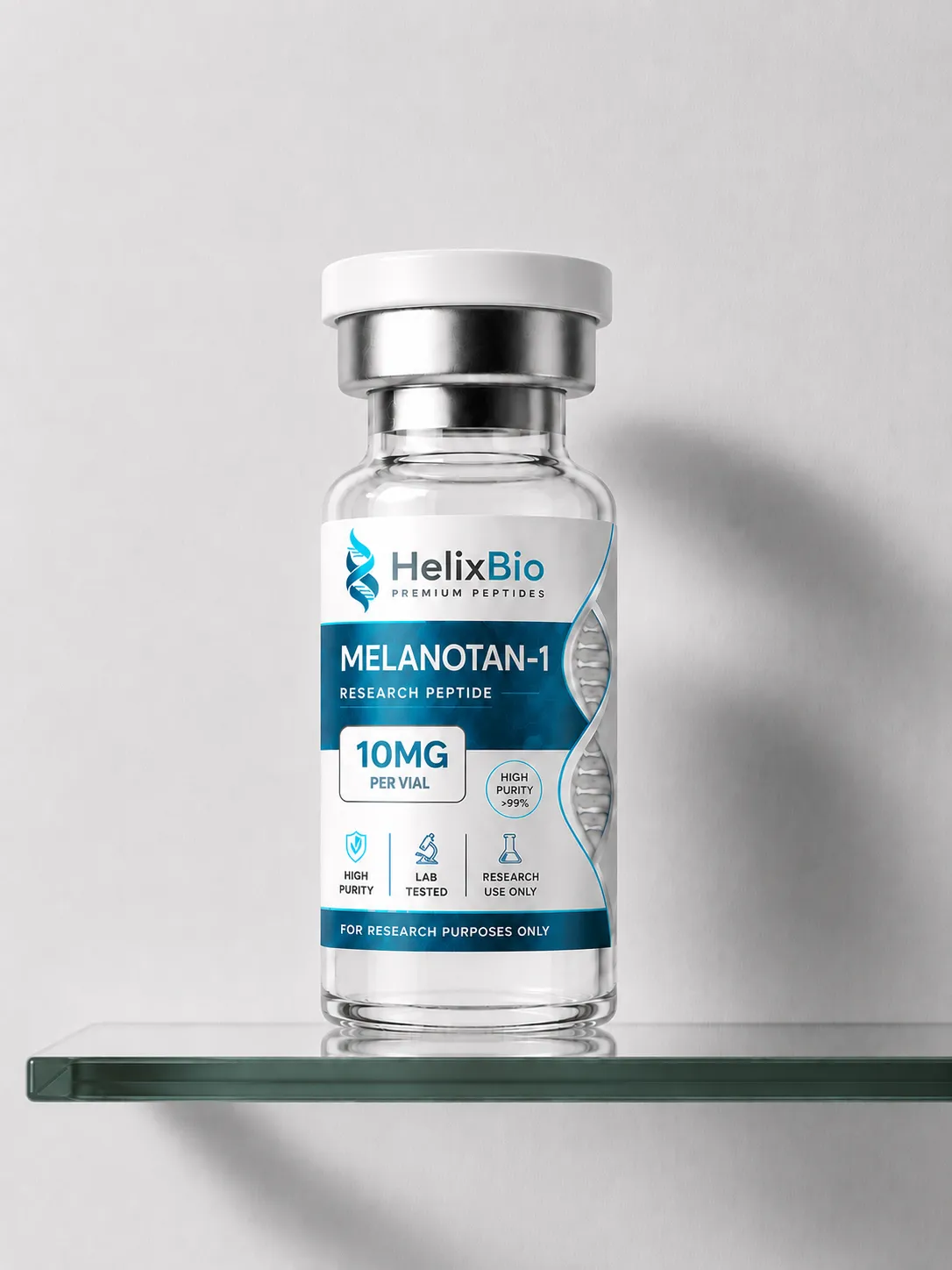
Melanotan-1 is a synthetic analog of alpha-melanocyte-stimulating hormone (α-MSH) used in laboratory research involving melanocortin biology, melanocortin receptors, and cellular pigmentation pathways. It is commonly associated with the research compound [Nle4-D-Phe7]-α-MSH and is also known in scientific literature as Melanotan I or MT-I. Helix Bio offers research-use-only peptide materials intended for controlled laboratory investigation. Product-specific analytical specifications should always be confirmed using the applicable lot documentation before experimental use.
HPLC certified
Independent analysis
Highest standard
Full traceability
Melanotan-1 is a synthetic melanocortin peptide developed from the structure of α-MSH. Scientific research has focused on its interaction with melanocortin receptors, particularly melanocortin 1 receptor (MC1R), a G-protein-coupled receptor strongly associated with melanocyte biology and pigmentation signaling.
In research literature, Melanotan I is commonly identified as [Nle4-D-Phe7]-α-MSH, also written as NDP-MSH. Structural modifications to the natural α-MSH sequence were investigated to alter receptor activity and peptide stability. Research has demonstrated activity across several melanocortin receptor subtypes, including MC1R, MC3R, MC4R, and MC5R, making the compound relevant to broader melanocortin receptor studies.
Melanotan-1 should be distinguished from Melanotan II. Although both compounds are synthetic α-MSH analogs, they have different structures and receptor activity profiles. Melanotan I is generally associated with the NDP-MSH structure, while Melanotan II contains additional structural modifications and is a separate research compound.
For laboratories studying receptor-ligand interactions, peptide structure-function relationships, melanocortin signaling, or cellular pigmentation mechanisms, Melanotan-1 provides a defined synthetic peptide model for controlled experimental work.
Melanotan-1 is a modified α-MSH analog containing the substitutions norleucine (Nle) at position 4 and D-phenylalanine (D-Phe) at position 7. The resulting structure is commonly represented as [Nle4-D-Phe7]-α-MSH.
The biological relevance of this peptide is closely connected to melanocortin receptor research. MC1R is expressed predominantly in melanocytes and participates in signaling pathways associated with melanogenesis. Experimental studies of MC1R have helped researchers investigate how endogenous and synthetic melanocortin ligands interact with receptor systems.
Melanotan-1 is intended for laboratory and scientific research only. Potential research contexts include:
The compound should be evaluated according to the requirements of the specific experimental model rather than assumed to produce a particular biological outcome.
Melanotan-1 is of particular interest to researchers because its structure has been extensively studied within the melanocortin field. Published research provides a substantial scientific background for investigating modified α-MSH peptides and their interactions with melanocortin receptor systems.
Melanotan-1 has a well-established presence in melanocortin research, making it useful when a laboratory needs a defined synthetic α-MSH analog for controlled experimental investigation.
Its research value comes from several characteristics:
Defined Molecular Framework
The Nle4 and D-Phe7 modifications distinguish Melanotan-1 from native α-MSH and make it useful for studying how structural changes influence melanocortin receptor activity.
Receptor Research Relevance
Published studies have examined Melanotan-1 and related melanocortin analogs across multiple receptor subtypes. This makes the compound relevant to receptor pharmacology and ligand-comparison experiments.
Established Scientific Literature
Melanotan-1 has been investigated in peer-reviewed research for decades, providing researchers with background literature when designing experiments involving α-MSH analogs and melanocortin signaling.
Research-Only Positioning
A clearly defined research-use-only product is appropriate for laboratories that require peptide reagents for non-clinical research rather than materials marketed for human use.
Melanotan-1 is intended for qualified users conducting legitimate scientific or laboratory research, including:
The product is not intended for consumers seeking tanning, cosmetic, therapeutic, or other personal-use effects.
| Specification | Melanotan-1 |
|---|---|
| Product Name | Melanotan-1 |
| Common Names | Melanotan I, MT-I, NDP-MSH |
| Scientific Description | Synthetic α-MSH analog |
| Structural Description | [Nle4-D-Phe7]-α-MSH |
| Research Category | Melanocortin / Cosmetic & Skin Research |
| Primary Research Target | Melanocortin receptors, including MC1R |
| Physical Form | Refer to current product listing and lot documentation |
| Purity | Verify current lot-specific COA |
| Packaging | Refer to current product listing |
| Storage | Follow product-specific COA and supplier documentation |
| Quality Documentation | Refer to applicable lot documentation |
| Research Use | Laboratory research only |
| Human Use | Not intended for human use |
| Veterinary Use | Not intended for veterinary use |
Product-specific attributes such as package size, purity percentage, physical appearance, storage requirements, and lot information should be confirmed against the current product listing and Certificate of Analysis rather than assumed from general peptide specifications.
MC1R Research
Melanotan-1 is particularly relevant to studies involving MC1R, a melanocortin receptor expressed prominently in melanocytes. Research into MC1R has contributed to understanding melanocortin signaling and its relationship to pigmentation biology.
Melanocortin Receptor Binding Studies
Synthetic α-MSH analogs can be used as ligands in receptor-binding experiments designed to examine receptor affinity, ligand selectivity, receptor activation, or competitive interactions.
Structure-Activity Relationship Research
The modified structure of Melanotan-1 provides a useful model for studying how amino-acid substitutions can alter peptide-receptor interactions. Researchers can compare modified α-MSH analogs to investigate relationships between molecular structure and receptor behavior.
Melanocyte and Pigmentation Research
MC1R signaling is closely associated with melanocyte biology and melanin synthesis. Melanotan-1 can therefore serve as a research reagent in controlled cellular models investigating melanocortin-mediated pigmentation pathways.
Comparative Peptide Research
Researchers can compare Melanotan-1 with native α-MSH and other synthetic melanocortin analogs to evaluate differences in receptor interactions, structure, and experimental behavior.
Analytical Research
Melanotan-1 may also be relevant to analytical workflows involving peptide identity, purity, stability, chromatographic characterization, and mass-spectrometric analysis.
For research peptides, analytical documentation is an important part of evaluating material before it is incorporated into an experimental workflow.
The Helix Bio website describes quality controls involving reversed-phase HPLC for purity assessment and LC-MS for peptide identity and molecular-weight confirmation. It also states that analytical documentation can include batch-specific information such as purity and identity data.
For Melanotan-1, researchers should review the current lot-specific documentation for:
Do not treat a general supplier specification as a substitute for the COA associated with the actual research material being evaluated.
Storage conditions should be determined from the current product-specific documentation and COA because peptide stability can depend on sequence, formulation, container, moisture exposure, temperature, and storage duration.
General laboratory considerations include:
Do not substitute a generic peptide storage protocol for the product-specific instructions supplied with the material.
Helix Bio's website describes research-peptide shipping processes that include protective and temperature-controlled packaging. Current shipping availability, packaging configuration, delivery timelines, and applicable restrictions should be confirmed through the site's current Shipping Policy before placing or publishing an order.
For laboratory materials, researchers should inspect packaging upon arrival and follow the applicable product-specific storage instructions promptly after receipt.
Melanotan-1 offered by Helix Bio is intended strictly for research and laboratory use. It is not intended for human consumption, ingestion, injection, administration, veterinary use, diagnosis, treatment, cure, prevention of disease, or cosmetic use.
This material is provided for controlled scientific investigation only. It has not been presented as a human-use medicine by Helix Bio, and research-use-only materials should not be represented as FDA-approved treatments or as substitutes for approved medical products.
The FDA distinguishes legitimate cosmetic tanning products from other products marketed with tanning-related claims and maintains consumer resources concerning tanning products and health-fraud concerns.
Researchers are responsible for complying with applicable federal, state, local, institutional, laboratory, biosafety, and chemical-handling requirements.
Knowledge Base
Knowledge Base
Knowledge Base
Knowledge Base
Knowledge Base
Knowledge Base
Knowledge Base
Knowledge Base
Knowledge Base
Knowledge Base
Knowledge Base
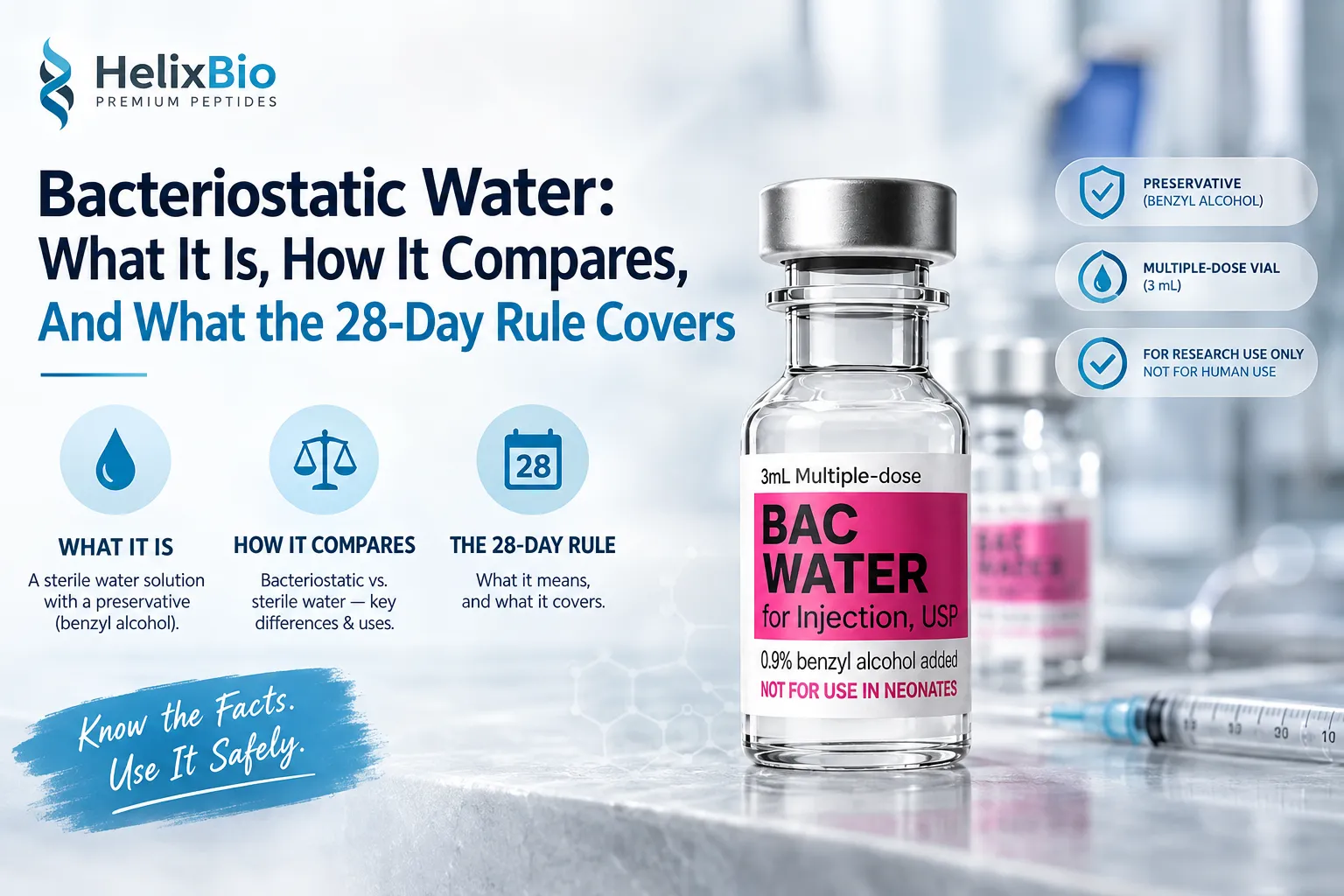
What bacteriostatic water contains, how it differs from sterile water and saline, where the 28-day opened-vial figure comes from, and what a COA can show.
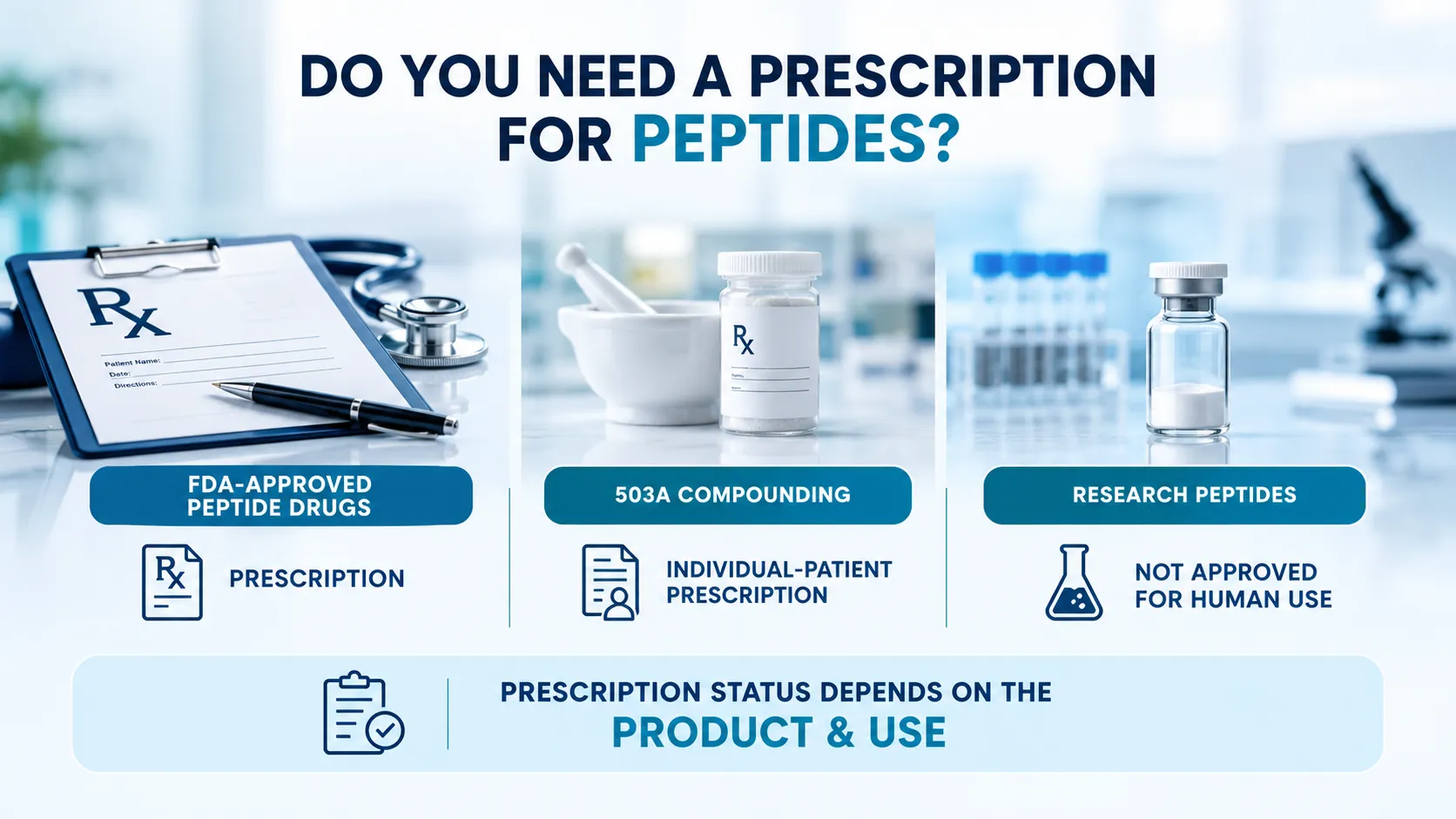
Do you need a prescription for peptides? It depends on the category. See which peptides need one, which do not, and the dated 2026 FDA rules that apply.

The complete 2026 list of FDA-approved peptides: 47 drugs by category and approval year, which popular peptides are not approved, and pipeline to watch.