- Sermorelin contains 29 amino acids and acts as a direct, short-acting mimic of endogenous GHRH.
- Tesamorelin features 44 amino acids plus a trans-3-hexenoic acid group, protecting it from rapid enzymatic cleavage.
- Sermorelin has a very short half-life of less than 15 minutes in research models.
- Tesamorelin's structural modification allows for sustained growth hormone release and is heavily studied in lipodystrophy models.
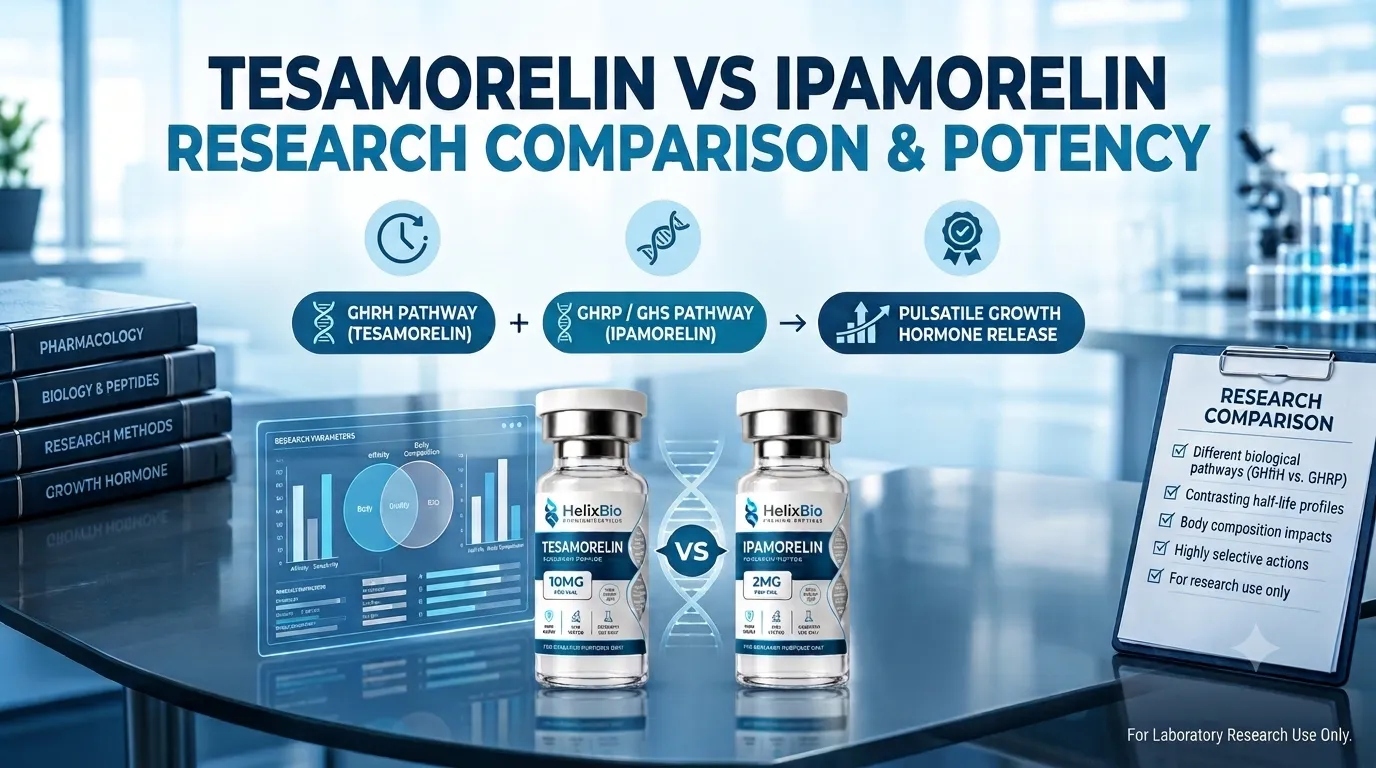
- Combining a GHRH analog like Tesamorelin with a GHSR agonist like Ipamorelin yields synergistic increases in GH and IGF-1 secretion.
- Both synthetic analogs are heavily monitored by anti-doping agencies, leading to advanced in vitro detection studies.
The study of Growth Hormone-Releasing Hormone (GHRH) analogs remains a cornerstone of endocrinological research. Among the various synthetic peptides designed to mimic endogenous GHRH, Sermorelin and Tesamorelin stand out for their distinct pharmacokinetic profiles and specific applications in laboratory models. Understanding the nuances of Sermorelin vs Tesamorelin is essential for researchers designing experiments aimed at modulating the somatotropic axis.
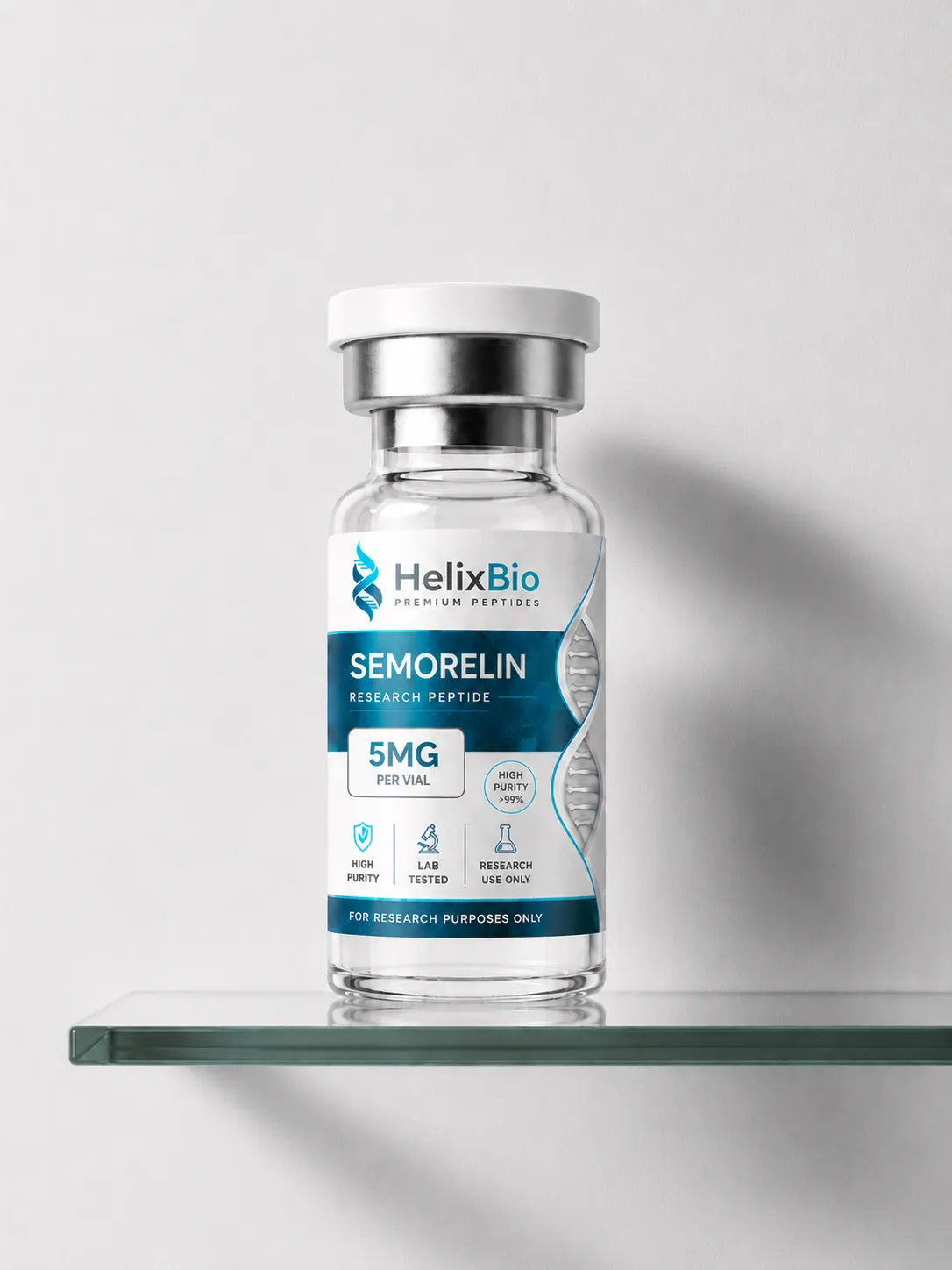
Sermorelin
RESEARCH PEPTIDE
Sermorelin is the common name for GHRH(1-29)NH2, a 29-amino-acid peptide fragment of human growth hormone-releasing hormone. Helix Bio supplies sermorelin acetate as a lyophilized research compound, packaged for laboratory and academic study of the GHRH receptor and the pituitary growth hormone pathway. This listing is for a research chemical only. It is not a drug, dietary supplement, or finished pharmaceutical product, and it is not sold, labeled, or intended for human or animal use of any kind. It is intended exclusively for qualified researchers and laboratories operating under appropriate institutional protocols.
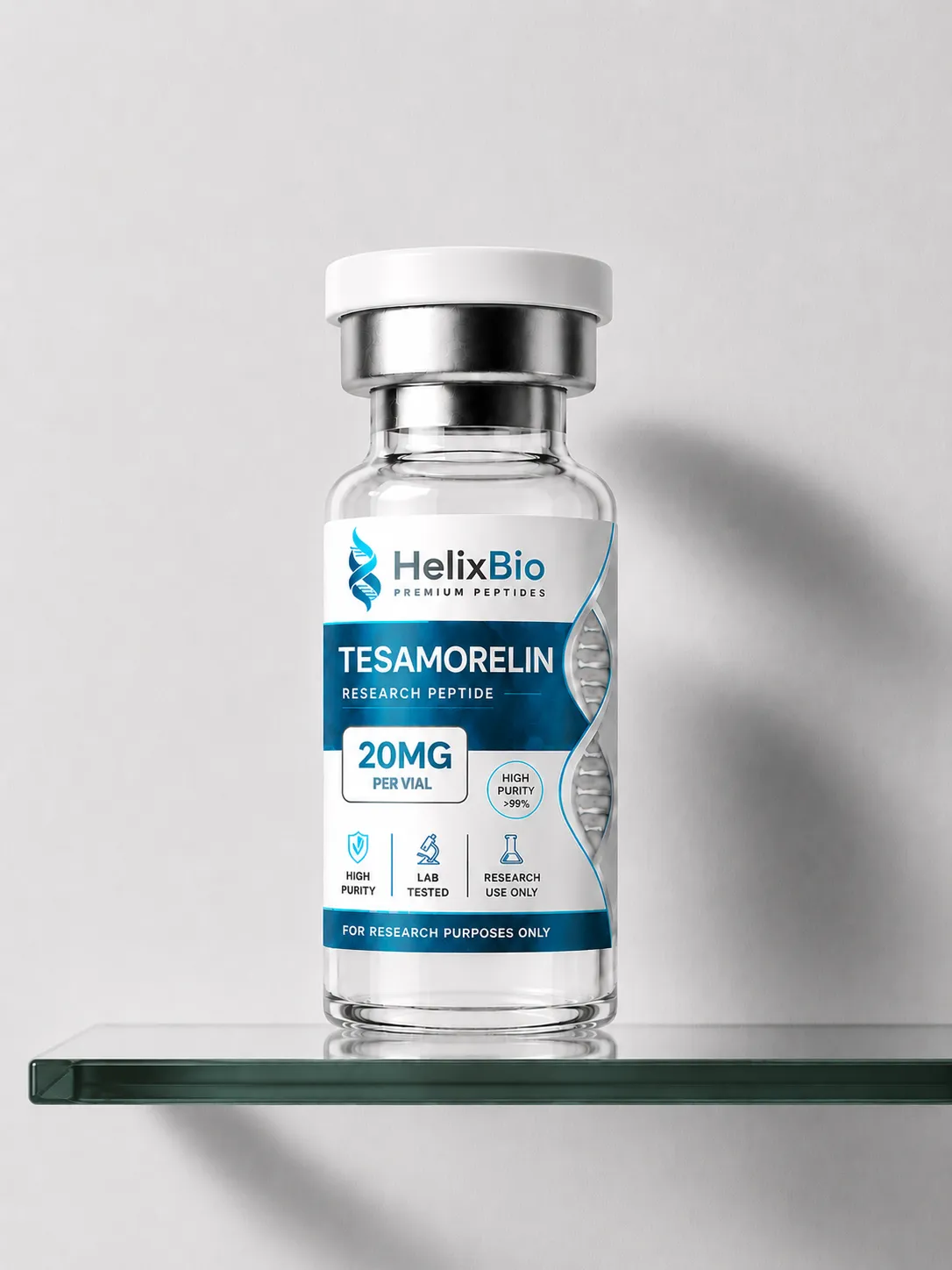
Tesamorelin
RESEARCH PEPTIDE
Tesamorelin is a stabilized, 44-amino-acid analog of human growth hormone-releasing hormone (GHRH), modified with a hexenoyl group that gives it greater resistance to enzymatic breakdown than unmodified GHRH fragments. Helix Bio supplies tesamorelin acetate as a lyophilized research compound for laboratory study of GHRH receptor activity and the growth hormone axis. This listing is for a research chemical only. Tesamorelin also exists as an FDA-approved prescription drug (marketed as Egrifta / Egrifta WR) for a specific clinical indication, but that is a separate, pharmacy-dispensed product manufactured under a New Drug Application. Helix Bio's research-use-only tesamorelin is not that product, is not equivalent to it, and is not sold, labeled, or intended for human or animal use, self-treatment, or off-label use of any kind.
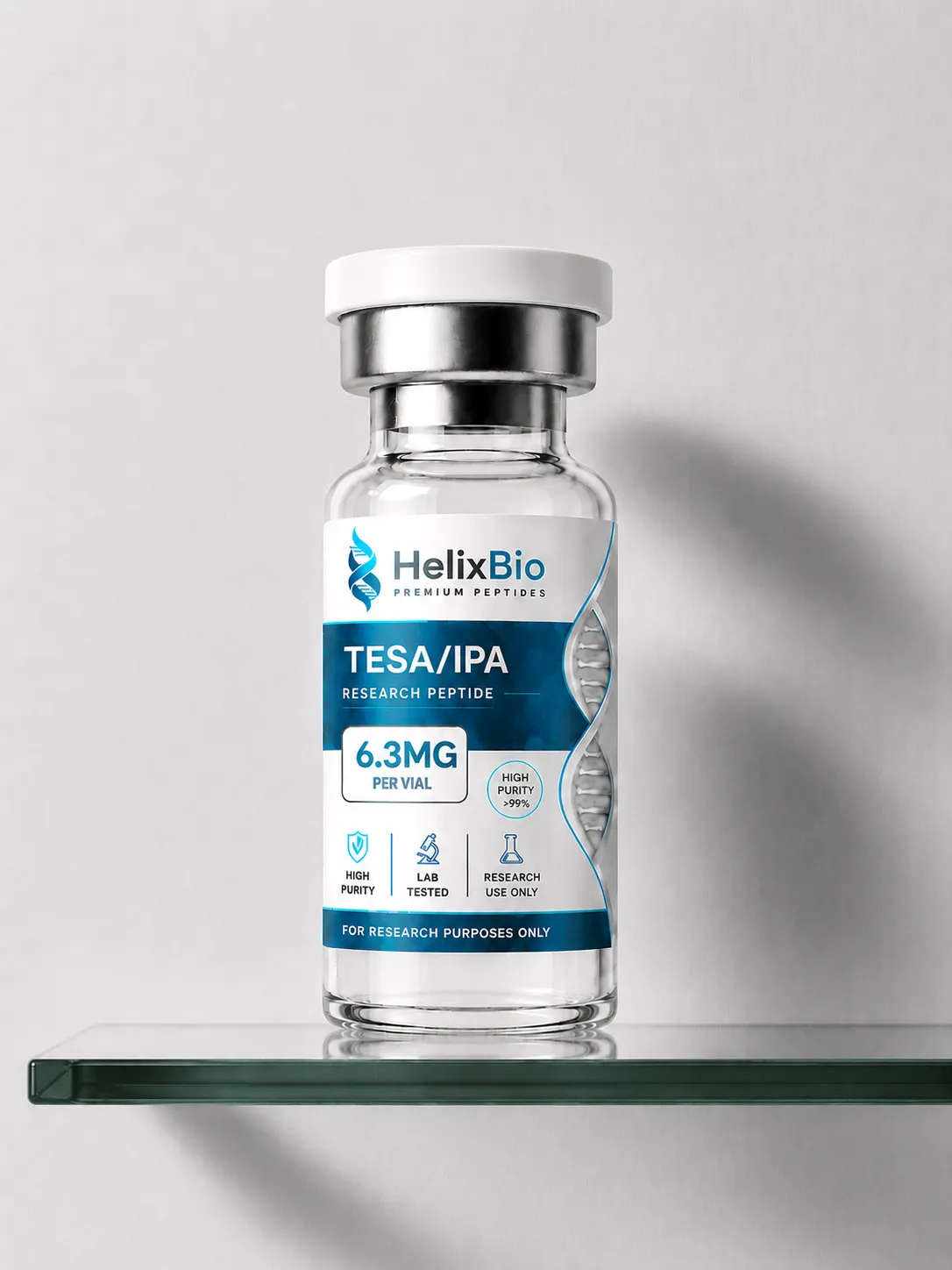
Tesamorelin + Ipamorelin Blend
RESEARCH PEPTIDE
TesaIpa is a research peptide blend combining tesamorelin and ipamorelin for laboratory investigation of growth hormone–related signaling pathways. Tesamorelin is a synthetic analog of growth hormone-releasing hormone (GHRH), while ipamorelin is a growth hormone secretagogue associated with ghrelin receptor (GHSR) signaling. The combination provides researchers with a defined research material for studying two distinct signaling inputs involved in the regulation of growth hormone release. TesaIpa is supplied by Helix Bio strictly for research and laboratory use and is not intended for human or veterinary administration.
Both compounds function by binding to GHRH receptors on the anterior pituitary gland, stimulating the pulsatile release of growth hormone (GH). However, their structural modifications lead to vastly different half-lives, cleavage resistance, and downstream metabolic effects, making them suitable for entirely different research protocols.
Structural and Mechanistic Overview
To accurately compare Sermorelin vs Tesamorelin, one must first examine their molecular structures and how these structures dictate their behavior in vitro.
Sermorelin: The Endogenous Mimic
Sermorelin (frequently formulated as Sermorelin acetate) represents the first 29 amino acids of the naturally occurring 44-amino-acid endogenous GHRH string (GRF 1-29 NH2). Research has established that this 29-amino-acid sequence is the shortest fragment capable of retaining full receptor binding functionality.
Because it so closely mimics the natural hormone without protective modifications, Sermorelin is highly susceptible to rapid enzymatic degradation in vivo, particularly by dipeptidyl peptidase-4 (DPP-4). Consequently, its half-life in research subjects is extremely short—typically between 10 and 15 minutes. This rapid clearance forces researchers to utilize multiple daily administration protocols to mimic natural GH pulsatility without causing prolonged receptor desensitization.
Tesamorelin: Engineered for Stability
Tesamorelin is also built upon the foundational 44-amino-acid sequence of human GHRH, but with a critical structural modification: the addition of a trans-3-hexenoic acid group attached to the N-terminus of the peptide chain.
This specific alteration shields the peptide bond from being rapidly cleaved by DPP-4 and other ubiquitous proteases. As a result, Tesamorelin possesses a significantly extended half-life compared to Sermorelin. In animal models, this extended half-life translates to a more robust, sustained stimulation of the somatotroph cells, yielding higher overall AUC (Area Under the Curve) for both GH and IGF-1.
Comparative Pharmacokinetics
The most significant differentiator in Sermorelin vs Tesamorelin research lies in their pharmacokinetic profiles and how they are metabolized. Studies investigating the in vitro metabolism of GHRH synthetic analogs reveal that understanding their breakdown is critical, especially since the administration of these analogs is monitored closely by organizations like WADA.
Characteristic | Sermorelin | Tesamorelin |
|---|---|---|
Amino Acid Sequence | 29 | 44 + trans-3-hexenoic acid |
Half-Life | < 15 minutes | ~ 30-45 minutes (extended action) |
DPP-4 Resistance | Very Low | High |
Primary Research Focus | General GH pulsatility restoration | Lipodystrophy, visceral fat reduction |
Receptor Target | GHRH Receptor | GHRH Receptor |
Research Applications and Efficacy
Due to their distinct profiles, investigators deploy these peptides in different experimental contexts.
Applications of Sermorelin in Research
Sermorelin is often the compound of choice in studies where the primary objective is to evaluate the baseline function of the pituitary gland. Because it clears rapidly, researchers can observe acute GH spikes and measure the pituitary's immediate response without residual interference. It is frequently utilized in anti-aging research models and studies exploring the restoration of natural circadian hormone rhythms. Additionally, researchers rely on 19 major identified in vitro metabolites of these analogs as reference materials to develop sensitive liquid chromatography-tandem mass spectrometry detection methods.
Applications of Tesamorelin in Research
Tesamorelin is predominantly investigated for its pronounced effects on lipid metabolism. In research models representing HIV-associated lipodystrophy, Tesamorelin demonstrates a unique propensity for reducing visceral adipose tissue (VAT) without negatively altering glucose homeostasis to the degree seen with exogenous recombinant human growth hormone (rhGH). Its sustained action allows for a steady release of GH, which upregulates lipolysis (the breakdown of fats) more effectively than the brief spikes induced by Sermorelin.
Synergistic Blends: Tesamorelin + Ipamorelin
Advanced research protocols frequently explore the combination of GHRH analogs with Growth Hormone Secretagogue Receptor (GHSR) agonists. A notable example is the Tesamorelin + Ipamorelin Blend.
While Tesamorelin stimulates the release of GH via the GHRH receptor, Ipamorelin acts on the ghrelin receptor to suppress somatostatin and amplify the pulse amplitude. In animal studies, this dual-pathway stimulation yields a synergistic multiplier effect, resulting in significantly higher serum IGF-1 levels than could be achieved with either compound alone, offering robust data for models studying severe muscle wasting or metabolic dysfunction.
Sermorelin, Tesamorelin, and their respective blends are strictly designated as Research Use Only (RUO). They are intended exclusively for in-vitro testing and animal research, not for human clinical application.
Laboratory Handling Protocols
Researchers must adhere to strict handling protocols to prevent the degradation of these delicate molecules. Both Sermorelin and Tesamorelin arrive as lyophilized powders and must be stored at -20°C.
Upon reconstitution with sterile bacteriostatic water, the molecular structure becomes vulnerable to mechanical stress and thermal degradation. The solution must be refrigerated (2°C to 8°C) and utilized within strict timeframes (typically 14-21 days) to ensure consistent experimental variables. Gentle swirling—never shaking—is mandatory during reconstitution to prevent shearing of the peptide bonds.
In conclusion, the choice between Sermorelin and Tesamorelin hinges on the specific pharmacokinetic requirements of the research protocol. Sermorelin offers acute, natural pulsatility, while Tesamorelin provides sustained action and robust lipolytic effects in metabolic disease models.
For a comparison against a dual-receptor GHRH/GHSR approach, see our guide to CJC-1295 and Ipamorelin research.
Frequently Asked Questions
Sermorelin is a 29-amino-acid peptide mirroring the functional portion of endogenous GHRH, while Tesamorelin is a 44-amino-acid peptide with an added trans-3-hexenoic acid group.
Sermorelin clears rapidly in less than 15 minutes, whereas Tesamorelin's protective modification extends its functional half-life to approximately 30-45 minutes, providing longer stimulation.
Research indicates Tesamorelin induces a sustained GH release that powerfully upregulates lipolysis, specifically targeting reductions in visceral adipose tissue.
Because of its extremely short half-life, Sermorelin induces acute, pulsatile GH spikes that typically do not cause receptor down-regulation in animal models.
Dipeptidyl peptidase-4 (DPP-4) rapidly cleaves unprotected GHRH analogs like Sermorelin in vivo.
Investigators blend them to activate both the GHRH and ghrelin receptors simultaneously, creating a synergistic effect that maximizes overall GH and IGF-1 output.
No. Both compounds are strictly designated for laboratory research (RUO) and are not approved for human consumption or bodybuilding.
Advanced liquid chromatography-tandem mass spectrometry methods can detect in vitro metabolites of these analogs down to 1 ng/ml limits.
Like most lyophilized peptides, it must be stored in a freezer at or below -20°C to maintain stability.
No. Shaking the vial can shear the delicate peptide bonds, rendering the compound biologically inactive. Gentle swirling is required.
Unlike continuous administration of recombinant human growth hormone (rhGH), these secretagogues generally have a milder, more natural impact on glucose homeostasis in research models.
The World Anti-Doping Agency prohibits the administration of GHRH synthetic analogs, prompting rigorous in vitro metabolism studies to develop detection methods.
Helix Bio Chem Team
Research & Product Team
Our in-house team tracks published peptide research and translates it into clear, source-cited summaries for the research community.
Reviewed by in-house research chemists
support@helixbiochem.com