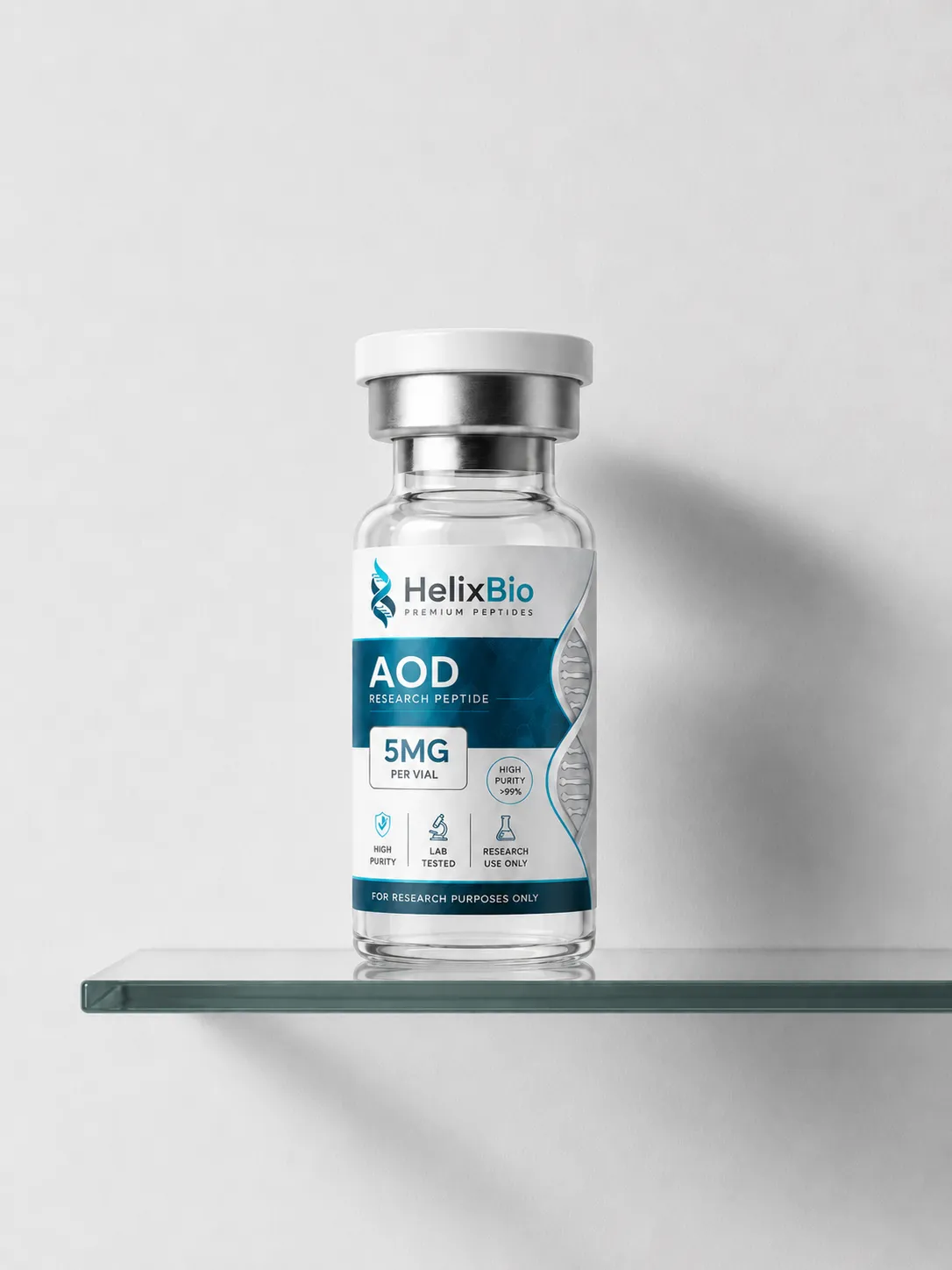
AOD9604 is a synthetic research peptide derived from the C-terminal fragment of human growth hormone (hGH 176-191), modified with an additional stabilizing tyrosine residue. It's studied in preclinical and early clinical research for its role in lipolysis — fat breakdown — without engaging the growth-promoting or IGF-1-elevating effects associated with full-length hGH. Originally developed by the Australian biotech Metabolic Pharmaceuticals Ltd, AOD9604 progressed through six Phase I/II human trials before its pivotal efficacy trial fell short, ending formal drug development in 2007. It remains a compound of interest in metabolic and adipocyte research today. Helix Bio supplies AOD9604 as a lyophilized powder intended strictly for laboratory research, manufactured to a high-purity standard and backed by third-party verification. It is not intended for human consumption, diagnostic use, or any therapeutic application.
HPLC certified
Independent analysis
Highest standard
Full traceability
AOD9604 is studied as a modified fragment of the lipolytic domain of human growth hormone, corresponding to amino acids 176-191 (sometimes referenced as 177-191) with a tyrosine added at the N-terminus for stability. The idea behind the molecule was to isolate hGH's fat-metabolism activity from its growth-promoting and blood-sugar-affecting properties, since those effects are what limit full-length hGH's use in metabolic research and complicate its interpretation. Preclinical work in rodent and adipose tissue models found that AOD9604 does not raise IGF-1 levels or impair glucose tolerance the way full-length hGH does, which is the main reason it's treated as a distinct research tool rather than a hGH substitute.
Helix Bio's AOD9604 is supplied as a lyophilized (freeze-dried) powder — a synthetic 16-amino-acid peptide manufactured under controlled laboratory conditions. Lyophilization extends shelf stability prior to reconstitution, which is useful for labs running studies over an extended timeline rather than using a full vial at once.
This product exists to support in vitro and preclinical laboratory research only. It's manufactured, labeled, and sold for research use only (RUO) — not for human or veterinary use, not for diagnostic procedures, and not for compounding. It's intended for researchers studying lipolysis, adipocyte metabolism, fat oxidation pathways, or the pharmacology of growth-hormone-derived peptide fragments.
AOD9604 has a research history that's a little different from most peptides on the market — it actually went through a formal pharmaceutical development program, with published safety data from real human trials, before that program was discontinued for efficacy reasons rather than safety ones. That gives researchers a documented starting point most experimental peptides don't have. Helix Bio manufactures its AOD9604 domestically, backs every batch with purity testing, and issues documentation so researchers can evaluate what they're working with before it reaches the bench. If your protocol calls for a well-characterized hGH-fragment peptide for lipolysis or adipocyte research, that's what this listing is built around.
This product is not intended for individual consumers seeking to use it outside a research setting.
| Field | Detail |
|---|---|
| Product Name | AOD9604 |
| Category | Research Peptide — Modified hGH Fragment (176-191) |
| Form | Lyophilized powder |
| Purity | High-purity, batch-verified — see current lot's Certificate of Analysis for the exact figure |
| Appearance | White to off-white lyophilized powder |
| Storage (unreconstituted) | Store frozen, protected from light |
| Packaging | Sealed glass vial, tamper-evident packaging |
| Research Use | Laboratory / in vitro / preclinical research only — not for human or animal use |
| Manufacturer | Domestically produced (USA) |
| Quality | Third-party purity testing performed per batch |
| Lot Testing | HPLC and mass spectrometry verification |
| Country of Origin | United States |
AOD9604 is studied across a few overlapping areas of metabolic and adipocyte research:
AOD9604's human trial history is unusually well documented for a research peptide: six Phase I/II studies enrolled roughly 900 participants and reported a favorable safety and tolerability profile, with no significant effect on IGF-1 or glucose tolerance. Its pivotal Phase 2b efficacy trial, however, did not replicate the weight-loss signal seen in an earlier smaller study, and Metabolic Pharmaceuticals halted the formal drug development program in 2007. AOD9604 is not FDA-approved as a drug and is not available by prescription; it remains an investigational compound studied through laboratory and preclinical research. Everything sold by Helix Bio is intended for laboratory research only, not for administration to humans or animals outside a licensed research setting.
Purity is the first thing serious researchers check, and it's the first thing worth being transparent about. Helix Bio's AOD9604 is manufactured in a controlled laboratory environment and tested by a third party using high-performance liquid chromatography (HPLC) and mass spectrometry — the two standard methods for confirming peptide identity and purity in the research supply chain. Each batch is issued its own Certificate of Analysis (COA), so purity isn't something you have to take on faith; you can review the documentation for the specific lot you receive. If a vendor can't produce a COA for the batch in your hand, that's worth treating as a red flag — for AOD9604 or any research peptide.
Handling in our facility follows accepted good manufacturing practice for research-use compounds: peptides are processed to limit contamination, packaged in sealed, tamper-evident vials, and shipped in a way that protects the lyophilized powder from temperature swings and light exposure during transit.
AOD9604 ships in a sealed, tamper-evident vial packaged to protect the lyophilized powder in transit. Because peptide stability can be affected by heat, orders are packed with insulation appropriate to the season and route. Exact carriers, transit times, and packaging materials can vary by order — check Helix Bio's shipping policy page for current specifics before ordering.
AOD9604 sold by Helix Bio is intended strictly for in vitro laboratory and preclinical research use. It is not a drug, dietary supplement, cosmetic, or food product, and it is not approved by the FDA or any regulatory body for human or veterinary use, diagnosis, treatment, cure, or prevention of any disease or condition. This product must not be administered to humans or animals outside of a properly licensed research facility. Nothing on this page constitutes medical advice, and no statement here should be interpreted as a therapeutic or health claim. References to past clinical trial history are provided for research and educational context only and do not imply that AOD9604 is approved, effective, or safe for any human or veterinary application. By purchasing this product, the buyer confirms they are a qualified researcher, laboratory, or institution acquiring it for lawful research purposes only, and accepts full responsibility for compliance with all applicable local, state, and federal regulations governing research chemicals.
Knowledge Base
Knowledge Base
Knowledge Base
Knowledge Base
Knowledge Base
Knowledge Base
Knowledge Base
Knowledge Base
Knowledge Base
Knowledge Base
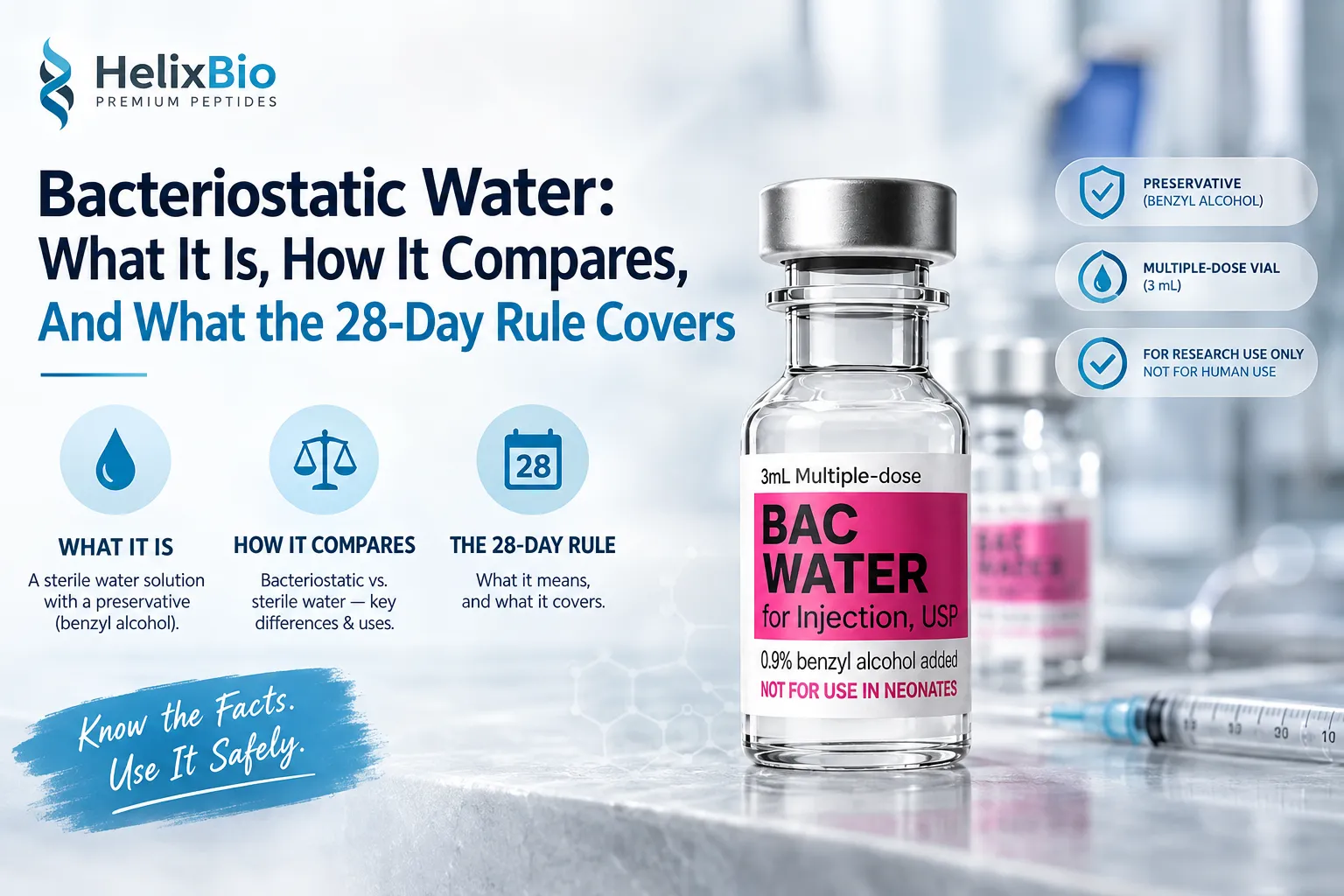
What bacteriostatic water contains, how it differs from sterile water and saline, where the 28-day opened-vial figure comes from, and what a COA can show.
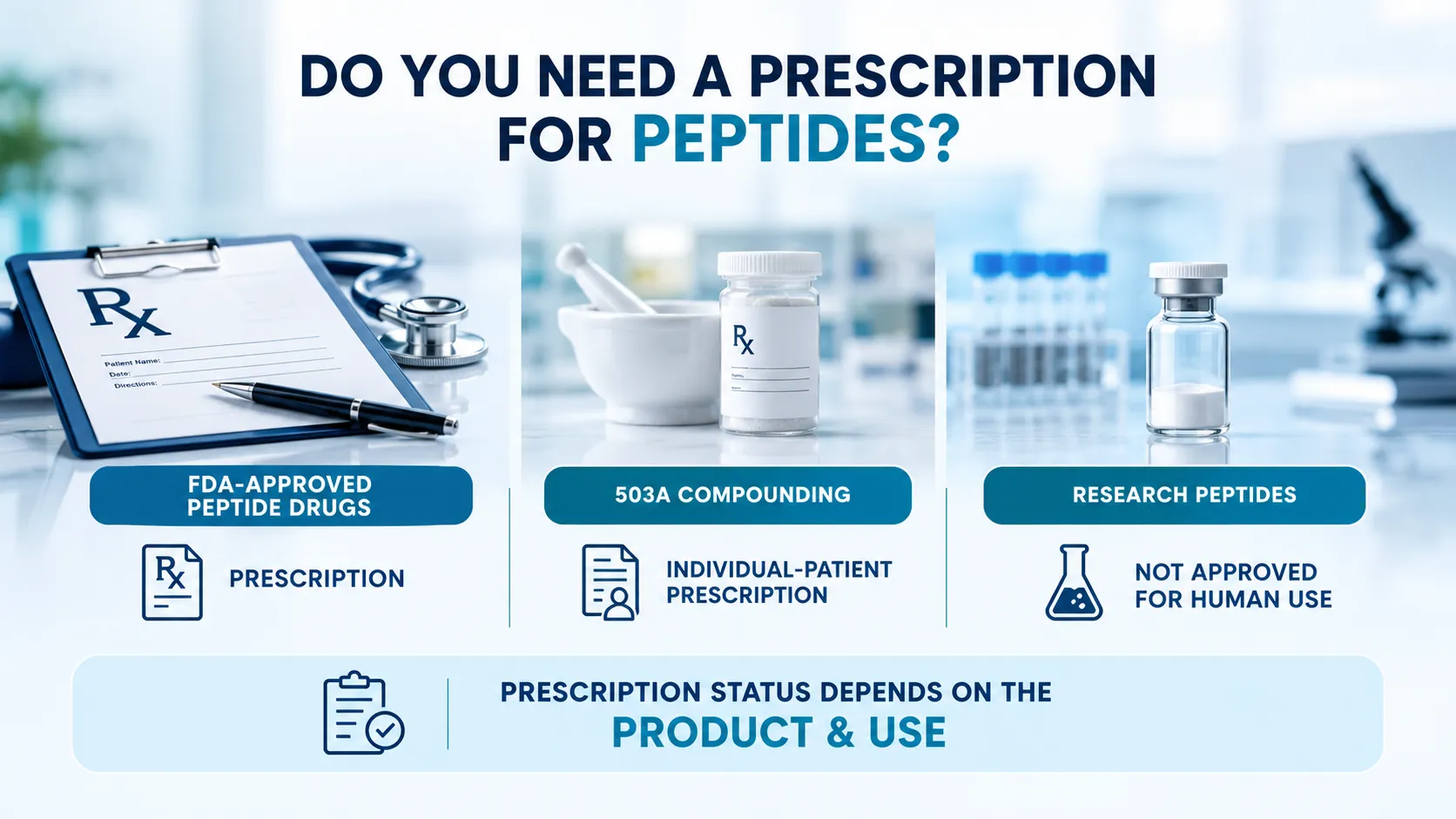
Do you need a prescription for peptides? It depends on the category. See which peptides need one, which do not, and the dated 2026 FDA rules that apply.
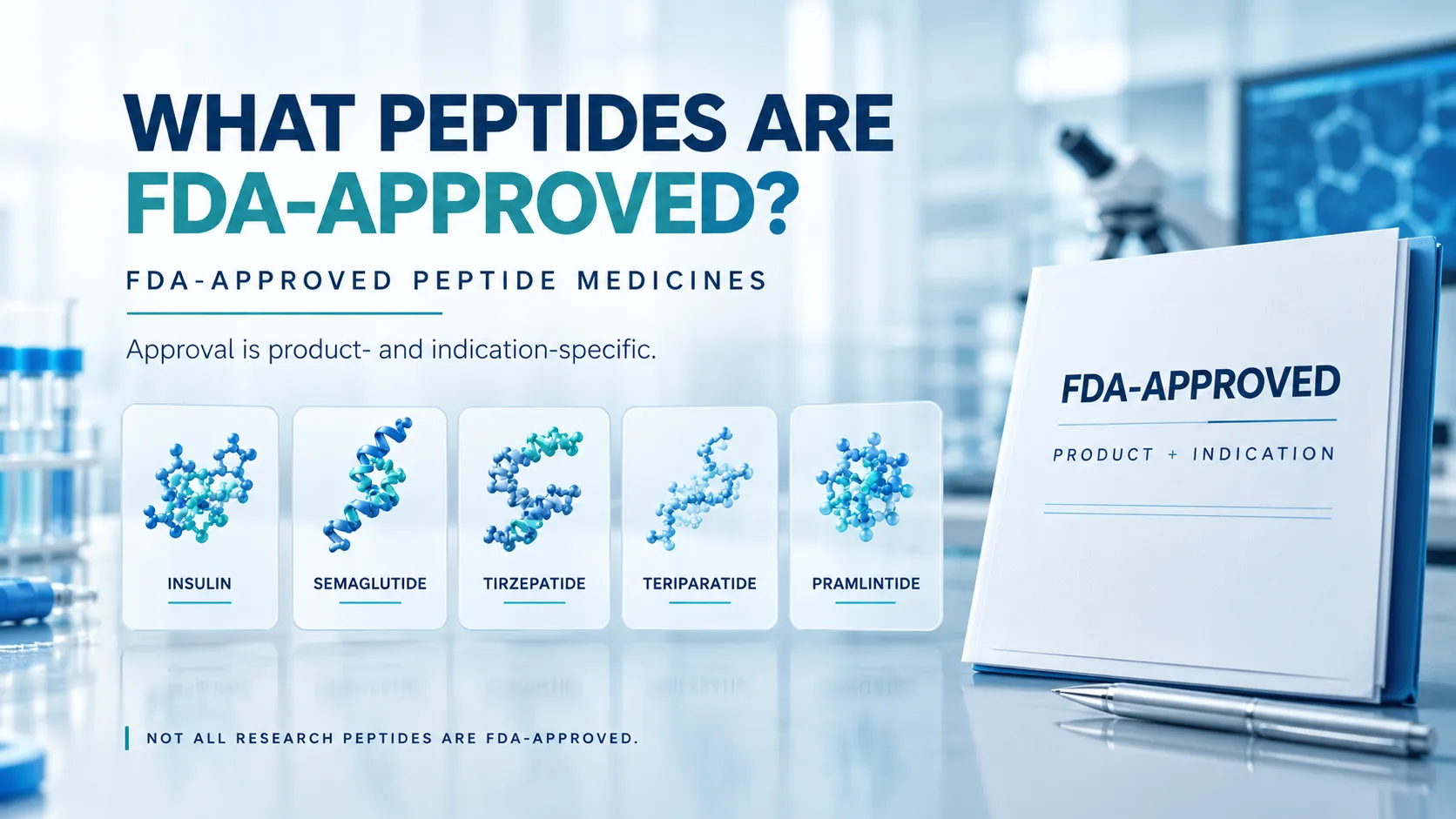
The complete 2026 list of FDA-approved peptides: 47 drugs by category and approval year, which popular peptides are not approved, and pipeline to watch.