Lipo-C Ingredients: What Formulations Contain and Why They Differ
Metabolic researchSeptember 13, 202612 min read
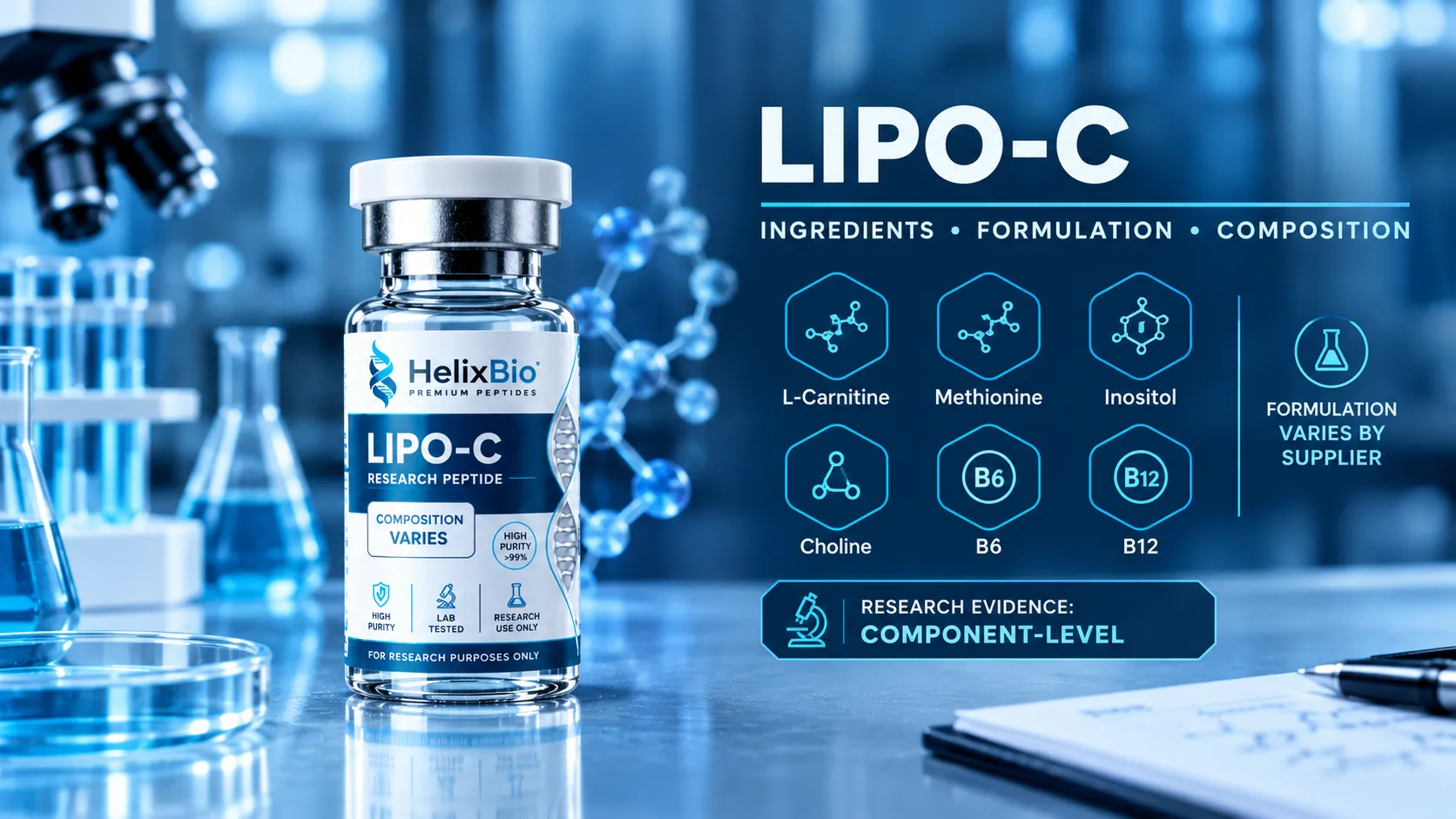
Lipo-C has no fixed composition. A sourced comparison of documented formulations, the origin of the MIC list, and what the component evidence does not prove.
Lipo-C is a formulation designation rather than a chemical substance, so it has no CAS number, molecular formula or pharmacopoeial monograph at product level.
Publicly documented Lipo-C formulations differ from one another: several contain no inositol and several contain no vitamin B12, despite the common description of the product as MIC plus B12.
The letter C in Lipo-C is not standardised and has been used consistently with choline, with carnitine and with ascorbic acid across different preparers.
Lipo-C is a distinct product category from liposomal vitamin C, although both are sold under similar wording and both appear in the same search data.
The methionine, inositol and choline grouping originates in 1930s and 1940s nutritional deficiency research, not in modern formulation design.
Choline and methionine converge on the same endpoint, phosphatidylcholine synthesis for VLDL assembly, and in the defining hepatocyte experiment either one alone restored secretion.
Inositol acts through phosphatidylinositol and phosphoinositide signalling, a separate pathway from the phosphatidylcholine route the other two components share.
No published randomised controlled trial of any formulation marketed as Lipo-C was identified, so no interaction between the components has been estimated.
Choline, inositol, carnitine and dexpanthenol have no ultraviolet chromophore, so a conventional UV-HPLC purity figure can describe only part of the material.
No formulation marketed as Lipo-C is an FDA-approved drug product, and a component's independent regulatory status does not transfer to a formulation containing it.
Search results for Lipo-C ingredients return confident lists, and most of them agree: methionine, inositol and choline, usually with vitamin B12 attached. Several of the formulations actually sold under the name contain no inositol. Several contain no B12. The standard answer is therefore wrong for a meaningful share of the market, and it is wrong in a way that matters to anyone trying to interpret a specification, a supplier description or a published finding attached to the term. This page sets out what documented Lipo-C formulations contain, where the three-nutrient list came from historically, what the literature establishes about each component, and what none of it establishes about the combination.
Featured In This Article
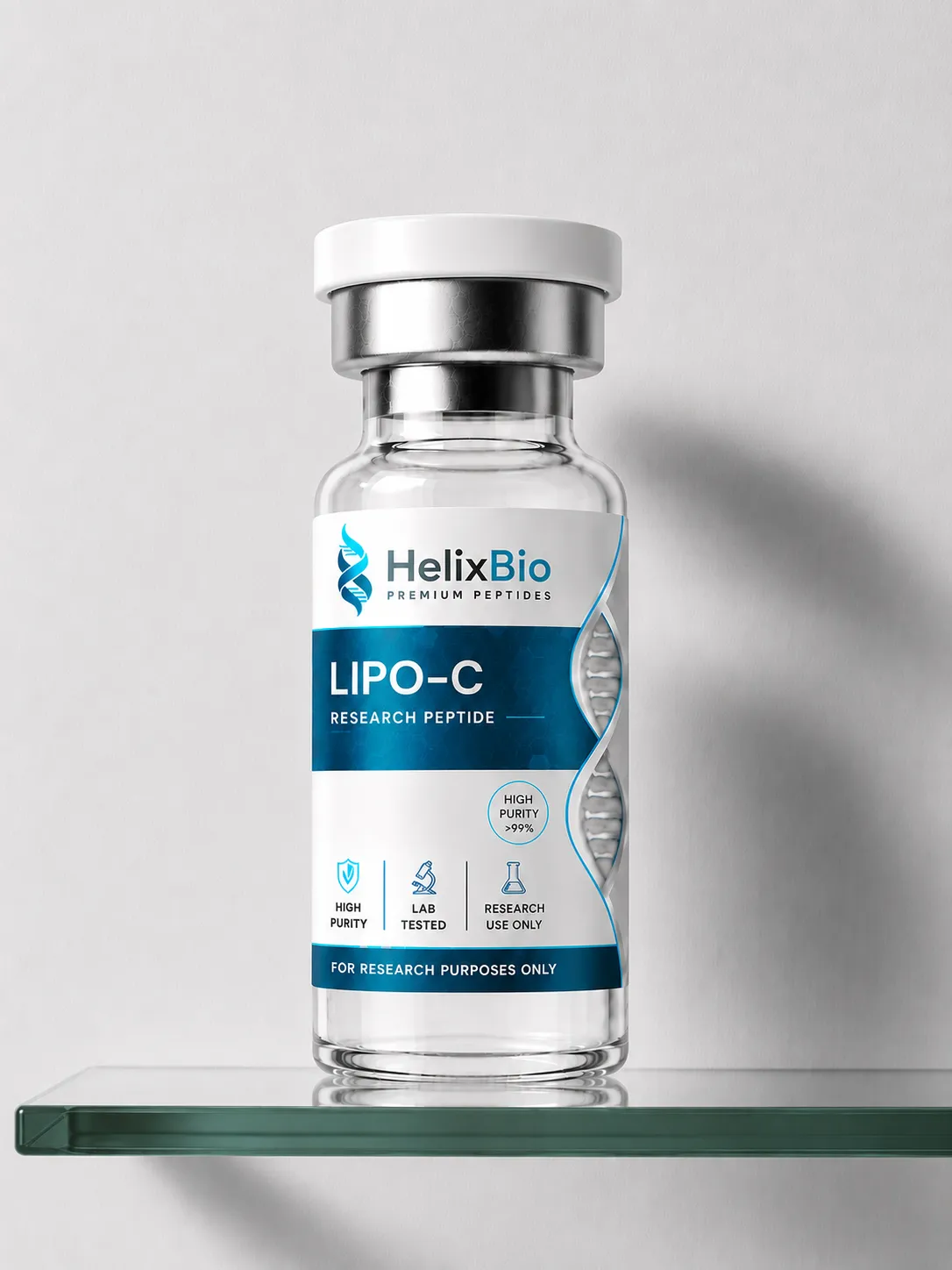
Lipo-C
RESEARCH PEPTIDE
Highly purified synthetic peptide prepared for rigorous laboratory research.
$72.00
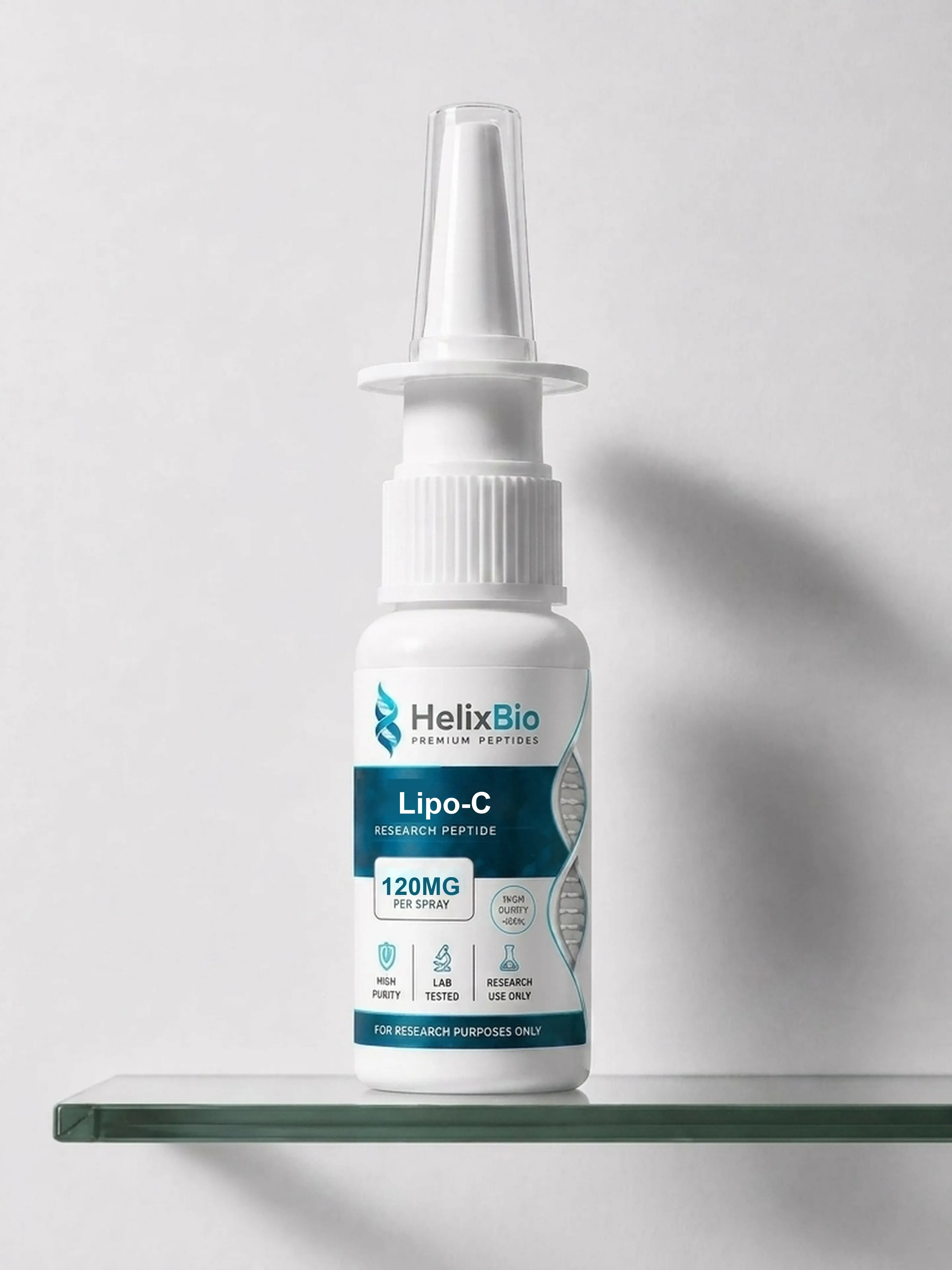
Lipo-C Spray
RESEARCH PEPTIDE
Highly purified synthetic peptide prepared for rigorous laboratory research.
$65.99
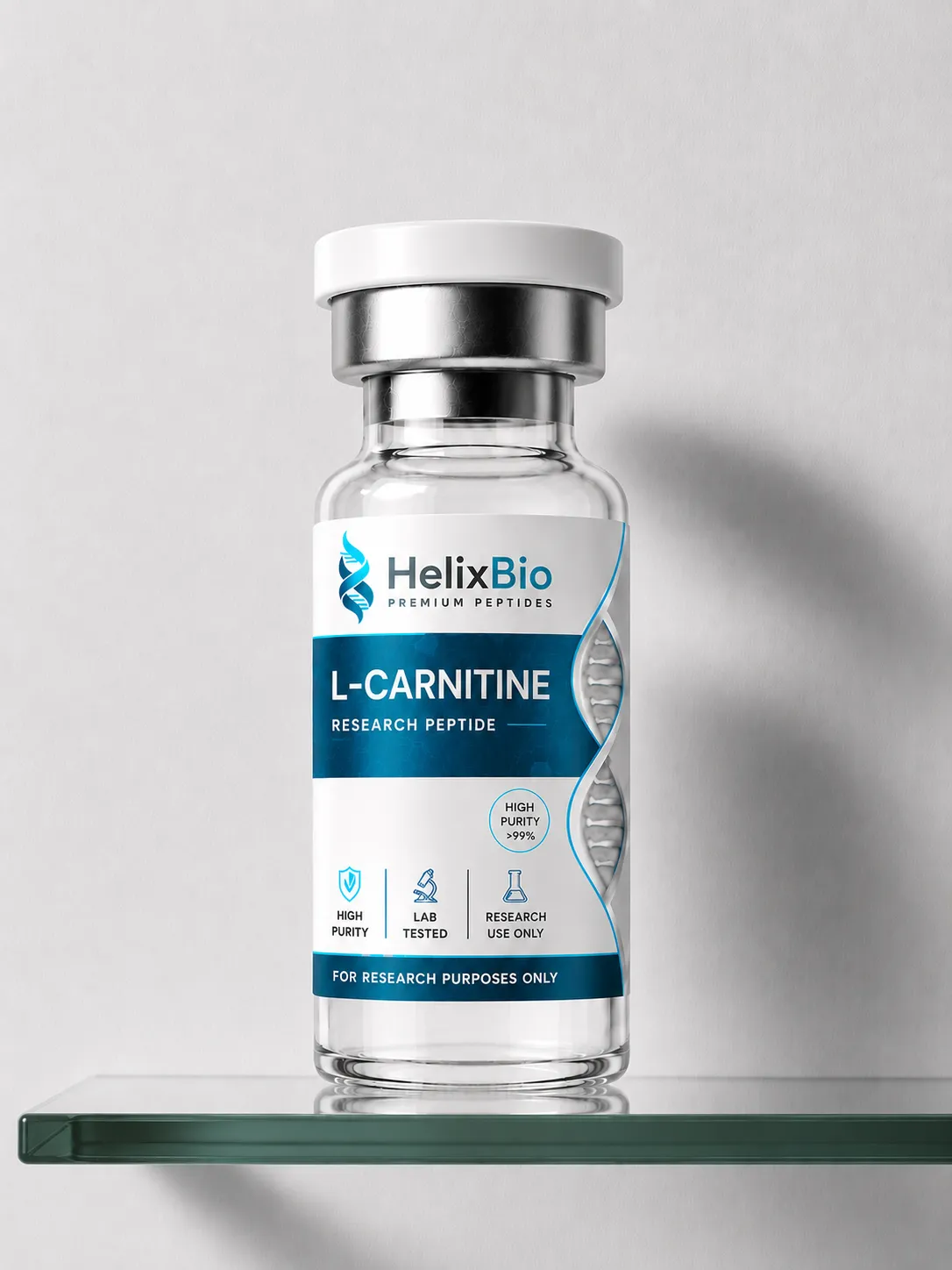
L-Carnitine
RESEARCH PEPTIDE
Highly purified synthetic peptide prepared for rigorous laboratory research.
$25.00
Quick answer: what is in Lipo-C
Lipo-C is a formulation designation rather than a chemical substance, so its ingredients are set by whoever prepared a given lot. Across publicly documented formulations the components most often present are methionine, choline, inositol, L-carnitine, dexpanthenol and one or more B vitamins, in combinations that differ from preparer to preparer. No composition is universal, no single ingredient appears in every formulation, and the letter C is not standardised.
Everything below follows from that. A composition, a study or a description attached to the name describes whichever formulation its author had. It does not describe a category, and it does not transfer to a different vial carrying the same label.
What documented Lipo-C formulations actually contain
The variability is easiest to see side by side. Each row is taken from a preparer's own published description of its own product.
Three of the six contain no inositol, which is the I in MIC. Only one names cyanocobalamin, and it does so conditionally. One is not a lipotropic preparation at all — it is a liposomal vitamin C supplement that happens to carry the same trade name.
Where two formulations do share a component, they do not necessarily share an amount. Published L-carnitine content across lipotropic preparations sold under this and adjacent names differs by more than threefold. A component list is only half of a composition. The other half is a quantity, and quantities travel even less reliably than names do.
Why "MIC plus B12" is the usual answer
MIC is a real abbreviation — methionine, inositol, choline — and clinic-facing material frequently presents Lipo-C as MIC with cyanocobalamin added. That is accurate for some products. It is not a definition. Treating the two terms as interchangeable will be correct for some materials and incorrect for others, and nothing in the name indicates which.
What the letter C denotes
No authority defines it. Across documented formulations it has been used consistently with choline, with carnitine and with ascorbic acid. Reading composition out of the name means relying on a convention that was never established.
Lipo-C is not liposomal vitamin C
Two unrelated product categories sit under similar wording. Lipotropic Lipo-C preparations are built from amino acids, nutrients and B vitamins. Liposomal or "lipo" vitamin C products are ascorbate formulations delivered in a phospholipid carrier, and the BioPure product in the table above is exactly that: sodium ascorbate with liposomal phosphatidylcholine, sharing the trade name and nothing else.
The collision is worth naming explicitly because it also runs through search data. Query volume for "lipo vitamin C" and related ascorbate terms dwarfs volume for the lipotropic entity, so aggregate demand figures for "lipo" terms describe two populations of searchers at once.
Lipo-C, MIC, MIC+B12, lipotropic injection and liposomal vitamin C are not synonyms. Evidence, specifications, storage guidance and handling instructions published under any one of these labels should not be applied to material carrying another.
Terminology reference
Five labels circulate around this material and are routinely swapped for one another. They are not equivalent.
Term
What it denotes
Composition fixed?
MIC
Methionine, inositol, choline specifically
Yes, by definition of the abbreviation
MIC+B12
MIC with a cobalamin added
Partly — the vitamer form varies
Lipo-B
A lipotropic preparation emphasising B vitamins; usage varies by preparer
No
Lipo-C
A lipotropic preparation; the C is undefined
No
Liposomal or "lipo" vitamin C
Ascorbate in a phospholipid carrier; a different product category
Varies, but unrelated to the above
MIC is the only one of the five whose name fully determines its components, and that is because the name is an initialism of them.
Why the formulations diverge so widely
It is worth asking why a category this old has no standard composition. The answer is straightforward. Nothing constrains it.
A formulation converges on a fixed composition when something external forces it to: a monograph, an approval, a pharmacopoeial standard, or a body of trial evidence tied to a specific ratio. None of those exists here. Individual components have monographs; the mixture has none. No formulation-level trial has established a composition worth reproducing. In the absence of a constraint, each preparer's ingredient list reflects local judgement, ingredient availability and market positioning, and there is no mechanism by which those choices would converge.
That is also why the list tends to grow rather than shrink. Adding a component to a preparation with no defined composition carries no evidentiary cost, because there was no defined composition to depart from. Formulations sold under this and adjacent names run from four components to eight.
Where the three-nutrient list came from
The MIC list is older than the products that use it, and knowing its origin explains why the modern formulations vary so freely.
In 1932 Best and Huntsman reported that components of lecithin, choline in particular, prevented fat deposition in the liver of animals on deficient diets (J Physiol 1932;75:405-412). The word lipotropic was coined to describe choline and the other dietary factors that produced that effect. Methionine entered the list because it can supply methyl groups for phosphatidylcholine synthesis when dietary choline is short. Inositol entered it through a 1941 rat study by Gavin and McHenry titled, plainly enough, "Inositol: a lipotropic factor" (J Biol Chem 1941;139:485).
So MIC is not a designed formulation. It is a list of nutrients that each corrected experimental fatty liver in deficient animals, assembled across a decade of mid-century nutrition work and later repackaged as an ingredient panel.
Correcting a deficiency and producing an effect in a replete system are different claims. A nutrient whose absence causes hepatic lipid accumulation in a deficient animal has not thereby been shown to alter lipid handling when added to an animal, cell or subject that already has enough of it. Almost all of the classical lipotropic literature is deficiency-correction work.
Component biochemistry, and where the pathways converge
The usual ingredient-by-ingredient presentation implies three independent mechanisms adding up. The literature does not support that picture, and the reason is specific: two of the three components feed the same node.
Choline and phosphatidylcholine
Hepatic very-low-density lipoprotein assembly structurally requires phosphatidylcholine, and choline supplies it through the CDP-choline pathway. In the foundational experiment, hepatocytes from choline-deficient rats secreted less triacylglycerol and less phosphatidylcholine, and secretion was restored on adding choline (Yao and Vance, J Biol Chem 1988;263:2998-3004).
Methionine, SAM, and the same node
Methionine is the precursor of S-adenosylmethionine, the principal biological methyl donor. One of the things SAM pays for is the PEMT route to phosphatidylcholine, which methylates phosphatidylethanolamine. That is the same endpoint the choline pathway serves, reached by a different road. Mice lacking the liver-specific methionine adenosyltransferase MAT1A show abnormal hepatic lipid handling and are more susceptible to choline-deficient steatosis (Lu et al., PNAS 2001;98:5560-5565), and a 2025 study traced SAMe deficiency in the same model to reduced phosphatidylcholine synthesis and impaired VLDL secretion (J Lipid Res 2025).
Here is the part that the ingredient-panel framing obscures. In the 1988 hepatocyte experiment, adding either choline or methionine restored secretion — roughly a threefold increase in triacylglycerol and twofold in phosphatidylcholine in each case. Two components, one endpoint, each sufficient on its own in that system. That is partial redundancy, not additivity.
Inositol and phosphoinositide signalling
Inositol is not on that pathway. Myo-inositol forms the core of phosphatidylinositol and its phosphorylated derivatives, which act as signalling intermediates in membrane trafficking, calcium dynamics and insulin signalling; a 2025 review in Clinical Science surveys their role in metabolic dysfunction-associated steatotic liver disease, inflammation, fibrosis and hepatic insulin resistance. That is a substantial and active literature. It is also a different mechanism from the phosphatidylcholine one, which means inositol is in the formulation for historical rather than mechanistic reasons.
Component
Primary pathway
Converges with
Evidence tier for that pathway
Choline
CDP-choline to phosphatidylcholine, VLDL assembly
Methionine
Established biochemistry, animal and cell models
Methionine
SAM and transmethylation, PEMT to phosphatidylcholine
Choline
Established biochemistry, genetic mouse models
Inositol
Phosphatidylinositol and phosphoinositide signalling
Neither
Established biochemistry, active preclinical literature
Established biochemistry, human nutrition literature
Two consequences follow. Methionine and choline are partly substitutable rather than complementary. And cyanocobalamin, where present, sits on the methionine arm rather than adding a fourth independent mechanism — which is a reason to know whether a lot contains it, and in which vitamer form, rather than assuming from the label. For the carnitine arm, L-carnitine as a standalone research compound has its own literature that does not transfer to a blend containing it.
What evidence exists for the combination itself
No published randomised controlled trial of any formulation marketed as Lipo-C was identified. Reviews of the wider lipotropic category report no robust randomised evidence for an independent effect on body weight. One compounding pharmacy states the position about its own product directly: no current studies evaluate the four-component combination it prepares, though studies exist for the individual ingredients.
That gap is not unusual for multi-component preparations, and it is not fatal to a material's usefulness in a laboratory. What it forecloses is a specific inferential move. Component-level findings describe components. Summing three separate nutrient literatures does not produce evidence about a mixture of the three, and where a combination has never been compared against its own parts, no interaction term has ever been estimated — so nothing has been shown to be additive, synergistic or antagonistic. The same reasoning applies to any research blend; it is set out in more detail for a two-peptide case in what combination evidence actually requires.
Reading composition off documentation rather than off the name
Because the name carries no composition, the lot document has to. There is one analytical wrinkle specific to this class of material that is easy to miss: choline, inositol, carnitine and dexpanthenol have no ultraviolet chromophore, so a conventional UV-HPLC purity run does not see them regardless of how much is present. A percentage produced that way describes only the detectable fraction. Appropriate characterisation uses per-component identity confirmation plus quantitative content, with detection suited to each analyte — charged aerosol, evaporative light scattering, refractive index, mass spectrometric or ion chromatographic. The analytical problem is set out at length on the Lipo-C Spray product documentation.
For a multi-component preparation, the questions that settle composition are: which components are confirmed present and by what method; the quantitative content of each and the reference standard used; the chemical form and salt of each, since a milligram figure depends on it; the vehicle and excipients; and the lot number and test date. General reading on this is in the [certificate of analysis guide](/how-to-read-peptide-certificate-of-analysis).
One free check exists for this class. Cyanocobalamin is intensely coloured, so a preparation containing it at typical strengths is visibly pink or red and one without it is essentially colourless. Appearance establishes presence only — never amount, and never which cobalamin form.
What this does not establish
That any Lipo-C formulation produces a metabolic, hepatic or body-composition outcome. No formulation-level trial supports that.
That component mechanisms combine. Two of the three core components share an endpoint and were each sufficient alone in the model that defines it.
That a purity percentage confirms composition. On this material it may describe a minority of the dissolved mass.
That one supplier's specification describes another's material, or that a prior lot describes the current one.
That the classical lipotropic literature applies outside deficiency. It was generated in deficient animals.
Regulatory position
No formulation marketed as Lipo-C is an FDA-approved drug product. FDA states that compounded drugs are not FDA-approved and are not reviewed for safety, effectiveness or quality before reaching patients. Individual components have independent standing — methionine and inositol carry USP-NF monographs, and several components are actives of approved injectable products — but a component's regulatory status does not transfer to a formulation containing it.
Research-use-only labelling is a supplier's stated intended use, not a regulatory determination about a substance. Helix Bio's Lipo-C research material is supplied for laboratory use only and is not offered for administration by any route; broader context on that distinction is in the research-use compliance guide. Compounded preparations, dietary supplements and research materials are three separate categories with three separate frameworks, and the shared trade name across all three is the source of most of the confusion this page exists to clear up.
Got Questions?
Frequently Asked Questions
There is no universal ingredient list. Across documented formulations the components most often present are methionine, choline, inositol, L-carnitine, dexpanthenol and one or more B vitamins, in combinations that vary by preparer. Composition for any given material should be read from its lot documentation rather than from the name.
No. None of the components documented in Lipo-C formulations is a peptide. Methionine is an amino acid, carnitine is an amino-acid derivative, choline and inositol are vitamin-like nutrients, and the B vitamins are vitamins. Terms such as sequence, peptide purity and peptide identity do not apply to this material.
No. Publicly documented formulations exist that omit inositol entirely while retaining methionine and choline alongside carnitine and dexpanthenol. The MIC grouping describes one common pattern rather than a specification that every Lipo-C preparation follows.
Not necessarily. Several documented formulations contain no cobalamin at all, despite the widespread description of Lipo-C as MIC plus B12. Where B12 is present, the vitamer form also varies; cyanocobalamin and methylcobalamin are different substances and are not interchangeable in a specification.
Not reliably. MIC denotes methionine, inositol and choline specifically, and its name determines its components. Lipo-C does not. Some Lipo-C formulations contain all three plus additional components, and others omit inositol, so the two terms overlap without being synonyms.
No authority defines it. Market usage applies the letter consistently with choline, with carnitine and with ascorbic acid, depending on the preparer. Inferring composition from the letter relies on a convention that was never established.
They are unrelated product categories that share similar wording. Lipotropic Lipo-C preparations are built from amino acids, nutrients and B vitamins. Liposomal vitamin C products are ascorbate formulations delivered in a phospholipid carrier, and at least one consumer supplement sold as Lipo-C is of the latter type.
Because nothing constrains the composition. The mixture has no monograph, no approval and no formulation-level trial evidence tied to a particular ratio, so each preparer's ingredient list reflects its own judgement. Individual components have monographs; the combination does not.
No published randomised controlled trial of any formulation marketed as Lipo-C was identified, and reviews of the wider lipotropic category report no robust randomised evidence of an independent effect on body weight. Component-level nutritional literature exists, but a study of choline is a study of choline.
Not entirely. Choline and methionine both feed phosphatidylcholine synthesis, which hepatic VLDL assembly requires, and in choline-deficient rat hepatocytes either one alone restored secretion. Inositol acts through phosphoinositide signalling instead. The components are therefore partly redundant rather than uniformly complementary.
Not in the way it describes a single compound. Choline, inositol, carnitine and dexpanthenol have no ultraviolet chromophore and are effectively invisible on a conventional UV-HPLC run regardless of amount. Meaningful characterisation requires per-component identity and quantitative content using detection appropriate to each analyte.
Which components are confirmed present and by what method, the quantitative content of each and the reference standard used, the chemical form and salt of each component, the vehicle and any excipients, and the lot number and test date. If a purity figure appears, confirm what it is a percentage of.