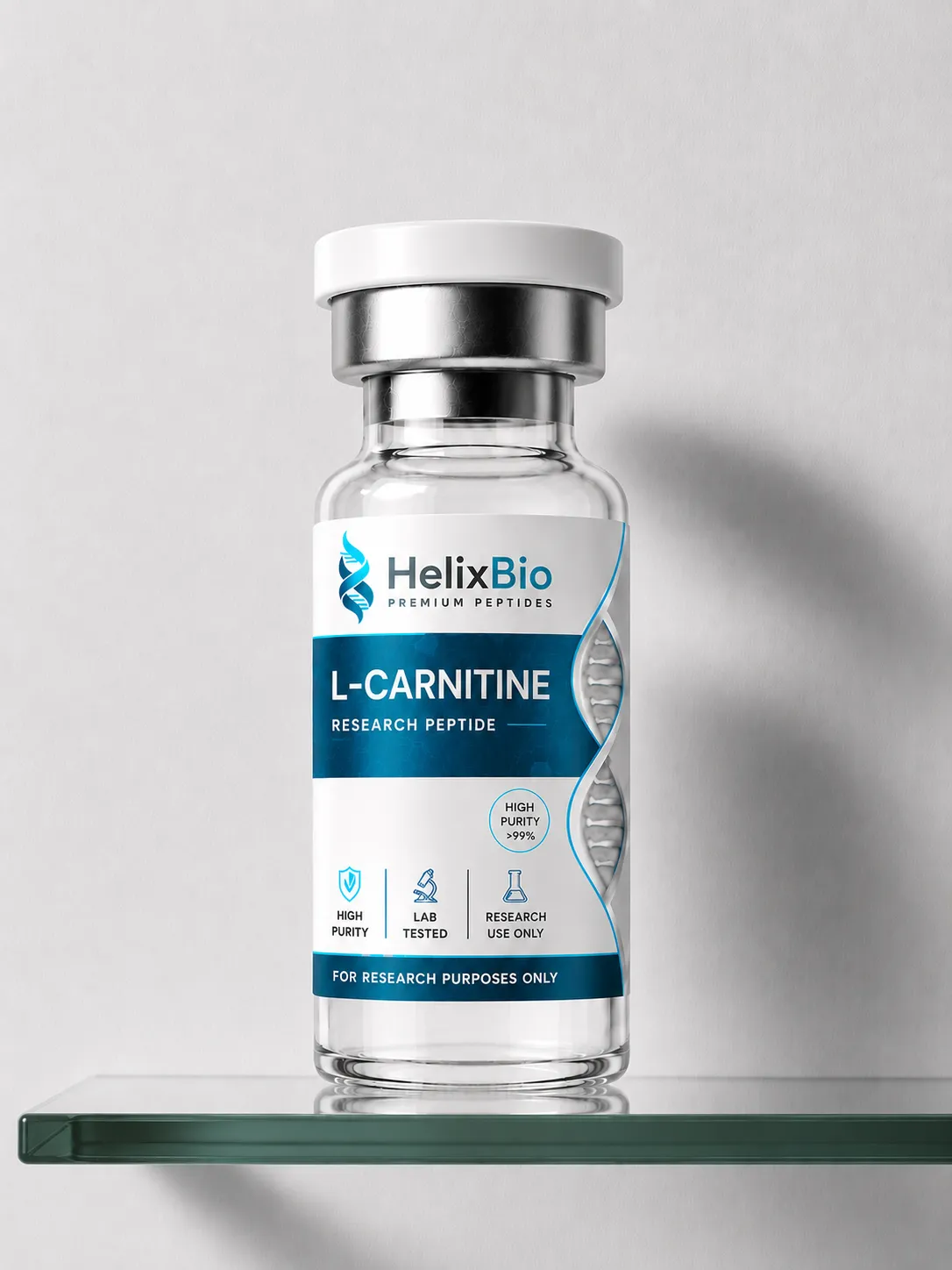
L-Carnitine is a naturally occurring quaternary ammonium compound derived from the amino acids lysine and methionine, best known in metabolic research for its role in shuttling fatty acids into the mitochondria for beta-oxidation. Its molecular formula is C7H15NO3, and it exists as a chiral molecule — the L-isomer is the biologically relevant form studied in carnitine shuttle research, distinct from D-carnitine. Helix Bio supplies L-Carnitine as a research-grade compound for laboratory use only. Every batch ships with a third-party Certificate of Analysis confirming purity by HPLC and identity by mass spectrometry. This product is not a drug, dietary supplement, or food product, and it is not intended for human or animal consumption.
HPLC certified
Independent analysis
Highest standard
Full traceability
L-Carnitine has been studied in metabolic biochemistry since researchers first isolated it from muscle tissue in the early twentieth century, though its role in fatty acid oxidation wasn't well characterized until decades later. Today it's a standard reference compound in mitochondrial and lipid metabolism research, largely because of its function in what's called the carnitine shuttle — the mechanism that moves long-chain fatty acids across the mitochondrial membrane so they can be broken down for energy.
Researchers studying energy metabolism, mitochondrial biogenesis, or lipid oxidation frequently use L-Carnitine as a tool compound or reference standard. Because it's a small, well-characterized molecule with a defined chiral structure, it also serves as a useful comparison point when evaluating related derivatives like Acetyl-L-Carnitine and Propionyl-L-Carnitine.
Helix Bio's L-Carnitine is supplied as a research-grade powder with a defined molecular formula (C7H15NO3) and molar mass consistent with the L-isomer. It is available in base and salt forms depending on batch, each verified for identity and purity before release.
This product exists to support in-vitro and in-vivo laboratory research into fatty acid metabolism, mitochondrial function, and related biochemical pathways. It is manufactured, labeled, and sold strictly as a research chemical under "for laboratory research use only" terms. Helix Bio does not market, label, or sell L-Carnitine for human use, human consumption, dietary supplementation, or as a treatment for any condition.
Researchers sourcing L-Carnitine for metabolic studies care about batch-to-batch consistency as much as raw purity, since reproducibility depends on knowing exactly what's in the vial from one order to the next. Helix Bio verifies both purity and identity on every batch and documents the results independently rather than relying on internal claims alone.
Purity claims on a label are only as good as the testing behind them. A lot of research-chemical suppliers skip independent verification or don't make lab reports available on request. Helix Bio tests every L-Carnitine batch through an outside laboratory and includes that documentation with the order, so researchers aren't taking purity on faith.
Storage conditions matter too. L-Carnitine is hygroscopic, meaning it readily absorbs moisture from the air, which can affect stability and accuracy in downstream research applications. Helix Bio packages it to limit that exposure during shipping, so what arrives in the lab is close to what left the facility.
This product is not intended for individual consumers, and it is not sold, labeled, or marketed for human use, human consumption, dietary supplementation, or personal health purposes.
| Field | Detail |
|---|---|
| Product Name | L-Carnitine |
| Category | Metabolic Research Compound (Research Use Only) |
| Molecular Formula | C7H15NO3 |
| Purity | 99%+ (HPLC verified) |
| Appearance | White to off-white crystalline powder |
| Storage | Cool, dry conditions, sealed, protected from moisture |
| Packaging | Sealed container, moisture-controlled shipping |
| Research Use | Laboratory/in-vitro and in-vivo research only |
| Manufacturer | Helix Bio |
| Quality | Third-party HPLC and mass spectrometry tested |
| Lot Testing | Batch-specific Certificate of Analysis (COA) |
| Country of Origin | United States |
Published research has used L-Carnitine across several areas of metabolic and mitochondrial biology. The following applications reflect documented areas of scientific study — not claims about outcomes, and not suggestions for human use.
Fatty acid oxidation research. L-Carnitine is central to the carnitine shuttle, the mechanism researchers study for how long-chain fatty acids cross the mitochondrial membrane for beta-oxidation.
Mitochondrial energy metabolism. Studies have examined L-Carnitine's role in mitochondrial function and cellular respiration, often alongside markers of energy metabolism.
Carnitine palmitoyltransferase (CPT1/CPT2) research. L-Carnitine is frequently referenced in studies of these enzymes, which regulate the rate-limiting step of fatty acid transport into mitochondria.
Comparative derivative research. Researchers studying Acetyl-L-Carnitine or Propionyl-L-Carnitine often use L-Carnitine as a baseline reference compound for structural and functional comparison.
Lipid metabolism and biomarker studies. L-Carnitine and its derivatives appear in research examining lipid metabolism pathways and carnitine-related biomarkers in cell and animal models.
None of the above reflects an approved use, a therapeutic claim, or a guarantee of any research outcome. These are documented areas of scientific inquiry, presented for informational purposes only.
Researchers frequently compare L-Carnitine to its acetylated and propionylated derivatives. The table below summarizes the structural distinctions relevant to research design.
| Compound | Structure | Studied Context |
|---|---|---|
| L-Carnitine | Base quaternary ammonium compound (C7H15NO3) | Carnitine shuttle, fatty acid oxidation research |
| Acetyl-L-Carnitine (ALCAR) | L-Carnitine with an acetyl group attached | Comparative bioavailability and cellular uptake studies |
| Propionyl-L-Carnitine | L-Carnitine with a propionyl group attached | Comparative metabolic and vascular research models |
Every L-Carnitine batch Helix Bio sells is tested by an independent laboratory using High-Performance Liquid Chromatography (HPLC) to confirm purity and mass spectrometry to confirm the compound's identity matches its labeled structure. These are standard analytical methods for verifying research chemicals, and both are applied consistently rather than selectively.
Because L-Carnitine is hygroscopic, handling standards focus heavily on moisture control. Helix Bio packages it to reduce exposure during transit and recommends researchers store it in a cool, dry, sealed environment once it arrives. A Certificate of Analysis accompanies each order so researchers can check purity and identity data against their own institutional requirements before use.
Store L-Carnitine powder in a cool, dry location, sealed and protected from moisture, since the compound is hygroscopic and can absorb humidity from the air. Avoid repeated exposure to open air once the container has been opened. For stock solution preparation, researchers should follow their own lab's protocols for solvent selection and concentration, since these vary by application and study design.
L-Carnitine ships in sealed, moisture-controlled packaging to help preserve stability in transit. Orders are processed and shipped within the United States. Specific carrier options, processing times, and delivery windows are detailed on Helix Bio's shipping policy page.
L-Carnitine is sold exclusively for laboratory research use. It is not a drug, dietary supplement, cosmetic, or food product, and it has not been evaluated or approved by the FDA for any use in humans or animals. This product is not intended to diagnose, treat, cure, or prevent any disease. It must not be introduced into the human body in any form. By purchasing this product, the buyer confirms they are a qualified researcher or research institution and agrees to handle it in accordance with applicable federal, state, and local research chemical regulations.
Knowledge Base
Knowledge Base
Knowledge Base
Knowledge Base
Knowledge Base
Knowledge Base
Knowledge Base
Knowledge Base
Knowledge Base
Knowledge Base
Knowledge Base
Knowledge Base
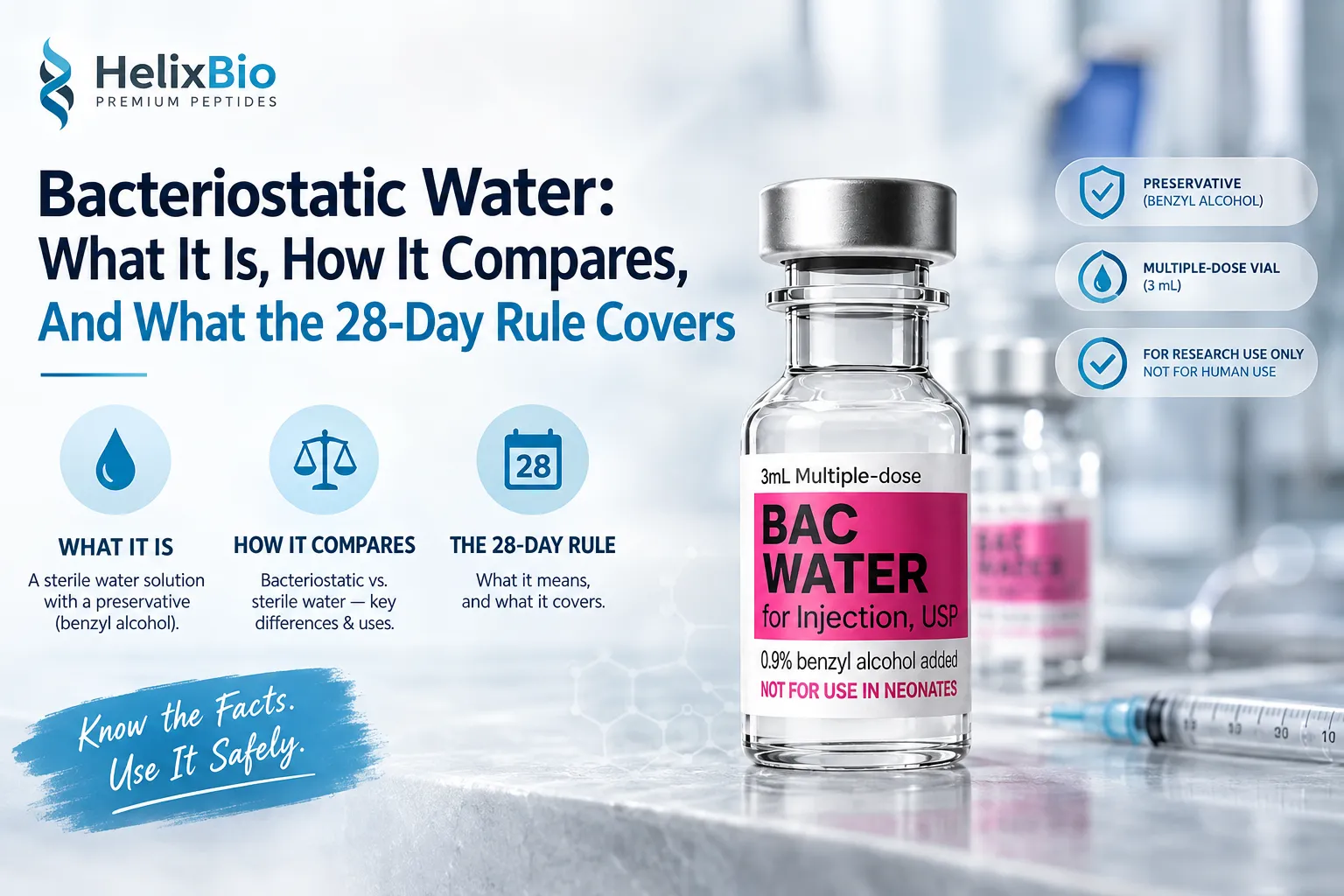
What bacteriostatic water contains, how it differs from sterile water and saline, where the 28-day opened-vial figure comes from, and what a COA can show.
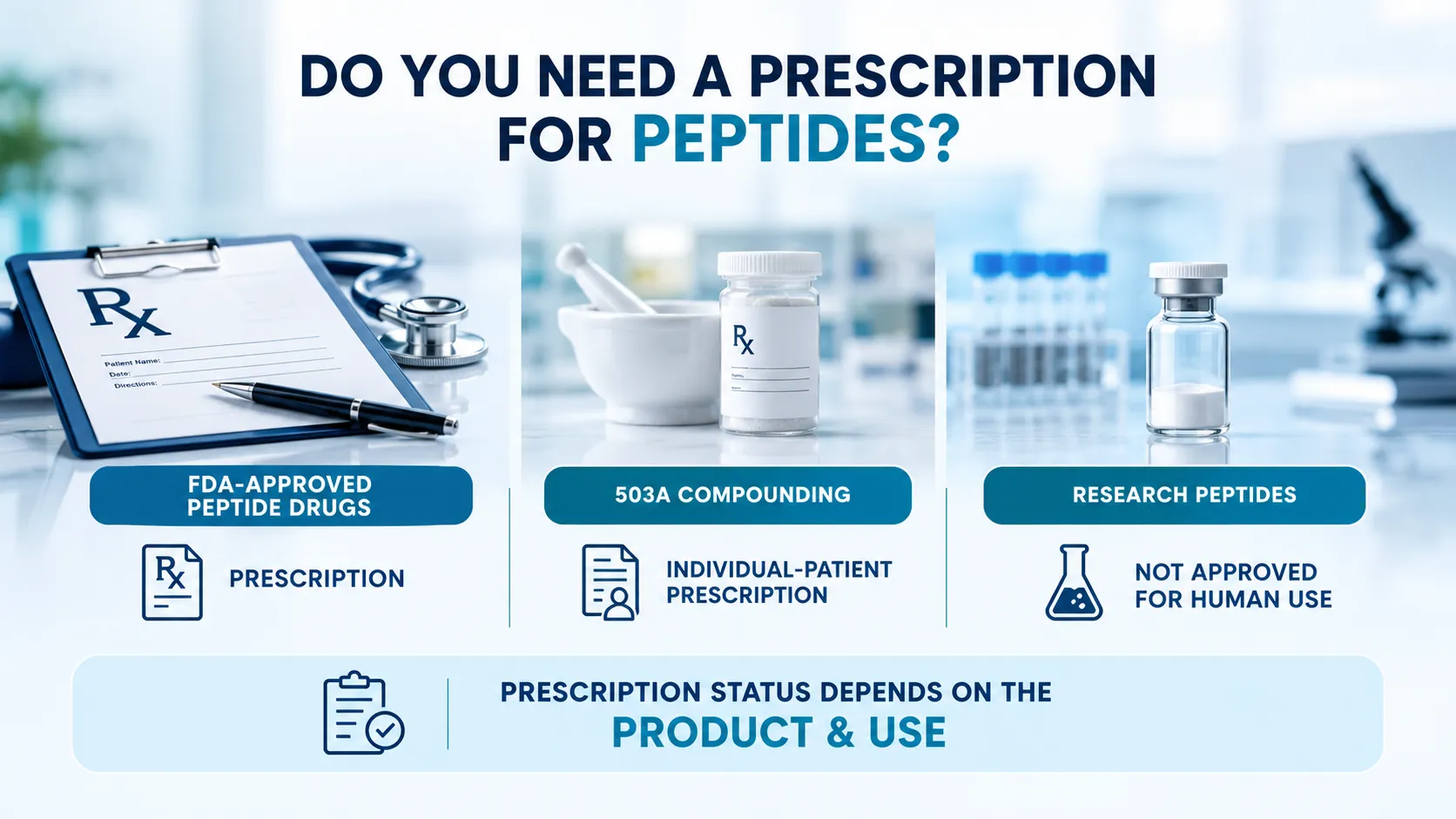
Do you need a prescription for peptides? It depends on the category. See which peptides need one, which do not, and the dated 2026 FDA rules that apply.
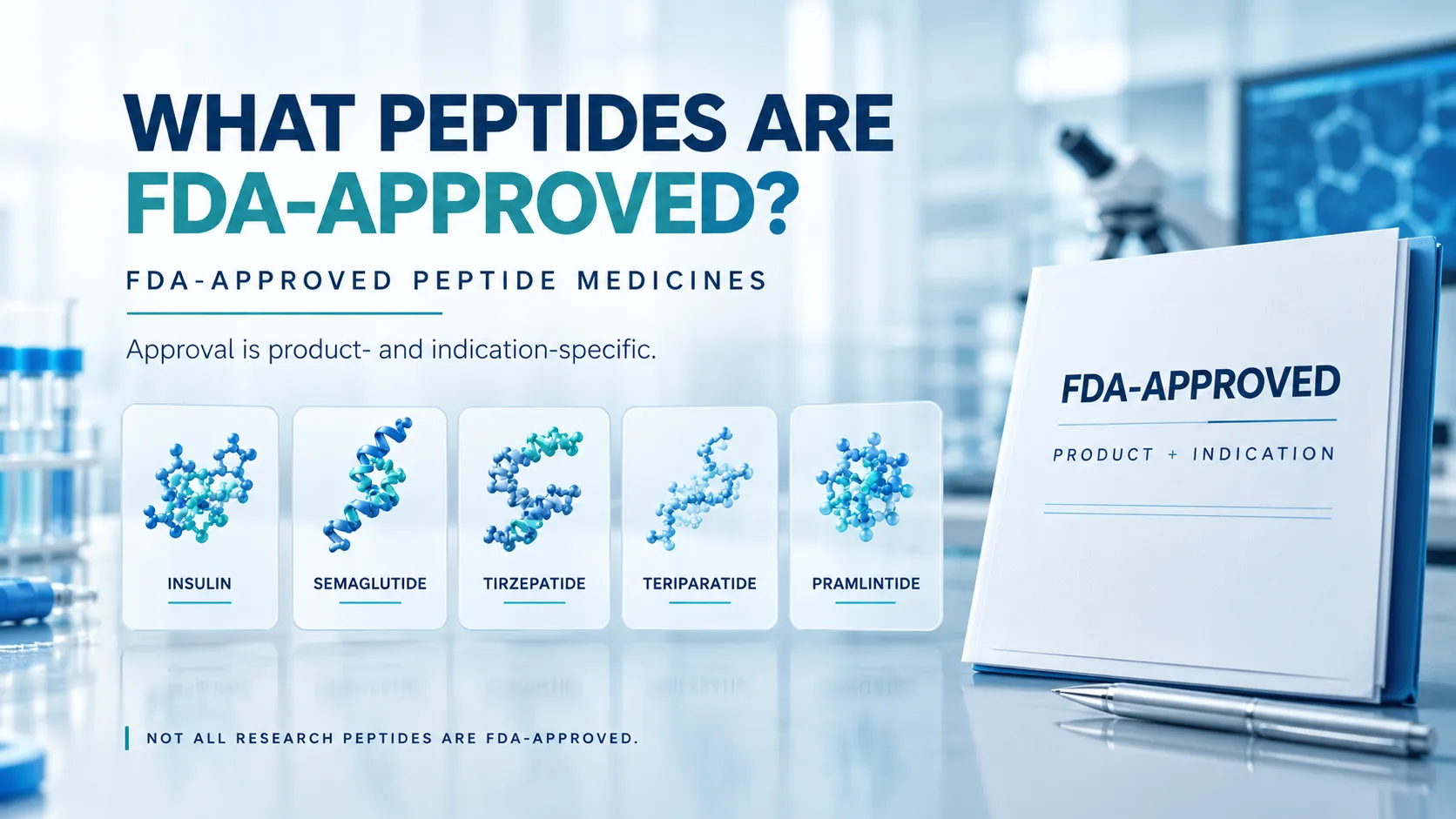
The complete 2026 list of FDA-approved peptides: 47 drugs by category and approval year, which popular peptides are not approved, and pipeline to watch.