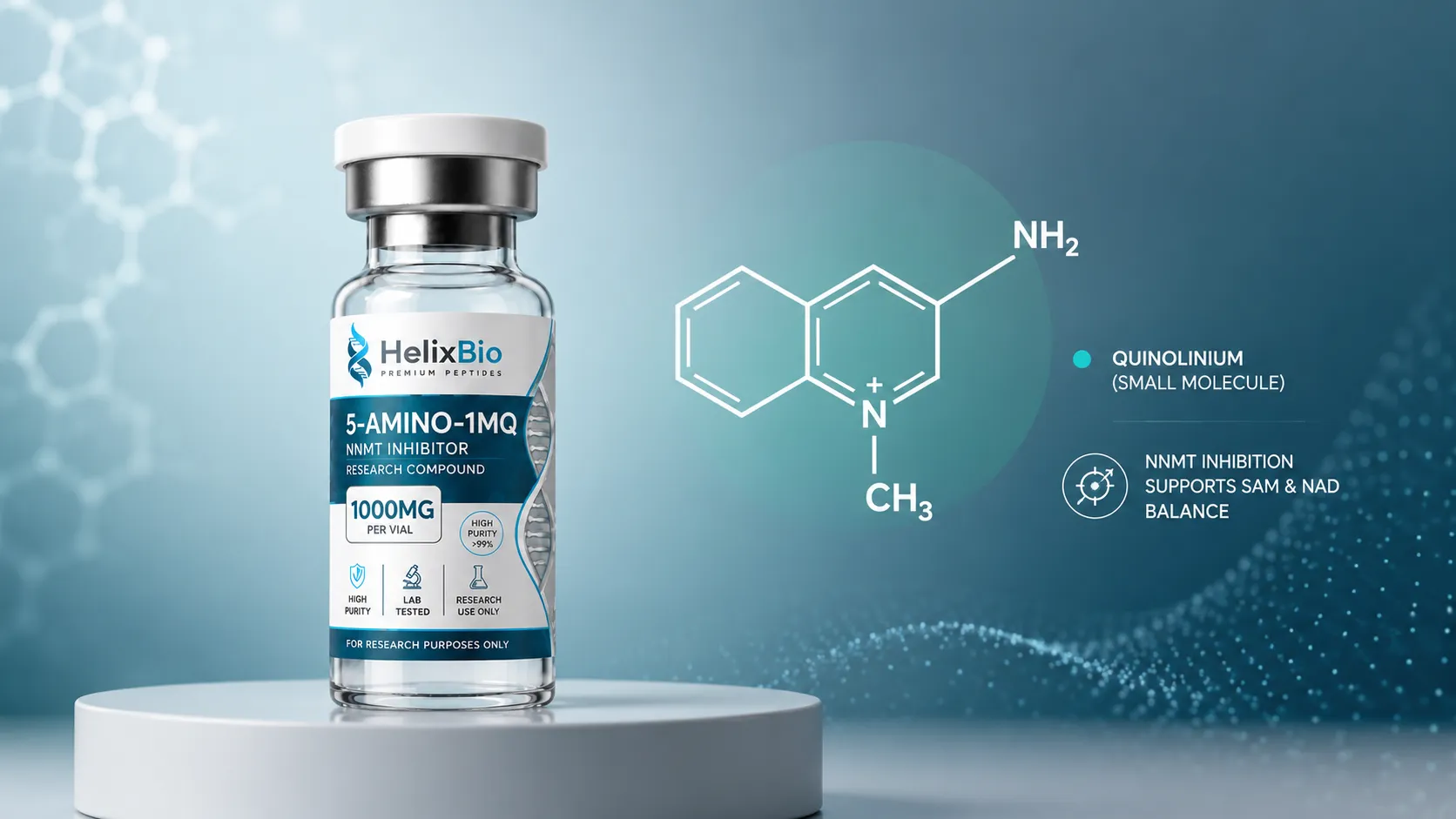
- 5-Amino-1MQ is 5-amino-1-methylquinolinium, a quinolinium small molecule with no amino acid backbone and no peptide bonds, despite being stocked and searched alongside research peptides.
- The compound is a selective, membrane-permeable inhibitor of nicotinamide N-methyltransferase, an intracellular enzyme that methylates nicotinamide using S-adenosylmethionine as the methyl donor.
- Inhibiting NNMT preserves both S-adenosylmethionine pools and the nicotinamide available to the NAD salvage pathway, since each enzymatic turnover consumes one of each.
- In the 2018 Neelakantan study, diet-induced obese mice received 5-Amino-1MQ subcutaneously at 20 mg/kg three times daily for 11 days, with nine animals per group.
- Treated mice showed reduced body weight, white adipose mass, adipocyte size, and plasma cholesterol with no significant change in food intake, indicating a mechanism operating downstream of appetite.
- A 2019 study in 24-month-old mice reported roughly doubled myofiber cross-sectional area after injury and approximately a 70 percent increase in peak tibialis anterior torque versus controls.
- There are no published human clinical trials of 5-Amino-1MQ, and the entire efficacy evidence base is rodent and in vitro.
- 5-Amino-1MQ has no FDA-approved indication for any purpose and no publicly recorded investigational new drug application.
Most 5-Amino-1MQ NNMT inhibitor research starts from a category error. The compound sits on catalog pages between BPC-157 and MOTS-c, gets searched alongside them, and gets discussed as though it belongs to the same class. It does not. 5-Amino-1-methylquinolinium is a quinolinium small molecule with no amino acid backbone and no peptide bonds anywhere in its structure. That is not a pedantic distinction, and treating it as a one-line disclaimer buries the most useful thing a researcher can know about the compound: nearly every practical difference in how it is handled, delivered, measured, and interpreted follows from the fact that it is not a peptide.
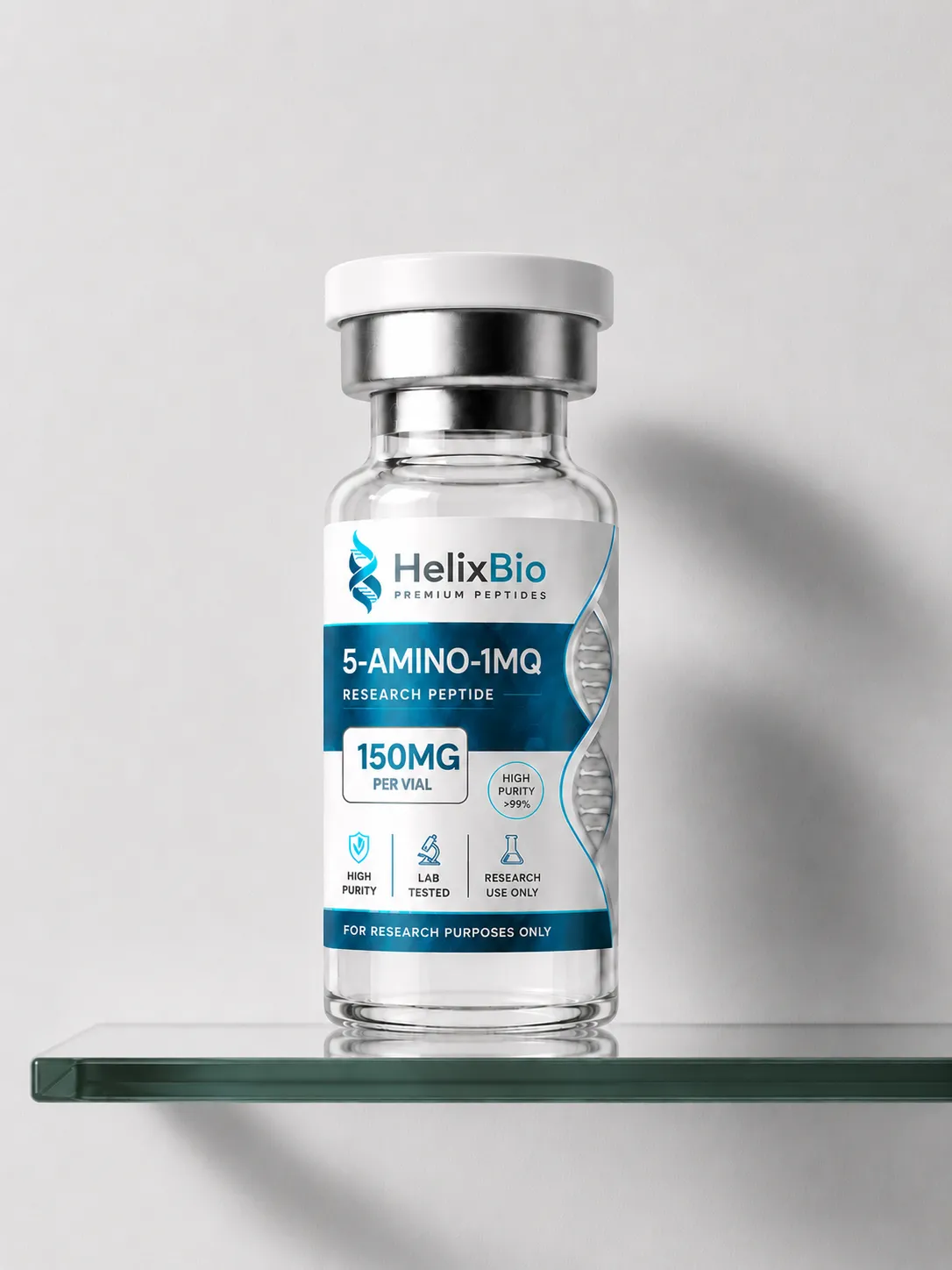
5-Amino-1MQ
RESEARCH PEPTIDE
5-Amino-1MQ is a small-molecule research compound studied as an inhibitor of nicotinamide N-methyltransferase (NNMT), an enzyme involved in NAD+ and methyl-group metabolism. Unlike most products in Helix Bio's catalog, 5-Amino-1MQ is not a peptide — it's a quinolinium-based small molecule that reaches intracellular targets without receptor binding. Preclinical rodent studies have linked NNMT inhibition to adipocyte and fat-metabolism research outcomes, which is why the compound draws interest from researchers working alongside peptide-based metabolic compounds like MOTS-c and GLP-1-class peptides. Helix Bio supplies 5-Amino-1MQ as a research-grade powder intended strictly for laboratory use, manufactured to a high-purity standard and backed by third-party verification. It is not intended for human consumption, diagnostic use, or any therapeutic application.
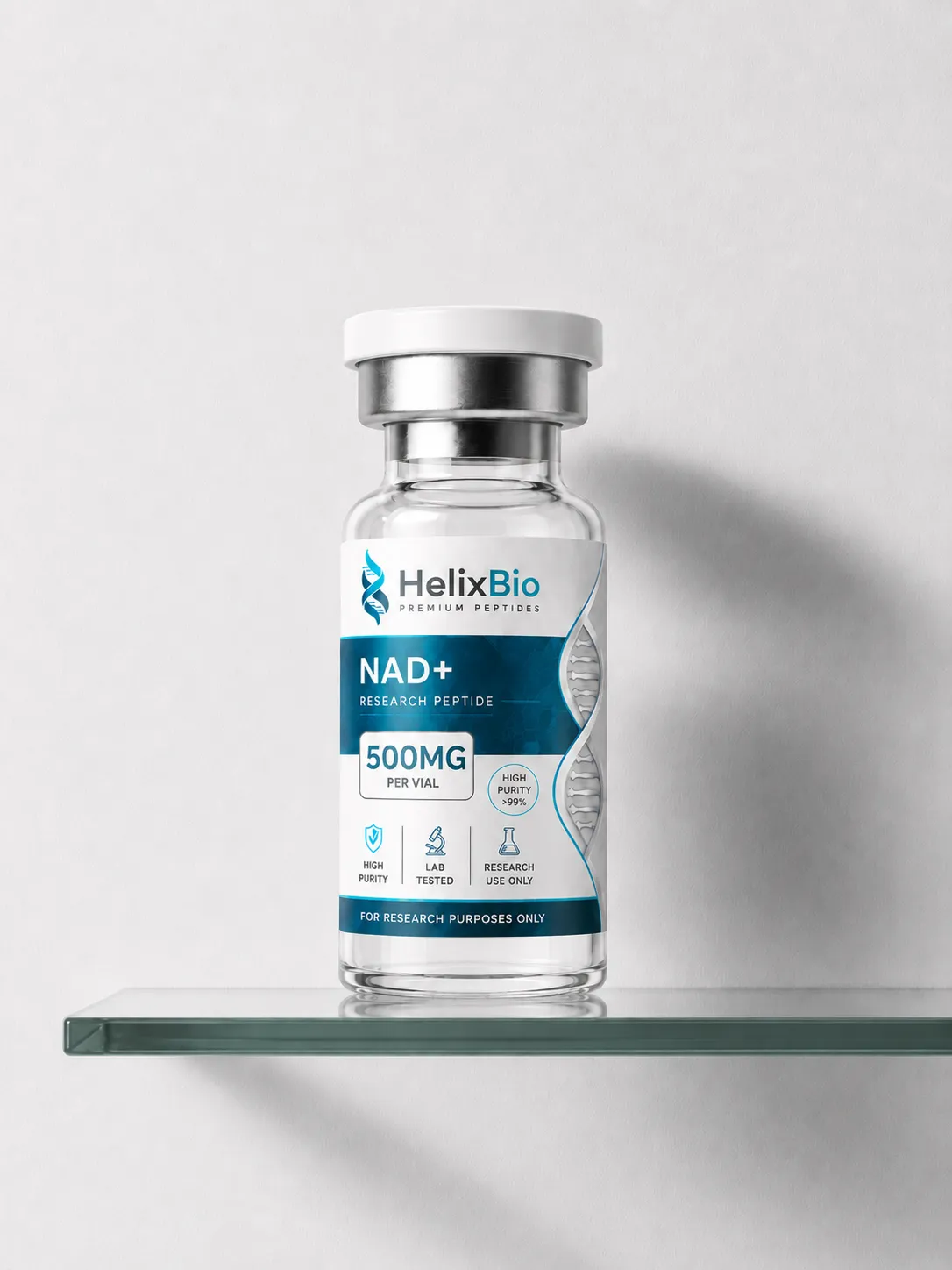
NAD+
RESEARCH PEPTIDE
NAD+ (nicotinamide adenine dinucleotide) is a coenzyme found in every living cell, where it plays a central role in redox reactions and cellular energy metabolism. Helix Bio's NAD+ research peptide is manufactured for laboratory use, supplied as a lyophilized powder, and backed by a certificate of analysis for every batch. It's intended strictly for qualified researchers, laboratories, and academic institutions studying cellular energy pathways, mitochondrial function, and related areas of biochemistry. This product is not intended for human or animal consumption.
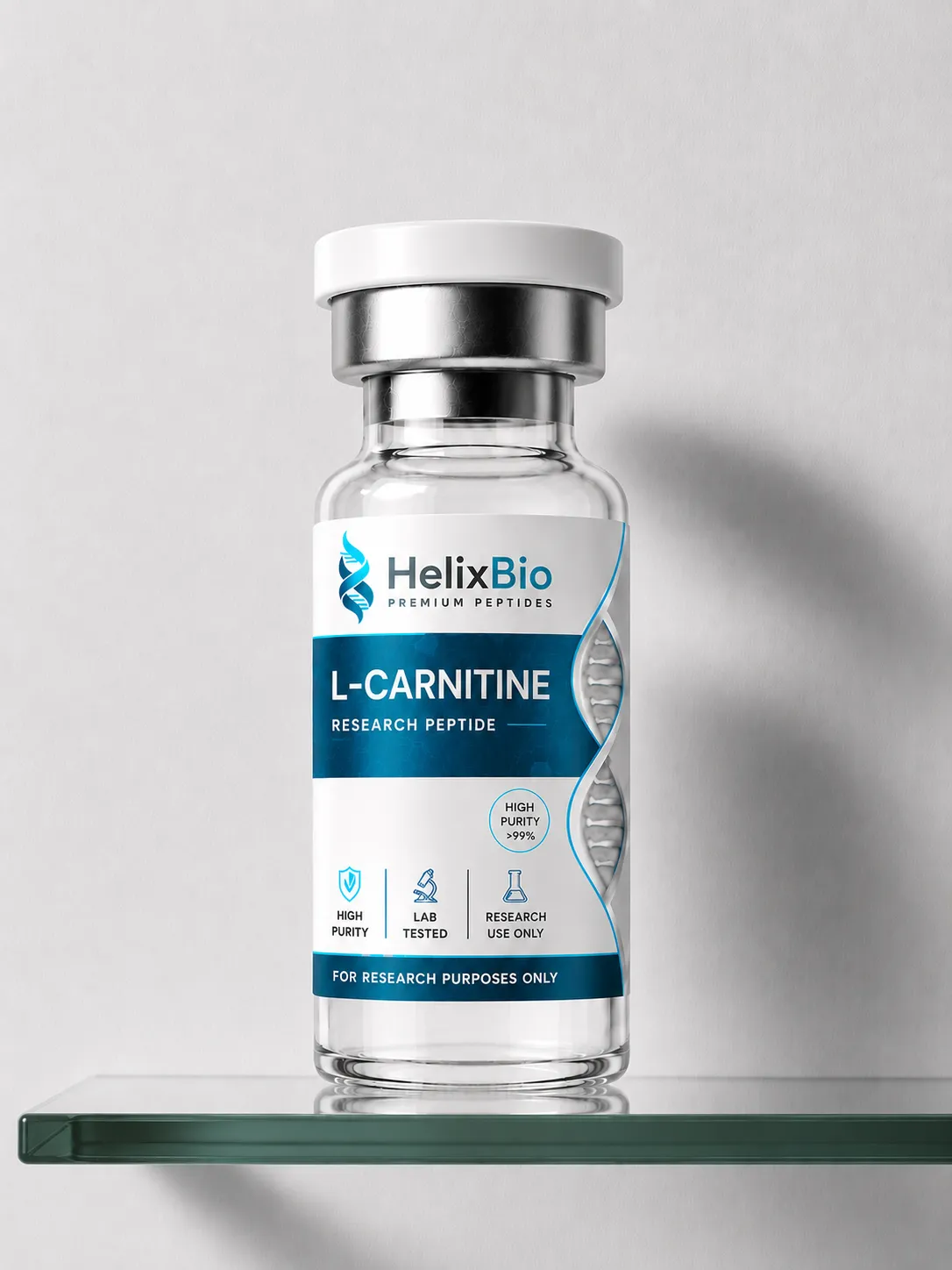
L-Carnitine
RESEARCH PEPTIDE
L-Carnitine is a naturally occurring quaternary ammonium compound derived from the amino acids lysine and methionine, best known in metabolic research for its role in shuttling fatty acids into the mitochondria for beta-oxidation. Its molecular formula is C7H15NO3, and it exists as a chiral molecule — the L-isomer is the biologically relevant form studied in carnitine shuttle research, distinct from D-carnitine. Helix Bio supplies L-Carnitine as a research-grade compound for laboratory use only. Every batch ships with a third-party Certificate of Analysis confirming purity by HPLC and identity by mass spectrometry. This product is not a drug, dietary supplement, or food product, and it is not intended for human or animal consumption.
Why the Structural Distinction Changes the Research Picture
A peptide is a chain of amino acids joined by peptide bonds. BPC-157 is fifteen of them. MOTS-c is sixteen. Thymosin beta-4 is forty-three. 5-Amino-1MQ is a single aromatic heterocycle with a methylated quaternary nitrogen and an amino substituent, closer in kind to a small-molecule enzyme inhibitor than to anything in a peptide catalog.
That difference cascades into four practical consequences.
Target class. Peptides in this space generally act at cell-surface receptors. 5-Amino-1MQ acts on an intracellular enzyme, which means it has to cross the plasma membrane to do anything at all. Membrane permeability was the specific design problem its developers were solving. Earlier NNMT inhibitors such as tetramethylquinolinium inhibited the enzyme competently in cell-free assays and failed inside living adipocytes because they could not get in.
Stability profile. Peptides degrade through proteolysis, deamidation, oxidation of specific residues, and aggregation. A quinolinium salt has none of those failure modes. It is not a substrate for peptidases, which is also why it shows oral bioavailability that injectable peptides do not.
Analytical verification. A certificate of analysis for a peptide typically reports HPLC purity alongside mass spectrometry confirming the expected molecular weight for a specific amino acid sequence. For a small molecule, identity confirmation rests on the molecular formula and spectroscopic characterization, and there is no sequence to verify. Reading a small-molecule COA against peptide expectations produces confusion in both directions. The general framework is covered in the certificate of analysis guide.
Handling. Peptide storage guidance is largely built around protecting fragile secondary structure and preventing hydrolysis. Those concerns do not transfer directly.
When evaluating documentation for 5-Amino-1MQ, expect small-molecule analytical data rather than peptide-style sequence confirmation. A supplier presenting sequence purity figures for a compound with no sequence is a signal worth investigating.
How the 5-Amino-1MQ NNMT Inhibitor Works: One Enzyme, Two Pools
Nicotinamide N-methyltransferase is a cytosolic enzyme that transfers a methyl group from S-adenosylmethionine to nicotinamide, producing 1-methylnicotinamide and S-adenosylhomocysteine. The reaction is metabolically expensive in a specific way, and that expense is the entire basis of the research interest.
Each turnover consumes two things the cell needs elsewhere.
SAM Depletion
S-adenosylmethionine is the universal methyl donor for DNA methylation, histone methylation, and polyamine synthesis. NNMT is expressed at high levels in white adipose tissue, and when its activity rises, it competes for the same SAM pool that epigenetic and polyamine pathways draw on. The original identification of NNMT as a metabolic target, published by Kraus and colleagues in Nature in 2014, proposed exactly this: NNMT influences adipose tissue through histone methylation and polyamine flux, and knocking it down in mice on a high-fat diet protected against diet-induced obesity.
Nicotinamide Diverted Away From NAD Salvage
The second cost is the one that connects this compound to a much larger body of longevity research. Nicotinamide is the primary substrate of the NAD salvage pathway, which recycles it back into NAD through nicotinamide phosphoribosyltransferase. Every nicotinamide molecule NNMT methylates is a molecule permanently removed from that recycling loop, exported as 1-methylnicotinamide instead.
Inhibiting NNMT therefore preserves both pools at once. Cell-culture work with 5-Amino-1MQ reported rising intracellular NAD and SAM alongside falling 1-methylnicotinamide, confirmed by mass spectrometry, with selectivity over related methyltransferases at the concentrations tested. The salvage pathway itself is covered in more depth in the NAD research overview, and researchers pairing the two lines of work should note that an NNMT inhibitor and an NAD precursor act at genuinely different points rather than duplicating each other.
The Diet-Induced Obesity Data
The defining study is Neelakantan and colleagues, published in Biochemical Pharmacology in 2018 under the title describing selective and membrane-permeable small molecule NNMT inhibitors reversing high fat diet-induced obesity in mice.
The design detail most often misreported is the regimen. Diet-induced obese C57BL/6 mice received 5-Amino-1MQ subcutaneously at 20 mg/kg administered three times daily for 11 days, with nine animals per group. That is 20 mg/kg per administration, not per day, and secondary summaries frequently compress it into "20 mg/kg/day," which understates total exposure by a factor of three.
Reported outcomes in treated animals versus vehicle controls:
- Progressive reduction in body weight across the treatment period, with statistically significant separation from controls emerging around day 6 and strengthening through days 9 and 10
- Reduced white adipose tissue mass
- Reduced adipocyte size on histology, the most strongly significant of the reported measures
- Lowered plasma total cholesterol
- No significant difference in food intake between treated and control groups
The Finding That Actually Distinguishes This Compound
That last bullet is the mechanistically interesting one, and it deserves more than a passing mention.
Body weight fell while food intake held constant. Whatever produced the effect operated downstream of appetite, consistent with altered lipid handling in adipose tissue rather than reduced caloric input. This separates the compound cleanly from the incretin class, where semaglutide, tirzepatide, and related agonists produce weight change substantially through appetite and gastric emptying effects mediated at GLP-1 and GIP receptors. The comparative pharmacology of that class is covered in the GLP-1 and GIP agonist research overview.
Property | 5-Amino-1MQ | NAD precursors | GLP-1 class agonists |
|---|---|---|---|
Molecular class | Quinolinium small molecule | Nucleotide precursors | Peptides |
Target | NNMT, intracellular enzyme | Salvage pathway substrate supply | GLP-1 receptor, cell surface |
Primary mechanism | Blocks methylation of nicotinamide | Supplies substrate for NAD synthesis | Receptor-mediated signaling |
Effect on food intake in models | No significant change reported | Not an appetite-directed mechanism | Appetite reduction is a primary route |
Peptide bonds present | None | None | Yes |
Human clinical trials | None published | Multiple published | Extensive Phase 3 programs |
Calorie Restriction and the Microbiome Extension
Two follow-up studies extended the metabolic work beyond monotherapy.
Sampson and colleagues reported in Scientific Reports in 2021 that combining NNMT inhibition with a reduced-calorie diet normalized body composition in obese mice and enhanced metabolic outcomes relative to either intervention alone.
Dimet-Wiley and colleagues published a companion finding in Scientific Reports in 2022 examining the gut microbiome. In that study, mice were maintained on a high-fat diet for 12 weeks, transitioned to a Western diet for four weeks, then randomized to continued Western diet or a lean diet with either vehicle or NNMT inhibitor treatment for roughly seven weeks. The combination of NNMT inhibition with low-fat diet drove body weight and fat mass down to levels statistically indistinguishable from age-matched lean controls, while the diet switch alone did not restore those measures in the same window. The cecal microbiome profiles of the treated animals were distinct.
The Second Research Angle: Aged and Injured Skeletal Muscle
Framing 5-Amino-1MQ purely as a fat-loss compound misses the more interesting half of its literature.
NNMT accumulates in aged skeletal muscle, and the same enzymatic logic applies there: high NNMT activity drains NAD salvage capacity in a tissue where NAD decline is already implicated in dysfunction. Neelakantan and colleagues tested the pharmacological consequence in a 2019 Biochemical Pharmacology study using the same quinolinium inhibitor.
The design used 24-month-old mice, an age at which murine muscle recapitulates several hallmarks of human sarcopenia. Animals received saline control or NNMT inhibitor at 5 or 10 mg/kg, then underwent acute barium chloride injury to the tibialis anterior muscle. Muscle stem cell activity was tracked with systemically administered EdU labeling, with cohorts assessed at one week and three weeks post-injury.
The reported results:
- Muscle stem cell proliferation increased, with the proportion of EdU-positive satellite cells roughly doubling in treated animals
- Myofiber cross-sectional area in regenerating muscle approximately doubled versus controls
- Evidence of increased satellite cell fusion into damaged myofibers
- Peak isometric torque of the tibialis anterior increased by approximately 70 percent compared with controls
The torque figure carries the most weight, because contractile function is a whole-organ outcome rather than a histological proxy. Parallel in vitro work in C2C12 myoblasts showed enhanced differentiation with corresponding shifts in cellular NAD and NADH redox state, which supports the proposed mechanism rather than merely correlating with it.
A 2024 Scientific Reports study extended this line by treating aged mice with NNMT inhibition, intensive exercise, or both, comparing grip strength, running capacity, plantarflexor peak torque, fatigue resistance, fiber type, cross-sectional area, and intramyocellular lipid content across conditions.
What the Evidence Base Does Not Include
Stating this plainly matters more than any individual finding above.
There are no published human clinical trials of 5-Amino-1MQ. Not a Phase 1 dose-finding study, not a published human pharmacokinetic characterization, not a placebo-controlled trial in any indication. The entire efficacy literature is rodent and in vitro. The compound has no FDA-approved indication for any purpose and no publicly recorded investigational new drug application.
The rodent studies themselves carry meaningful limitations. The 2018 obesity work used nine animals per group over 11 days in a single inbred strain. Short duration and small group sizes constrain what can be concluded about durability or generalizability, and metabolic targets have a well-documented history of failing to translate from rodents to humans.
Quinoline-derived NNMT inhibitor patents exist and are publicly accessible. They are not peer-reviewed evidence, they were drafted to support intellectual property claims rather than to report neutral findings, and they should not be cited as though they carry the weight of a published study.
No dosing regimen for human use has been established for 5-Amino-1MQ in any published study. Retail protocols in circulation are extrapolations from rodent milligram-per-kilogram figures, not findings from a human trial, and the 2018 study's three-times-daily subcutaneous regimen does not translate to any validated equivalent.
Handling and Storage Considerations
As a small-molecule salt rather than a peptide, 5-Amino-1MQ is generally more forgiving than lyophilized peptides on the handling variables that most often cause silent potency loss. It is not vulnerable to proteolytic degradation, and it does not carry the freeze-thaw sensitivity associated with fragile peptide secondary structure.
Standard practice still applies: protection from light and moisture, storage at the supplier-specified temperature, documented reconstitution dates where a solution is prepared, and avoidance of repeated temperature cycling. The general principles are covered in the reconstitution and storage guide and the storage mistakes breakdown, with the caveat that the degradation chemistry differs.
Available as 5-Amino-1MQ, and researchers examining adjacent metabolic pathways commonly work alongside NAD+ and L-Carnitine. All are supplied for research use only, with the regulatory framing covered in the RUO compliance overview. Regulatory context for related compounds is discussed in the FDA 503A Bulks List explainer; 5-Amino-1MQ was not among the substances nominated at that meeting, which is itself a consequence of its small-molecule classification.
The Question the Literature Has Not Answered
NNMT inhibition raises SAM. That is the mechanism, and it is also the least examined part of the safety picture. SAM is the methyl donor for DNA and histone methylation across every tissue, not only adipose and muscle, and a sustained rise in a universal methyl donor is a genuinely open question that eleven-day and seven-week rodent studies were not designed to address. The muscle findings are the more striking result and the metabolic findings get the marketing attention, but the durability question sitting underneath both is what a human trial would need to resolve first, and no such trial has been registered.
Frequently Asked Questions
No. 5-Amino-1MQ is 5-amino-1-methylquinolinium, a quinolinium-class small molecule containing no amino acid backbone and no peptide bonds. It is commonly stocked and searched alongside research peptides, but structurally it belongs to a different chemical class entirely.
Nicotinamide N-methyltransferase is a cytosolic enzyme that transfers a methyl group from S-adenosylmethionine to nicotinamide, producing 1-methylnicotinamide and S-adenosylhomocysteine. It is expressed at high levels in white adipose tissue and accumulates in aged skeletal muscle.
5-Amino-1MQ selectively inhibits NNMT and is membrane-permeable, allowing it to reach the enzyme inside cells. Blocking the reaction preserves S-adenosylmethionine that would otherwise be consumed as a methyl donor and preserves nicotinamide that would otherwise be diverted away from the NAD salvage pathway.
NNMT is an intracellular enzyme, so an inhibitor must cross the plasma membrane to have any effect. Earlier NNMT inhibitors such as tetramethylquinolinium inhibited the enzyme effectively in cell-free assays but performed poorly in living adipocytes because they could not enter the cell.
Diet-induced obese C57BL/6 mice receiving 5-Amino-1MQ showed progressive body weight reduction, decreased white adipose mass, reduced adipocyte size, and lowered plasma total cholesterol compared with vehicle controls. Food intake did not differ significantly between treated and control groups.
Mice received 5-Amino-1MQ subcutaneously at 20 mg/kg administered three times daily for 11 days, with nine animals per group. Secondary sources frequently misreport this as 20 mg/kg per day, which understates total daily exposure threefold.
In the published mouse work, 5-Amino-1MQ reduced adiposity without any significant change in food intake, indicating a mechanism acting downstream of appetite. GLP-1 receptor agonists such as semaglutide produce weight change substantially through appetite suppression and gastric emptying effects mediated at cell-surface receptors.
A 2019 study in 24-month-old mice reported that NNMT inhibition increased muscle stem cell proliferation and fusion following barium chloride injury to the tibialis anterior, with myofiber cross-sectional area roughly doubling and peak isometric torque increasing by approximately 70 percent versus controls. Parallel work in C2C12 myoblasts showed enhanced differentiation with corresponding shifts in cellular NAD and NADH redox state.
No. There is no published Phase 1 dose-finding study, no published human pharmacokinetic characterization, and no placebo-controlled human trial in any indication. The entire efficacy evidence base consists of rodent and in vitro studies.
No. 5-Amino-1MQ has no FDA-approved indication for any purpose and no publicly recorded investigational new drug application. It is supplied strictly as a research compound.
NNMT permanently removes nicotinamide from the NAD salvage pathway by methylating it into 1-methylnicotinamide, so inhibiting NNMT preserves substrate availability for NAD synthesis. An NNMT inhibitor and an NAD precursor therefore act at different points in the same pathway rather than duplicating each other.
The 2018 obesity study used nine animals per group across 11 days in a single inbred mouse strain, which constrains conclusions about durability and generalizability. Metabolic targets have a documented history of failing to replicate from rodent models to human outcomes.
No. Quinoline-derived NNMT inhibitor patents exist and are publicly accessible, but patents are drafted to support intellectual property claims rather than to report neutral findings and are not peer-reviewed. The peer-reviewed rodent studies constitute the actual evidence base.
As a small-molecule salt, 5-Amino-1MQ is not subject to proteolytic degradation or the freeze-thaw sensitivity associated with fragile peptide secondary structure. Standard practice still includes protection from light and moisture, storage at the supplier-specified temperature, and documented reconstitution dates where solutions are prepared.
Documentation should present small-molecule analytical data including molecular formula confirmation and spectroscopic characterization rather than peptide-style sequence verification. There is no amino acid sequence to verify, so a supplier reporting sequence purity for this compound is presenting data that does not apply to it.
- 01Kraus D, Yang Q, Kong D, et al. Nicotinamide N-methyltransferase knockdown protects against diet-induced obesity. Nature. 2014;508(7495):258-262. doi:10.1038/nature13198
- 02Neelakantan H, Vance V, Wetzel MD, et al. Selective and membrane-permeable small molecule inhibitors of nicotinamide N-methyltransferase reverse high fat diet-induced obesity in mice. Biochemical Pharmacology. 2018;147:141-152. doi:10.1016/j.bcp.2017.11.007
- 03Neelakantan H, Brightwell CR, Graber TG, et al. Small molecule nicotinamide N-methyltransferase inhibitor activates senescent muscle stem cells and improves regenerative capacity of aged skeletal muscle. Biochemical Pharmacology. 2019;163:481-492. doi:10.1016/j.bcp.2019.02.008
- 04Sampson CM, Dimet AL, Neelakantan H, et al. Combined nicotinamide N-methyltransferase inhibition and reduced-calorie diet normalizes body composition and enhances metabolic benefits in obese mice. Scientific Reports. 2021. doi:10.1038/s41598-021-85051-6
- 05Dimet-Wiley A, Wu Q, Wiley JT, et al. Reduced calorie diet combined with NNMT inhibition establishes a distinct microbiome in DIO mice. Scientific Reports. 2022;12(1):484. doi:10.1038/s41598-021-03670-5
- 06Nicotinamide N-methyltransferase inhibition mimics and boosts exercise-mediated improvements in muscle function in aged mice. Scientific Reports. 2024. doi:10.1038/s41598-024-66034-9
Helix Bio Chem Team
Research & Product Team
Our in-house team tracks published peptide research and translates it into clear, source-cited summaries for the research community.
Reviewed by in-house research chemists
support@helixbiochem.com