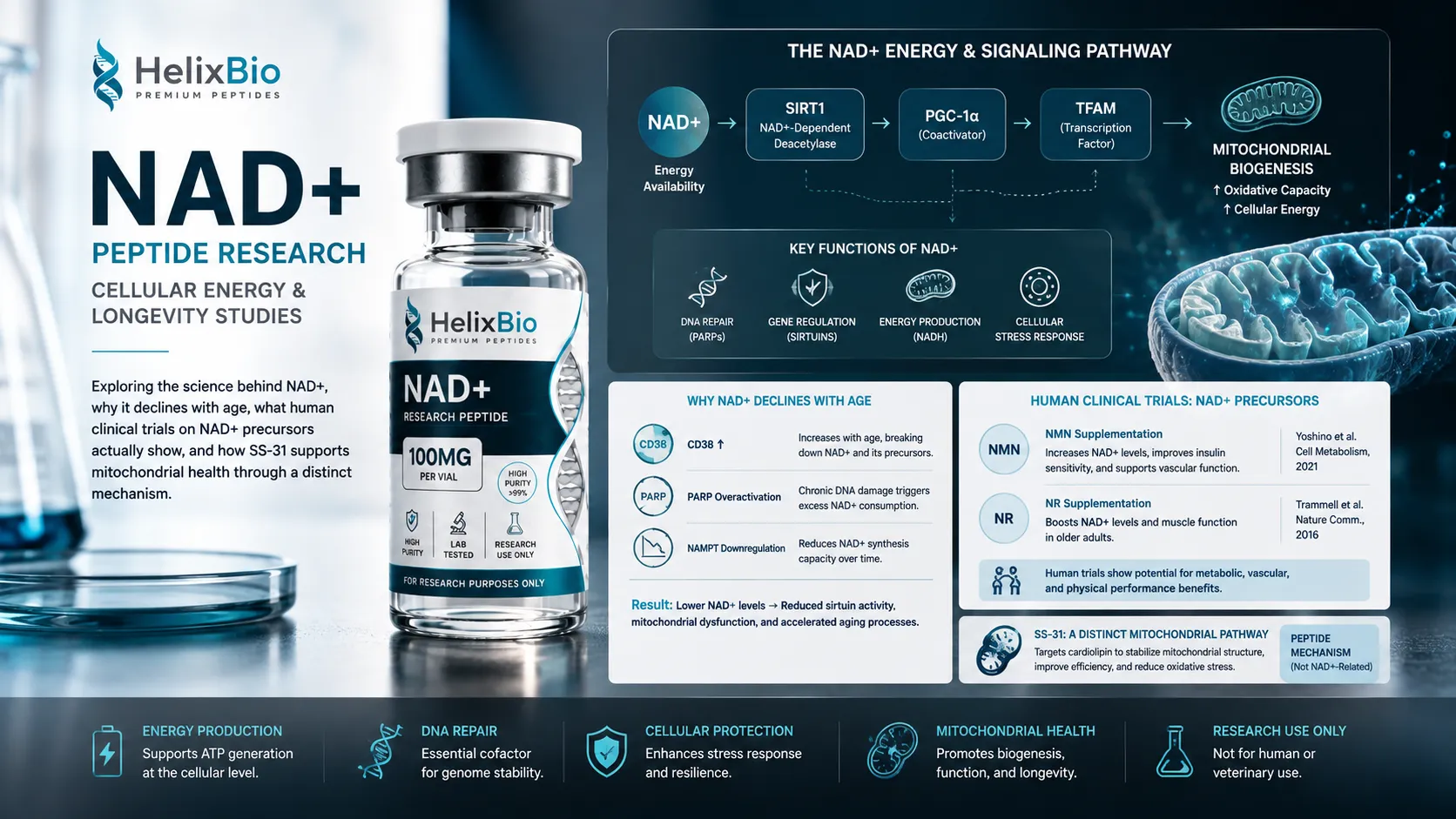
- NAD+ is both a redox cofactor for energy metabolism and a consumable substrate for sirtuins, PARPs, and CD38 NADase enzymes.
- SIRT1 activity is directly gated by NAD+ availability and drives PGC-1alpha-TFAM-mediated mitochondrial biogenesis.
- A 2016 Cell Metabolism study found CD38 is required for age-related NAD+ decline and mitochondrial dysfunction, using CD38-knockout mice that preserved NAD+ levels through aging.
- Human clinical trials confirm NMN and NR reliably raise blood NAD+ levels, but a 2024 meta-analysis of 12 RCTs (513 participants) found most clinically relevant outcomes were not significantly different from control.
- SS-31 (elamipretide) supports mitochondrial function through a mechanistically distinct pathway: direct cardiolipin binding and inner-membrane stabilization, unrelated to NAD+/sirtuin signaling.
- No published study has tested NAD+ and SS-31 in direct combination; each should be evaluated against its own separate mechanistic literature.
Nicotinamide adenine dinucleotide (NAD+) is not a peptide itself, but it sits at the center of a fast-growing body of peptide-adjacent research because of its role as the obligatory cofactor for sirtuin enzymes, DNA repair proteins, and mitochondrial energy metabolism. Research interest in NAD+ has intensified because circulating and tissue NAD+ levels decline measurably with age, and because that decline has been mechanistically linked — not just correlated — to specific enzymes that consume NAD+ faster than the body can replace it. This guide covers the NAD+ mechanism, what the human clinical trial data on NAD+ precursors actually shows (as distinct from marketing claims about it), and how SS-31, a genuinely mitochondria-targeted peptide, fits into the same broader research area through a completely different mechanism.
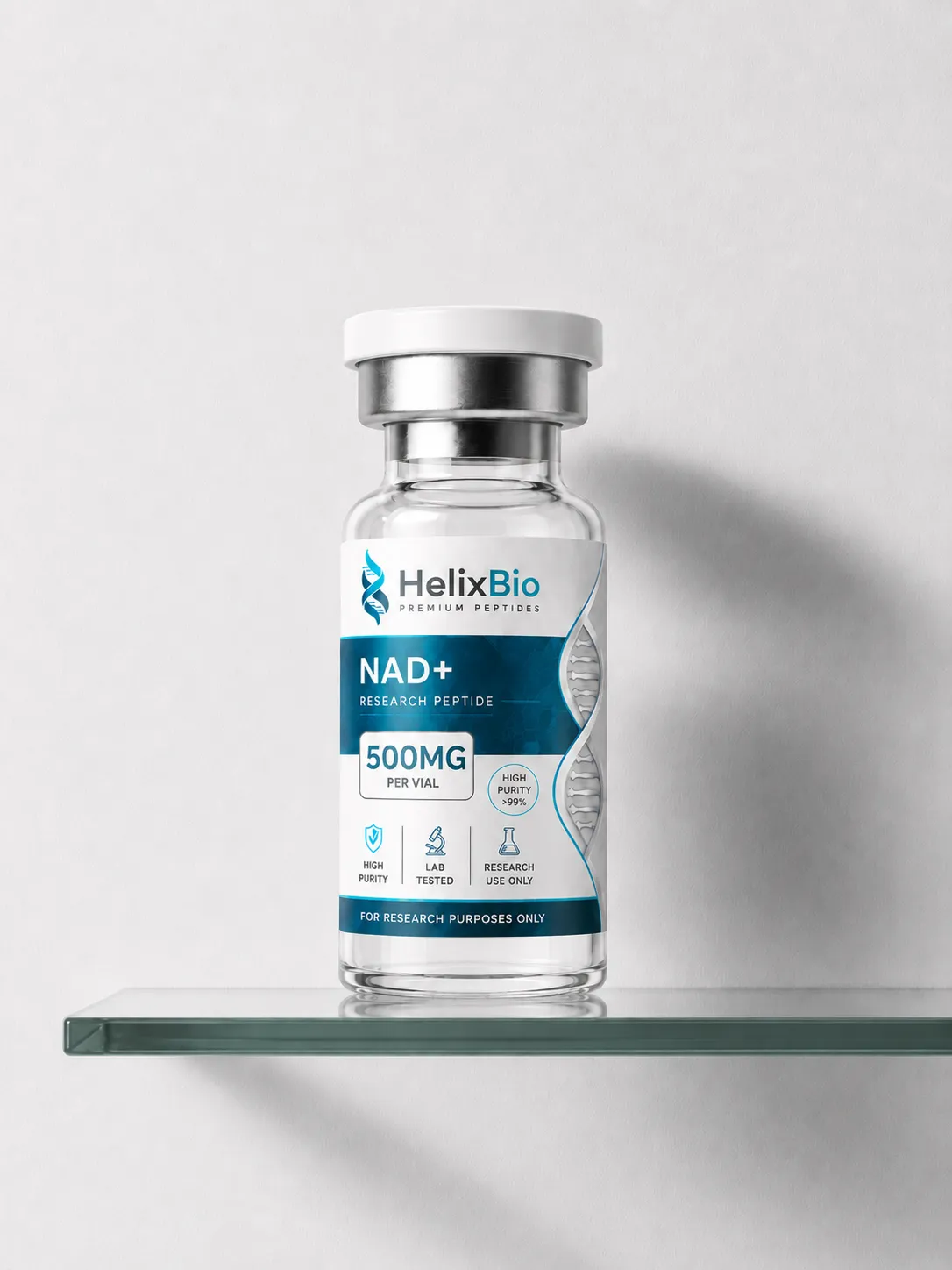
NAD+
RESEARCH PEPTIDE
NAD+ (nicotinamide adenine dinucleotide) is a coenzyme found in every living cell, where it plays a central role in redox reactions and cellular energy metabolism. Helix Bio's NAD+ research peptide is manufactured for laboratory use, supplied as a lyophilized powder, and backed by a certificate of analysis for every batch. It's intended strictly for qualified researchers, laboratories, and academic institutions studying cellular energy pathways, mitochondrial function, and related areas of biochemistry. This product is not intended for human or animal consumption.
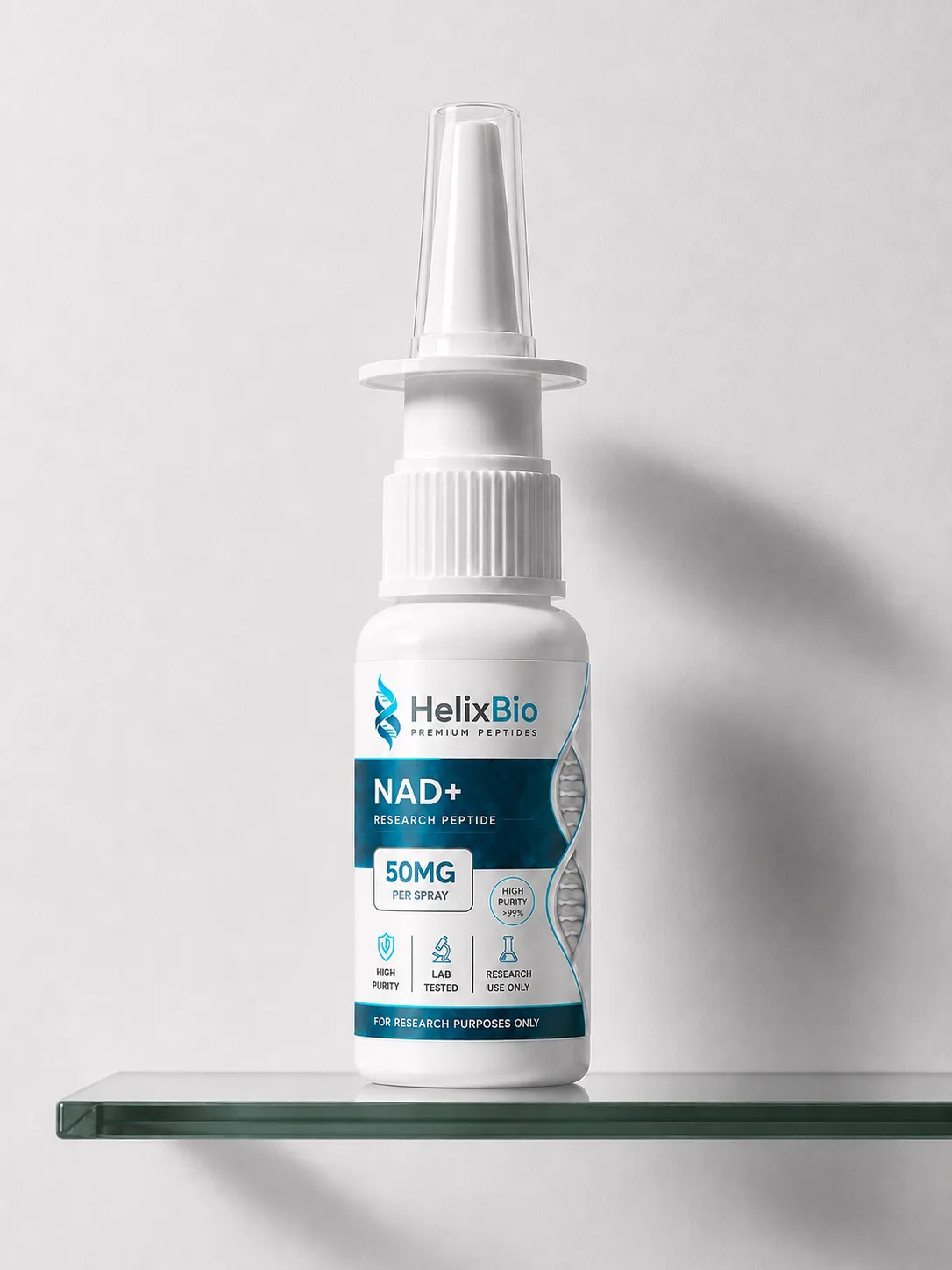
NAD+ Spray
RESEARCH PEPTIDE
NAD+ Spray is a research-use formulation containing nicotinamide adenine dinucleotide (NAD+), an essential cellular coenzyme involved in redox reactions and several biochemical signaling processes. NAD+ research spans cellular metabolism, mitochondrial biology, oxidative phosphorylation, DNA repair, and NAD-dependent enzyme activity. Helix Bio supplies NAD+ Spray strictly as a research and laboratory material. It is intended for qualified researchers investigating NAD+ biology and related biochemical pathways and is not intended for human or veterinary administration.
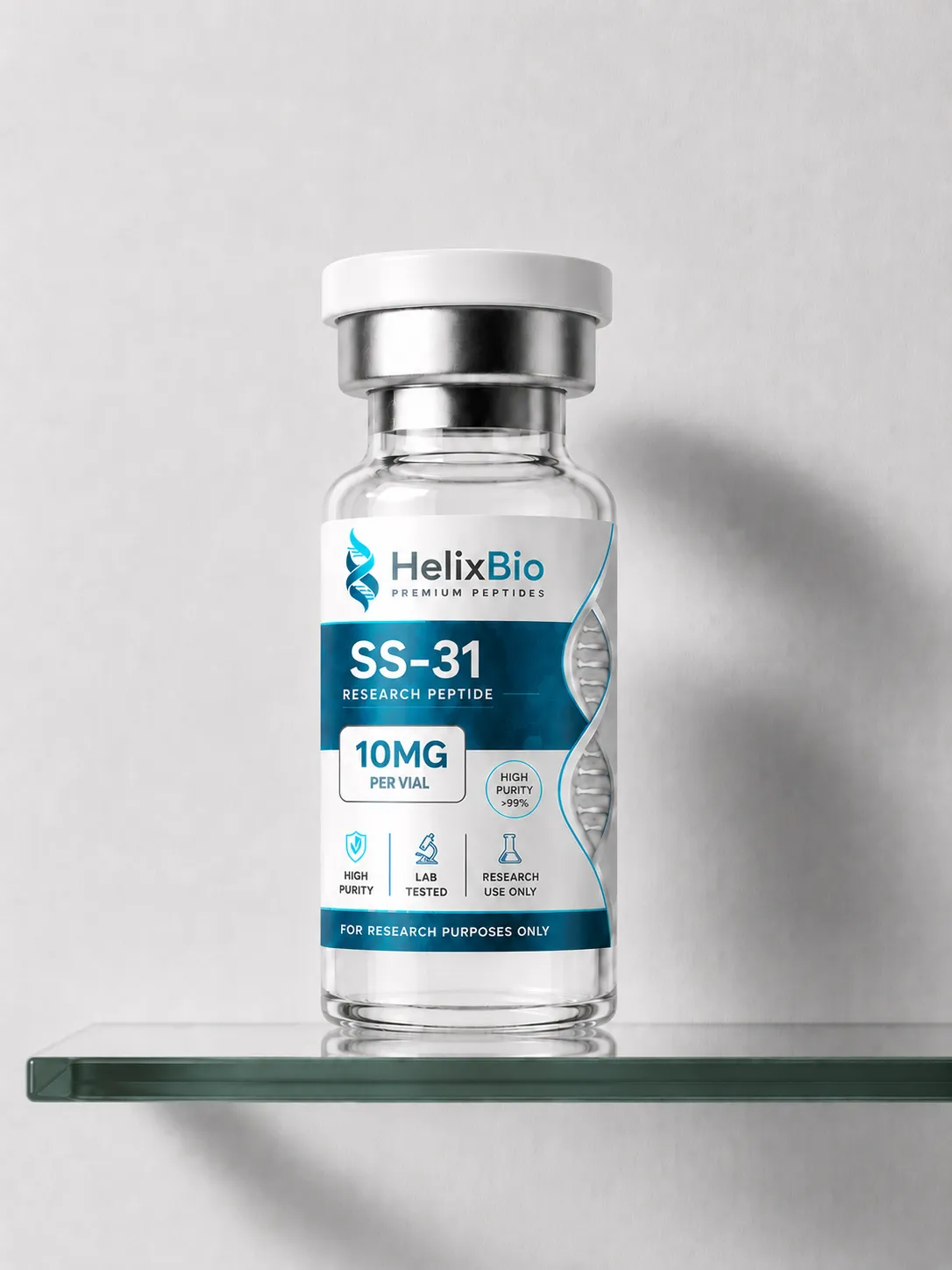
SS-31
RESEARCH PEPTIDE
SS-31, also known as elamipretide, MTP-131, or Bendavia, is a synthetic mitochondria-targeted tetrapeptide studied extensively in laboratory research involving mitochondrial membranes, cardiolipin interactions, cellular bioenergetics, oxidative stress models, and mitochondrial protein interactions. SS-31 is particularly relevant to researchers investigating how small cationic-aromatic peptides interact with mitochondrial membranes and influence molecular processes associated with mitochondrial structure and function. Research has identified interactions between SS-31 and cardiolipin-containing membranes, as well as several mitochondrial proteins associated with energy metabolism. Helix Bio supplies research peptides for laboratory and scientific applications. The company's website states that its products are research and laboratory materials rather than products intended for human or veterinary use.
A Century-Old Molecule With a Newly Active Research Agenda
NAD+ was first identified in the early 20th century as a component required for yeast fermentation, decades before its role as a universal cofactor in cellular respiration was fully mapped. For most of that history, NAD+ research was confined to basic biochemistry: understanding its role in glycolysis and the electron transport chain. The research agenda shifted substantially once sirtuins were identified as NAD+-dependent enzymes in the late 1990s and early 2000s, which reframed NAD+ from a purely metabolic cofactor into a molecule whose *availability* directly gates a family of regulatory enzymes involved in gene expression, DNA repair, and stress response. That reframing is the direct ancestor of the current wave of NAD+ and NAD+-precursor research, including the human clinical trials on NMN and NR discussed below.
NAD+ in Cellular Metabolism: The Redox and Signaling Cofactor
NAD+ exists in cells in two interconvertible forms — oxidized (NAD+) and reduced (NADH) — and this redox pair is essential to glycolysis, the citric acid cycle, and oxidative phosphorylation, where NAD+ accepts electrons to become NADH and then donates them at the mitochondrial electron transport chain to drive ATP synthesis. Beyond this redox role, NAD+ is also consumed (not just used catalytically) as a substrate by three distinct enzyme families: sirtuins, poly(ADP-ribose) polymerases (PARPs), and CD38/CD157 NADase enzymes — meaning NAD+ is simultaneously an energy-metabolism cofactor and a depletable signaling substrate, which is the basis for essentially all current NAD+ research.
The Sirtuin Pathway: SIRT1, PGC-1α, and Mitochondrial Biogenesis
Research on NAD+ has focused heavily on SIRT1, an NAD+-dependent protein deacetylase whose activity is directly gated by NAD+ availability — Sirt1 is most active precisely when cellular NAD+ or the NAD+/NADH ratio is highest, which positions it as an energy-sensing enzyme rather than a constitutively active one. SIRT1 deacetylates and activates PGC-1α, the master transcriptional coactivator for mitochondrial biogenesis, which in turn drives expression of TFAM (mitochondrial transcription factor A) and downstream nuclear-encoded mitochondrial genes. This SIRT1-PGC-1α-TFAM axis is the specific mechanistic pathway researchers point to when connecting NAD+ availability to mitochondrial proliferation and oxidative capacity, particularly in skeletal muscle following endurance exercise, where this pathway has been most extensively characterized.
Because SIRT1 activity requires NAD+ as a co-substrate rather than merely as a cofactor it can recycle indefinitely, sirtuin research treats NAD+ availability as a rate-limiting input — a cell with depleted NAD+ cannot sustain SIRT1-driven deacetylation regardless of how much SIRT1 protein is present, which is the core rationale for NAD+-focused research separate from any therapeutic claim.
Why NAD+ Declines With Age: CD38, PARP, and NAMPT
Multiple mechanisms have been proposed for age-related NAD+ decline, and current research points to consumption rather than simply reduced production as the dominant driver. A 2016 study published in *Cell Metabolism* found that CD38, a cell-surface NADase enzyme, increases in activity with age across every tissue examined, and that CD38 is required for age-related NAD+ decline and the accompanying mitochondrial dysfunction through an SIRT3-dependent mechanism — a finding the researchers established using CD38-knockout mice, which preserved NAD+ levels, mitochondrial respiratory rates, and metabolic function through the aging process relative to wild-type controls. The same research identified CD38 as the primary enzyme responsible for degrading nicotinamide mononucleotide (NMN), one of the two major NAD+ precursor compounds used in supplementation research.
Separately from CD38, DNA damage activates PARP1, which consumes NAD+ during the PARylation process used in DNA repair — meaning accumulated DNA damage over a lifespan represents a second, independent drain on cellular NAD+ pools, compounding the CD38-driven decline rather than operating through the same mechanism.
A reduction in NAMPT, the rate-limiting enzyme in the NAD+ salvage synthesis pathway, has also been proposed as a contributing factor, though current research treats increased consumption (via CD38 and PARP1) as the better-supported driver relative to reduced synthesis alone.
The Salvage Pathway: Why NAMPT Matters for Precursor Research
Mammalian cells maintain NAD+ largely through the salvage pathway, which recycles nicotinamide (a byproduct of NAD+-consuming reactions) back into NAD+ through a two-step conversion: nicotinamide to NMN via NAMPT, and NMN to NAD+ via NMN adenylyltransferase (NMNAT) enzymes. This salvage pathway is the reason NMN and NR are studied as NAD+ precursors in the first place — both compounds are designed to feed directly into this recycling route rather than requiring the cell to synthesize NAD+ from tryptophan through the longer de novo pathway. Because NAMPT is rate-limiting for this entire salvage route, and because CD38 directly degrades the NMN intermediate before it can be converted to NAD+, researchers studying NAD+ precursor efficacy are effectively studying a race between NAMPT-driven synthesis and CD38-driven degradation, not a simple linear supplementation model.
What Human Clinical Trials Actually Show
Direct NAD+ administration research exists alongside a much larger body of research on oral NAD+ precursors — nicotinamide mononucleotide (NMN) and nicotinamide riboside (NR) — and the distinction between raising blood NAD+ levels and producing a measurable clinical outcome is one researchers should track carefully. A randomized, multicenter, double-blind, placebo-controlled, dose-dependent clinical trial in healthy middle-aged adults found that oral NMN supplementation reliably and dose-dependently increased blood NAD+ concentrations relative to placebo. A recent PRISMA-guided systematic review covering 113 eligible studies (33 human intervention studies and 80 rodent studies) confirmed that NAD+ augmentation shows clear biological activity — NMN and NR supplementation reliably and sustainably increases circulating NAD+ — but concluded that clinical effectiveness for anti-aging or broader wellness outcomes in humans remains inconclusive.
A 2024 meta-analysis of 12 randomized controlled trials (513 participants total) found that while NMN supplementation significantly elevated blood NAD+ levels across studies, most clinically relevant metabolic outcomes were not significantly different between NMN and control groups. Researchers should treat "raises NAD+ levels" and "produces a measurable clinical benefit" as two separate claims requiring separate evidence, not one automatically implying the other.
SS-31 (Elamipretide): A Mechanistically Distinct Mitochondrial Peptide
SS-31 is frequently discussed alongside NAD+ research because both are studied in the context of mitochondrial function, but its mechanism is entirely unrelated to the NAD+/sirtuin pathway described above. SS-31 is a small, cell-permeable tetrapeptide that selectively binds cardiolipin, an anionic phospholipid concentrated in the inner mitochondrial membrane, through electrostatic attraction between the peptide's positive charges and cardiolipin's negative charges. This cardiolipin-binding mechanism is understood to stabilize mitochondrial cristae architecture, reduce oxidative stress, and support more efficient electron transport chain function and ATP production — a structural and biophysical mechanism, rather than a cofactor-availability mechanism like NAD+ and sirtuin signaling.
Researchers combining SS-31 and NAD+ in the same experimental protocol are typically testing complementary, non-overlapping mitochondrial support hypotheses: NAD+ addressing sirtuin-pathway cofactor availability, and SS-31 addressing inner-membrane structural integrity via cardiolipin stabilization. No published study has directly tested the two compounds in combination, so any observed combined effect should be attributed cautiously and only with appropriate individual-compound control arms.
SS-31's discovery history is itself informative for research context: the Szeto-Schiller peptide class it belongs to was identified serendipitously during research into opioid receptor agonist peptides, and its mitochondrial targeting was recognized only after the compound's unusual membrane-binding behavior was characterized biophysically. Because cardiolipin is concentrated almost exclusively in the inner mitochondrial membrane and is largely absent from the plasma membrane, SS-31 achieves mitochondrial selectivity through simple electrostatic and lipid-composition targeting, without requiring a dedicated transporter or receptor — a mechanistically simpler form of organelle targeting than most receptor-mediated peptide research compounds rely on.
Research Applications
- Sirtuin pathway research, using NAD+ availability as the rate-limiting variable in SIRT1-PGC-1α-TFAM signaling studies, particularly in mitochondrial biogenesis and oxidative-capacity research.
- NAD+ consumption pathway research, studying CD38 and PARP1 as the two dominant enzymatic drivers of age-related NAD+ depletion, using CD38-knockout or PARP-inhibitor models as comparative tools.
- Comparative precursor research, evaluating NAD+ direct administration against NMN and NR oral precursor research, given the now well-documented gap between reliably raised blood NAD+ levels and inconsistent downstream clinical outcomes.
- Mitochondrial membrane structural research, using SS-31's cardiolipin-binding mechanism as a study tool independent of and complementary to NAD+/sirtuin cofactor research.
- NAD+ salvage pathway kinetics research, using the NAMPT-versus-CD38 competition described above as a model system for studying how enzyme-level competition, rather than simple substrate availability, determines a precursor compound's downstream efficacy.
- Biomarker-versus-outcome methodology research, using the documented gap between NAD+-level elevation and inconsistent metabolic outcomes as a working case study in why a reliably moved biomarker does not automatically validate a clinical or functional claim — a methodological point with relevance well beyond NAD+ research specifically.
Reconstitution and Handling
NAD+ and SS-31 are typically supplied as lyophilized powder for laboratory reconstitution, or, in the case of NAD+ Spray, as a stabilized intranasal formulation for protocols that call for a non-injectable research route. Standard handling principles apply: bacteriostatic water introduced slowly down the vial wall, gentle swirling rather than shaking, and refrigerated storage of the reconstituted solution within its documented stability window — NAD+ in particular is documented to be light- and temperature-sensitive, making prompt refrigeration and light-protected storage especially important for maintaining potency. Researchers working with reconstituted NAD+ solutions should also account for its comparatively narrower stability window relative to more chemically robust peptides, since degradation products can interfere with downstream assay readouts if a solution is used past its documented window. Our peptide reconstitution guide covers solvent selection and stability timelines, and our guide to common peptide storage mistakes covers the handling errors most likely to affect potency in light-sensitive compounds like NAD+.
Regulatory and Compliance Context
NAD+ itself is an endogenous coenzyme, but NAD+ formulated for research injection or spray use, along with SS-31, is supplied strictly as a Research Use Only laboratory material in the United States, not evaluated for human safety or efficacy outside a research setting and not intended for human consumption. The mixed clinical trial evidence on NAD+ precursors described above underscores why RUO framing matters here specifically: robust evidence that a compound raises a biomarker is not equivalent to evidence of a health benefit, and research protocols should be designed and reported with that distinction intact, particularly given how frequently NAD+-level data is presented in secondary sources without noting whether a corresponding functional outcome was actually measured. For a full walkthrough of what RUO classification permits, see our guide on whether research peptides are legal in the USA.
Conclusion
NAD+ research sits at an unusually well-characterized mechanistic starting point — the SIRT1-PGC-1α-TFAM pathway and the CD38/PARP1 consumption mechanisms are both solidly established — but the translation from "raises NAD+ levels" to "produces a measurable clinical outcome" remains genuinely unresolved in the current human trial literature. SS-31 offers researchers a mechanistically distinct, cardiolipin-targeted complement to NAD+-focused mitochondrial research rather than a substitute for it, and protocols studying either compound should be explicit about which specific mechanism — cofactor availability or membrane structural integrity — the research question actually addresses. As the systematic review literature continues to accumulate human intervention data beyond the 33 studies captured in the most recent PRISMA review, the field's central open question is likely to remain less about whether NAD+ precursors move the biomarker — that much is now well established — and more about which specific downstream physiological outcomes, if any, reliably follow from that movement.
Frequently Asked Questions
NAD+ functions as a redox cofactor in glycolysis, the citric acid cycle, and oxidative phosphorylation, and separately as a consumable substrate for sirtuin enzymes, PARP DNA-repair enzymes, and CD38 NADase enzymes. It is both an energy-metabolism cofactor and a depletable signaling substrate.
Research points to increased consumption as the dominant driver, primarily through CD38, a NADase enzyme whose activity rises with age across tissues, and secondarily through PARP1, which consumes NAD+ during DNA repair. A 2016 Cell Metabolism study found CD38-knockout mice preserved NAD+ levels and mitochondrial function through aging, establishing CD38 as a required driver of the decline.
Human trials consistently show that NMN and NR supplementation raises blood NAD+ levels. However, a 2024 meta-analysis of 12 randomized controlled trials found most clinically relevant metabolic outcomes were not significantly different between NMN and control groups, meaning the link between raised NAD+ levels and measurable clinical benefit remains unresolved.
SIRT1 is an NAD+-dependent deacetylase that, when NAD+ availability is high, deacetylates and activates PGC-1alpha, the master transcriptional coactivator for mitochondrial biogenesis. PGC-1alpha then drives TFAM and downstream nuclear-encoded mitochondrial gene expression, increasing mitochondrial proliferation and oxidative capacity.
NAD+ works as a metabolic cofactor and sirtuin substrate, addressing energy-metabolism signaling. SS-31 (elamipretide) works through a completely different, structural mechanism: it binds cardiolipin in the inner mitochondrial membrane to stabilize cristae architecture and reduce oxidative stress. They are complementary, not redundant, research tools.
CD38 is a cell-surface NADase enzyme whose activity increases with age. Research has identified it as the primary enzyme responsible for degrading NAD+ and its precursor NMN, and CD38-knockout studies show it is required for age-related NAD+ decline and mitochondrial dysfunction.
SS-31 is a small, cell-permeable tetrapeptide whose positive charges are electrostatically attracted to cardiolipin, an anionic phospholipid concentrated almost exclusively in the inner mitochondrial membrane, which is what gives it its mitochondria-selective binding without requiring an active transport mechanism.
Research indicates that both NR and NMN sustainably increase circulating NAD+ levels, while nicotinamide (Nam) supplementation does not produce the same sustained increase, based on comparative human trial data reviewed in recent systematic reviews.
PARP1 is a DNA repair enzyme activated by DNA damage. During the PARylation process it uses to repair damaged DNA, PARP1 consumes NAD+ as a substrate, representing a distinct and additive drain on cellular NAD+ pools alongside CD38-mediated consumption.
No. NAD+ formulated for research use, along with SS-31, is not FDA-approved for any indication and is supplied strictly as a Research Use Only laboratory material, not evaluated for human safety or efficacy outside a research setting.
A recent PRISMA-guided systematic review identified 113 eligible studies on NAD+ supplementation, including 33 human intervention studies (28 randomized and 5 nonrandomized) alongside 80 rodent studies, and found reliable biological activity but inconclusive clinical effectiveness for anti-aging or wellness outcomes.
They can be, on the rationale that they address complementary mitochondrial mechanisms — cofactor availability versus membrane structural integrity — but no published study has directly tested the combination, so any combined effect observed should include separate single-compound control arms before being attributed to either compound individually.
- 01Camacho-Pereira J, et al. CD38 Dictates Age-Related NAD Decline and Mitochondrial Dysfunction through an SIRT3-Dependent Mechanism. Cell Metabolism, 2016. DOI: 10.1016/j.cmet.2016.05.006.
- 02NAD+ supplementation for anti-aging and wellness: A PRISMA-guided systematic review of preclinical and clinical evidence. PMID: 41655607.
- 03The efficacy and safety of beta-nicotinamide mononucleotide (NMN) supplementation in healthy middle-aged adults: a randomized, multicenter, double-blind, placebo-controlled, parallel-group, dose-dependent clinical trial. PMID: 36482258.
- 04Efficacy of oral nicotinamide mononucleotide supplementation on glucose and lipid metabolism for adults: a systematic review with meta-analysis on randomized controlled trials. PMID: 39116016.
- 05The mitochondria-targeted peptide SS-31 binds lipid bilayers and modulates surface electrostatics as a key component of its mechanism of action. Journal of Biological Chemistry, 2020. DOI: 10.1074/jbc.RA119.012094.
- 06Elamipretide: A Review of Its Structure, Mechanism of Action, and Therapeutic Potential. PMC11816484.
Helix Bio Chem Team
Research & Product Team
Our in-house team tracks published peptide research and translates it into clear, source-cited summaries for the research community.
Reviewed by in-house research chemists
support@helixbiochem.com