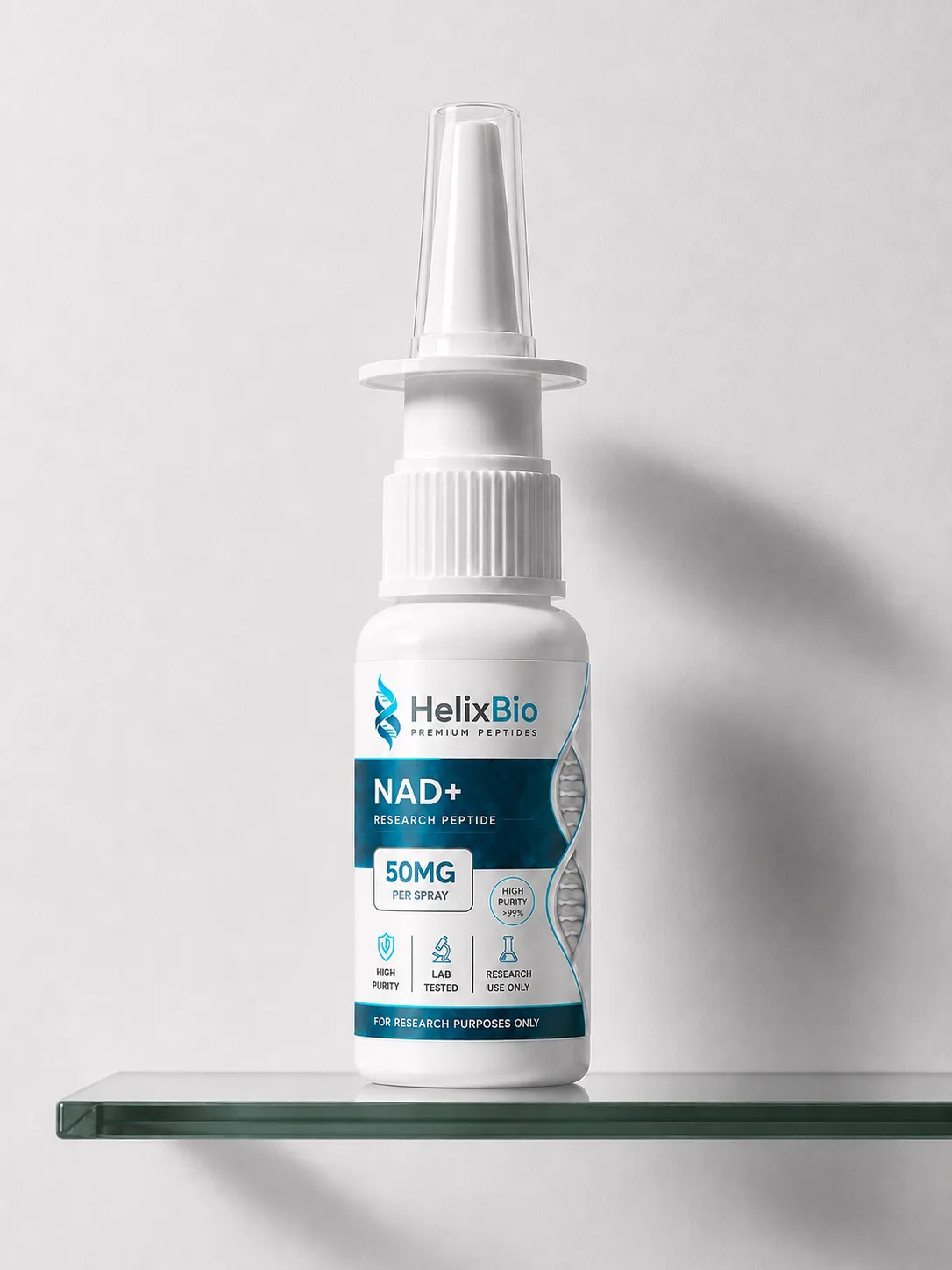
NAD+ Spray is a research-use formulation containing nicotinamide adenine dinucleotide (NAD+), an essential cellular coenzyme involved in redox reactions and several biochemical signaling processes. NAD+ research spans cellular metabolism, mitochondrial biology, oxidative phosphorylation, DNA repair, and NAD-dependent enzyme activity. Helix Bio supplies NAD+ Spray strictly as a research and laboratory material. It is intended for qualified researchers investigating NAD+ biology and related biochemical pathways and is not intended for human or veterinary administration.
HPLC certified
Independent analysis
Highest standard
Full traceability
Nicotinamide adenine dinucleotide, commonly abbreviated NAD+ or NAD, is a naturally occurring pyridine nucleotide found throughout biological systems. It exists in an oxidized form, NAD+, and a reduced form, NADH. The NAD+/NADH pair participates in cellular redox reactions and is closely connected to energy metabolism.
NAD+ also serves as a substrate or cofactor in several enzyme systems. Research literature examines its involvement in processes associated with oxidative phosphorylation, DNA repair, gene regulation, protein modification, and cellular signaling.
NAD+ Spray provides researchers with a defined NAD+-containing research material in a spray format. Because the exact formulation, concentration, excipients, and storage requirements can vary by product and lot, researchers should review the applicable product documentation and Certificate of Analysis before incorporating the material into an experimental workflow.
The primary research compound is nicotinamide adenine dinucleotide (NAD+). The complete formulation of a spray may include additional carrier or formulation components depending on the specific product configuration.
Researchers should use the current product specification and lot-specific documentation to verify:
NAD+ is of interest in biochemical and molecular research because of its central role in cellular redox chemistry and its relationship to NAD-dependent enzymes. Researchers study NAD metabolism in contexts including mitochondrial function, cellular energy metabolism, redox balance, DNA repair, and signaling pathways.
Research into NAD+ biology should distinguish between mechanistic or preclinical findings and established human outcomes. Published reviews continue to identify unanswered questions regarding NAD-related interventions and their translation into human applications.
NAD+ Spray is intended solely for controlled laboratory and scientific research.
It may be evaluated as a research reagent in appropriately designed experimental systems involving NAD metabolism, biochemical signaling, cellular models, or related analytical workflows.
It is not intended for ingestion, inhalation, injection, topical administration, or any other form of human or veterinary use.
Researchers working with NAD+ biology need to know precisely what material is being incorporated into an experimental workflow. Identity, purity, formulation, storage conditions, and lot-specific documentation can all affect how a research reagent is evaluated.
Helix Bio states that its research products are supported by batch-specific Certificates of Analysis and third-party HPLC and mass spectrometry testing. These analytical methods provide complementary information: HPLC is used to assess chromatographic purity, while mass spectrometry can help confirm molecular identity and molecular weight.
For NAD+ research, this documentation can help investigators evaluate whether a particular lot is appropriate for their planned laboratory work.
NAD+ Spray is intended for qualified users working in appropriate research environments, including:
The material is not intended for personal wellness use, self-experimentation, or human or veterinary administration.
| Specification | Details |
|---|---|
| Product Name | NAD+ Spray |
| Research Compound | Nicotinamide Adenine Dinucleotide (NAD+) |
| Category | Research / Biochemical Compound |
| Format | Spray |
| Research Use | Laboratory and scientific research only |
| Human Use | Not intended for human use |
| Veterinary Use | Not intended for veterinary use |
| Purity | Verify current lot-specific COA and product documentation |
| Identity Testing | Verify current lot-specific analytical documentation |
| Packaging | Product-specific; confirm current listing |
| Storage | Follow current product label and COA |
| Manufacturer / Supplier | Helix Bio |
| Lot Testing | Review applicable batch-specific documentation |
| Country of Origin | Not specified; verify current product documentation |
Product-specific details such as concentration, formulation, packaging, and storage conditions should not be inferred from the product name alone. Researchers should confirm the current lot documentation before beginning an experiment.
NAD+ is a broad research subject with applications across biochemistry, cell biology, molecular biology, and metabolic research.
Researchers can investigate the relationship between NAD+ and NADH and how changes in their relative abundance relate to cellular redox chemistry and metabolism. NAD+ participates in multiple metabolic pathways, including reactions connected with glycolysis, beta-oxidation, and oxidative phosphorylation.
NAD+ is closely connected to mitochondrial and cellular energy metabolism. Laboratory models can be used to investigate biochemical pathways in which NAD+/NADH serves as an electron-transfer system.
NAD+ functions as a substrate or cofactor for several enzyme families, including enzymes involved in protein modification and cellular signaling. Research has examined NAD-dependent processes involving PARP enzymes, sirtuins, CD38, CD157, and related pathways.
NAD+ metabolism is relevant to research into DNA repair, post-translational modification, gene regulation, and cellular stress responses.
Because NAD+/NADH chemistry is closely associated with oxidative phosphorylation and mitochondrial metabolism, NAD+ is frequently examined in experimental studies of mitochondrial function and cellular bioenergetics.
NAD+ research may also involve comparisons between NAD+, NAD+ precursors, and related metabolic pathways. Current scientific literature emphasizes that findings from different models, formulations, and delivery methods should not automatically be treated as equivalent.
Helix Bio describes a quality-control approach involving third-party analytical testing, including HPLC purity testing and mass spectrometry for identity confirmation. The company's website also states that batch-specific Certificates of Analysis are available for its research products.
For a specific NAD+ Spray lot, researchers should review the corresponding COA rather than relying on a general catalog-level purity statement.
A useful COA should allow the researcher to match the analytical documentation to the material received by checking information such as:
Helix Bio's website notes that purity can vary by product and lot, making lot-specific documentation particularly important.
No certification, regulatory approval, or therapeutic status should be inferred unless explicitly documented by the manufacturer or an appropriate regulatory authority.
Storage requirements should always be confirmed against the current NAD+ Spray product documentation and lot-specific COA.
General laboratory handling considerations include:
Do not assume that storage requirements for a lyophilized peptide or NAD+ precursor automatically apply to a spray formulation. The formulation and packaging can affect stability.
Helix Bio's website describes research products as laboratory materials and states that its fulfillment process includes tracked shipping and cold-chain handling for applicable compounds.
Because packaging and temperature requirements can vary by formulation, researchers should verify the current product listing and shipping documentation before ordering.
Upon receipt, researchers should check:
Any discrepancy should be addressed with the supplier before the material is incorporated into a research protocol.
NAD+ Spray is supplied strictly for research and laboratory purposes.
This product is not intended for human or veterinary use and is not intended for ingestion, inhalation, injection, topical administration, or any other form of administration. It is not intended to diagnose, treat, cure, mitigate, or prevent any disease or medical condition.
The product has not been evaluated or approved by the U.S. Food and Drug Administration for human or veterinary use. It should not be represented as a dietary supplement, pharmaceutical, therapeutic product, or medical treatment.
Researchers are responsible for determining whether a material is suitable for their experimental system and for complying with applicable institutional, federal, state, and local requirements. All research involving biological materials should be conducted by appropriately qualified personnel under suitable laboratory safety procedures.
Knowledge Base
Knowledge Base
Knowledge Base
Knowledge Base
Knowledge Base
Knowledge Base
Knowledge Base
Knowledge Base
Knowledge Base
Knowledge Base
Knowledge Base
Knowledge Base
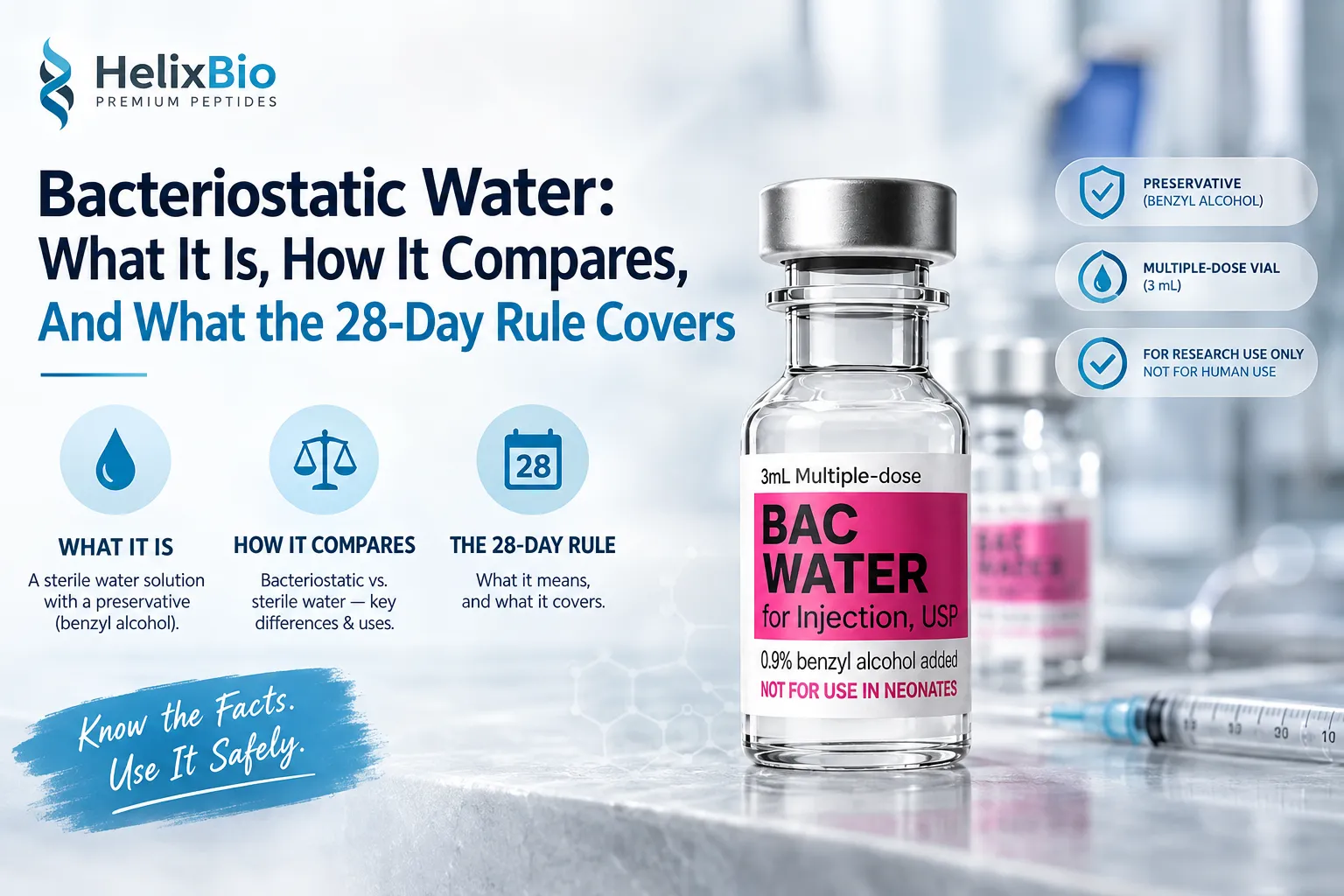
What bacteriostatic water contains, how it differs from sterile water and saline, where the 28-day opened-vial figure comes from, and what a COA can show.
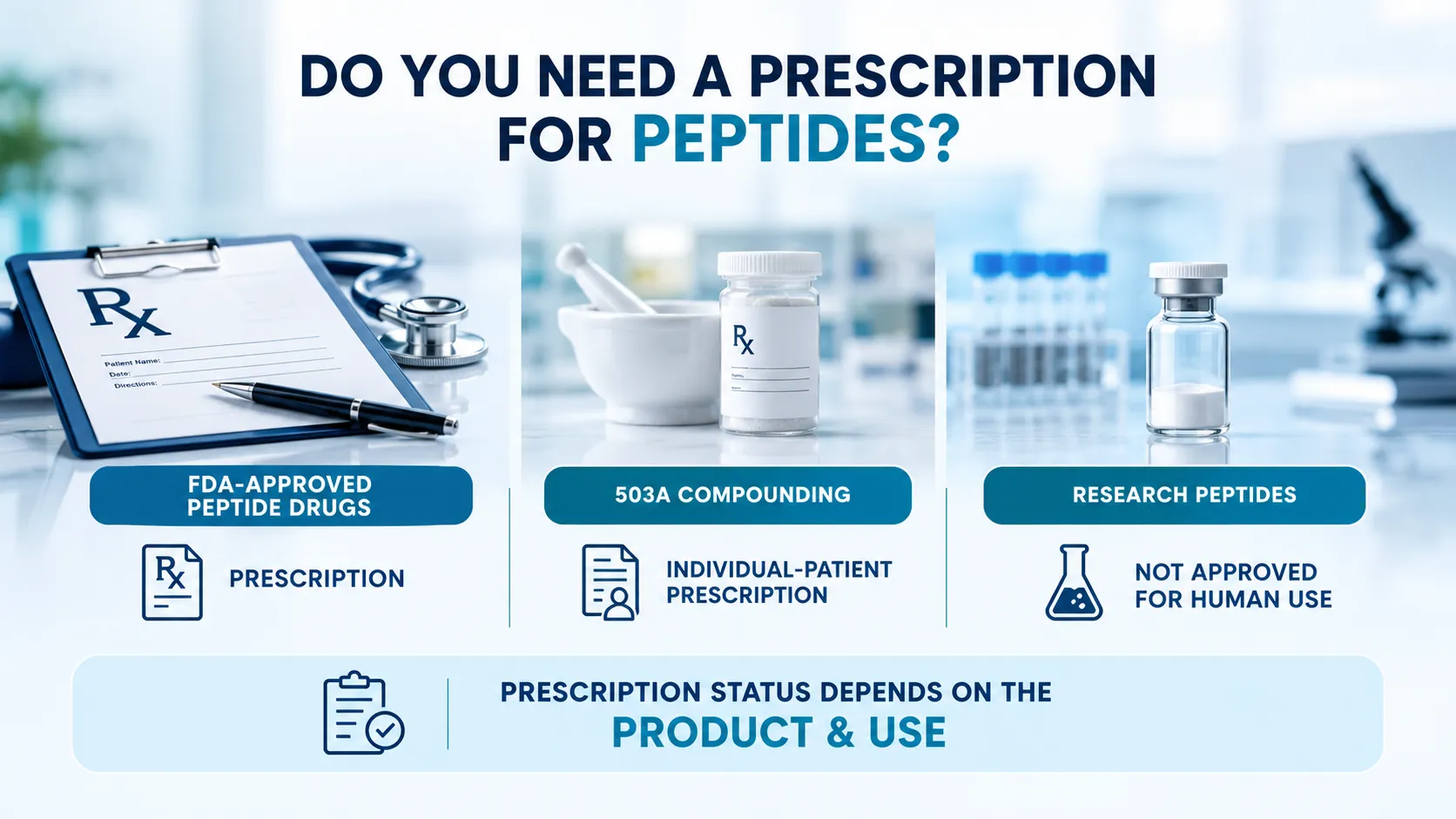
Do you need a prescription for peptides? It depends on the category. See which peptides need one, which do not, and the dated 2026 FDA rules that apply.
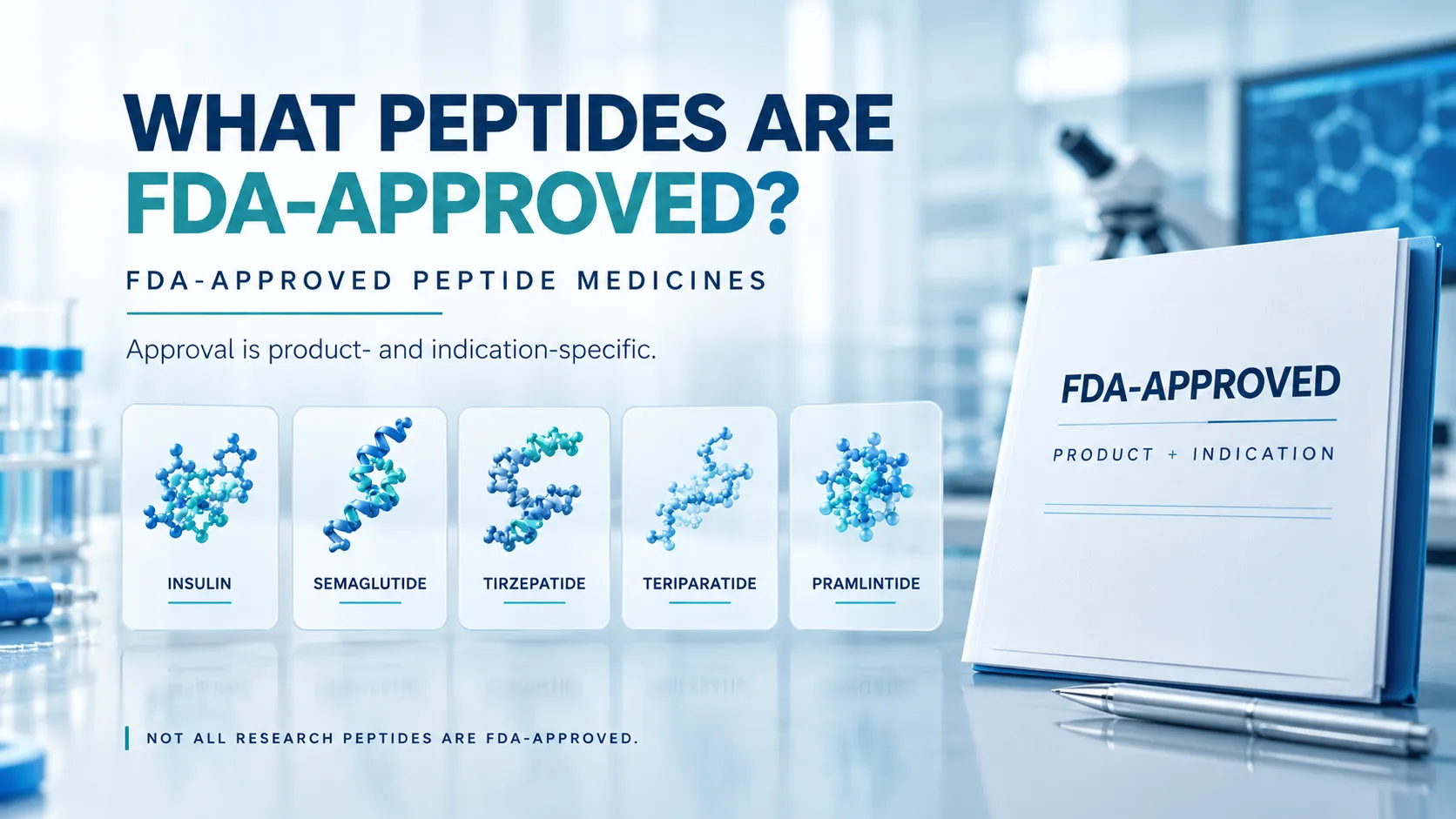
The complete 2026 list of FDA-approved peptides: 47 drugs by category and approval year, which popular peptides are not approved, and pipeline to watch.