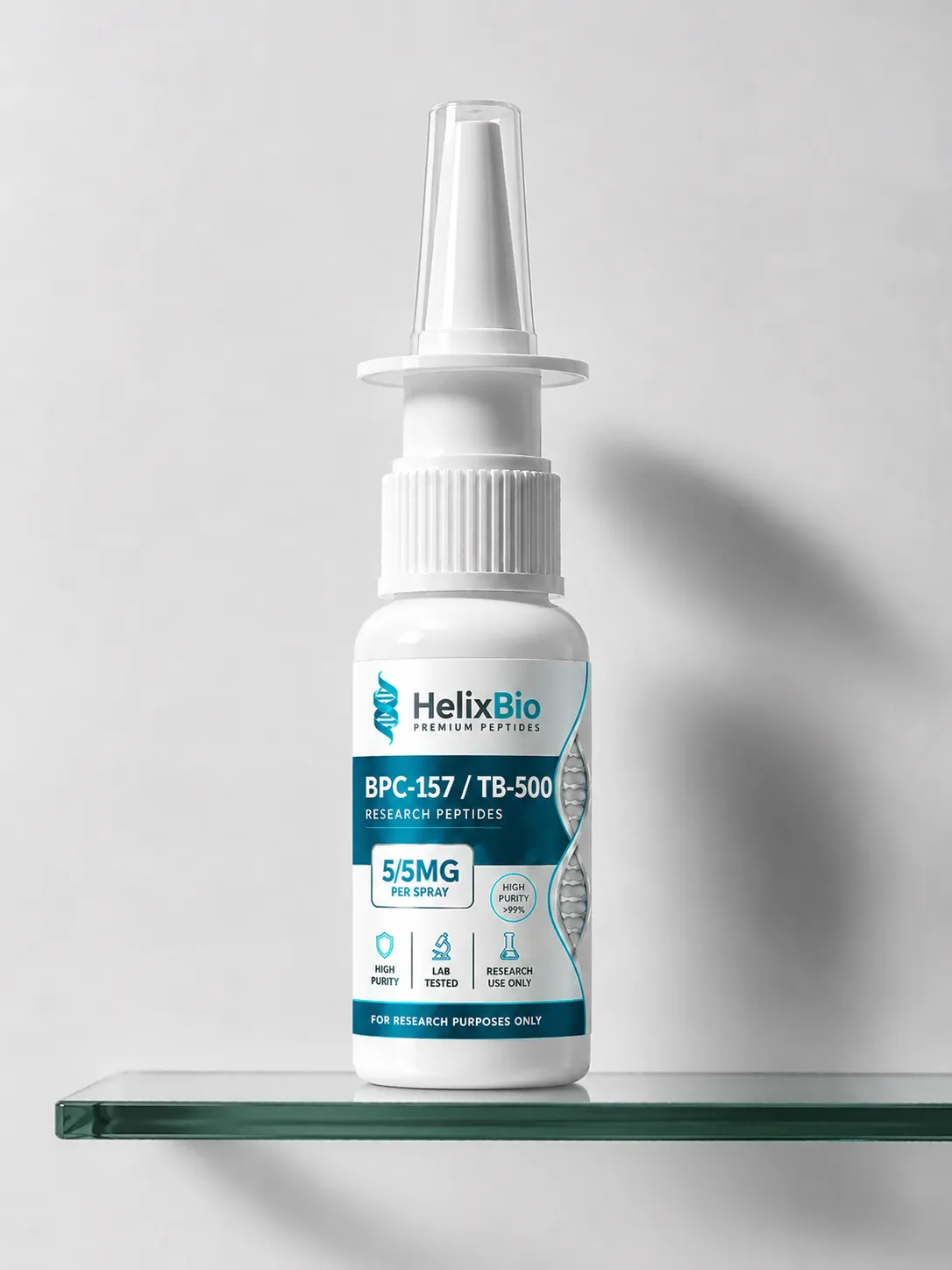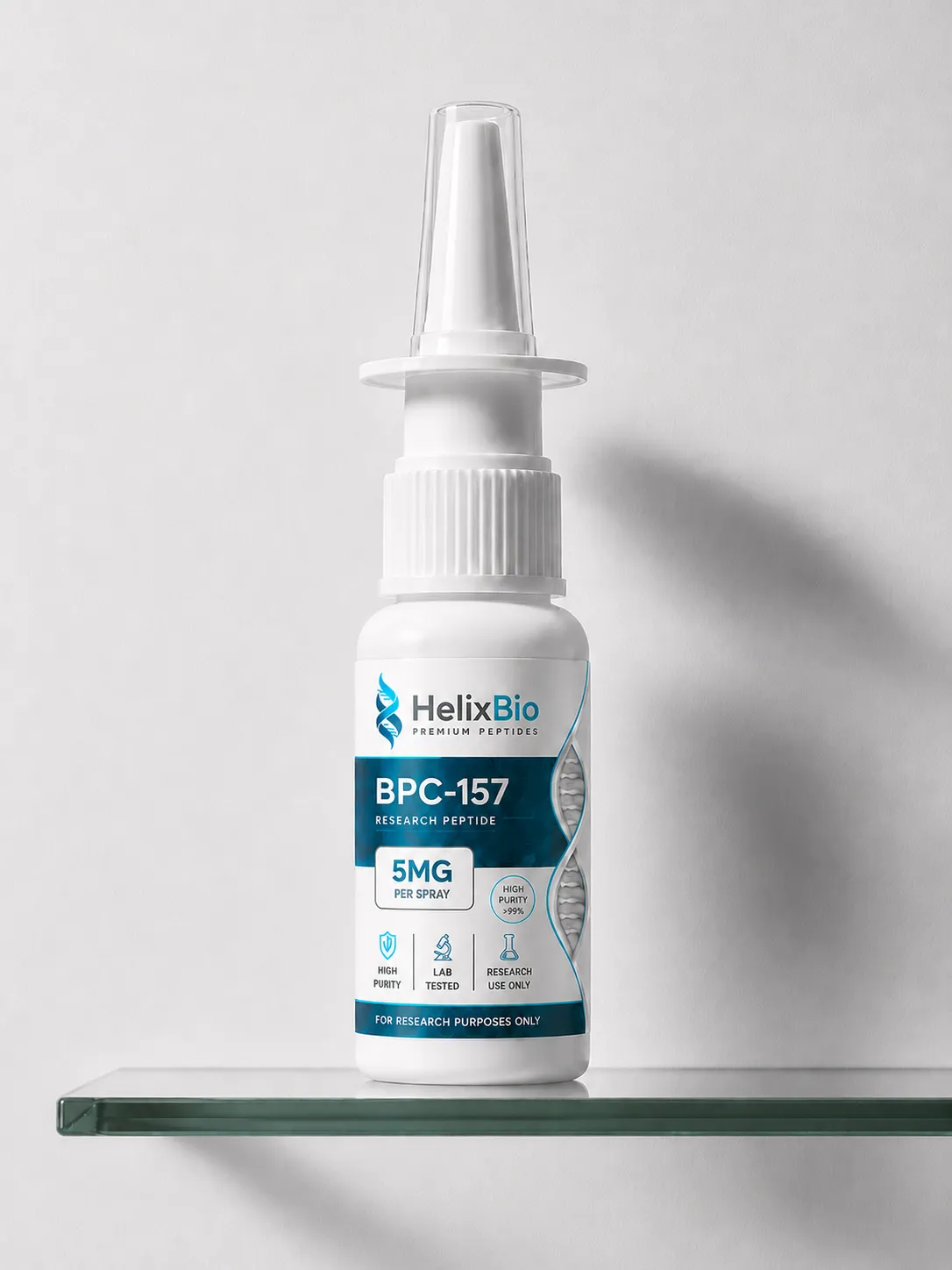
BPC-157 Spray is a research-use peptide preparation containing BPC-157, a synthetic pentadecapeptide that has been investigated extensively in preclinical research. Scientific literature has examined BPC-157 across areas including peptide biology, gastrointestinal research models, vascular signaling, tissue biology, and molecular pathways. Helix Bio supplies BPC-157 Spray for laboratory and scientific research only. It is not intended for human or veterinary administration, self-experimentation, diagnosis, treatment, or prevention of disease. Researchers evaluating BPC-157 should consider the compound's experimental status, the limitations of existing clinical evidence, and the exact specifications and analytical documentation associated with the product lot.
HPLC certified
Independent analysis
Highest standard
Full traceability
BPC-157, commonly referred to as Body Protection Compound 157, is a synthetic pentadecapeptide consisting of 15 amino acids. The sequence commonly reported in scientific literature is:
Gly-Glu-Pro-Pro-Pro-Gly-Lys-Pro-Ala-Asp-Asp-Ala-Gly-Leu-Val
BPC-157 has been studied extensively in animal and laboratory models. Research has examined biological activity involving gastrointestinal, vascular, inflammatory, neurological, and tissue-related experimental endpoints. Much of the literature remains preclinical, and the findings should not be treated as evidence that BPC-157 is an established human therapy.
BPC-157 Spray provides a spray-format presentation of BPC-157 for research environments in which a spray formulation is relevant to the experimental design.
The formulation and concentration of a spray product should not be inferred from the compound name alone. Researchers should verify the current product specification, lot information, concentration, formulation, storage requirements, and Certificate of Analysis before incorporating a product into a laboratory protocol.
This distinction is particularly important for BPC-157 because recent scientific literature has highlighted unresolved formulation, pharmacokinetic, characterization, and translational-development questions. A 2026 review concluded that pharmaceutical development remains limited and that standardized formulations and validated pharmacokinetic information remain important gaps.
BPC-157 is classified as a short synthetic peptide and is generally described as a pentadecapeptide.
Commonly reported sequence:
GEPPPGKPADDAGLV
Number of amino acids:
15
Commonly reported molecular mass:
Approximately 1,419 Da for the free peptide.
The precise chemical form matters when comparing research materials. For example, FDA's 2026 briefing materials distinguish BPC-157 free base from BPC-157 acetate as different active pharmaceutical ingredients. Researchers should therefore confirm whether a particular material is supplied as a free base, acetate, or another specified form rather than assuming that all BPC-157 products are chemically identical.
Research peptide selection should be based on documented identity, formulation, analytical characterization, handling requirements, and suitability for the intended experimental model.
BPC-157 has a substantial preclinical research history, which makes it a frequently discussed peptide in scientific literature. At the same time, its research status makes careful interpretation especially important. A 2025 review noted that BPC-157 has been studied in numerous preclinical models while also emphasizing that it has not received standard medical approval from the FDA and other major regulatory authorities.
For researchers, the value of a properly documented research material is not simply the compound name. It is the ability to identify what was actually used in an experiment and connect the material to appropriate analytical documentation.
Before purchasing BPC-157 Spray, researchers should verify:
BPC-157 Spray is intended for qualified research environments such as:
It is not intended for personal experimentation, self-administration, human consumption, veterinary use, diagnosis, treatment, or disease prevention.
| Specification | Details |
|---|---|
| Product Name | BPC-157 Spray |
| Research Compound | BPC-157 |
| Peptide Type | Synthetic pentadecapeptide |
| Amino-Acid Sequence | GEPPPGKPADDAGLV |
| Number of Amino Acids | 15 |
| Format | Spray |
| Category | Research Peptide |
| Intended Use | Laboratory and scientific research only |
| Human Use | Not intended for human administration |
| Veterinary Use | Not intended for veterinary administration |
| Purity | Verify current lot-specific COA |
| Chemical Form | Verify current product documentation |
| Concentration | Verify current product specification |
| Identity Testing | Refer to current lot documentation |
| Packaging | Verify current product specification |
| Storage | Follow current product label and documentation |
| Manufacturer / Supplier | Helix Bio |
| Country of Origin | Not specified; verify current documentation |
| Shelf Life | Verify current lot documentation |
Specification note: Exact concentration, chemical form, purity, formulation, storage conditions, packaging, and shelf life should be taken from the current product documentation and applicable lot-specific Certificate of Analysis. Specifications from other BPC-157 suppliers should not be substituted.
BPC-157 has been investigated across a wide range of experimental models. The majority of the literature is preclinical, so research findings should be interpreted according to the specific model, formulation, route, experimental conditions, and measured endpoints.
BPC-157 has been studied in experimental models involving the gastrointestinal tract and gastric or intestinal lesions. Early research investigated its biological activity in animal models involving gastric and duodenal lesions.
These studies provide a historical foundation for BPC-157 research but should not be interpreted as proof of a therapeutic effect in humans.
Experimental literature has investigated BPC-157 in relation to vascular and endothelial signaling, including models examining vascular responses and blood-vessel-related mechanisms. These findings remain part of the preclinical research literature.
BPC-157 research has examined several molecular pathways and signaling mechanisms. Published reviews discuss experimental findings involving pathways such as EGR-1, NAB2, FAK-paxillin, JAK-2, nitric oxide-related signaling, and other biological systems.
These pathways are useful areas of investigation for researchers studying peptide-mediated biological signaling.
Preclinical studies have examined BPC-157 in experimental models involving different tissues and biological systems. Researchers may use such literature to develop hypotheses concerning cellular responses, peptide interactions, signaling pathways, and tissue-level biological processes.
BPC-157 has also been studied from an analytical perspective. Published work has examined its detection and in-vitro metabolism using mass-spectrometric approaches, including characterization of BPC-157 and related metabolites.
BPC-157 remains an area of scientific interest, but there are important translational limitations. A 2026 review identified unresolved issues involving formulation, pharmacokinetics, permeability, excipient compatibility, and clinical development.
For this reason, preclinical observations should not be presented as established human outcomes.
Analytical characterization is an important part of research peptide procurement. Peptide-related impurities, degradation products, sequence variants, formulation differences, and incorrect compound identity can affect experimental reproducibility.
Researchers should therefore evaluate the actual analytical documentation associated with the material rather than relying exclusively on a generic product description.
For BPC-157 Spray, relevant documentation may include:
HPLC is commonly used in peptide analysis to evaluate chromatographic purity, while mass spectrometry can provide information relevant to molecular identity and molecular mass.
No certification, accreditation, third-party test, or purity result should be assumed unless it is explicitly provided for the relevant product or lot.
A researcher's experimental record should be traceable to the actual material used. Recording the lot number and retaining the associated COA can help connect experimental observations with the material's analytical profile.
This is particularly relevant for BPC-157 because FDA's current regulatory materials distinguish between BPC-157 free base and BPC-157 acetate and discuss unresolved issues involving substance characterization and peptide-related impurities in the context of compounded drugs.
BPC-157 Spray should be stored and handled according to the manufacturer's current product documentation and the requirements of the specific formulation.
General laboratory considerations include:
The spray format is particularly relevant here because formulation and delivery characteristics can influence peptide stability. Researchers should use product-specific storage instructions rather than relying on generalized peptide-storage assumptions.
BPC-157 Spray should be received, inspected, and documented according to the research organization's procurement procedures.
Researchers should confirm that:
Shipping availability, packaging configuration, delivery timelines, temperature controls, and destination restrictions should be confirmed directly with Helix Bio because these details can change and should not be assumed from a general product description.
Research Use Only.
BPC-157 Spray is supplied strictly as a laboratory and scientific research material. It is not intended for human or veterinary administration, ingestion, inhalation, injection, diagnosis, treatment, cure, mitigation, or prevention of any disease or medical condition.
This product should not be represented as an FDA-approved drug or as an approved medical treatment. BPC-157 remains an investigational research compound, and existing evidence contains substantial preclinical research with important gaps in standardized formulation, pharmacokinetics, and clinical development.
FDA's current materials also identify unresolved safety and characterization concerns surrounding BPC-157 in the context of compounded drug substances.
Researchers are responsible for determining whether the material is appropriate and lawful for their specific research application and for complying with applicable federal, state, local, institutional, and laboratory requirements.
Knowledge Base
Knowledge Base
Knowledge Base
Knowledge Base
Knowledge Base
Knowledge Base
Knowledge Base
Knowledge Base
Knowledge Base
Knowledge Base
Knowledge Base
Knowledge Base
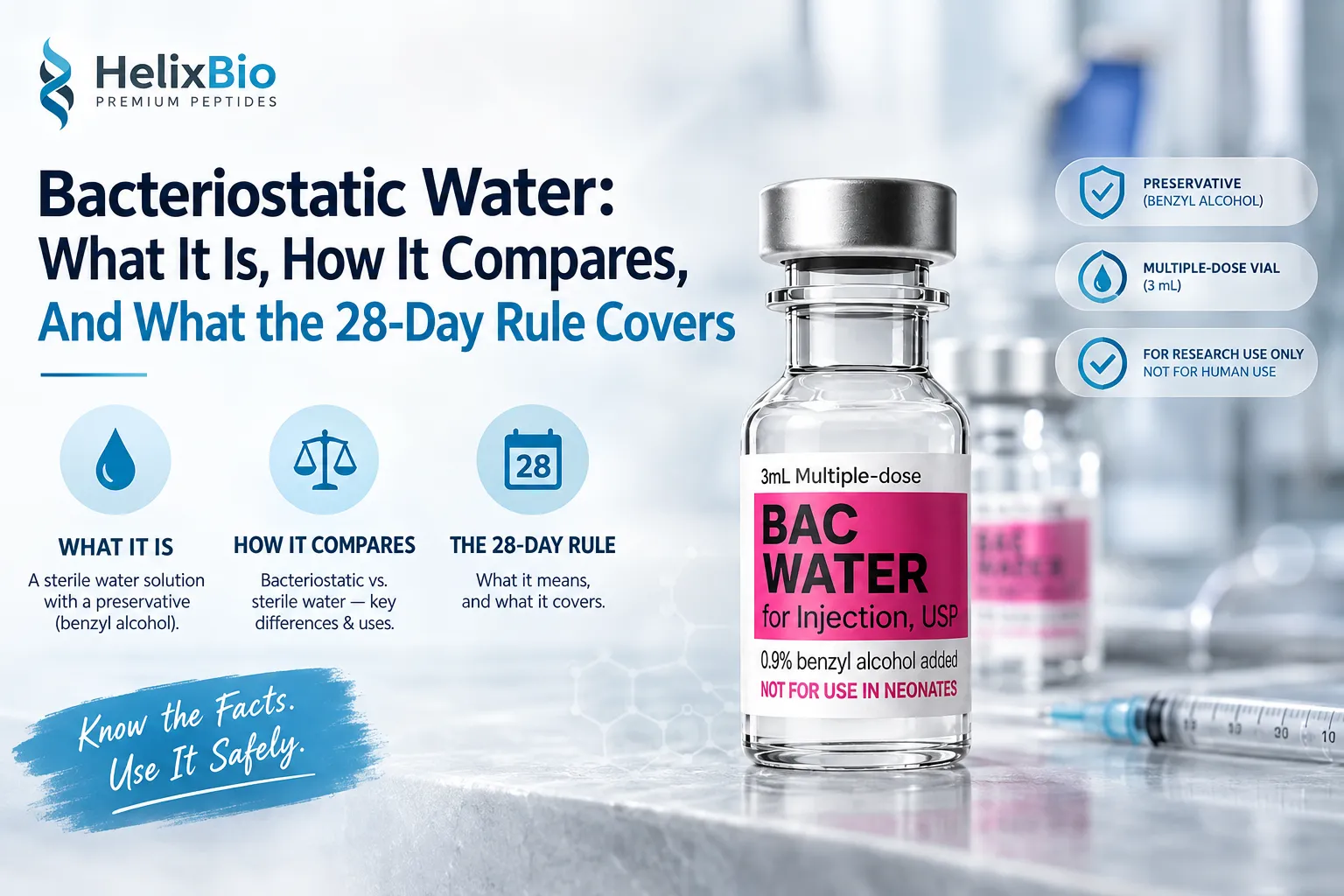
What bacteriostatic water contains, how it differs from sterile water and saline, where the 28-day opened-vial figure comes from, and what a COA can show.
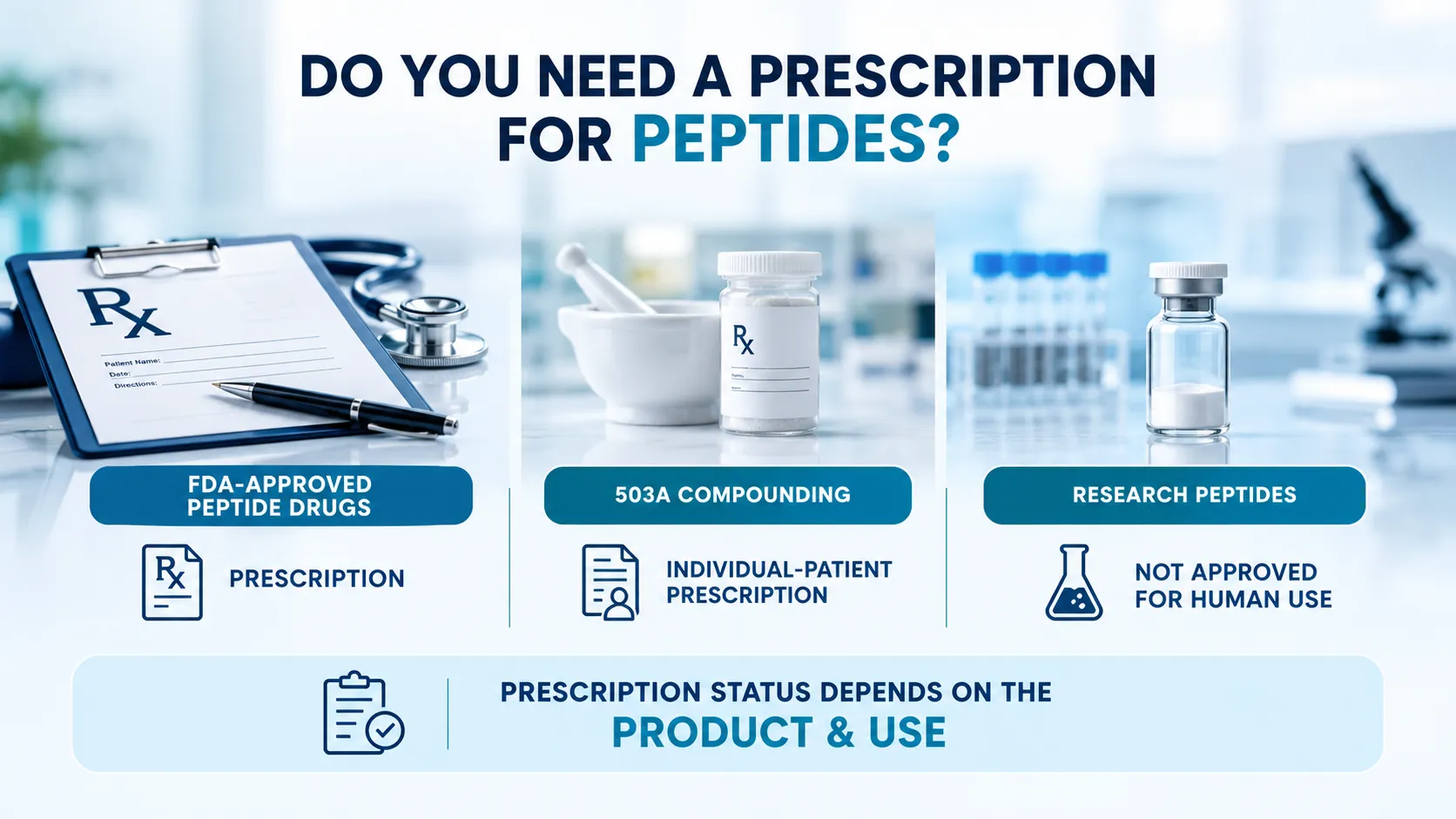
Do you need a prescription for peptides? It depends on the category. See which peptides need one, which do not, and the dated 2026 FDA rules that apply.
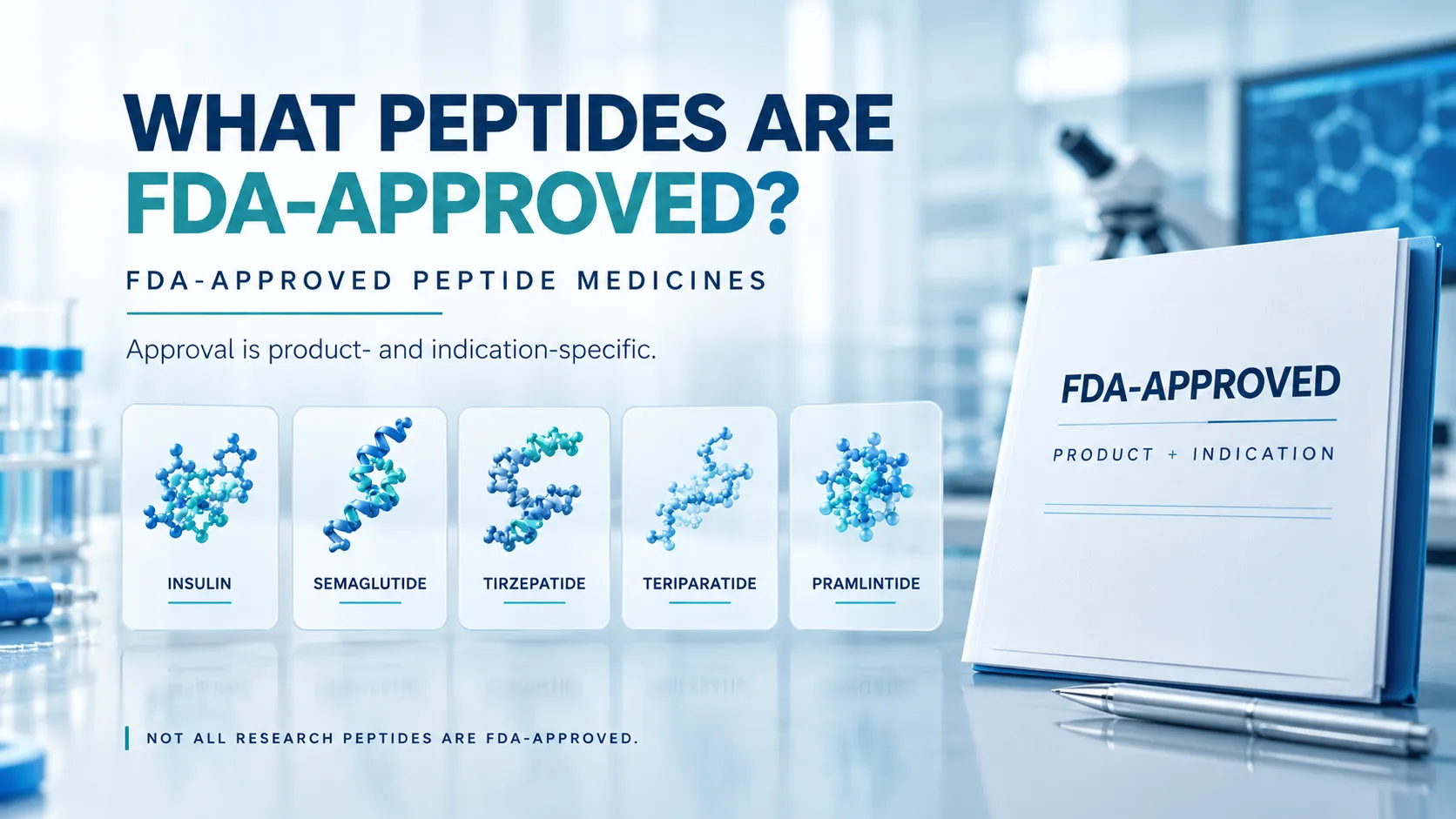
The complete 2026 list of FDA-approved peptides: 47 drugs by category and approval year, which popular peptides are not approved, and pipeline to watch.