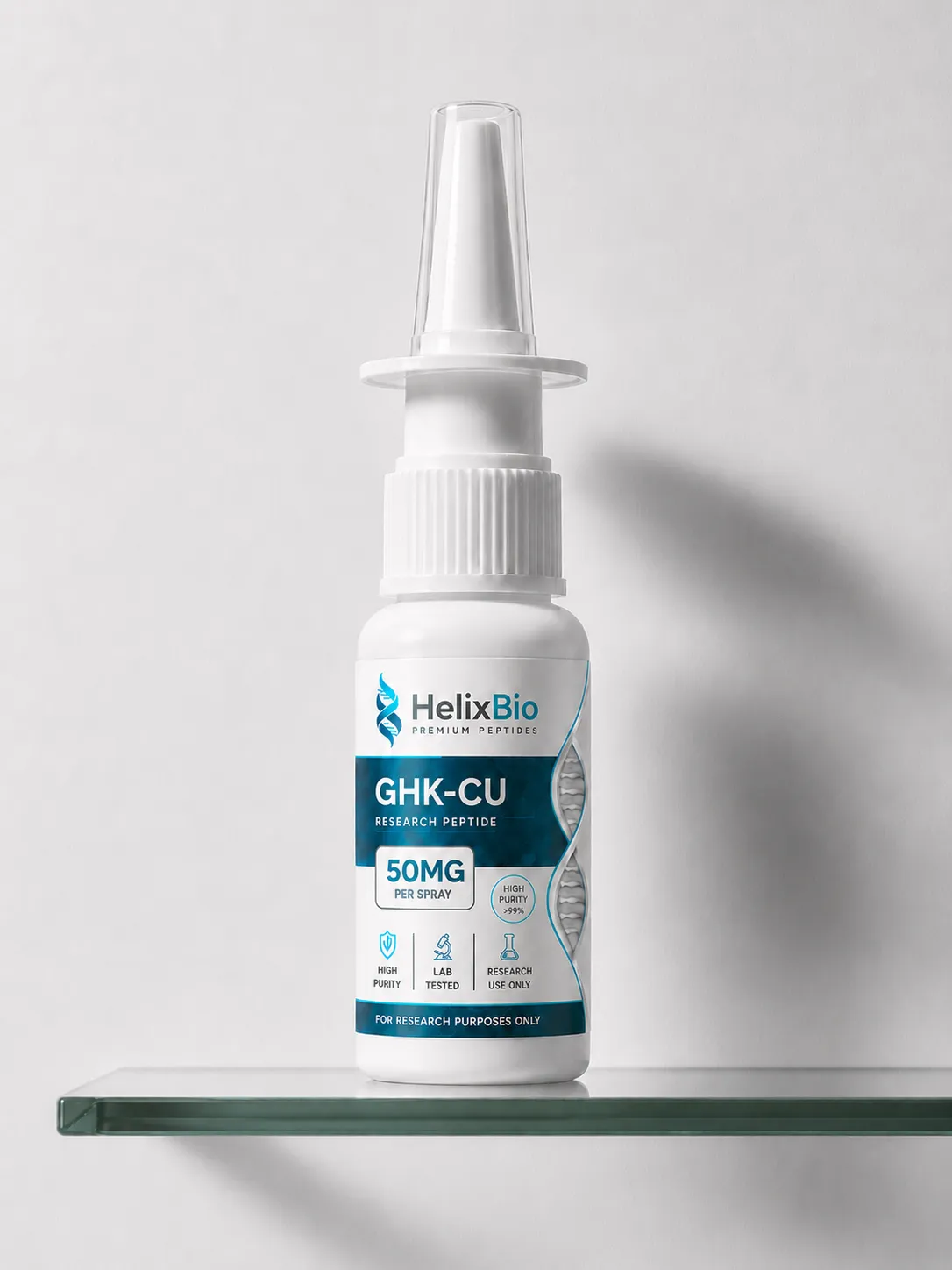
GHK-Cu Spray is a research-use formulation containing GHK-Cu, the copper complex of glycyl-L-histidyl-L-lysine (GHK). GHK is a naturally occurring tripeptide that has been investigated extensively for its copper-binding properties, cellular signaling, extracellular-matrix biology, and tissue-remodeling mechanisms. Helix Bio supplies GHK-Cu Spray strictly for laboratory and scientific research. It is intended for qualified researchers studying copper-peptide chemistry, cellular pathways, peptide biology, and related experimental models. It is not intended for human or veterinary administration.
HPLC certified
Independent analysis
Highest standard
Full traceability
GHK-Cu refers to a complex formed between the tripeptide GHK and copper(II). GHK stands for glycyl-L-histidyl-L-lysine and consists of three amino acids: glycine, histidine, and lysine. The peptide has a strong affinity for copper ions and can form the GHK-Cu complex under appropriate conditions.
GHK-Cu has attracted scientific interest because the peptide and its copper complex have been studied across several areas of molecular and cellular biology. Published research has examined its interactions with copper, extracellular-matrix processes, cellular signaling, oxidative biology, and tissue-remodeling pathways.
GHK-Cu Spray provides the material in a spray-format presentation for research workflows where that formulation is relevant. Researchers should consult the current product documentation and lot-specific Certificate of Analysis (COA) before incorporating the product into an experiment.
GHK-Cu is a copper-peptide complex involving the naturally occurring tripeptide GHK and Cu(II). Structural research has investigated how copper coordinates with the peptide, including interactions involving nitrogen-containing groups within the GHK sequence.
This distinction is important when discussing GHK-Cu research because GHK and GHK-Cu are related but are not identical materials. GHK-Cu specifically refers to the copper-associated complex.
GHK-Cu research can be relevant to investigations involving:
The scientific literature includes both laboratory and preclinical work. Findings from these models should not automatically be interpreted as evidence of clinical efficacy or suitability for human use.
GHK-Cu has a well-established research history and remains an interesting model for studying how small peptides interact with metal ions and biological systems. Its copper-binding behavior is particularly relevant to researchers examining peptide-metal coordination and the biological consequences of copper-associated signaling.
Researchers may also choose a spray-format formulation when their experimental design requires a specific delivery or formulation format. However, formulation should be treated as an experimental characteristic rather than an indication that a research product is suitable for clinical or personal use.
For research purchasing, documentation is equally important. Investigators should evaluate the product identity, lot information, available analytical results, storage conditions, and current COA before use.
GHK-Cu Spray is intended for qualified users conducting legitimate scientific or laboratory research, including:
It is not intended for consumers seeking products for personal, cosmetic, or therapeutic use.
| Specification | Details |
|---|---|
| Product Name | GHK-Cu Spray |
| Active Research Material | GHK-Cu (glycyl-L-histidyl-L-lysine copper complex) |
| Category | Specialty & Hormonal Peptides |
| Peptide Type | Copper-binding tripeptide complex |
| Peptide Sequence | Gly-His-Lys (GHK) |
| Copper Component | Cu(II) associated with GHK |
| Format | Spray |
| Primary Research Areas | Peptide-metal interactions, cellular signaling, tissue biology, formulation research |
| Research Use | Laboratory and scientific research only |
| Human Use | Not intended for human use |
| Veterinary Use | Not intended for veterinary use |
| Purity | Refer to current lot-specific COA |
| Identity Testing | Refer to current batch documentation |
| Storage | Follow current product label and product-specific documentation |
| Packaging | Product-specific; verify current listing |
| Manufacturer/Supplier | Helix Bio |
| Country of Origin | Not specified; verify current product documentation |
One of the defining characteristics of GHK-Cu is its strong interaction with copper ions. Research has investigated the molecular structure and coordination chemistry of the complex, making it relevant to studies involving peptide-metal interactions.
Potential research topics include:
GHK and GHK-Cu have been investigated in cellular and molecular models involving gene expression and multiple biological pathways. Reviews have described experimental work examining changes in cellular signaling and gene-regulatory processes associated with GHK-Cu.
Researchers may therefore use GHK-Cu as a model compound when investigating peptide-associated cellular responses.
GHK-Cu has been studied in connection with extracellular-matrix biology, fibroblast activity, collagen-related processes, and tissue remodeling. Much of this literature consists of laboratory, animal, or mechanistic research, so experimental findings should be interpreted within the limits of each model.
Published research has examined GHK-Cu in experimental models involving oxidative stress and cellular protective pathways. These findings can provide research context for investigators studying peptide-mediated cellular responses, but they should not be presented as proof of therapeutic effects in humans.
GHK-Cu has also been studied in the context of topical peptide formulations and skin permeation. Recent research has highlighted the importance of experimentally measuring how formulation affects peptide transport rather than assuming that a topical or spray formulation will provide a particular level of biological delivery.
This makes GHK-Cu Spray potentially relevant to controlled formulation, delivery, and peptide-stability studies.
Research-grade peptide materials should be evaluated using objective analytical information rather than marketing descriptions alone.
For GHK-Cu Spray, researchers should review the documentation applicable to the specific lot, including available information concerning:
GHK-Cu presents an additional analytical consideration because researchers may need to distinguish the peptide component from the copper-associated complex. Published structural studies have used techniques including spectroscopy and crystallographic approaches to investigate GHK-Cu coordination.
Do not assume a purity percentage, certification, third-party test result, or manufacturing standard unless it is supported by current product-specific documentation.
Storage requirements should be based on the current product label and product-specific documentation rather than generalized instructions for other GHK-Cu products.
General laboratory handling practices include:
Because spray products may contain formulation components beyond the peptide itself, researchers should rely on formulation-specific documentation.
Shipping, packaging, availability, and fulfillment terms should be confirmed through Helix Bio's current policies and product listing before purchase.
Researchers should inspect the package and accompanying documentation after delivery. Product identity, packaging condition, lot number, and available analytical documentation should be checked before the material is introduced into an experimental workflow.
GHK-Cu Spray is supplied as a research-use-only material.
This product is not intended for human or veterinary use, ingestion, injection, inhalation, or any other form of administration. It is not intended to diagnose, treat, cure, mitigate, or prevent any disease or medical condition.
This research material has not been evaluated or approved by the U.S. Food and Drug Administration (FDA) for human or veterinary use. It is not a prescription medication, over-the-counter drug, dietary supplement, or approved therapeutic product.
Research materials should be handled only by appropriately qualified personnel in suitable laboratory environments and in accordance with applicable institutional, federal, state, and local requirements.
Researchers are responsible for reviewing the current product documentation, COA, safety information, applicable regulations, and institutional requirements before use.
Knowledge Base
Knowledge Base
Knowledge Base
Knowledge Base
Knowledge Base
Knowledge Base
Knowledge Base
Knowledge Base
Knowledge Base
Knowledge Base
Knowledge Base
Knowledge Base
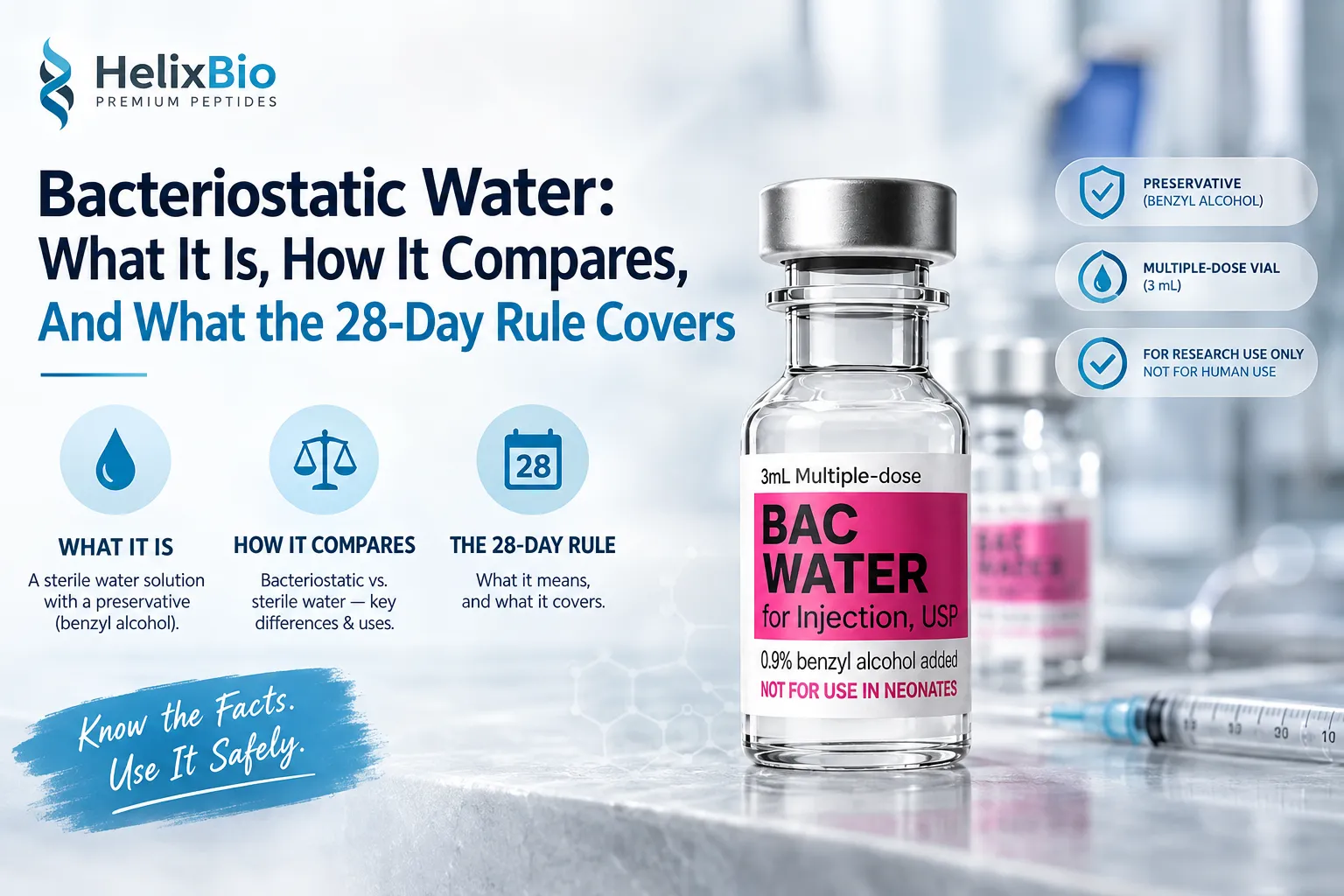
What bacteriostatic water contains, how it differs from sterile water and saline, where the 28-day opened-vial figure comes from, and what a COA can show.
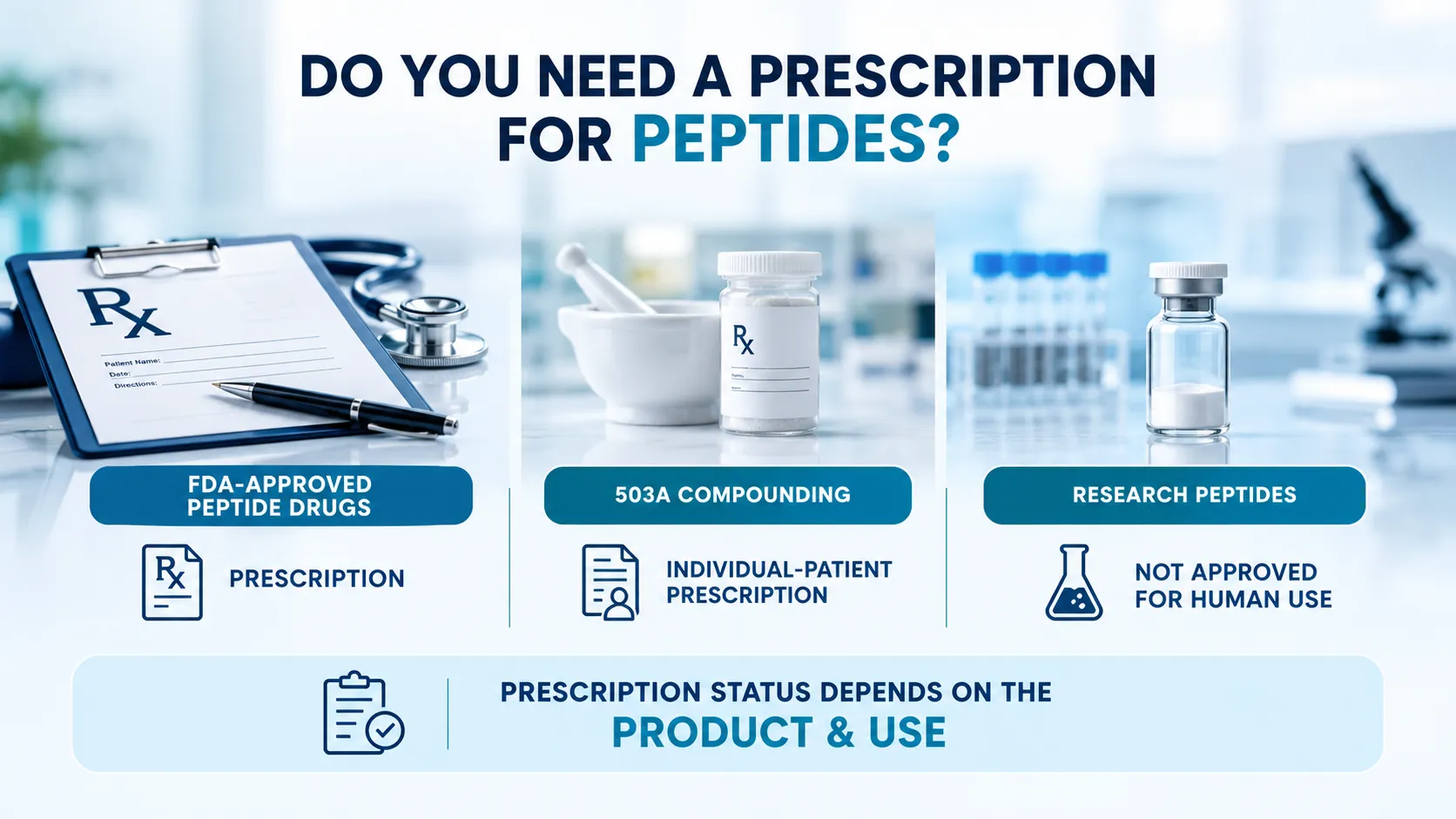
Do you need a prescription for peptides? It depends on the category. See which peptides need one, which do not, and the dated 2026 FDA rules that apply.
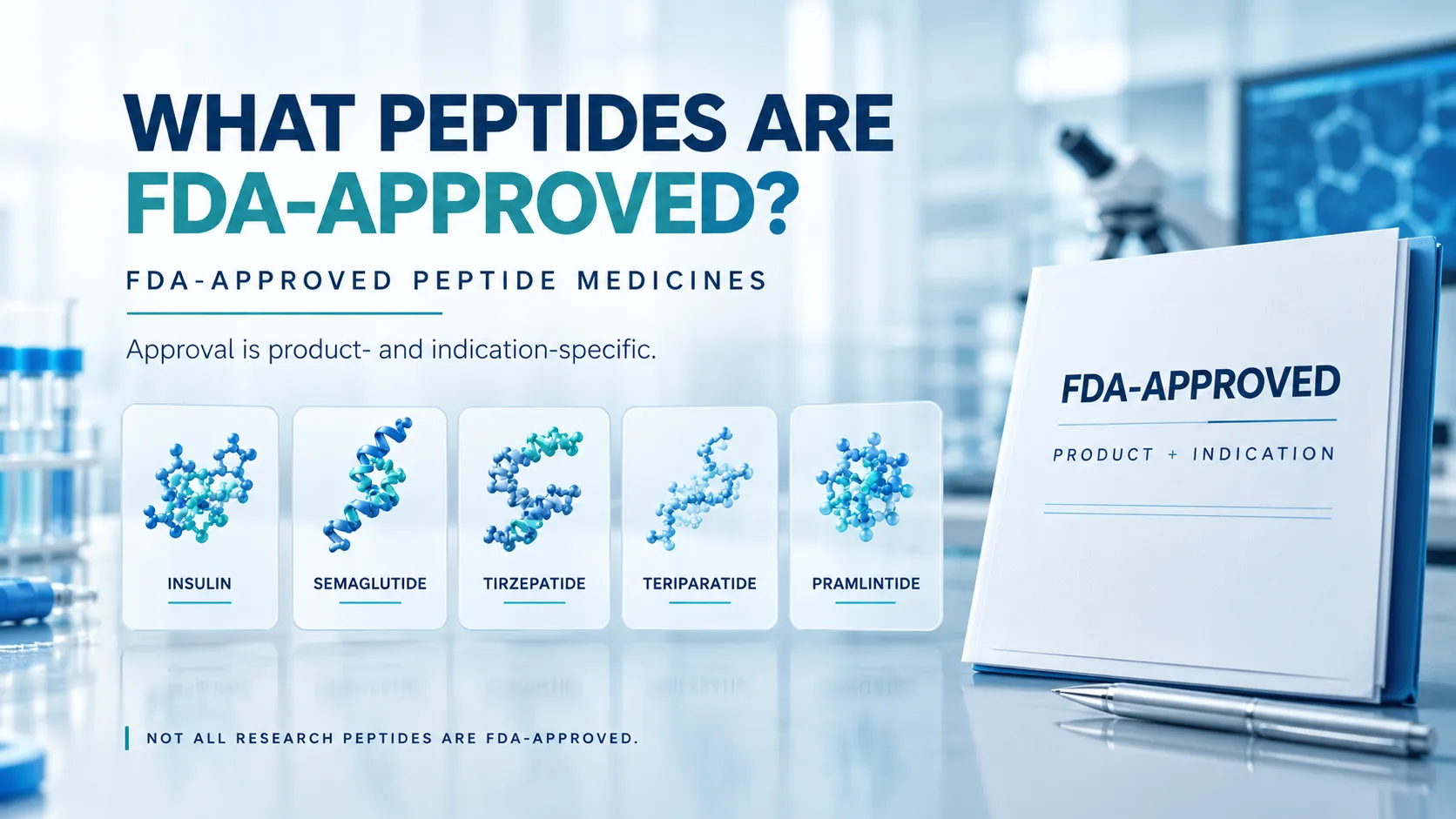
The complete 2026 list of FDA-approved peptides: 47 drugs by category and approval year, which popular peptides are not approved, and pipeline to watch.