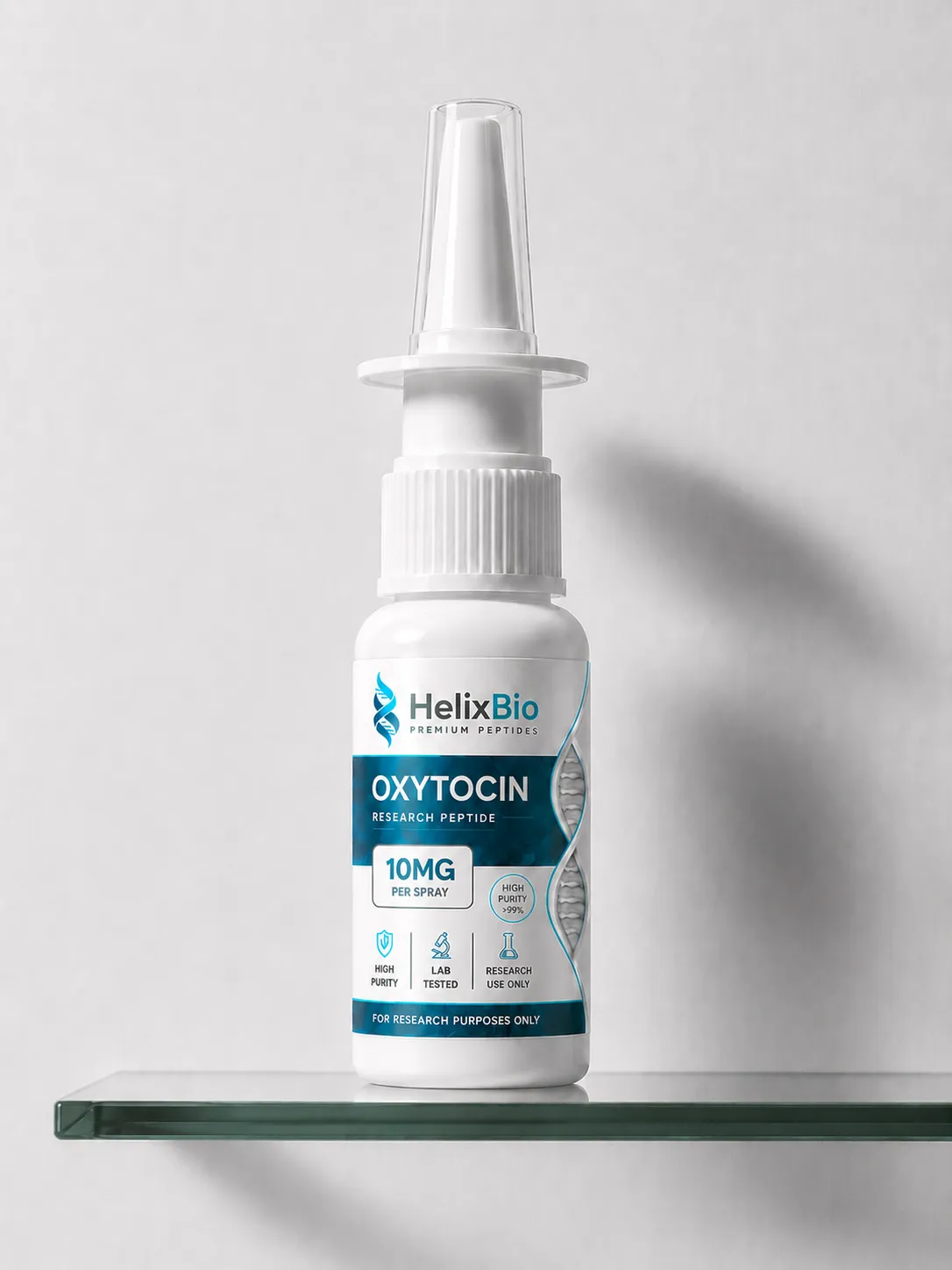
Oxytocin Spray is a spray-format research material intended for laboratory and scientific investigation of oxytocin biology, peptide signaling, and oxytocin receptor pathways. Oxytocin is a naturally occurring nonapeptide hormone and neuropeptide that has been extensively studied in neuroendocrine, reproductive, cellular, and receptor research. Helix Bio supplies this product strictly for research and laboratory purposes. It is not intended for human or veterinary use, ingestion, injection, nasal administration, or any other form of administration. Researchers should review the current product documentation and lot-specific Certificate of Analysis (COA) before incorporating the material into an experimental workflow.
HPLC certified
Independent analysis
Highest standard
Full traceability
Oxytocin is a nine-amino-acid peptide hormone and neuropeptide produced naturally in the body. Scientific research has examined oxytocin and its receptor, OXTR, across several areas of biology, including neuroendocrine signaling, reproductive physiology, lactation, receptor pharmacology, cellular signaling, and behavioral research.
At the molecular level, the oxytocin receptor belongs to the G protein-coupled receptor (GPCR) family. Research involving the oxytocin system commonly examines receptor activation, downstream signaling, receptor distribution, ligand-receptor interactions, and differences between peripheral and central biological systems.
Oxytocin Spray provides researchers with a defined spray-format research material for laboratory workflows where the compound itself is being investigated. The spray presentation should not be interpreted as approval or recommendation for any route of administration.
The active research compound is oxytocin. The exact formulation, concentration, excipients, and other product-specific characteristics should be confirmed using the current product label, product documentation, and lot-specific COA.
Because formulation details can vary by product and lot, researchers should not assume that the material is equivalent to a pharmaceutical oxytocin preparation or that it is suitable for clinical, veterinary, or personal use.
Oxytocin research can be relevant to investigations involving:
The scientific literature describes oxytocin as a biologically active peptide involved in multiple physiological systems, making the oxytocin/OXTR signaling system an established area of laboratory investigation.
Oxytocin Spray is positioned as a research-use-only material rather than a pharmaceutical product. The product should be evaluated based on analytical documentation, identity, purity, lot information, and compatibility with the researcher's validated protocol.
Researchers should distinguish between the scientific study of oxytocin and the clinical use of approved oxytocin medicines. Pharmaceutical oxytocin has specific medical applications and regulatory requirements that do not apply to a research-use-only spray product.
Selecting a research peptide is about more than the compound name on a label. Analytical documentation, identity confirmation, purity data, lot traceability, and appropriate research-use labeling are important when the material will become part of a controlled laboratory workflow.
Helix Bio states that its research materials are supported by batch-specific documentation, with HPLC purity testing and mass spectrometry used to assess purity and molecular identity. The company also states that a Certificate of Analysis is available for each batch. Researchers should always match the COA information to the specific lot received.
For Oxytocin Spray, researchers can use the available product documentation to evaluate whether the material is appropriate for a particular experimental design before beginning laboratory work.
Key considerations include:
Oxytocin Spray is intended for qualified users conducting legitimate laboratory or scientific research, including:
It is not intended for consumers seeking a health, wellness, cosmetic, reproductive, behavioral, or therapeutic product.
| Specification | Details |
|---|---|
| Product Name | Oxytocin Spray |
| Active Research Compound | Oxytocin |
| Peptide Type | Nonapeptide hormone / neuropeptide |
| Research Category | Specialty & Hormonal Peptides |
| Format | Spray-format research material |
| Intended Use | Laboratory and scientific research only |
| Purity | Refer to the current lot-specific COA |
| Appearance | Refer to current product specifications |
| Concentration | Refer to current product label and COA |
| Storage | Follow current product label and COA |
| Packaging | Refer to current product listing |
| Lot Testing | Review applicable batch-specific analytical documentation |
| Manufacturer / Supplier | Helix Bio |
| Country of Origin | Not specified; verify current product documentation |
| Human Use | Not intended |
| Veterinary Use | Not intended |
Oxytocin and the oxytocin receptor system have a broad scientific literature, making oxytocin relevant to several types of laboratory investigation.
OXTR is a GPCR that serves as a central target in oxytocin biology. Research can examine receptor activation, receptor distribution, ligand binding, downstream signaling, and receptor regulation.
Oxytocin is closely associated with neuroendocrine signaling and has been studied in relation to hypothalamic and posterior-pituitary systems. Research models may investigate peptide release, receptor signaling, and communication between neural and peripheral systems.
Researchers may investigate oxytocin-related signaling in controlled cellular systems, including receptor-mediated pathways and intracellular signaling responses.
Oxytocin has an established research history in reproductive physiology. Laboratory research can examine oxytocin receptor activity and signaling in models related to reproductive tissues and physiological processes.
Oxytocin can also serve as a research tool for studying peptide-receptor interactions, receptor pharmacology, ligand selectivity, and downstream signaling mechanisms.
The oxytocin system has been extensively studied in neurobiology and behavioral science. Research reviews have examined oxytocin receptor distribution, central and peripheral signaling, and its relationship with social and emotional behaviors. These findings should be interpreted within the limitations of each experimental model rather than generalized as predictable human outcomes.
High-performance liquid chromatography (HPLC) is commonly used in peptide analysis to separate the target peptide from related substances and other components. HPLC purity data can therefore provide an important measure when evaluating a research peptide.
Helix Bio states that HPLC testing is used to verify the purity reported for its research materials. Researchers should rely on the documentation supplied for the specific lot rather than a general catalog-level purity statement.
Mass spectrometry can be used to assess molecular mass and support compound identity confirmation. For peptide research, combining mass spectrometry with chromatographic purity analysis provides complementary information about the material being studied.
Helix Bio states that mass spectrometry is used alongside HPLC testing to confirm molecular identity and evaluate purity.
A batch-specific Certificate of Analysis is valuable because it connects analytical results to a particular production lot. Researchers should check that the lot number on the received material corresponds with the lot number shown on the COA.
Relevant information may include:
Helix Bio's published research-quality information states that batch-specific COA documentation is available and that identity and purity can be independently reviewed.
Researchers should follow the storage and handling instructions supplied with the specific Oxytocin Spray product and its accompanying documentation.
General research-material handling principles include:
Because the formulation and stability characteristics of a spray product can differ from those of a lyophilized peptide, researchers should not automatically apply generic peptide storage instructions. The product-specific documentation should take precedence.
Helix Bio's website describes its research materials as laboratory products and states that its shipping process includes tracked delivery and protective handling. The exact packaging configuration, shipping conditions, and availability can vary by product and order. Researchers should confirm current shipping information before purchasing.
For laboratory receipt and inventory control, researchers should verify:
Any damaged, mislabeled, or questionable material should be isolated and reviewed before use in an experiment.
Oxytocin Spray is offered by Helix Bio strictly for research and laboratory purposes. It is not intended for human or veterinary use and is not intended for ingestion, injection, nasal administration, or any other form of administration.
This product is not intended to diagnose, treat, cure, or prevent any disease or medical condition. It is not a substitute for an approved pharmaceutical product, prescription medication, medical advice, or professional healthcare.
The scientific information presented on this page is provided for educational and research-context purposes only. Research findings involving oxytocin should not be interpreted as evidence that this research material is safe, effective, or appropriate for human use.
The product has not been evaluated or approved by the U.S. Food and Drug Administration for the uses described on this page. Researchers are responsible for following applicable laws, institutional requirements, laboratory safety procedures, and research protocols.
Knowledge Base
Knowledge Base
Knowledge Base
Knowledge Base
Knowledge Base
Knowledge Base
Knowledge Base
Knowledge Base
Knowledge Base
Knowledge Base
Knowledge Base
Knowledge Base
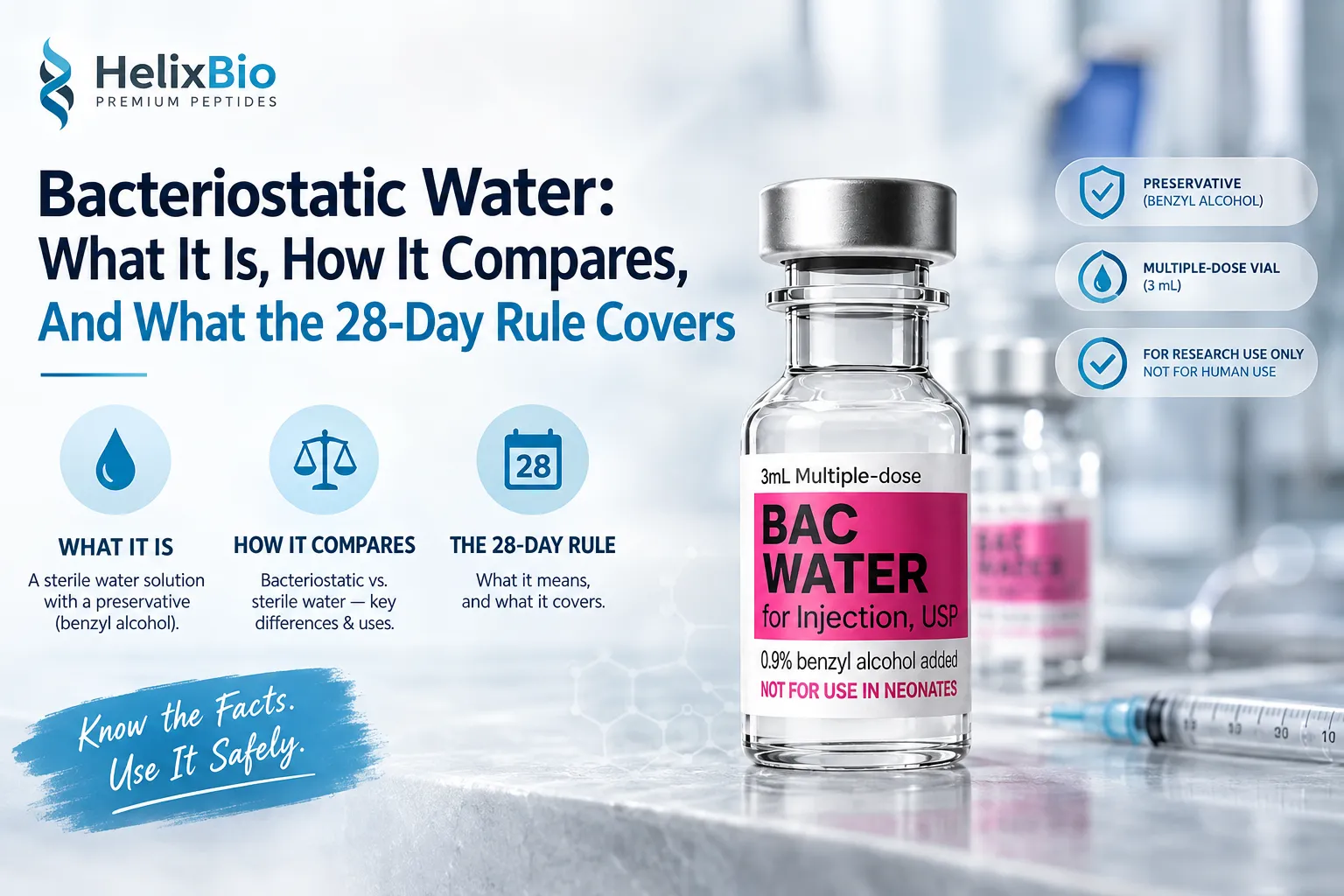
What bacteriostatic water contains, how it differs from sterile water and saline, where the 28-day opened-vial figure comes from, and what a COA can show.
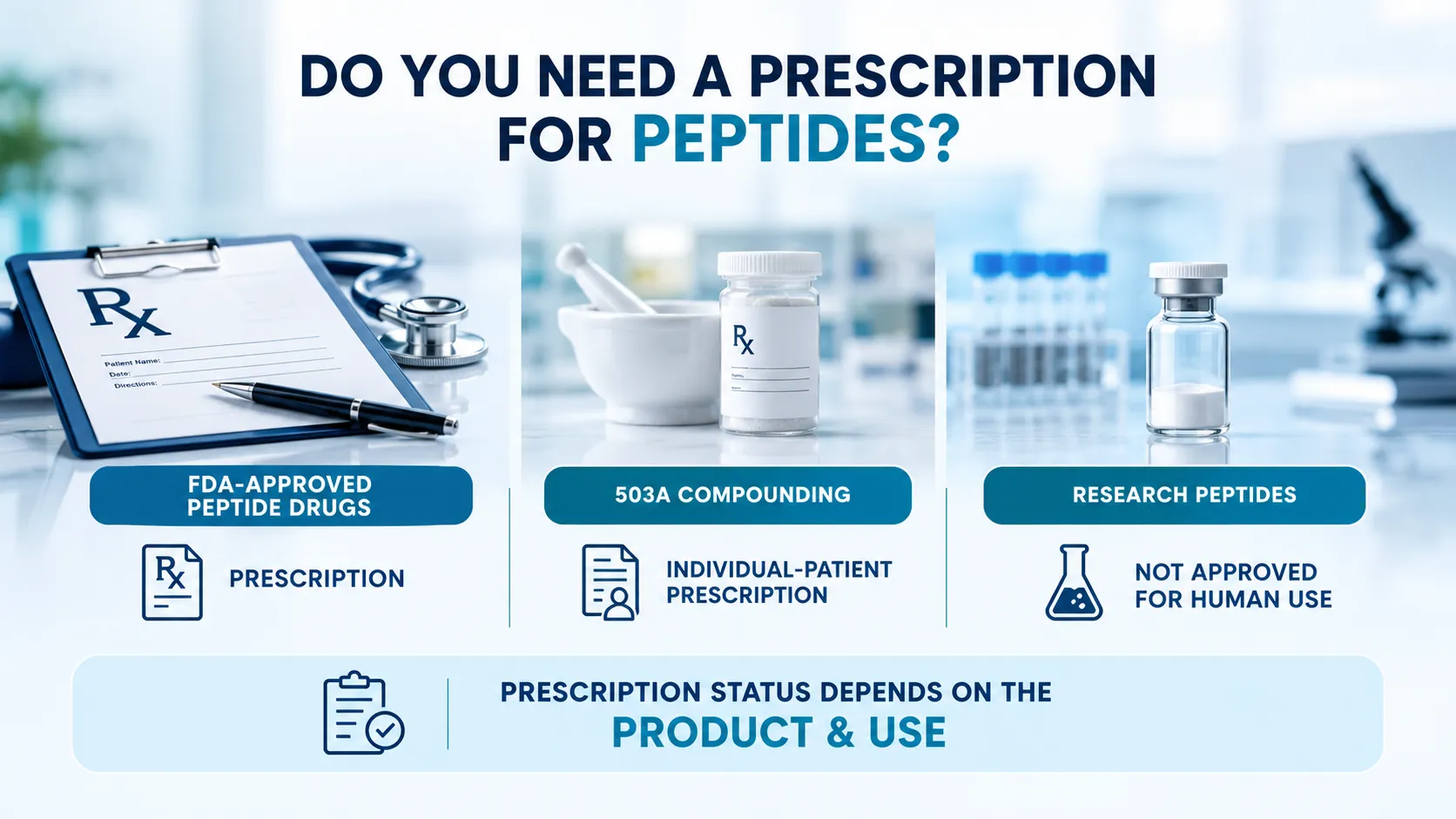
Do you need a prescription for peptides? It depends on the category. See which peptides need one, which do not, and the dated 2026 FDA rules that apply.
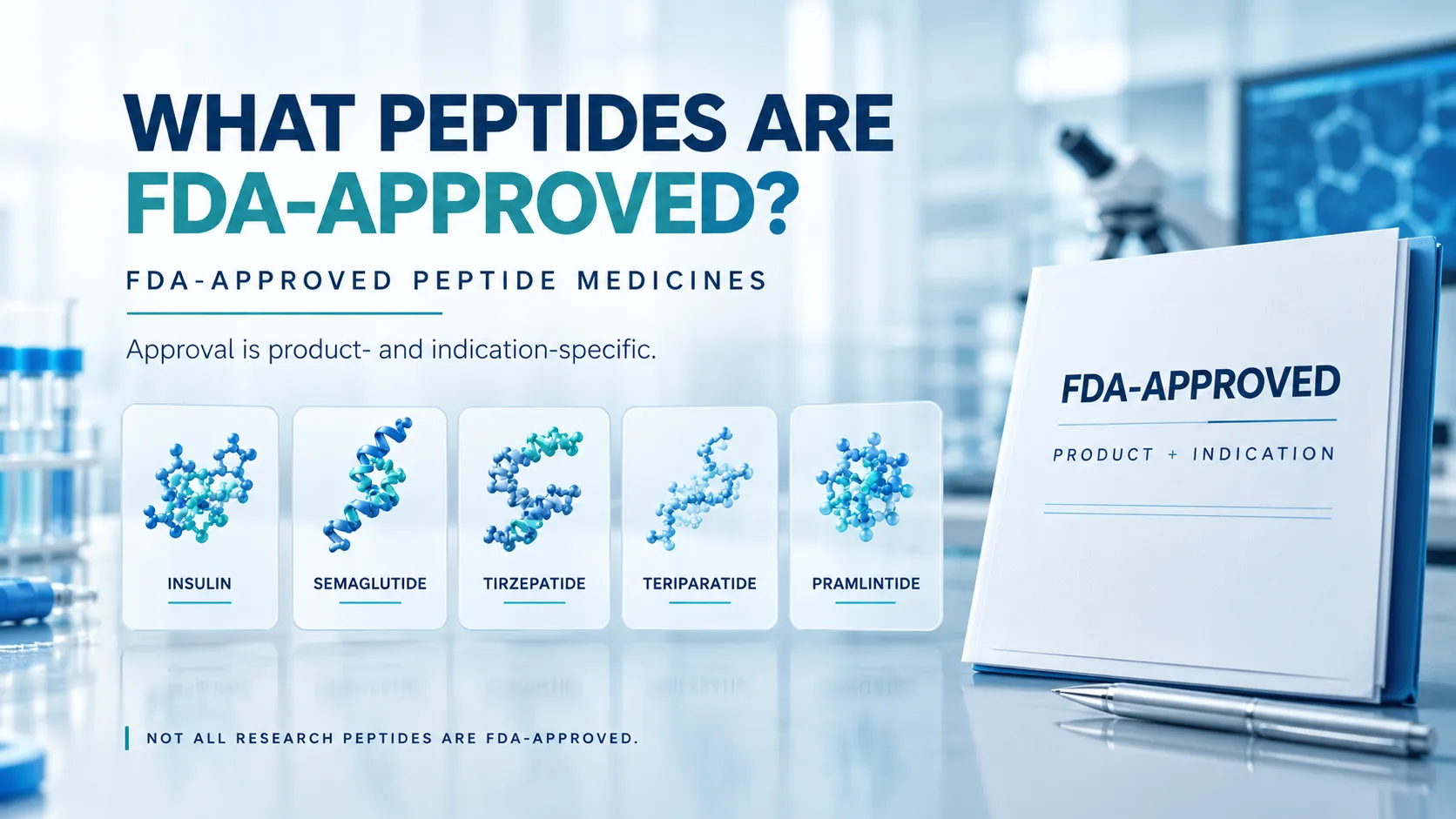
The complete 2026 list of FDA-approved peptides: 47 drugs by category and approval year, which popular peptides are not approved, and pipeline to watch.