GHRH analogues act on the GHRH receptor (GHRHR), a Class B1 GPCR coupled to Gs, adenylate cyclase and cyclic AMP.
GHRPs act on the growth hormone secretagogue receptor type 1a (GHS-R1a), a Class A GPCR coupled to Gq/11, phospholipase C and intracellular calcium.
The GHRP class was characterised in 1984 from enkephalin-derived structures, its receptor was cloned in 1996, and ghrelin was identified as that receptor's natural ligand only in 1999.
Sermorelin, tesamorelin and both forms of CJC-1295 are GHRH analogues; ipamorelin, GHRP-2, GHRP-6 and hexarelin are GHRPs, also called ghrelin mimetics.
GHS-R1a shows unusually high constitutive activity, signaling in the absence of ligand at roughly half its maximal ghrelin-stimulated response, with no comparable property described for GHRHR.
Combined administration of a GHRH and a GHRP produces a greater acute GH response than either alone in humans, but that evidence covers acute GH release rather than downstream outcomes.
GHRPs do not release growth hormone independently of GHRH: a GHRH antagonist eliminated most of the GH response to GHRP-6 in a human study.
IGF-1, hGH fragments such as the 176-191 region, and recombinant growth hormone belong to neither class, because none of them acts at GHRHR or GHS-R1a.
Two abbreviations that differ by a single letter describe two pharmacologically separate families of research compounds. GHRH analogues and GHRPs both raise growth hormone output from the anterior pituitary, which is why they appear together in catalogues, papers and product listings. They arrive there by different receptors, different second messengers and, in one case, an entirely different discovery history. Confusing them changes what a compound is expected to do in a model system, what the published evidence actually covers, and what class a certificate of analysis is describing. This article sets out that distinction at the level of receptor biology, signaling and compound classification.
Featured In This Article
Sermorelin
RESEARCH PEPTIDE
Highly purified synthetic peptide prepared for rigorous laboratory research.
$88.00
Tesamorelin
RESEARCH PEPTIDE
Highly purified synthetic peptide prepared for rigorous laboratory research.
$105.00
GHRP-6
RESEARCH PEPTIDE
Highly purified synthetic peptide prepared for rigorous laboratory research.
$72.00
GHRP-2
RESEARCH PEPTIDE
Highly purified synthetic peptide prepared for rigorous laboratory research.
$72.00
Ipamorelin
RESEARCH PEPTIDE
Highly purified synthetic peptide prepared for rigorous laboratory research.
$72.00
The short answer
GHRH analogues act on the growth hormone-releasing hormone receptor (GHRHR). GHRPs act on the growth hormone secretagogue receptor type 1a (GHS-R1a), better known as the ghrelin receptor. These are two distinct G protein-coupled receptors expressed on the same pituitary cell type, coupled to two different intracellular pathways: GHRHR signals principally through Gs, adenylate cyclase and cyclic AMP, while GHS-R1a signals principally through Gq/11, phospholipase C and intracellular calcium.
Everything else — the compound lists, the combination literature, the terminology arguments — follows from that split.
Why the two abbreviations get confused
Three separate causes converge, and most explanations address only the first.
The obvious one is orthographic. GHRH and GHRP differ by one character, both expand to phrases containing "growth hormone" and "releasing", and both classes are routinely shortened further to "GH peptides" in commercial writing.
The second is that both classes converge on the same measurable readout. If the only endpoint recorded is circulating GH, a GHRH analogue and a GHRP produce superficially similar results, and the mechanistic difference disappears from the data.
The third cause is the most persistent: the umbrella term growth hormone secretagogue is used inconsistently in the literature itself. In the original pharmacological usage established in the 1980s and carried through the patent corpus, "GHS" refers specifically to the synthetic compounds acting through the non-GHRH pathway — that is, to GHRPs and their non-peptide successors — and is defined in contrast to GHRH. In more recent commercial and clinical writing, "secretagogue" has broadened to mean any compound that stimulates endogenous GH secretion, which sweeps GHRH analogues into the same bucket. Both usages are in current circulation.
When a source calls something a growth hormone secretagogue, check which convention it is using. In the narrow historical sense the term excludes GHRH analogues by definition; in the broad modern sense it includes them. Class assignment based on that phrase alone is unreliable. Assign class by receptor instead.
The unambiguous alternatives are worth knowing. On the GHRH side: GHRH analogue or GHRHR agonist. On the GHRP side: ghrelin mimetic or GHS-R1a agonist. Those four terms carry no scope ambiguity because they name the receptor.
GHRH analogues: modifications of a hypothalamic hormone
Growth hormone-releasing hormone is a hypothalamic peptide hormone. The human form is 44 amino acids long and carries a C-terminal amide. It is released into the hypophyseal portal circulation and acts on somatotroph cells of the anterior pituitary to stimulate both the synthesis and the release of growth hormone.
A structure-activity fact defines the whole class: the biological activity of GHRH resides in its N-terminal region, and the 1-29 amidated fragment retains full GH-releasing potency. That is why the class contains compounds of very different lengths that are nonetheless all GHRH analogues. Some are built on the full 1-44 backbone, others on the truncated 1-29 fragment, with modifications added to resist enzymatic degradation or extend circulating persistence.
A GHRH analogue is therefore any compound whose structure derives from GHRH and whose activity is exerted at GHRHR. Length, half-life and the presence or absence of a conjugation moiety vary widely within the class and do not change the class assignment.
The receptor: GHRHR
GHRHR is a Class B1 G protein-coupled receptor, part of the secretin-like family and structurally distinct from the Class A rhodopsin-like receptors that make up most of the GPCR superfamily. It is expressed on pituitary somatotrophs, and splice variants including SV1 have been identified in extrapituitary tissues and in various neoplasms, where SV1 retains functional cAMP signaling.
The receptor's necessity for normal GH output is established genetically, not only pharmacologically. Loss-of-function mutations in the GHRHR gene cause isolated growth hormone deficiency type IB in humans, an autosomal recessive condition with low but detectable GH and marked short stature. The murine counterpart is the little mouse, in which a missense mutation in the extracellular domain of the receptor disrupts function and produces a dwarf phenotype. GHRH is ineffective in these animals: the ligand is present, the receptor cannot transduce it.
The signal: cyclic AMP
GHRHR couples to Gs. Ligand binding activates adenylate cyclase, raising intracellular cyclic AMP, which activates protein kinase A. This is the classical route by which GHRH stimulates GH synthesis and release, and it is the mechanistic property every compound in the class shares.
Class B1 peptide receptors engage their ligands in two steps: the C-terminal portion of the peptide first binds the receptor's extracellular domain, after which the N-terminus engages the transmembrane bundle and triggers activation. That two-domain requirement is why the N-terminal region carries the activity while the C-terminal region contributes binding.
GHRPs: a class discovered backwards
The GHRP class has an unusual history, and it explains the terminology better than any definition.
In 1984, Bowers, Momany and colleagues reported a series of small synthetic peptides that released GH from the pituitary. The series was derived structurally not from GHRH but from the enkephalins, opioid peptides with no established role in GH regulation. GHRP-6 emerged as the most potent early member and was subsequently shown to be active in humans.
At that point the class existed with no known receptor and no known endogenous ligand. Compounds were being characterised pharmacologically against a target nobody had identified.
The receptor came second. In 1996, Howard and colleagues cloned the growth hormone secretagogue receptor, using GHRP-class compounds as the pharmacological tools that made the screen possible. It was confirmed to be a G protein-coupled receptor distinct from GHRHR and, at the moment of cloning, an orphan receptor with no known natural ligand.
The natural ligand came third. In 1999, Kojima and colleagues identified ghrelin, a 28-amino-acid peptide produced predominantly in the stomach, carrying an n-octanoyl modification on serine 3 that is required for receptor binding. Ghrelin turned out to be the endogenous ligand for the receptor that synthetic GHRPs had been targeting, unknowingly, for fifteen years.
This is why GHRP and ghrelin mimetic describe the same class. The historical name records what the compounds were made to do; the modern name records what they actually bind.
The receptor: GHS-R1a
GHS-R1a is a Class A G protein-coupled receptor of 366 amino acids, expressed on pituitary somatotrophs and in the hypothalamus, including on GHRH neurons and in the arcuate nucleus. A truncated splice variant, GHS-R1b, comprises the first five transmembrane domains, does not bind ghrelin, and acts as a dominant negative on GHS-R1a surface expression.
The signal: calcium
GHS-R1a couples principally to Gq/11. Activation stimulates phospholipase C, which hydrolyses membrane phosphoinositides to inositol trisphosphate and diacylglycerol; IP3 mobilises calcium from intracellular stores and DAG activates protein kinase C. The functional consequence at the somatotroph is a rise in intracellular calcium leading to GH exocytosis.
The cAMP-versus-calcium contrast is the cleanest way to state the class difference. It was the observation that GHRH raised cAMP while the synthetic secretagogues raised intracellular calcium that first indicated the two were not acting at the same receptor, years before the second receptor was cloned.
GHRH analogues vs GHRPs at a glance
Feature
GHRH analogues
GHRPs / ghrelin mimetics
Primary receptor
GHRHR
GHS-R1a (ghrelin receptor)
Receptor family
Class B1 GPCR (secretin-like)
Class A GPCR
G protein coupling
Gs
Gq/11
Second messenger route
Adenylate cyclase, cAMP, PKA
PLC, IP3 and DAG, intracellular calcium, PKC
Endogenous ligand context
GHRH, a 44-residue hypothalamic hormone
Ghrelin, a 28-residue gastric peptide requiring Ser3 octanoylation
Structural origin of the class
Derived from GHRH itself
The receptor difference most comparisons omit
Comparisons of these two classes almost always stop at different receptors and different second messengers. There is a further asymmetry that is well documented and rarely mentioned.
GHS-R1a exhibits unusually high constitutive activity, meaning it signals in the absence of any ligand. Holst and colleagues reported in 2003 that the receptor showed strong ligand-independent signaling in transfected cells, with basal activity in the region of half the maximum response produced by saturating ghrelin. This is not an artefact of the cellular environment: work on purified receptor monomers reconstituted in lipid discs demonstrated that the receptor activates Gq in the absence of agonist, establishing constitutive activity as an intrinsic property of the protein itself.
That basal signaling appears to be physiologically meaningful. Human GHSR variants that selectively abolish constitutive activity, while leaving ghrelin-stimulated signaling intact, have been associated with a short-stature phenotype.
No comparable constitutive activity has been described for GHRHR. The consequence for interpreting research models is real: a system expressing GHS-R1a has a signaling baseline before any GHRP is introduced, which is not true of a GHRHR-expressing system. Experiments involving inverse agonism, receptor expression levels or baseline subtraction are not symmetrical between the two classes.
There is a mirror in the genetics of the two receptors. Loss of GHRHR function produces GH deficiency because the stimulated pathway fails. Loss of GHS-R1a constitutive activity produces a growth phenotype because the unstimulated pathway fails.
Is it a GHRH analogue or a GHRP?
Assignment is by receptor, and it is unambiguous for every compound in common research circulation.
Full-length human GHRH(1-44) backbone with a trans-3-hexenoyl group on the N-terminal tyrosine
CJC-1295 with DAC
GHRH analogue
GHRHR
A modified GRF(1-29) sequence bearing a moiety that conjugates to serum albumin
CJC-1295 without DAC / modified GRF (1-29)
GHRH analogue
GHRHR
Two footnotes on that table are worth stating, because they are commonly got wrong.
Ipamorelin is not a modified GHRP-2 or GHRP-6. It was identified within a GHRP-1 series that lacked the central Ala-Trp dipeptide, and the resulting pentapeptide contains no tryptophan at all. GHRP-2 and GHRP-6, by contrast, are close structural relatives of each other, differing at only two positions while sharing an identical C-terminal Ala-Trp-D-Phe-Lys amide.
Compound-level detail sits outside the scope of a class-level article; for the GHRH side, how tesamorelin engages the GHRH axis is covered separately, and a direct comparison of two GHRH analogues is handled in its own article.
Length is not a classifier. The GHRP side spans five to six residues and the GHRH side twenty-nine to forty-four, but a short GHRH analogue is still a GHRH analogue, and residue count indicates nothing about receptor.
Why the two classes are studied together
The combination question is where accuracy matters most, because the available claims are stronger in some directions than others.
What is established. Combined administration of a GHRH and a GHRP produces a GH response greater than either agent alone in humans. Bowers and colleagues reported this in 1990, showing that GHRP acted synergistically with GHRH in normal subjects. The finding has been reproduced in several populations, including studies in obese subjects where the combination produced a marked GH discharge not seen after any single stimulus. The mechanistic rationale is straightforward: two receptors, two signaling routes, one cell type. The most studied cross-class pairing is covered in its own guide, and the broader logic of combining peptides by receptor mechanism is treated separately; this article stops at why the two classes are distinct.
What is frequently overstated. The synergy literature concerns acute GH release measured over minutes to hours. It does not establish anything about downstream outcomes, and it should not be read as evidence for any particular combination of modern compounds. The documented human synergy involves GHRH alongside GHRP-6 and GHRP-2 specifically; it is not a demonstrated property of every possible pairing across the two classes.
What is commonly stated backwards. A claim repeated across a great deal of commercial writing is that GHRPs release GH independently of GHRH. The human data do not support it. Pandya and colleagues administered a specific GHRH antagonist before GHRP-6 in healthy men and found that most of the GH response was eliminated, with the maximal increase over baseline falling from approximately 34 to approximately 6 micrograms per litre. The correct statement is that GHRPs act at a separate receptor but require an intact endogenous GHRH signal for a maximal response. The two pathways are distinct; they are not independent.
What belongs to neither class
Class-level clarity requires stating the boundary. Several compounds routinely grouped into growth hormone peptide lists are in neither class.
IGF-1 and its analogues are downstream mediators of GH action, not secretagogues, and act at neither receptor discussed here.
hGH fragments, such as the C-terminal 176-191 region and its tyrosine-extended relative, are fragments of the hormone itself rather than GH-releasing compounds.
Recombinant growth hormone is the hormone. Both classes above modulate the endogenous secretory system; exogenous GH replaces its output.
Non-peptide secretagogues, developed from GHRP-6 as a chemical template to overcome the poor oral bioavailability of the peptides, act at GHS-R1a and belong to the ghrelin-mimetic pathway pharmacologically, but they are not peptides, so GHRP does not apply to them.
Reading the evidence across the two classes
The two classes are not matched for depth of human evidence, and treating them as equivalent misrepresents both. The GHRH-analogue side includes compounds with substantial published human trial programmes alongside compounds whose human record is thin. The GHRP side has a large body of human GH-response pharmacology from the 1990s but comparatively little modern controlled work on any downstream endpoint.
Three distinctions are worth carrying into any reading of this literature.
Acute GH-response data is not outcome data. Much of what exists for both classes measures a hormone concentration over a few hours.
Class findings do not transfer automatically between members. Evidence generated with GHRP-6 is evidence about GHRP-6.
Absence of evidence is a finding worth recording. For several widely circulated compound pairings, no published controlled study of the combination exists, and that absence should be stated rather than filled with mechanism.
When evaluating documentation for any compound in either class, receptor assignment is the first thing to confirm and the easiest to check against primary sources. A description that names a class without naming a receptor has not actually classified the compound.
Using the distinction in practice
For anyone reviewing certificates of analysis, catalogue entries or published methods, the class distinction resolves several recurring ambiguities. A blended preparation containing one compound from each class contains two chemically unrelated molecules with different masses, different degradation chemistries and different analytical requirements, and a single purity figure describes such a preparation poorly. A category labelled by outcome rather than by mechanism will mix classes and non-classes together. A compound described only as a GH peptide has not been identified in any meaningful sense.
Receptor first, then everything else. It is the one classifier that never has to be revised.
All compounds discussed here are described strictly in the context of laboratory research. Nothing in this article constitutes guidance for human administration, and no therapeutic claim is made or implied.
Got Questions?
Frequently Asked Questions
GHRH analogues act on the GHRH receptor (GHRHR) and signal principally through Gs, adenylate cyclase and cyclic AMP. GHRPs act on the growth hormone secretagogue receptor type 1a (GHS-R1a, the ghrelin receptor) and signal principally through Gq/11, phospholipase C and intracellular calcium. Both classes increase pituitary GH output in research models, but through separate receptors and separate intracellular pathways.
Ipamorelin is a GHRP, a ghrelin mimetic acting at GHS-R1a. It is not structurally derived from GHRH and does not act at GHRHR. A common error is describing it as a modified GHRP-2 or GHRP-6; it was identified within a GHRP-1 series lacking the central Ala-Trp dipeptide and contains no tryptophan.
Tesamorelin is a GHRH analogue. It is built on the full-length human GHRH(1-44) backbone with a trans-3-hexenoyl group attached to the N-terminal tyrosine, and it acts at GHRHR.
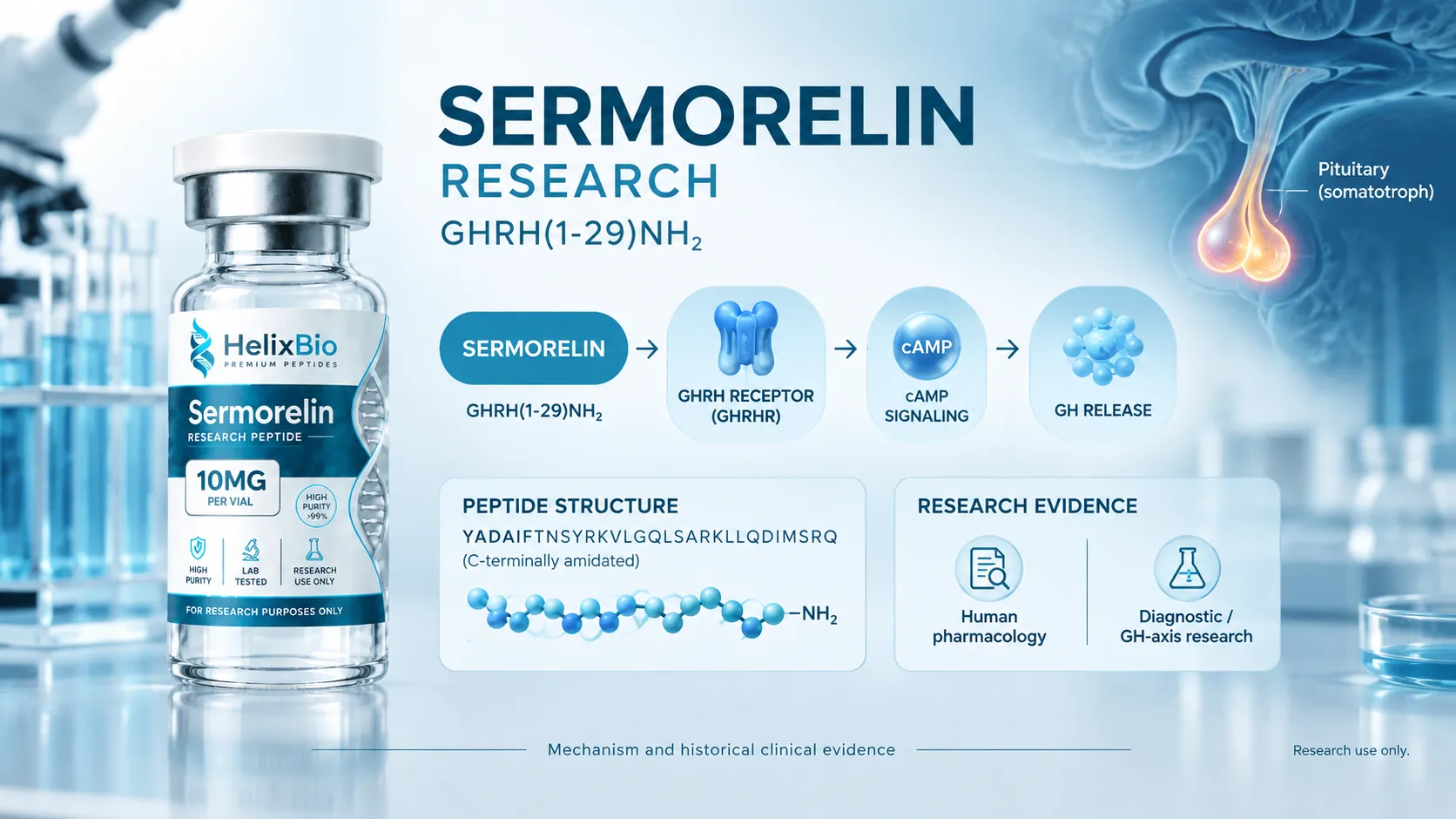
Yes. Sermorelin corresponds to the amidated 1-29 fragment of human GHRH with no further modification. Because the GH-releasing activity of GHRH resides in its N-terminal region, this truncated fragment retains the parent hormone's activity at GHRHR.
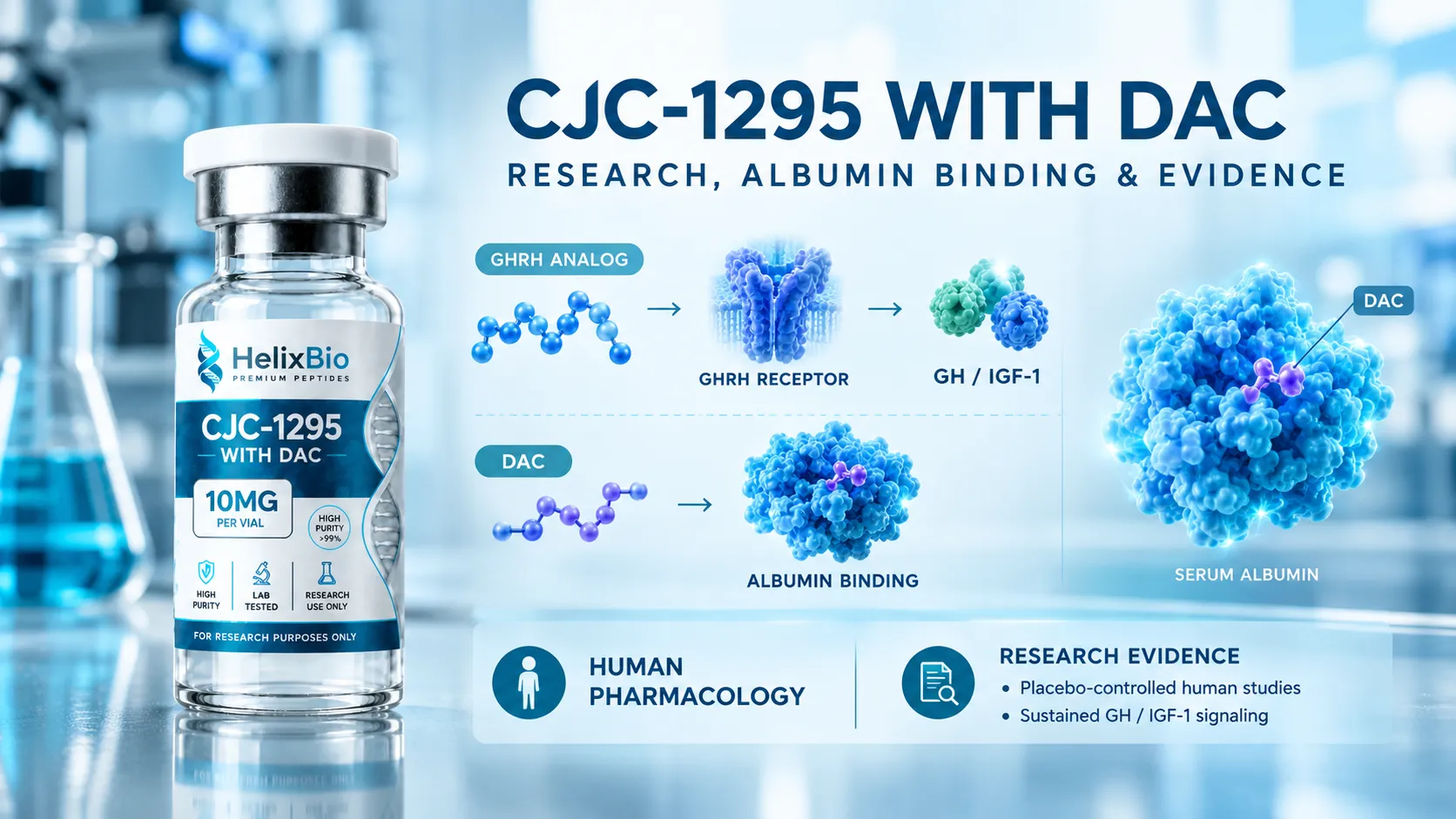
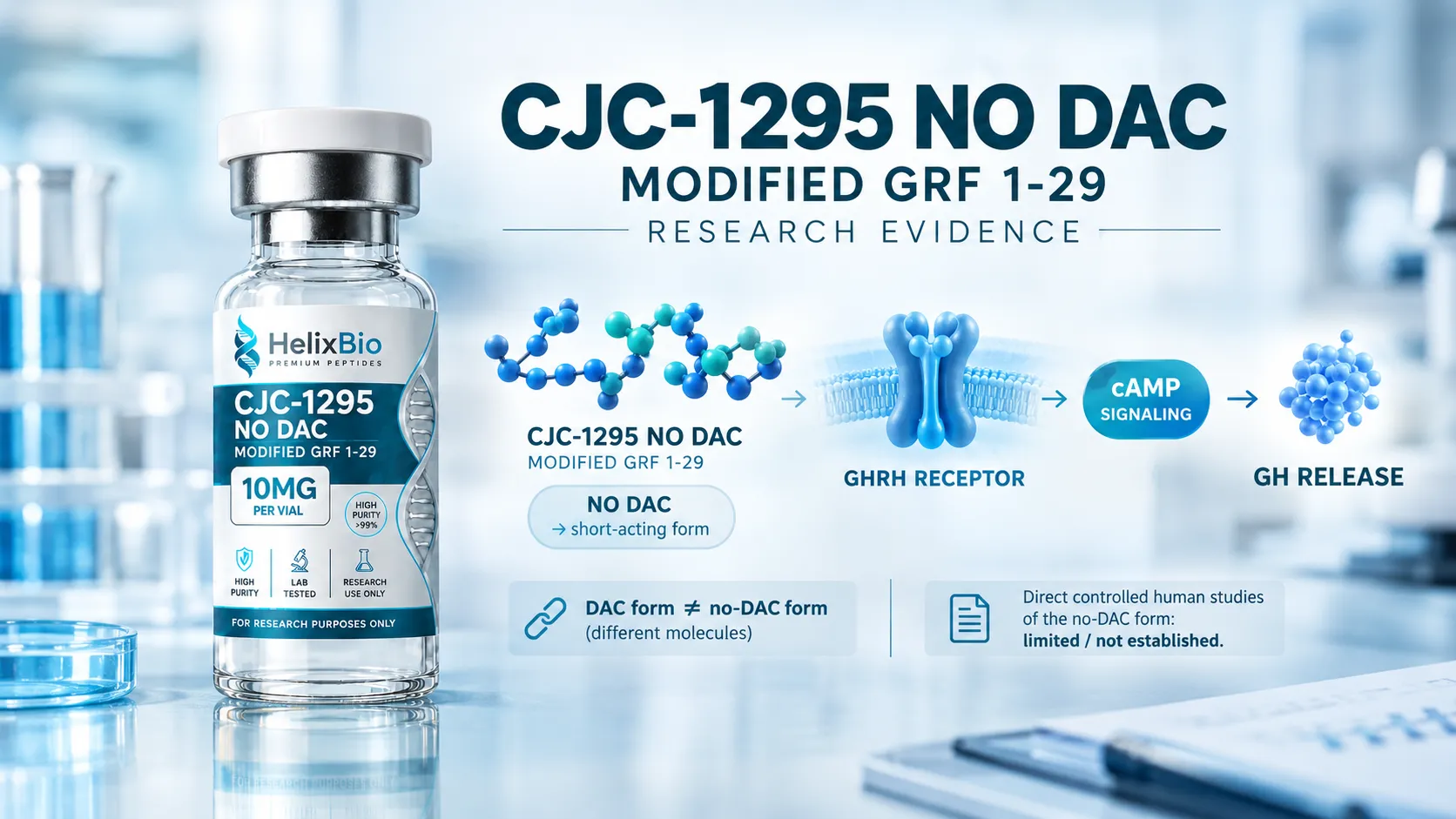
Yes, in both circulating forms. CJC-1295 is built on a substituted GRF(1-29) sequence and acts at GHRHR. The presence or absence of the drug-affinity-complex moiety affects circulating persistence, not class assignment.
GHS-R1a, the growth hormone secretagogue receptor type 1a, which is the receptor for endogenous ghrelin. It is a Class A G protein-coupled receptor expressed on pituitary somatotrophs and on hypothalamic neurons.
GHRHR, the growth hormone-releasing hormone receptor. It is a Class B1 secretin-like G protein-coupled receptor expressed on anterior pituitary somatotrophs, and loss-of-function mutations in the gene encoding it cause isolated growth hormone deficiency type IB in humans.
GHS-R1a stands for growth hormone secretagogue receptor type 1a. It was cloned in 1996 using synthetic GHRPs as pharmacological tools, at which point it was an orphan receptor with no known natural ligand. Ghrelin was identified as that ligand in 1999, so the same receptor carries both names.
Yes. Both are ghrelin mimetics acting at GHS-R1a, and they are close structural relatives differing at only two positions while sharing an identical C-terminal Ala-Trp-D-Phe-Lys amide. Their individual pharmacological differences are a separate subject from the class distinction covered here.
No, and this is the most frequently repeated error on the topic. In a human study using a specific GHRH antagonist, most of the GH response to GHRP-6 was eliminated. GHRPs act at a distinct receptor but require an intact endogenous GHRH signal for a maximal response.
Because they engage two different receptors on the same cell type, combined administration produces a greater acute GH response than either alone, a finding first reported in humans in 1990 and reproduced since. That evidence concerns acute GH release measured over hours; it does not establish downstream outcomes, and the documented human synergy involves GHRH with GHRP-6 and GHRP-2 specifically rather than every possible pairing.
Both classes act on the endogenous secretory system, stimulating the pituitary to release its own GH through a receptor. Recombinant growth hormone supplies the hormone directly and bypasses that regulatory step entirely. The difference is categorical rather than one of degree, which is why neither class is interchangeable with GH in a research model.