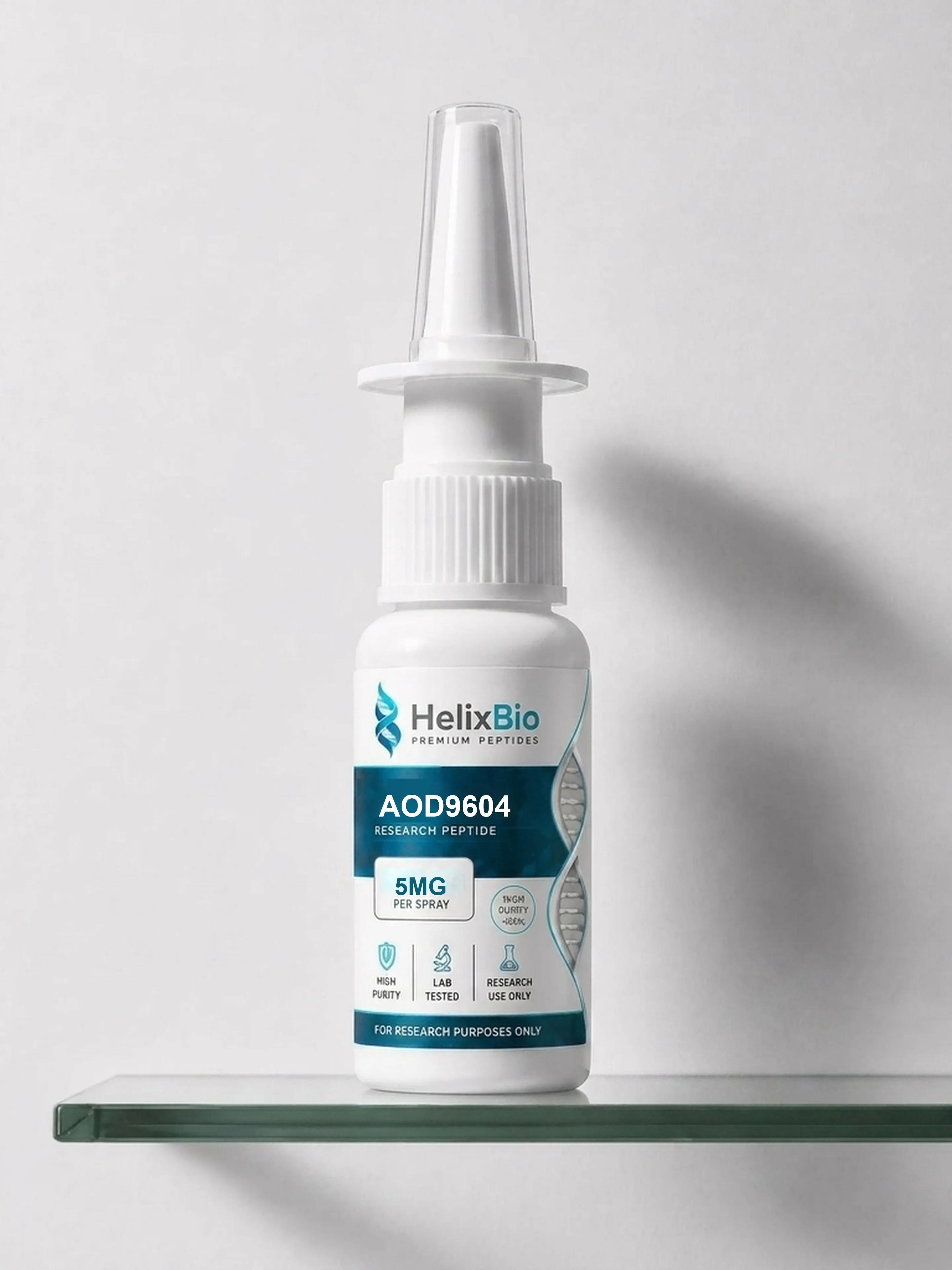
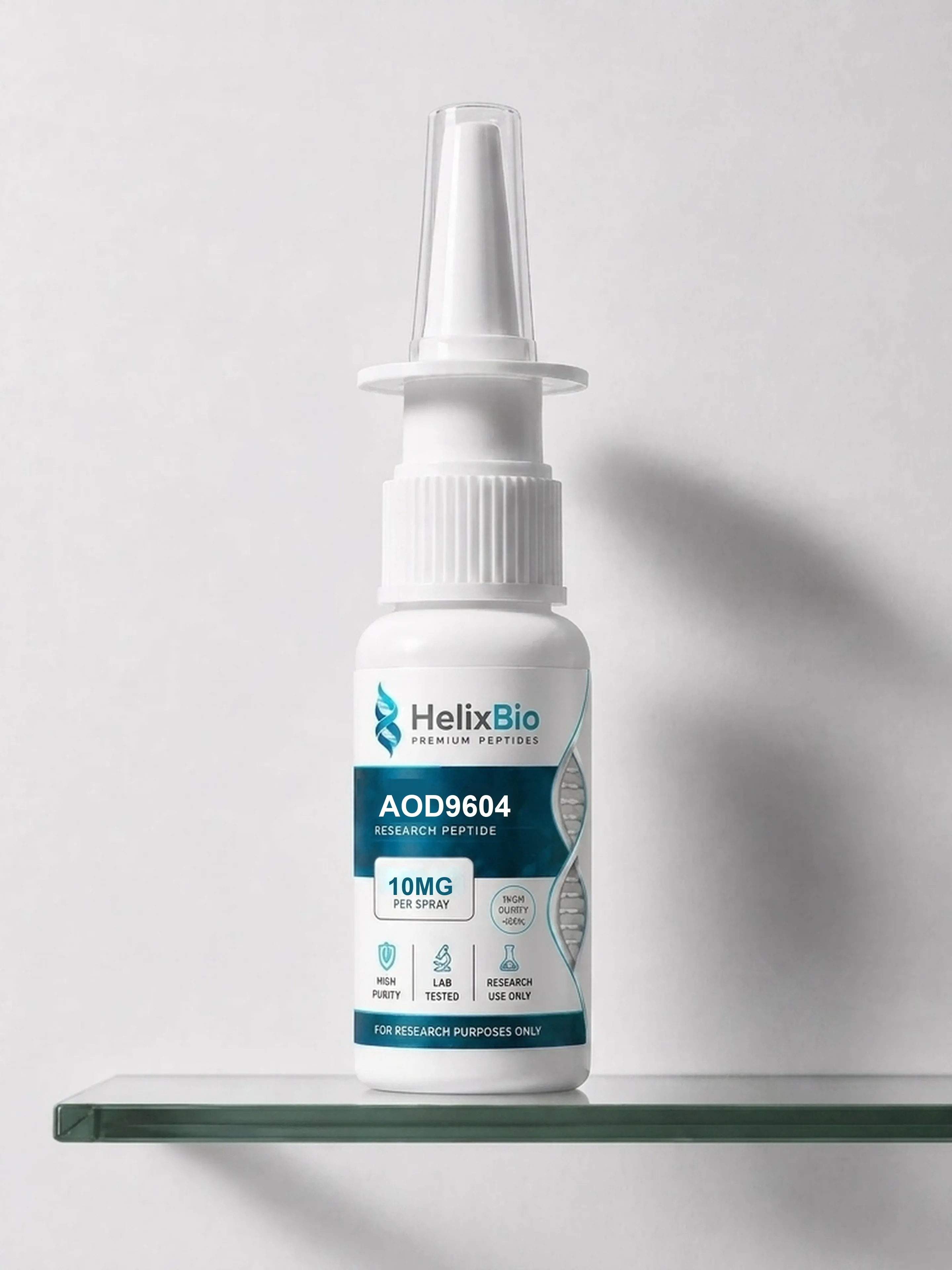
AOD9604 Spray is a research-use solution of AOD9604, a synthetic 16-amino-acid peptide corresponding to the C-terminal region of human growth hormone (residues 177–191) carried on an added N-terminal tyrosine. The compound was developed at Monash University and taken through six placebo-controlled human trials by Metabolic Pharmaceuticals before its obesity programme was discontinued in 2007, which makes it one of the few research peptides with a substantial published human safety record and a documented efficacy failure alongside it. Supplied by Helix Bio as a pre-solubilised laboratory material for in vitro and analytical work. Not for human or veterinary use.
HPLC certified
Independent analysis
Highest standard
Full traceability
AOD9604 is a hexadecapeptide — sixteen amino acids — with the sequence Tyr-Leu-Arg-Ile-Val-Gln-Cys-Arg-Ser-Val-Glu-Gly-Ser-Cys-Gly-Phe (YLRIVQCRSVEGSCGF). Fifteen of those residues reproduce positions 177 to 191 of human growth hormone. The sixteenth, the N-terminal tyrosine, is a substitution: in native hGH, position 176 is phenylalanine, and AOD9604 replaces it with tyrosine to stabilise the molecule.
The designation is literal. "AOD" abbreviates anti-obesity drug, the indication Metabolic Pharmaceuticals pursued; 9604 is the internal compound number that followed an earlier fragment, AOD9401. The compound is not a growth hormone analogue and does not reproduce growth hormone's activity — it reproduces one isolated region of the molecule, which is the entire premise of the research programme built around it.
| Identifier | Value |
|---|---|
| CAS Registry Number | 221231-10-3 |
| PubChem CID | 71300630 |
| FDA UNII | 7UP768IP4M |
| ChemSpider | 57582224 |
| Molecular formula (free base) | C78H123N23O23S2 |
| Molecular weight (free base) | 1815.10 g/mol |
| Common synonyms | AOD-9604, AOD 9604, Tyr-hGH 177–191, hGH fragment 176–191 (Tyr176) |
AOD9604 is occasionally listed by suppliers as "lipotropin AOD9604". The label is inaccurate and worth correcting, because β-lipotropin is a separate, well-characterised 91-residue peptide derived from proopiomelanocortin — a different precursor protein, a different sequence, and a different literature. AOD9604 has no structural relationship to it. Searches that combine the two terms are retrieving marketing copy, not chemistry.
Two cysteine residues sit at positions 7 and 14 of the sixteen-residue chain and form an intramolecular disulfide bridge. That bridge is what makes the molecule cyclic across its central region and is a defining structural feature rather than an incidental one — the reduced, open-chain form is a different species and would be expected to resolve differently on both HPLC and mass spectrometry. FDA's own characterisation of AOD9604 in its 2024 compounding review describes the substance in exactly these terms: a sixteen-amino-acid peptide with a disulfide bond between the cysteines at positions 7 and 14.
These are two different compounds that are routinely sold as though they were one, and the difference is measurable to a single atom.
| Property | AOD9604 | hGH fragment 176–191 |
|---|---|---|
| N-terminal residue | Tyrosine | Phenylalanine |
| Sequence | YLRIVQCRSVEGSCGF | FLRIVQCRSVEGSCGF |
| Molecular formula | C78H123N23O23S2 | C78H123N23O22S2 |
| Molecular weight | 1815.10 g/mol | 1799.10 g/mol |
| CAS | 221231-10-3 | 66004-57-7 |
| Human trial data | Six placebo-controlled trials | None published |
The two differ by one hydroxyl oxygen — a 16 Da mass difference. That is comfortably within the resolving power of routine LC-MS, which means an identity assay on a specific lot can distinguish them and a product name cannot. Anyone comparing AOD9604 material across suppliers should read the mass on the certificate rather than the label. Note also that literature findings for AOD9604 do not transfer to hGH fragment 176–191, which has never been studied in humans; the reverse extrapolation is one of the more common errors in secondary sources on this compound.
AOD9604 is generally manufactured and supplied as the acetate salt rather than the free base. FDA treats the two as distinct active pharmaceutical ingredients with different physicochemical characteristics, and it evaluated them separately in its 2024 review. For laboratory purposes the practical consequence is arithmetic: a stated peptide mass may refer to the acetate salt or to the free base contained within it, and the two figures are not interchangeable when calculating molar concentration. The salt form and mass basis for this product are recorded on the applicable certificate of analysis.
This material is supplied for in vitro and analytical laboratory work — reference standard use, analytical method development, identity and purity comparison, and formulation-stability investigation. Because AOD9604 is explicitly named on the World Anti-Doping Agency Prohibited List, it also appears in anti-doping analytical chemistry as a target analyte, and validated urinary detection methods for it have been published.
It is not supplied for administration to humans or animals, for clinical or diagnostic use, or for compounding. Helix Bio does not provide dosing, administration, or protocol guidance for this or any catalog item.
AOD9604 is a compound where several specific things are worth checking before a material enters a workflow, and they are not the same things that matter for a typical lyophilised peptide.
Qualified researchers at academic, biotechnology, pharmaceutical, and contract research organisations, and analytical laboratories including anti-doping and forensic facilities working with growth hormone fragments as reference analytes. Not for personal use, self-administration, or supply to individuals.
| Specification | Detail |
|---|---|
| Product name | AOD9604 Spray |
| Compound | AOD9604 |
| Synonyms | AOD-9604, Tyr-hGH 177–191 |
| Chemical class | Synthetic hexadecapeptide |
| Sequence | Tyr-Leu-Arg-Ile-Val-Gln-Cys-Arg-Ser-Val-Glu-Gly-Ser-Cys-Gly-Phe |
| Disulfide bridge | Cys7–Cys14 |
| Molecular formula (free base) | C78H123N23O23S2 |
| Molecular weight (free base) | 1815.10 g/mol |
| CAS | 221231-10-3 |
| PubChem CID | 71300630 |
| UNII | 7UP768IP4M |
| Salt form | See current lot certificate of analysis |
| Format | Solution, spray presentation |
| Fill volume | See current product listing |
| Total peptide content | See current product listing |
| Concentration | See current lot certificate of analysis |
| Vehicle | See current lot certificate of analysis |
| Purity | See current lot certificate of analysis |
| Identity method | See current lot certificate of analysis |
| Storage | See product-specific documentation supplied with this formulation |
| Intended use | Laboratory research only |
| Human use | Not for human consumption |
| Veterinary use | Not for veterinary use |
Growth hormone has been known to mobilise fat since the 1960s, but it also raises IGF-1, impairs glucose tolerance, and promotes tissue growth — a combination that ruled it out as a long-term obesity treatment. The research programme behind AOD9604 tested a structural hypothesis: that the lipolytic activity resides in a discrete region of the molecule and can be separated from everything else. AOD9604 is that region, synthesised as a standalone peptide.
Ng and colleagues at Monash University reported in Hormone Research (2000) that obese Zucker rats given AOD9604 orally at 500 µg/kg daily for 19 days gained less than half the body weight of controls (15.8 ± 0.6 g versus 35.6 ± 0.8 g), with increased lipolytic activity measured in adipose tissue. Euglycemic clamp testing in the same animals showed no adverse effect on insulin sensitivity, in contrast to what chronic intact hGH produced.
Heffernan and colleagues followed in Endocrinology (2001) with the mechanistic work that still defines what is and is not known. In obese mice, fourteen days of AOD9604 reduced body weight and fat mass and restored suppressed β3-adrenergic receptor mRNA to levels seen in lean animals. The informative result came from β3-AR knockout mice: chronic treatment there produced neither the weight change nor the increased lipolysis seen in wild-type controls — yet in an acute experiment, AOD9604 still raised energy expenditure and fat oxidation in the same knockout animals. The authors concluded that the lipolytic action is not mediated directly through the β3-adrenergic receptor, although the compound increases its expression, which may in turn heighten lipolytic sensitivity.
That distinction is frequently lost in secondary descriptions, which often state that AOD9604 "binds β3-adrenergic receptors". The primary literature does not support that claim. No high-affinity receptor target for AOD9604 has been established, and the compound is not a growth hormone receptor agonist.
Six randomised, double-blind, placebo-controlled trials were conducted — two intravenous pilots, two oral pilots, and two oral Phase IIb studies enrolling roughly 300 and 500 adults with obesity. Stier, Vos and Kenley pooled the safety data in the Journal of Endocrinology and Metabolism (2013). Across the programme, tolerability was indistinguishable from placebo; serum IGF-1 did not rise, which supported the hypothesis that AOD9604 does not act through the IGF-1 axis; oral glucose tolerance testing showed no adverse effect on carbohydrate metabolism, unlike hGH; and no anti-AOD9604 antibodies were detected.
Efficacy is the other half of the record and it is negative. Weight reduction observed in the earlier trials was not reproduced in the final study, which layered an intensive diet and exercise regime over the treatment arms. The programme was discontinued in 2007. Any current account of AOD9604 that reports the positive early signal without the pivotal failure is describing half a dataset.
A separate line of investigation followed the observation, recorded in the Metabolic Pharmaceuticals patent literature, that C-terminal growth hormone fragments appeared to increase osteoblast formation without a matching increase in osteoclasts. Kwon, Park and Lee subsequently examined intra-articular AOD9604 with and without hyaluronic acid in a rabbit osteoarthritis model (Annals of Clinical and Laboratory Science, 2015). These are preclinical animal findings in a joint-injection model; they establish nothing about systemic administration, human outcomes, or any other route.
Because AOD9604 is prohibited in sport, it has an analytical literature of its own. Cox and colleagues published a validated solid-phase extraction and LC-MS/MS method for urinary detection in Drug Testing and Analysis (2015), reporting a limit of detection near 50 pg/mL and identifying a metabolite fragment, CRSVEGSCG, that proved considerably more stable than the parent compound. For laboratories doing method development or reference-standard work, that paper is the more directly useful of the AOD9604 publications.
For a solution product, purity and concentration are separate questions and both matter. Percentage purity describes the peptide relative to peptide-related impurities; concentration describes how much of it is present per unit volume of the finished formulation. A high-purity peptide diluted to an unverified concentration is not a characterised material. The lot certificate supplied with this product is the applicable record for both, together with identity confirmation and the analytical methods used.
For AOD9604 specifically, the identity result is worth reading rather than skimming. The observed mass distinguishes AOD9604 (1815.1) from hGH fragment 176–191 (1799.1) and confirms whether the Cys7–Cys14 disulfide is in the oxidised, bridged form. Both determinations come from the same assay and neither can be inferred from the product name.
Helix Bio states that its research peptides undergo independent third-party testing, with certificates of analysis issued per batch. That is a statement about the catalog. It is not a substitute for the document attached to the specific lot in hand, and where the two appear to differ, the lot document governs.
Storage conditions for this material are the ones supplied with this formulation. Solution products and lyophilised powders are not governed by the same rules — a lyophilised peptide is stable frozen for long periods, while a peptide already in solution is subject to hydrolysis, oxidation, and adsorption from the moment it is filled, and its stability depends on the vehicle, any preservative present, pH, and container. Storage guidance written for lyophilised AOD9604 vials should not be applied to this product, and neither should guidance from a different peptide supplied in a similar bottle.
Beyond that: keep the container closed when not in use, avoid repeated temperature cycling, protect from light, maintain lot traceability in your inventory records, and follow your institution's procedures for handling research materials. Consult the product documentation for anything specific to this formulation, including any retest date.
AOD9604 Spray is supplied by Helix Bio for laboratory research use only. It is not for human or veterinary consumption, self-administration, diagnosis, treatment, cure, mitigation, or prevention of any disease or condition. It is not a dietary supplement, a wellness product, or a medicine.
AOD9604 is not an approved drug in the United States and has never held an approved indication. Its obesity development programme was discontinued in 2007 and no marketing application has followed.
Its compounding status has been the subject of formal FDA review. On 4 December 2024, FDA's Pharmacy Compounding Advisory Committee considered AOD-9604 (free base) and AOD-9604 acetate for inclusion on the Section 503A Bulks List, in the context of a weight-loss use. FDA's briefing document set out an evaluation weighing against inclusion, citing physicochemical characterisation, immunogenicity considerations relating to impurities and aggregates, absence of clinical effectiveness data, and the lack of published human exposure data for the proposed non-oral routes. The committee voted against recommending inclusion. AOD9604 does not appear on the 503A Bulks List. Compounding policy in this area has continued to move through 2026 and the current position should be confirmed against FDA's own published materials rather than any secondary summary.
AOD9604 is named individually on the World Anti-Doping Agency Prohibited List under S2.2.3, growth hormone analogues and fragments, alongside hGH 176-191. It is prohibited at all times, in and out of competition. Validated urinary detection methods exist. Athletes subject to anti-doping rules should treat this as disqualifying regardless of the format in which the compound is supplied.
Purchasers are responsible for determining whether this material is appropriate for their intended experimental application and for compliance with applicable institutional, federal, state, and local requirements.
Knowledge Base
Knowledge Base
Knowledge Base
Knowledge Base
Knowledge Base
Knowledge Base
Knowledge Base
Knowledge Base
Knowledge Base
Knowledge Base
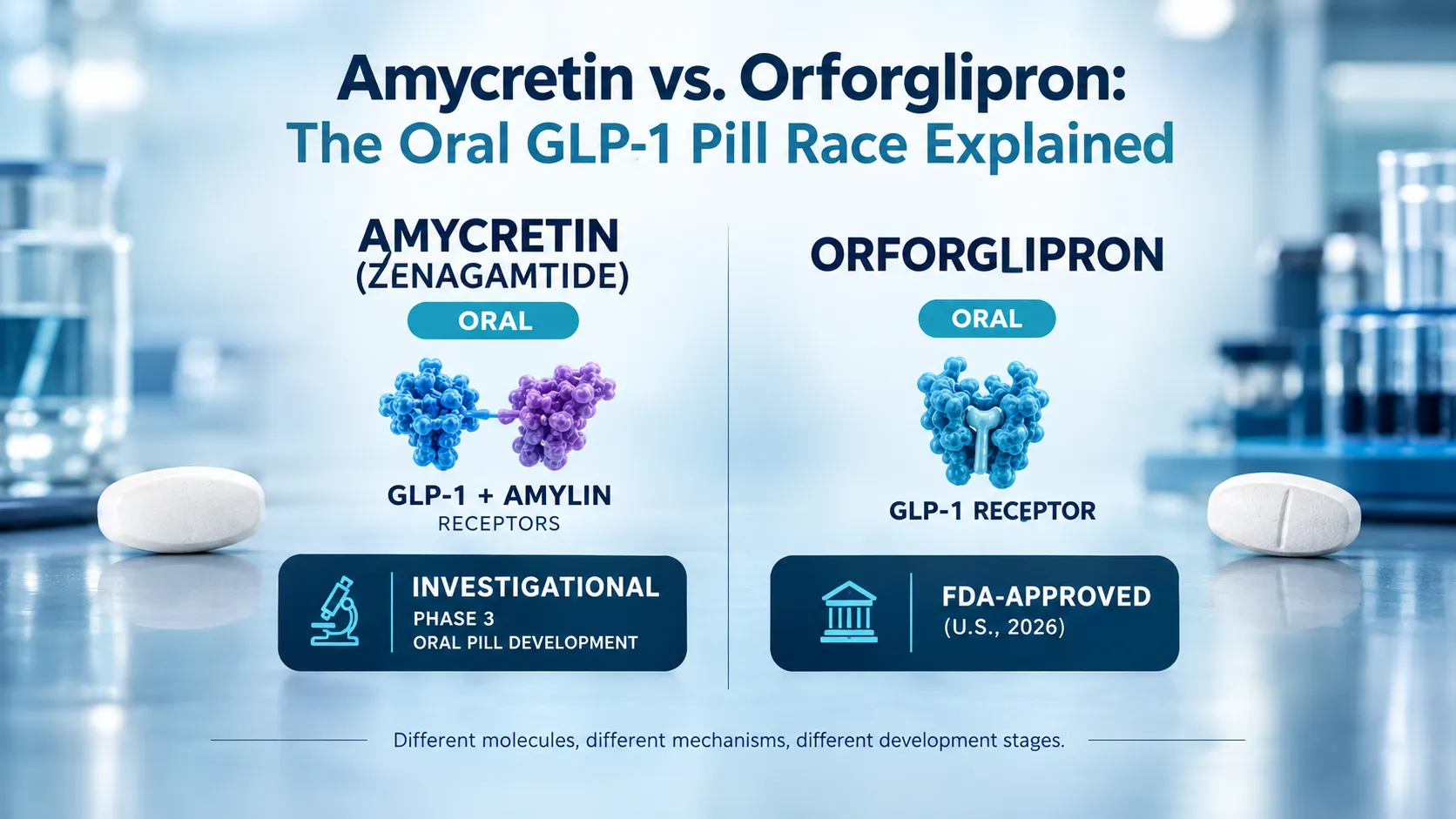
Amycretin is a peptide and orforglipron is not. How that chemistry explains the formulations, trial results, and approval status of both GLP-1 pills.
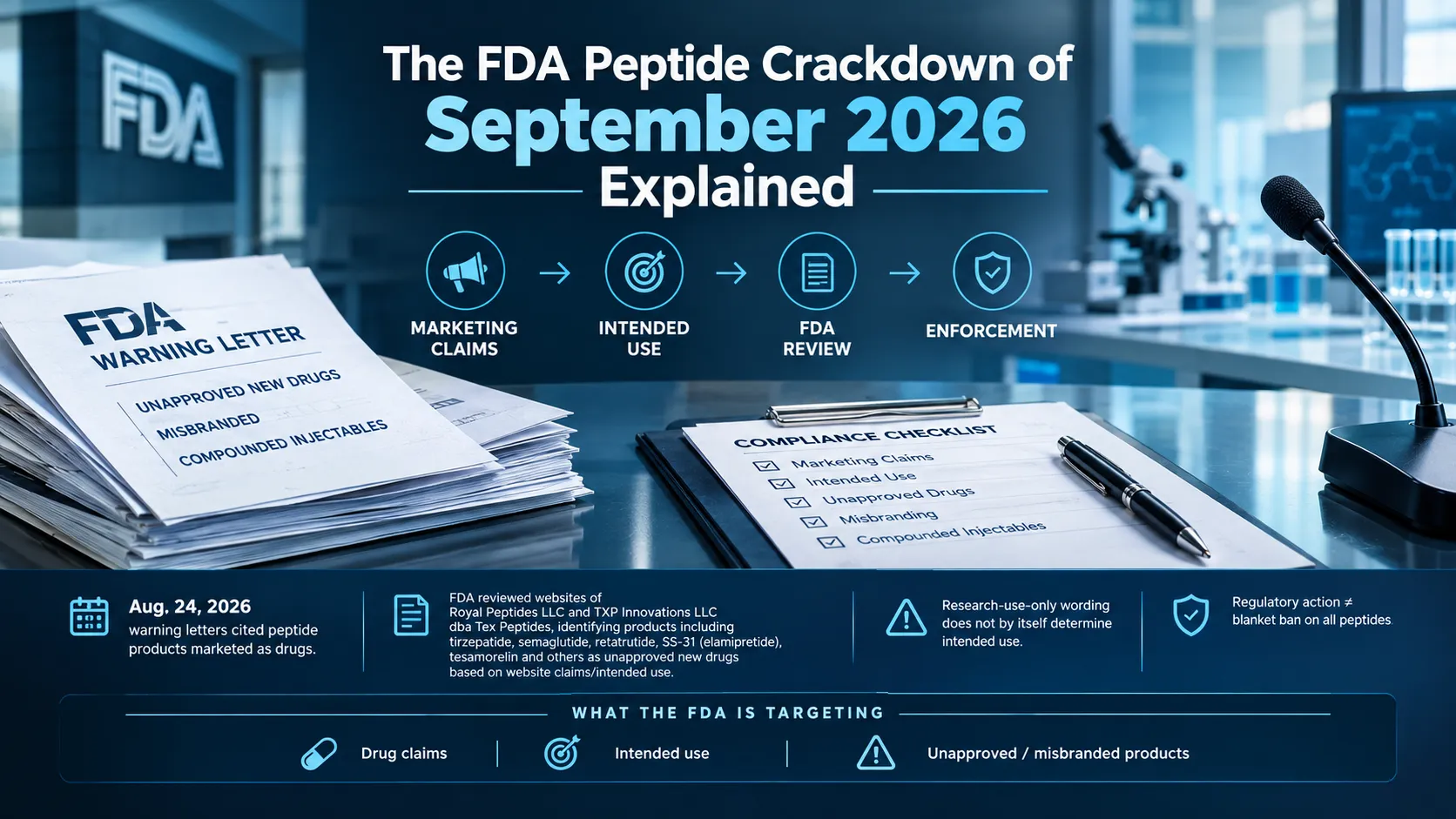
Five peptide sellers got FDA warning letters in September 2026. See who was named, why the research label failed, and the full 2026 enforcement timeline.

In July 2026, the FDA's advisory committee recommended 6 peptides for the 503A bulk list. None are on it yet. What the vote changed and what it didn't.