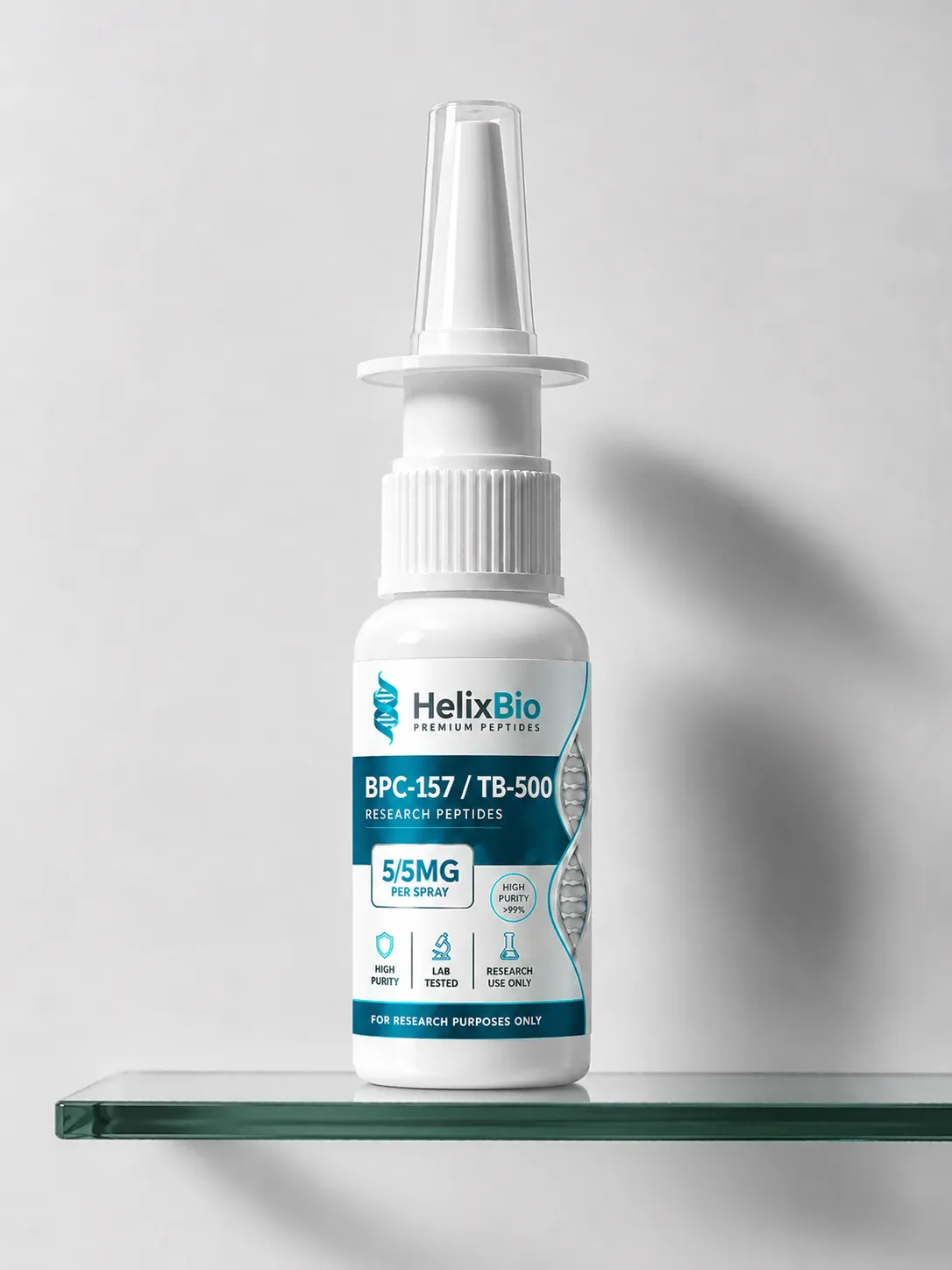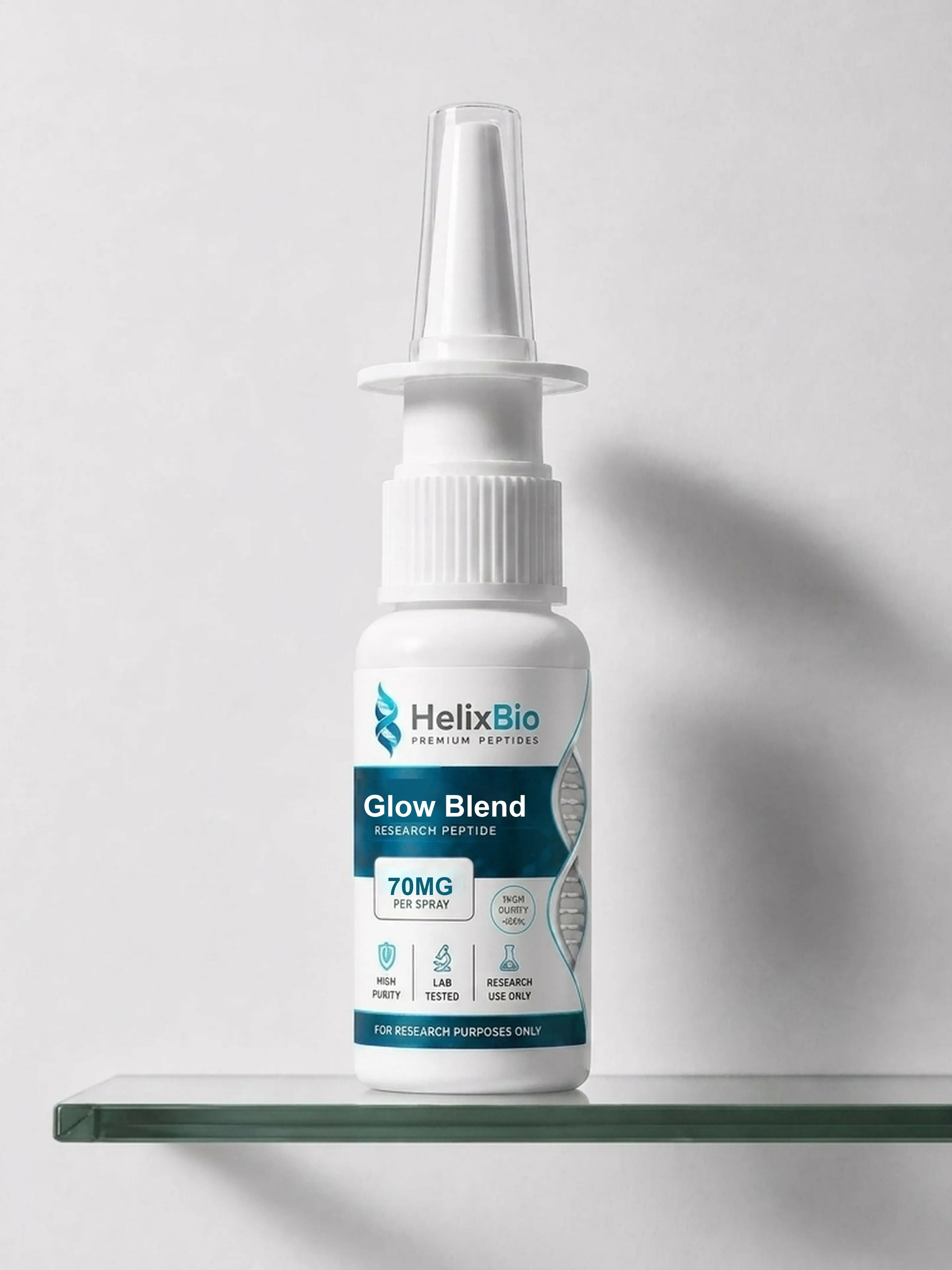
Three separately characterised molecules share one bottle here, and only two of them are peptides in the ordinary sense. Glow Blend Spray is Helix Bio’s spray-format preparation of the GLOW combination — GHK-Cu, a copper(II) complex of the tripeptide glycyl-L-histidyl-L-lysine, together with the synthetic pentadecapeptide BPC-157 and a thymosin β4-related material supplied as TB-500. Each has its own literature, its own molecular identity and its own analytical requirements. Helix Bio supplies this material for qualified laboratory and scientific research. It is not intended for human or veterinary consumption, administration by any route, diagnosis, treatment, or prevention of disease.
HPLC certified
Independent analysis
Highest standard
Full traceability
Glow Blend is a commercial product name, not a scientific formulation name. There is no monograph for it, no CAS registry entry, and no standard definition — the term describes a combination as sold rather than a characterised molecular entity. Different suppliers apply the same name to combinations that share component identities but differ substantially in how much of each component they contain.
For a researcher, that has one immediate implication: the name is not a specification. The facts that determine whether a material fits an experiment sit one level down, at the component identities and at the lot documentation. This page is organised around that principle.
Glow Blend contains three distinct molecular entities, and treating them as one compound is the most common error made about this product.
GHK-Cu is the copper(II) complex of glycyl-L-histidyl-L-lysine, a tripeptide first described in human plasma in the early 1970s. The copper is coordinated by the peptide rather than simply present alongside it, with the histidine imidazole nitrogen among the coordinating atoms. In cosmetic ingredient nomenclature the same molecule is called copper tripeptide-1. Because it is a metal complex, its identity is only half-established by chromatography — the copper component requires elemental analysis.
BPC-157 is a synthetic pentadecapeptide with the sequence Gly-Glu-Pro-Pro-Pro-Gly-Lys-Pro-Ala-Asp-Asp-Ala-Gly-Leu-Val, corresponding to a partial sequence attributed to a protein described in gastric juice. It contains no cysteine, methionine or histidine.
TB-500 is the component whose identity most often needs checking. The name is used in the market for material related to thymosin β4, a 43-residue actin-sequestering protein of roughly 4,963 daltons, and also for the acetylated seven-residue N-terminal actin-binding fragment Ac-LKKTETQ, of roughly 889 daltons. Published analytical work has identified the heptapeptide in a marketed TB-500 preparation. Roughly 4,000 daltons separate the two forms, so the distinction changes what a stated milligram figure means in molar terms. The applicable Certificate of Analysis is the document that settles which form is present in a given lot.
The spray describes the physical presentation. It is a prepared solution in a metered-delivery container, and Helix Bio supplies it on that basis alone — no administration route is implied, recommended or supported by this product, and none should be inferred from the format.
What the format does change is chemistry rather than application. A lyophilised powder holds three components in a dry, comparatively inert state until a researcher reconstitutes each preparation as their protocol requires. A prepared solution commits all three to a single aqueous environment, at a single pH, chosen once at manufacture. The three molecules do not have identical stability preferences: a copper-coordinated peptide, a proline-rich pentadecapeptide carrying an aspartyl-glycine motif, and a thymosin-related material of contested length are not optimised by the same conditions. The vehicle is therefore a deliberate compromise, and the vehicle composition and pH are legitimate questions to put to the supplier before a solution-format blend enters a workflow.
One practical observation follows from the copper chemistry. Copper(II)–peptide complexes of this type are characteristically blue in aqueous solution, and that colour reflects the coordination state rather than an added colourant. Appearance is consequently informative on this product in a way it is not on a single-peptide spray, and any appearance specification should be read against the current lot documentation rather than against general expectations.
The three components have been investigated in overlapping but distinct areas:
The existence of published research on each component does not establish that the combination has been studied, that it is safe, or that it is effective for anything. No published study was identified in which these three components were investigated together and compared against the components individually. Evidence for one component in one model and one preparation is not evidence for the blend.
Evaluating a single-compound research material is a familiar exercise: check identity, check purity, check the lot. A three-component product does not reduce to that, and most of the difficulty is hidden by how simple the label looks.
A blend introduces at least three questions a single compound never raises. Which molecular form of each component is present. How much of each is present, and in what proportion. And what a purity figure means when a chromatogram carries more than one intended peak. Helix Bio’s position is that these questions belong on the product page rather than in a support email, and that the honest answers point a researcher toward the lot documentation rather than away from it.
For Glow Blend Spray specifically, the documentation to look for is per-component identity confirmation, a quantitative determination of how much of each component is present, and — because one component is a metal complex — a copper determination by an elemental method. A general catalogue statement about testing is not a substitute for any of these.
Glow Blend Spray is intended for qualified users working in legitimate laboratory or scientific research environments, including:
It is not intended for personal experimentation, self-administration, human consumption, veterinary use, cosmetic use, or medical treatment.
| Specification | Details |
|---|---|
| Product Name | Glow Blend Spray |
| Research Category | Cosmetic & Skin / Research Peptide Blend |
| Product Type | Multi-component research material |
| Number of Components | Three |
| Format | Prepared spray solution |
| Component Proportion | Fixed at manufacture; not adjustable by the end user |
| Intended Use | Research and laboratory investigation only |
| Human Use | Not intended for human consumption or administration |
| Veterinary Use | Not intended for veterinary use |
| Concentration | Refer to current product listing and lot documentation |
| Fill Volume | Refer to current product listing |
| Vehicle / Excipients | Refer to current product documentation |
| Appearance | Refer to current lot documentation |
| Purity | Reported per component; refer to the applicable Certificate of Analysis |
| Identity Testing | Refer to the applicable Certificate of Analysis |
| Storage | Follow current product-specific documentation |
| Packaging | Refer to current product listing |
| Manufacturer | Helix Bio |
| Country of Origin | Verify current product documentation |
| Component | Molecular class | Identity notes |
|---|---|---|
| GHK-Cu | Copper(II) coordination complex of a tripeptide | Glycyl-L-histidyl-L-lysine copper(II); INCI copper tripeptide-1; CAS 89030-95-5; commonly reported as C₁₄H₂₄CuN₆O₄, ~403.9 g/mol |
| BPC-157 | Synthetic pentadecapeptide | Gly-Glu-Pro-Pro-Pro-Gly-Lys-Pro-Ala-Asp-Asp-Ala-Gly-Leu-Val; commonly reported as C₆₂H₉₈N₁₆O₂₂, ~1,419.5 g/mol |
| TB-500 | Thymosin β4-related peptide material | Molecular form must be confirmed per lot: full-length thymosin β4 (43 residues, ~4,963 Da) and the acetylated fragment Ac-LKKTETQ (~889 Da) are both supplied under this name |
Molecular values above are drawn from published chemical references for the named entities. They describe the compounds, not this lot. Lot-specific values come from the Certificate of Analysis.
Copper-peptide chemistry. GHK-Cu is studied as a defined copper(II)–peptide complex, which makes it a reference material in work on metal–peptide coordination, copper transport and copper-dependent enzymes. Lysyl oxidase, a copper-requiring enzyme involved in the cross-linking of collagen and elastin, recurs throughout this literature as a mechanistic anchor. Most of this work is in vitro or in animal models.
Matrix and dermal cell biology. Fibroblast and keratinocyte culture systems, matrix protein synthesis endpoints and gene-expression profiling account for a large share of the published GHK-Cu record. These are cell-level findings. They describe what has been measured in a dish, not what happens to skin.
Cytoskeletal and actin research. Thymosin β4 is characterised as an actin-sequestering protein, and its interaction with monomeric actin is the mechanistic basis of most of its research literature. Whether that literature applies to a given research material depends entirely on whether the material is the full-length protein or a short N-terminal fragment.
Soft-tissue and gastrointestinal models. BPC-157’s published record is concentrated in rodent models across gastrointestinal and soft-tissue endpoints. Two limitations belong with any reading of it: the work is overwhelmingly preclinical, and a large proportion of it originates from a small number of closely associated research groups.
Combination research. No published study was identified in which this three-component combination was investigated as a combination. Researchers designing work with a multi-component material should treat the combination as uncharacterised and should consider whether component-level controls are required to interpret any result obtained with it.
Analytical method development. The product is a practical test case for multi-analyte characterisation: three species spanning roughly an order of magnitude in mass, one of which is a metal complex requiring an orthogonal technique. That is a legitimate research application in its own right.
Each publication should be evaluated on its own model, preparation, concentration and endpoints. Findings do not transfer across molecular forms, across preparations, or from components to combinations.
A single purity percentage is a well-defined quantity for a single-compound material. On a three-component product it is not, and this is worth stating plainly rather than working around.
Chromatographic purity is normally expressed by area normalisation — the target peak as a proportion of total peak area. On a chromatogram carrying three intended components, there is no single “target peak,” so an area-normalised figure has no unambiguous meaning. Three things are needed instead, and they are different from each other:
Mass spectrometry is unusually informative on this particular combination because the components are well separated in mass — roughly 404, roughly 1,420, and either roughly 889 or roughly 4,963 depending on which thymosin-related form is supplied. A single mass-spectrometric run therefore does two jobs at once: it confirms that three intended species are present, and it settles the TB-500 identity question that the product name leaves open.
Researchers evaluating a Glow Blend Spray lot should look for:
No certification, regulatory approval or quality claim should be inferred unless it is explicitly documented by the manufacturer or the relevant regulatory authority. Where a general catalogue statement and a lot document disagree, the lot document governs.
Storage and handling requirements should be taken from the current Glow Blend Spray product documentation and lot-specific instructions.
General laboratory considerations:
Because this is a multi-component solution, degradation is not necessarily uniform across the components. Guidance published for any one component in isolation should not be assumed to describe the blend.
Helix Bio describes its research materials as supplied to laboratories and institutions in the United States, with tracked shipping and controlled packaging practices within its fulfilment process.
Because shipping conditions, packaging specifications, availability and delivery requirements change, researchers should review the current Helix Bio shipping information and the product listing before ordering.
Product packaging should remain appropriately labelled and handled as research material after delivery, with the lot number retained so it can be matched to the applicable Certificate of Analysis. Researchers are responsible for following applicable institutional, federal, state and local requirements governing research materials.
Glow Blend Spray is supplied by Helix Bio for research and laboratory purposes only. It is not intended for human or veterinary consumption, self-administration, administration by any route, diagnosis, treatment, cure, mitigation or prevention of any disease or condition. It is not a cosmetic, a dietary supplement, a consumer wellness product or a medical treatment.
None of the components is an FDA-approved drug in the United States, and their regulatory positions are not identical. As of September 2026, BPC-157 and TB-500 were each removed from Category 2 of FDA’s interim 503A bulk drug substances list on 15 April 2026 and subsequently recommended for possible inclusion on the 503A Bulks List by the Pharmacy Compounding Advisory Committee at its meeting on 23 July 2026. Injectable GHK-Cu was also removed from Category 2 on 15 April 2026 but was not considered at that meeting; FDA has indicated a separate review before the end of February 2027.
Three qualifications apply to all of the above. Removal from Category 2 did not place any substance on the authorised 503A list. A Pharmacy Compounding Advisory Committee recommendation is advisory and is not FDA approval. And Helix Bio is not a compounding pharmacy and does not operate as a compounding facility under Section 503A of the Federal Food, Drug, and Cosmetic Act, so none of this describes a route to human use. Regulatory status changes; researchers should confirm current status directly with FDA.
Researchers are responsible for determining whether a material is appropriate for their intended experimental application and for complying with applicable institutional and regulatory requirements.
Knowledge Base
Knowledge Base
Knowledge Base
Knowledge Base
Knowledge Base
Knowledge Base
Knowledge Base
Knowledge Base
Knowledge Base
Knowledge Base
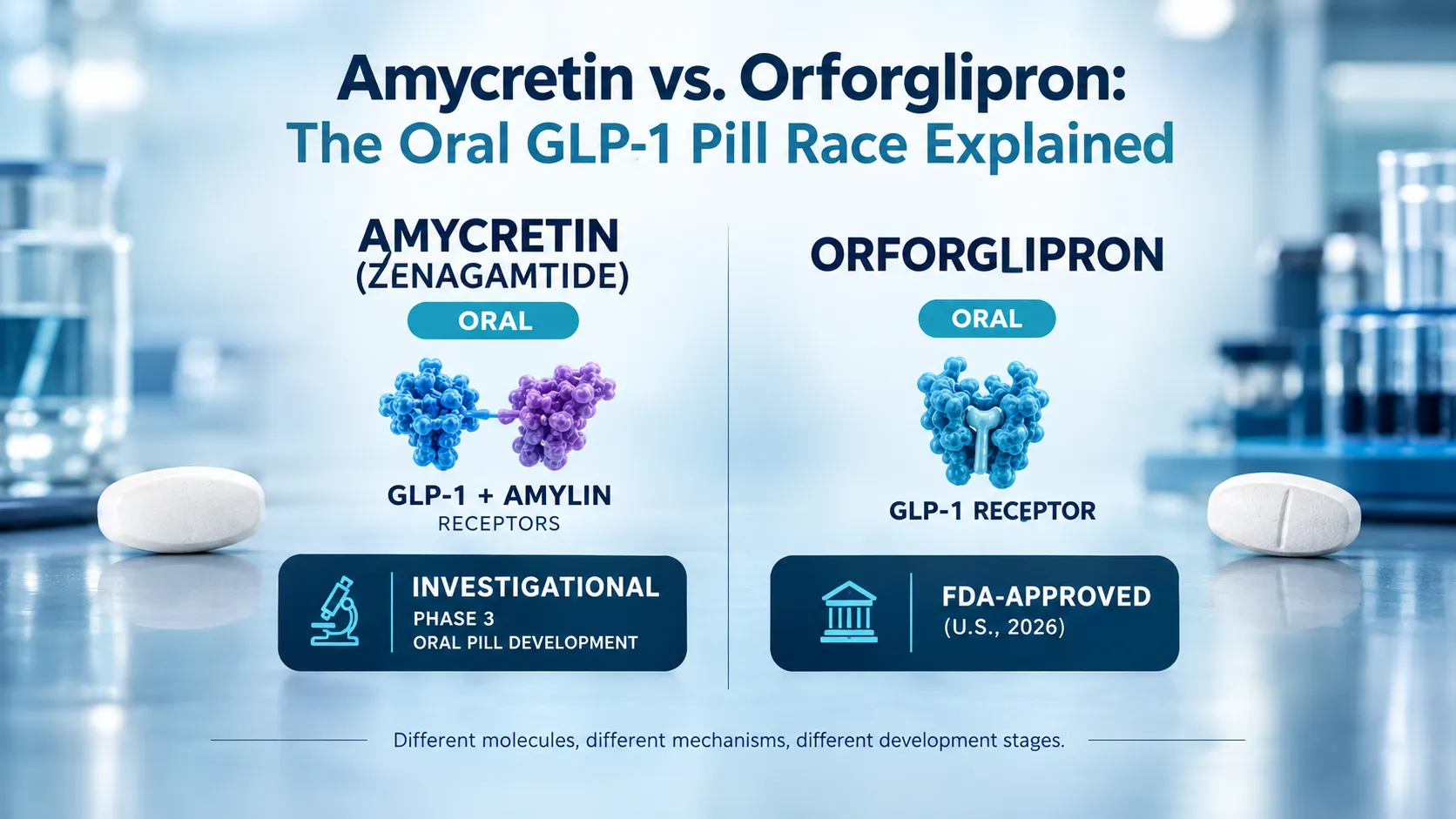
Amycretin is a peptide and orforglipron is not. How that chemistry explains the formulations, trial results, and approval status of both GLP-1 pills.
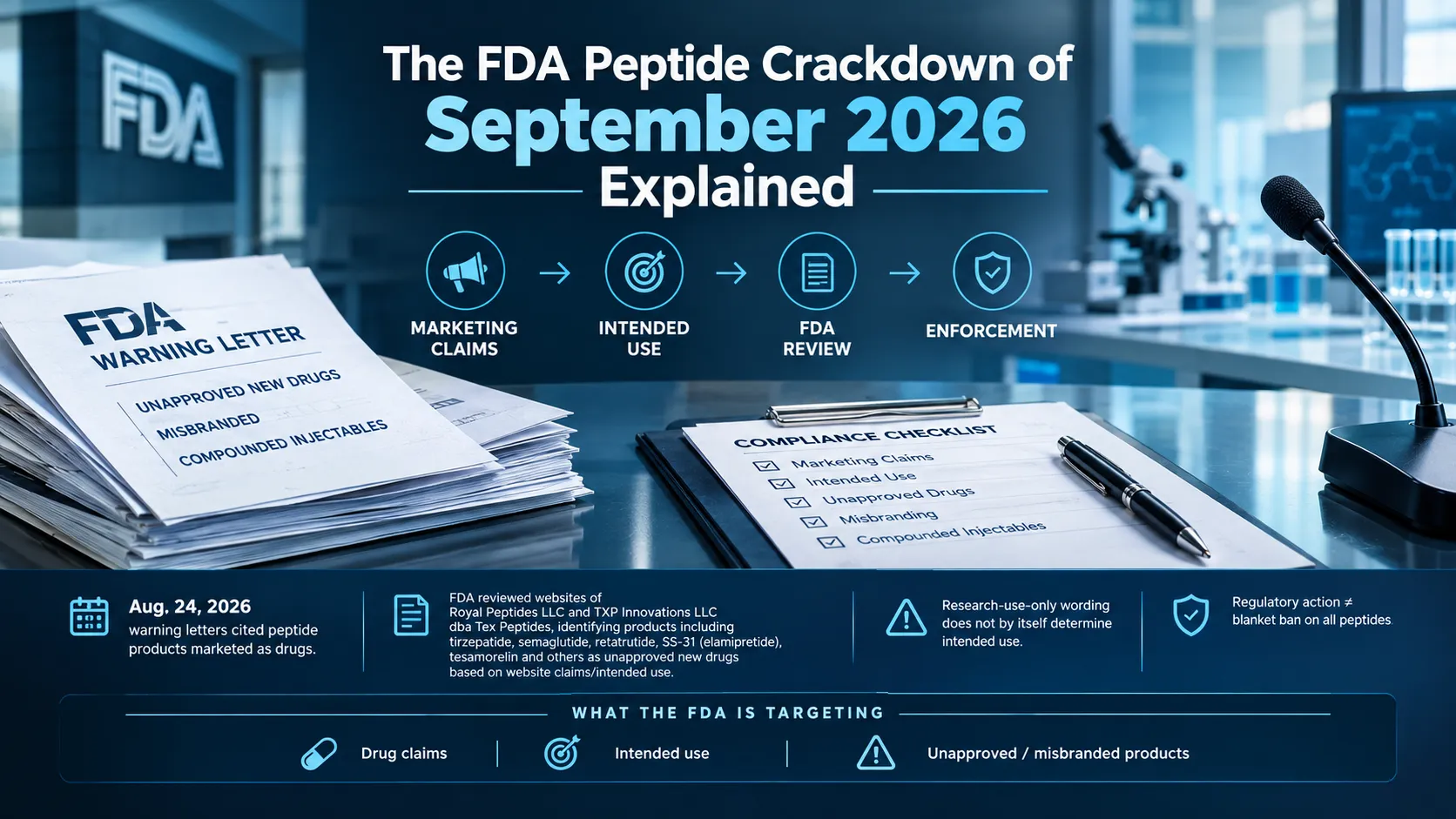
Five peptide sellers got FDA warning letters in September 2026. See who was named, why the research label failed, and the full 2026 enforcement timeline.
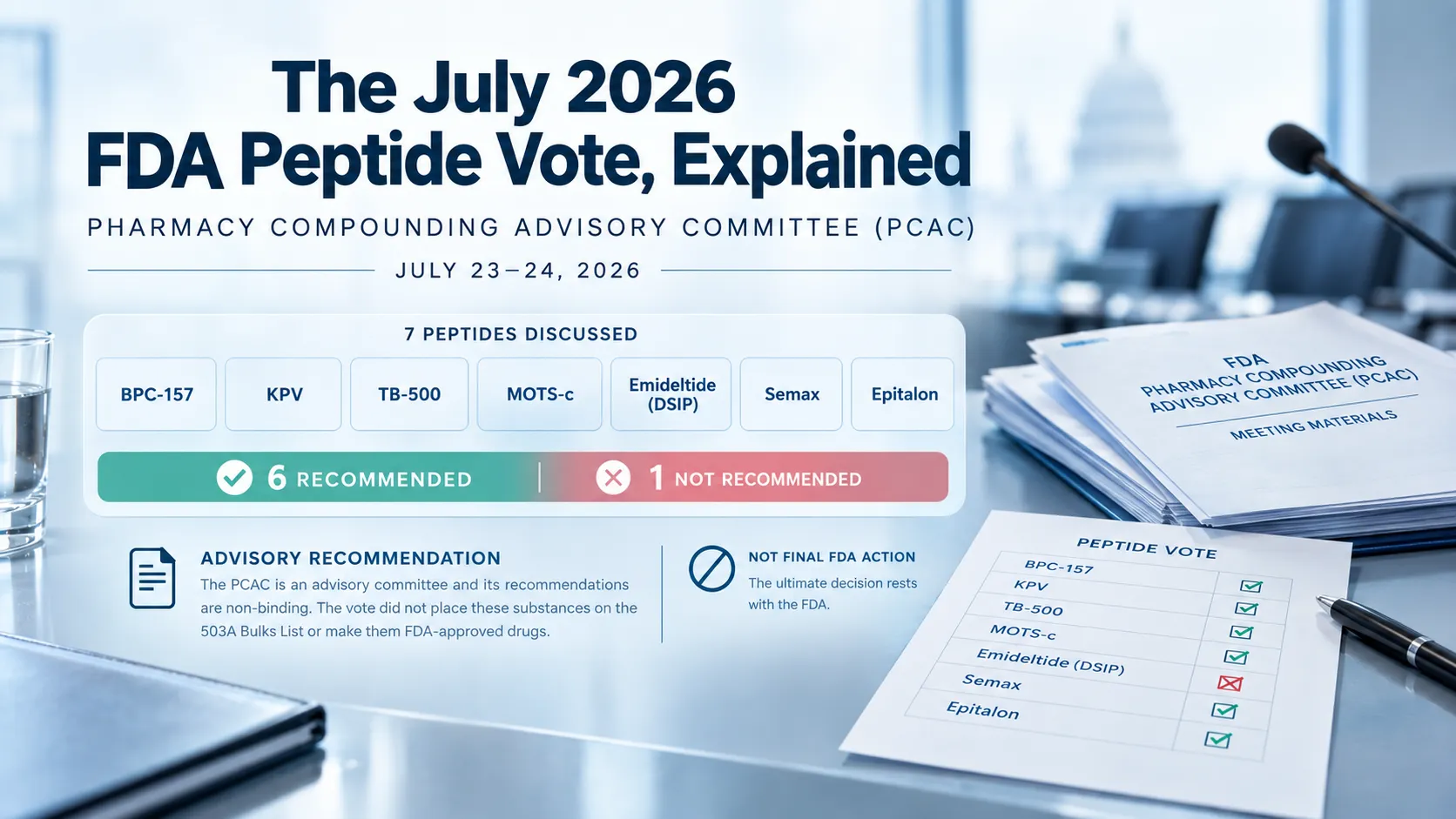
In July 2026, the FDA's advisory committee recommended 6 peptides for the 503A bulk list. None are on it yet. What the vote changed and what it didn't.