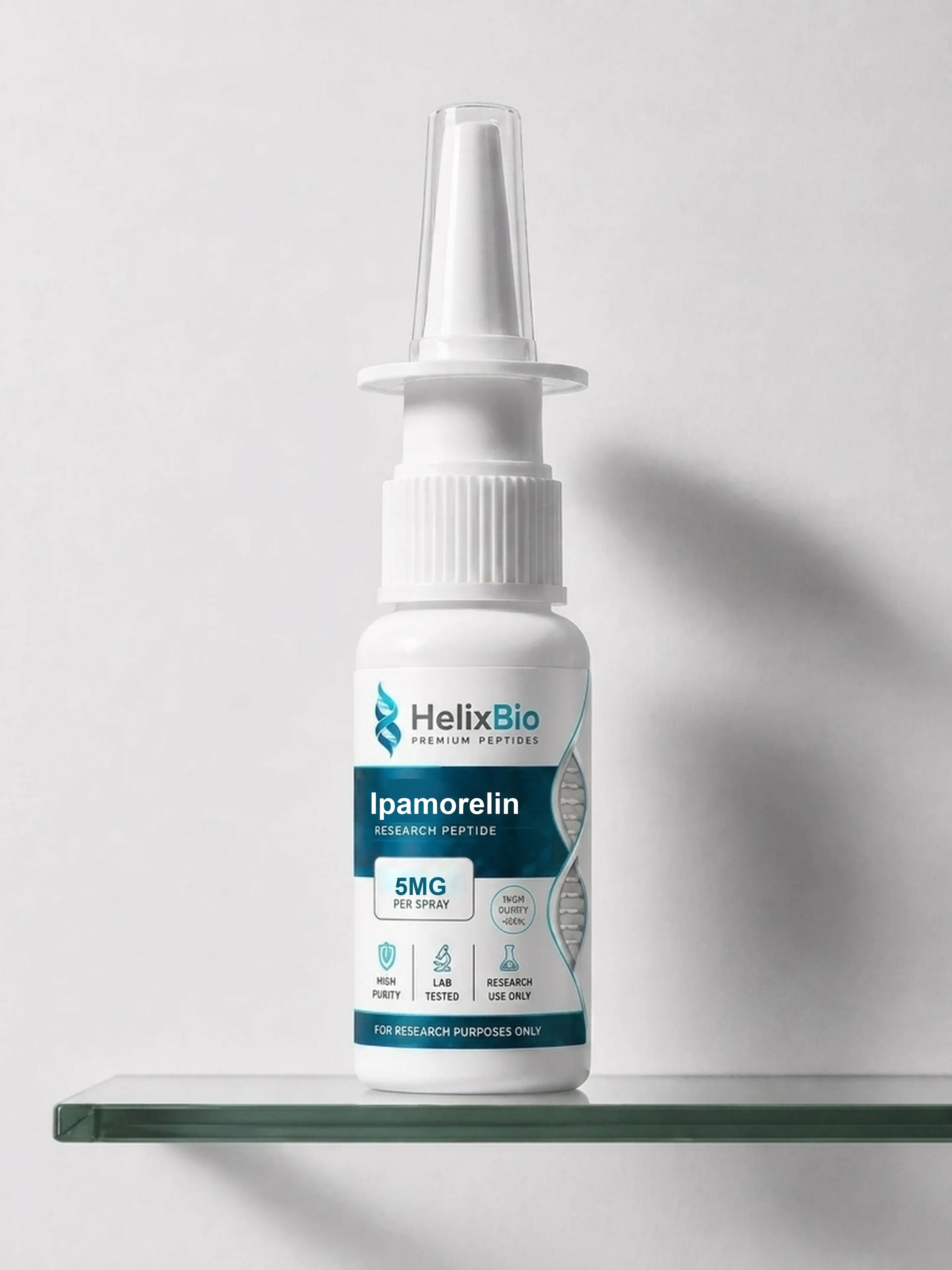
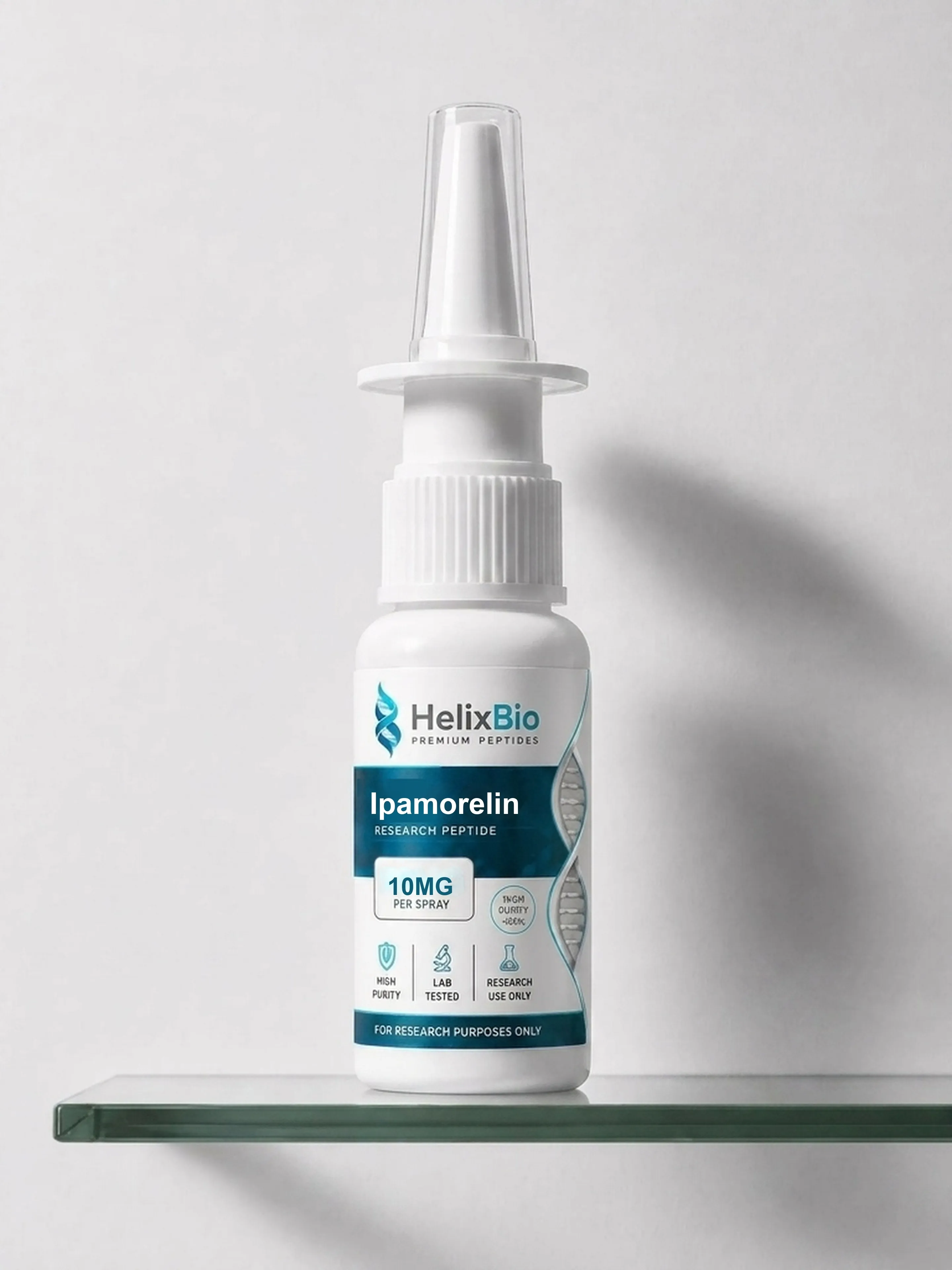
Ipamorelin is a synthetic pentapeptide — Aib-His-D-2-Nal-D-Phe-Lys-NH₂ — developed at Novo Nordisk and described in 1998 as the first growth hormone secretagogue whose selectivity for growth hormone release approached that of GHRH itself. It binds the ghrelin receptor, GHS-R1a. Helix Bio supplies it here as a spray-format research material for controlled laboratory work. This product is intended for research and laboratory investigation only. It is not intended for human or veterinary use, ingestion, injection, nasal administration, or any other form of administration, and it is not offered for the diagnosis, treatment, cure or prevention of any disease.
HPLC certified
Independent analysis
Highest standard
Full traceability
Ipamorelin is a five-residue synthetic peptide with the sequence Aib-His-D-2-Nal-D-Phe-Lys-NH₂. Three of those five residues are not standard proteinogenic amino acids: position 1 is α-aminoisobutyric acid (Aib), an achiral residue with two methyl groups on the α-carbon; position 3 is D-2-naphthylalanine; position 4 is D-phenylalanine. The C-terminus is amidated. Its molecular formula as the free base is C₃₈H₄₉N₉O₅ and its molecular weight is 711.85 g/mol.
It carries the International Nonproprietary Name ipamorelin and the original Novo Nordisk development code NNC 26-0161.
The compound was not derived from GHRP-2 or GHRP-6, which is a common misstatement. Raun and colleagues identified it within a series of compounds built by removing the central Ala-Trp dipeptide from growth hormone-releasing peptide-1. One consequence of that deletion is compositional and analytically convenient: unlike GHRP-1, GHRP-2 and GHRP-6, ipamorelin contains no tryptophan at all.
Ipamorelin acts as an agonist at the growth hormone secretagogue receptor type 1a, GHS-R1a, also called the ghrelin receptor. This is a G protein-coupled receptor that signals principally through Gα11/q-coupled phospholipase C activation. Published work locates the relevant receptor populations on somatotrophs of the anterior pituitary and on GHRH-positive neurons of the hypothalamus, though GHSR expression is documented across many peripheral tissues as well.
A spray is a prepared solution, and for ipamorelin that makes one question unusually important: which molecular form the material actually is.
Ipamorelin free base and ipamorelin acetate share the same active moiety, but they are distinct substances with distinct properties. FDA’s 2024 evaluation of both forms records the free base as slightly soluble in water at 0.0032 mg/mL and the acetate as soluble at 5 mg/mL — a difference of more than three orders of magnitude. The same evaluation concluded that a proposed 2 mg/mL injectable could not be formulated from the free base for exactly this reason. For any solution-format material, therefore, the form is not a labelling detail; it is a physical constraint on what can be in the container.
The two forms are also distinguished in the identifier record. The free base carries CAS 170851-70-4 and UNII Y9M3S784Z6; the acetate carries CAS 1258196-85-8 and has no assigned UNII. FDA notes that the free-base CAS number is nevertheless used for the acetate in some public references, so a CAS number alone does not settle which material was supplied.
Researchers evaluating any commercial ipamorelin preparation should treat the scientific literature on the molecule and the specification of a particular research material as two separate things. Experimental results depend on molecular form, concentration and its stated mass basis, vehicle composition, pH, storage history, analytical method and study design. The specification and lot documentation supplied with a given material — not a general product description — is what describes the material.
Ipamorelin appears in published experimental work across several areas:
The existence of this literature does not establish that Ipamorelin Spray is safe or effective for use in humans. Ipamorelin is not an FDA-approved drug in the United States, and no FDA-approved drug product contains ipamorelin in any form. Its regulatory status under the compounding framework has been formally examined: FDA’s Pharmacy Compounding Advisory Committee reviewed both ipamorelin free base and ipamorelin acetate on 29 October 2024 and voted against including either on the Section 503A Bulk Drug Substances List, in both cases 0 in favour, 12 against, 1 abstention. There is no USP, National Formulary, European, Japanese, Chinese or Indian pharmacopoeial monograph for either form.
Researchers assessing a short synthetic peptide need more than a product name, and for ipamorelin they need more than a purity percentage.
Helix Bio states that its research peptide catalogue is tested by independent HPLC for purity and by mass spectrometry for molecular identity, and that batch-specific Certificates of Analysis are available. For ipamorelin, two additional questions sit alongside those results and are worth putting to any supplier, including this one.
The first is molecular form and mass basis. Because the free base and the acetate differ so sharply in aqueous solubility, and because an acetate has no single fixed molecular weight — its mass depends on acetate stoichiometry — a stated concentration means something different depending on which form it refers to and whether the figure is expressed as free-base equivalent or as supplied salt.
The second is what a purity figure can and cannot establish here. Ipamorelin contains two D-amino acids. A D-to-L inversion at either position produces a molecule with an identical formula and an identical mass, invisible to mass spectrometry and, without a method validated to resolve it, potentially invisible on a reversed-phase chromatogram as well. An area-percent purity figure describes the peak; confirming stereochemical identity is a separate question requiring a chiral or otherwise stereospecific method.
For a specific Ipamorelin Spray lot, review the applicable documentation and current lot information rather than relying on a general catalogue statement.
Ipamorelin Spray is intended for qualified users working in legitimate laboratory or scientific research environments, including:
The product is not intended for personal experimentation, self-administration, human consumption, veterinary use or medical treatment. Ipamorelin appears on the World Anti-Doping Agency Prohibited List, and it is subject to controls in some jurisdictions outside the United States; users are responsible for determining what applies where they work.
| Specification | Details |
|---|---|
| Product Name | Ipamorelin Spray |
| Research Category | Growth Hormone Secretagogue / Research Peptide |
| Compound | Ipamorelin |
| International Nonproprietary Name | Ipamorelin |
| Development Code | NNC 26-0161 |
| Chemical Class | Synthetic pentapeptide; growth hormone secretagogue |
| Sequence | Aib-His-D-2-Nal-D-Phe-Lys-NH₂ |
| Amino Acid Count | 5 |
| Terminal Chemistry | Free N-terminal amine; C-terminal carboxamide |
| Non-Proteinogenic Residues | Aib (position 1); D-2-Nal (position 3); D-Phe (position 4) |
| Molecular Formula (free base) | C₃₈H₄₉N₉O₅ |
| Molecular Weight (free base) | 711.85 g/mol |
| CAS Number (free base) | 170851-70-4 |
| CAS Number (acetate) | 1258196-85-8 |
| UNII (free base) | Y9M3S784Z6 |
| PubChem CID | 9831659 |
| InChIKey | NEHWBYHLYZGBNO-BVEPWEIPSA-N |
| Receptor Target | Growth hormone secretagogue receptor 1a (GHS-R1a / ghrelin receptor) |
| Pharmacopoeial Monograph | None in USP-NF, Ph. Eur., JP, ChP or IP |
| Molecular Form Supplied | Confirm from the applicable Certificate of Analysis; free base and acetate are distinct substances |
| Format | Spray solution |
| Concentration | Refer to the current product listing and lot documentation |
| Fill Volume | Refer to the current product listing |
| Vehicle / Formulation | Refer to current product-specific documentation |
| Purity | Refer to current lot-specific product documentation |
| Identity Testing | Refer to the applicable Certificate of Analysis |
| Packaging | Refer to the current product listing |
| Storage | Follow current product-specific documentation |
| Manufacturer / Supplier | Helix Bio |
| Country of Origin | Not specified; verify current product documentation |
| Intended Use | Research and laboratory investigation only |
| Human Use | Not intended for human consumption or administration |
| Veterinary Use | Not intended for veterinary use |
Ipamorelin has a defined, and relatively small, experimental record. Most of it is preclinical, and the areas below are described at the level the underlying studies actually support.
Receptor pharmacology. Ipamorelin is characterised as an agonist at GHS-R1a. Published receptor-level parameters from the compound’s original characterisation include binding to GHS-R1a expressed in COS-7 cells with Ki ≈ 63.4 nM, and induction of inositol-1,4,5-trisphosphate accumulation in GHS-R1a-expressing BHK cells with EC₅₀ ≈ 46.9 nM. These are in-vitro measurements of receptor engagement. They describe what the molecule does to a receptor in a dish, and nothing beyond that.
Growth hormone secretagogue research and the selectivity finding. In primary rat pituitary cell cultures, ipamorelin released growth hormone with EC₅₀ = 1.3 ± 0.4 nmol/L and Emax = 85 ± 5%, compared with GHRP-6 at 2.2 ± 0.3 nmol/L and 100%. In conscious swine, ED₅₀ = 2.3 ± 0.03 nmol/kg with Emax = 65 ± 0.2 ng GH/mL plasma, against GHRP-6 at 3.9 ± 1.4 nmol/kg and 74 ± 7 ng/mL; GHRP-2 was more potent but less efficacious at 0.6 nmol/kg and 56 ± 6 ng/mL. In the same swine work, none of the three secretagogues affected FSH, LH, prolactin or TSH, but GHRP-6 and GHRP-2 both raised plasma ACTH and cortisol while ipamorelin did not — its levels were not significantly different from those following GHRH stimulation, and this held at doses more than 200-fold above the GH-release ED₅₀. That result is the basis of the description of ipamorelin as the first selective growth hormone secretagogue. It is a swine finding, it concerns ACTH and cortisol specifically, and it is a statement about which hormones are released, not about efficacy for any condition.
Preclinical gastrointestinal and skeletal models. In rat models of surgically induced postoperative ileus, intravenous ipamorelin has been reported to accelerate colonic transit, increase faecal pellet output, food intake and body-weight gain, and normalise contractile responses in the gastric fundus. Route comparisons in the same setting are instructive about formulation: oral gavage at 10 and 100 mg/kg accelerated gastric emptying by approximately 12.4% and 41.6%, while intravenous administration at 0.1 to 1.0 mg/kg produced increases of 87.1% to 96.0% — roughly two orders of magnitude less compound for a substantially larger effect. Separate work reported dose-dependent reductions in colonic hypersensitivity and somatic allodynia in rats, statistically significant only at the highest dose tested. In a rodent study, ipamorelin was reported to induce longitudinal bone growth. A rat pharmacokinetic study found a half-life of approximately 27 minutes after 1 mg/kg intravenous administration, with 60–80% excreted unchanged, primarily in urine.
Human research and its limits. Two human publications exist. A randomised, placebo-controlled dose-escalation study in 48 healthy male subjects characterised pharmacokinetics and pharmacodynamics after a 15-minute intravenous infusion, reporting linear kinetics, a terminal half-life of approximately 2 hours, systemic clearance of 0.078 L/h/kg, a steady-state volume of distribution of 0.22 L/kg, and a sharp growth hormone peak at around 0.67 hours that declined to very low concentrations at all doses by 6 hours. A Phase 2 randomised, double-blind, placebo-controlled trial evaluated intravenous ipamorelin for postoperative ileus following bowel resection; per FDA’s account, 117 subjects were enrolled and 114 randomised. The primary endpoint — median time from first dose to tolerance of a standardised solid meal — was 25.3 hours on ipamorelin against 32.6 hours on placebo, a difference reported as not statistically significant, with no differences on secondary endpoints. Hypokalaemia, insomnia and hyperglycaemia at discharge were each reported more frequently in the ipamorelin arm, and two subjects in that arm experienced fatal serious adverse events following anastomotic leak after resection for colon cancer; FDA states it is unclear whether those deaths were related to ipamorelin. A subsequent review recorded that development for this indication was discontinued. Some secondary sources describe this trial with a different subject count, apparently referring to a different analysis population; the figures above are those given in FDA’s evaluation.
There is no published human pharmacokinetic, pharmacodynamic or safety data for ipamorelin by any route other than intravenous, and no human study in growth hormone deficiency.
Publications in this area should be read according to their model, species, route, concentration and endpoint. Receptor-level activity, whole-animal physiology and human clinical outcome are three different levels of evidence, and findings at one do not carry to another.
Analytical quality matters for any research peptide, because impurities, degradation products, incorrect identity or inconsistent concentration introduce variables the experiment did not intend. For ipamorelin, three specific issues sit behind the general point.
A purity figure and an identity confirmation answer different questions. Reversed-phase HPLC reports the proportion of chromatographic area attributable to the main peak. Mass spectrometry confirms that the main peak has the expected mass. Neither confirms stereochemistry. Ipamorelin’s two D-residues mean the wrong-handed molecule weighs exactly the same as the right one; establishing that the material is ipamorelin rather than a diastereomer requires a method validated for that purpose.
The mass basis of a concentration is not self-evident. Ipamorelin acetate has no single molecular weight, because it is described as C₃₈H₄₉N₉O₅ · x CH₃COOH with x depending on the preparation. A figure quoted in mg/mL therefore needs its basis stated — free-base equivalent, or as-supplied salt — before it can be converted to a molar concentration.
Impurity control is where published ipamorelin documentation has historically been weakest. In its 2024 evaluation, FDA reported that the Certificates of Analysis it examined for ipamorelin carried a purity result but “limited or no information on the impurity limits/testing results as attribute control”. One nominated acetate COA showed a ≥95% limit with a 99.72% result and no impurity attribute control at all; another located in the literature carried a single lumped limit of less than 2% with no identification of the species inside it. FDA also listed the impurity classes expected from solid-phase synthesis of a peptide of this type — truncation and deletion sequences from incomplete coupling, side-reaction products, isomeric impurities, residual protected and free amino acids, residual solvents, coupling reagents, activators, catalysts and scavengers — together with peptide-related aggregates.
Where documentation is available, researchers should assess:
FDA’s own account of the ipamorelin nominations makes a useful closing point about document reading. Both nomination packages contained a Certificate of Analysis headed Ipamorelin Acetate that carried the molecular formula, molecular weight, CAS number and UNII of the free base. FDA’s summary of the problem was direct: it was unclear from either package which substance was being described, because acetate and free base are different substances. Checking that a document’s title, formula, mass and registry number describe the same material takes a moment and is worth doing on every lot.
No certification, regulatory approval or quality claim should be inferred unless it is explicitly documented by the manufacturer or the relevant regulatory authority.
Storage and handling requirements should be taken from the current Ipamorelin Spray product documentation and lot-specific instructions.
General laboratory considerations include:
Published storage figures for ipamorelin describe the solid substance or a solution the researcher prepares — lyophilised material stored desiccated below −18 °C, or reconstituted solution held for limited periods at 4 °C or −20 °C. A manufactured spray in a defined vehicle at a defined pH is a different material from either, and its stability is a property of that formulation rather than something that can be inferred from a powder or from another preparation.
Helix Bio’s website describes research materials as being supplied to laboratories and institutions in the United States and describes tracked shipping and cold-chain handling within its fulfilment process.
Because shipping conditions, packaging specifications, availability and delivery requirements may change, researchers should review the current Helix Bio shipping information and product listing before ordering.
Product packaging should remain appropriately labelled and handled as research material after delivery. Researchers are responsible for following applicable institutional, federal, state and local requirements governing research materials.
Ipamorelin Spray is sold by Helix Bio for research and laboratory purposes only. It is not intended for human or veterinary consumption, self-administration, diagnosis, treatment, cure, mitigation or prevention of any disease or medical condition.
Ipamorelin is not an FDA-approved drug in the United States. No New Drug Application or Biologics License Application exists for it, and no FDA-approved drug product contains ipamorelin free base or ipamorelin acetate. FDA explains that unapproved drugs have not undergone the agency’s standard review for safety, effectiveness and quality.
FDA’s Pharmacy Compounding Advisory Committee reviewed ipamorelin free base and ipamorelin acetate on 29 October 2024 and voted against placing either on the Section 503A Bulk Drug Substances List. Neither form appears on that list. Regulatory status should not be inferred from published research, product availability, commercial marketing or laboratory use.
This product is not a dietary supplement, consumer wellness product or medical treatment. Marketing claims made elsewhere for ipamorelin — including claims relating to body composition, muscle, fat loss, recovery, sleep, cognition or ageing — are not supported by the evidence described on this page and are not made here. Researchers are responsible for determining whether a material is appropriate for their intended experimental application and for complying with applicable institutional and regulatory requirements.
Knowledge Base
Knowledge Base
Knowledge Base
Knowledge Base
Knowledge Base
Knowledge Base
Knowledge Base
Knowledge Base
Knowledge Base
Knowledge Base
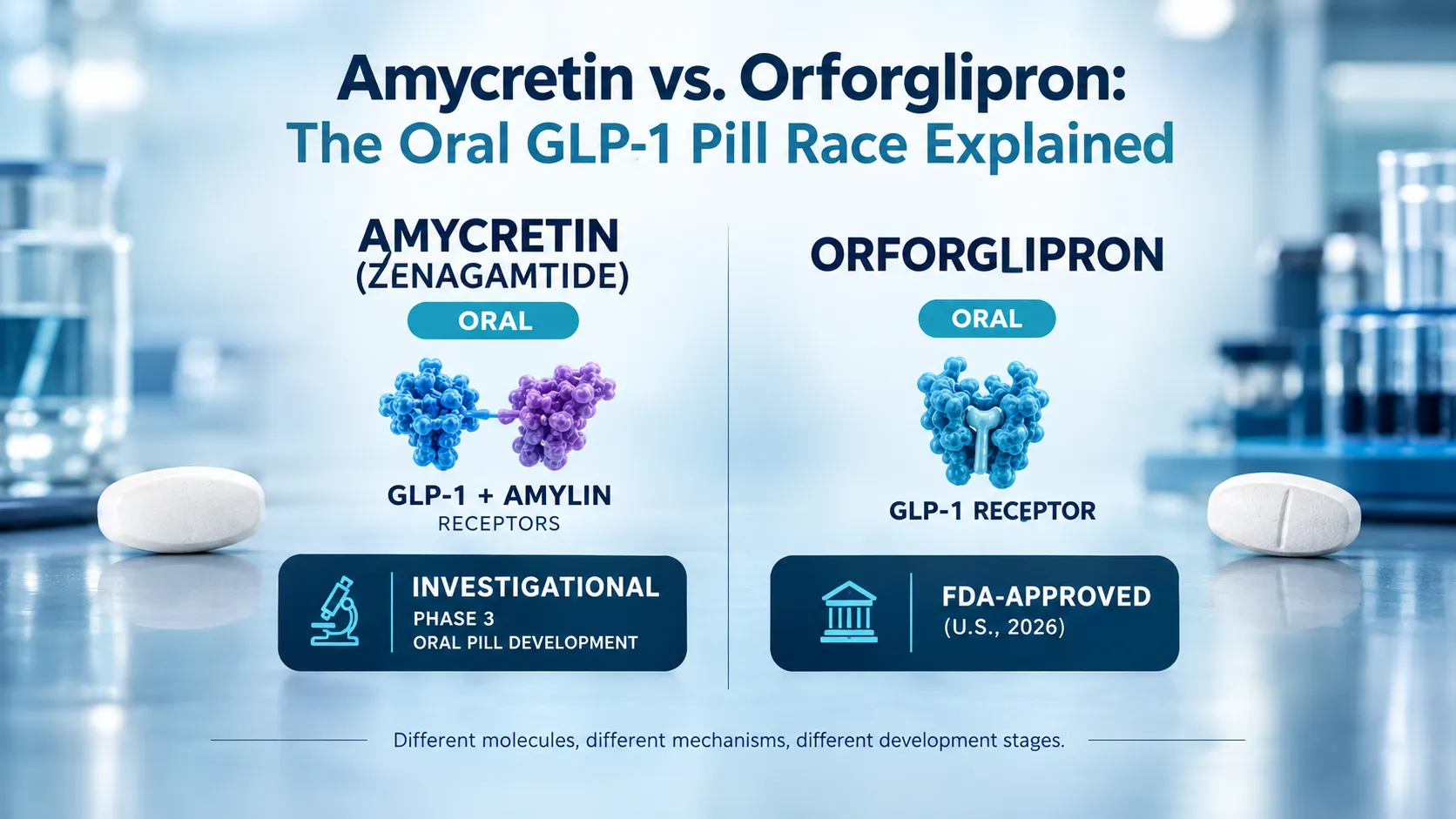
Amycretin is a peptide and orforglipron is not. How that chemistry explains the formulations, trial results, and approval status of both GLP-1 pills.
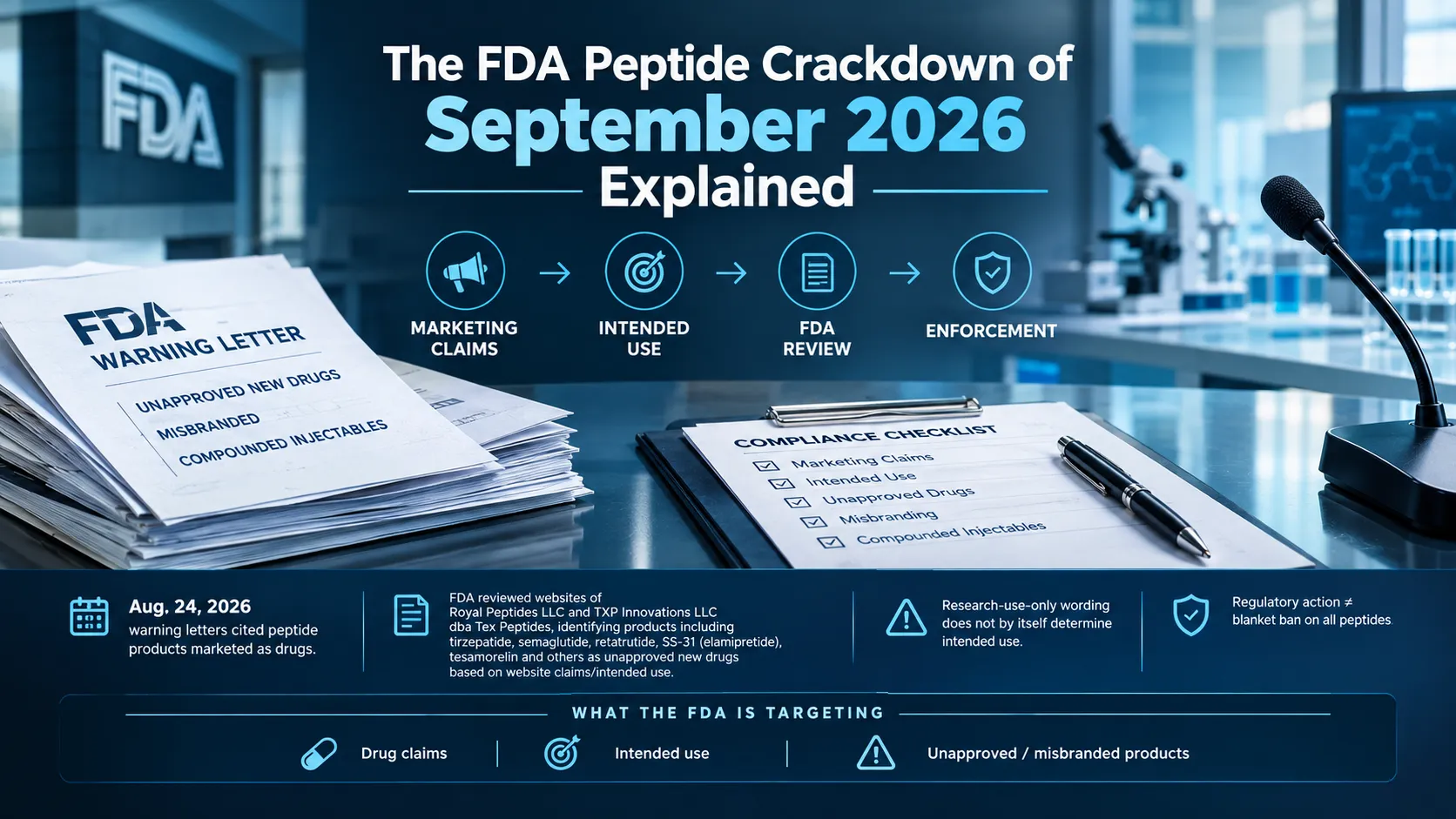
Five peptide sellers got FDA warning letters in September 2026. See who was named, why the research label failed, and the full 2026 enforcement timeline.
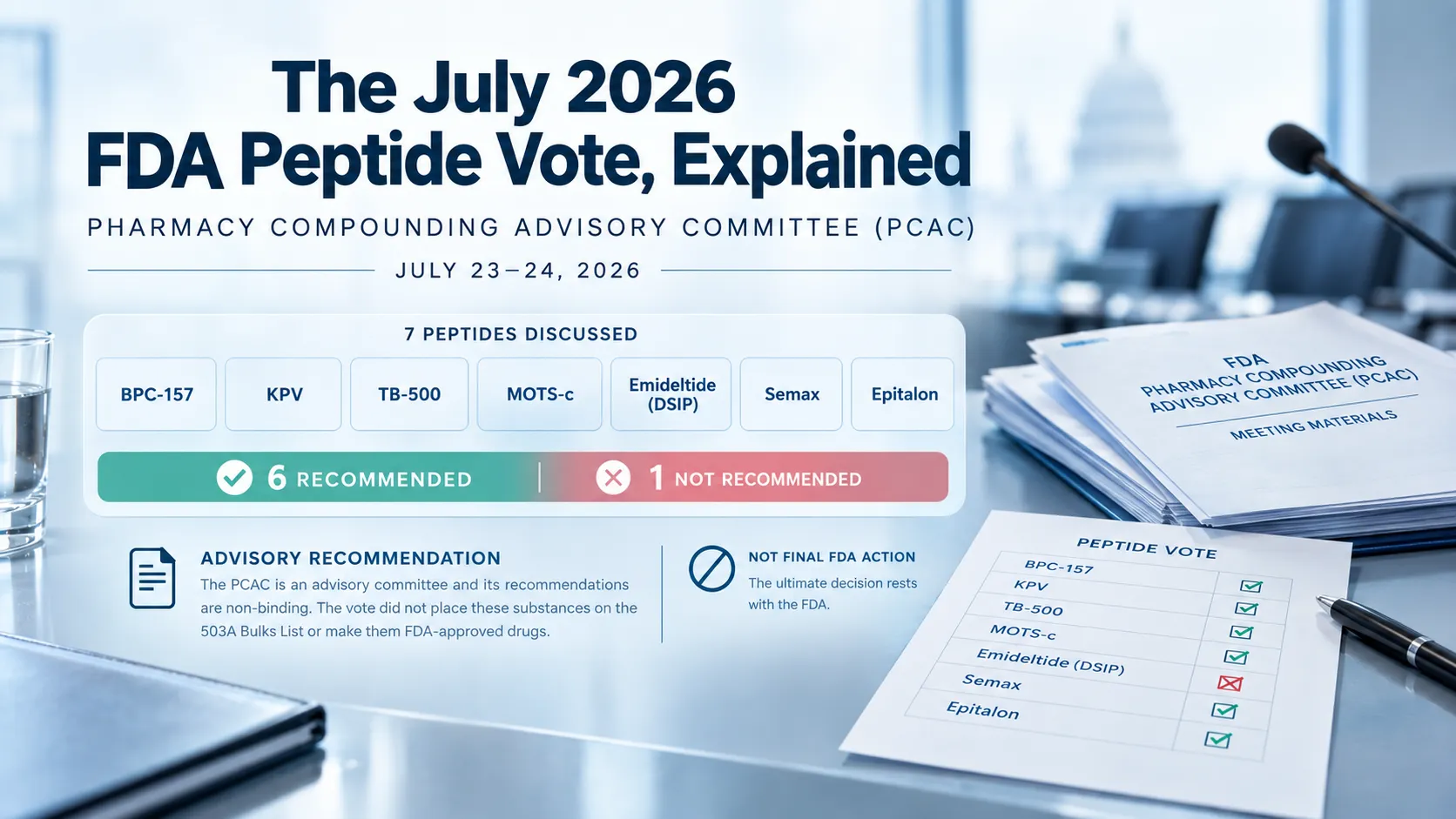
In July 2026, the FDA's advisory committee recommended 6 peptides for the 503A bulk list. None are on it yet. What the vote changed and what it didn't.