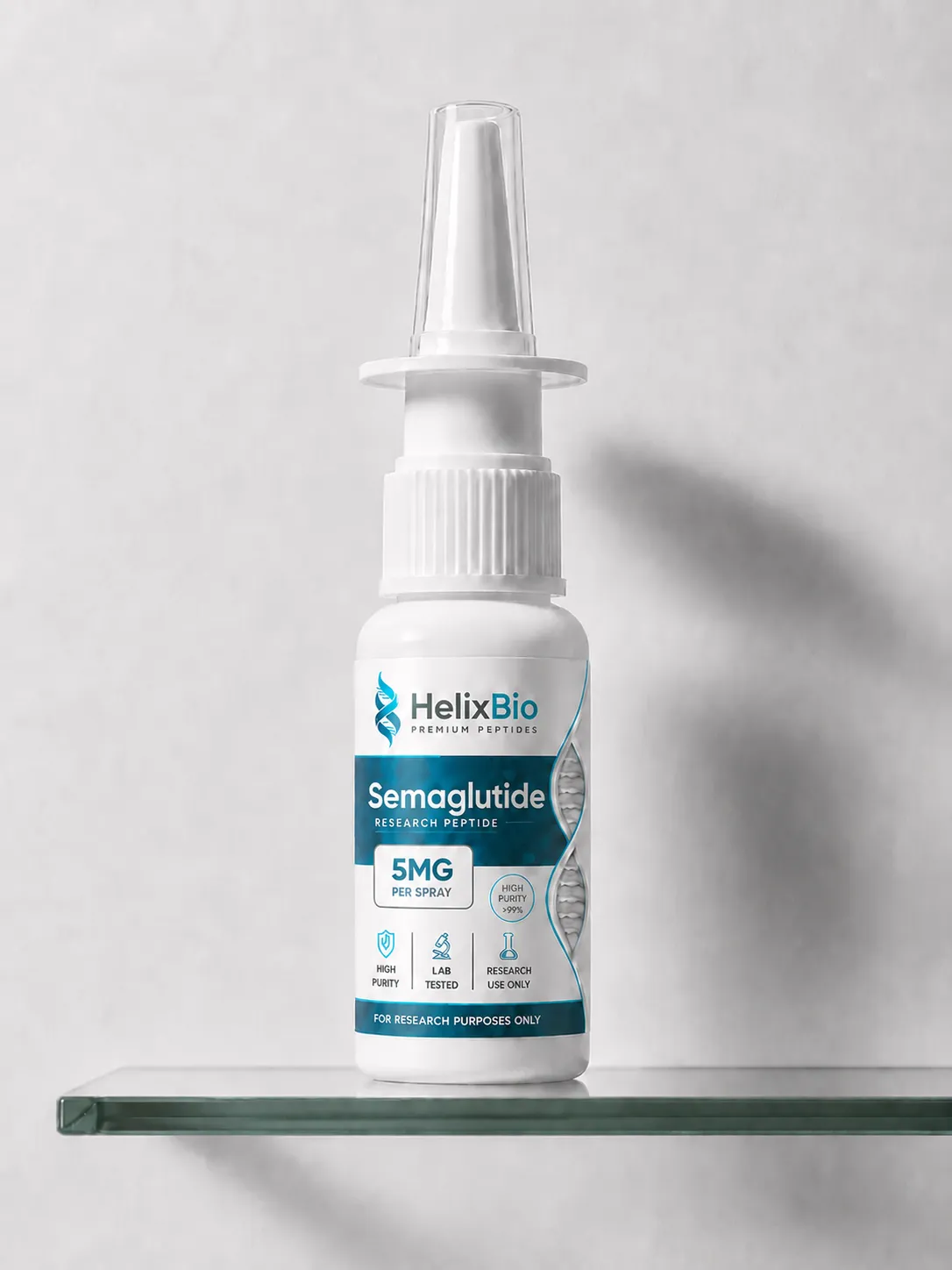
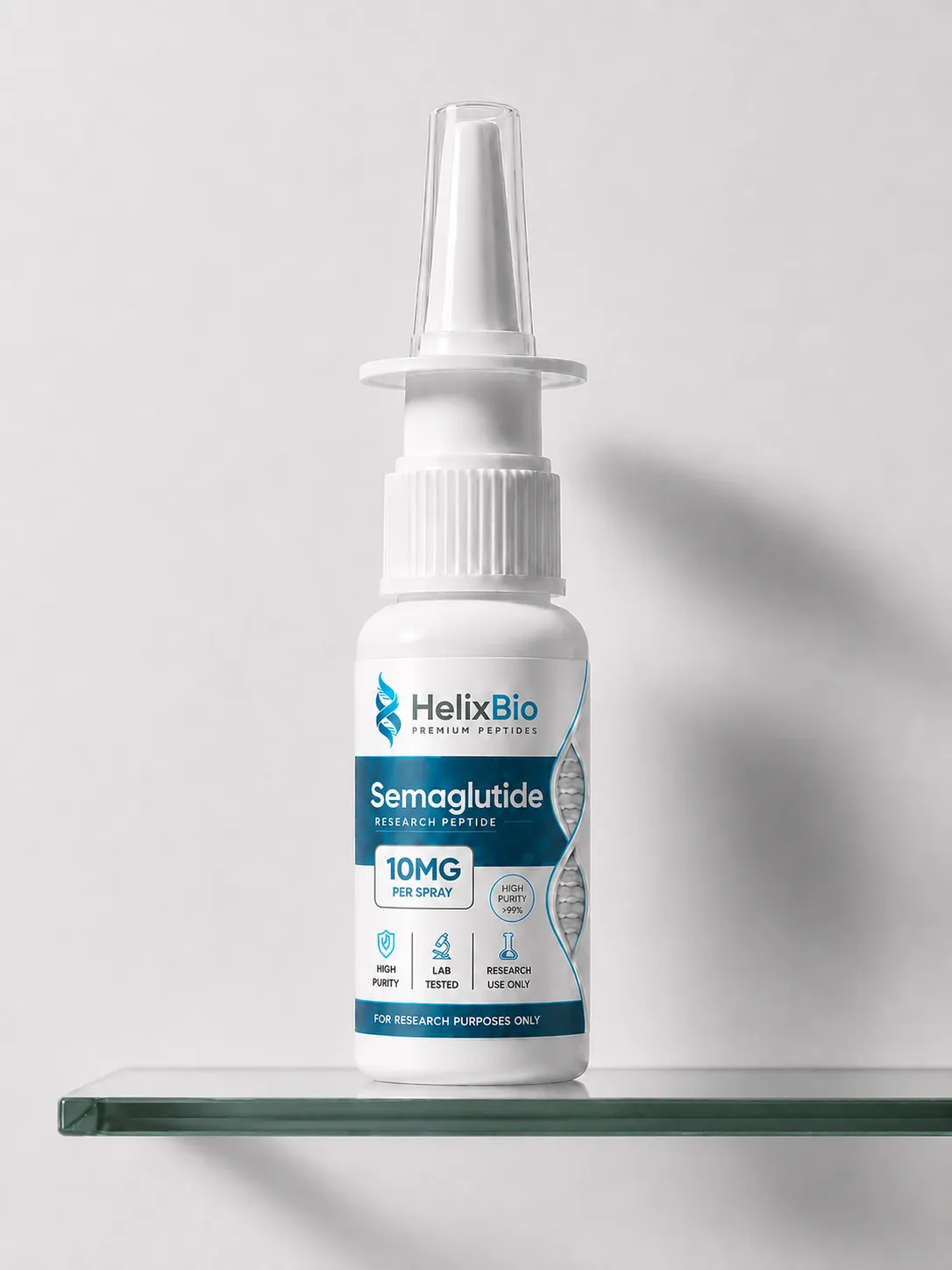
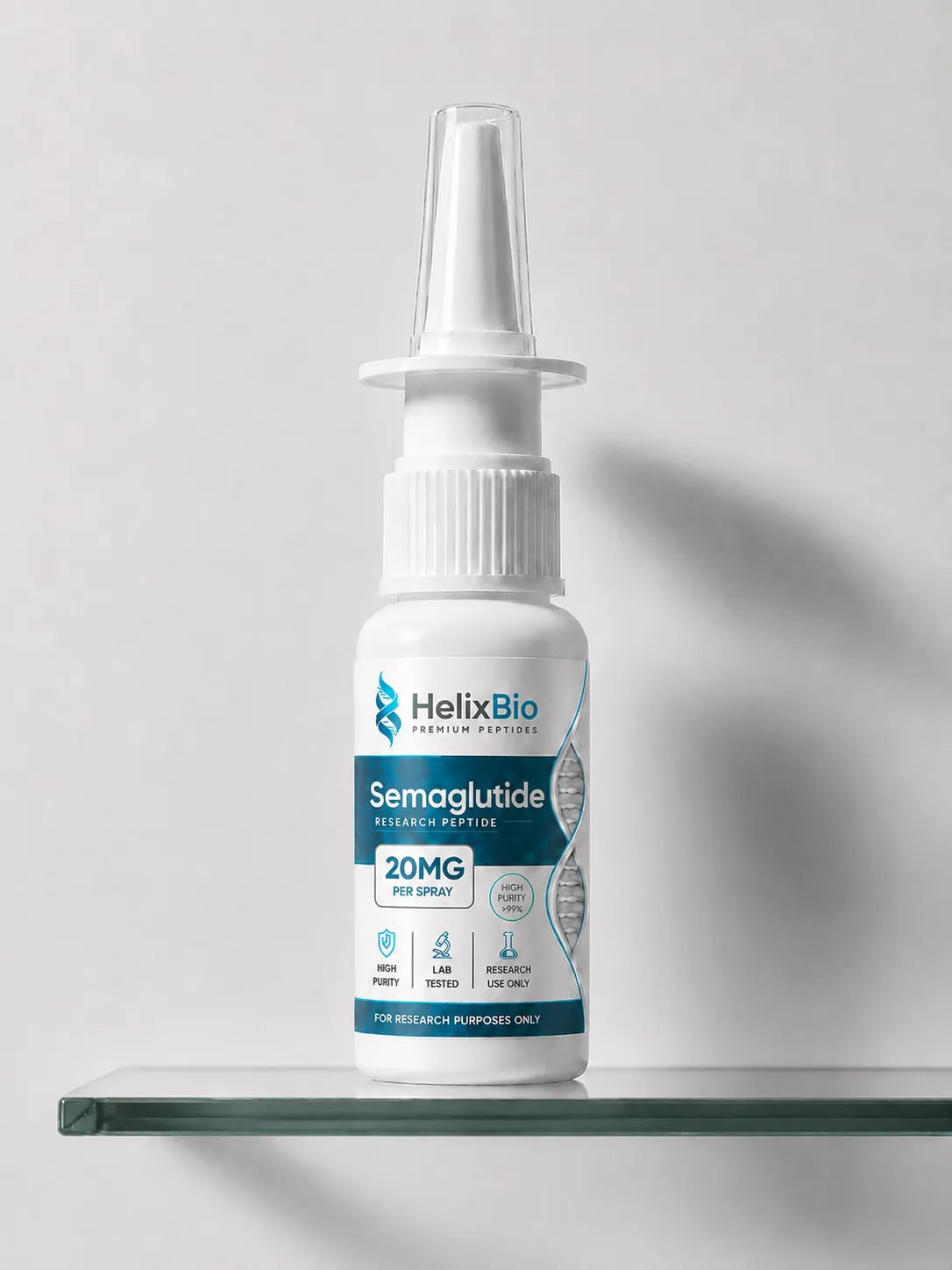
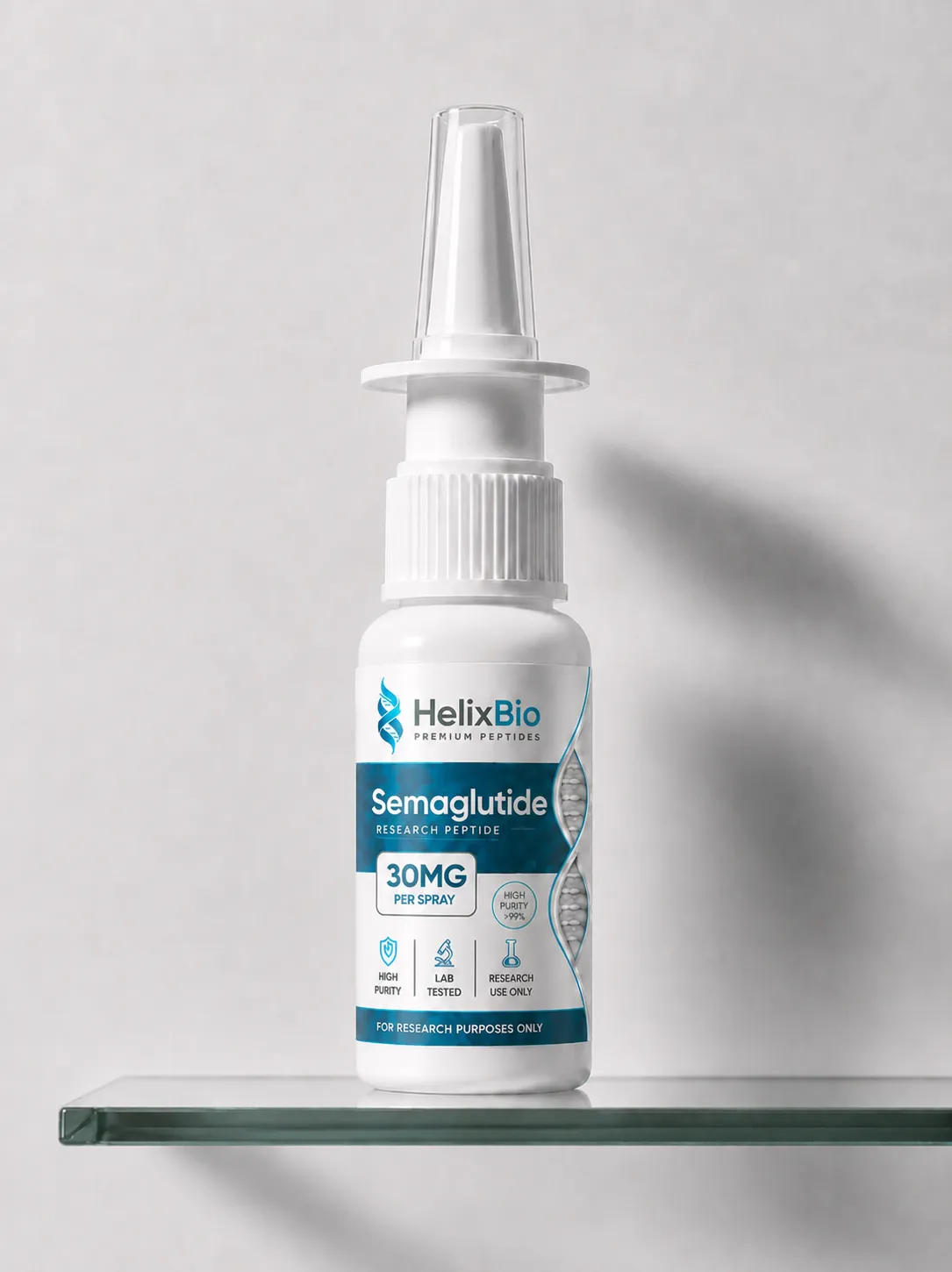
Roughly a sixth of this molecule is not peptide at all. Semaglutide is a 31-residue analogue of glucagon-like peptide-1 carrying a fatty diacid attached to Lys26 through a glutamate and two ethylene-glycol spacers — an engineered side chain that binds albumin and is the reason the molecule persists in circulation for about a week rather than minutes. Helix Bio supplies it, C₁₈₇H₂₉₁N₄₅O₅₉ at 4113.6 g/mol, as a prepared spray solution. This is a research material for qualified laboratory use. It is not a medicine, not a substitute for one, and is not intended for human or veterinary consumption or administration by any route.
HPLC certified
Independent analysis
Highest standard
Full traceability
Semaglutide is an acylated analogue of human glucagon-like peptide-1, built on the GLP-1(7-37) backbone with three deliberate modifications. Each one solves a specific problem, and describing them separately is the difference between describing semaglutide and describing any long-acting GLP-1 analogue.
The residue at position 8 is α-aminoisobutyric acid rather than alanine. Native GLP-1 is cleaved rapidly at that position by dipeptidyl peptidase-4, which is why the endogenous hormone lasts minutes; the substituted residue resists that cleavage.
The residue at position 34 is arginine rather than lysine. Native GLP-1 carries two lysines, and acylation chemistry attaches to lysine side chains, so a molecule with both present would yield a mixture of singly and doubly modified products. Removing one leaves exactly one attachment point, at Lys26. This modification exists for manufacturing control rather than pharmacology, and it is the one most often left out of descriptions of this molecule.
Lys26 then carries the construct that defines semaglutide: two AEEA spacers, a γ-glutamate, and octadecanedioic acid — a C18 diacid. The diacid binds reversibly to circulating albumin. Together with the position-8 substitution, that is what turns a hormone with a minutes-long half-life into a molecule with a half-life measured in days.
Semaglutide is an active ingredient. Ozempic, Wegovy and Rybelsus are three finished pharmaceutical products from Novo Nordisk, all containing it. They are not three molecules, and the research material supplied here is none of them.
The distinction is not pedantry. Regulatory approvals attach to finished products with specified formulations, manufacturing controls, labelling and indications — not to an active ingredient in the abstract. A research material containing the same molecule holds no part of that approval and carries none of its evidence.
The oral product illustrates why formulation cannot be waved away. Rybelsus achieves oral delivery by co-formulating semaglutide with SNAC, an absorption enhancer present at 300 milligrams per tablet, and even with that enhancer the oral bioavailability is on the order of one per cent, under dosing conditions requiring a fasted state, a defined water volume and a waiting interval before anything else is taken. That is the engineering required to move this molecule across a mucosal surface at all.
Spray describes the container and the physical presentation. No route of administration is claimed, implied or supported by this product, and for this molecule that is a statement backed by chemistry rather than only by policy.
Two properties make a prepared spray a demanding format for semaglutide specifically.
The first is size and structure. At 4113.6 daltons, semaglutide is far above the rough ceiling at which peptides cross mucosal barriers passively, and the Rybelsus formulation is the documented evidence of what it takes to get any meaningful fraction across. Nothing about aerosolising a solution changes that arithmetic.
The second is the acyl side chain. A C18 diacid attached to a peptide backbone makes the molecule amphiphilic — one end water-seeking, one end not — and amphiphilic peptides tend to self-associate in solution and to concentrate at air-liquid interfaces. A spray mechanism generates large interfacial area and shear at the nozzle on every actuation. Interfacial and shear stress are recognised triggers for aggregation and particulate formation in peptide solutions generally, and an acylated peptide is a more sensitive case than a short unmodified one.
Neither observation describes any particular Helix lot. Both are reasons that vehicle composition, buffer, pH, surfactant content if any, and stability data under actuation are legitimate questions to put to a supplier before a solution-format material of this class enters a workflow.
Published research on semaglutide spans:
That last category needs care. Every human trial of semaglutide studied a defined pharmaceutical formulation at a defined dose by a defined route. Those results describe what an approved product does in a studied population. They do not describe a research material in a different presentation, they are not evidence about this product, and nothing on this page should be read as claiming otherwise.
A short synthetic peptide is straightforward to characterise: confirm the sequence, confirm the mass, report the purity. Semaglutide is not that, and documentation written as though it were leaves the most important thing unverified.
The problem is the side chain. A des-acyl semaglutide — same 31 residues, same substitutions, no fatty acid — would return the correct backbone on sequence-level analysis while lacking the property the molecule exists for. Backbone confirmation is necessary and it is not sufficient. What settles identity is intact-mass measurement, because the acyl construct shifts the mass by hundreds of daltons and its absence is unmissable at that level.
Purity has a similar wrinkle. Semaglutide has a documented family of related substances, including truncated fragments and cyclised variants, several of which are available commercially as reference standards. That is genuinely useful to a buyer: for this compound, “what did you screen against” has a real answer, and a purity figure quoted without a method and a related-substance list is less informative than it looks.
Helix Bio’s position is that a researcher should be told which questions matter before ordering. For semaglutide the questions are named in the section below, and the applicable lot documentation is what answers them.
Semaglutide Spray is intended for qualified users working in legitimate laboratory or scientific research environments, including:
It is not intended for personal use of any kind. It is not a substitute for a prescribed medicine, it is not an alternative route to a compounded preparation, and it is not intended for human consumption, self-administration, veterinary use, weight management, glucose management or medical treatment. Anyone seeking semaglutide for a health purpose should speak to a licensed clinician rather than a research supplier.
| Specification | Details |
|---|---|
| Product Name | Semaglutide Spray |
| Scientific Classification | Acylated analogue of glucagon-like peptide-1; GLP-1 receptor agonist |
| Development Code | NN9535 |
| Backbone Length | 31 residues, based on GLP-1(7-37) |
| Sequence | His-Aib-Glu-Gly-Thr-Phe-Thr-Ser-Asp-Val-Ser-Ser-Tyr-Leu-Glu-Gly-Gln-Ala-Ala-Lys(acylated)-Glu-Phe-Ile-Ala-Trp-Leu-Val-Arg-Gly-Arg-Gly |
| Modifications | Aib at position 8; Arg at position 34; Lys26 acylated with AEEA–AEEA–γGlu–octadecanedioic acid |
| Molecular Formula | C₁₈₇H₂₉₁N₄₅O₅₉ |
| Molecular Weight | 4113.6 g/mol |
| CAS Number | 910463-68-2 |
| PubChem CID | 56843331 |
| Molecular Target | GLP-1 receptor |
| Research Category | Metabolic / Research Peptide |
| Format | Prepared spray solution |
| Salt Form / Counter-ion | Refer to current lot documentation |
| Concentration | Refer to current product listing and lot documentation |
| Fill Volume | Refer to current product listing |
| Vehicle / Excipients | Refer to current product documentation |
| Appearance | Refer to current lot documentation |
| Purity | Refer to the applicable Certificate of Analysis |
| Identity Testing | Refer to the applicable Certificate of Analysis |
| Storage | Follow current product-specific documentation |
| Packaging | Refer to current product listing |
| Intended Use | Research and laboratory investigation only |
| Human Use | Not intended for human consumption or administration |
| Veterinary Use | Not intended for veterinary use |
| Manufacturer | Helix Bio |
| Country of Origin | Verify current product documentation |
Molecular values describe the compound as characterised in public chemical databases and primary literature. They do not describe a lot. Lot-specific values come from the Certificate of Analysis.
GLP-1 receptor pharmacology. Semaglutide is used in receptor-level work as a long-acting, DPP-4-resistant agonist, which makes it a common comparator against native GLP-1 and against shorter-acting analogues in binding and signalling assays.
Acylated peptide design. The three-part side chain is a worked example of albumin-mediated half-life extension, and semaglutide is one of the reference molecules in that design literature. Comparing it against liraglutide is instructive: liraglutide is also acylated at a lysine, but with a C16 mono-acid through a single γGlu and no AEEA spacers, and no position-8 substitution — and its half-life is measured in hours rather than days. The difference is the construct, not the fact of acylation.
Metabolic and glucose research in models. Cell and animal work has examined semaglutide in glucose regulation, insulin signalling and gastric-emptying contexts. These are model-level findings, and they describe the model rather than any outcome in a person.
Energy balance in animal models. Appetite and food-intake endpoints appear in the rodent literature. Reported at the level found, in the species studied.
Preclinical work beyond metabolism. Published animal and cell studies have examined semaglutide in hepatic, cardiovascular and neurological models, including stroke models and autophagy and oxidative-stress markers. Early-stage, model-bound, and not translatable as stated.
Analytical method development. An acylated peptide with a defined impurity family and a commercially available related-substance panel is a practical subject for method development, particularly for laboratories building intact-mass workflows.
Each publication should be evaluated on its exact formulation, route, model and endpoints. Human trial evidence for approved semaglutide products is evidence about those products.
Analytical documentation matters on every research peptide. On an acylated 4 kDa peptide it has to answer three questions rather than one.
Is the backbone correct? Sequence-level or peptide-mapping data addresses this, and it is the part most documentation covers.
Is the acylation present, intact, and in the right place? This is the question backbone data does not answer. Intact-mass measurement is the practical check — the side chain contributes hundreds of daltons, so its absence or truncation is visible at the whole-molecule level in a way it is not at the fragment level.
What was the purity measured against? Semaglutide has a named related-substance family, including truncated and cyclised variants, several available as commercial reference standards. A purity percentage produced by a method that screened against those standards means something specific. One quoted without a method and without a related-substance list means considerably less.
Two further points worth knowing when reading a semaglutide certificate:
Amino acid analysis under-reports certain residues by design. Acid hydrolysis destroys tryptophan almost entirely and partially degrades serine and threonine. A semaglutide COA showing tryptophan recovery near zero against a theoretical value of one is behaving normally, not failing. Reading it as a failed identity check is a common error.
Salt form changes the mass basis. Research-grade semaglutide is supplied with a counter-ion, and a stated milligram figure may refer to gross weight rather than peptide content. Where documentation does not specify, it is a fair question to ask.
Researchers evaluating a lot should look for:
No certification, regulatory approval or quality claim should be inferred unless explicitly documented by the manufacturer or the relevant regulatory authority. Third-party testing should not be assumed for a given lot unless the lot documentation states it. Where a general catalogue statement and a lot document disagree, the lot document governs.
Storage and handling requirements should be taken from the current Semaglutide Spray product documentation and lot-specific instructions.
General laboratory considerations:
Because stability behaviour depends on vehicle, buffer, pH, concentration, container and handling, guidance published for another semaglutide preparation should not be assumed to describe this one.
Helix Bio describes its research materials as supplied to laboratories and institutions in the United States, with tracked shipping and controlled packaging practices within its fulfilment process.
Because shipping conditions, packaging specifications, availability and delivery requirements change, researchers should review the current Helix Bio shipping information and the product listing before ordering.
Product packaging should remain appropriately labelled and handled as research material after delivery, with the lot number retained so it can be matched to the applicable Certificate of Analysis. Researchers are responsible for following applicable institutional, federal, state and local requirements governing research materials.
Semaglutide Spray is supplied by Helix Bio for research and laboratory purposes only. It is not intended for human or veterinary consumption, self-administration, administration by any route, diagnosis, treatment, cure, mitigation or prevention of any disease or condition. It is not a medicine, a dietary supplement, a consumer wellness product or a medical treatment, and it is not an alternative to a prescribed or compounded medicine.
Semaglutide is an FDA-approved active pharmaceutical ingredient, and that fact requires care rather than celebration. The approvals belong to finished pharmaceutical products manufactured by Novo Nordisk — Ozempic and Wegovy as subcutaneous injections for different indications, Rybelsus as an oral tablet — each approved with a specified formulation, manufacturing process, labelling and indication. A research material containing the same active molecule holds no part of those approvals, carries none of their clinical evidence, and has not been evaluated by FDA for safety, effectiveness or quality in any use.
The compounding position has also changed and the dates are specific. FDA determined on 21 February 2025 that the shortage of injectable semaglutide products was resolved. Enforcement-discretion windows for compounders closed in April 2025 for state-licensed pharmacies under Section 503A and in May 2025 for outsourcing facilities under Section 503B, and federal courts declined to enjoin those determinations. On 30 April 2026 FDA proposed excluding semaglutide, tirzepatide and liraglutide from the 503B bulks list on a finding of no clinical need for bulk compounding; the comment period closed on 29 June 2026 and, as of September 2026, no final determination had been issued. Helix Bio is not a compounding pharmacy and does not operate as a facility under Section 503A of the Federal Food, Drug, and Cosmetic Act. Nothing on this page describes a route to obtaining semaglutide for human use, and this product must not be treated as one.
Published clinical evidence concerning approved semaglutide products does not apply to this material. No claim is made or implied regarding body weight, appetite, glucose, insulin, cardiovascular outcomes or any other physiological effect of this product.
Regulatory status changes. Confirm the current position directly with FDA. Researchers are responsible for determining whether a material is appropriate for their intended experimental application and for complying with applicable institutional and regulatory requirements.
Knowledge Base
Knowledge Base
Knowledge Base
Knowledge Base
Knowledge Base
Knowledge Base
Knowledge Base
Knowledge Base
Knowledge Base
Knowledge Base
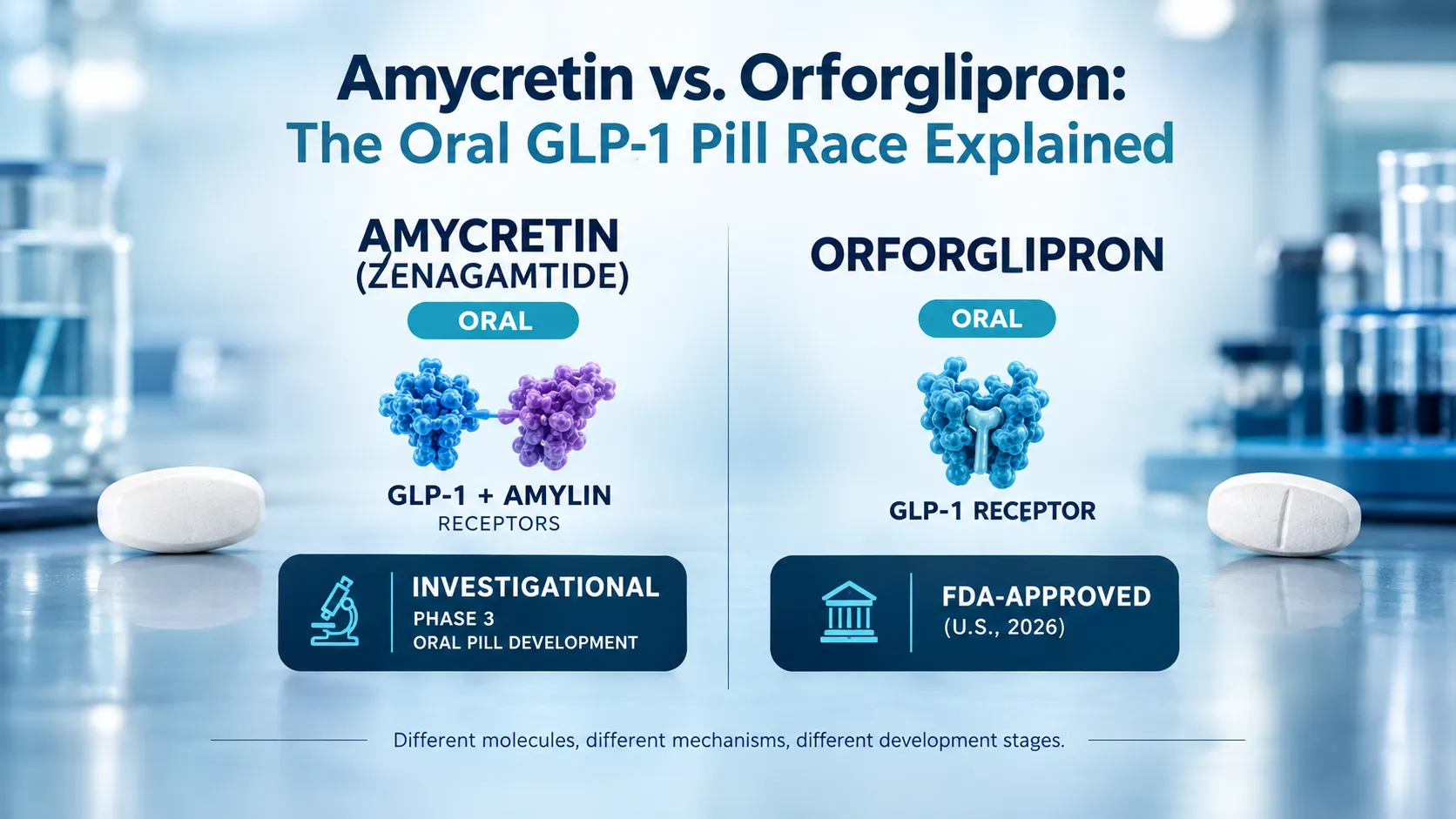
Amycretin is a peptide and orforglipron is not. How that chemistry explains the formulations, trial results, and approval status of both GLP-1 pills.
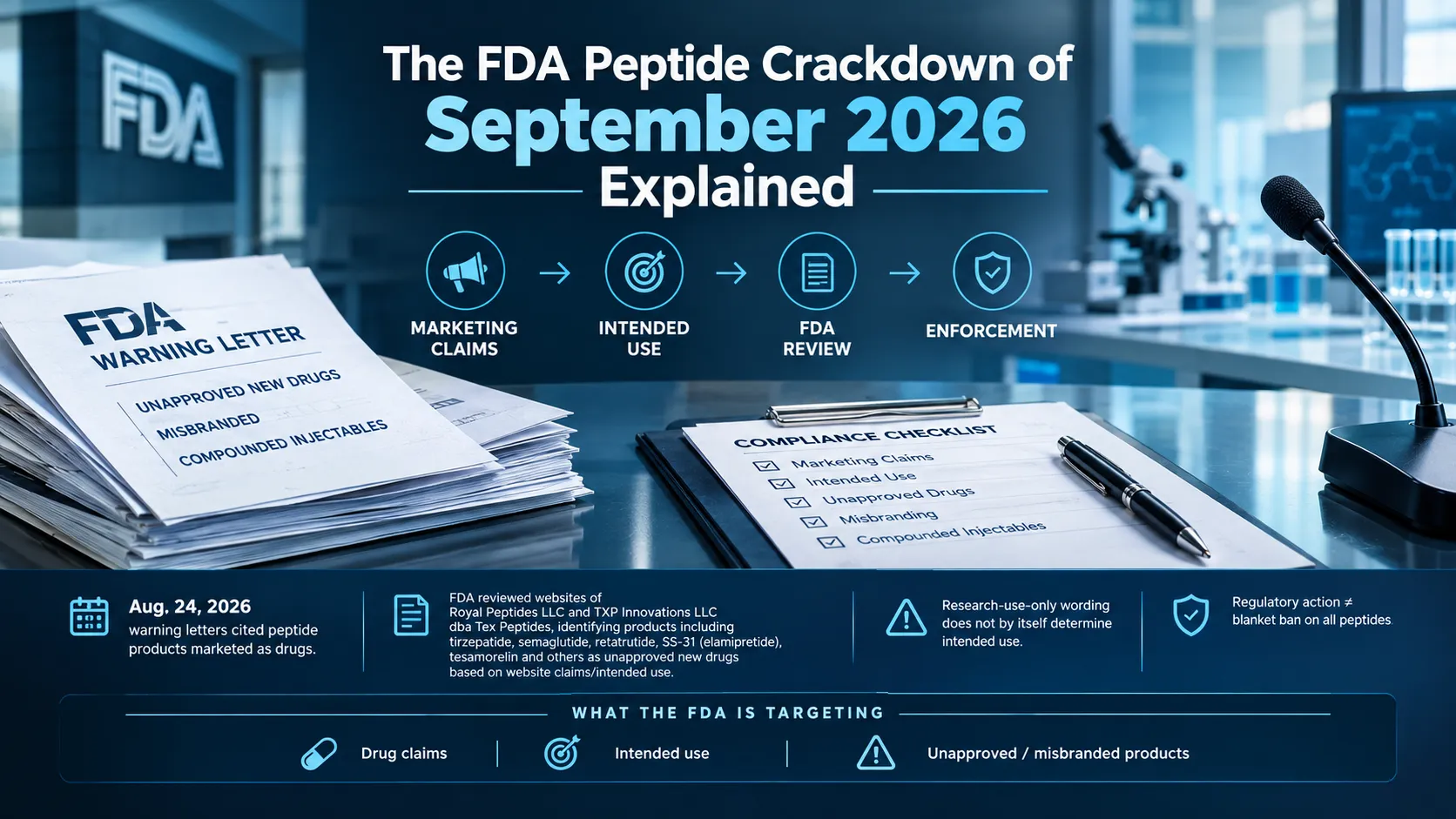
Five peptide sellers got FDA warning letters in September 2026. See who was named, why the research label failed, and the full 2026 enforcement timeline.
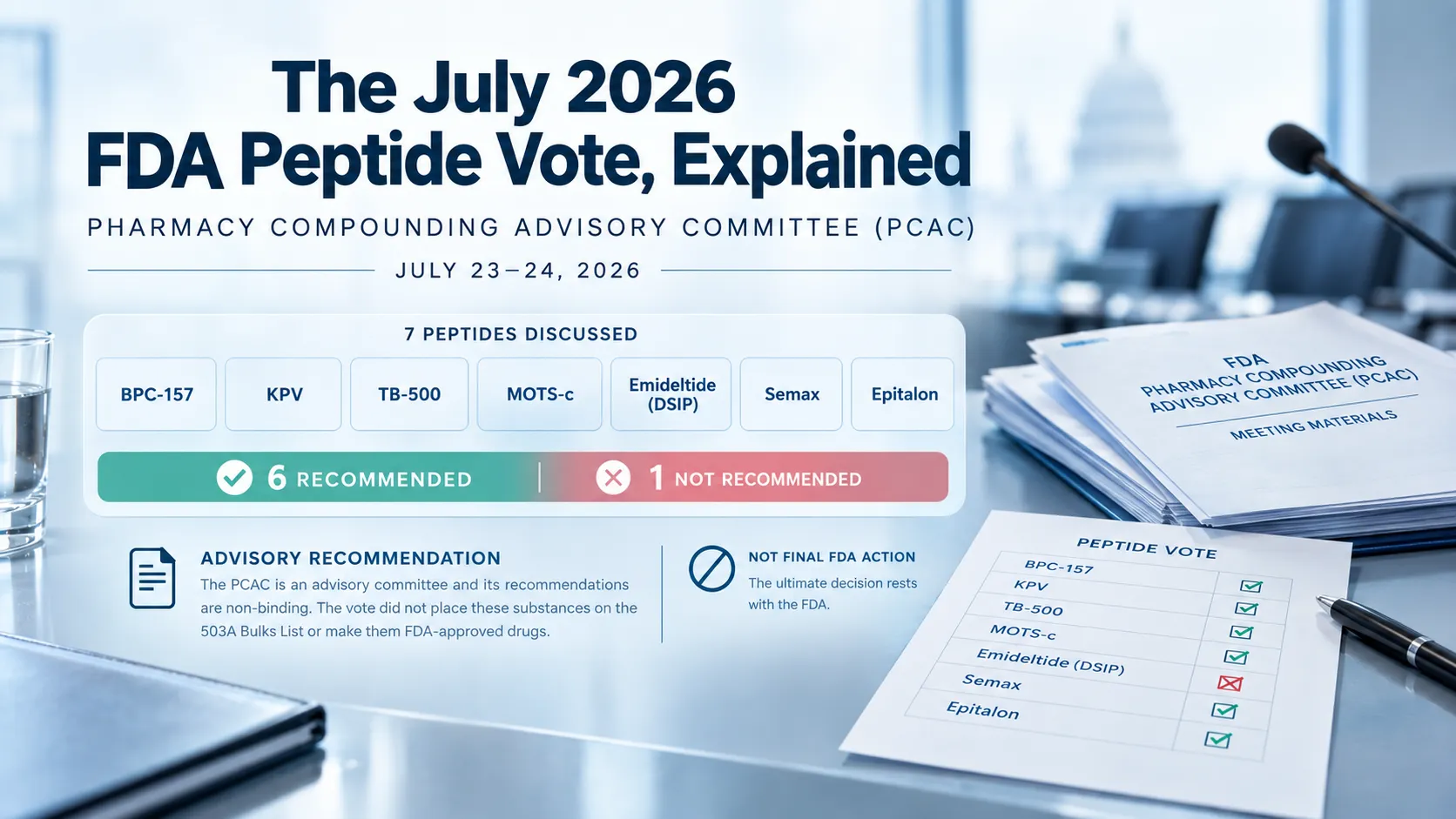
In July 2026, the FDA's advisory committee recommended 6 peptides for the 503A bulk list. None are on it yet. What the vote changed and what it didn't.