- Eloralintide (LY3841136) is an investigational, selective AMY1R amylin receptor agonist developed by Eli Lilly, not an approved drug.
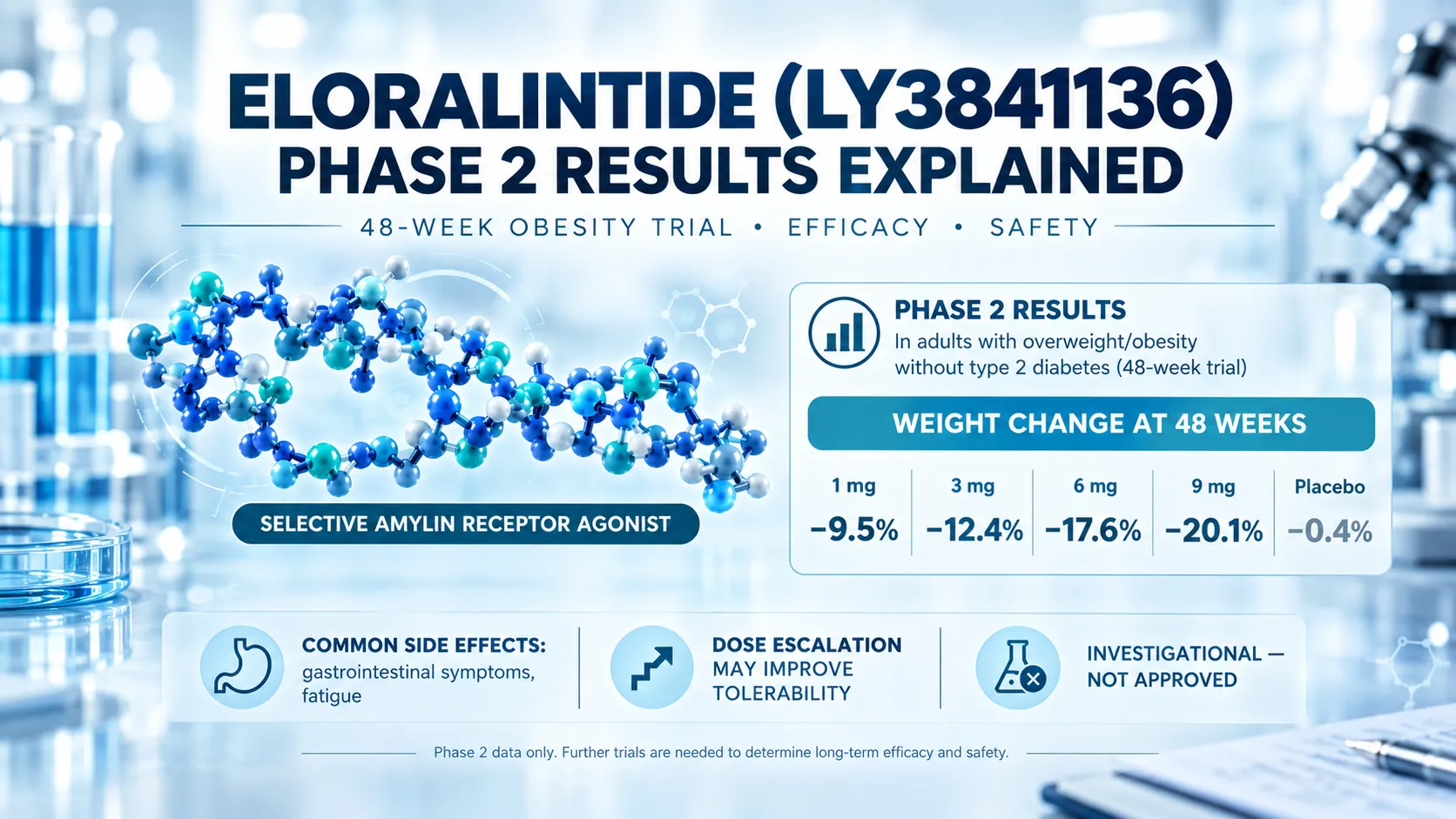
- A 263-participant, 48-week Phase 2 trial (NCT06230523) reported dose-dependent weight loss of 9.5% to 20.1% versus 0.4% with placebo, using the efficacy estimand.
- Two separate Phase 1 studies measured safety and early pharmacokinetics; a 12-week multiple-ascending-dose study reported 2.6% to 11.3% weight loss.
- Reported adverse events across trials include decreased appetite, headache, fatigue, and mild gastrointestinal symptoms, with Phase 2 discontinuation near placebo levels at the studied dose-escalation regimen.
- Five Phase 3 trials under the name ENLIGHTEN are recruiting as of October 2026, covering obesity, type 2 diabetes, obstructive sleep apnea, and knee osteoarthritis populations.
- No FDA-approved drug product containing eloralintide has been identified as of October 2026.
- EloraTZP, a separate combination research program pairing eloralintide with tirzepatide, reported up to 23.3% average weight loss at 48 weeks in a Phase 2b trial, with Phase 3 trials planned by late 2026.
- No published head-to-head human trial compares eloralintide directly against retatrutide, cagrilintide, or tirzepatide.
Eloralintide, known in early scientific literature by its development code LY3841136, is an investigational amylin receptor agonist developed by Eli Lilly and studied in obesity and overweight research models. It is a selective amylin receptor agonist, a mechanism distinct from GLP-1-only and dual GIP/GLP-1 research compounds. This article reviews what the preclinical and clinical research record currently shows, separating eloralintide monotherapy findings from the separate EloraTZP combination research program, and noting where the evidence stops.
What Eloralintide Is and Where It Stands
Eloralintide (CAS 2883634-40-8) is a synthetic, long-acting peptide engineered to activate amylin receptors with strong selectivity for the AMY1R subtype over AMY3R and the calcitonin receptor. It has progressed through a completed Phase 1 program and a completed 48-week Phase 2 monotherapy study, and is now in Phase 3 development under the research program name ENLIGHTEN. Completion of a trial phase documents a research milestone; it does not by itself establish regulatory approval or a drug's suitability for human use outside a supervised trial.
Eloralintide is an investigational compound studied exclusively in Eli Lilly-sponsored clinical trials to date. It has no approved indication, and research findings summarized here describe trial-controlled conditions, not a protocol for individual use.
How Does Eloralintide Work?
Amylin is a hormone co-released with insulin after eating, acting on amylin receptors in the brain to help signal satiety. Amylin receptors form from a calcitonin receptor core paired with accessory proteins, producing subtypes including AMY1R, AMY3R, and the calcitonin receptor (CTR) itself. In vitro pharmacology work found eloralintide activates human AMY1R roughly 11- to 12-fold more potently than AMY3R or CTR, acting as a full agonist at all three receptors studied.
In diet-induced obese rat models, eloralintide dose-dependently reduced food intake and lowered body weight, primarily through fat-mass loss, with pharmacokinetics supporting once-weekly dosing in the species studied. A comparative rat study found eloralintide produced significantly less conditioned taste avoidance — a preclinical proxy for aversive, nausea-like responses — than cagrilintide, a non-selective amylin receptor agonist. This finding is preclinical and animal-only; it supports a tolerability hypothesis that only human trials can confirm or refute. For background on cagrilintide's own receptor profile and clinical program, see Cagrilintide: Amylin Receptor Research & the CagriSema Combination.
Eloralintide Phase 1 Research
Two distinct Phase 1-stage studies have been reported. The first was a randomized, placebo-controlled, single-ascending-dose study in 48 healthy participants (mean BMI 27.5 kg/m2), testing doses from 0.04 mg to 12 mg. Nine participants in the eloralintide cohorts reported 16 adverse events total, 15 of which were mild. This study measured safety, tolerability, and pharmacokinetics in healthy volunteers — not efficacy.
A separate Phase 1b study, published in Diabetes Obesity Metabolism in January 2026, was a 12-week, randomized, placebo-controlled, multiple-ascending-dose trial conducted in participants with obesity or overweight, using once-weekly dosing without dose escalation. The most common treatment-emergent adverse events were decreased appetite (19%), headache (12%), fatigue (11%), and COVID-19 (11%); gastrointestinal events were comparatively infrequent — diarrhoea (10%), nausea (8%), vomiting (4%) — and mostly mild. One serious adverse event occurred in the 6 mg cohort, judged unrelated to treatment; there were no deaths. At week 12, least-squares mean weight reduction across dose groups ranged from 2.6% to 11.3%. Both Phase 1 studies are short-duration and limited in size, intended to establish safety and dosing logic rather than confirm a durable effect.
Eloralintide Phase 2 Results
The central efficacy evidence comes from a 48-week, randomized, double-blind, placebo-controlled Phase 2 trial (registered as NCT06230523), published in The Lancet on November 6, 2025. The trial enrolled 263 adults with obesity or overweight and at least one weight-related comorbidity, excluding participants with type 2 diabetes, across U.S. research centers. Participants were randomized to placebo or to eloralintide at fixed doses of 1 mg, 3 mg, 6 mg, or 9 mg, or to dose-escalation regimens reaching 6/9 mg or 3/6/9 mg. The primary objective was percent change in body weight from baseline at 48 weeks, analyzed using the efficacy estimand — the modeled effect had all participants remained on their assigned regimen for the full study.
Eloralintide arm | Mean weight change at 48 weeks |
|---|---|
1 mg | -9.5% |
3 mg | -12.4% |
6 mg | -17.6% |
9 mg | -20.1% |
6/9 mg dose-escalation | -19.9% |
3/6/9 mg dose-escalation | -16.4% |
Placebo | -0.4% |
All eloralintide arms met the primary endpoint versus placebo. Secondary endpoints — absolute weight and BMI reduction — were also met at every dose, with up to roughly 90% of participants improving by at least one BMI category. The trial additionally reported improvements across cardiometabolic markers including waist circumference, blood pressure, lipid profile, glycemic measures, and inflammation markers. These are efficacy-estimand figures, not intention-to-treat results, and describe an idealized on-treatment effect rather than the outcome for every enrolled participant including dropouts.
Interpreting the Weight-Loss Data
Several distinctions matter when reading these figures as research data rather than a promised outcome. Reported percentages are group averages across dozens of participants per arm, not individual predictions — results varied within each arm as in any obesity trial. The placebo comparison is the central test: placebo-arm participants lost 0.4% on average over the same 48 weeks, reflecting the effect of trial participation itself (monitoring, counseling, self-selection) independent of any active compound. Forty-eight weeks also establishes a defined effect within under a year under closely monitored trial conditions; it does not establish outcomes at two or five years, durability after stopping treatment, or performance in a broader, less-monitored population. Finally, dose-escalation arms produced different results than matched fixed doses, indicating the regimen — not only the final dose — shapes the measured outcome.
Safety and Adverse Events
Across the Phase 1b study, the most frequent treatment-emergent adverse events were decreased appetite, headache, and fatigue, with gastrointestinal events comparatively uncommon and mostly mild. In the Phase 2 trial, nausea and fatigue were among the most frequently cited adverse events and tended to rise at higher fixed doses, while adverse-event-led discontinuation in the advancing 3/6/9 mg regimen was approximately 7.4%, close to the 7.7% observed with placebo. No study identified in this review has followed eloralintide beyond 48 weeks, so durability after stopping treatment and long-term safety outcomes remain unestablished. Research material labeled Research Use Only describes a seller's stated intended use only — it is not evidence of identity, purity, or concentration for any specific lot, and carries none of the manufacturing or pharmacovigilance oversight that applies to an approved drug product. For a broader review of reported peptide-class side effects, see Are Peptides Safe? What the Evidence on Side Effects Actually Shows.
Phase 3: The ENLIGHTEN Program
Eli Lilly's Phase 3 program for eloralintide monotherapy is organized under the name ENLIGHTEN, with five trials identified in ClinicalTrials.gov and the EU Clinical Trials Information System as of this review.
Trial | Population | Status |
|---|---|---|
ENLIGHTEN-1 | Obesity/overweight, without type 2 diabetes (~1,980 participants) | Recruiting |
ENLIGHTEN-2 | Obesity/overweight, with type 2 diabetes (~1,035 participants) | Recruiting |
ENLIGHTEN-3 | Moderate-to-severe obstructive sleep apnea with obesity/overweight (~800 participants) | Recruiting |
ENLIGHTEN-4 | Knee osteoarthritis pain with obesity/overweight | Recruiting |
ENLIGHTEN-6 | Persistent obesity on stable weekly incretin therapy | Recruiting |
ENLIGHTEN-1 and ENLIGHTEN-6 are each designed to run well over a year including an extension phase, with estimated primary completion in 2028. A trial being Phase 3 and actively recruiting is a research-program status, not a reported result, and a reported result is not a regulatory decision.
Regulatory Status
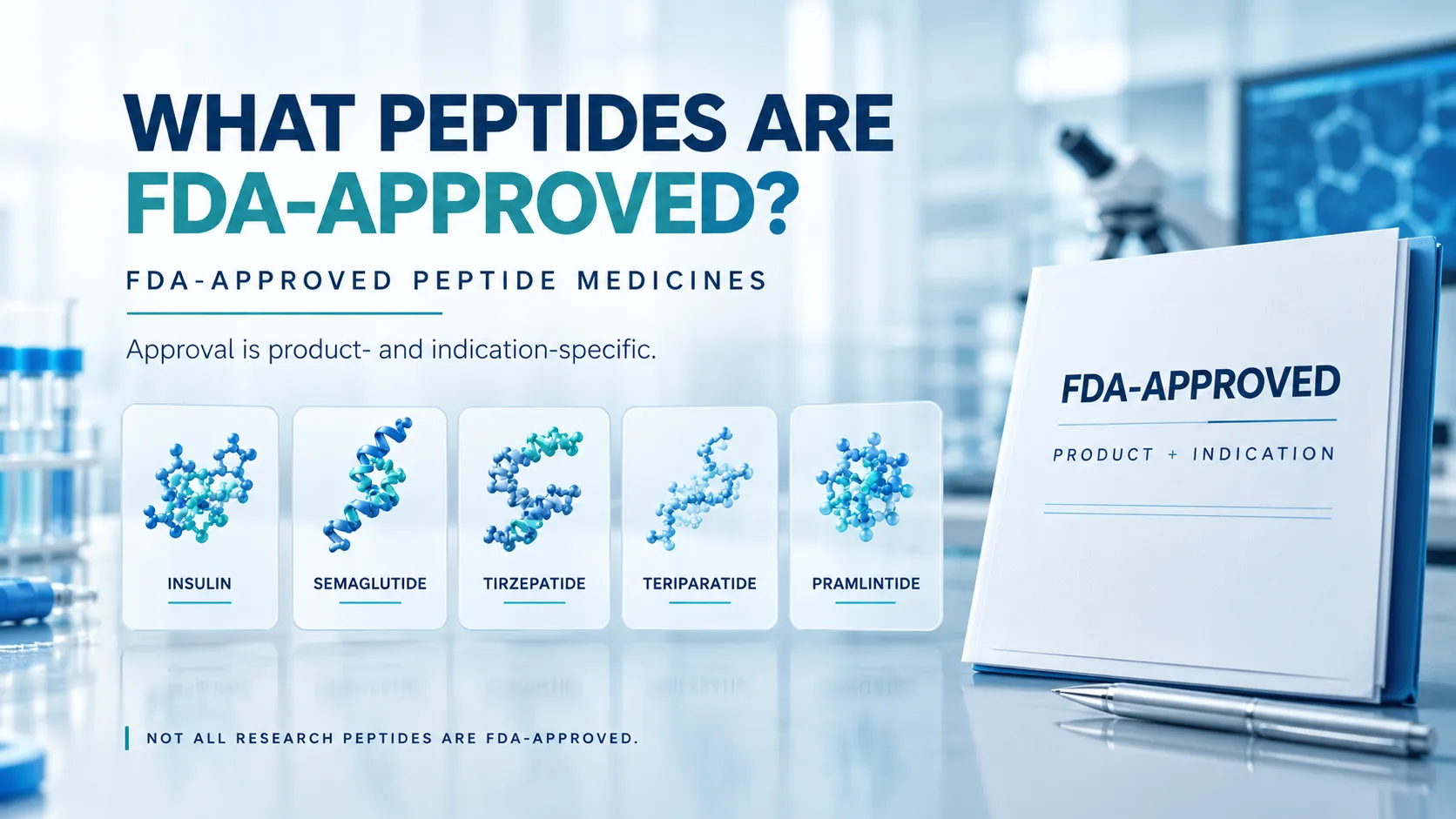
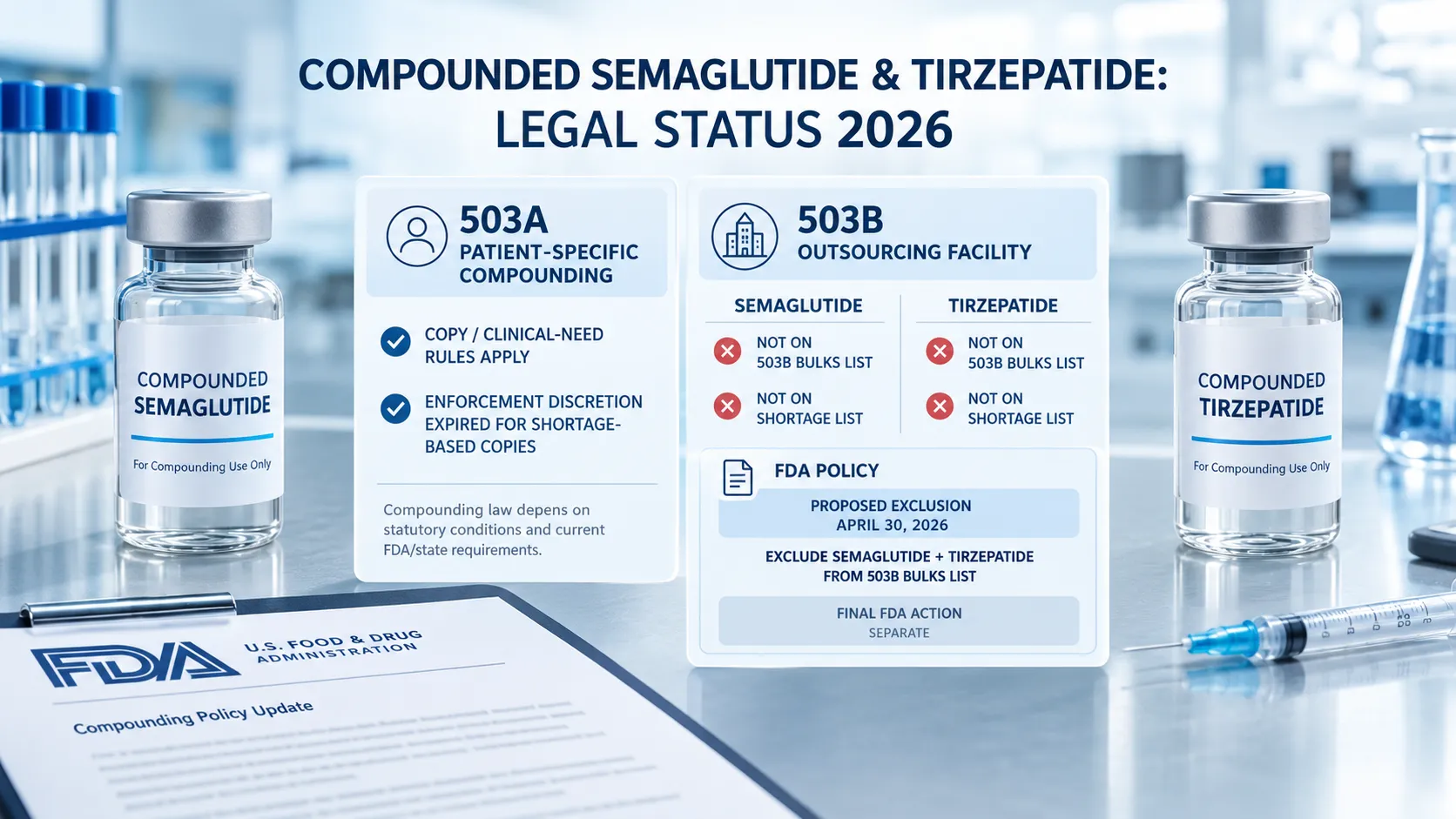
No FDA-approved drug product containing eloralintide was identified in the sources reviewed for this article as of October 2026. Eloralintide remains investigational, and Lilly's own published materials state that any future regulatory submission depends on the outcomes of ongoing and future clinical trials. Completing Phase 2, starting Phase 3, or a sponsor announcing positive topline results are development milestones, not approval decisions. Eloralintide's regulatory record to date is entirely that of an investigational compound inside Lilly's own trial program, not a compounding-pathway bulk substance. For a current list of which peptide compounds hold FDA approval, see What Peptides Are FDA Approved? The Complete 2026 List.
EloraTZP: The Tirzepatide Combination
EloraTZP is Lilly's investigational combination of eloralintide with tirzepatide, the dual GIP/GLP-1 receptor agonist active in Zepbound and Mounjaro. It is a separate research program with its own distinct evidence base. On September 30, 2026, Lilly presented results from a 48-week, randomized, double-blind, placebo-controlled Phase 2b trial enrolling 367 adults with obesity/overweight and type 2 diabetes, administered as separate injections rather than a co-formulation.
Arm | Mean weight change at 48 weeks |
|---|---|
Eloralintide 9 mg + tirzepatide 15 mg | -23.3% |
Eloralintide 6 mg + tirzepatide 10 mg | -19.9% |
Tirzepatide 15 mg alone | -14.8% |
Eloralintide 6 mg alone | -12.3% |
Placebo | -3.0% |
Gastrointestinal adverse events were more frequent in combination arms than with either compound alone, occurring mainly during dose escalation, and discontinuation due to adverse events ran 10.8%-27.0% in combination arms versus 2.9% for tirzepatide alone. These are efficacy-estimand figures from a conference presentation, not yet a peer-reviewed publication. Lilly plans Phase 3 trials of an EloraTZP co-formulation by the end of 2026; EloraTZP has not itself been evaluated in Phase 3 and its results should not be read as applying to eloralintide used alone.
Eloralintide vs Retatrutide, Cagrilintide and Tirzepatide
Eloralintide is mechanistically distinct from each of these compounds. Retatrutide is an investigational triple receptor agonist activating GLP-1, GIP, and glucagon receptors, studied in its own separate Phase 3 program; no head-to-head trial against eloralintide has been reported. See Retatrutide Clinical Trials, Peer-Reviewed and Topline Results for its trial record. Cagrilintide, developed by Novo Nordisk, is a non-selective amylin receptor agonist studied primarily as CagriSema in combination with semaglutide; the only reported comparison to eloralintide is the preclinical rat study described above. Tirzepatide is an FDA-approved dual GIP/GLP-1 receptor agonist, distinguished from eloralintide's amylin mechanism and combined with it only within the separate EloraTZP research program described above. See Tirzepatide Research Peptide: Dual GIP and GLP-1 Agonism Explained for its research record.
Dosage Protocols, Pricing and Sourcing
Phase 1 and Phase 2 trials used dose ranges from 0.04 mg up to 12 mg, with Phase 2 testing fixed and escalating regimens between 1 mg and 9 mg weekly, selected and monitored by trial investigators as part of a controlled research protocol. These figures describe what trial protocols administered under clinical supervision; they are not a dosing guide, and this article does not provide administration instructions for any audience. No FDA-approved product or standard retail price exists for eloralintide. A listing or forum discussion referencing eloralintide does not establish a product's identity, purity, or legality for any purpose.
Evaluating Research Peptide Quality
The relevant analytical questions for any research-use material are confirmed compound identity by HPLC and mass spectrometry, batch- and lot-specific documentation, third-party testing where available, and clear storage records. Analytical purity is not the same as clinical safety or efficacy — a certificate of analysis documents what is reportedly in a vial, not regulatory approval or a demonstrated outcome. See Peptide Purity Testing: What Contamination Data Shows and How Helix Bio Grades Peptide Research Evidence for a fuller framework.
Frequently Asked Questions
Eloralintide is an investigational, selective amylin receptor agonist developed by Eli Lilly, studied in obesity and overweight research populations. LY3841136 is its original development code.
It activates amylin receptors with strong selectivity for the AMY1R subtype, mirroring the natural hormone amylin's role in satiety signaling. In vitro work shows roughly 11- to 12-fold greater potency at AMY1R than at AMY3R or the calcitonin receptor.
A 263-participant, 48-week trial reported weight reductions of 9.5% to 20.1% across dose arms versus 0.4% with placebo, using the efficacy estimand, with all arms meeting the primary endpoint.
Two separate studies were conducted: a single-ascending-dose safety study in 48 healthy participants, and a 12-week multiple-ascending-dose study in participants with obesity/overweight reporting 2.6% to 11.3% weight loss and mostly mild adverse events.
Reported treatment-emergent adverse events include decreased appetite, headache, fatigue, and mild gastrointestinal symptoms such as nausea and diarrhoea. No long-term, multi-year safety data have been published.
Yes. Five Phase 3 trials under the research program name ENLIGHTEN are recruiting as of October 2026, spanning obesity with and without type 2 diabetes, obstructive sleep apnea, and knee osteoarthritis populations.
No. No FDA-approved drug product containing eloralintide has been identified as of October 2026. It remains an investigational compound.
EloraTZP is a separate Lilly research program combining eloralintide with tirzepatide. A Phase 2b trial reported up to 23.3% average weight loss at 48 weeks, with Phase 3 trials of a co-formulation planned for late 2026.
Eloralintide is selective for the AMY1R receptor subtype, while cagrilintide is a non-selective amylin receptor agonist studied primarily as part of the CagriSema combination with semaglutide. A preclinical rat study found less taste-aversion response with eloralintide, but no human comparison has been published.
Eloralintide is a selective amylin receptor agonist, while retatrutide is an investigational triple receptor agonist activating GLP-1, GIP, and glucagon receptors. The two have separate clinical programs, and no head-to-head trial has been reported.
Phase 1 studies tested doses from 0.04 mg to 12 mg; Phase 2 tested fixed and escalating weekly regimens between 1 mg and 9 mg, all under investigator supervision as part of controlled research protocols. These figures describe trial design, not an administration guide.
Confirmed identity by HPLC and mass spectrometry, batch-specific certificates of analysis, and documented storage history. Analytical purity on its own does not establish clinical safety or efficacy.
- 01Eli Lilly and Company. What to know about eloralintide (FAQ). Updated September 2026.
- 02Eli Lilly and Company. Lilly's selective amylin agonist, eloralintide, demonstrated meaningful weight loss and favorable tolerability in a Phase 2 study of adults with obesity or overweight. November 6, 2025.
- 03Billings LK, et al. Eloralintide, a selective amylin receptor agonist for the treatment of obesity: a 48-week phase 2, multicentre, double-blind, randomised, placebo-controlled trial. The Lancet. November 6, 2025.
- 04Briere DA, et al. Eloralintide (LY3841136), a novel amylin receptor agonist for the treatment of obesity: From discovery to clinical proof of concept. Molecular Metabolism.
- 05Bhattachar S, et al. Eloralintide, a selective, long-acting amylin receptor agonist for treatment of obesity: Phase 1 proof of concept. Diabetes Obes Metab. January 20, 2026.
- 06Eli Lilly and Company. Lilly's EloraTZP (combination of eloralintide and tirzepatide) delivered greater weight loss and A1C reduction vs. tirzepatide 15 mg in adults with obesity and type 2 diabetes. September 30, 2026.
- 07ClinicalTrials.gov. A Study of Eloralintide (LY3841136) in Participants With Obesity, or Overweight Without Type 2 Diabetes (ENLIGHTEN-1). NCT07321886.
- 08ClinicalTrials.gov. A Study of Eloralintide (LY3841136) in Participants With Persistent Obesity Who Are Treated With a Weekly Incretin (ENLIGHTEN-6). NCT07392190.
Helix Bio Chem Team
Research & Product Team
Our in-house team tracks published peptide research and translates it into clear, source-cited summaries for the research community.
Reviewed by in-house research chemists
support@helixbiochem.com