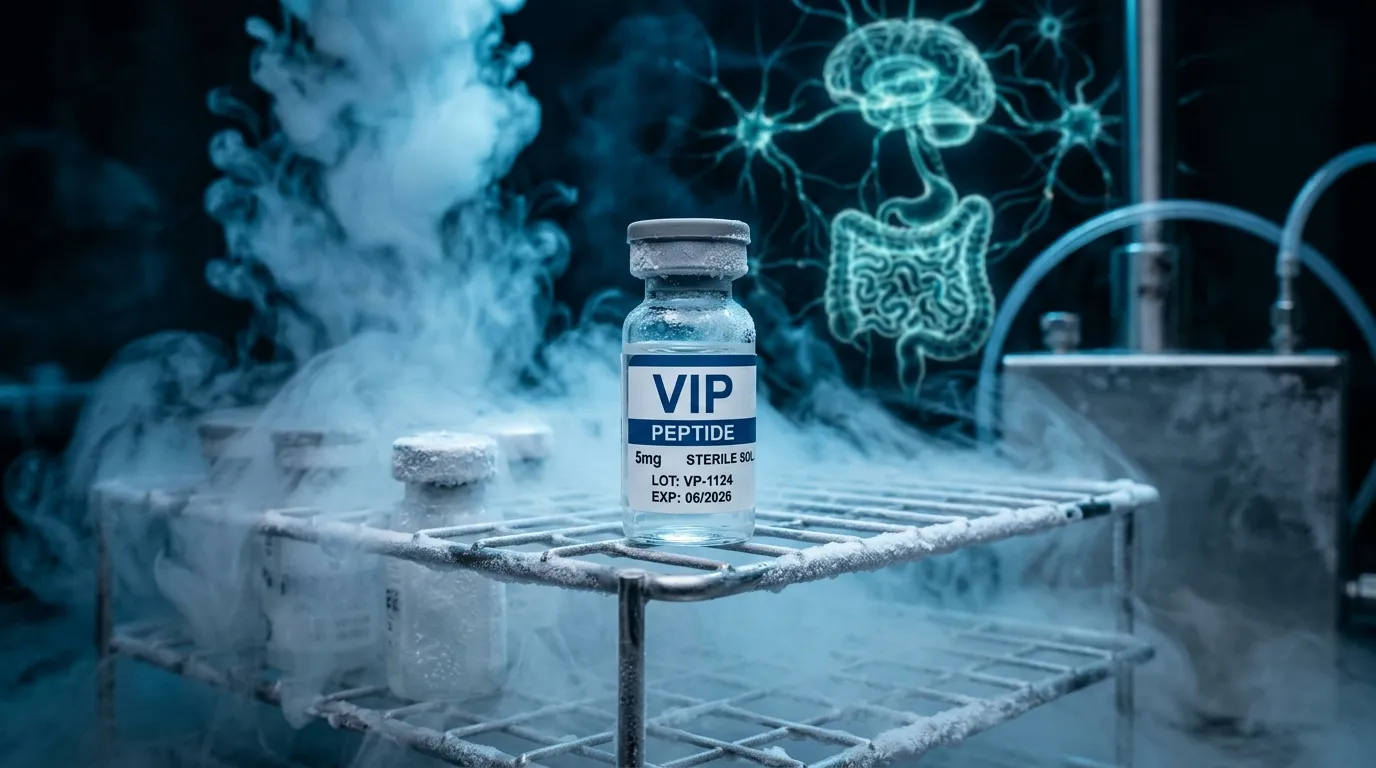
- Vasoactive intestinal peptide (VIP) is a 28-amino-acid endogenous neuropeptide in the secretin/glucagon superfamily.
- VIP signals through the class B G protein-coupled receptors VPAC1 and VPAC2 via adenylate cyclase, cAMP, and protein kinase A.
- VIP is a principal non-adrenergic, non-cholinergic inhibitory neurotransmitter of the enteric nervous system.
- Reported VIP suppression of TNF-alpha, IL-6, and IL-12 and induction of regulatory T cells comes from cell-culture and murine models, not controlled human trials.
- Human infusion studies report a plasma disappearance half-time of roughly one minute, which is why delivery route and formulation dominate VIP study design.
- VIP is not an FDA-approved drug; the synthetic analogue aviptadil remained investigational and was denied emergency use authorisation twice.
- The clinical evidence linking VIP to chronic inflammatory response syndrome consists of small uncontrolled open-label reports, not randomised trials.
- A VIPoma is a rare VIP-secreting neuroendocrine tumour and is a distinct entity from the VIP peptide itself.
Vasoactive intestinal peptide is one of the most thoroughly characterised endogenous neuropeptides in mammalian biology and, at the same time, one of the most frequently overstated compounds in online peptide writing. The gap between the two is the reason this article exists. What follows covers what VIP actually is, how its receptors work, what the immune and gastrointestinal literature has established in laboratory models, why a peptide that disappears from human plasma in roughly a minute makes delivery route the dominant variable in any study design, and how to read the claims that connect VIP to chronic inflammatory response syndrome and mold exposure. Every section is written for laboratory and analytical research contexts only.
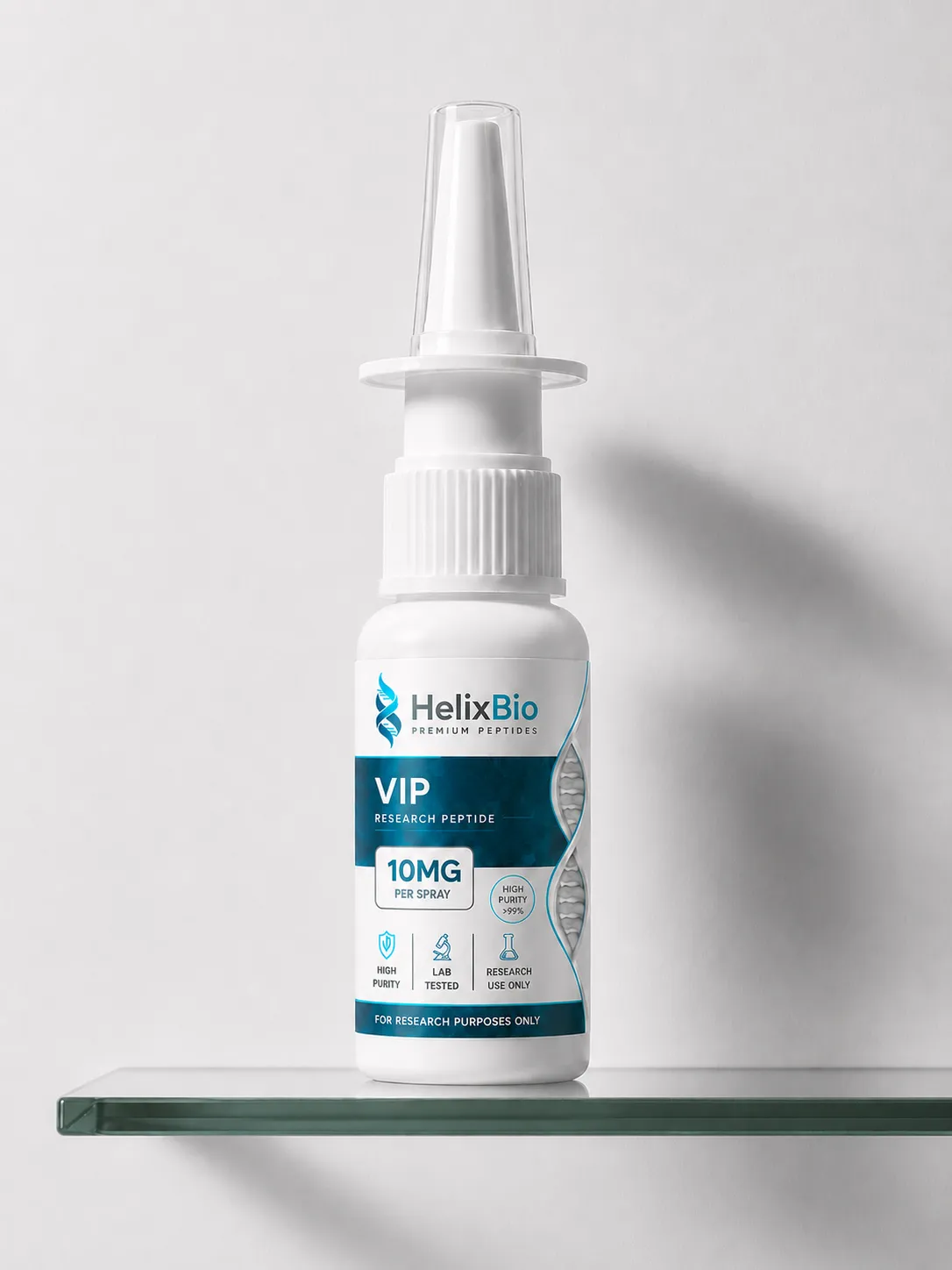
VIP Spray
RESEARCH PEPTIDE
VIP Spray is a research-use formulation associated with vasoactive intestinal peptide (VIP), a naturally occurring 28-amino-acid neuropeptide belonging to the secretin/glucagon peptide family. VIP has been studied extensively in receptor pharmacology, neurobiology, gastrointestinal physiology, vascular signaling, smooth-muscle biology, and cellular signaling. Helix Bio supplies VIP Spray strictly as a research and laboratory material. It is intended for qualified researchers investigating VIP-related molecular pathways and is not intended for human or veterinary administration.
What Is Vasoactive Intestinal Peptide (VIP)?
Vasoactive intestinal peptide (VIP) is a 28-amino-acid neuropeptide belonging to the secretin/glucagon peptide superfamily, which also includes secretin, glucagon, PACAP, and growth hormone-releasing hormone. It was first isolated from porcine intestinal tissue in the early 1970s and named for the vasodilatory activity observed in those early preparations. The name has aged poorly: VIP is distributed far beyond the intestine, appearing in central and peripheral neurons, airway and vascular nerve fibres, exocrine glands, and immune cells.
In humans the VIP gene encodes a precursor protein that is post-translationally processed to release both VIP and the related peptide histidine-methionine. The mature peptide is amidated at the carboxy terminus, which matters for receptor activation and for analytical identity confirmation.
Attribute | Detail |
|---|---|
Molecule | Vasoactive intestinal peptide (VIP, vasoactive intestinal polypeptide) |
Class | Endogenous neuropeptide; secretin/glucagon superfamily |
Length | 28 amino acids, C-terminally amidated |
Primary receptors | VPAC1, VPAC2 (class B GPCRs); shares PAC1 family relationship with PACAP |
Canonical signalling | Gs-coupled, adenylate cyclase, cAMP, PKA |
Major research systems | Enteric and central nervous systems, immune cells, airway and vascular smooth muscle |
Research context | Widely used reference neuropeptide for GPCR and neuroimmune studies |
How VIP Signalling Works: VPAC1, VPAC2 and PAC1
VIP binds two class B G protein-coupled receptors, VPAC1 and VPAC2, with broadly comparable affinity. A third related receptor, PAC1, preferentially binds PACAP rather than VIP, which is a distinction worth holding onto when reading comparative papers. Receptor engagement is predominantly Gs-coupled: adenylate cyclase is activated, intracellular cAMP rises, and protein kinase A signalling follows, with downstream effects on CREB and on transcription factors including NF-kB.
Receptor distribution is what makes VIP research interpretation difficult. VPAC1 is well represented in the central nervous system, liver, lung, intestine, and T lymphocytes. VPAC2 appears in the central nervous system, pancreas, skeletal muscle, heart, kidney, adipose tissue, and stomach. Because a single ligand engages two receptors with overlapping but non-identical tissue maps, an experimental effect attributed to "VIP" may in fact be a VPAC1 effect, a VPAC2 effect, or a composite of both. Studies using receptor-selective agonists, antagonists, or knockout models report meaningfully different results from those using native VIP, and the two categories should not be pooled when summarising evidence.
Why one peptide participates in so many systems
The breadth of VIP activity is not evidence of unusual potency. It is a consequence of an ancient, widely conserved ligand-receptor pair being recruited independently by several tissue systems. Smooth muscle relaxation, epithelial fluid secretion, and suppression of pro-inflammatory transcription can all follow from the same cAMP-dependent cascade acting in different cell types. Reading VIP's distribution as evidence of a single unifying function is a common interpretive error in secondary sources.
VIP, the Enteric Nervous System and the Gut-Brain Axis
Within the gut, VIP is one of the principal non-adrenergic, non-cholinergic inhibitory neurotransmitters of the enteric nervous system. VIP-immunoreactive neurons project through the myenteric and submucosal plexuses, and VIP release contributes to smooth muscle relaxation, sphincter relaxation, and epithelial secretion of water and electrolytes. This is settled physiology, established across decades of tissue-bath, immunohistochemical, and knockout work.
The more recent and more interesting literature concerns neuroimmune interaction at the mucosal surface. Mouse studies have reported that enteric VIP-expressing neurons are transiently activated by feeding, and that VIP acting through VPAC receptors influences the behaviour of group 3 innate lymphoid cells and downstream IL-22 signalling relevant to barrier function. Other rodent work links VIP signalling to goblet cell production, mucus layer maintenance, and tight junction protein expression.
Two cautions apply. First, these are rodent and ex vivo findings, not demonstrations of a human outcome. Second, "gut-brain axis" is a description of several interacting systems, not a single pathway that VIP controls. VIP is one signalling node within enteric neurotransmission, mucosal immunity, and vagal communication; it is not the axis itself.
VIP Immune Regulation: What the Models Actually Show
VIP is genuinely a neuroimmune peptide, and the immunology is the strongest part of its mechanistic literature. It is worth stating precisely what that literature contains.
Macrophages and pro-inflammatory cytokines
Work published largely from the late 1990s onward established that VIP and PACAP inhibit endotoxin-induced production of TNF-alpha, IL-6, and IL-12 by stimulated macrophages, while increasing IL-10 production. Mechanistic follow-up attributed much of this to interference with NF-kB nuclear translocation and with IFN regulatory factor 1 activation, and to suppression of inducible nitric oxide synthase transcription. In murine endotoxemia models, VIP administration reduced mortality alongside those cytokine changes.
Regulatory T cells and tolerance
A second line of work reported that VIP conditions dendritic cells toward a tolerogenic phenotype, which in turn supports generation of Foxp3-positive regulatory T cells. Related studies in murine models of experimental arthritis and other autoimmune models reported reduced disease severity. These are important mechanistic results and they are also, without exception, animal and cell-culture results.
Research area | Evidence type | Model | What it supports | Principal limitation |
|---|---|---|---|---|
Cytokine suppression (TNF-alpha, IL-6, IL-12) | In vitro and in vivo | Murine macrophages, endotoxemia models | Receptor-mediated anti-inflammatory signalling | No controlled human efficacy data |
Treg induction via tolerogenic dendritic cells | In vitro and in vivo | Murine immune cells, autoimmune models | Adaptive immune modulation mechanism | Species differences in receptor expression |
Enteric inhibitory neurotransmission | Ex vivo and knockout | Guinea pig, mouse, human tissue | Established physiological role | Endogenous role, not exogenous administration |
Mucosal barrier and ILC3 signalling | In vivo | Mouse | Neuroimmune regulation of barrier function | Recent, rodent-only, mechanism-level |
Pulmonary and vascular relaxation | In vitro and human infusion | Tissue preparations, healthy volunteers | Vasoactive and bronchorelaxant activity | Short duration, route-dependent |
CIRS-related clinical claims | Uncontrolled case series | Human, open label | Hypothesis generation only | No randomisation, no control group |
The distinction that has to be maintained is between mechanistic immunology and demonstrated therapeutic efficacy. Every one of the immune findings above describes what VIP does to a signalling pathway under experimental conditions. None of them establishes that exogenous VIP produces a clinical benefit in a human disease, and the clinical development record discussed below is the reason that distinction is not academic.
VIP and Neuroinflammation
Preclinical studies have reported that VIP reduces chemokine production by activated microglia and limits neuronal loss in inflammatory injury models. This work is cellular and rodent-based, and it is best described as evidence that VPAC signalling modulates neuroinflammatory pathways in experimental systems. It does not establish treatment of any neurological condition, and papers in this area routinely say so in their own limitations sections.
Half-Life, Stability, and Why Delivery Route Dominates VIP Research
A frequently cited human pharmacokinetic study infused graded doses of VIP intravenously in a small group of healthy volunteers and reported a plasma disappearance half-time averaging approximately one minute after the infusion stopped, with rapid metabolic clearance. Other sources report figures under two minutes. The honest summary is that circulating VIP is cleared and enzymatically degraded very quickly, that reported values vary by assay, species, and route, and that no single universal half-life value should be quoted as definitive.
This one property has shaped the entire field. It is why decades of medicinal chemistry effort have gone into stabilised analogues, cyclised and stapled derivatives, receptor-selective agonists, and depot or particle-based delivery systems, and why the peptide itself has never become a practical systemic pharmaceutical despite an enormous mechanistic literature.
Half-life, stability, and formulation data are route-specific and species-specific. Findings from intravenous infusion studies cannot be transferred to intranasal formulations, and none of the pharmacokinetic literature described here constitutes administration guidance. All material discussed on this page is for research use only.
VIP nasal spray research: why the route is studied
Intranasal formulation is scientifically interesting for a peptide with these properties for straightforward reasons. It bypasses gastrointestinal degradation and hepatic first-pass metabolism, the nasal mucosa is thin and well vascularised, and the olfactory and trigeminal pathways have been proposed as routes by which some molecules may reach the central nervous system directly.
Proposed is doing real work in that sentence. Nose-to-brain transfer is demonstrated for some small molecules in animal models, but for a hydrophilic peptide of roughly 3.3 kilodaltons it remains a hypothesis rather than an established human pathway. Systemic absorption across nasal mucosa and delivery to brain tissue are two different claims, and much of the consumer-facing writing on VIP nasal spray conflates them. For research purposes, the tractable questions are formulation stability, spray-to-spray dose uniformity, peptide integrity over the container lifetime, and analytical reproducibility, which are exactly the questions a comparison between spray and lyophilised formats is designed to answer. Researchers evaluating either format should review reconstitution and stability fundamentals before designing a handling protocol.
VIP and CIRS: Separating the Biology From the Treatment Claims
Chronic inflammatory response syndrome (CIRS) is a proposed clinical framework describing a persistent multi-system illness said to follow exposure to water-damaged buildings and other biotoxin sources. Within that framework, developed principally by Ritchie Shoemaker and associated clinicians, low measured VIP and melanocyte-stimulating hormone are treated as characteristic findings, and intranasal VIP appears as a late step in a sequential treatment protocol.
Three separate questions get collapsed in most online writing, and they need to be kept apart.
Does indoor dampness and mold exposure affect human health? Yes, and the evidence is strong. Comprehensive reviews of the epidemiological literature have found consistent associations between visible indoor dampness or mold and asthma development and exacerbation, wheeze, cough, respiratory infections, bronchitis, allergic rhinitis, and upper respiratory symptoms, in both allergic and non-allergic individuals. Remediation of dampness is a well-supported public health measure.
Is CIRS an established diagnostic entity with validated biomarkers? This is contested. Position statements from medical toxicology and allergy organisations accept the association between damp indoor spaces and health effects while attributing it primarily to allergic and irritant mechanisms, and specifically reject mycotoxin antibody testing as a validated method of exposure assessment. There is no case definition for CIRS endorsed by major professional bodies, and the diagnostic criteria in circulation originate from within the framework's own consensus documents rather than from independent validation studies.
Is VIP an established treatment for CIRS? No. The primary clinical evidence is a 2013 open-label report of 20 patients with treatment-refractory illness who used compounded intranasal VIP, published in a low-visibility open-access journal, with no control group and no randomisation. Subsequent transcriptomic and volumetric imaging papers from the same research group are similarly small and uncontrolled. A 2024 narrative review in Annals of Medicine and Surgery concluded that the Shoemaker Protocol was the only CIRS treatment in the retrieved literature with documented clinical efficacy, which is accurate as a description of a sparse literature and is not equivalent to demonstrated efficacy in controlled trials. That review was written by authors working within the CIRS field, and it did not have randomised comparators to review.
Claim encountered online | Underlying hypothesis | Supporting evidence | Evidence limitation |
|---|---|---|---|
Water-damaged buildings affect health | Dampness promotes microbial growth and irritant exposure | Large epidemiological review base | Association strong; specific causal agents often unresolved |
CIRS is a defined biotoxin illness | Innate immune dysregulation with characteristic biomarkers | Case series and consensus statements from within the framework | No independently validated case definition or biomarker panel |
VIP is deficient in CIRS patients | Neuropeptide depletion sustains inflammation | Uncontrolled cohort measurements | Assay variability; no controlled comparison populations |
VIP corrects or reverses CIRS | Replacement restores immune regulation | One open-label series of 20 patients plus follow-up reports | No randomisation, no blinding, no control group, single research group |
VIP treats mold toxicity | Peptide neutralises biotoxin effects | None identified | Not a claim the published literature supports |
On the phrase "mold toxicity peptide"
This phrase is a search term, not a scientific classification. No peptide class is defined by activity against mold or mycotoxins, and VIP has no described mechanism of toxin binding, neutralisation, or clearance. Its relevance to this topic area is entirely a function of the immune-regulatory framework described above. Treating the search phrase as though it named a real pharmacological category is the single most common error in vendor writing about VIP.
Is VIP Peptide FDA Approved?
No. Vasoactive intestinal peptide is not an FDA-approved drug product, and precision matters here because several adjacent facts get misreported as approval.
Aviptadil, a synthetic form of human VIP, has been studied under investigational new drug status for acute respiratory conditions. During the COVID-19 period it received Fast Track designation and was tested in a National Institutes of Health trial arm that was stopped for futility at interim analysis; the FDA declined emergency use authorisation requests on two occasions in 2021 and 2022. Investigational status, fast track designation, and orphan designation are regulatory pathway mechanisms, not approvals, and a trial that is halted for futility is the opposite of an efficacy finding.
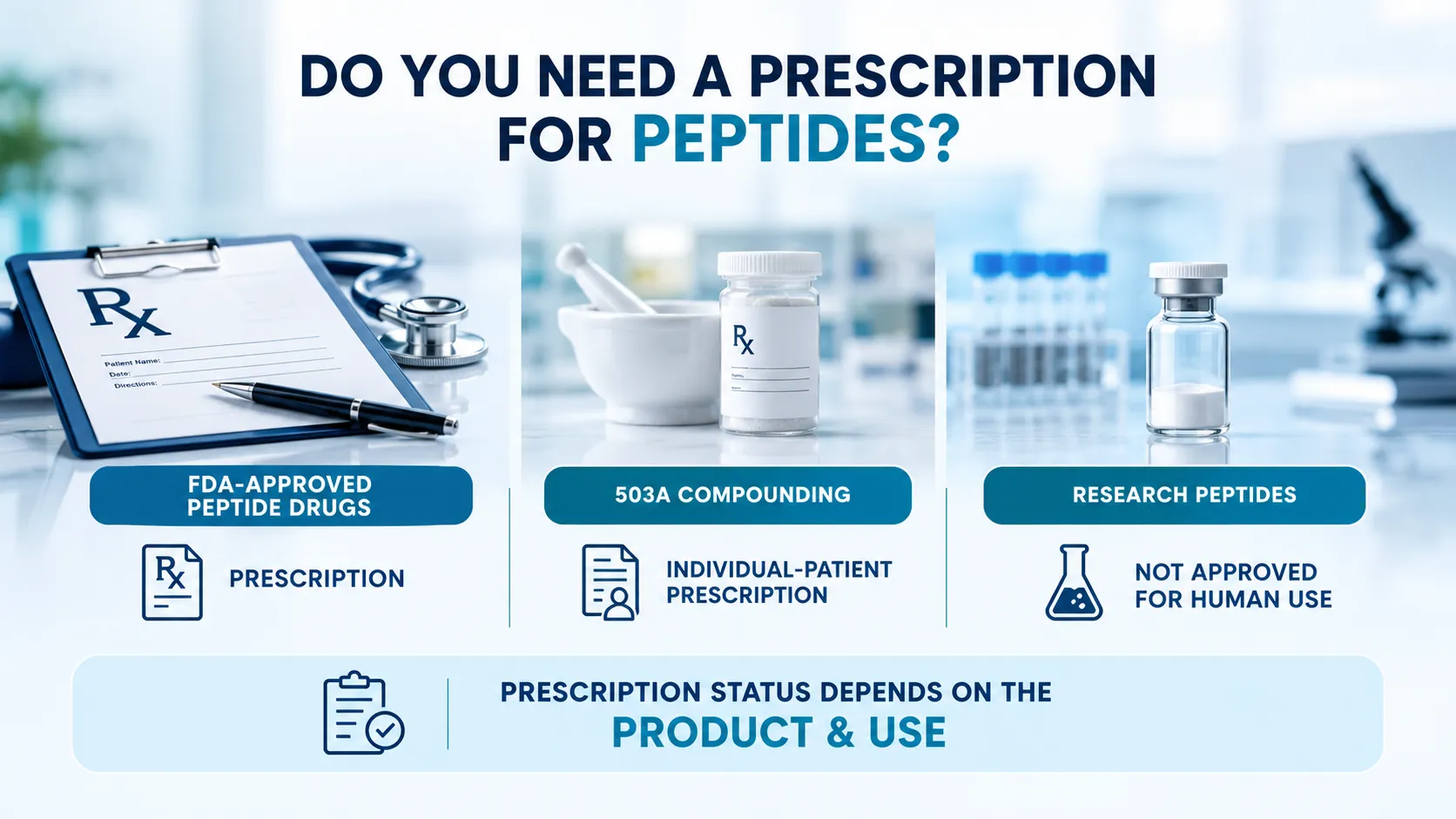
Separately, VIP has appeared in Category 1 of the FDA's interim policy on bulk drug substances nominated for compounding under Section 503A, meaning it was under evaluation without the agency having identified significant safety risks. That category permits enforcement discretion for compounding pharmacies under specified conditions. It is a compounding policy classification, not a drug approval, and the peptide landscape under that policy has shifted repeatedly. Research-grade material sits outside all of this: it is neither an approved drug nor a compounded prescription product, and is supplied for laboratory use only. Researchers working in the United States should review current RUO compliance expectations rather than inferring status from regulatory news coverage.
VIP vs VIPoma: Two Entirely Different Entities
This distinction causes persistent confusion, and it is simple. VIP is a peptide. A VIPoma is a tumour.
VIPomas are rare neuroendocrine tumours, most often pancreatic, that autonomously secrete VIP. The resulting clinical picture is known as Verner-Morrison syndrome or WDHA syndrome, characterised by profuse watery diarrhoea, hypokalaemia, and achlorhydria, driven by the same epithelial secretory mechanism that VIP performs physiologically at normal concentrations. Reported incidence is on the order of a fraction of a case per million person-years, and VIPomas account for a small percentage of pancreatic neuroendocrine tumours.
The instructive point for anyone reading VIP research is that the syndrome is a demonstration of what unregulated, sustained, supraphysiological VIP exposure does in humans. It is the clearest available human evidence that VIP signalling is dose-dependent and consequential, and it is a reason the peptide's clinical development history has been cautious rather than casual.
VIP Compared With BPC-157 in Research Contexts
Comparisons between VIP and BPC-157 are common in search queries and are scientifically meaningful only when framed around defined endpoints. The question of which is "better" has no answer without specifying what is being measured.
VIP | BPC-157 | |
|---|---|---|
Molecular identity | 28-amino-acid endogenous human neuropeptide | 15-amino-acid synthetic sequence derived from a gastric juice protein fragment |
Receptor biology | Defined: VPAC1 and VPAC2, class B GPCRs, cAMP/PKA | No confirmed dedicated receptor; proposed pathway effects |
Principal research fields | Neuroimmunology, enteric neurophysiology, GPCR pharmacology | Tissue repair, angiogenesis, gastrointestinal models |
Human data | Infusion pharmacokinetics; investigational analogue trials | Very limited; predominantly rodent literature |
Evidence stage | Extensive mechanistic base, no approved indication | Preclinical, mechanism largely unresolved |
Main limitation | Rapid clearance; route dependence | Poorly defined mechanism; sparse human data |
Researchers running comparative work on repair-focused compounds may find the BPC-157 and TB-500 comparison a more direct starting point, since VIP and the tissue-repair peptides occupy different mechanistic territory.
Evaluating VIP Research Material
VIP presents specific analytical challenges. It is a hydrophilic 28-mer with a C-terminal amide, it is proteolytically labile, and in spray formulations it is presented in solution rather than as a lyophilised powder, which removes the buffer that a dry format provides against hydrolytic degradation over time.
For solution formulations, the useful documentation questions are identity confirmation by mass spectrometry, purity by HPLC with the method and column stated, the fill and concentration, and whether stability was assessed in the formulation rather than only on the input powder. A certificate covering the raw peptide says little about the finished solution.
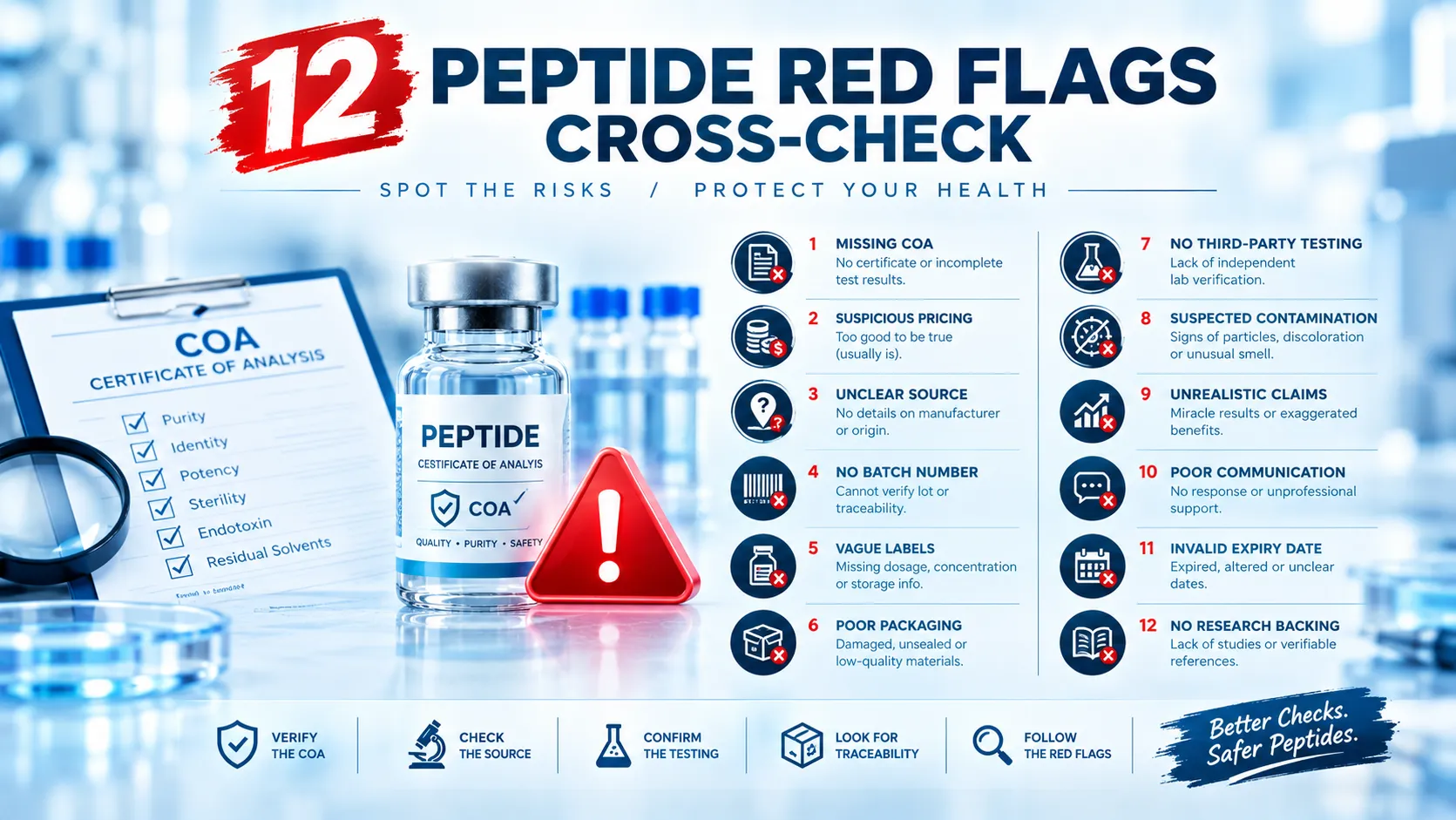
Anyone sourcing VIP for laboratory work should apply the same documentation standard used for any research peptide, starting with how to read a certificate of analysis and a handling protocol that accounts for the conditions that drive peptide degradation.
Researchers sourcing the compound for VPAC receptor work can review the batch documentation and certificate of analysis supplied with Helix Bio's research-use VIP Spray.
Evidence Gaps and Open Research Questions
Several questions remain genuinely open, and they define where the useful work in this area sits.
- Receptor attribution: how much of the reported anti-inflammatory activity is VPAC1-mediated versus VPAC2-mediated, and does the balance differ between human and rodent immune cells?
- Human translation: no controlled trial has tested whether exogenous VIP produces the cytokine changes in humans that are consistently reported in murine models.
- Intranasal pharmacokinetics: there is no well-characterised human absorption or distribution profile for intranasal VIP formulations, which leaves the central premise of the delivery route untested.
- Biomarker validity: whether measured plasma VIP is a meaningful indicator of anything in chronic multi-system illness depends on assay standardisation that has not been independently established.
- Formulation stability: peer-reviewed stability data for VIP in aqueous spray formulations is thin compared with the volume of mechanistic receptor literature.
The realistic summary is that VIP is a well-understood signalling molecule with an unresolved translational record. That combination is common in peptide science and it is not a criticism of the underlying biology. It is simply the reason that mechanism, however elegant, should not be reported as outcome.
Frequently Asked Questions
Vasoactive intestinal peptide is a 28-amino-acid endogenous neuropeptide in the secretin/glucagon superfamily, first isolated from porcine intestinal tissue in the early 1970s. It is distributed across the central and peripheral nervous systems, the gastrointestinal tract, airways, and immune cells, and signals through the VPAC1 and VPAC2 receptors.
VIP is a peptide; a VIPoma is a rare neuroendocrine tumour, usually pancreatic, that secretes VIP without regulation. The resulting clinical picture is called Verner-Morrison or WDHA syndrome, and it reflects sustained supraphysiological VIP exposure rather than any property of the peptide as a research material.
VPAC1 and VPAC2 are class B G protein-coupled receptors that bind VIP with broadly comparable affinity and couple predominantly to Gs. Activation raises intracellular cAMP and engages protein kinase A signalling, with downstream effects reported on CREB and NF-kB-dependent transcription in experimental systems.
VIP is one of the principal non-adrenergic, non-cholinergic inhibitory neurotransmitters of the enteric nervous system and contributes to smooth muscle relaxation and epithelial secretion. Rodent studies have also linked enteric VIP signalling to innate lymphoid cell behaviour and mucosal barrier function, but the gut-brain axis is a network of interacting systems rather than a single pathway controlled by VIP.
Cell-culture and murine studies report that VIP suppresses endotoxin-induced TNF-alpha, IL-6, and IL-12 production by macrophages, increases IL-10, interferes with NF-kB activation, and supports generation of regulatory T cells via tolerogenic dendritic cells. These are mechanistic findings in experimental models and do not establish clinical efficacy in humans.
No. The primary clinical evidence is a 2013 open-label report of 20 treatment-refractory patients with no control group and no randomisation, followed by small uncontrolled transcriptomic and imaging reports from the same research group. No randomised controlled trial has evaluated VIP for chronic inflammatory response syndrome.
The Shoemaker Protocol is a sequential treatment framework developed for chronic inflammatory response syndrome in which intranasal VIP appears as a late step, on the premise that low measured VIP sustains innate immune dysregulation. A 2024 narrative review described it as the only CIRS treatment with documented efficacy in the retrieved literature, which reflects a sparse and uncontrolled evidence base rather than trial-level demonstration.
No, and the phrase mold toxicity peptide is a search term rather than a scientific classification. VIP has no described mechanism of mycotoxin binding, neutralisation, or clearance, and its appearance in this topic area derives entirely from immune-regulatory hypotheses, not from evidence of activity against fungal toxins.
Published research has used intravenous infusion in human pharmacokinetic studies, intraperitoneal and intravenous routes in rodent immunology models, and inhaled or intranasal formulations in investigational work on analogues. Route determines exposure profile so completely that findings cannot be transferred between formats, and none of this literature constitutes administration guidance.
No. VIP is not an approved drug product. The synthetic analogue aviptadil was studied under investigational new drug status and received Fast Track designation, but a National Institutes of Health trial arm was stopped for futility and the FDA declined emergency use authorisation on two occasions in 2021 and 2022.
VIP is a 28-amino-acid endogenous neuropeptide with two defined receptors and an extensive mechanistic literature in neuroimmunology and enteric physiology, while BPC-157 is a 15-amino-acid synthetic sequence with no confirmed dedicated receptor and a predominantly rodent tissue-repair literature. They occupy different mechanistic territory, so comparison is only meaningful against a defined experimental endpoint.
Identity confirmation by mass spectrometry, purity by HPLC with the analytical method stated, the stated fill and concentration, and whether stability was assessed in the finished formulation rather than only on the input powder. Solution formats warrant particular attention because they lack the hydrolytic protection a lyophilised powder provides.
- 01Delgado M, Pozo D, Ganea D. The significance of vasoactive intestinal peptide in immunomodulation. Pharmacological Reviews. 2004;56(2):249-290.
- 02Domschke S, Domschke W, Bloom SR, et al. Vasoactive intestinal peptide in man: pharmacokinetics, metabolic and circulatory effects. Gut. 1978;19(11):1049-1053.
- 03Vasoactive intestinal peptide promotes host defense against enteric pathogens by modulating the recruitment of group 3 innate lymphoid cells (PMC8521691).
- 04Mendell MJ, Mirer AG, Cheung K, Tong M, Douwes J. Respiratory and allergic health effects of dampness, mold, and dampness-related agents: a review of the epidemiologic evidence. Environmental Health Perspectives. 2011.
- 05Shoemaker RC, House D, Ryan JC. Vasoactive intestinal polypeptide (VIP) corrects chronic inflammatory response syndrome (CIRS) acquired following exposure to water-damaged buildings. Health. 2013;5(3):396-401.
- 06Dooley M, Vukelic A, Jim L. Chronic inflammatory response syndrome: a review of the evidence of clinical efficacy of treatment. Annals of Medicine and Surgery. 2024;86(12):7248-7254.
- 07American College of Medical Toxicology. Position Statement: Medical Toxicology Considerations in the Diagnosis and Treatment of Patients with Concerns About Mold-Related Inhalation Exposures. 2025.
- 08Vasoactive Intestinal Peptide-Secreting Tumor (VIPoma). Endotext, NCBI Bookshelf (NBK278960).
Helix Bio Chem Team
Research & Product Team
Our in-house team tracks published peptide research and translates it into clear, source-cited summaries for the research community.
Reviewed by in-house research chemists
support@helixbiochem.com