
- Solid-phase peptide synthesis, introduced by Bruce Merrifield in 1963, still produces the large majority of synthetic research peptides.
- Continuous-flow SPPS shortens each coupling from minutes to seconds and holds temperature and stoichiometry constant across every cycle.
- An MIT automated fast-flow platform reported in Science in 2020 assembled peptide chains up to 164 amino acids long over 327 consecutive reactions.
- Peptide manufacturing shows process mass intensity values far above small-molecule drugs, with solvent consumption the dominant contributor.
- Chemo-enzymatic peptide synthesis using engineered peptiligases joins fragments in aqueous buffer without epimerization at the ligation site.
- Machine learning contributes at two separate points: de novo sequence design, and prediction of coupling difficulty and synthesis yield.
- Synthesis method affects final quality through crude purity, impurity type and batch-to-batch reproducibility, all of which surface on a certificate of analysis.
- A lot-specific certificate of analysis carrying both HPLC purity and mass spectrometry confirmation is the clearest available signal of a documented manufacturing process.
Every vial of lyophilized research peptide is the end point of a manufacturing decision made weeks earlier: which chemistry, which resin, which solvent system, which purification cut. Peptide synthesis technology shapes what ends up in that vial as directly as the sequence itself does, yet it is the part of the supply chain researchers see least. This article explains how research peptides are made today, what is genuinely changing in 2026, and what those changes mean for purity, batch consistency, documentation and cost. Everything below is framed for laboratory research use only.
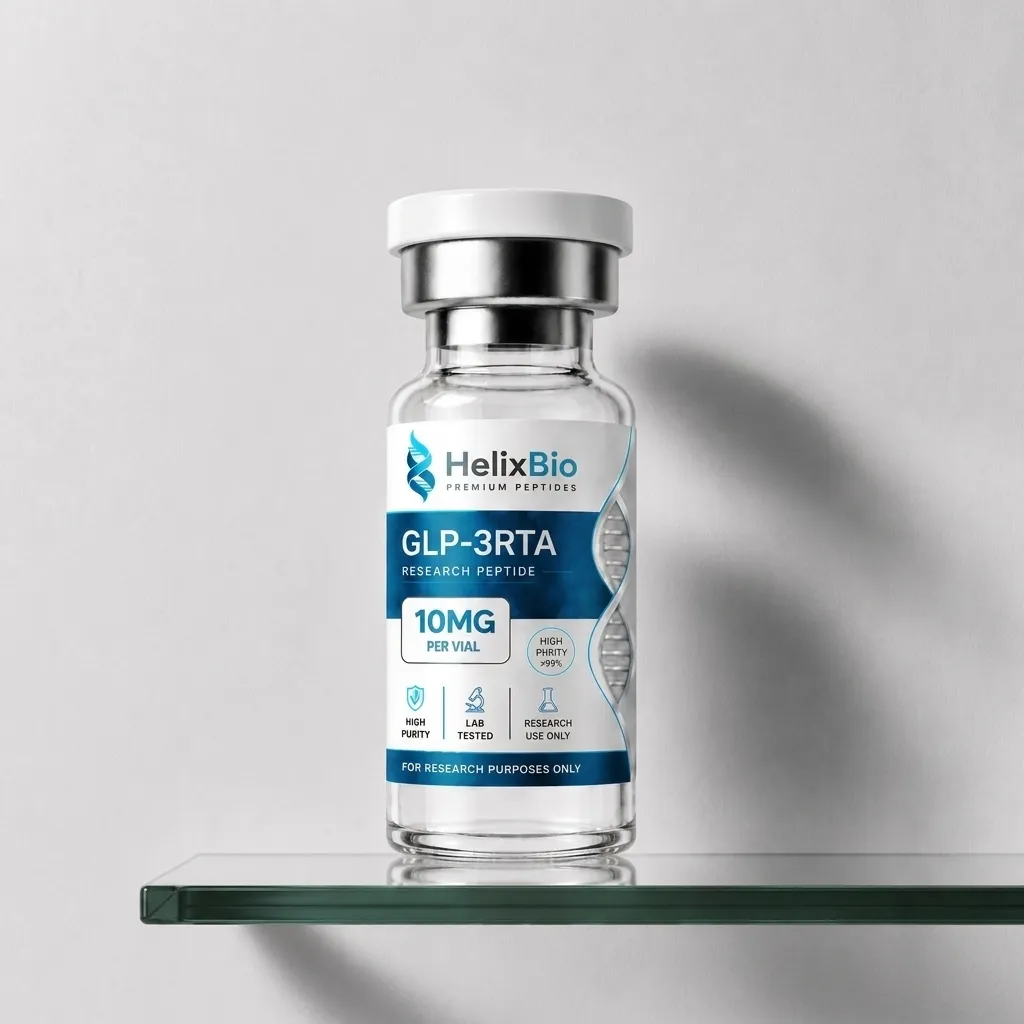
GLP-3RTA
RESEARCH PEPTIDE
GLP-3RTA is a synthetic research peptide studied for triple hormone receptor agonism — activity across the GLP-1, GIP, and glucagon receptors within a single molecule. That three-receptor mechanism has made it one of the most closely watched areas of metabolic and endocrine research, setting it apart from single- or dual-agonist peptides such as Semaglutide and GLP-1TRZ. Helix Bio supplies GLP-3RTA as a lyophilized powder intended strictly for laboratory and preclinical research, manufactured to a high-purity standard and backed by third-party verification. It is not intended for human consumption, diagnostic use, or any therapeutic application.
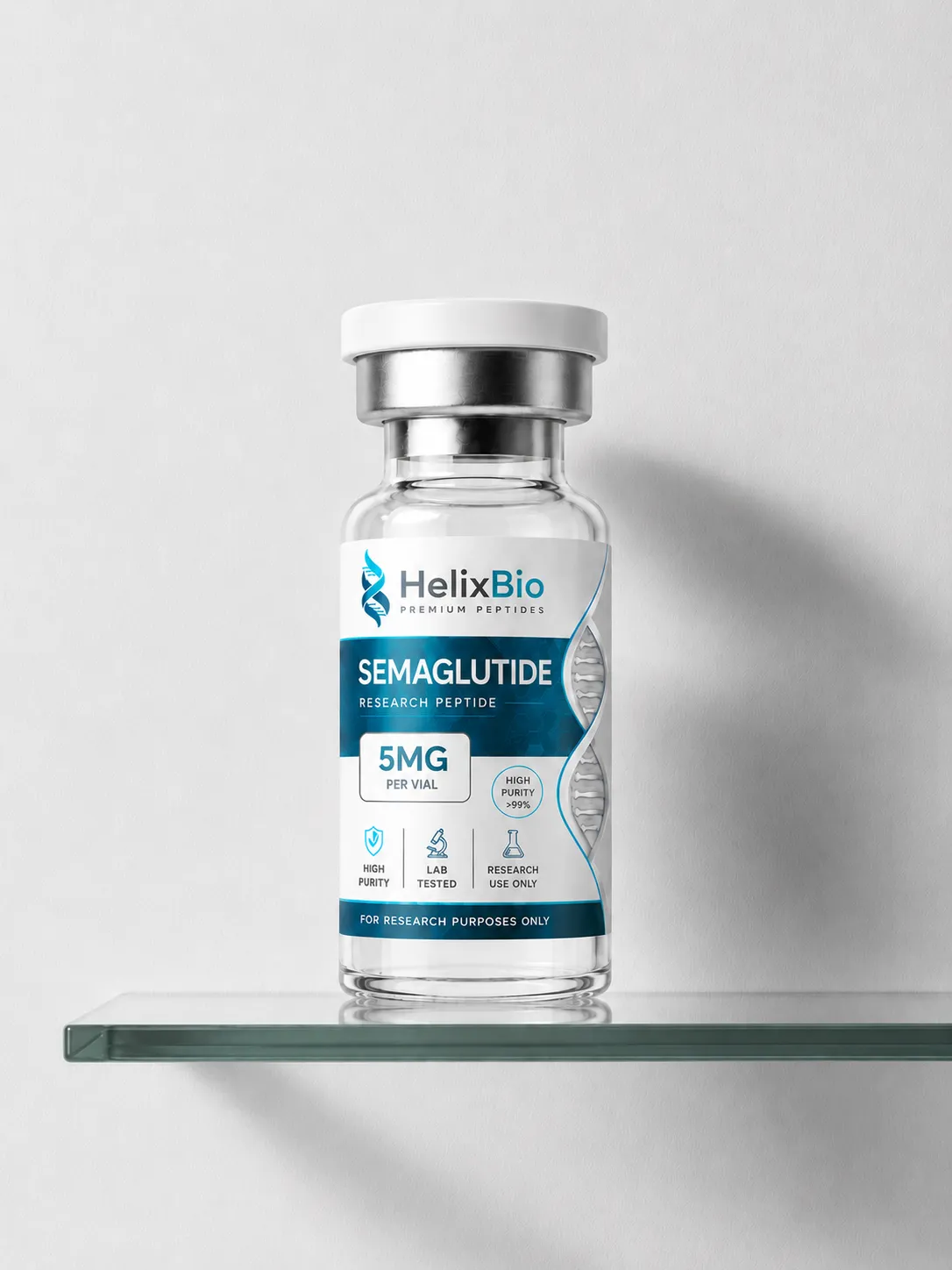
Semaglutide
RESEARCH PEPTIDE
Semaglutide is a synthetic research peptide studied for its activity as a GLP-1 receptor agonist — one of the most extensively documented compounds in incretin pharmacology, with a clinical trial record (the STEP and SUSTAIN programs) that spans over a decade. Developed originally by Novo Nordisk, Semaglutide is the reference point most researchers use when evaluating newer dual- and triple-agonist peptides such as GLP-1TRZ and GLP-3RTA. Helix Bio supplies Semaglutide as a lyophilized powder intended strictly for laboratory and preclinical research, manufactured to a high-purity standard and backed by third-party verification. It is not intended for human consumption, diagnostic use, or any therapeutic application, and it is a separate product from FDA-approved branded medications.
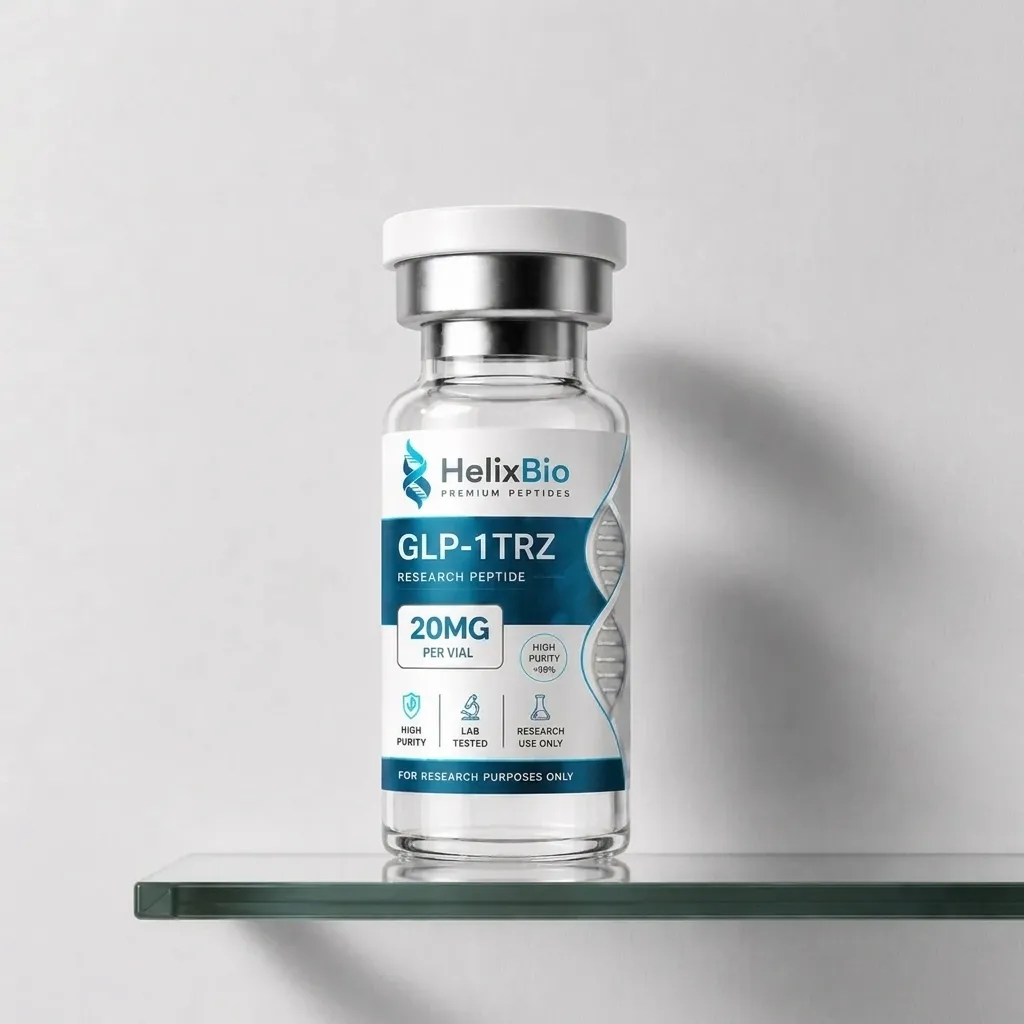
GLP-1TRZ
RESEARCH PEPTIDE
GLP-1TRZ is a synthetic research peptide studied for its activity as a dual GIP/GLP-1 receptor agonist — engaging two distinct incretin receptor pathways within a single molecule. It sits between single-receptor compounds like Semaglutide and the newer triple-agonist GLP-3RTA, making it a common middle point of comparison in incretin research. Helix Bio supplies GLP-1TRZ as a lyophilized powder intended strictly for laboratory and preclinical research, manufactured to a high-purity standard and backed by third-party verification. It is not intended for human consumption, diagnostic use, or any therapeutic application, and it is a separate product from FDA-approved branded medications.
How Peptide Synthesis Works Today
Solid-phase peptide synthesis (SPPS) is the assembly of a peptide chain on an insoluble polymer resin, one amino acid at a time, working from the C-terminus toward the N-terminus. Bruce Merrifield introduced the method at Rockefeller University in 1963 and received the Nobel Prize in Chemistry in 1984 for it. Sixty years on, SPPS still produces the large majority of synthetic research peptides.
The breakthrough was mechanical rather than chemical. Because the growing chain stays anchored to a solid support, excess reagents and by-products are removed by simple filtration and washing instead of by isolating an intermediate after every step. That one change made stepwise chain elongation repeatable, scalable and — eventually — automatable.
The SPPS cycle, step by step
- Swell the resin in solvent so the reactive sites become accessible.
- Deprotect the N-terminal protecting group, typically Fmoc removal with piperidine.
- Wash away the deprotection reagent and the cleaved by-products.
- Couple the next protected amino acid using an activator such as HATU, COMU or DIC/Oxyma.
- Wash again to clear unreacted amino acid and coupling reagent.
- Repeat the cycle once for every residue in the target sequence.
- Cleave the finished chain from the resin with a TFA cocktail, then precipitate, purify by preparative HPLC and lyophilise.
Fmoc versus Boc chemistry
Fmoc chemistry uses a base-labile fluorenylmethyloxycarbonyl group on the alpha-amine paired with acid-labile side-chain protection. That orthogonal protecting group strategy avoids repeated strong-acid treatment of the growing chain. Boc chemistry, the original Merrifield approach, needs TFA at every cycle and hydrogen fluoride at final cleavage. Fmoc/tBu is now the default across research and commercial peptide manufacturing, while Boc survives for a narrow set of difficult or highly hydrophobic sequences.
Where liquid-phase synthesis still fits
Liquid-phase peptide synthesis (LPPS) builds the chain in solution and isolates each intermediate, which allows purification at every stage but makes long sequences impractical. In practice, manufacturers increasingly run hybrid workflows: short fragments are made by SPPS, then joined in solution by fragment condensation or native chemical ligation.
Attribute | Solid-phase (SPPS) | Liquid-phase (LPPS) |
|---|---|---|
Chain assembly | On resin, C-terminus anchored | In solution, stepwise isolation |
Practical length | Routinely 5–50 residues | Best under roughly 10 residues |
Purification | Once, after cleavage | After each coupling |
Solvent demand | Very high | High, but recoverable |
Typical use | Research peptides, most commercial APIs | Short peptides at large scale, fragment work |
Where Traditional Batch Synthesis Falls Short
Batch SPPS is dependable, but it carries three structural limits: it consumes an extraordinary volume of solvent, its efficiency decays as sequences lengthen, and it scales awkwardly.
The solvent burden
Peptide manufacturing is among the most solvent-intensive processes in pharmaceutical chemistry. Process mass intensity (PMI) measures that burden directly: it is the total mass of material consumed divided by the mass of product obtained. A 2024 analysis compiled by member companies of the ACS Green Chemistry Institute Pharmaceutical Roundtable found that peptide APIs show PMI values substantially higher than small-molecule drugs, with solvent consumption identified as the dominant contributor.
The problem concentrates in a handful of reagents. DMF and its relatives DMAc and NMP are classified as reprotoxic and face tightening restriction in Europe and elsewhere. Dichloromethane, diethyl ether and MTBE add further hazard, and TFA is corrosive at cleavage scale. Because those solvents also dominate washing and purification, solvent reduction is now a first-order engineering target rather than a public-relations one.
Difficult sequences and side reactions
Coupling efficiency compounds. A 30-residue peptide needs 29 successive couplings; at 99% efficiency per coupling, theoretical crude yield already falls to roughly 75%, and real-world sequences rarely hold 99% throughout. Chains aggregate on resin, aspartimide formation scrambles Asp-containing motifs, and epimerization during activation produces diastereomeric impurities that are difficult to separate.
Those failures leave fingerprints a buyer can actually see. Deletion sequences — chains missing one residue because a coupling failed — differ from the target by a single amino acid mass and show up as shoulder peaks on HPLC and as satellite masses by mass spectrometry.
Synthesis method is a quality variable, not a marketing detail. Two vials labelled with the same sequence and the same nominal purity can carry very different impurity profiles depending on how the chain was assembled and how it was purified. All material discussed here is for laboratory research use only.
The Technologies Changing Peptide Synthesis
Five developments are reshaping the field: continuous flow, deeper automation, enzymatic coupling, machine learning, and green solvent substitution. Each addresses a different failure mode of batch SPPS.
Continuous flow and fast-flow SPPS
Continuous flow peptide synthesis (CF-SPPS) pumps reagents continuously through a heated packed resin bed instead of filling and draining a batch vessel. Constant flow refreshes reagent at the reaction site and removes by-products immediately, which shortens each coupling from tens of minutes to seconds and sharply reduces mixing-limited failures.
The capability ceiling has moved fast. Researchers at MIT reported in *Science* in 2020 that an automated fast-flow instrument assembled peptide chains up to 164 amino acids long across 327 consecutive reactions, with chain elongation complete in hours rather than days. Synthetic single-domain proteins produced this way folded into functional enzymes.
For research-scale supply, the practical consequence is not record length but reproducibility: a flow reactor holds temperature, residence time and stoichiometry within a narrow window on every cycle, which is exactly what batch-to-batch consistency depends on.
Automation, robotics and in-line monitoring
Automated peptide synthesizers have existed for decades, but the current generation adds process analytical technology — in-line UV monitoring of Fmoc deprotection, and increasingly Raman or infrared monitoring of coupling — so a failed step is detected while the run is still on the instrument rather than after cleavage.
Microwave-assisted SPPS, resonant acoustic mixing and high-throughput parallel synthesis all attack the same bottleneck from different directions. At the frontier, robotic platforms driven by machine-readable chemical description languages allow a published procedure to be executed as code, which makes a synthesis portable between sites in a way a written protocol never was.
- Consistent reagent stoichiometry on every cycle
- Documented cycle-by-cycle process records
- Early detection of failed couplings
- Lower operator-to-operator variability
- Faster turnaround on repeat sequences
Enzymatic and chemo-enzymatic routes
Chemo-enzymatic peptide synthesis (CEPS) uses engineered enzymes to join peptide fragments in aqueous buffer rather than joining them with chemical activators in organic solvent. Engineered subtilisin variants known as peptiligases — omniligase-1 being the best characterised — catalyse fragment ligation with broad sequence tolerance and without the epimerization that plagues chemical fragment condensation.
The commercial position is real but bounded. Enzymatic ligation is established for joining SPPS-made fragments and for head-to-tail cyclisation; it does not yet replace stepwise chemical elongation for building the fragments themselves. Water as the reaction medium is the headline environmental win, and it removes several of the reprotoxic solvents from that portion of the process entirely.
AI-assisted design and yield prediction
Machine learning now touches peptide work at two separate points, and conflating them causes most of the confusion in this area.
The first is de novo design. Deep-learning generative models — RFdiffusion, published in *Nature* in 2023, being the most prominent — produce novel backbones and binders from a functional specification, with experimental characterisation of hundreds of designs. That work targets what molecule to make.
The second is synthesis optimisation. Models trained on instrument data can predict coupling difficulty and yield for a given sequence before a run begins, letting chemists adjust reagents or temperature for the residues likely to fail. Work published in *ACS Central Science* in 2020 demonstrated deep-learning prediction and optimisation of fast-flow peptide synthesis using experimental synthesis parameters. That work targets how to make it reliably.
Green solvent systems
Substitution is the most immediately deployable of the five. 2-MeTHF, Cyrene, NBP and mixed aqueous systems are being validated as DMF replacements for coupling and washing; solvent recovery and reuse loops cut PMI without changing the chemistry at all. Progress is uneven — a solvent that performs well for standard couplings may fail on aggregation-prone sequences — but DMF-free and reduced-DMF processes are moving from proof of concept into production.
Peptide Synthesis Methods Compared
Method | Relative speed | Practical scale | Purity profile | Best suited to |
|---|---|---|---|---|
Batch SPPS | Moderate | Milligram to kilogram | Good, degrades with length | Most research peptides |
Continuous-flow SPPS | Fastest per residue | Milligram to gram | High, very consistent | Long or difficult sequences |
LPPS | Slow | Kilogram and above | Very high per step | Short peptides at scale |
Hybrid SPPS/LPPS | Moderate | Gram to kilogram | High | Medium-length commercial peptides |
Chemo-enzymatic (CEPS) | Fast at the ligation step | Gram to kilogram | High, no ligation epimerization | Fragment joining, cyclic peptides |
Recombinant expression | Slow to set up, fast to scale | Gram and above | Sequence-faithful, needs host clean-up | Longer chains, natural residues only |
What This Means for Research Peptide Quality
Synthesis method affects final quality through three routes: crude purity entering purification, the type of impurities present, and the reproducibility of both across batches. A cleaner crude means a purification step that removes less material and preserves more of the target, which is why manufacturing improvements show up on the certificate of analysis rather than in the marketing copy.
That is also why two analytical methods appear on a credible COA rather than one. HPLC quantifies how much of the sample is the main peak; mass spectrometry confirms that the main peak is the intended molecule. Neither substitutes for the other, and a full walkthrough of the fields is covered in the guide to reading a peptide certificate of analysis.
Attribute | RP-HPLC | Mass spectrometry |
|---|---|---|
What it answers | How pure is this sample? | Is this the right molecule? |
Output | Percentage purity by peak area | Observed molecular mass |
Detects | Deletion sequences, truncations, related impurities | Mass mismatches, incorrect sequences |
Blind spot | Co-eluting impurities of similar retention | Relative quantity of impurities |
Reported as | Purity percentage plus chromatogram | Observed versus theoretical mass |
Manufacturing route also influences stability once the vial reaches the bench. Residual TFA, residual solvent and moisture content are all process-dependent, and all affect how lyophilized material behaves over time — which is why handling practice and synthesis quality are related questions rather than separate ones. Practical handling guidance is covered in the peptide reconstitution and storage guide.
What This Means for Cost, Lead Time and Availability
Three forces are pulling in different directions. Demand for peptide manufacturing capacity has risen sharply on the back of metabolic research interest, which pushes lead times out and prices up. Flow chemistry and automation cut instrument time per sequence, which pushes in the opposite direction. Solvent regulation adds compliance cost to legacy processes while rewarding facilities that have already reformulated.
The realistic near-term outlook is not uniformly cheaper peptides. It is a widening gap between suppliers whose processes are documented, monitored and reproducible, and suppliers who buy opportunistically and cannot say how a given lot was produced. Cost per gram will keep falling for well-characterised sequences made at volume; complex, long or heavily modified sequences will stay expensive because they remain hard to build.
How Researchers Can Evaluate a Supplier's Synthesis Standards
Most researchers will never audit a synthesis facility. They can still read the signals that separate a documented supply chain from an undocumented one.
- Ask which synthesis route was used — SPPS, hybrid or enzymatic — and whether it is consistent across lots.
- Request a lot-specific certificate of analysis, not a generic sample document.
- Confirm both HPLC and mass spectrometry data appear on that COA.
- Check that the COA identifies the testing laboratory and the analysis date.
- Look for third-party verification rather than in-house numbers alone.
- Ask about residual solvent and water content testing, since both are process-dependent.
- Verify storage and shipping conditions, including whether cold-chain handling is used.
- Confirm Research Use Only labelling and documentation consistency across the site.
The single most informative question to ask a supplier is whether the COA is lot-specific. A supplier that can produce a document tied to the exact lot number on the vial is demonstrating a records system; a supplier that sends the same PDF for every order is demonstrating the opposite.
Attribute | Research grade (RUO) | Pharmaceutical grade |
|---|---|---|
Governing standard | Supplier specification, RUO labelling | cGMP, pharmacopoeial monograph |
Typical purity claim | 98–99%+ by HPLC | Specification-bound, fully characterised |
Documentation | Certificate of analysis | Full batch record and regulatory dossier |
Permitted use | Laboratory research only | Approved medical use |
Oversight | Supplier and third-party testing | Regulatory inspection |
US-based researchers should also keep the compliance frame explicit in their own records. Research Use Only material is not approved for human or veterinary use, and that status is a function of labelling, documentation and intended use rather than of purity; the RUO compliance overview covers what that designation does and does not mean. For sourcing practice, the checklist for buying research peptides online in the USA sets out the vendor questions worth asking before a first order, and current catalogue availability is listed in the Helix Bio shop.
Where This Is Heading
The next few years of peptide synthesis technology will be defined less by a single breakthrough than by consolidation of the five threads above. Flow chemistry and automation are already delivering reproducibility gains; enzymatic ligation is expanding from specialist ligations toward routine fragment work; machine learning is moving from design into process optimisation; solvent substitution is becoming a regulatory necessity rather than an option.
For researchers working with compounds such as GLP-1 and GIP receptor agonists or tissue-repair peptides, the practical takeaway is narrow and useful: manufacturing quality is now a measurable, documentable property, and suppliers who can evidence it will increasingly be distinguishable from those who cannot.
Frequently Asked Questions
Solid phase peptide synthesis (SPPS) is the assembly of a peptide chain on an insoluble polymer resin, one amino acid at a time, from the C-terminus toward the N-terminus. Because the chain stays anchored to the support, excess reagents are washed away by filtration instead of by isolating each intermediate.
Research peptides are typically built by SPPS: the resin is swelled, the N-terminal protecting group is removed, the next protected amino acid is coupled, and the cycle repeats for every residue. The finished chain is cleaved from the resin, purified by preparative HPLC, then lyophilized and vialed under Research Use Only labelling.
Continuous flow peptide synthesis pumps reagents continuously through a heated packed resin bed rather than filling and draining a batch vessel. Constant flow refreshes reagent at the reaction site and removes by-products immediately, shortening each coupling from tens of minutes to seconds.
SPPS assembles the chain on a solid resin and purifies once at the end, which suits sequences of roughly 5 to 50 residues. LPPS builds the chain in solution and isolates each intermediate, allowing purification at every stage but becoming impractical beyond about ten residues. Hybrid workflows combine both.
Purity is measured primarily by reversed-phase HPLC, which reports the target as a percentage of total peak area. Mass spectrometry is run alongside it to confirm the observed molecular mass matches the theoretical mass of the intended sequence. Neither method substitutes for the other.
HPLC quantifies how much of a sample is the main peak but does not identify what that peak is. Mass spectrometry confirms molecular identity by comparing observed mass against theoretical mass. Together they answer both questions a certificate of analysis needs to answer.
Yes. The synthesis route determines crude purity entering purification, the type of impurities present, and how reproducible both are across lots. A cleaner crude requires less aggressive purification, which is why manufacturing improvements appear on the certificate of analysis rather than in product descriptions.
The main causes are incomplete couplings that produce deletion sequences, premature chain termination that produces truncation products, aspartimide formation in Asp-containing motifs, and epimerization during activation. Longer and aggregation-prone sequences accumulate these errors more readily.
Yes, because coupling efficiency compounds. A 30-residue peptide requires 29 successive couplings, so even 99% efficiency per step gives a theoretical crude yield of roughly 75%. Longer chains also aggregate on resin, which further reduces coupling efficiency.
Every coupling and deprotection cycle is followed by repeated washes to remove excess reagent, and final purification consumes further solvent. Because those cycles repeat once per residue, solvent use scales with sequence length and dominates the process mass intensity of peptide manufacturing.
Chemo-enzymatic peptide synthesis is used commercially for fragment ligation and head-to-tail cyclisation, where engineered peptiligases such as omniligase-1 couple fragments in aqueous buffer without epimerization. It does not currently replace stepwise chemical elongation for building the fragments themselves.
Machine learning contributes at two distinct points. Generative models such as RFdiffusion design novel sequences and binders from a functional specification, while models trained on instrument data predict coupling difficulty and yield so a synthesis can be optimised before it runs.
Lyophilized research peptides are generally stored sealed, protected from light and moisture, and at reduced temperature, with reconstituted material handled under narrower conditions and shorter timeframes. Residual solvent and moisture content from manufacturing both influence how a given lot behaves over time.
A supplier should be able to state the synthesis route used, provide a lot-specific certificate of analysis showing both HPLC purity and mass spectrometry confirmation, identify the testing laboratory and analysis date, and label material clearly for Research Use Only.
Research Use Only (RUO) designates material intended solely for laboratory research and not approved for human or veterinary use. The designation is a function of labelling, documentation and intended use rather than of purity level, and it applies regardless of how the peptide was synthesized.
- 01Merrifield, R. B. Solid Phase Peptide Synthesis. I. The Synthesis of a Tetrapeptide. Journal of the American Chemical Society, 1963, 85(14), 2149-2154.
- 02Hartrampf, N. et al. Synthesis of proteins by automated flow chemistry. Science, 2020, 368(6494), 980-987.
- 03Process Mass Intensity (PMI): A Holistic Analysis of Current Peptide Manufacturing Processes Informs Sustainability in Peptide Synthesis. The Journal of Organic Chemistry, 2024 (ACS Green Chemistry Institute Pharmaceutical Roundtable Peptides Focus Team).
- 04Toplak, A. et al. From thiol-subtilisin to omniligase: Design and structure of a broadly applicable peptide ligase. Computational and Structural Biotechnology Journal, 2021, 19, 1277-1287.
- 05Deep Learning for Prediction and Optimization of Fast-Flow Peptide Synthesis. ACS Central Science, 2020, 6(12), 2277-2286.
- 06Watson, J. L. et al. De novo design of protein structure and function with RFdiffusion. Nature, 2023, 620(7976), 1089-1100.
- 07ACS Green Chemistry Institute Pharmaceutical Roundtable — Peptides Focus Area.
Helix Bio Chem Team
Research & Product Team
Our in-house team tracks published peptide research and translates it into clear, source-cited summaries for the research community.
Reviewed by in-house research chemists
support@helixbiochem.com